Iran's missile attacks injured 175 people in Israel's southern cities Arad and Dimona on Saturday evening, Israeli authorities said on Sunday.
The Iranian missile attack in Arad wounded 115 people, which is the largest number in Israel since the joint U.S.-Israeli strikes on Iran started on Feb. 28. Among them nine people were seriously injured.
Rescuers were still searching for victims in the struck residential buildings in Arad on Saturday evening and early Sunday morning.
"The forces need to go floor to floor to make sure that there's nobody remaining underneath any of this rubble. Also, the Israel police bomb disposal unit arrived here, and they had to clear the site of any dangerous debris from unexploded ordnances or things of that sort," said police spokesman Dean Elsdunne.
"So the missile size is, what we appraise, is about half a ton. It's a missile that we didn't intercept. We have a great air defense system, but nothing is 100 percent," said Adam Ittah, a spokesman for the Israel Defense Forces.
All educational activities in the affected areas have been canceled, and schools across the country will be closed for two days.
The developments came amid heightened tensions following joint U.S.-Israeli strikes on Iran, to which Iran and its regional allies responded with attacks on Israeli and U.S. interests across the Middle East.
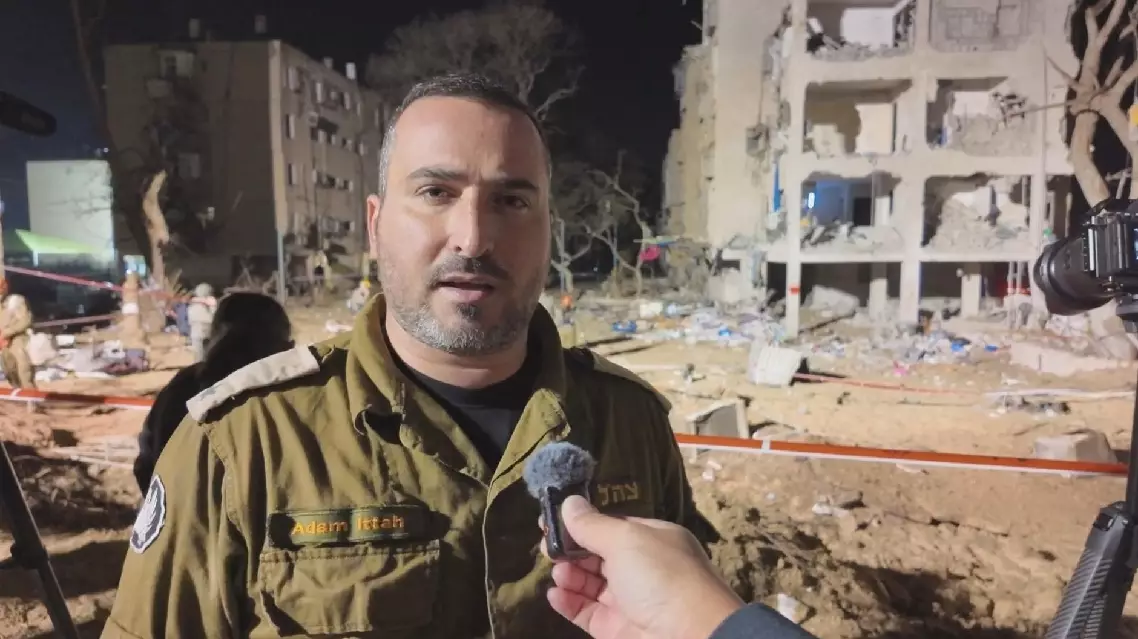
Iran missile attacks injure 175 in Israel's southern cities
Iran missile attacks injure 175 in Israel's southern cities
Iran missile attacks injure 175 in Israel's southern cities
Beijing's "rocket street" project is evolving into a national-level scientific research and production hub, helping to support China's commercial space development.
The project is located in Beijing E-Town, an economic and technological development area in the southeast of the capital city, with a total floor space of 140,000 square meters, roughly the size of 20 football fields. The complex features a common technological platform, a high-end manufacturing center, and an innovation research and development hub as its core facilities.
Previously, it was the more established launch sites and their surrounding "space cities" that featured streets and roads that were totally space themed -- such as Wenchang's Road of Starlight and Jiuquan's Road to Space.
Beijing's "rocket street," which is really a complex dedicated to commercial space development, was only completed earlier this year. At the "rocket street," efforts to advance reusable rocket technology -- featuring cost-effectiveness, repeatability, flexibility, and ultimately global competitiveness -- is receiving major support, and several companies have announced their plans for 2026.
LandSpace has scheduled a recovery test for its Zhuque-3 reusable rocket in the second quarter of this year.
Galactic Energy plans to launch its first reusable liquid-fueled rocket, Pallas 1, in less than three months. It also aims to launch the more powerful, reusable Pallas 2, before the end of the year.
The "Rocket Street" itself also plans to break into new stratospheres in the coming years with reusable rockets.
"We aim to rank among the best in the world. We will promote 'airline-style' launches of large reusable rockets, fully reusable rockets, and fully reusable heavy-lift rockets. We will accelerate the development and mass production of new internet satellites, plan the building of new space infrastructure, and develop full-industrial-chain capabilities to launch 1,000 satellites," said Ma Zhao, Deputy Director of Beijing E-Town's Robotics, Intelligent Manufacturing Industry Bureau.
Galactic Energy is also working on the rocket's final stage -- an on-orbit service platform designed to perform multiple tasks, including cleaning up space by extending its "hands" and removing space debris.
The company believes now is the right moment to carry out these missions, relying on its own technical capabilities and supportive policies.
"In recent years, we have deeply felt the concerted support from policy, capital, and talent. Areas such as Beijing Economic-Technological Development Area have provided targeted support for core technology breakthroughs. Patient capital at both national and local levels has accelerated its convergence," said Wu Yue, Director of Public Relations at Galactic Energy.
China has included the commercial space sector among 109 major projects in the coming years, expecting the industry to become a key driver of new quality productive forces.
"Development opportunities for the commercial space industry are unprecedented, and there is no time to waste. During the 15th Five-Year Plan period, Beijing E-Town will support the commercial space industry cluster with 1,000 enterprises working together, 1,000 satellites in orbit, and over 100 billion yuan in revenue," said Ma.
Opened to private investment in 2015, the sector now comprises over 600 commercial space companies, with annual financing reaching more than 18 billion yuan (about 2.62 billion U.S. dollars) in 2025.
China's 15th Five-Year Plan, which outlines national economic and social development goals for the next five years, sets a goal of building the country into a "space power" by 2030, as well as identifies the aerospace industry as "an emerging pillar." Against this backdrop, commercial space launches are taking on growing importance.
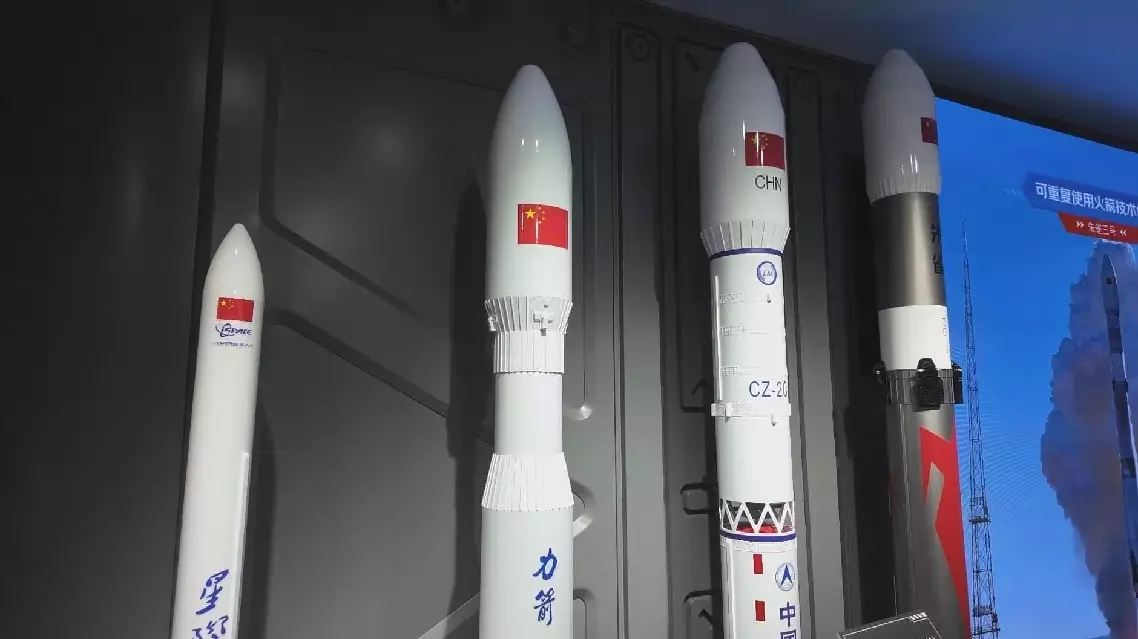
Beijing's "rocket street" project advances commercial space development