Skip to Content Facebook Feature Image

Trump touted bigger tax refunds this year, but Americans will likely spend them on gas

News

Trump touted bigger tax refunds this year, but Americans will likely spend them on gas
News

News

Trump touted bigger tax refunds this year, but Americans will likely spend them on gas

2026-03-22 18:25 Last Updated At:18:30

WASHINGTON (AP) — The U.S. economy was supposed to start the year with a bang, fueled by an unusually large jump in tax refunds from President Donald Trump's tax cut legislation. Yet spiking gas prices are on track to eat up those refunds, leaving most Americans with little extra to spend.

“Next spring is projected to be the largest tax refund season of all time,” Trump said in a prime-time speech in December that was intended to address voters' concerns about the economy and stubbornly high prices.

But that was before the Iran war, which began Feb. 28. Oil and gas prices have soared since then, with the nationwide average price of gas reaching $3.94 Sunday, up more than a dollar from just a month earlier.

Gas prices are likely to remain elevated for some time, even if the war ends soon, because shipping and production have been disrupted and will take time to recover. Economists now expect slower growth this spring and for the year as a whole, as dollars that are spent on gas are less likely to be used for restaurant meals, new clothes, or entertainment.

Lower and middle-income households are likely to be hit particularly hard, because they receive lower refunds, while spending a greater proportion of their earnings on gas.

“The energy shock is to going to hit those who have the least cushion,” said Alex Jacquez, chief of policy at the left-leaning Groundwork Collaborative and a former economist in the Biden White House. "And it doesn't look like those tax refunds are going to be here to save them.”

Neale Mahoney, director of the Stanford Institute for Economic Policy Research, calculates that gas prices could peak in May at $4.36 a gallon, based on oil price forecasts by Goldman Sachs, followed by slow declines for the rest of the year. The notion that gas prices decline much more slowly than they rise is so ingrained among economists that they refer to it as the “rocket and feathers” phenomenon.

In that scenario, the average household would pay $740 more in gas this year, nearly equal to the $748 increase in refunds that the Tax Foundation has estimated the average household will receive.

Through March 6, refunds have risen by much less than that, according to IRS data: They have averaged $3,676, up $352 from $3,324 in 2025. Still, average refunds could rise as more complex returns are filed.

Other estimates show similar impacts. Economists at Oxford Economics, a consulting firm, estimate that if gas prices average $3.70 a gallon all year, it will cost consumers about $70 billion — more than the $60 billion in increased tax refunds.

The gas price spike comes with many consumers already in a precarious position, particularly compared to 2022, when gas prices also soared because of Russia's invasion of Ukraine. At that time, many households still had fattened bank accounts from pandemic-era stimulus payments and companies were hiring rapidly and sharply lifting pay to attract workers.

Now, hiring is nearly at a standstill and Americans' saving rate has steadily fallen in the past few years as many households borrow more to sustain their spending.

“When you start looking across the perspective from a consumer side, you’re seeing people who have maxed out their credit cards, are using ‘buy now, pay later’ to purchase their groceries,” said Julie Margetta Morgan, president of The Century Foundation, a think tank. “They're making it work for now, but that can fall apart quite quickly.”

The impact will likely worsen the “K-shaped” narrativ e around the U.S. economy, analysts said, in which higher income households have fared better than lower-income households. The bottom 10% of earners spend nearly 4% of their incomes on gasoline, Pantheon Macroeconomics estimates, while the top 10% spend just 1.5%.

For now, most analysts still expect the U.S. economy to expand this year, even if more slowly, given the gas price shock. Higher gas prices will likely worsen inflation in the short run, but over time weaker spending will also slow growth.

American consumers and businesses have repeatedly shaken off shocks since the pandemic — soaring inflation, rising interest rates, tariffs — and continued to spend, defying concerns that the economy would tip into recession. Many economists note that the proportion of their incomes that Americans spend on gas and other energy has fallen significantly compared with a decade ago.

Data from the Bank of America Institute, released Friday, showed that spending on gas on the bank's credit and debit cards shot 14.4% higher in the week ended March 14 compared with a year ago. Before the war, such spending was running 5% below the previous year, a benefit to consumers.

Spending on discretionary items — restaurant meals, electronics, and travel — is still growing, the institute said, evidence of consumer resilience. But there is little sign it is accelerating, as many economists had hoped.

“The longer these gasoline prices persist, the more that will gradually sap consumer discretionary spending,” said David Tinsley, senior economist at the institute.

Other analysts expect growth will slow because of the war. Bernard Yaros and Michael Pearce, economists at Oxford Economics, forecast that the U.S. economy will grow just 1.9% this year, down from an earlier estimate of 2.5%.

“We had anticipated a lift in spending from a bumper tax refund season,” they wrote, “but the rise in gasoline prices, if sustained, would more than offset that boost.”
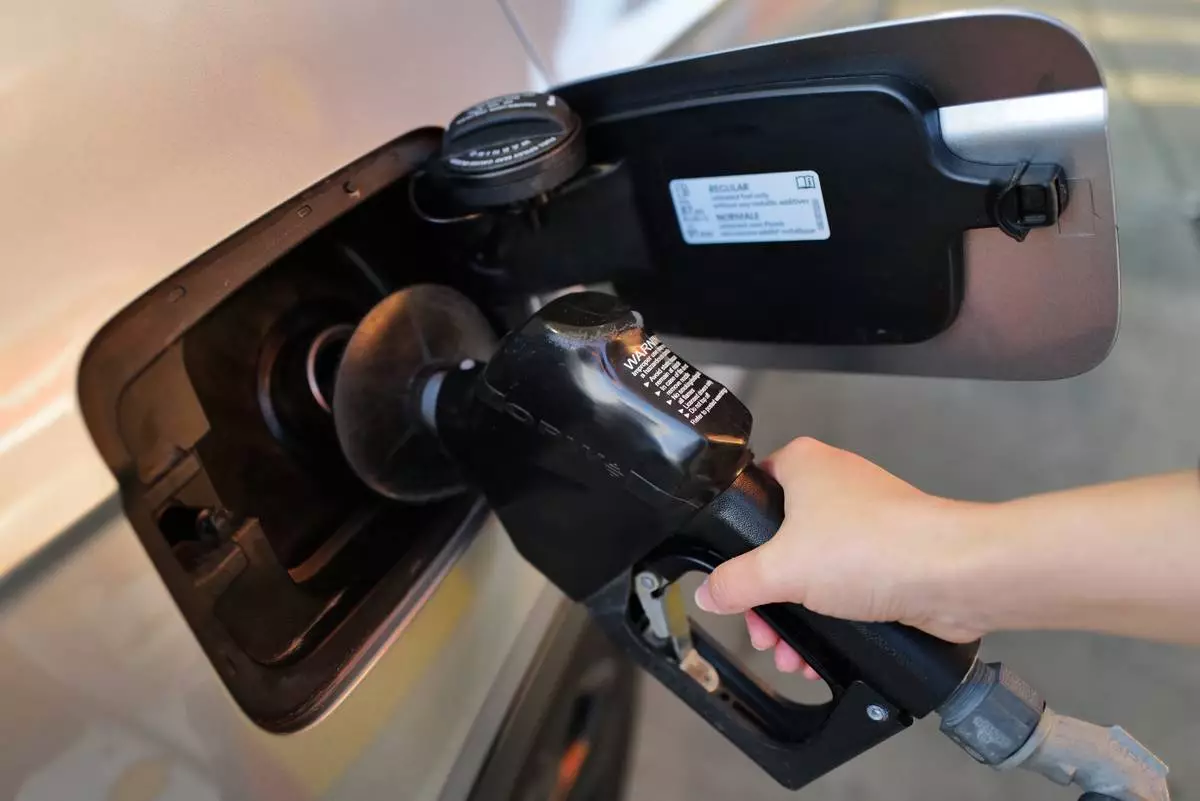
A person fills up her vehicle's gas tank at a gas station in Buffalo Grove, Ill., Thursday, March 19, 2026. (AP Photo/Nam Y. Huh)
A person fills up her vehicle's gas tank at a gas station in Buffalo Grove, Ill., Thursday, March 19, 2026. (AP Photo/Nam Y. Huh)
LJUBLJANA, Slovenia (AP) — Voters in Slovenia headed to the polls on Sunday in a highly contested parliamentary election that pits the governing liberals against right-wing populists in a vote that will decide whether the small European Union nation stays on its liberal course or sways toward the right.

The race is expected to be tight and follows a campaign rocked by allegations of foreign interference that stunned the traditionally moderate EU country.

The vote comes down to two main players: Prime Minister Robert Golob's Freedom Movement and the right-wing Slovenian Democratic Party, or SDS, led by three-time premier Janez Jansa, a populist-style politician and an admirer of U.S. President Donald Trump.

Who wins will resonate wider in the 27-member EU bloc.

Golob's government has been a strong liberal voice in the bloc while a victory of Jansa — also a close ally of nationalist Hungarian Prime Minister Viktor Orbán — would strengthen Europe's surging populist groups.

“Although Slovenia is a small Balkan country, the elections taking place there could be seen as another sign of the rise of illiberal tendencies in Europe,” Helen Levy, a researcher at the Robert Schuman Foundation, wrote in an analysis last month.

Slovenian sociologist Samo Uhan told The Associated Press that “the biggest differences between the government and the opposition are reflected in their understanding of global developments.”

Slovenia's top two parties have been running neck and neck in recent polls and analysts predict that no party would have a clear majority in the 90-member parliament, which would turn smaller parties into kingmakers.

The outcome “is completely uncertain, which is nothing unusual for Slovenia as the electorate has always been polarized,” Uhan said.

Further whipping up the divisions have been claims, first made by a group of activists and journalists, that a string of secret video recordings showing alleged, government-tied corruption, aimed to sway the voters.

The allegations further claimed Jansa's party and a private, foreign agency were linked to the recordings, based on gathered intelligence. Jansa has acknowledged having contacts with a Black Cube adviser, but denied the allegations of election interference.

An investigation by authorities so far has said that representatives of the private Black Cube intelligence agency visited Slovenia four times in the past several months, including a street in the capital, Ljubljana, that hosts Jansa's party headquarters.

Speaking to reporters at an EU summit in Brussels on Thursday, Golob urged an EU investigation.

“It is so important not to act now on behalf of Slovenia, but to act now to protect every other state that will come into election process in the next months,” Golob said. “I am absolutely confident that Slovenian voters will be able to recognize that foreign interference is something that shall never be allowed.”

Black Cube didn't immediately respond to requests for comment.

The company, run by two former Israeli intelligence agents, has been involved in a number of controversies over the years, including an undercover operation on behalf of the film mogul Harvey Weinstein to discredit his accusers. It has said that all of its activities are legal and ethical.

Jansa has faced accusations of clamping down on media freedoms and undermining the rule of law in Slovenia during his latest term in office in 2020-22. He has lashed out at Golob's government as a “crime syndicate” and pledged to “take back” a captured state.

A former energy company manager, 59-year-old Golob and his party were seen back in 2022 as a new hope for disillusioned voters. The government, however, has since been shaken by a series of reshuffles, problems with health care reform and frequent changes in tax policy that reflected an air of inconsistency.

Internationally, Golob’s government has taken a strongly pro-Palestinian stance, recognizing a Palestinian state in 2024 and banning top Israeli officials from entry. Jansa, on the other hand, is pro-Israel and has strongly criticized Palestinian recognition.

Slovenia routinely has switched between the two blocks since it broke away from the former, Communist-run Yugoslavia in 1991. The Alpine nation of 2 million people became a member of NATO and the EU in 2004.

Jovana Gec in Belgrade, Serbia, Josef Federman in Jerusalem, and Lorne Cook in Brussels, contributed to this report.

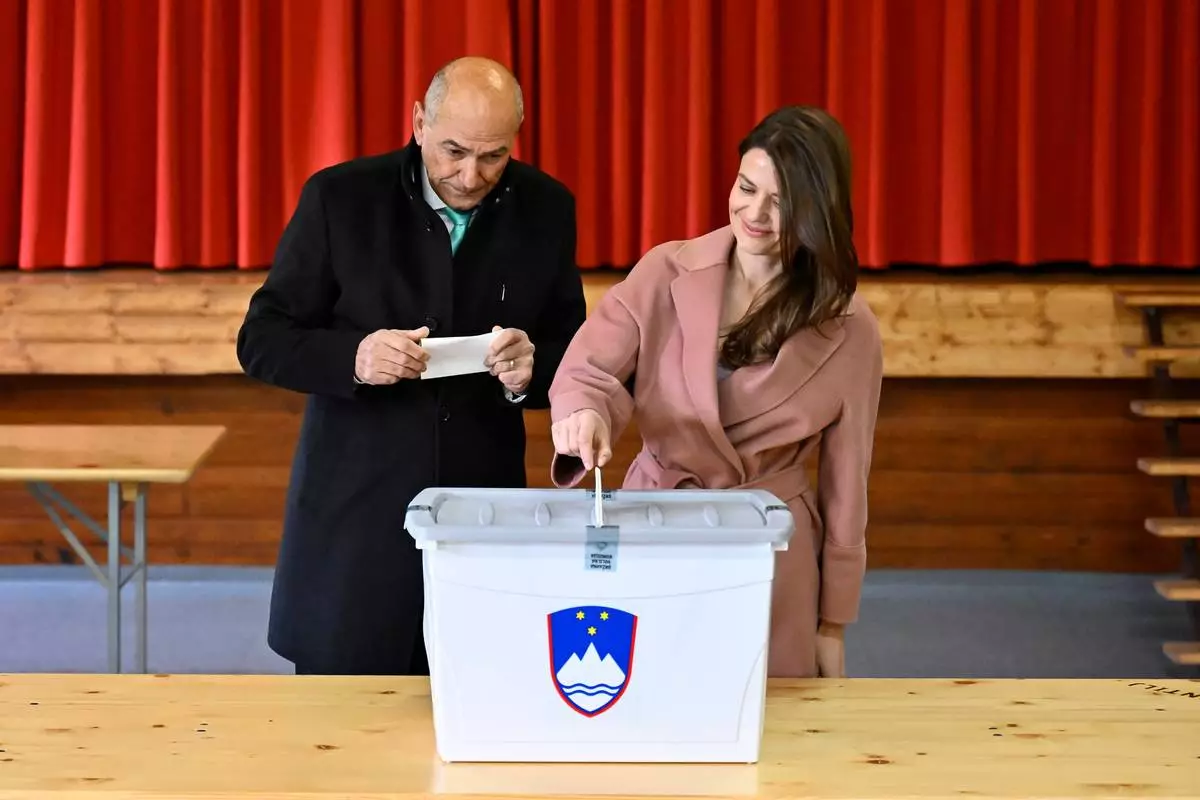
Former Slovenian Prime Minister Janez Jansa, left, and his wife Urska Bacovnik Jansa cast their vote at a polling station for parliamentary elections in Arnace, Slovenia, Sunday, March 22, 2026. (AP Photo/Denes Erdos)

Former Slovenian Prime Minister Janez Jansa, left, and his wife Urska Bacovnik Jansa cast their vote at a polling station for parliamentary elections in Arnace, Slovenia, Sunday, March 22, 2026. (AP Photo/Denes Erdos)

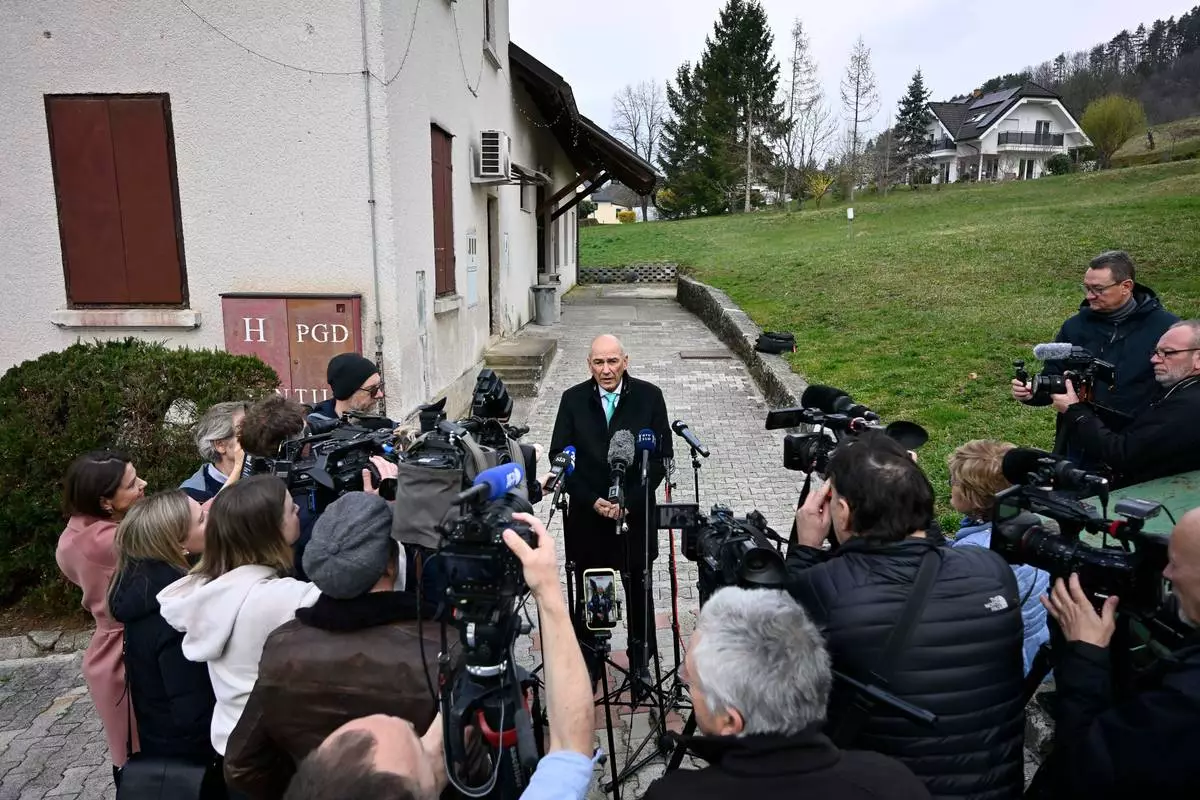
Former Slovenian Prime Minister Janez Jansa, center, speaks to the media outside a polling station for parliamentary elections in Arnace, Slovenia, Sunday, March 22, 2026. (AP Photo/Denes Erdos)

Former Slovenian Prime Minister Janez Jansa, center, speaks to the media outside a polling station for parliamentary elections in Arnace, Slovenia, Sunday, March 22, 2026. (AP Photo/Denes Erdos)

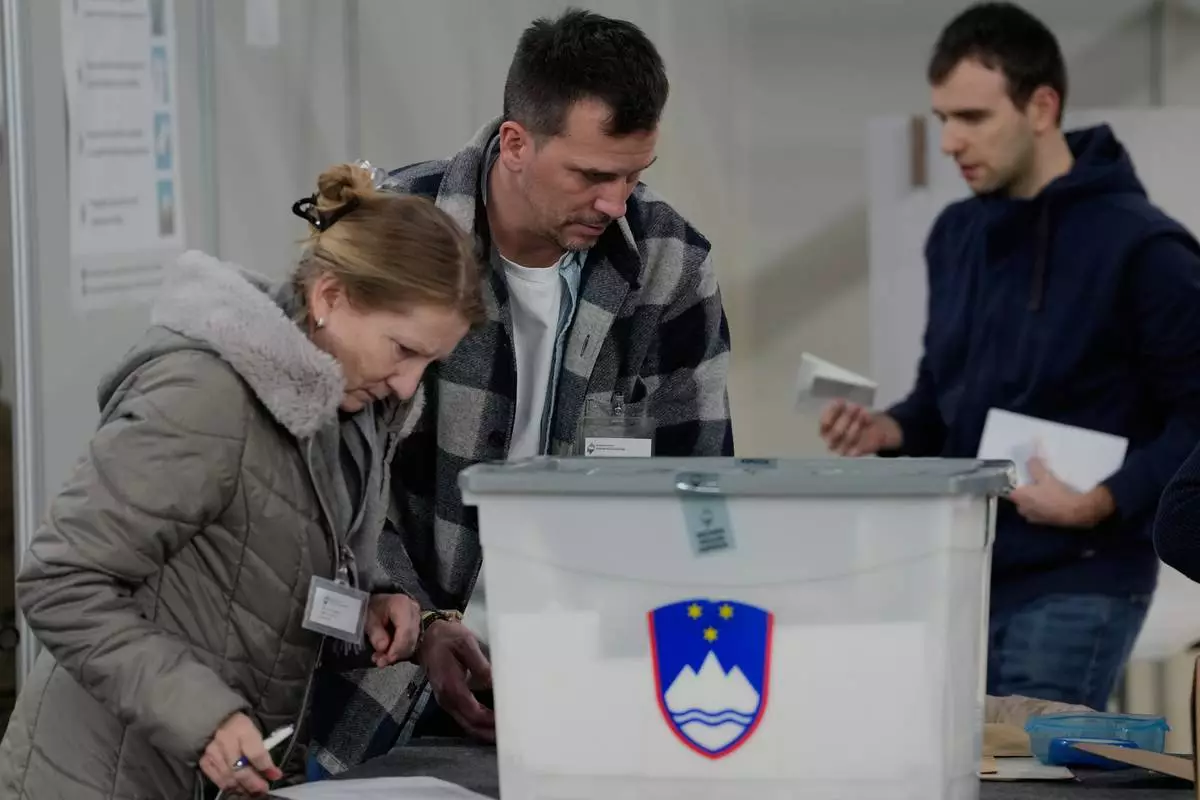
Members of the electoral commission handle ballots at a sports hall turned polling station for early vote in Ljubljana, Slovenia, Wednesday, March 18, 2026. (AP Photo/Darko Bandic)

Members of the electoral commission handle ballots at a sports hall turned polling station for early vote in Ljubljana, Slovenia, Wednesday, March 18, 2026. (AP Photo/Darko Bandic)

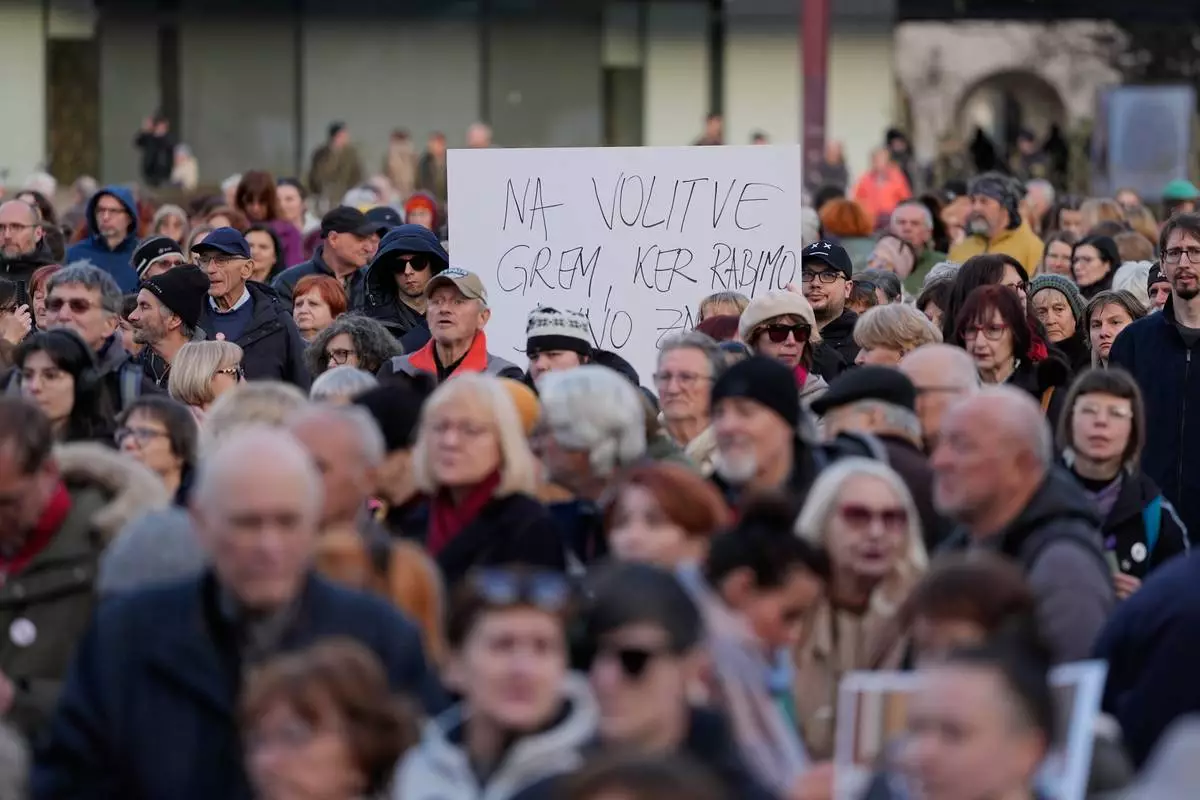
Left wing protesters denouncing foreign interference in Slovenian elections gather around a banner urging people to vote, in Ljubljana, Slovenia, Friday, March 20, 2026. (AP Photo/Darko Bandic)

Left wing protesters denouncing foreign interference in Slovenian elections gather around a banner urging people to vote, in Ljubljana, Slovenia, Friday, March 20, 2026. (AP Photo/Darko Bandic)

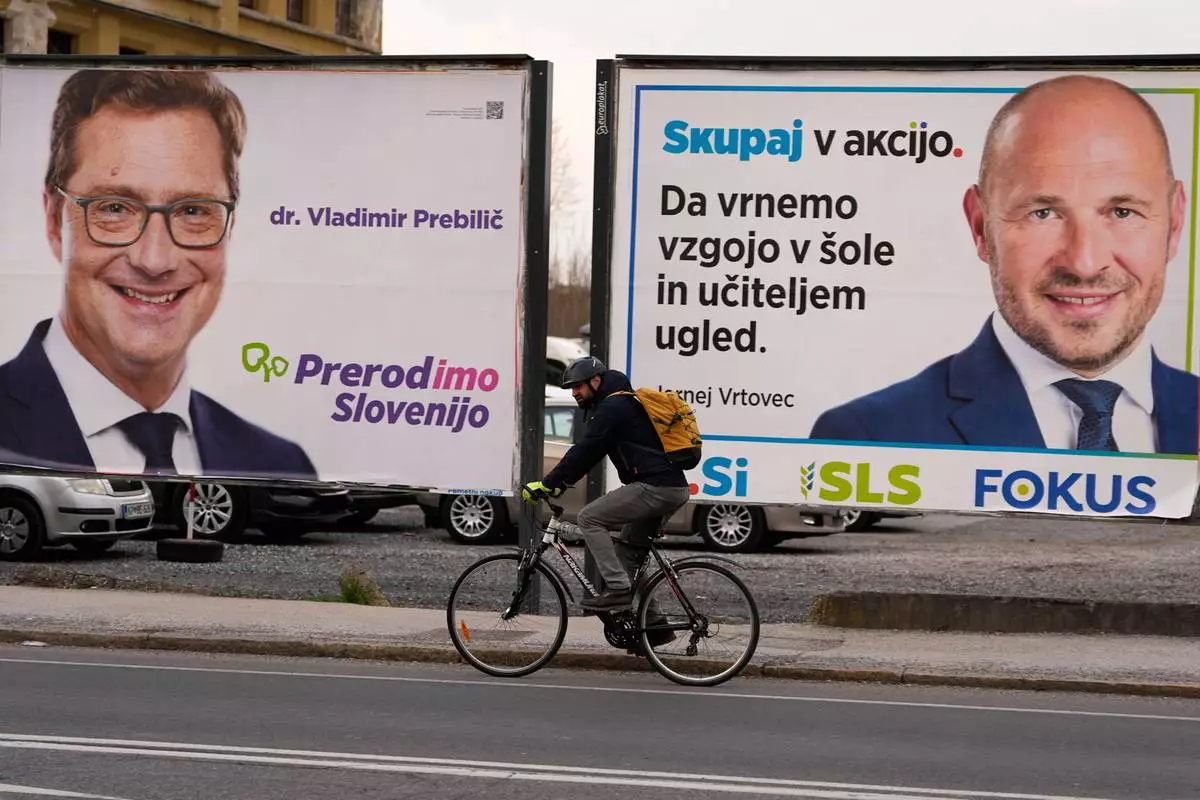
A cyclist rides past electoral posters in Ljubljana, Slovenia, Wednesday, March 18, 2026. (AP Photo/Darko Bandic)

A cyclist rides past electoral posters in Ljubljana, Slovenia, Wednesday, March 18, 2026. (AP Photo/Darko Bandic)

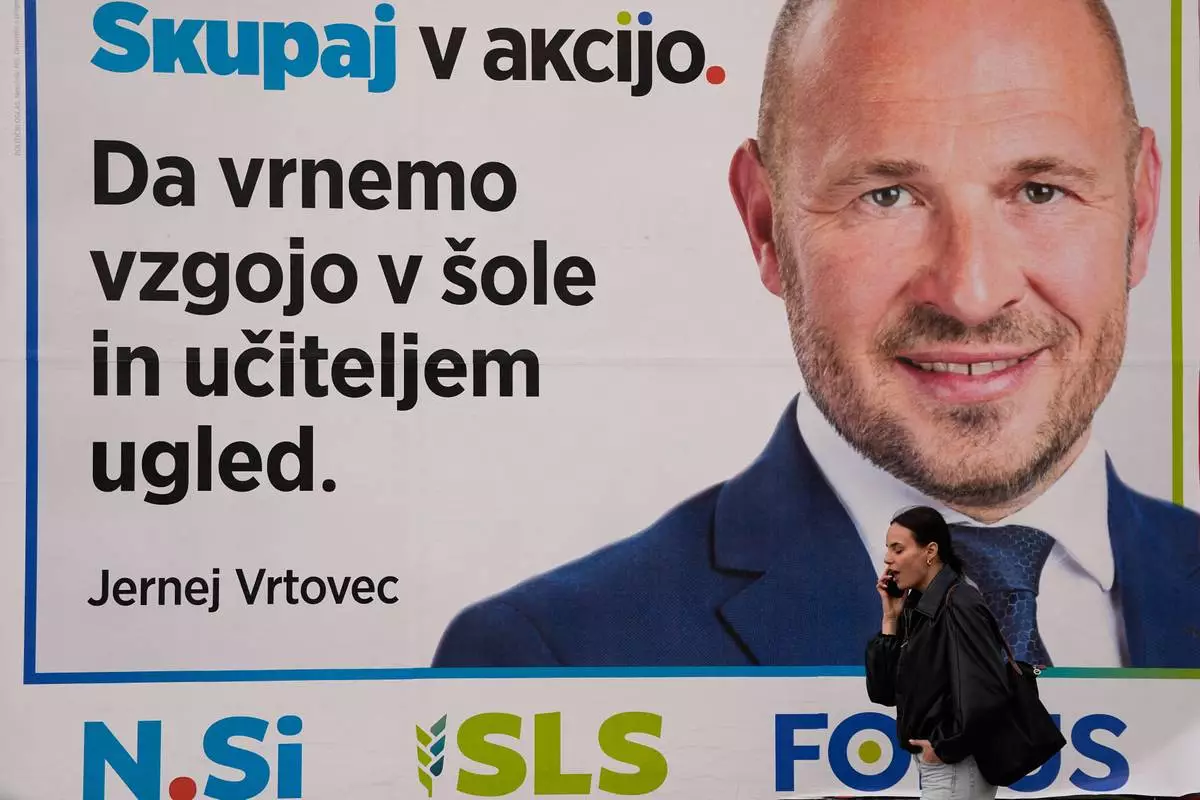
A pedestrian walks past a electoral poster in Ljubljana, Slovenia, Wednesday, March 18, 2026. (AP Photo/Darko Bandic)

A pedestrian walks past a electoral poster in Ljubljana, Slovenia, Wednesday, March 18, 2026. (AP Photo/Darko Bandic)

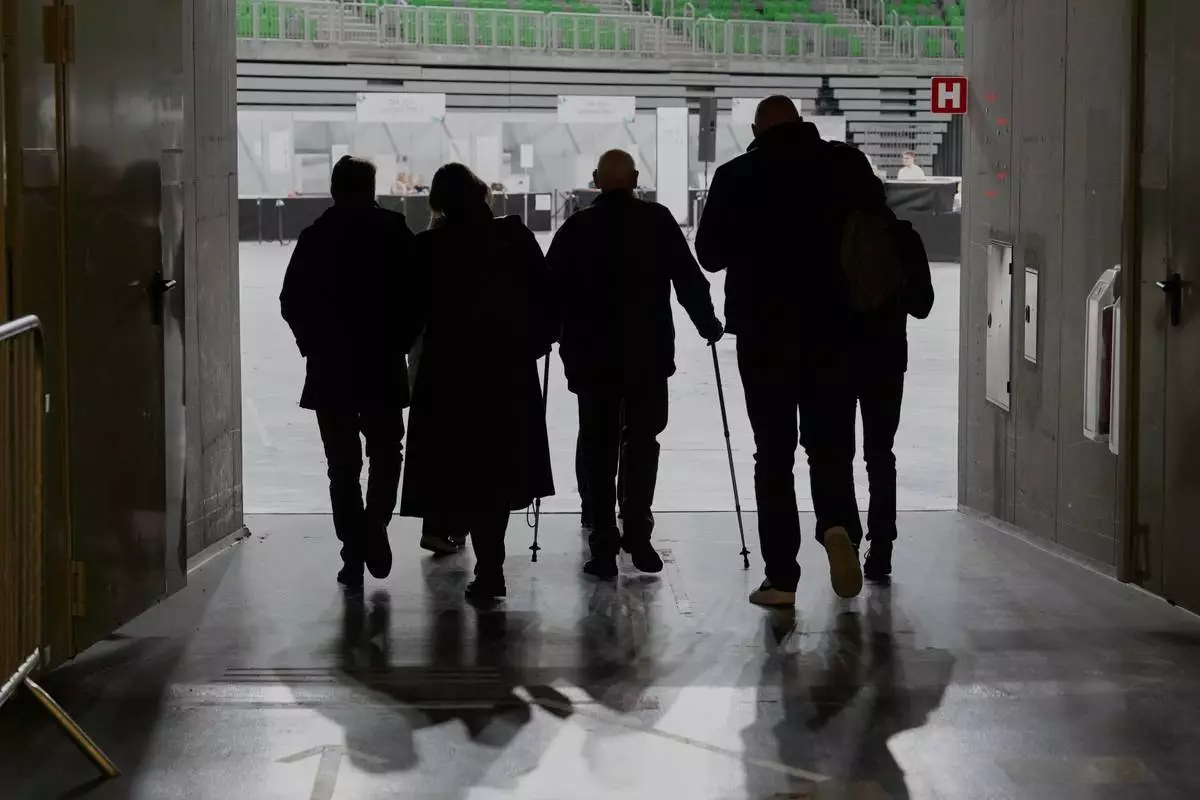
Voters arrive to a sports hall turned polling station for early vote in Ljubljana, Slovenia, Wednesday, March 18, 2026. (AP Photo/Darko Bandic)

Voters arrive to a sports hall turned polling station for early vote in Ljubljana, Slovenia, Wednesday, March 18, 2026. (AP Photo/Darko Bandic)

Recommended Articles