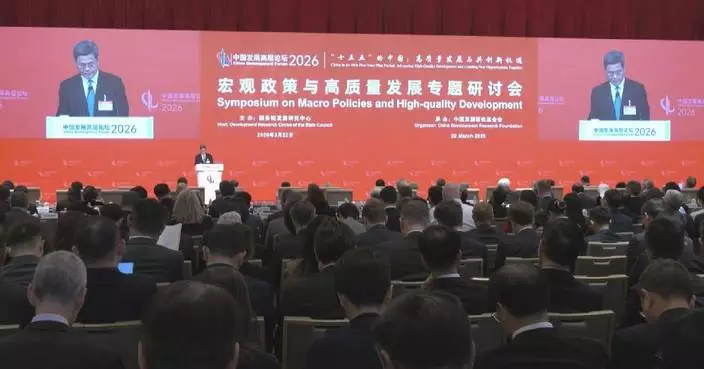
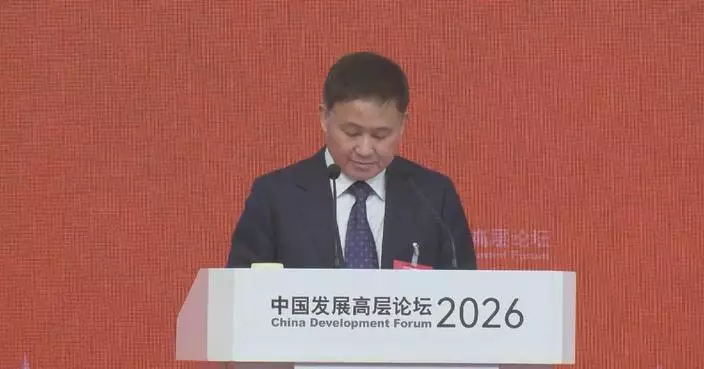
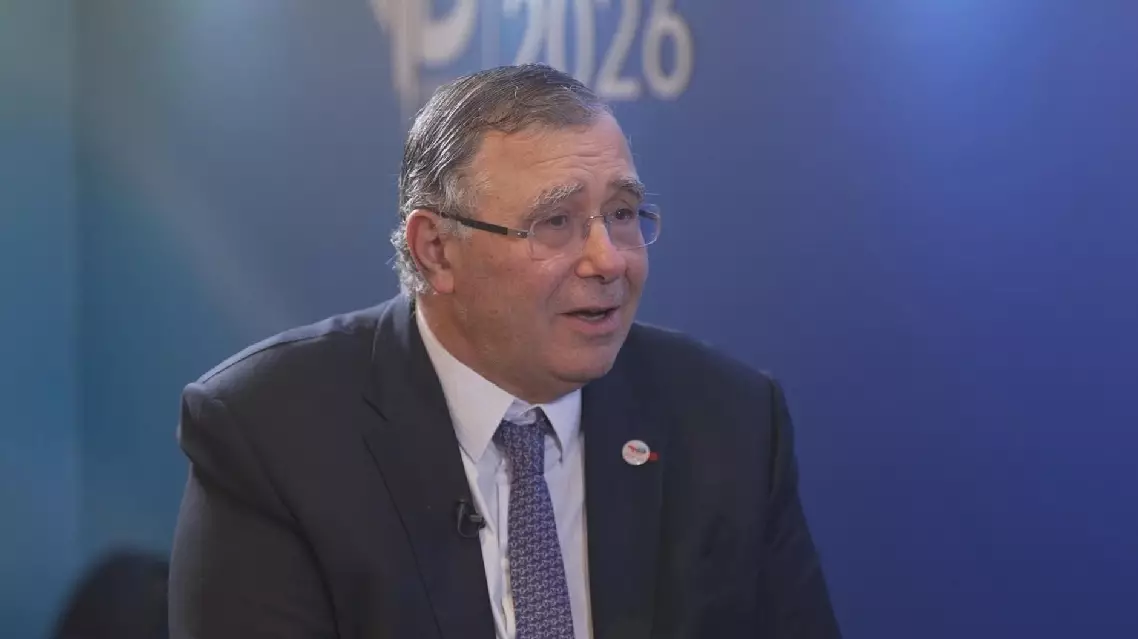
Global oil supplies face mounting strain due to developments in the Strait of Hormuz, a risk that could batter the world economy if the conflict drags on, TotalEnergies CEO Patrick Pouyanne warned at the China Development Forum in Beijing.
The bottleneck follows joint U.S.-Israeli strikes on Iran on Feb. 28 and retaliatory attacks across the Middle East, which have disrupted shipping through Hormuz, a chokepoint for one-fifth of the world's oil.
Speaking on the scale of the disruption, Pouyanne noted that limited alternatives exist to move crude out of the Gulf.
"You have some few pipelines, one crossing Saudi Arabia, one going south of United Arab Emirates. What is stuck today, you have 10 million barrel of oil per day which cannot exit the Arab Gulf. We cannot find the oil elsewhere in the planet because we are producing full speed everywhere. If this conflict lasts three, 4four months, we can swallow it. Today we manage to amortize this shock. Because we have inventories and we still have not tapped into inventories. So again, it's clearly a matter of how long we stay. If it is more than six months, we'll have some real impacts. All the economies of the world will be damaged. I hope we find solutions quickly for this war," said the energy executive.
Oil prices climbed on Friday, with Brent crude for May delivery rising 3.54 U.S. dollars to 112.19 a barrel and West Texas Intermediate for April delivery adding 2.18 U.S. dollars to 98.32, extending a surge of about 50 percent since U.S. and Israeli strikes on Iran began.
Facing what it called the largest supply shock in oil market history, the International Energy Agency (IEA) on March 16 ordered the immediate release of emergency reserves from member countries in Asia and Oceania, launching its biggest collective action to date to steady global trade flows.
Gulf oil shock could hit global growth if Iran conflict drags on: TotalEnergies CEO
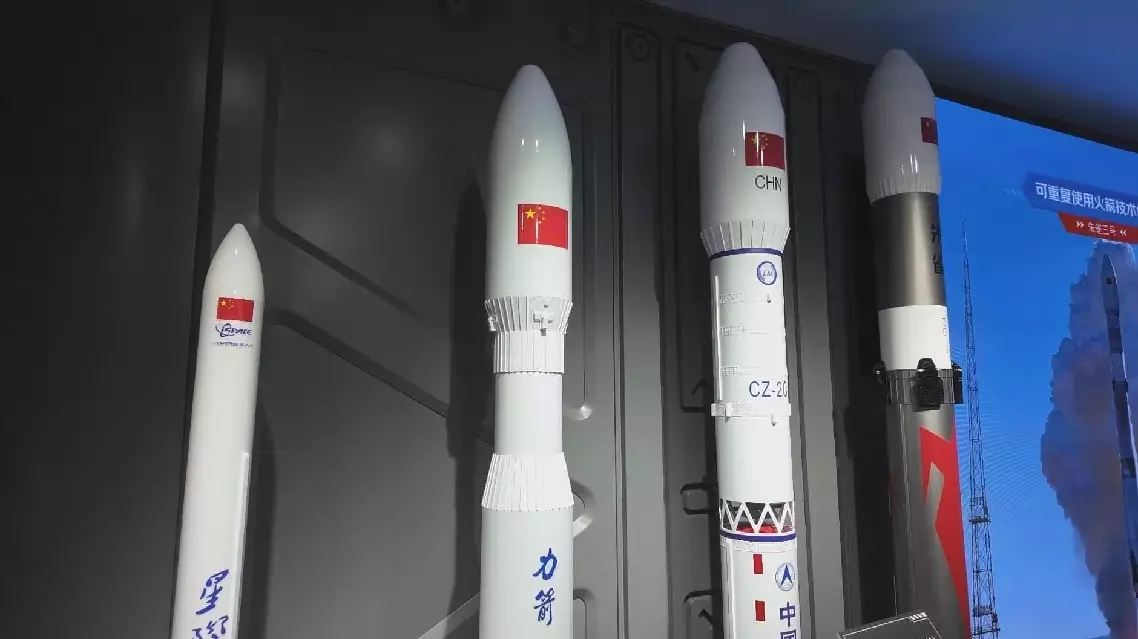
Beijing's "rocket street" project is evolving into a national-level scientific research and production hub, helping to support China's commercial space development.
The project is located in Beijing E-Town, an economic and technological development area in the southeast of the capital city, with a total floor space of 140,000 square meters, roughly the size of 20 football fields. The complex features a common technological platform, a high-end manufacturing center, and an innovation research and development hub as its core facilities.
Previously, it was the more established launch sites and their surrounding "space cities" that featured streets and roads that were totally space themed -- such as Wenchang's Road of Starlight and Jiuquan's Road to Space.
Beijing's "rocket street," which is really a complex dedicated to commercial space development, was only completed earlier this year. At the "rocket street," efforts to advance reusable rocket technology -- featuring cost-effectiveness, repeatability, flexibility, and ultimately global competitiveness -- is receiving major support, and several companies have announced their plans for 2026.
LandSpace has scheduled a recovery test for its Zhuque-3 reusable rocket in the second quarter of this year.
Galactic Energy plans to launch its first reusable liquid-fueled rocket, Pallas 1, in less than three months. It also aims to launch the more powerful, reusable Pallas 2, before the end of the year.
The "Rocket Street" itself also plans to break into new stratospheres in the coming years with reusable rockets.
"We aim to rank among the best in the world. We will promote 'airline-style' launches of large reusable rockets, fully reusable rockets, and fully reusable heavy-lift rockets. We will accelerate the development and mass production of new internet satellites, plan the building of new space infrastructure, and develop full-industrial-chain capabilities to launch 1,000 satellites," said Ma Zhao, Deputy Director of Beijing E-Town's Robotics, Intelligent Manufacturing Industry Bureau.
Galactic Energy is also working on the rocket's final stage -- an on-orbit service platform designed to perform multiple tasks, including cleaning up space by extending its "hands" and removing space debris.
The company believes now is the right moment to carry out these missions, relying on its own technical capabilities and supportive policies.
"In recent years, we have deeply felt the concerted support from policy, capital, and talent. Areas such as Beijing Economic-Technological Development Area have provided targeted support for core technology breakthroughs. Patient capital at both national and local levels has accelerated its convergence," said Wu Yue, Director of Public Relations at Galactic Energy.
China has included the commercial space sector among 109 major projects in the coming years, expecting the industry to become a key driver of new quality productive forces.
"Development opportunities for the commercial space industry are unprecedented, and there is no time to waste. During the 15th Five-Year Plan period, Beijing E-Town will support the commercial space industry cluster with 1,000 enterprises working together, 1,000 satellites in orbit, and over 100 billion yuan in revenue," said Ma.
Opened to private investment in 2015, the sector now comprises over 600 commercial space companies, with annual financing reaching more than 18 billion yuan (about 2.62 billion U.S. dollars) in 2025.
China's 15th Five-Year Plan, which outlines national economic and social development goals for the next five years, sets a goal of building the country into a "space power" by 2030, as well as identifies the aerospace industry as "an emerging pillar." Against this backdrop, commercial space launches are taking on growing importance.
Beijing's "rocket street" project advances commercial space development