The recent epic historical television series "Swords Into Plowshares," which underscores the enduring conviction of the Chinese nation to oppose division and strive for peace and unity, has attracted widespread viewership and discussion among Chinese living worldwide.
The series -- whose Chinese title literally translates as "Peaceful Years" -- is set during the tumultuous Five Dynasties and Ten Kingdoms period (907-979). At the heart of the story is the King of Wuyue, whose peaceful surrender to the Song Dynasty (960-1279) was a pivotal act that helped reunify China at that time.
"The recent unrest in different parts of the world, including the conflicts in the Middle East, makes us all long for peace even more. By watching this drama, we can learn and draw from the statecraft wisdom of our ancestors and our eastern traditions," said Da Hongjuan, a Chinese in Thailand.
"Through this drama, we see not only history, but also the value of the times. More importantly, we see a sense of cultural confidence and patriotic sentiment, and it reminds me how important peace and national unity are to ordinary people," said Zhang Yansong, an overseas Chinese in Japan.
Many viewers said the message conveyed in the drama, that leaders should think of the common people and ensure a peaceful life for them, is profoundly touching.
"This drama is not just about a piece of history. It speaks to the deepest hopes of ordinary people. In troubled times, what matters most is not power or political victory, but that everyone can live and work in peace," said Yang Shengfu, a Chinese in Myanmar.
The drama has also become popular in Taiwan as both its storyline and the historical context become hotspot topics.
"Watching Swords Into Plowshares, we see their actions, the hardships they endured during wartime, their pursuit of peace, and the sacrifices they made for it. We all feel a deep connection to these things. Therefore, I believe that within the same cultural framework, it's very easy for people to reach a consensus and be tolerant of each other. I think peace is absolutely the shared aspiration of people on both sides of the Taiwan Strait," said Duan Hsinyee (transliteration), secretary general of the Chinese Language Education Promotion Association in Taiwan.
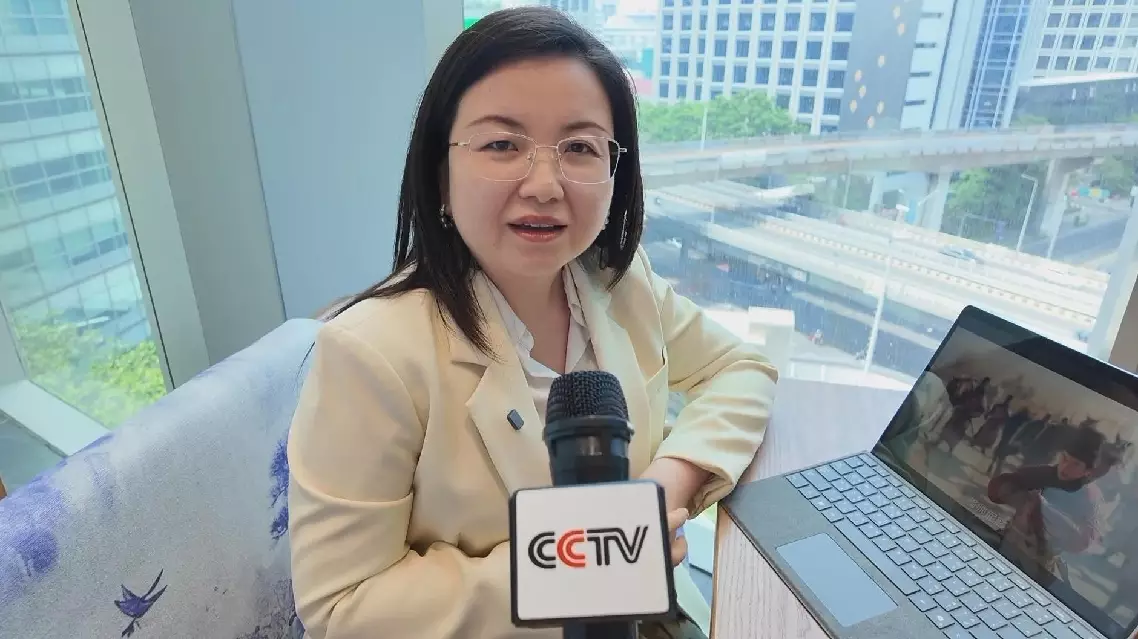
China's popular historical drama shows shared aspiration for peace
Beijing's "rocket street" project is evolving into a national-level scientific research and production hub, helping to support China's commercial space development.
The project is located in Beijing E-Town, an economic and technological development area in the southeast of the capital city, with a total floor space of 140,000 square meters, roughly the size of 20 football fields. The complex features a common technological platform, a high-end manufacturing center, and an innovation research and development hub as its core facilities.
Previously, it was the more established launch sites and their surrounding "space cities" that featured streets and roads that were totally space themed -- such as Wenchang's Road of Starlight and Jiuquan's Road to Space.
Beijing's "rocket street," which is really a complex dedicated to commercial space development, was only completed earlier this year. At the "rocket street," efforts to advance reusable rocket technology -- featuring cost-effectiveness, repeatability, flexibility, and ultimately global competitiveness -- is receiving major support, and several companies have announced their plans for 2026.
LandSpace has scheduled a recovery test for its Zhuque-3 reusable rocket in the second quarter of this year.
Galactic Energy plans to launch its first reusable liquid-fueled rocket, Pallas 1, in less than three months. It also aims to launch the more powerful, reusable Pallas 2, before the end of the year.
The "Rocket Street" itself also plans to break into new stratospheres in the coming years with reusable rockets.
"We aim to rank among the best in the world. We will promote 'airline-style' launches of large reusable rockets, fully reusable rockets, and fully reusable heavy-lift rockets. We will accelerate the development and mass production of new internet satellites, plan the building of new space infrastructure, and develop full-industrial-chain capabilities to launch 1,000 satellites," said Ma Zhao, Deputy Director of Beijing E-Town's Robotics, Intelligent Manufacturing Industry Bureau.
Galactic Energy is also working on the rocket's final stage -- an on-orbit service platform designed to perform multiple tasks, including cleaning up space by extending its "hands" and removing space debris.
The company believes now is the right moment to carry out these missions, relying on its own technical capabilities and supportive policies.
"In recent years, we have deeply felt the concerted support from policy, capital, and talent. Areas such as Beijing Economic-Technological Development Area have provided targeted support for core technology breakthroughs. Patient capital at both national and local levels has accelerated its convergence," said Wu Yue, Director of Public Relations at Galactic Energy.
China has included the commercial space sector among 109 major projects in the coming years, expecting the industry to become a key driver of new quality productive forces.
"Development opportunities for the commercial space industry are unprecedented, and there is no time to waste. During the 15th Five-Year Plan period, Beijing E-Town will support the commercial space industry cluster with 1,000 enterprises working together, 1,000 satellites in orbit, and over 100 billion yuan in revenue," said Ma.
Opened to private investment in 2015, the sector now comprises over 600 commercial space companies, with annual financing reaching more than 18 billion yuan (about 2.62 billion U.S. dollars) in 2025.
China's 15th Five-Year Plan, which outlines national economic and social development goals for the next five years, sets a goal of building the country into a "space power" by 2030, as well as identifies the aerospace industry as "an emerging pillar." Against this backdrop, commercial space launches are taking on growing importance.
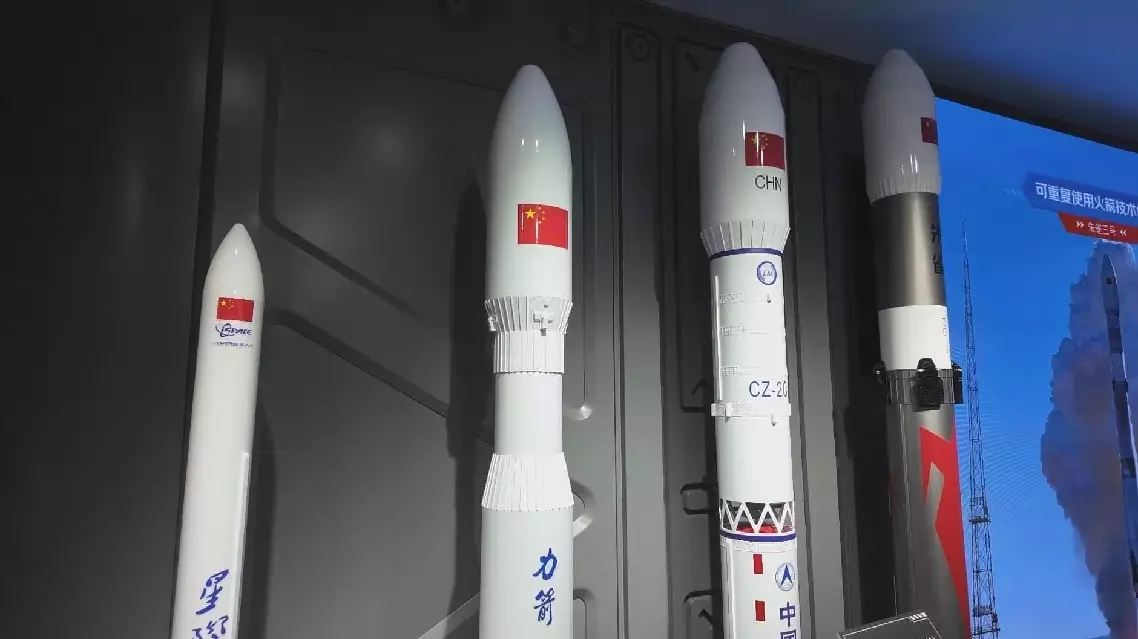
Beijing's "rocket street" project advances commercial space development