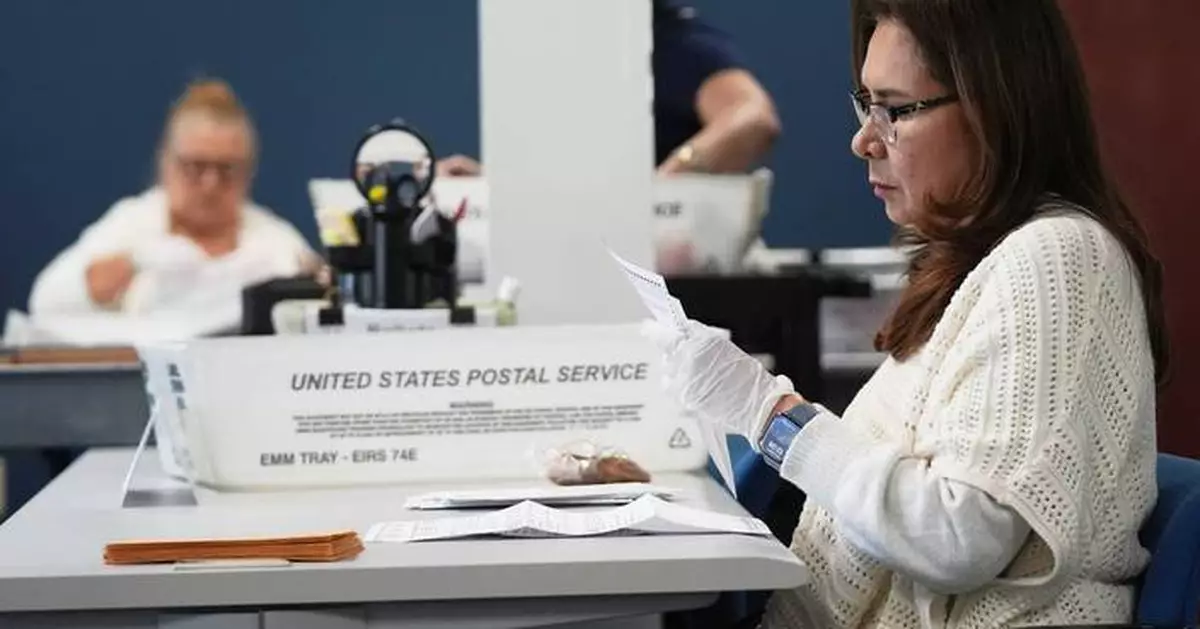
WASHINGTON (AP) — The Supreme Court is hearing arguments Monday in a case from Mississippi over whether states can count late-arriving mail ballots, a target of President Donald Trump.
The outcome of the case could affect voters in 14 states and the District of Columbia, which have grace periods for ballots cast by mail, provided they are postmarked by Election Day. An additional 15 states that have more forgiving deadlines for ballots from military and overseas voters also could be impacted.
A ruling is expected by late June, early enough to govern the counting of ballots in the 2026 midterm congressional elections.
Forcing states to change their practices just a few months before the election risks “confusion and disenfranchisement,” especially in places that have had relaxed deadlines for years, state and big-city election officials told the court in a written filing.
California, Texas, New York and Illinois are among the states with post-Election Day deadlines. Rural Alaska, with its vast distances and often unpredictable weather, also counts late-arriving ballots.
Lawyers for the Republican and Libertarian parties, as well as Trump's administration, are asking the justices to affirm an appellate ruling that struck down a Mississippi law allowing ballots to be counted if they arrive within five business days of the election and are postmarked by Election Day.
The court challenge is part of Trump’s broader attack on most mail balloting, which he has said breeds fraud despite strong evidence to the contrary and years of experience in numerous states.
Last year, the Republican president signed an executive order on elections that aims to require votes to be “cast and received” by Election Day. The order has been blocked in pending court challenges.
At the same time, four Republican-dominated states — Ohio, Kansas, North Dakota and Utah — eliminated grace periods last year, according to the National Conference of State Legislatures and Voting Rights Lab.
The issue at the Supreme Court is whether federal law sets a single Election Day that requires ballots to be both cast by voters and received by state officials.
In striking down Mississippi's grace period, Judge Andrew Oldham of the 5th U.S. Circuit Court of Appeals wrote that the state law allowing the late-arriving ballots to be counted violated federal law.
Oldham and the other two judges who joined the unanimous ruling, James Ho and Stuart Kyle Duncan, all were appointed by Trump during his first term.
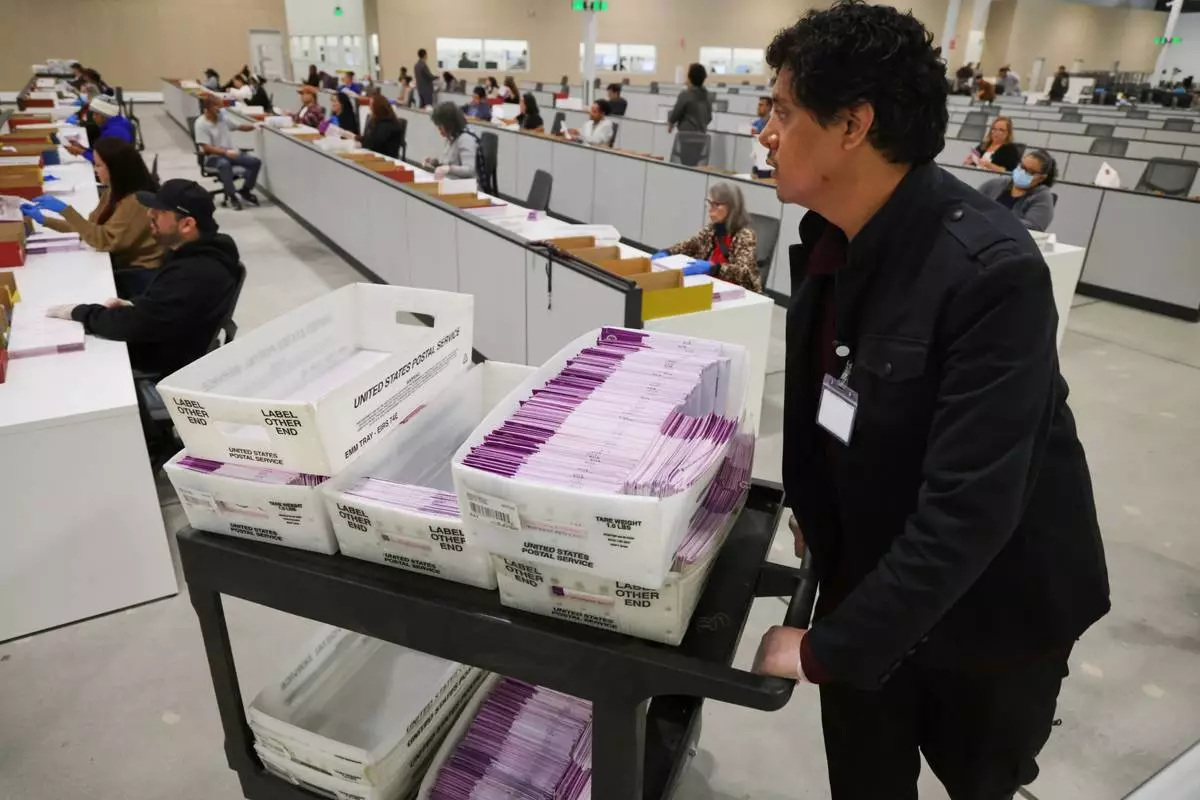
FILE - A worker pushes a cart of received mail ballots at the L.A. County Ballot Processing Center Nov. 4, 2025, in City of Industry, Calif. (AP Photo/Ethan Swope, File)
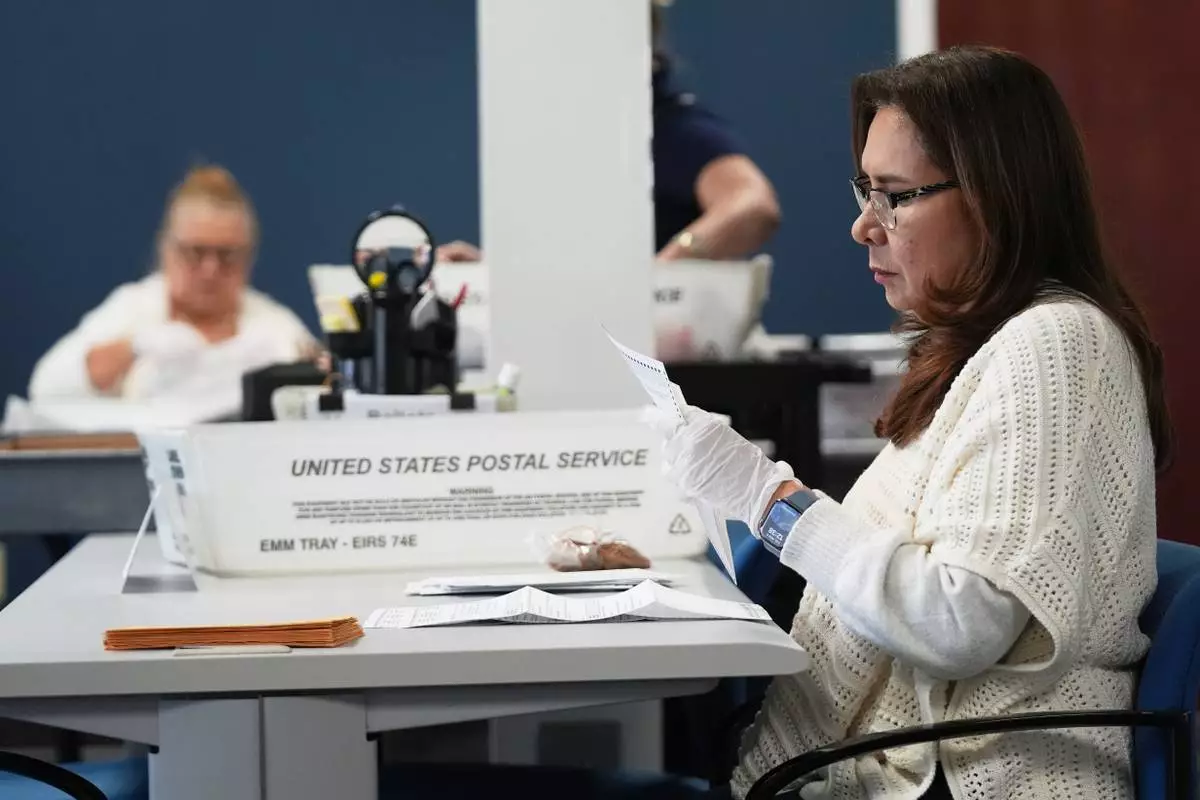
FILE - Employees sort vote-by-mail ballots from municipal elections on Election Day at the Miami-Dade County Supervisor of Elections Office, Nov. 4, 2025, in Doral, Fla. (AP Photo/Lynne Sladky, File)
WASHINGTON (AP) — Most Asian Americans, Native Hawaiians and Pacific Islanders believe President Donald Trump has done more harm than good on the issue of immigration and border security in his second term so far, according to a new AAPI Data/AP-NORC poll.
About 6 in 10 AAPI adults say Trump has hurt immigration and border security “a lot" or "a little," according to the survey from AAPI Data and The Associated Press-NORC Center for Public Affairs Research, compared with about 4 in 10 U.S. adults in a January AP-NORC survey. About two-thirds of AAPI adults — who are generally more likely to be Democrats than U.S. adults overall — also say Trump has “gone too far” when it comes to deporting immigrants living in the U.S. illegally, compared with about half of Americans in general.
Trump's administration has instituted sweeping immigration measures since he took office, but the past two months have been especially tumultuous. This past January, Trump suspended processing immigrant visas for citizens of 75 countries. Arrests at the U.S.-Mexico border have fallen dramatically, but the number of Immigration and Customs Enforcement arrests and detentions have soared. In December 2024, daily detentions averaged just under 40,000. Last month, they numbered about 70,000.
The survey was conducted on the heels of the January fatal shootings by ICE agents of two U.S. citizens and their detainment of a Hmong American man — clad only in his underwear — in freezing temperatures.
These immigration crackdowns hit close to home for Jeff Ugai, who lives in Hawaii. On his island, Kauai, nearly four dozen people were arrested in November in immigration raids.
“It seems like the current administration’s efforts have been more almost about cruelty than they have about actually establishing an immigration system that makes sense to this country,” said Ugai, 39, who is a Democrat.
AAPI adults, one of the fastest-growing demographics in the U.S., broadly don't support Trump's tough tactics on immigration, the poll found. A separate AAPI Data/AP-NORC survey last fall found that unhappiness about Trump's immigration approach had risen from earlier in the year.
“We’re also seeing opposition to policies that may not involve violence or violations of due process, but still involve things like banning immigrants from entire countries where there is a history of visa overstays or deporting immigrants who are married to U.S. citizens," said Karthick Ramakrishnan, founder and executive director of AAPI Data.
In this poll, around 4 in 10 AAPI adults say deporting immigrants living in the U.S. illegally should be a low priority for the U.S. government, an increase from about one-third just after Trump took office. About one-third of AAPI adults now say these deportations should be a moderate priority, and only about 2 in 10 say they should be a high priority.
Fran Peace, 75, of Oroville, California, still sees deporting immigrants here illegally as a high priority. But the Japanese American retiree disagrees with stopping people based on “stereotypes” like their looks or if they have an accent. She also is open to a citizenship path for those who've lived here for years and haven’t committed a crime.
“I don’t think you should just have to go back automatically, but the laws don’t say that," Peace said. “If you’re illegal you go back. But I think there should be some concession made for the people that have been here a long time.”
Most AAPI adults, 73%, have a “somewhat” or “very” unfavorable opinion of U.S. Immigration and Customs Enforcement, known as ICE.
AAPI Republicans have a much less negative view of the agency than AAPI adults overall, with only about one-third saying they view ICE negatively. But only about one-quarter of Republicans overall had an unfavorable opinion of ICE in a February AP-NORC survey.
There's also widespread opposition to several hardline immigration policies, with about 6 in 10 saying they oppose large-scale immigration enforcement operations in neighborhoods with high populations of immigrants, and about 7 in 10 against allowing immigration enforcement agents to cover their faces when arresting people.
Prohibiting face coverings would be like body cameras, “helping keep people accountable,” Ugai said.
The AAPI adult population is split on whether immigrants here illegally have a large impact on social welfare resources and crime. About 4 in 10 AAPI adults think immigrants in the U.S. illegally pose a “major risk” of burdening welfare and safety net programs. A similar share see this as “a minor risk.” Only about one-quarter see “not a risk at all.”
On the question of whether immigrants here illegally will commit crimes, about one-third of AAPI adults see this as a “major risk,” while about half think it's a "minor risk.” Only 15% say it's “not a risk at all."
Peace credits Trump with driving down crime like drug trafficking because before his second term, the U.S. “practically had open borders."
But Daniel Kim, 65, of Las Cruces, New Mexico, thinks that immigrants pose little risk in terms of crime.
A Democrat and Korean American, he previously volunteered at a church to assist refugees with food and donations. He stopped going to his own evangelical church over church leaders' insistence on remaining apolitical.
“The church leadership just could not make the connection or could not find it in their hearts to think (about) the issues involved with the treatment of foreigners in our country," Kim said.
The poll of 1,197 U.S. adults who are Asian American, Native Hawaiian and Pacific Islanders was conducted Feb. 2-9, 2026, using a sample drawn from NORC’s probability-based Amplify AAPI Panel, designed to be representative of the Asian American, Native Hawaiian and Pacific Islander population. The margin of sampling error for all respondents is plus or minus 4.6 percentage points.
This poll is part of an ongoing project exploring the views of Asian Americans, Native Hawaiians and Pacific Islanders, which are usually not highlighted in other surveys because of small sample sizes and lack of linguistic representation.
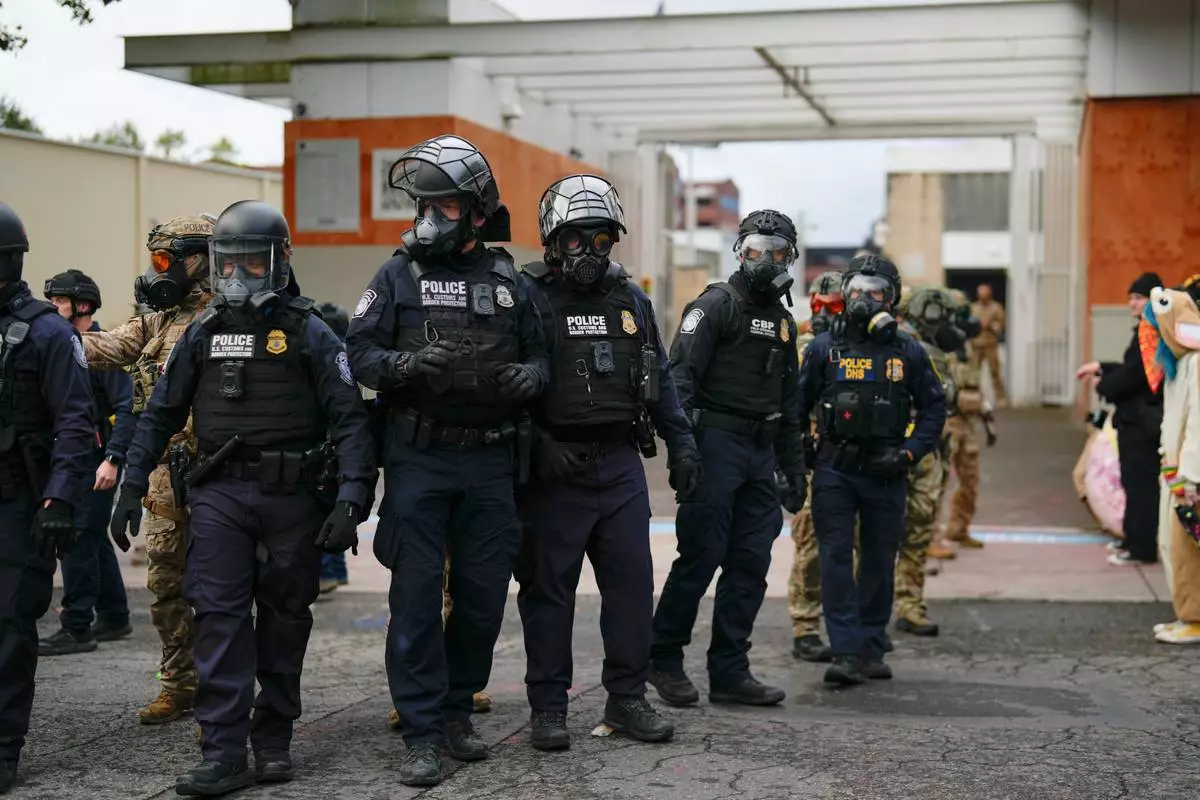
FILE - Law enforcement officers walk out of a U.S. Immigration and Customs Enforcement facility, Oct. 11, 2025, in Portland, Ore. (AP Photo/Jenny Kane, File)
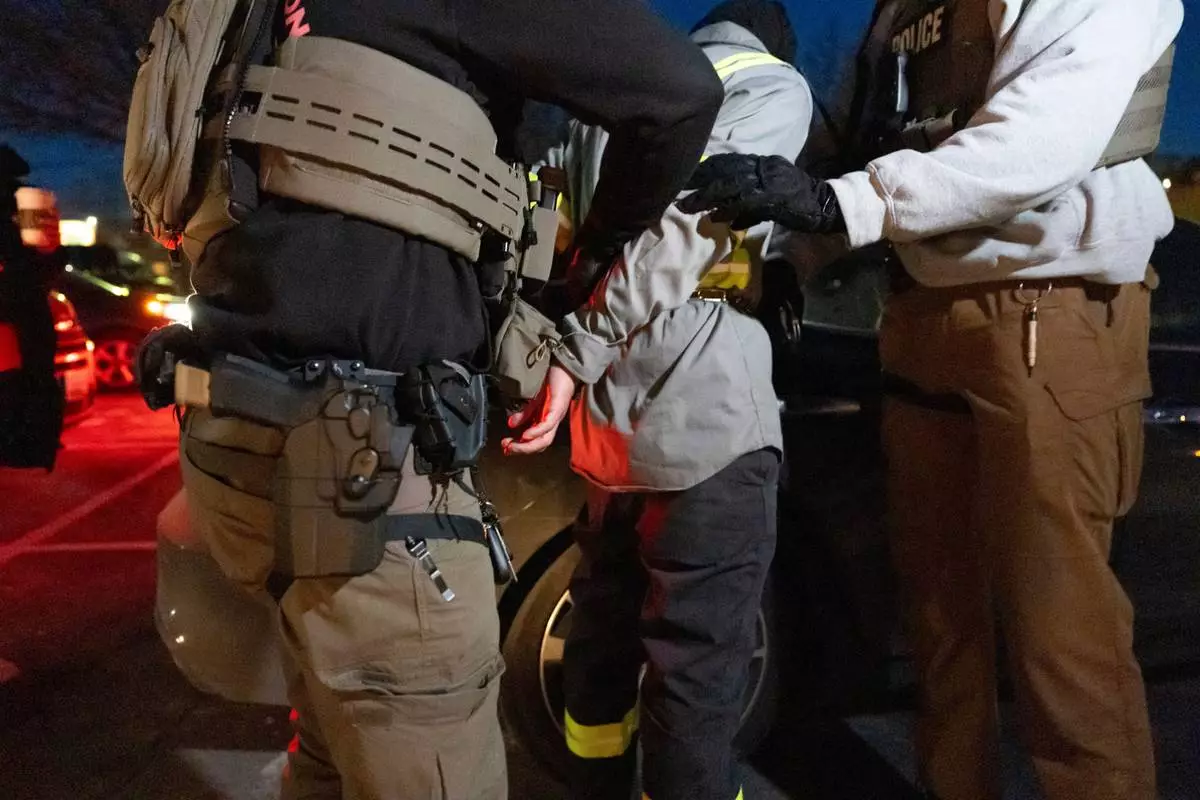
FILE - U.S. Immigration and Customs Enforcement officers detain a person, Jan. 27, 2025, in Silver Spring, Md. (AP Photo/Alex Brandon, File)