SCHAUMBURG, Ill.--(BUSINESS WIRE)--Mar 23, 2026--
AI technology is being adopted rapidly within many workplaces, but organizations are not necessarily keeping up with the governance and security measures needed to protect themselves from its risks, according to an advance look at select findings from ISACA’s 2026 AI Pulse Poll, which examines the latest trends related to AI use, policies and standards, workforce impact, incident response security, and more.
This press release features multimedia. View the full release here: https://www.businesswire.com/news/home/20260323090694/en/
The global pulse poll, which gathered responses from more than 3,400 digital trust professionals, finds that amidst increasing AI utilization at enterprises, there appears to be limited human oversight over AI decision-making, little disclosure around AI use, and uncertainty around AI security incident response and accountability for AI system harm.
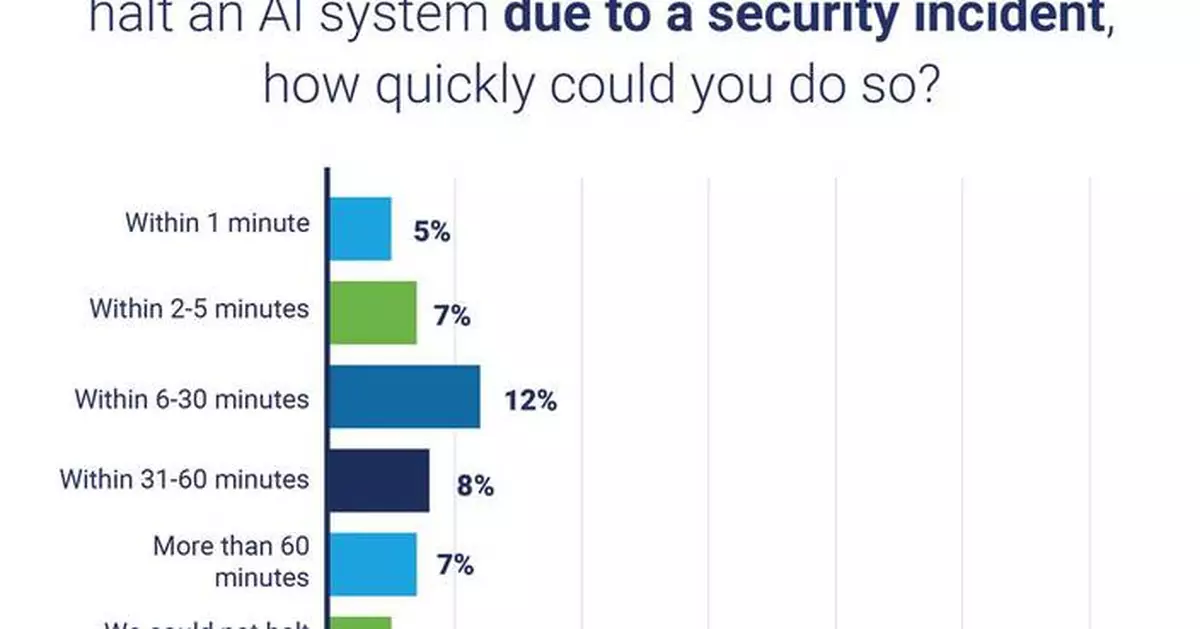
More than half of respondents (56 percent) indicate they do not know how quickly they could immediately halt an AI system due to a security incident if needed. Thirty-two percent believe they could halt it within 60 minutes, and 7 percent say it would take them more than 60 minutes.
Additionally, less than half of respondents (43 percent) have high confidence in their organization’s ability to investigate and explain to leadership or regulators if a serious incident with an AI system occurred, while 27 percent express low to no confidence.
“While organizations may feel the push to adopt AI technology quickly to keep pace and leverage its capabilities, it is imperative they have the proper guardrails and governance in place before doing so,” said Jenai Marinkovic, vCISO/CTO, Tiro Security, co-founder and board chair of GRCIE, and ISACA Emerging Trends Working Group member. “Enterprises need to ensure the right people, policies, processes, and plans are in place to be able to not only use AI effectively and responsibility, but also to avoid potential major disruption if crisis hits.”
And when it comes to who is ultimately responsible if an AI system causes harm or serious error in their organization, respondents largely point to their board/executives (28 percent). Eighteen percent believe that their CIO/CTO would be responsible, 13 percent assign the responsibility to their CISO, and 20 percent admit that they do not know where the responsibility would lie.
Much of the AI-generated actions taking place at organizations appear to happen without human oversight, with only 36 percent of respondents saying humans approve most AI-generated actions before execution, and 26 percent noting that humans review selected decisions or patterns after execution. Eleven percent say humans intervene only when alerted to potential issues, and 20 percent admit they do not know how humans oversee AI decision-making at their organization.
Also, only 18 percent of poll respondents indicate that disclosure is required and enforced if AI has been used to create or substantially assist with work products, while 20 percent say that disclosure is required but not consistently enforced. Nearly a third (32 percent) note that no disclosure requirements exist.
To meet the needs of digital trust professionals seeking the training, knowledge and best practices to keep pace in the age of AI, ISACA has recently released a range of AI courses and resources, as well as three new credentials: Advanced in AI Audit (AAIA),Advanced in AI Security Management (AAISM), and the upcoming Advanced in AI Risk (AAIR).
The full 2026 AI Pulse Poll from ISACA will be released in May 2026. Learn more about these findings in this blog post. For more AI resources, visit www.isaca.org/resources/artificial-intelligence, or learn more at ISACA booth S-2167 at RSAC Conference 2026, or during Marinkovic’s RSAC session, “From Promise to Practice: How AI Is Reshaping Cybersecurity,” on Thursday, 26 March at 9:40 am PT.
About ISACA
For more than 55 years, ISACA ® ( www.isaca.org ) has empowered its community of 195,000+ members, more than 230 chapters worldwide, in more than 190 countires with the knowledge, credentials, training and network they need to thrive in fields like information security, governance, assurance, risk management, data privacy and emerging tech. . Through the ISACA Foundation, ISACA also expands IT and education career pathways, fostering opportunities to grow the next generation of technology professionals.
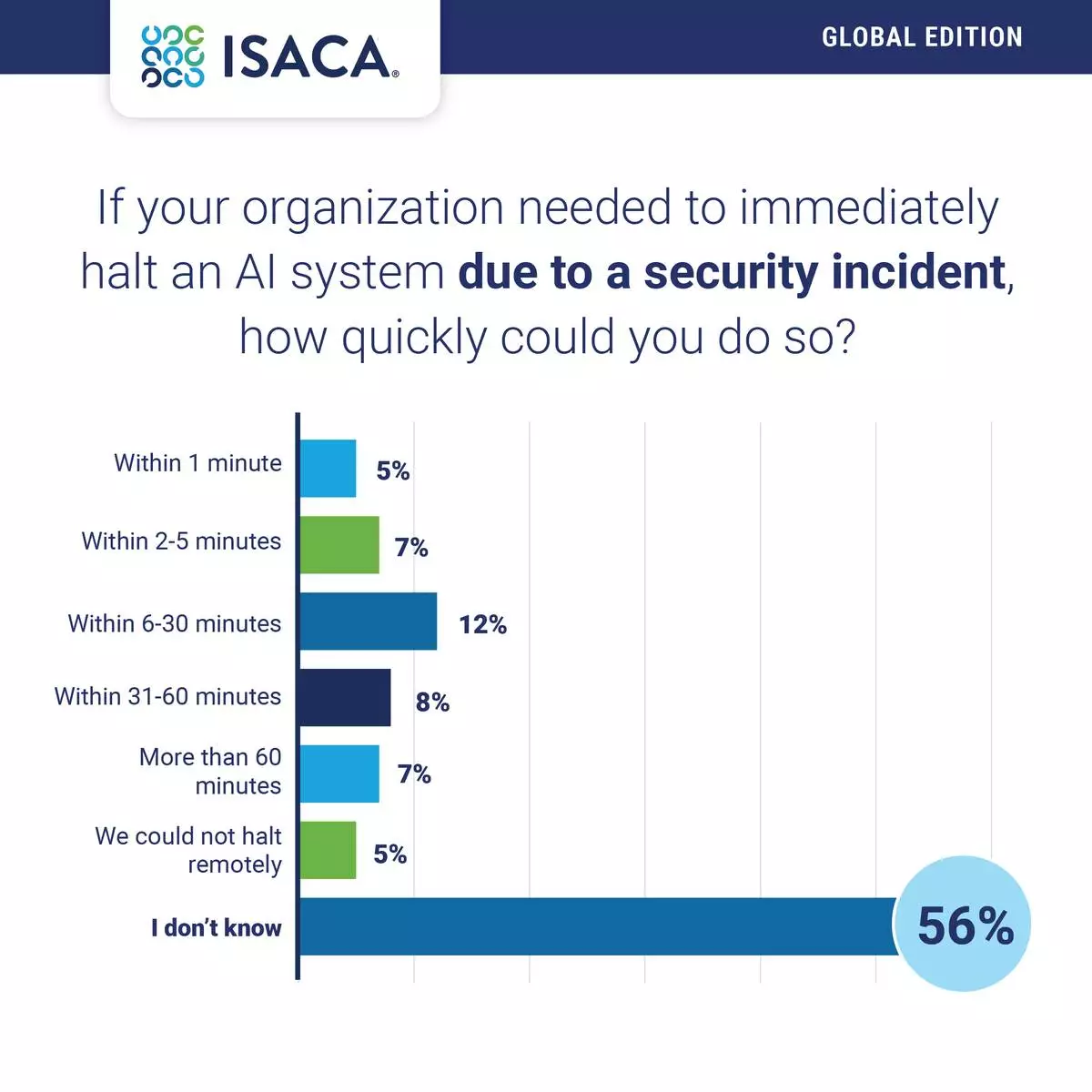
Select advance results from ISACA’s 2026 AI Pulse Poll, which gathered responses from more than 3,400 digital trust professionals, find that amidst increasing AI utilization at enterprises, there appears to be limited human oversight over AI decision-making, little disclosure around AI use, and uncertainty around AI security incident response and accountability for AI system harm.
DUBAI, United Arab Emirates (AP) — Iran warned Monday that it would strike electricity plants across the Middle East and mine the Persian Gulf after U.S. President Donald Trump threatened to bomb power stations in the Islamic Republic if it did not reopen the crucial Strait of Hormuz to international shipping.
The war, now in its fourth week, has already seen several dramatic turning points — the killing of Iran’s supreme leader, the bombing of a key Iranian gas field, and strikes targeting oil and gas facilities and other civilian infrastructure in Gulf Arab nations. The conflict has killed more than 2,000 people, shaken the global economy, sent oil prices surging, and endangered some of the world’s busiest air corridors.
Trump’s ultimatum and Iran’s promise of retaliation now threaten to raise the stakes yet again, with potentially catastrophic repercussions for civilians across the region.
If carried out, the attacks could cut electricity to wide swaths of people in Iran and around the Gulf and knock out desalination plants that provide many desert nations with drinking water. There are also increasing concerns about the consequences any of strikes on nuclear facilities.
Even if the attacks are not carried out, the fever pitch of the rhetoric shows how the war has spiraled to a point unimaginable at the start of the conflict on Feb. 28, when the United States and Israel began bombing Iran.
Trump said the U.S. would “obliterate” Iran’s power plants unless the country releases its stranglehold on the Strait of Hormuz within 48 hours — a deadline that expires late Monday Washington time.
Iran has shut the strait, through which a fifth of the world’s oil is shipped along with other important commodities, in response to U.S. and Israeli strikes. A trickle of ships has gotten through, and Iran insists the crucial waterway remains open — just not to the U.S., Israel or their allies.
The chokehold has wreaked havoc on energy markets, pushed up the prices on food and other goods well beyond the Middle East and sent shock waves throughout the global economy.
“No country will be immune to the effects of this crisis if it continues to go in this direction,” said Fatih Birol, the head of the Paris-based International Energy Agency.
Iran’s paramilitary Revolutionary Guard promised retaliation if Trump made good on his threat, saying Iran it would hit power plants in all areas that supply electricity to American bases, “as well as the economic, industrial and energy infrastructures in which Americans have shares.”
Iranian parliament speaker Mohammad Bagher Qalibaf said Iran would consider vital infrastructure across the region to be legitimate targets, including energy and desalination facilities critical for drinking water in Gulf nations.
Iran's semiofficial Fars news agency, which is close to the Revolutionary Guard, published a list of such facilities, including the United Arab Emirates’ nuclear power plant. Over the weekend, Iran launched missiles targeting Dimona in Israel, near a facility key to its long-suspected atomic weapons program. The Israeli facility wasn’t damaged.
United States Central Command chief Adm. Brad Cooper, meanwhile, claimed in an interview that Iran was launching missiles and drones from populated areas, and suggested those areas would be targeted.
“You need to stay inside for right now,” Cooper told Iranian civilians in the interview with the Farsi-language satellite network Iran International that aired early Monday.
In his first one-on-one interview since the war started, Cooper said the U.S. and Israel were targeting infrastructure and manufacturing facilities to destroy Iran’s capabilities to rebuild its military.
“It’s not just about the threat today,” he said. “We’re eliminating the threat of the future.”
Israel launched new attacks Monday on the Iranian capital, saying it had “begun a wide-scale wave of strikes” on infrastructure targets in Tehran without immediately elaborating. Explosions were heard in multiple locations in the afternoon. It wasn’t immediately clear what had been hit.
With the U.S. deploying more amphibious assault ships and additional Marines to the Middle East, Iran warned against any ground attack.
“Any attempt by the enemy to target Iran’s coasts or islands will, naturally and in accordance with established military practice, lead to the mining of all access routes ... in the Persian Gulf and along the coasts,” Iran’s Defense Council warned said in a statement.
The widespread use of mines could imperil not only military vessels but scores of commercial ships waiting to pass through the Strait of Hormuz, and a cleanup would last long after the conflict ends.
Trump has said he has no plans to send ground forces into Iran but also has said that he retains all options. Israel has suggested its ground forces could take part in the war.
Israel has also targeted the Iran-linked Hezbollah militant group in Lebanon during the war, while the group has fired hundreds of rockets into Israel.
In recent days, Israel has hit many apartment buildings in Beirut and bombed bridges over the Litani river in the Lebanon's south.
Lebanese President Joseph Aoun called the targeting of bridges “a prelude to a ground invasion,” while Egypt denounced the strikes as the "collective punishment” of civilians for the actions of Hezbollah.
Authorities say Israeli strikes have killed more than 1,000 people in Lebanon and displaced more than 1 million.
Iran’s death toll has surpassed 1,500, its Health Ministry has said. In Israel, 15 people have been killed by Iranian strikes. At least 13 U.S. military members have been killed, along with more than a dozen civilians in the occupied West Bank and Gulf Arab states.
Oil prices remained stubbornly high in early trading, with the price of Brent crude, the international standard, at around $113 a barrel, up some 55% since the war began.
Jorge Moreira da Silva, a senior United Nations official, said the world has already seen a ripple effect, including “exponential price hikes in oil, fuel and gas” that have had a far-reaching impact on millions, primarily in Asian and African developing countries.
“There is no military solution,” he said.
In another sign of the far-reaching effects, South Korean chemical giant LG Chem said Monday it had to shut down a major industrial plant because the war had disrupted supplies of naphtha, a petroleum product used in plastic manufacturing.
Rising reported from Bangkok and Magdy from Cairo. AP writers Charlotte Graham-McLay in Wellington, New Zealand, Sally Abou AlJoud and Bassem Mroue in Beirut, and Tong-hyung Kim in Seoul, South Korea, contributed to this report.
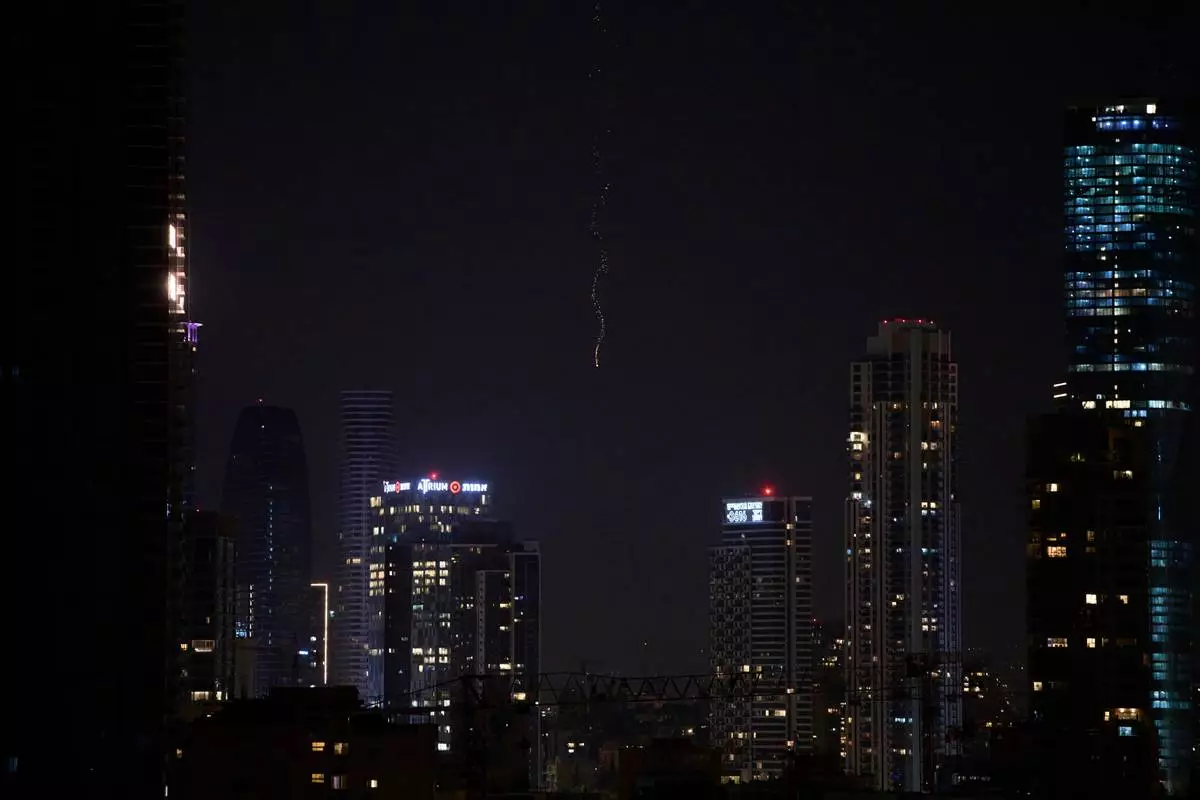
Missiles launched from Iran streak across the sky over central Israel, early Monday, March 23, 2026. (AP Photo/Ohad Zwigenberg)
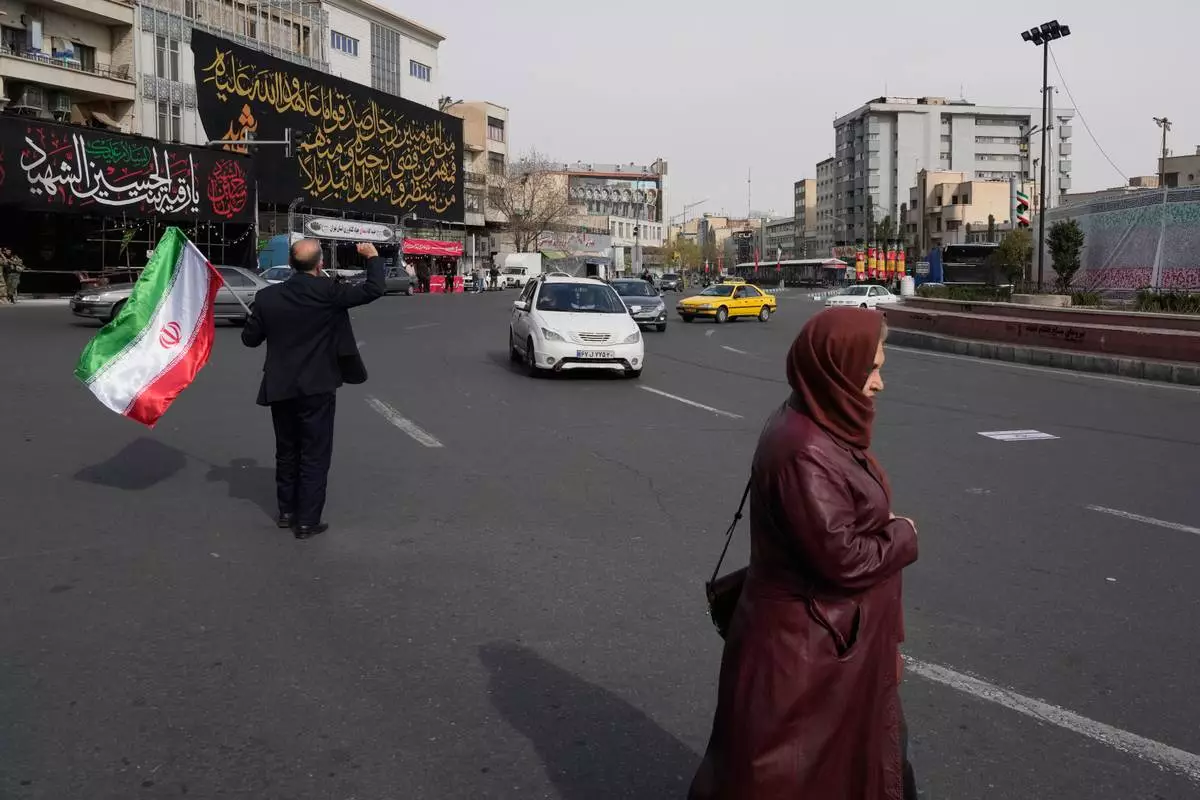
A man waves an Iranian flag during a campaign in support of the government as a woman and vehicles pass by at the Enqelab-e-Eslami, or Islamic Revolution, square in downtown Tehran, Iran, Sunday, March 22, 2026. (AP Photo/Vahid Salemi)
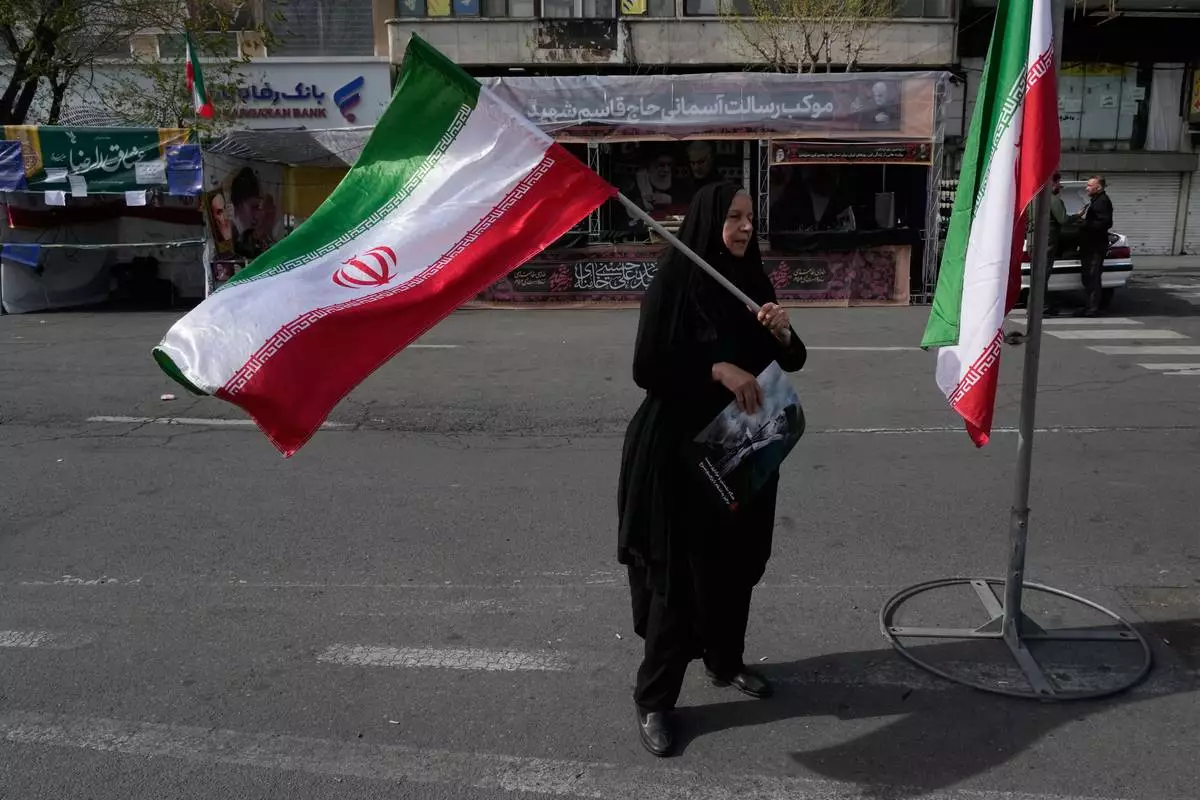
A woman waves an Iranian flag during a campaign in support of the government at the Enqelab-e-Eslami, or Islamic Revolution, square in downtown Tehran, Iran, Sunday, March 22, 2026. (AP Photo/Vahid Salemi)
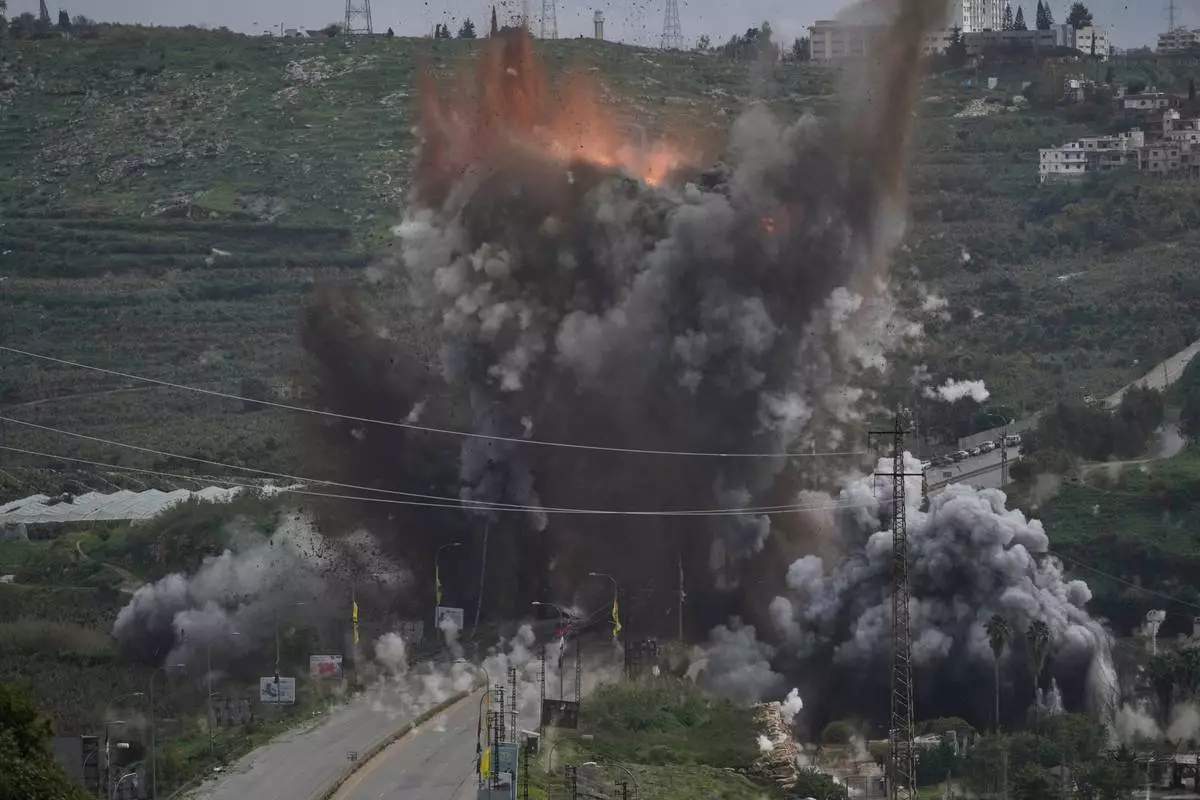
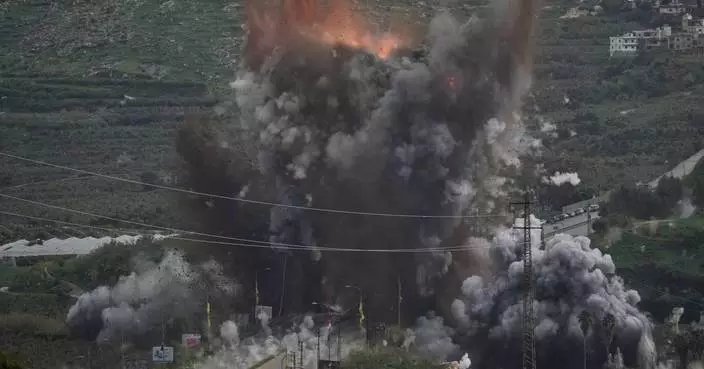
Smoke and flames rise from an Israeli airstrike that hit the Qasmiyeh Bridge near the coastal city of Tyre, Lebanon, Sunday, March 22, 2026. (AP Photo/Mohammad Zaatari)
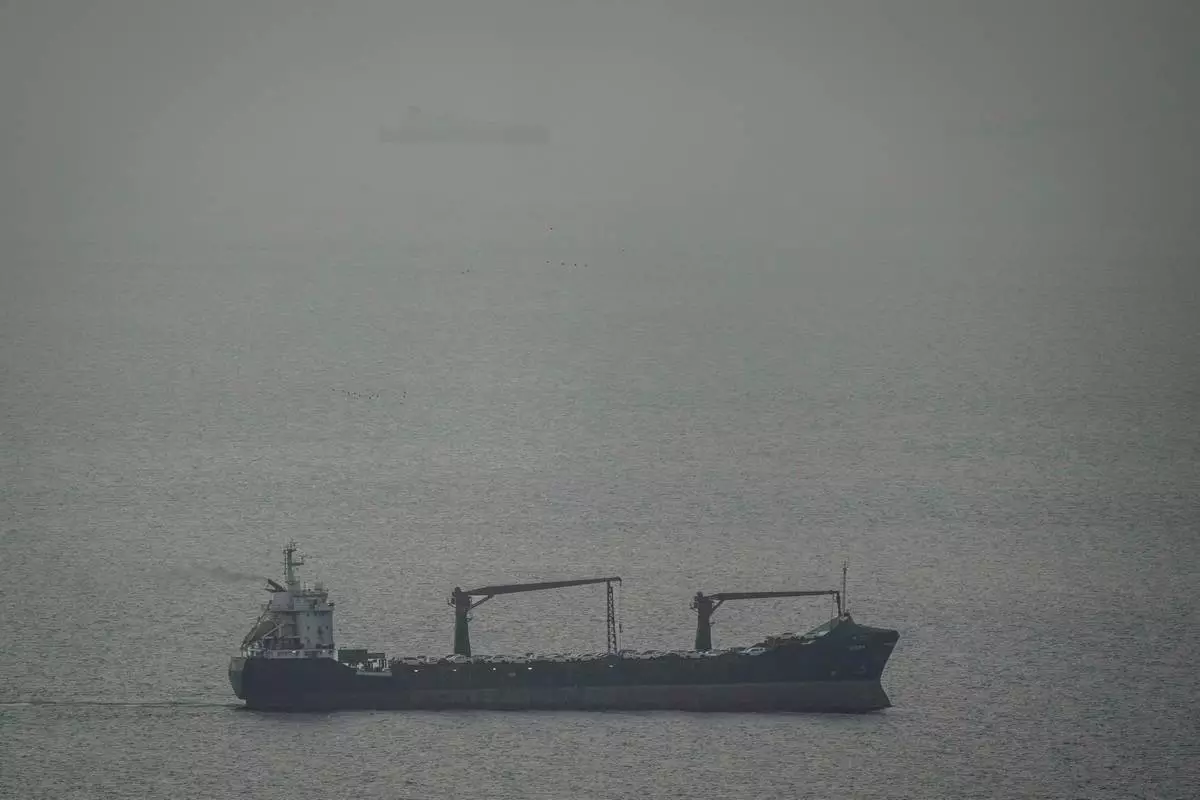
A cargo ship carrying vehicles sails through the Arabian Gulf toward the Strait of Hormuz in the United Arab Emirates, Sunday, March 22, 2026. (AP Photo)
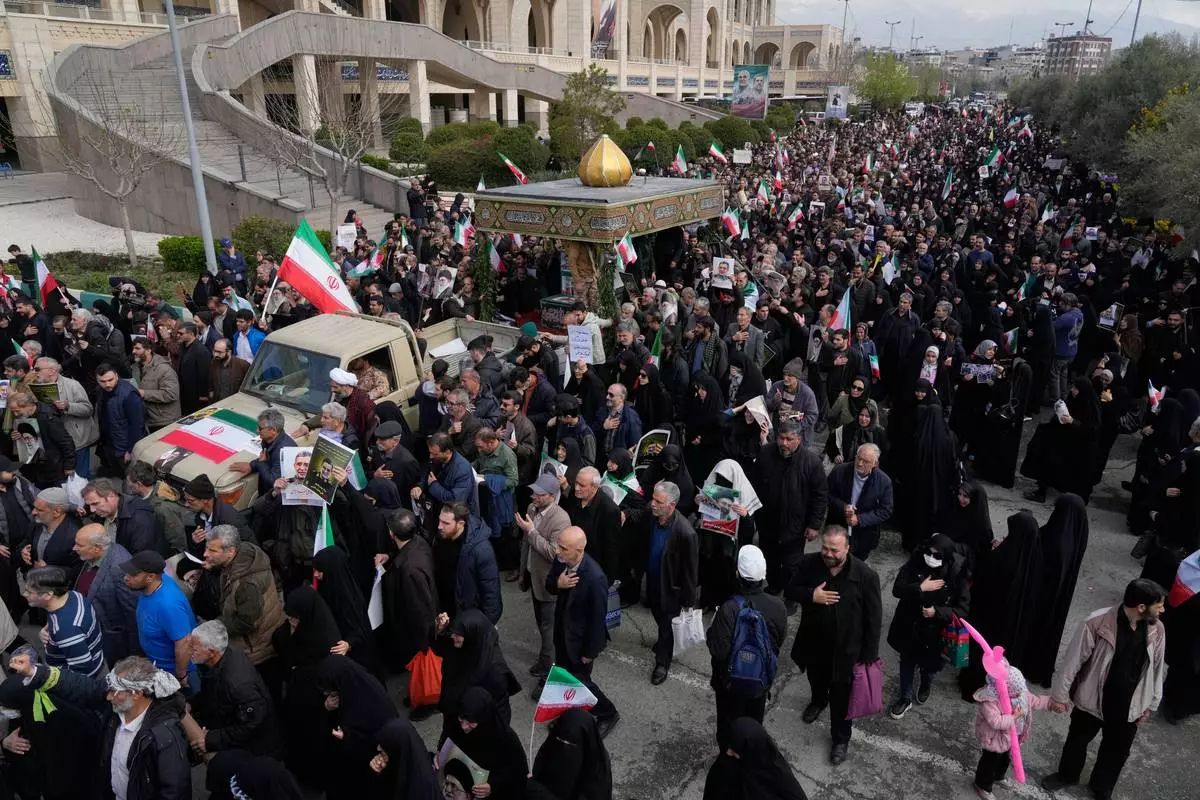
People follow a truck carrying the flag draped coffins of Gen. Ali Mohammad Naeini, a spokesperson for Iran’s paramilitary Revolutionary Guard and one of his comrades Amir Hossein Bidi , during their funeral procession in Tehran, Iran, Saturday, March 21, 2026. (AP Photo/Vahid Salemi)