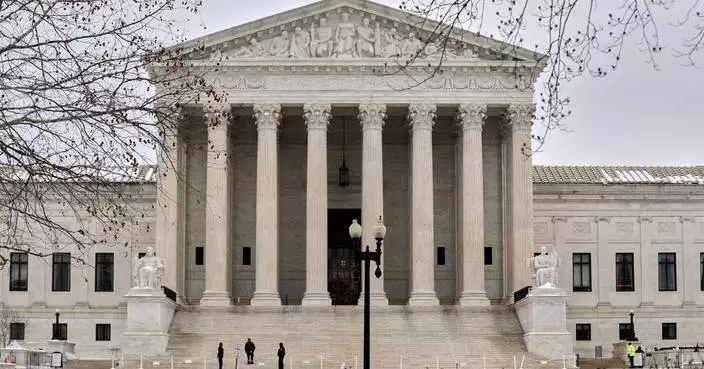
The U.S. Supreme Court is hearing arguments on Monday to decide whether states can continue to count late-arriving mail ballots — an election issue targeted by President Donald Trump.
All 50 states require ballots to be cast or postmarked on or before Election Day, but 14 states have grace periods for receiving and counting regular mailed ballots, ranging from a day to several weeks after the election.
A final ruling will almost certainly come by late June, early enough to govern the counting of ballots in the 2026 midterm congressional elections.
Here's the latest:
The arguments have opened with conservative justices asking questions about who a state can authorize to accept ballots.
The subtext here is the practice that conservatives have targeted known as “ballot harvesting.” In some states, non-governmental officials like families or even neighbors or nursing home administrators, can collect sealed ballots from voters. Conservatives are pushing back on Mississippi’s argument that the 1845 law passed by Congress setting a date for Election Day doesn’t open the door to further regulations of state elections.
Justice Samuel Alito cut to the chase when he asked Stewart: “So there are no limits?”
Republicans looking to interest the justices in taking up the issue could have sued in New York, Illinois or Washington, among other states with relaxed deadlines for receiving mailed ballots.
But they chose heavily Republican Mississippi to put the case in front of the 5th circuit, where a panel of three Trump appointees struck down the state law.
The Supreme Court is much more likely to intervene when a lower court has struck down a state law, reasoning that the nation’s highest court should have the final word on such things.
Solicitor General D. John Sauer, in his eighth Supreme Court argument, is urging the court to rule out late-arriving ballots, except for voters in the military and overseas.
Sauer’s biggest win to date was the presidential immunity decision that spared Trump from being tried for his effort to overturn the 2020 election. Paul Clement, who held Sauer’s job under George W. Bush, is arguing his eighth case this term among more than 125 arguments since 2001.
Both men were Supreme Court law clerks to Justice Antonin Scalia early in their legal careers. Mississippi Solicitor General Scott Stewart is defending the state law in his second Supreme Court argument. In his first appearance, Stewart persuaded the court to overturn the constitutional right to abortion in the landmark Dobbs case in 2022. Stewart was a law clerk for Thomas.
Three of the four states where mail-in voting gained in popularity in the 2024 presidential election voted for President Donald Trump.
A U.S. Election Assistance Commission study of data collected at the local level and submitted by states showed that voters from Indiana, South Dakota and Utah saw higher percentages of mail voting during Trump’s successful 2024 than 2020. Washington was the fourth state in the group.
Overall mail in balloting was more popular in 2024 than in pre-pandemic years with roughly 30% of voters using that method to vote while mail ballots typically accounted for about 25% of votes cast in pre-pandemic years. The 2020 election saw 43% of votes come through the mail.
Jesse Salinas, president of the California Association of Clerks and Election Officials, says his organization’s members are concerned that a potential ban on mail ballot grace periods could mean ballots of all kinds would be required to be counted by 11:59 p.m. on Election Day.
Large numbers of young voters use California’s same-day registration system to cast ballots that are typically counted after other tallies are completed.
“So all of those folks who will want to register and vote on Election Day, we just simply won’t have the ability to process all those” ballots before midnight, he said.
Alaska, more than twice the size of Texas, is dotted with small communities in far-flung places, many of them accessible only by air or water. Some political leaders and Native voting rights activists say the state’s 10-day grace period for absentee mail ballots is essential given the state’s unique geography and the limited postal service in rural areas.
In the 2022 general election, about 20% of all absentee ballots statewide were received after Election Day. The percentage was much higher for ballots from some of the state’s most rural communities.
The state’s senior U.S. senator, Republican Lisa Murkowski, says “there’s probably no other state where this ruling could have a more detrimental impact than ours.”
Alaska Native voting rights advocates and the state’s attorney general and solicitor general filed briefs with the Supreme Court to explain the importance of the state’s ballot grace period and the rationale behind it.

The downtown area of Alaska's capital, Juneau, a city accessible only by air or water and where ballots from elections are sent for tabulations and certification, is seen across Gastineau Channel from Douglas Island, Alaska, March 19, 2026. (AP Photo/Becky Bohrer)
NEW YORK (AP) — Relief is ripping through financial markets Monday after President Donald Trump said the United States has talked with Iran about a possible end to their war. Oil prices are easing, and stock prices are jumping on Wall Street following severe losses elsewhere in the world before Trump’s announcement.
The price for a barrel of Brent crude fell 10.5% to $100.37, down from nearly $120 last week, after Trump said on his social media network that the United States and Iran held productive talks the last two days “regarding a complete and total resolution of our hostilities in the Middle East.”
The S&P 500 leaped 1.9% toward its best day since well before the war began following the step down in tensions, even though Iran denied there were any negotiations.
Over the weekend, Trump had threatened to “obliterate” Iran’s power plants if it doesn’t open up the Strait of Hormuz within 48 hours. The strait has become a sore point for Trump because its near-closure by Iran has prevented oil tankers from leaving the Persian Gulf to supply customers around the world.
Trump said Monday that he is postponing attacks on Iranian power plants for five days to allow talks to continue. Still, caution remains, and the optimism in financial markets was measured. Shortly after Trump’s announcement — hours before his original deadline was set to expire — Iranian state television declared that the American leader had backed down “following Iran’s firm warning.” And a state-owned newspaper said Iran’s Foreign Ministry denied that any negotiations have taken place with the U.S.
The price of Brent crude fell as low as $96 immediately after Trump announced the postponement, but it quickly recovered a chunk of that loss. Benchmark U.S. crude had a similar reaction, immediately falling toward $84 per barrel before paring its loss and reaching $88.85.
Financial markets have had vicious swings, both up and down, since the war began because of uncertainty about how long it may last. The fear is that the war could keep so much oil and natural gas from the Persian Gulf off global markets that it sends a debilitating wave of inflation crashing through the global economy.
The frenetic swings of the past few weeks are similar, though not as dramatic, to those that hit last year when Trump shocked the global economy with his worldwide tariffs on “Liberation Day.” Many of those tariffs ended up being milder than originally threatened, and the back-and-forth in negotiations led to many jagged moves up and down.
Still, Monday's overriding reaction in financial markets was one of relief. The Dow Jones Industrial Average was up 910 points, or 2%, as of 10:15 a.m. Eastern time, and the Nasdaq composite was 2.2% higher.
In Europe, stock indexes immediately flipped from losses to gains following Trump’s announcement and then held onto them. France’s CAC 40 jumped 1.7%, and Germany’s DAX returned 2.2%.
That compares with sharp drops for Asian stock indexes, which finished trading before Trump made his announcement. South Korea’s Kospi careened 6.5% lower, Japan’s Nikkei 225 dropped 3.5% and Hong Kong’s Hang Seng fell 3.5%.
Treasury yields also eased in the bond market following Trump’s announcement. But like oil prices, they nevertheless remain well above where they were before the war began. The worry is that high oil prices could keep the Federal Reserve and other central banks from resuming their cuts to interest rates, which would give the global economy and prices for investments a boost.
The yield on the 10-year Treasury fell to 4.34% from 4.39% late Friday. But it remains solidly above its 3.97% level from just before the war.
On Wall Street, the rally was so widespread that nine out of every 10 stocks rose within the S&P 500.
At the head of the line were companies with big fuel bills that stand to benefit from any easing of oil prices. Norwegian Cruise Line Holdings surged 7.9%, while United Airlines climbed 4.5%, and American Airlines rose 4.9%. All, though, are still down for the year so far.
Stocks of smaller companies also led the market, and the Russell 2000 index of smaller stocks jumped a market-leading 3%. It had dropped last week to 10% below its record, a sharp enough drop that professional investors call it a “correction.”
AP Business Writers Yuri Kageyama, Matt Ott and Chan Ho-him contributed.
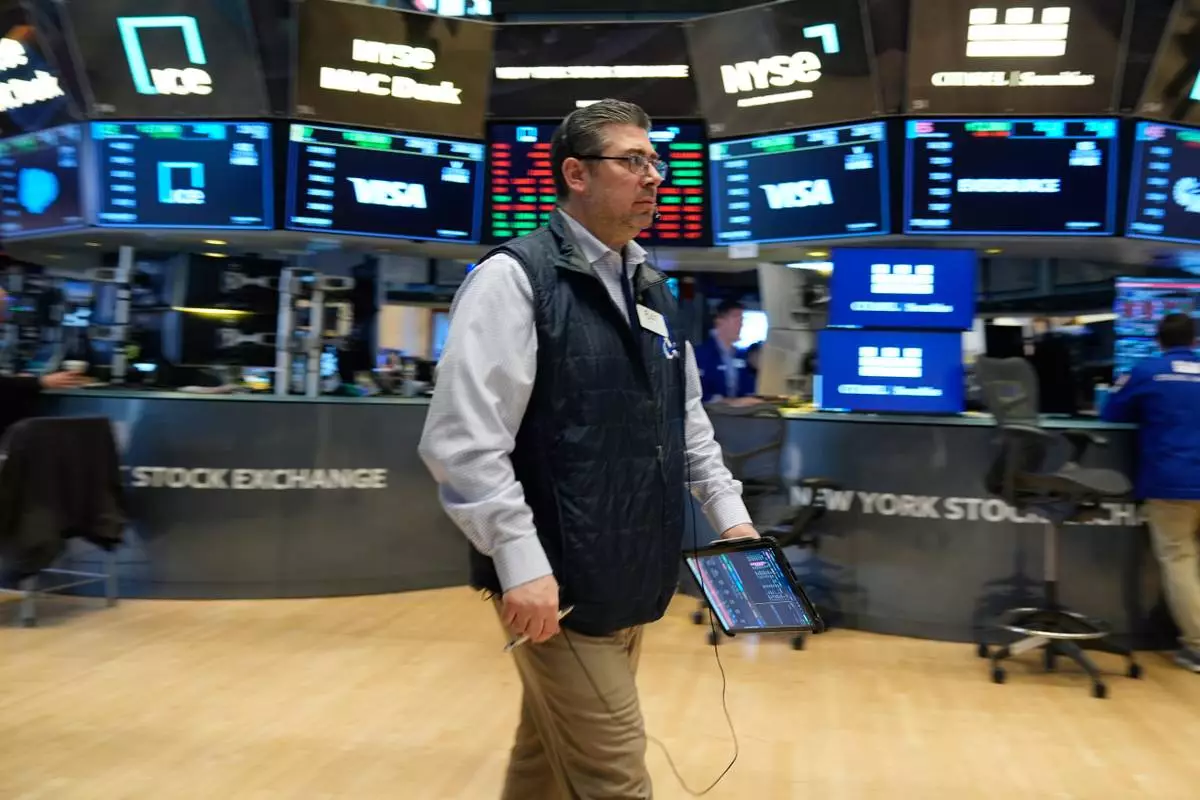
Michael Capolino works on the floor at the New York Stock Exchange in New York, Thursday, March 19, 2026. (AP Photo/Seth Wenig)
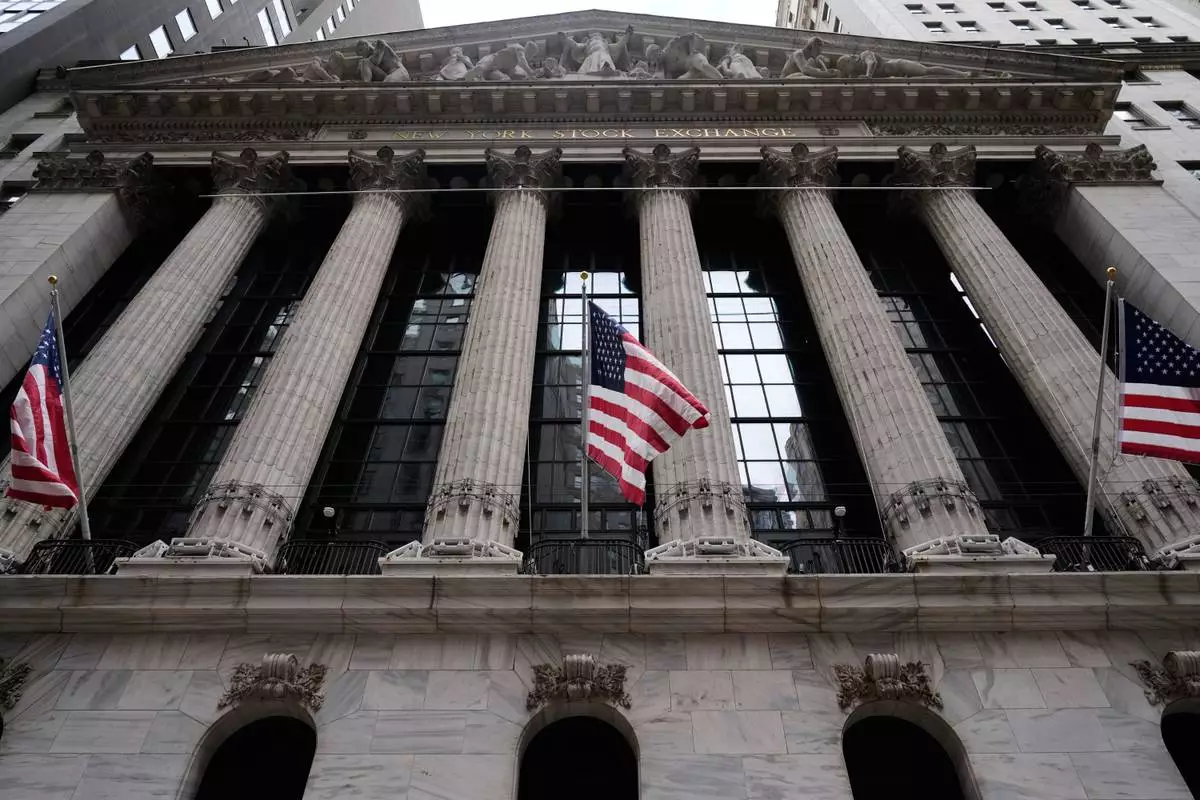
The New York Stock Exchange is seen in New York, Thursday, March 19, 2026. (AP Photo/Seth Wenig)
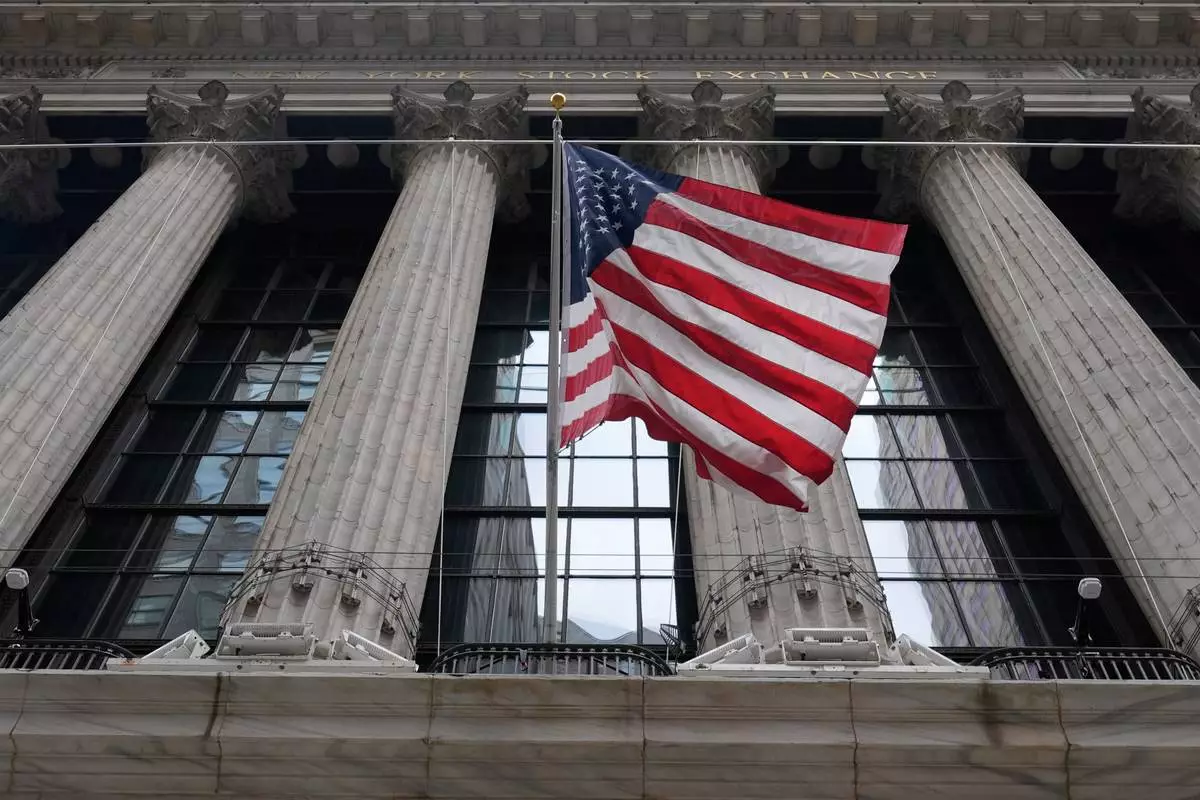
The New York Stock Exchange is seen in New York, Thursday, March 19, 2026. (AP Photo/Seth Wenig)

FILE - Liberia-flagged tanker Shenlong Suezmax, carrying crude oil from Saudi Arabia, that arrived clearing the Strait of Hormuz, is seen at the Mumbai Port in Mumbai, India, Thursday, March 12, 2026. (AP Photo/Rafiq Maqbool, File)
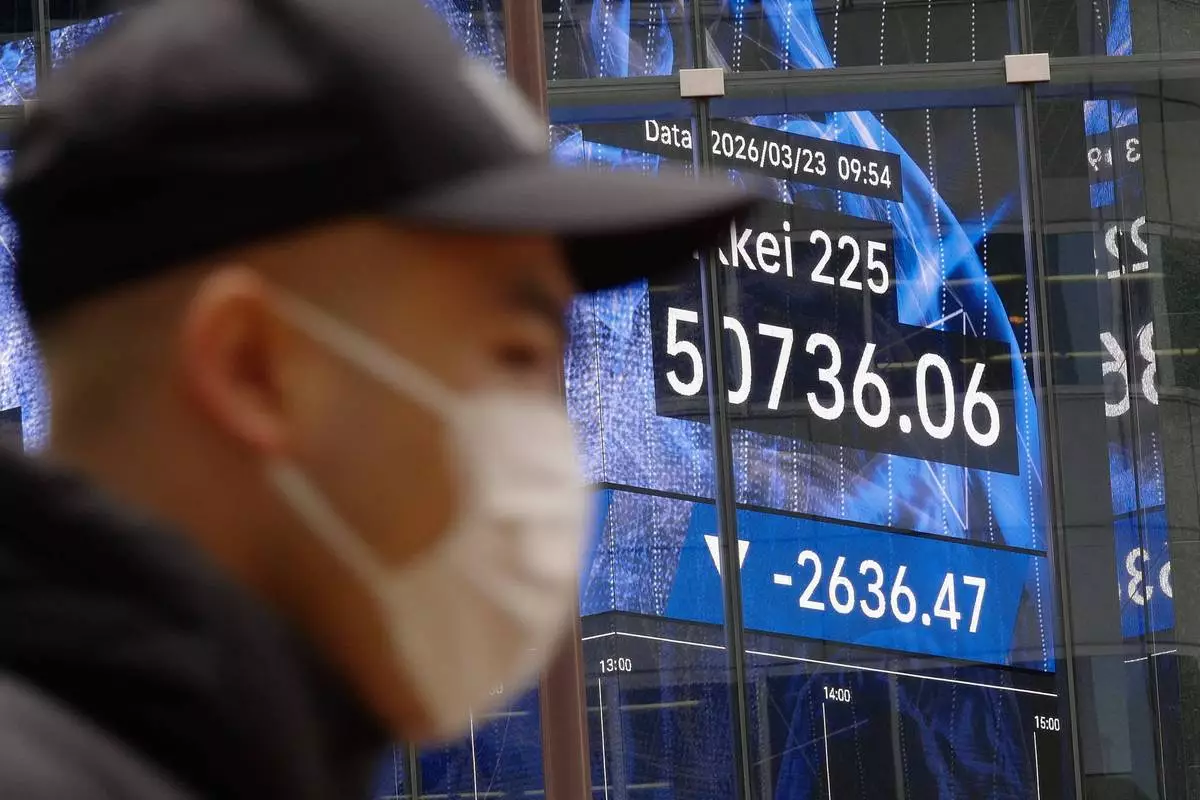
A person walks near an electronic stock board showing Japan's Nikkei index at a securities firm Monday, March 23, 2026, in Tokyo. (AP Photo/Eugene Hoshiko)
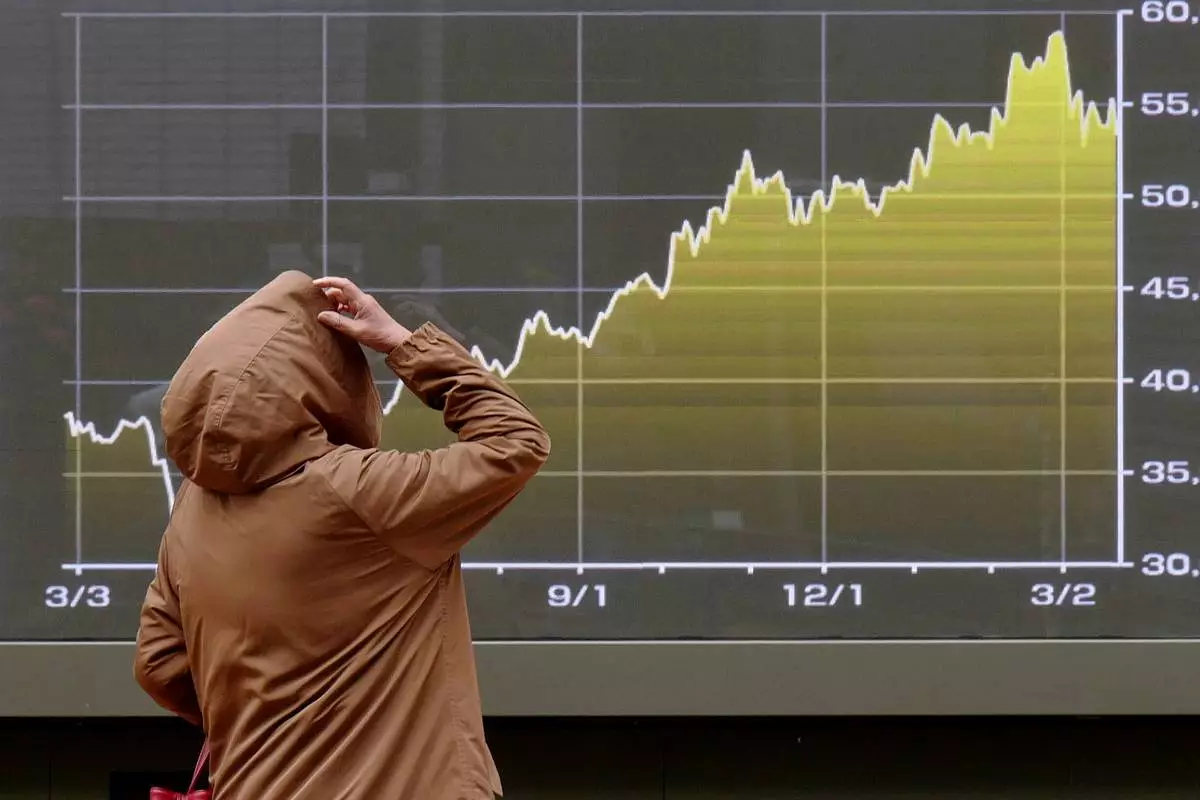
A person looks at an electronic stock board showing Japan's Nikkei index chart at a securities firm Monday, March 23, 2026, in Tokyo. (AP Photo/Eugene Hoshiko)

Traders work on the floor at the New York Stock Exchange in New York, Thursday, March 19, 2026. (AP Photo/Seth Wenig)