DUNEDIN, Fla. (AP) — Kevin Gausman got 709 called strikes over the past decade on pitches out of the strike zone, tied for the third highest total in the major leagues.
“I would have thought maybe I was top 20 maybe but top five is kind of kind of crazy,” the Toronto Blue Jays right-hander said. “I guess the book is kind of still out. We’ll see what happens and how we have to adjust.”
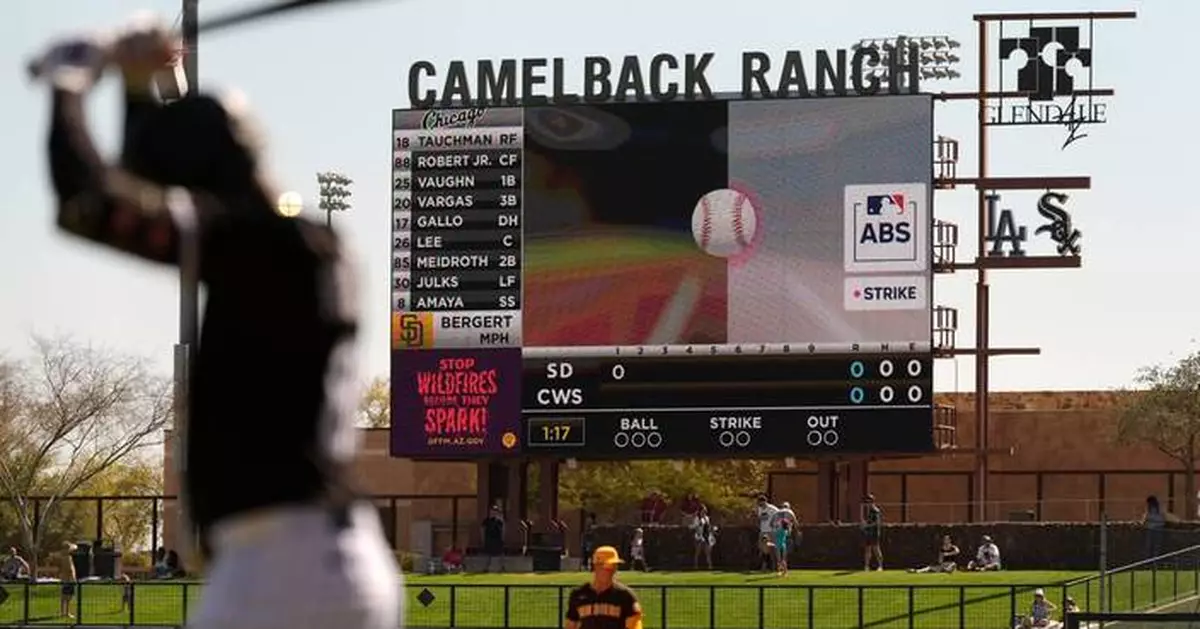
There will be winners and losers under the Automated Ball-Strike System, which makes its regular-season debut Wednesday night when the New York Yankees play at the San Francisco Giants. Using Hawk-Eye technology, 12 cameras measure whether a pitch crosses the strike zone with accuracy of about one-sixth of an inch.
Kyle Hendricks led the majors with 777 called strikes over the past decade on pitches that should have been balls, according to MLB Statcast. He was followed by Aaron Nola (747), Gausman and Zach Davies (709 each), Kyle Gibson (697), Patrick Corbin (694), Marcus Stroman (671), Zack Greinke (667), Martín Pérez (647) and Kyle Freeland (631).
“I guess that’s a good thing because you make balls look like strikes,” Nola said. “There's going to be some maybe good and bad to it, but I think the good parts and the big situations and big games, I that’s going to help out a lot. We've seen over the years our side lose games on a bad call.”
Conversely, Corbin topped the major leagues on balls that should have been called strikes with 470. He was followed by Chris Sale (461), Nola (460), Carlos Rodón (450), Yu Darvish (442), Sonny Gray (439), José Berríos (438), Steven Matz (436), and Jon Gray and Justin Verlander (435 apiece).
“All umpires always had like — they give a little bit here, they’re a little tight there. You know this as a hitter and a pitcher," said Verlander, a three-time Cy Young Award winner back with Detroit for the start of his 21st big league season. "But it’s all because of the way they set up and they see certain areas better than others. And now I think they’re put in a situation where they have to call this like theoretical zone, instead of creating their own strike zone that they’re probably much more consistent at.”
Mookie Betts led batters on called strikes that should have been balls at 714.
“He knows the strike zone as well as anyone and it does seem that he gets the short end of a lot of calls," Dodgers manager Dave Roberts said. “He’s a guy I certainly would trust to challenge a call.”
Betts was followed by Eugenio Suárez (684), José Ramírez (657), Paul Goldschmidt (656), Aaron Judge (653), Marcus Semien (631), Xander Bogaerts (625), Alex Bregman (603) and Christian Yelich (594).
“When we didn’t have a challenge system, you just try to do the best you could and understand that there’s stuff that’s out of your control,” Goldschmidt said. “Definitely the guys that are a little bit more patient are always going to have that. We just understand that’s kind of the nature of it.”
Giancarlo Stanton had 440 called strikes on pitches out of the strike zone and 351 balls on pitches that should have been strikes.
“The challenge, you could change the whole game right there,” the New York Yankees designated hitter said. “If you overturn one call, it could grow 15, 20 more pitches on a pitcher.”
Carlos Santana received the most balls that should have been called strikes with 636. He was followed by Mike Trout (612), Suárez (558), Ramírez (554), George Springer (539), Andrew McCutchen (513), Cody Bellinger (487), Freddie Freeman (471), and Ryan McMahon (466).
Statcast has been calculating based on the rule book strike zone at the front of home plate and using a batter’s stance. Starting this year, it will compute with the ABS strike zone measured at the middle of the plate and based on a batter's height.
Teams tried to prepare players by using ABS for batting practice and having the scoreboard signal ball/strike decisions.
A 1-1 pitch often can swing a plate appearance. Nola saw ABS in use last August when he made three injury rehabilitation starts at Triple-A Lehigh Valley.
“We’re just going to have to see what the umpires do,” he said, “if they’re really going to be that tight as they were down there.”
Statcast showed 1.6% of pitches out of the zone were called strikes last year, down from 2.1% in 2024 and the most accurate since 4.2% when tracking started in 2008.
Only 2.1% of pitches in the zone were ruled balls, up slightly from 1.7% in 2024 but well below 4.3% in 2008.
Pitchers who thrived on getting calls just beyond the black can lose those strikes, and memorable blown calls can be reversed — like Mark Langston’s 2-2 fastball to Tino Martinez in the 1998 World Series opener that was over the plate and above the knees but ruled a ball by since-retired umpire Richie Garcia. One pitch later, Martinez hit a tiebreaking grand slam, sparking the Yankees to a 9-6 win and four-game sweep.
Garcia doesn't wish that there had been ABS back then.
“I'd rather take the grief,” he said.
AP Baseball Writer Janie McCauley contributed to this report.
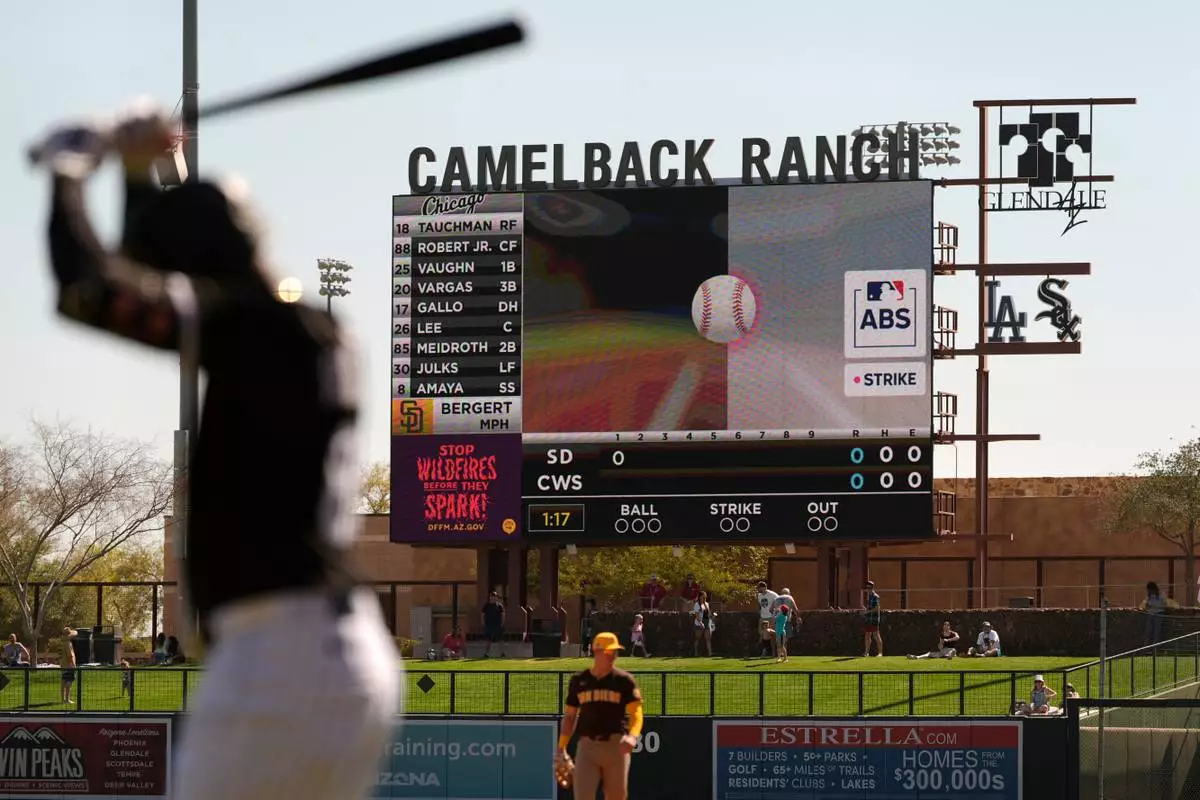
FILE - The Automated Ball-Strike System plays on the scoreboard after a pitch call was challenged during the first inning of a spring training baseball game between the Chicago White Sox and the San Diego Padres, Feb. 26, 2025, in Phoenix. (AP Photo/Carolyn Kaster, File)
NEW YORK (AP) — A cautious relief swept through financial markets Monday after President Donald Trump said the United States has talked with Iran about a possible end to their war. Oil prices eased, and stock prices rose on Wall Street following severe losses taken elsewhere in the world before Trump’s announcement.
The price for a barrel of Brent crude fell 10.9% to settle at $99.94, down from nearly $120 at one point last week, after Trump said the United States and Iran held productive talks the last two days “regarding a complete and total resolution of our hostilities in the Middle East.” The S&P 500 climbed 1.1% for its best day since the war began.
The market’s moves were tentative, though, after Iran denied such talks took place and Iranian parliament speaker Mohammad Bagher Qalibaf said that “fakenews is used to manipulate the financial and oil markets” in a posting on X. The Dow Jones Industrial Average went from a surge of nearly 1,135 points during the morning to a more modest gain of 540 before accelerating to finish with a climb of 631.
Over the weekend, Trump had threatened to “obliterate” Iran’s power plants if it doesn’t open up the Strait of Hormuz within 48 hours. The narrow waterway off Iran’s coast has become a sore point for Trump and the economy because a sharp slowdown in traffic is preventing oil tankers from leaving the Persian Gulf to supply customers around the world.
Trump said Monday that he is postponing attacks on Iranian power plants for five days to allow talks to continue. Quickly afterward, though, came the denials from Iran about talks, while Iran’s semiofficial Fars and Tasnim news agencies portrayed the American president as backing down.
Turkey and Egypt, meanwhile, said they had spoken to the warring parties, the first sign of coordinated mediation, which could be an encouraging signal.
Amid all the developments, the price of Brent crude fell as low as $96 immediately after Trump announced the postponement but quickly recovered a chunk of that loss. Benchmark U.S. crude had a similar reaction, immediately dropping toward $84 per barrel before yo-yoing back above $92 and then settling at $88.13, down 10.3% from Friday.
Financial markets have had vicious swings, both up and down, since the war began because of uncertainty about how long it may last. The fear is that a long-term disruption could keep so much oil and natural gas off global markets that it creates a punishing wave of inflation for the global economy.
The swings of the past few weeks are similar to, but not as dramatic as, those that hit last year when Trump shocked the global economy on “Liberation Day.” Many of his worldwide tariffs ended up being milder than he initially threatened, and the back-and-forth in negotiations led to historic moves up and down.
Monday’s overriding reaction in financial markets was nevertheless one of relief. The S&P 500 rose 74.52 points to 6,581.00. The Dow climbed 631.00, or 1.4%, to 46,208.47, and the Nasdaq composite jumped 299.15, or 1.4%, to 21,946.76.
In Europe, stock indexes immediately flipped from losses to gains following Trump’s announcement. France’s CAC 40 rose 0.8%, and Germany’s DAX returned 1.2%.
That compares with sharp drops for Asian stock markets, which finished trading before Trump made his announcement. South Korea’s Kospi careened 6.5% lower, Japan’s Nikkei 225 dropped 3.5% and Hong Kong’s Hang Seng fell 3.5%.
Treasury yields also eased in the bond market following Trump’s announcement. High Treasury yields and disruption in the bond market were factors that Trump named a year ago when he backed off his initial threats for global tariffs. The moves caused critics to allege Trump always chickens out, or “TACO,” if financial markets show enough pain.
Like oil prices, Treasury yields still remain well above where they were before the war began, even after Monday’s drop. The worry is that high oil prices could keep the Federal Reserve and other central banks from cutting interest rates, which would give the global economy and prices for investments a boost.
The yield on the 10-year Treasury fell to 4.35% from 4.39% late Friday. But it remains solidly above its 3.97% level from just before the war.
On Wall Street, companies with big fuel bills that will benefit from any easing of oil prices led the market. Norwegian Cruise Line Holdings surged 6.2%, while United Airlines climbed 4.5%, and American Airlines rose 3.6%. All, though, are still down for the year so far.
Stocks of smaller companies were also particularly strong, and the Russell 2000 index of smaller stocks jumped a market-leading 2.3%. It had dropped last week to 10% below its record, a sharp enough fall that professional investors have a name for it: a “correction.”
The S&P 500, which is the main measure of the U.S. stock market’s strength, pulled back within 5.7% of its own all-time high set early this year.
AP Business Writers Yuri Kageyama, Matt Ott and Chan Ho-him contributed.
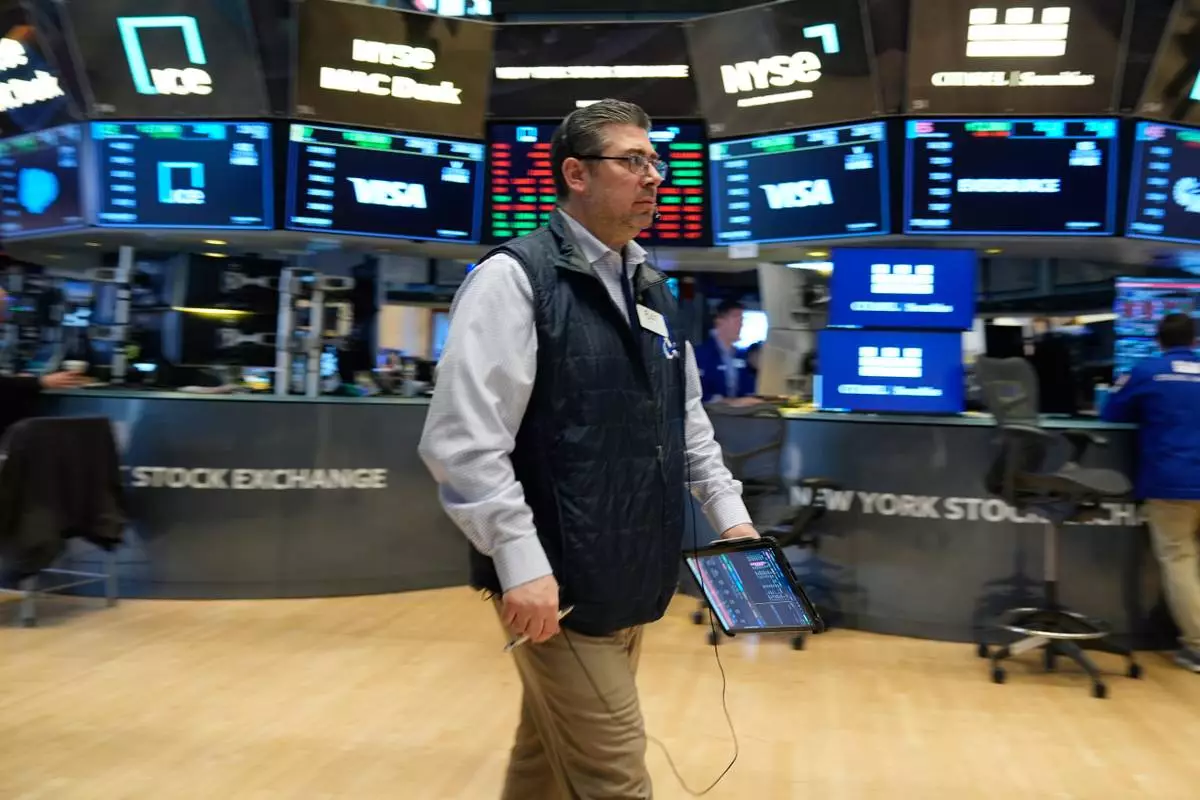
Michael Capolino works on the floor at the New York Stock Exchange in New York, Thursday, March 19, 2026. (AP Photo/Seth Wenig)
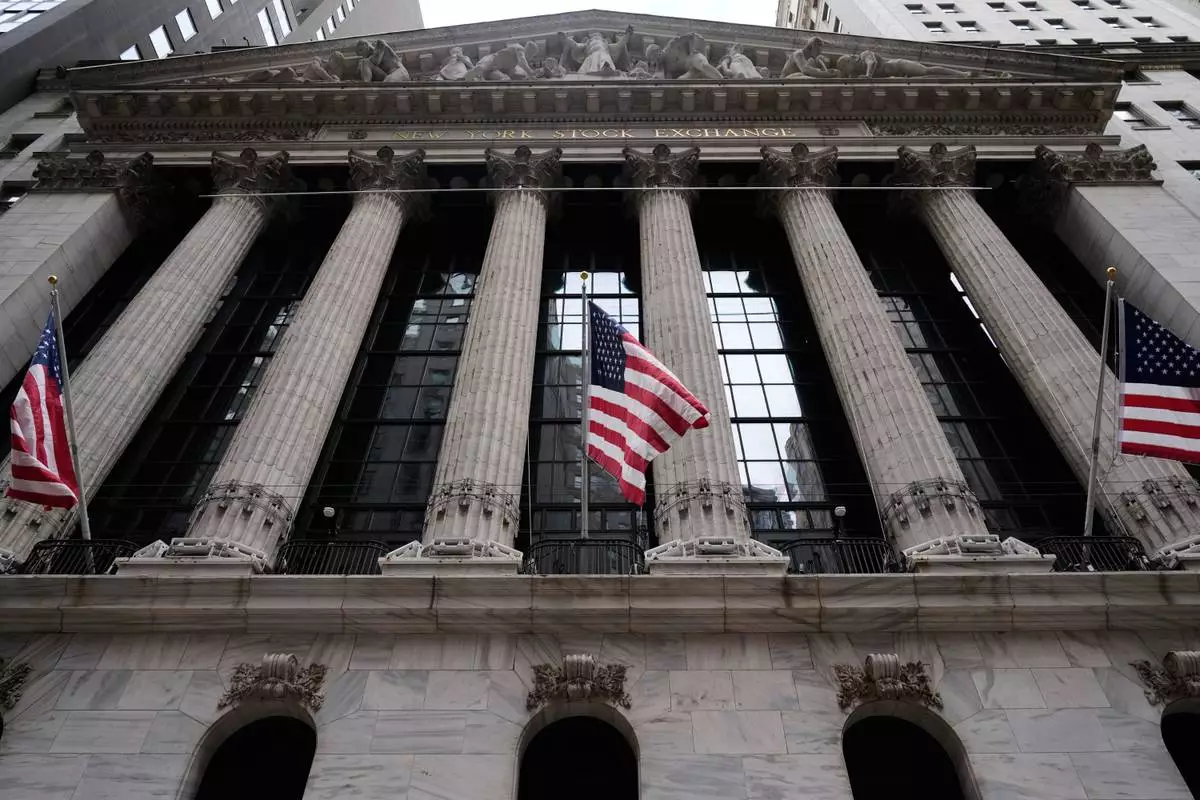
The New York Stock Exchange is seen in New York, Thursday, March 19, 2026. (AP Photo/Seth Wenig)
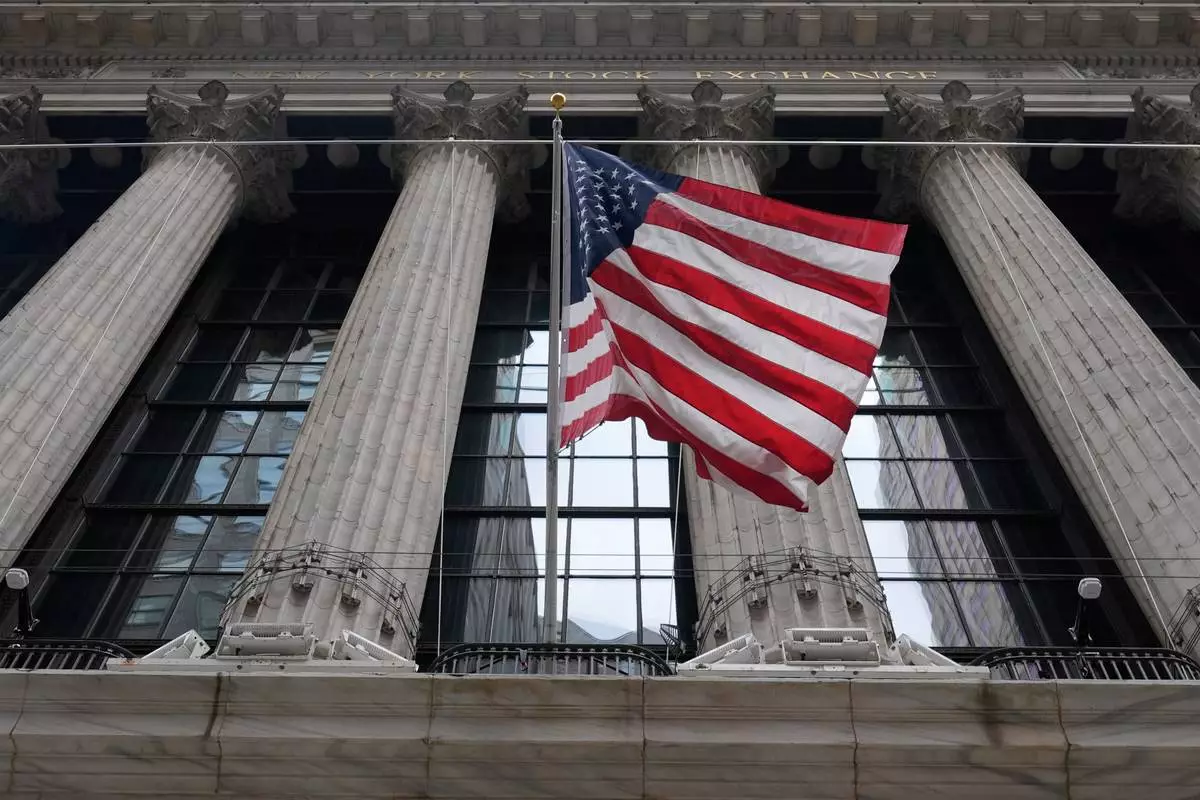
The New York Stock Exchange is seen in New York, Thursday, March 19, 2026. (AP Photo/Seth Wenig)
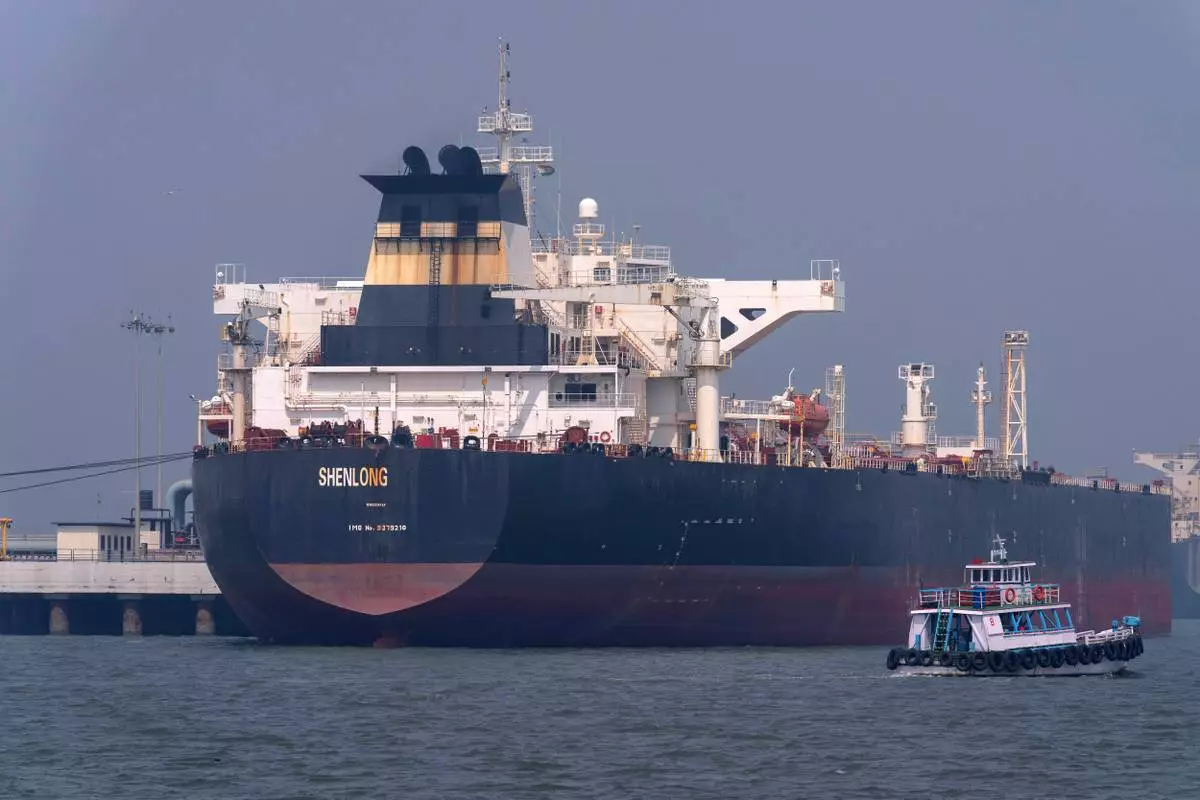
FILE - Liberia-flagged tanker Shenlong Suezmax, carrying crude oil from Saudi Arabia, that arrived clearing the Strait of Hormuz, is seen at the Mumbai Port in Mumbai, India, Thursday, March 12, 2026. (AP Photo/Rafiq Maqbool, File)
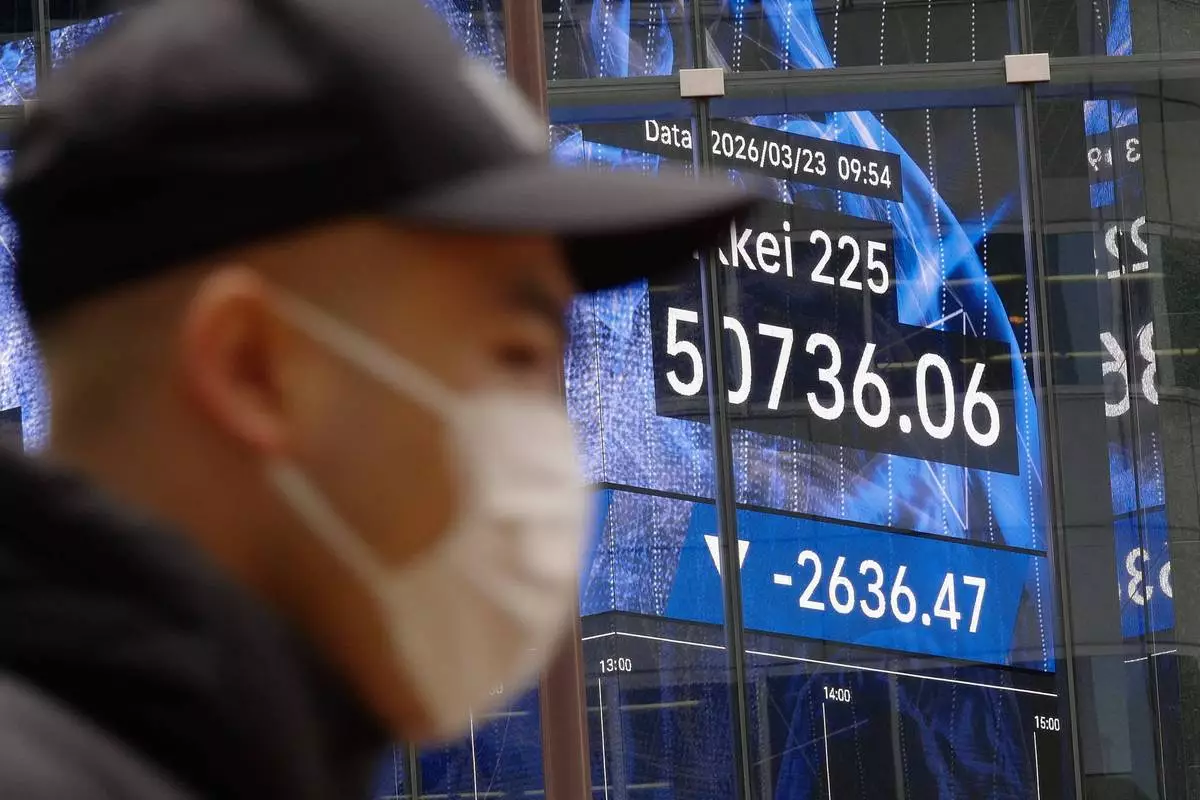
A person walks near an electronic stock board showing Japan's Nikkei index at a securities firm Monday, March 23, 2026, in Tokyo. (AP Photo/Eugene Hoshiko)
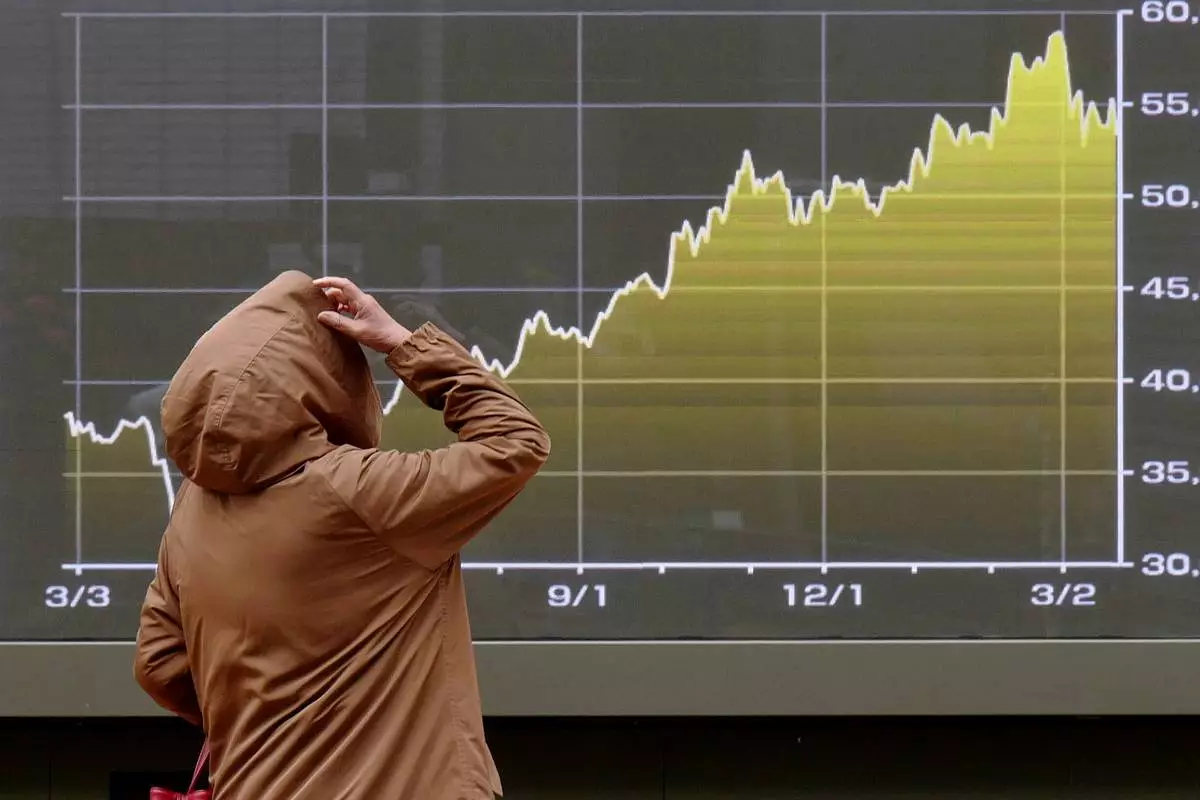
A person looks at an electronic stock board showing Japan's Nikkei index chart at a securities firm Monday, March 23, 2026, in Tokyo. (AP Photo/Eugene Hoshiko)
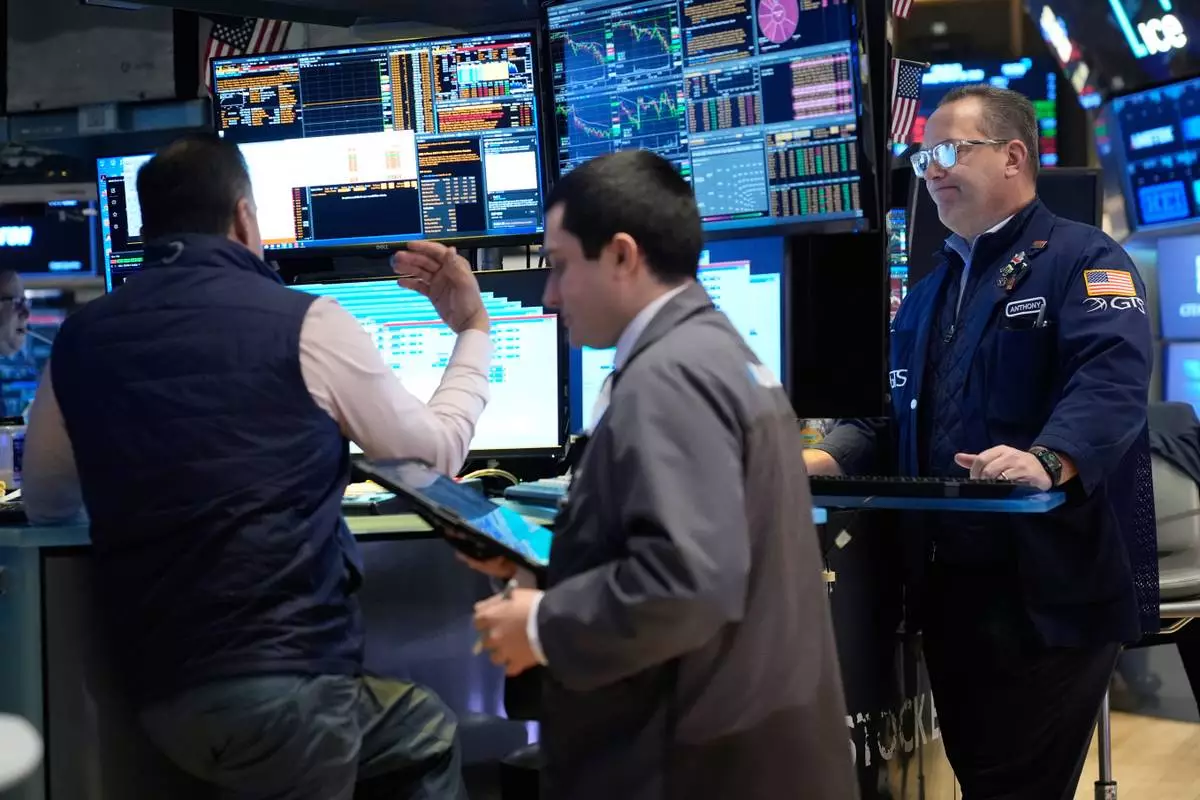
Traders work on the floor at the New York Stock Exchange in New York, Thursday, March 19, 2026. (AP Photo/Seth Wenig)