Skip to Content Facebook Feature Image

Kim vows to 'irreversibly' cement North Korea’s nuclear status, calls South 'most hostile'

News

Kim vows to 'irreversibly' cement North Korea’s nuclear status, calls South 'most hostile'
News

News

Kim vows to 'irreversibly' cement North Korea’s nuclear status, calls South 'most hostile'

2026-03-24 09:17 Last Updated At:09:20

SEOUL, South Korea (AP) — North Korean leader Kim Jong Un has pledged to irreversibly cement his country’s status as a nuclear power while maintaining a hard-line stance toward South Korea, which he called the “most hostile” state, state media said Tuesday.

In a speech Monday to Pyongyang’s rubber-stamp parliament, Kim accused the United States of global “state terrorism and aggression,” in an apparent reference to the war in the Middle East, and said the North will play a more forceful role in a united front against Washington amid rising anti-American sentiment. But Kim didn’t call out U.S. President Donald Trump by name and said whether his adversaries “choose confrontation or peaceful coexistence is up to them, and we are prepared to respond to any choice.”

His comments largely aligned with his statements at last month’s ruling Workers’ Party Congress, where he vilified Seoul but left open the door for dialogue with the Trump administration, urging Washington to drop its demands for the North’s nuclear disarmament as a precondition for talks.

State media said the Supreme People’s Assembly, which concluded its two-day session Monday, passed a revised constitution but did not specify the changes. There had been expectations the revisions would codify South Korea as a permanent enemy and remove references to shared nationhood. That's in line with Kim’s hard-line stance after he declared in 2024 that the North would abandon its long-term goal of a peaceful unification with the South.

Analysts say Kim’s vilification of South Korea reflects his view that Seoul, which helped arrange his first meetings with Trump in 2018 and 2019, is no longer a useful intermediary with Washington but an obstacle to his push for a more assertive regional role. He has also shown sensitivity to South Korean soft power, driving aggressive campaigns to block the influence of its culture and language among North Koreans as he seeks to tighten his family’s authoritarian grip.

In his speech, Kim expressed pride in the country’s rapid expansion of nuclear weapons and missiles in recent years, calling it the “right” choice to counter future threats and “hegemonic pursuits” by “gangsterlike” imperialists, a term the North often uses for the United States and its allies.

“The dignity of the nation, its national interest and its ultimate victory can only be guaranteed by the strongest of power,” Kim said. “The government of our republic will continue to consolidate our absolutely irreversible status as a nuclear power and will aggressively wage a struggle against hostile forces to crush their (anti-North Korean) provocations and schemes.”

Kim has suspended all meaningful dialogue with Washington and Seoul since the collapse of his second summit with Trump in 2019 over U.S.-led sanctions on the North.

Kim has recently been prioritizing Russia in his foreign policy, sending thousands of troops and large amounts of military equipment to support Moscow’s war in Ukraine, possibly in exchange for aid and military technology. Facing the possibility of the war winding down, analysts say Kim may try to keep his options open by taking a more measured approach toward Washington to preserve future dialogue, with the long-term aim of securing U.S. sanctions relief and tacit recognition as a nuclear state.

However, some experts believe that the United States and Israel’s joint attacks on Iran and the killing of Tehran’s previous supreme leader may have raised Kim’s bar for reviving dialogue with Washington.
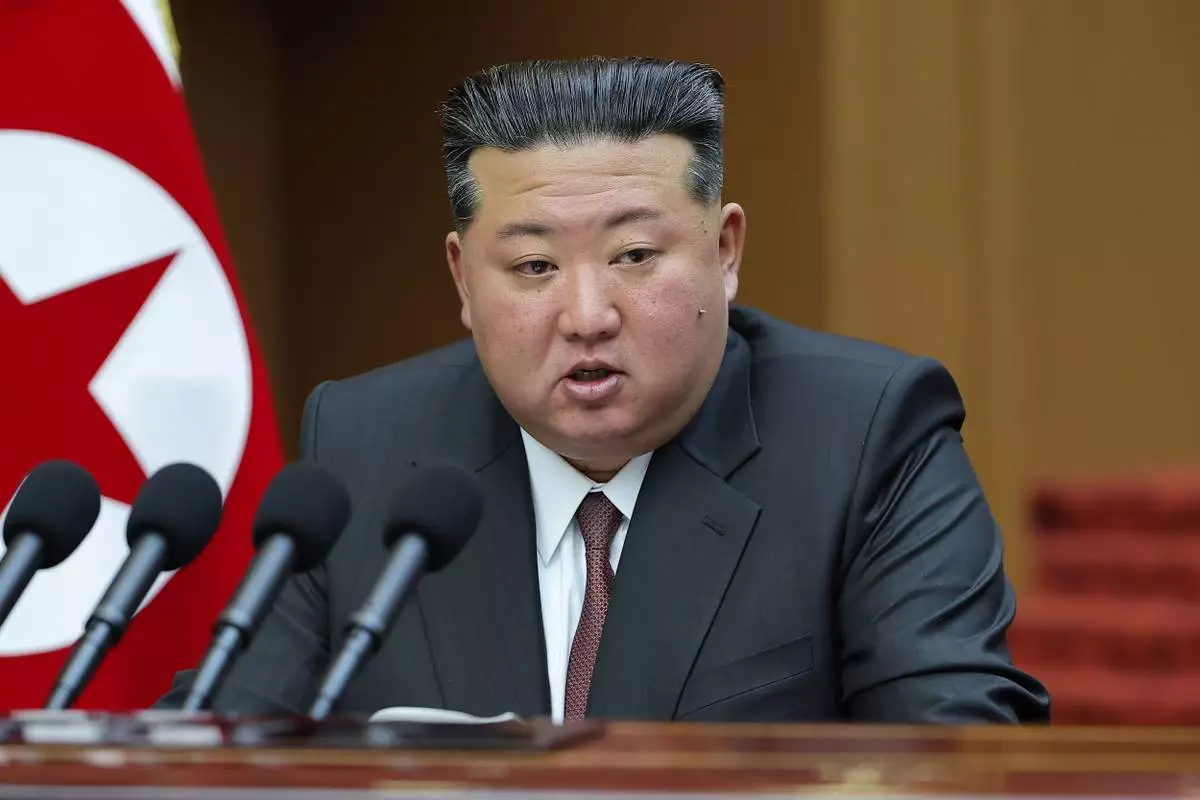
In this photo provided by the North Korean government, its leader Kim Jong Un delivers a speech during a session of the Supreme People’s Assembly at parliament in Pyongyang, North Korea Monday, March 23, 2026. Independent journalists were not given access to cover the event depicted in this image distributed by the North Korean government. The content of this image is as provided and cannot be independently verified. (Korean Central News Agency/Korea News Service via AP)
In this photo provided by the North Korean government, its leader Kim Jong Un delivers a speech during a session of the Supreme People’s Assembly at parliament in Pyongyang, North Korea Monday, March 23, 2026. Independent journalists were not given access to cover the event depicted in this image distributed by the North Korean government. The content of this image is as provided and cannot be independently verified. (Korean Central News Agency/Korea News Service via AP)

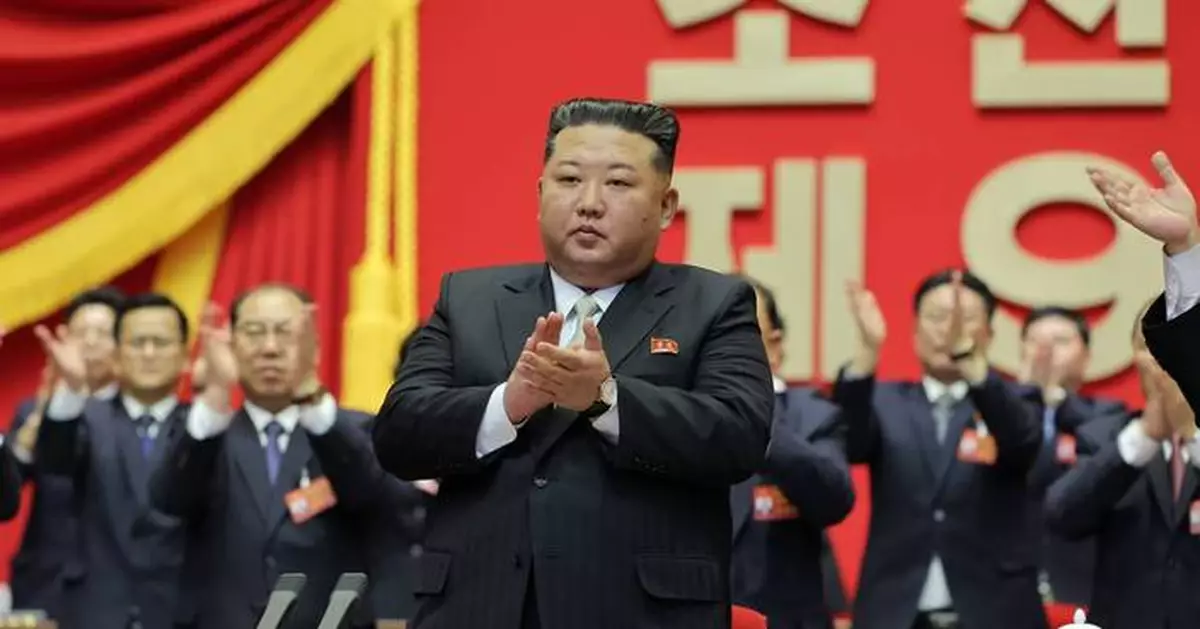
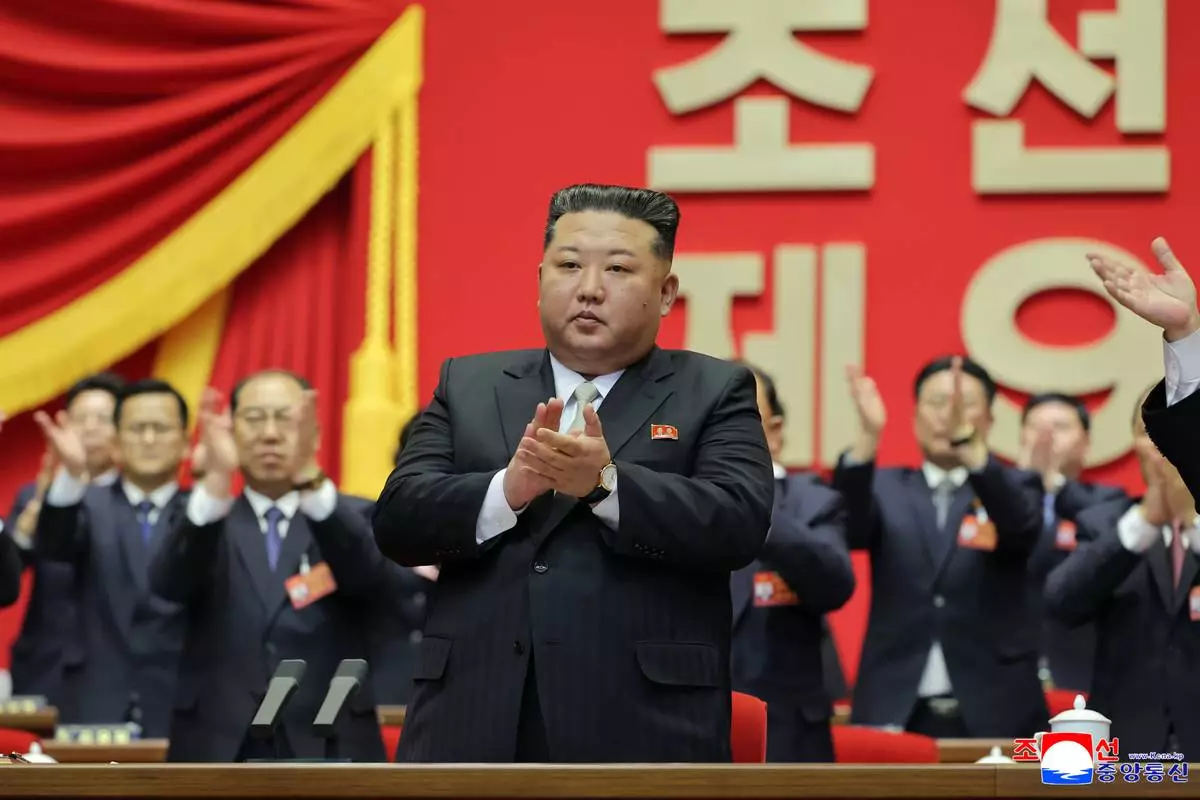
FILE - This photo provided by the North Korean government, its leader Kim Jong Un, center, claps hands as he was re-elected to the top post of the ruling Workers' Party, during the party's Congress in Pyongyang, on Feb. 22, 2026. Independent journalists were not given access to cover the event depicted in this image distributed by the North Korean government. The content of this image is as provided and cannot be independently verified. Korean language watermark on image as provided by source reads: "KCNA" which is the abbreviation for Korean Central News Agency. (Korean Central News Agency/Korea News Service via AP, File)

FILE - This photo provided by the North Korean government, its leader Kim Jong Un, center, claps hands as he was re-elected to the top post of the ruling Workers' Party, during the party's Congress in Pyongyang, on Feb. 22, 2026. Independent journalists were not given access to cover the event depicted in this image distributed by the North Korean government. The content of this image is as provided and cannot be independently verified. Korean language watermark on image as provided by source reads: "KCNA" which is the abbreviation for Korean Central News Agency. (Korean Central News Agency/Korea News Service via AP, File)
The U.S. Defense Department will remove media offices from the Pentagon after a federal judge sided with The New York Times in a lawsuit challenging limits on reporters’ access to the building, a department official announced Monday.

An area of the Pentagon known as "Correspondents’ Corridor" that reporters have used for decades to cover the U.S. military will close immediately, department spokesperson Sean Parnell said. Journalists will eventually be able to work from an “annex” outside the building, which he said “will be available when ready." He offered no detail about how long that will take.

The Pentagon Press Association said the announcement “is a clear violation of the letter and spirit of last week’s ruling.”

“At such a critical time, we ask why the Pentagon is choosing to restrict vital press freedoms that help inform all Americans,” the association said.

The new policy is the latest dispute over press access to President Donald Trump’s administration, which has limited legacy media while boosting conservative and pro-Trump outlets.

The Times sued the Pentagon and Defense Secretary Pete Hegseth in December, claiming the agency's new credentialing policy violated journalists’ constitutional rights to free speech and due process. Dozens of reporters had walked out of the building rather than agree to government-imposed restrictions on their work.

U.S. District Judge Paul Friedman in Washington, D.C., last week sided with the newspaper. He ordered the Pentagon to reinstate the press credentials of seven Times journalists and struck down some of the agency's restrictions on news reporting.

Friedman said the “undisputed evidence” shows that the policy is designed to weed out “disfavored journalists” and replace them with those who are “on board and willing to serve” the government, a clear instance of illegal viewpoint discrimination.

Parnell said the Defense Department disagrees with the ruling and is pursuing an appeal. He said security concerns prompted restrictions on press access, a claim that journalists have rejected.

Under the latest Pentagon rules announced Monday, journalists will still have access to the Pentagon for press conferences and interviews arranged through the department’s public affairs team, but they will have to be escorted, Parnell wrote on social media.

The current Pentagon press corps is comprised mostly of conservative outlets that agreed to the policy. Reporters from outlets that refused to consent to the new rules, including from The Associated Press, have continued reporting on the military.

The AP, meanwhile, is awaiting a decision by a three-judge panel of the U.S. District Court of Appeals on its separate lawsuit against President Donald Trump’s administration. The AP contends that Trump’s White House team punished it by reducing its access to presidential events because the outlet hasn’t followed his lead in renaming the Gulf of Mexico.

Defense Secretary Pete Hegseth speaks to members of the media during a press briefing at the Pentagon in Washington, Thursday, March 19, 2026. (AP Photo/Manuel Balce Ceneta)

Defense Secretary Pete Hegseth speaks to members of the media during a press briefing at the Pentagon in Washington, Thursday, March 19, 2026. (AP Photo/Manuel Balce Ceneta)

FILE - The Pentagon and the surrounding area is seen in this aerial view in Washington, Jan. 26, 2020. (AP Photo/Pablo Martinez Monsivais, File)

FILE - The Pentagon and the surrounding area is seen in this aerial view in Washington, Jan. 26, 2020. (AP Photo/Pablo Martinez Monsivais, File)

Recommended Articles