Skip to Content Facebook Feature Image

Geneva's CERN hails delicate test on transporting antimatter as a scientific success

TECH

Geneva's CERN hails delicate test on transporting antimatter as a scientific success
TECH

TECH

Geneva's CERN hails delicate test on transporting antimatter as a scientific success

2026-03-25 02:55 Last Updated At:13:28

GENEVA (AP) — Scientists in Geneva took some antiprotons out for a spin — a very delicate one — in a truck, in a never-tried-before test drive that has been deemed a success.

If this so-called antimatter had come into contact with actual matter, even for a fraction of an instant, it would have been annihilated in a quick flash of energy. So experts at the European Organization for Nuclear Research, known as CERN, had to be extra careful when they took 92 antiprotons on the road for a short ride on Tuesday.

More Images
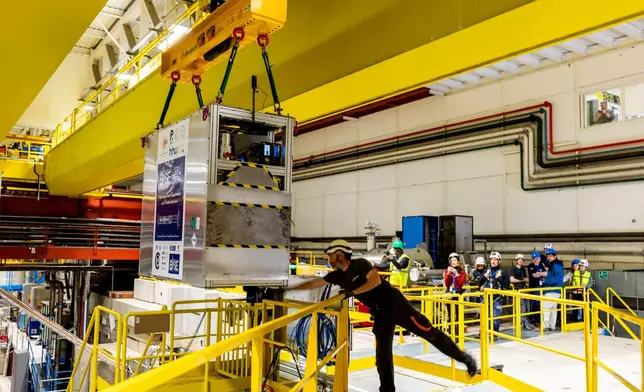
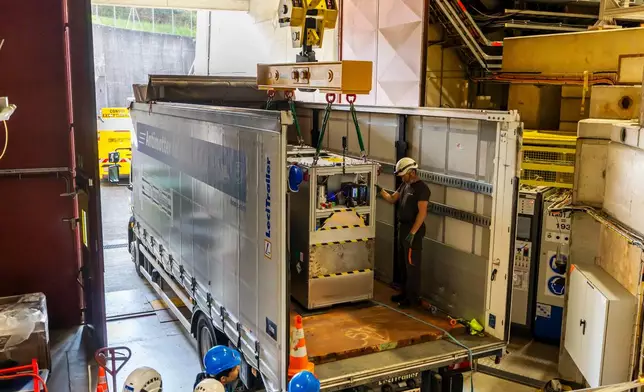
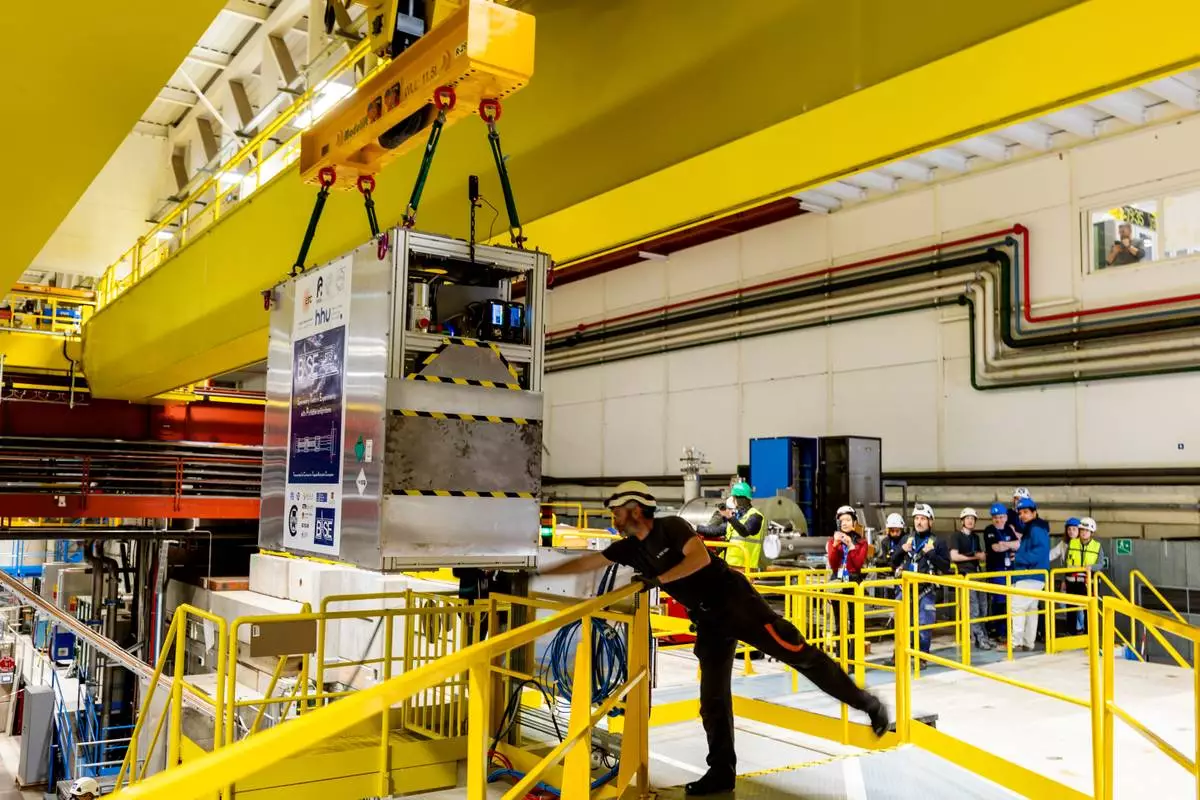
Technicians move the transportable antimatter trap into the Antimatter Factory at the European Organization for Nuclear Research (CERN) for a road test in Meyrin near Geneva, Switzerland, Tuesday, March 24, 2026. (Salvatore Di Nolfi/Keystone via AP)
Technicians move the transportable antimatter trap into the Antimatter Factory at the European Organization for Nuclear Research (CERN) for a road test in Meyrin near Geneva, Switzerland, Tuesday, March 24, 2026. (Salvatore Di Nolfi/Keystone via AP)

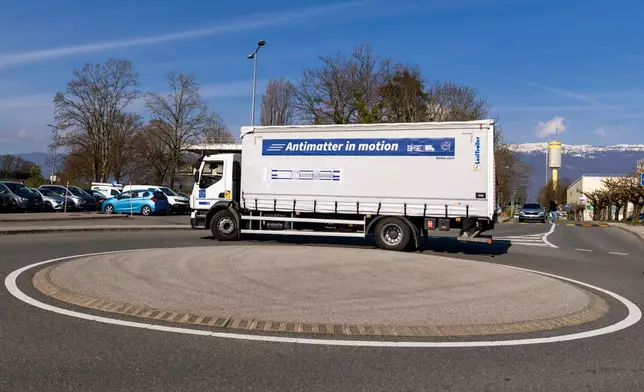
A truck carries the transportable antimatter trap during a road test at the European Organization for Nuclear Research (CERN), in Meyrin near Geneva, Switzerland, Tuesday, March 24, 2026. (Salvatore Di Nolfi/Keystone via AP)
A truck carries the transportable antimatter trap during a road test at the European Organization for Nuclear Research (CERN), in Meyrin near Geneva, Switzerland, Tuesday, March 24, 2026. (Salvatore Di Nolfi/Keystone via AP)

Technicians load the transportable antimatter trap into a truck from the Antimatter Factory at the European Organization for Nuclear Research (CERN) for a road test in Meyrin near Geneva, Switzerland, Tuesday, March 24, 2026. (Salvatore Di Nolfi/Keystone via AP)
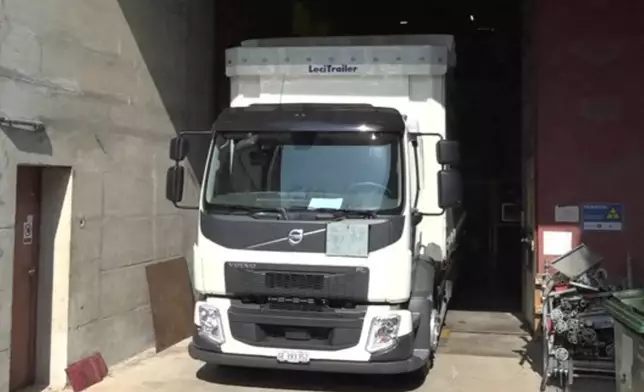
Technicians load the transportable antimatter trap into a truck from the Antimatter Factory at the European Organization for Nuclear Research (CERN) for a road test in Meyrin near Geneva, Switzerland, Tuesday, March 24, 2026. (Salvatore Di Nolfi/Keystone via AP)

This image, taken from video, shows a truck transporting antiprotons in a first-ever test drive to study antimatter at the European Organization for Nuclear Research, CERN, in Meyrin, near Geneva, Switzerland, March 24, 2026. (AP Photo/Jamey Keaten)
This image, taken from video, shows a truck transporting antiprotons in a first-ever test drive to study antimatter at the European Organization for Nuclear Research, CERN, in Meyrin, near Geneva, Switzerland, March 24, 2026. (AP Photo/Jamey Keaten)

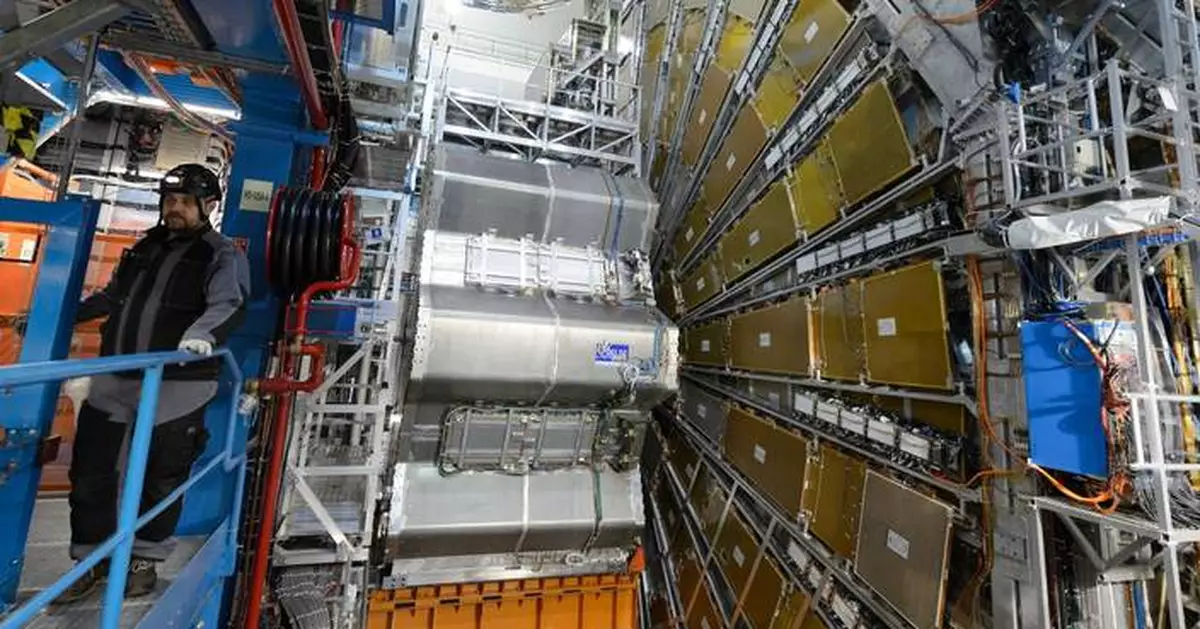
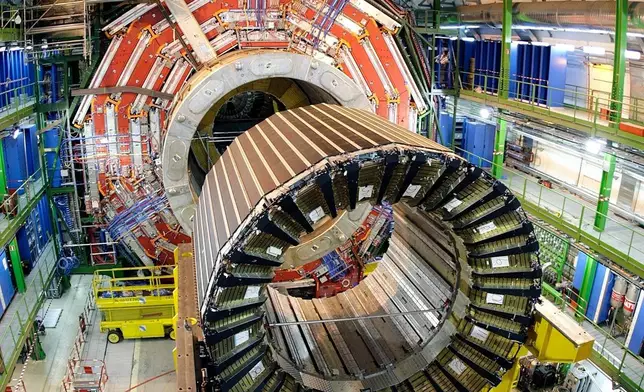
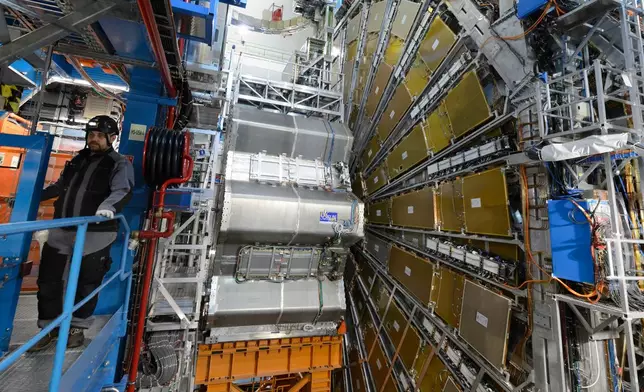
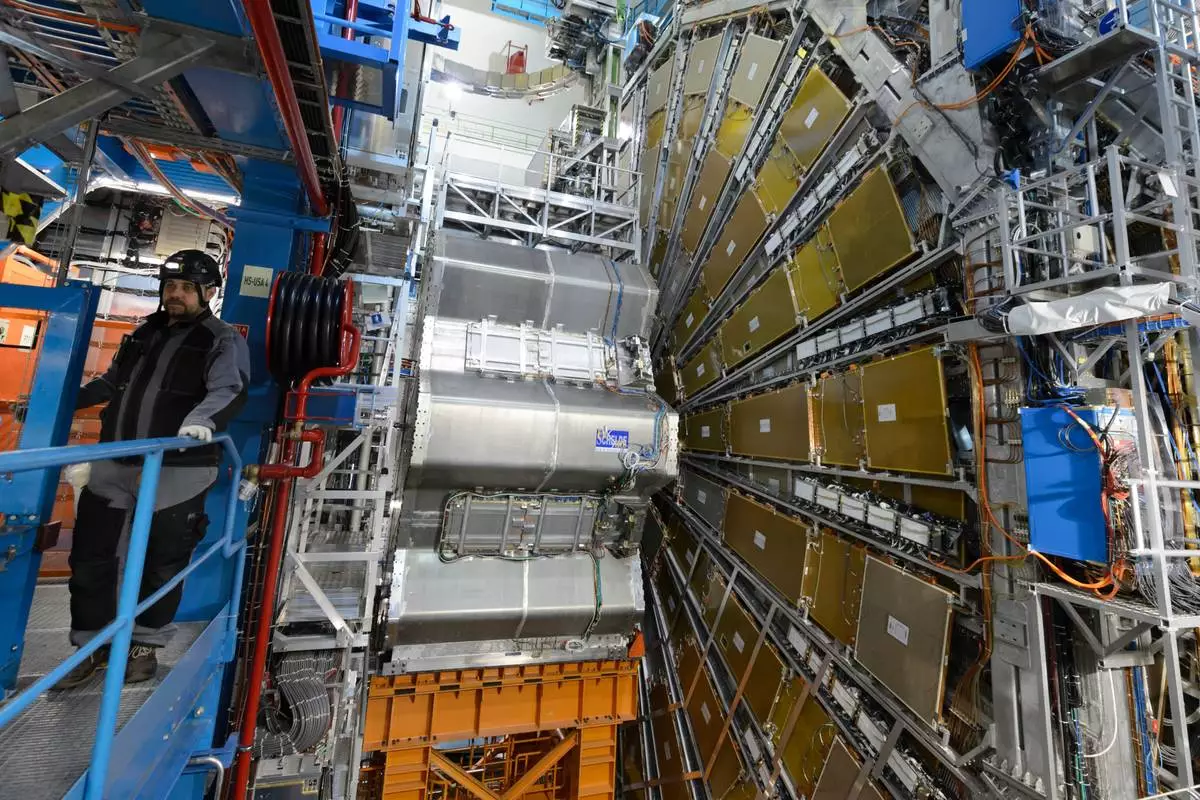
FILE - The magnet core of the world's largest superconducting solenoid magnet (CMS, Compact Muon Solenoid) at the European Organization for Nuclear Research (CERN)'s Large Hadron Collider (LHC) particle accelerator, in Geneva, Switzerland, March 22, 2007. (AP Photo/Keystone, Martial Trezzini, File)
FILE - The magnet core of the world's largest superconducting solenoid magnet (CMS, Compact Muon Solenoid) at the European Organization for Nuclear Research (CERN)'s Large Hadron Collider (LHC) particle accelerator, in Geneva, Switzerland, March 22, 2007. (AP Photo/Keystone, Martial Trezzini, File)

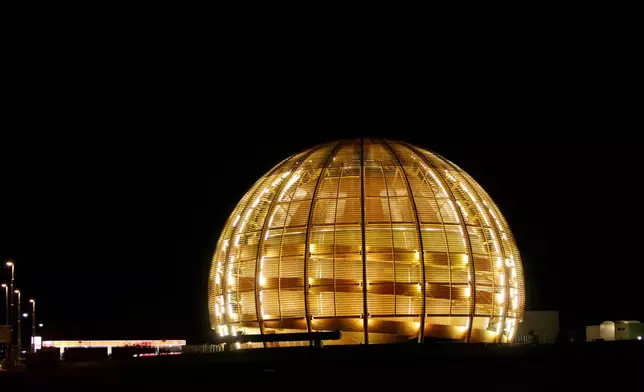
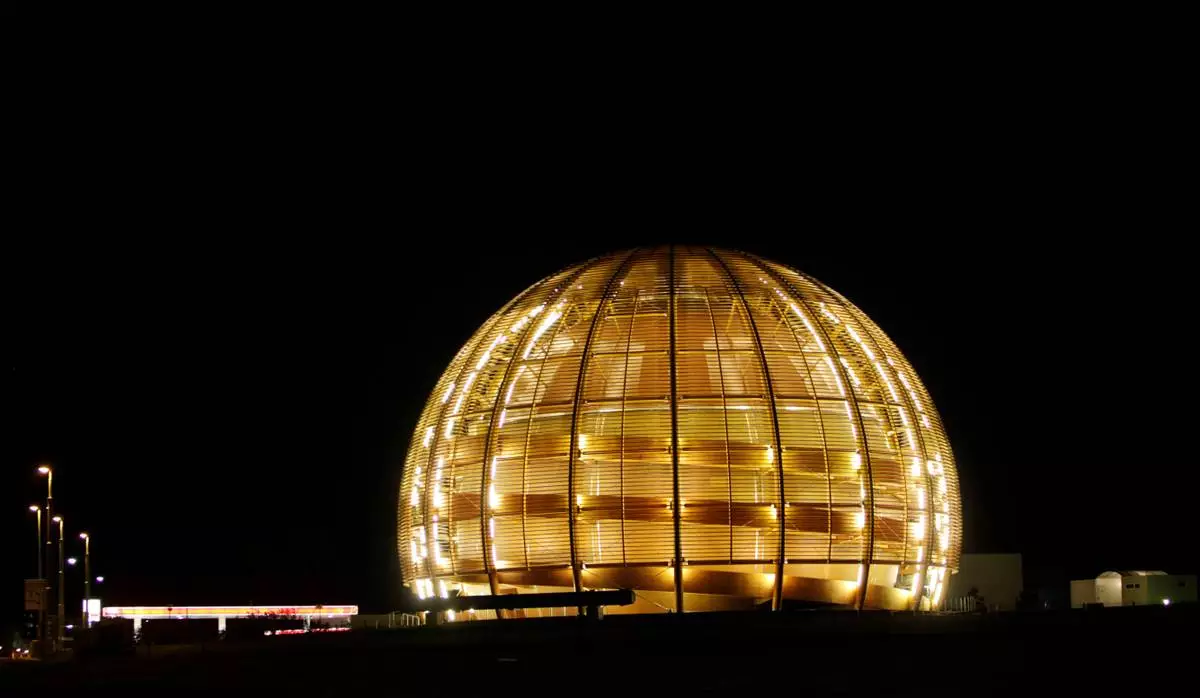
FILE - The globe of the European Organization for Nuclear Research, CERN, is illuminated outside Geneva, Switzerland, March 30, 2010. (AP Photo/Anja Niedringhaus, File)
FILE - The globe of the European Organization for Nuclear Research, CERN, is illuminated outside Geneva, Switzerland, March 30, 2010. (AP Photo/Anja Niedringhaus, File)

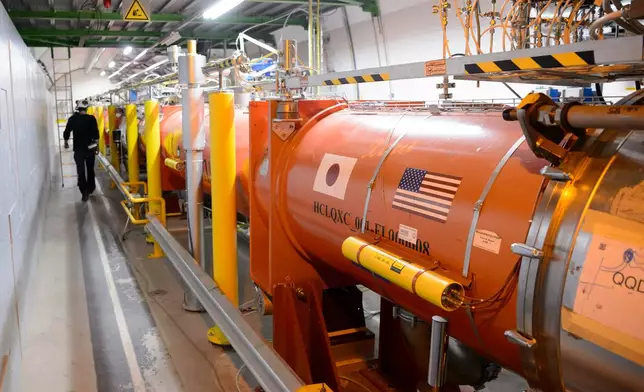
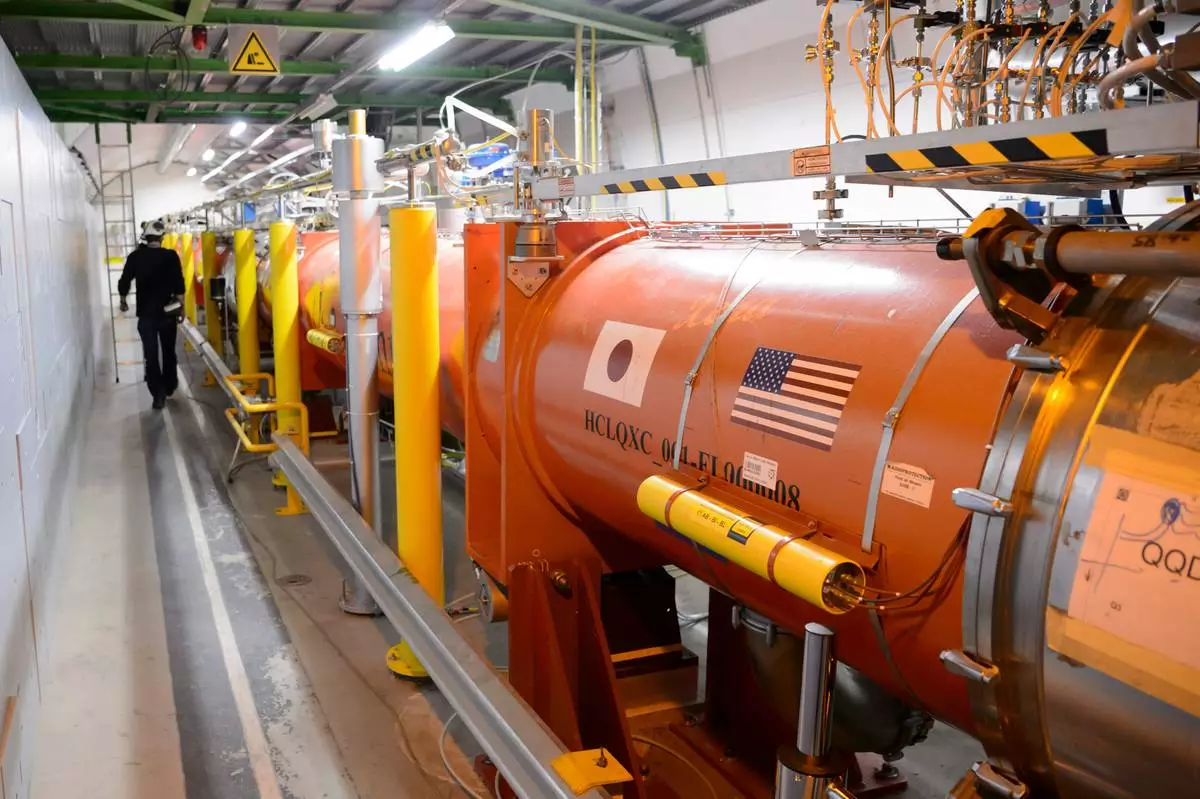
FILE - A technician works in the LHC (Large Hadron Collider) tunnel of the European Organization for Nuclear Research, CERN, during a press visit in Meyrin, near Geneva, Switzerland, Feb. 16, 2016. (Laurent Gillieron/Keystone via AP, File)
FILE - A technician works in the LHC (Large Hadron Collider) tunnel of the European Organization for Nuclear Research, CERN, during a press visit in Meyrin, near Geneva, Switzerland, Feb. 16, 2016. (Laurent Gillieron/Keystone via AP, File)

FILE - A technician works in the LHC (Large Hadron Collider) tunnel of the European Organization for Nuclear Research, CERN, during a press visit in Meyrin, near Geneva, Switzerland, Feb. 16, 2016. (Laurent Gillieron/Keystone via AP, File)

FILE - A technician works in the LHC (Large Hadron Collider) tunnel of the European Organization for Nuclear Research, CERN, during a press visit in Meyrin, near Geneva, Switzerland, Feb. 16, 2016. (Laurent Gillieron/Keystone via AP, File)

The antiprotons were suspended in a vacuum inside a specially designed box and held in place by supercooled magnets.

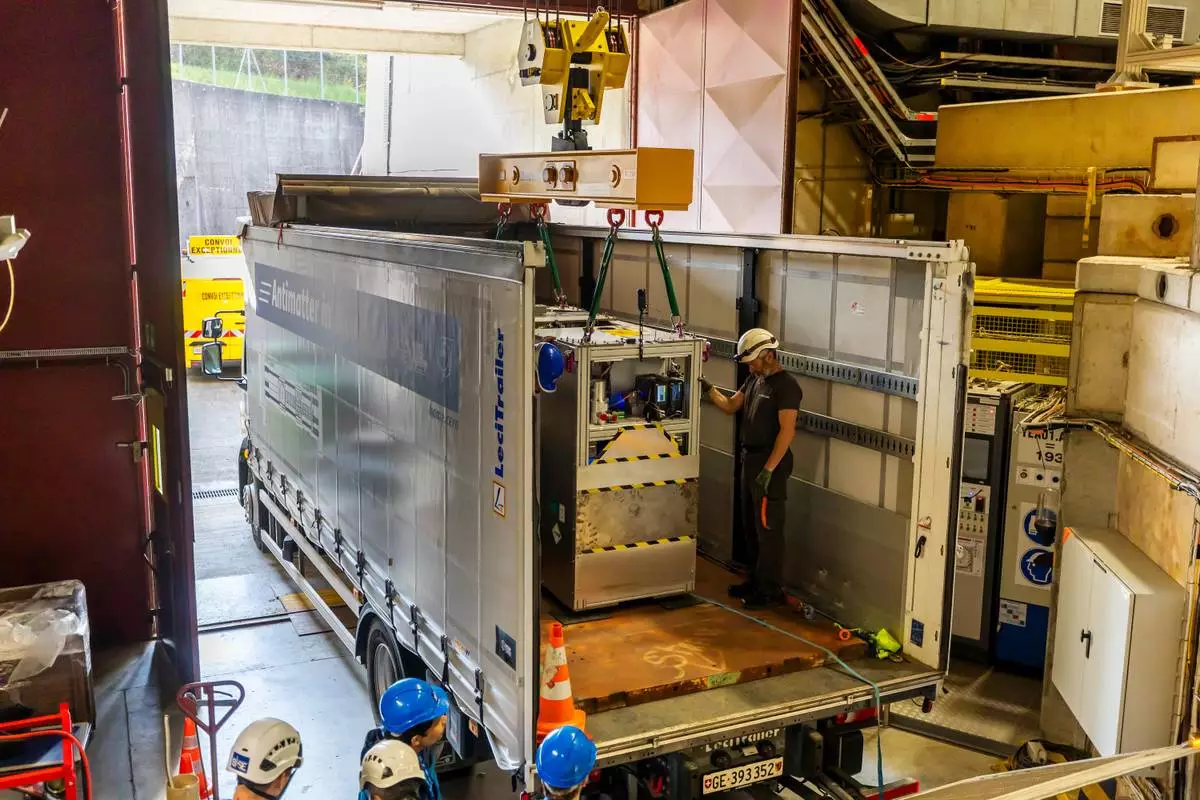
In methodical exercise over about three hours, the nearly 1,000-kilogram (2,200-pound) cryogenic box was craned up slowly and moved through a cavernous lab the onto the truck.

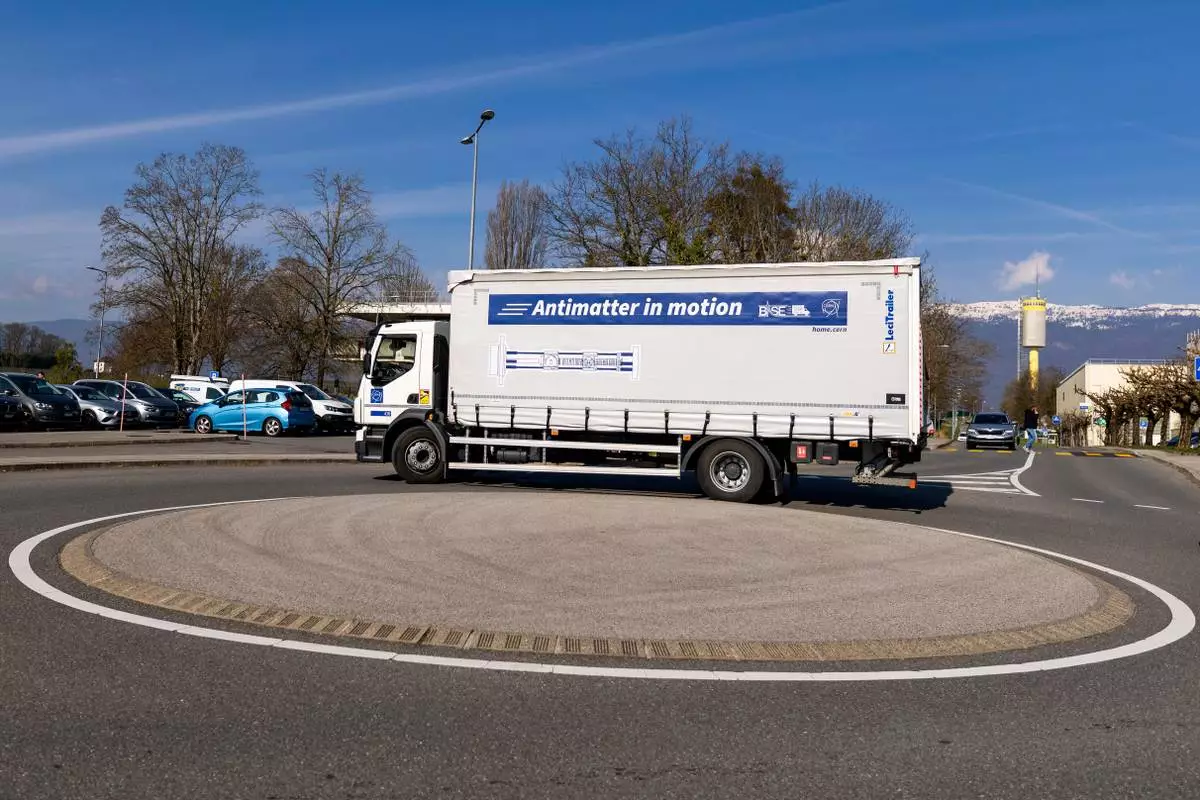
The drive on CERN’s campus itself lasted only about a half-hour to test how — if at all — the infinitesimal particles could be transported by road without seeping out.

The antiprotons were then placed back in their usual lab area, and the operation was concluded with applause, claims of success, and a bottle of Champagne.

“Transporting antimatter is a pioneering and ambitious project," said Gautier Hamel de Monchenault, CERN's director for research and computing. "We are at the beginning of an exciting scientific journey that will allow us to further deepen our understanding of antimatter.”

Manipulating antimatter, like antiprotons, can be tricky business. As scientists understand the universe today, for every type of particle that exists, there is a corresponding antiparticle, exactly matching the particle but with an opposite charge.

If those opposites come into contact, they “annihilate” each other, setting off lots of energy, depending on the masses involved. Any bumps in the road on the test journey that aren't compensated for by the specially-designed box could spoil the whole exercise.

“The motivation behind these experiments is to compare matter and antimatter with extremely high accuracy and watch for differences which we might have not seen yet,” said Stefan Ulmer, the leader and spokesperson for Tuesday’s test run.

The exercise was a first step toward making good on hopes, one day, to deliver CERN antiprotons to researchers abroad — such as at Heinrich Heine University in Düsseldorf, Germany, which is about eight hours away in normal driving conditions.

“We are scientists. We want to understand something about the fundamental symmetries of nature, and we know that if we do these experiments outside of this accelerator facility, we can measure 100 to 1,000 times better,” Ulmer said.

The antiprotons were encased in a “transportable antiproton trap” box that is compact enough to fit through ordinary laboratory doors and fit on a truck. It used superconducting magnets cooled to -269 degrees Celsius (-452 Fahrenheit) that allowed the antiprotons to be remain suspended in a vacuum — not touching the inner walls, which are made of ... matter.

To put the amount into perspective:

The mass in Tuesday's test — slightly less than that of about 100 hydrogen atoms — is so little, experts say, that the worst possible outcome was the loss of the antiprotons. Even if they did touch matter, any release of energy would be unnoticeable, only an oscilloscope, which picks up electrical signals, would be able to detect it.

To put the amount into perspective, Ulmer noted that a single grain of salt contains 10 to the 18th power — or a billion times a billion — of particles, and “we are transporting 100,” give or take.

The trap, said CERN press officer Sophie Tesauri, “is supposed to contain these antiprotons no matter what: If the truck stops, if it starts again, if it has to slam on the brakes — all that.” Work remains: The trap can contain the antiprotons on its own for only about four hours, and the drive to Düsseldorf is twice that.

Antimatter, says experimental particle physicist Tara Shears, is “one of the biggest mysteries that we have in science." It is now rare, but when the universe was created, half of it was made of antimatter.

"We haven’t been able to study it very much," said Shears, a professor at the University of Liverpool. “But it holds the keys to our understanding of what — literally — why the universe is like it is.”

Particle physicist Alan Barr said science has progressed enough that precise experiments are necessary to spot “rather subtle” differences between matter and antimatter.

“To do this, it’s useful to be able to take small amounts of antimatter from places where it is produced, like CERN, to other laboratories around Europe, where precise tests of it can be done,” said Barr, a professor at the University of Oxford.

The Geneva-based center is best known for its Large Hadron Collider, a network of magnets that accelerates particles through a 27-kilometer (17-mile) underground tunnel and slams them together at velocities approaching the speed of light. Scientists then study the results of those collisions.

But the sprawling, buzzing complex of scientific experiment is more than just about smashing atoms together: The World Wide Web, for example, was invented here by Britain’s Tim Berners-Lee in 1989. Advances as varied as touch screens and tools to fight cancer have been worked on and developed at CERN.

Heinrich Heine University is seen as a better place to study antiprotons in-depth because CERN, with all its other activities, generates a lot of magnetic interference that can skew the study of antimatter.

The university is still working on a center that can take in such antiprotons, by 2029 at the earliest, Ulmer said.

CERN's Antiproton Decelerator, where a proton beam gets fired into a block of metal, causes collisions that generate secondary particles, including lots of antiprotons. It’s billed as a unique machine that produces low-energy antiprotons for the study of antimatter.

The CERN “Antimatter Factory” is said to be the only place in the world where scientists can store and study antiprotons.

The center has been experimenting with antimatter for years, and has made breakthroughs on measurement, storage and interaction of antimatter. Two years ago, the team transported a “cloud” of about 70 protons — not antiprotons — across CERN's campus.

AP video journalist Havovi Todd contributed from London.
Technicians move the transportable antimatter trap into the Antimatter Factory at the European Organization for Nuclear Research (CERN) for a road test in Meyrin near Geneva, Switzerland, Tuesday, March 24, 2026. (Salvatore Di Nolfi/Keystone via AP)
Technicians move the transportable antimatter trap into the Antimatter Factory at the European Organization for Nuclear Research (CERN) for a road test in Meyrin near Geneva, Switzerland, Tuesday, March 24, 2026. (Salvatore Di Nolfi/Keystone via AP)

A truck carries the transportable antimatter trap during a road test at the European Organization for Nuclear Research (CERN), in Meyrin near Geneva, Switzerland, Tuesday, March 24, 2026. (Salvatore Di Nolfi/Keystone via AP)
A truck carries the transportable antimatter trap during a road test at the European Organization for Nuclear Research (CERN), in Meyrin near Geneva, Switzerland, Tuesday, March 24, 2026. (Salvatore Di Nolfi/Keystone via AP)

Technicians load the transportable antimatter trap into a truck from the Antimatter Factory at the European Organization for Nuclear Research (CERN) for a road test in Meyrin near Geneva, Switzerland, Tuesday, March 24, 2026. (Salvatore Di Nolfi/Keystone via AP)
Technicians load the transportable antimatter trap into a truck from the Antimatter Factory at the European Organization for Nuclear Research (CERN) for a road test in Meyrin near Geneva, Switzerland, Tuesday, March 24, 2026. (Salvatore Di Nolfi/Keystone via AP)

This image, taken from video, shows a truck transporting antiprotons in a first-ever test drive to study antimatter at the European Organization for Nuclear Research, CERN, in Meyrin, near Geneva, Switzerland, March 24, 2026. (AP Photo/Jamey Keaten)
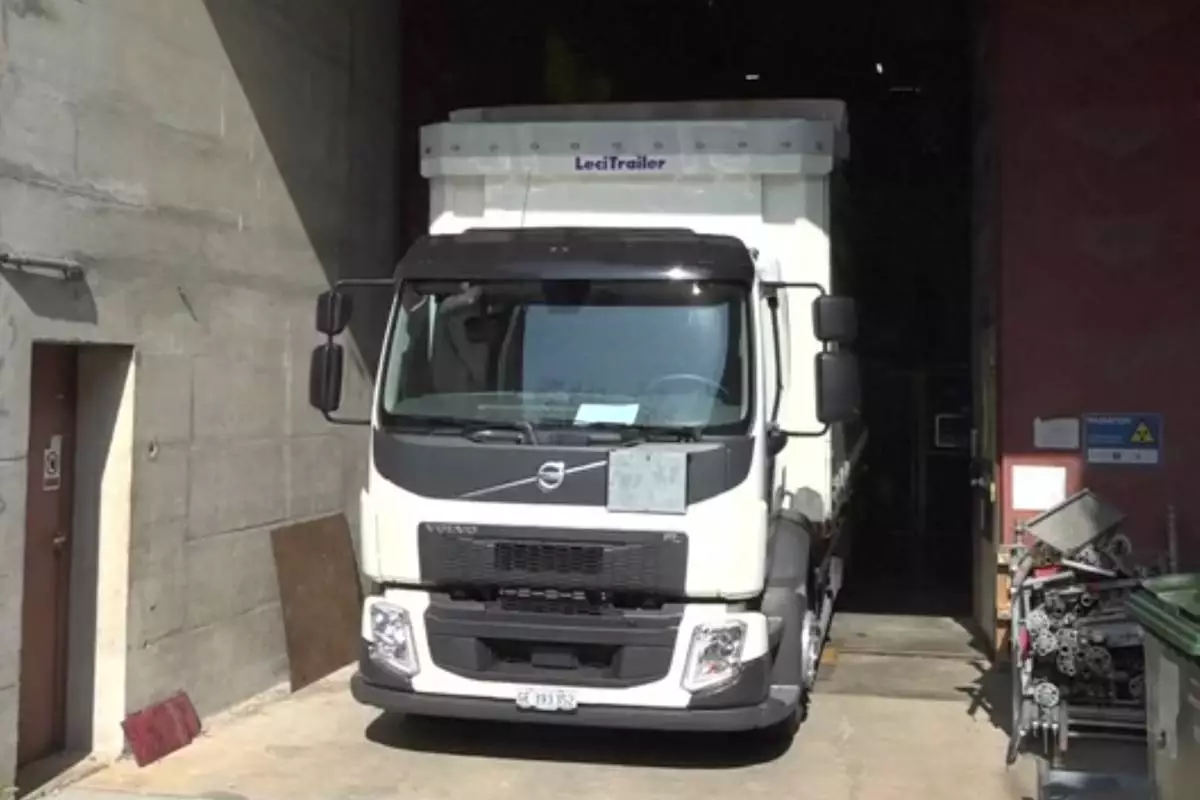
This image, taken from video, shows a truck transporting antiprotons in a first-ever test drive to study antimatter at the European Organization for Nuclear Research, CERN, in Meyrin, near Geneva, Switzerland, March 24, 2026. (AP Photo/Jamey Keaten)

FILE - The magnet core of the world's largest superconducting solenoid magnet (CMS, Compact Muon Solenoid) at the European Organization for Nuclear Research (CERN)'s Large Hadron Collider (LHC) particle accelerator, in Geneva, Switzerland, March 22, 2007. (AP Photo/Keystone, Martial Trezzini, File)
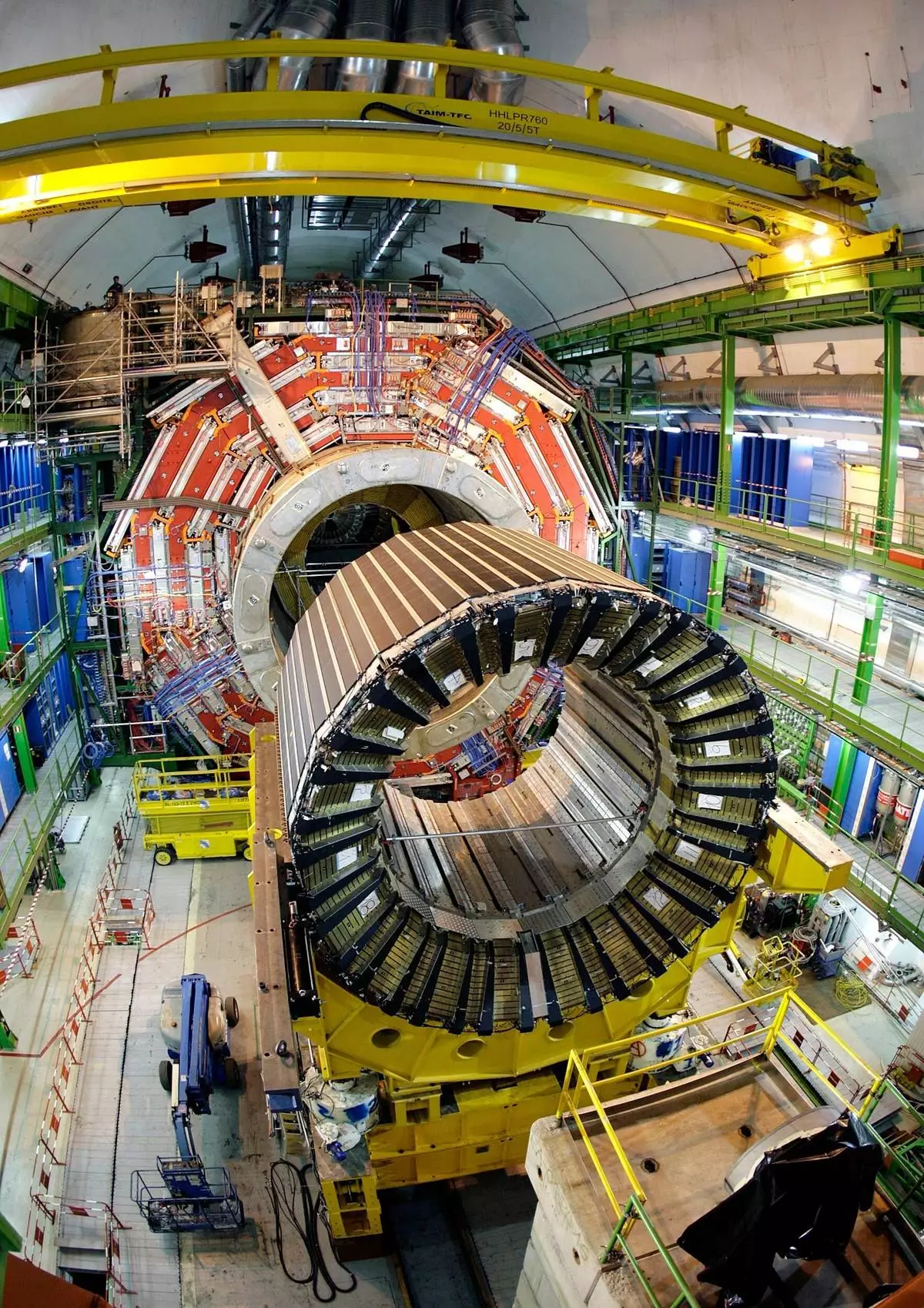
FILE - The magnet core of the world's largest superconducting solenoid magnet (CMS, Compact Muon Solenoid) at the European Organization for Nuclear Research (CERN)'s Large Hadron Collider (LHC) particle accelerator, in Geneva, Switzerland, March 22, 2007. (AP Photo/Keystone, Martial Trezzini, File)

FILE - The globe of the European Organization for Nuclear Research, CERN, is illuminated outside Geneva, Switzerland, March 30, 2010. (AP Photo/Anja Niedringhaus, File)
FILE - The globe of the European Organization for Nuclear Research, CERN, is illuminated outside Geneva, Switzerland, March 30, 2010. (AP Photo/Anja Niedringhaus, File)

FILE - A technician works in the LHC (Large Hadron Collider) tunnel of the European Organization for Nuclear Research, CERN, during a press visit in Meyrin, near Geneva, Switzerland, Feb. 16, 2016. (Laurent Gillieron/Keystone via AP, File)
FILE - A technician works in the LHC (Large Hadron Collider) tunnel of the European Organization for Nuclear Research, CERN, during a press visit in Meyrin, near Geneva, Switzerland, Feb. 16, 2016. (Laurent Gillieron/Keystone via AP, File)


FILE - A technician works in the LHC (Large Hadron Collider) tunnel of the European Organization for Nuclear Research, CERN, during a press visit in Meyrin, near Geneva, Switzerland, Feb. 16, 2016. (Laurent Gillieron/Keystone via AP, File)

FILE - A technician works in the LHC (Large Hadron Collider) tunnel of the European Organization for Nuclear Research, CERN, during a press visit in Meyrin, near Geneva, Switzerland, Feb. 16, 2016. (Laurent Gillieron/Keystone via AP, File)

DUBAI, United Arab Emirates (AP) — Iran sent its response to the latest U.S. ceasefire proposal to end the Iran war via Pakistani mediators on Sunday, but U.S. President Donald Trump quickly rejected it in a social media post as “TOTALLY UNACCEPTABLE!” — the latest setback to efforts to resolve the standoff in the Persian Gulf that has throttled shipping and sent energy prices soaring.

Iranian state media reported that Tehran rejected the U.S. proposal as amounting to surrender, insisting instead on “war reparations by the U.S., full Iranian sovereignty over the Strait of Hormuz, an end to sanctions, and the release of seized Iranian assets.”

Washington’s latest proposal addressed a deal to end the war, reopen the strait and roll back Iran’s nuclear program.

Trump's rejection of the Iranian response included no details. In an earlier post, he accused Tehran of “playing games” with the United States for nearly 50 years, adding: "They will be laughing no longer!"

Trump is giving diplomacy “every chance we possibly can before going back to hostilities,” the U.S. ambassador to the United Nations, Mike Waltz, told ABC earlier.

Iran's new supreme leader, Mojtaba Khamenei, who has not been seen or heard publicly since the war began, “issued new and decisive directives for the continuation of operations and the powerful confrontation with the enemies” while meeting with the head of the joint military command, the state broadcaster reported, with no details.

The fragile ceasefire was tested when a drone ignited a small fire on a ship off Qatar and the United Arab Emirates and Kuwait reported drones entering their airspace. The UAE said it shot down two drones and blamed Iran. No casualties were reported, and no one immediately claimed responsibility.

Qatar's Foreign Ministry called the ship attack a “dangerous and unacceptable escalation that threatens the security and safety of maritime trade routes and vital supplies in the region." The United Kingdom Maritime Trade Operations Center gave no details about the ship's owner or origin.

Kuwait Defense Ministry spokesperson Brig. Gen. Saud Abdulaziz Al Otaibi said forces responded to drones but did not say where they came from.

Iran and armed allied groups such as the Lebanese militant Hezbollah group have used drones to carry out hundreds of strikes since the war began with U.S. and Israeli attacks on Feb. 28.

Trump has reiterated threats to resume full-scale bombing if Iran does not accept an agreement to reopen the strait and roll back its nuclear program. Iran has largely blocked the strategic waterway that's key to the global flow of oil, natural gas and fertilizer since the war began, rattling world markets.

The U.S. military in turn has blockaded Iranian ports since April 13, saying it has turned back 61 commercial vessels and disabled four. On Friday, it struck two Iranian oil tankers it said were trying to breach the blockade. Iran’s Revolutionary Guard navy says any attack on Iranian oil tankers or commercial vessels would be met with a “heavy assault” on U.S. bases in the region and enemy ships.

Another sticking point in negotiations is Iran’s highly enriched uranium. The U.N. nuclear agency says Iran has more than 440 kilograms (970 pounds) enriched up to 60% purity, a short, technical step from weapons grade.

In an interview posted late Saturday, an Iranian military spokesperson said forces were on “full readiness” to protect sites where uranium is stored.

“We considered it possible that they might intend to steal it through infiltration operations or heli-borne operations,” Brig. Gen. Akrami Nia told the IRNA news agency.

Israeli Prime Minister Benjamin Netanyahu in an excerpt of an interview with CBS airing Sunday said the war isn't over because the enriched uranium needs to be taken out of Iran. “Trump has said to me, ‘I want to go in there,’ and I think it can be done physically,” he said.

Russian President Vladimir Putin said Saturday that Moscow’s proposal to take enriched uranium from Iran to help negotiate a settlement remains on the table.

The majority of Iran’s highly enriched uranium is likely at its Isfahan nuclear complex, the International Atomic Energy Agency director-general told The Associated Press last month. The facility was hit by U.S.-Israeli airstrikes in the 12-day war last year and faced less intense attacks this year.

Iran's deputy foreign minister warned against a planned French-British effort that aims to support maritime security in the Strait of Hormuz after hostilities are over.

“The presence of French and British vessels, or those of any other country, for any possible cooperation with illegal U.S. actions in the Strait of Hormuz that violate international law will be met with a decisive and immediate response from the armed forces,” Kazem Gharibabadi said on social media.

French President Emmanuel Macron responded by saying it won't be a military deployment but an international mission to secure shipping once conditions allow.

Several attacks against ships in the Persian Gulf have occurred over the past week, and a U.S. effort to “guide” ships through the strait was quickly paused.

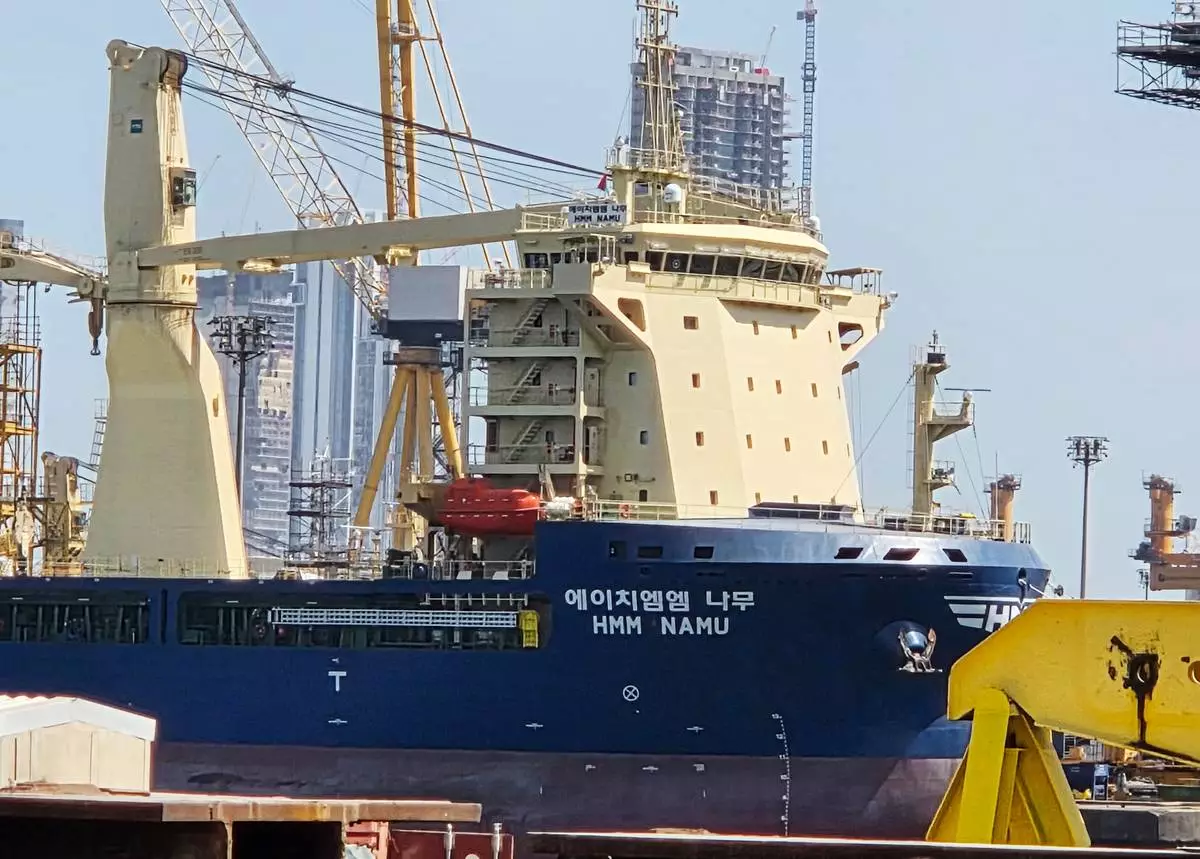
South Korea announced initial findings from an investigation that said two unidentified objects struck the South Korean-operated vessel HMM NAMU about one minute apart while it was anchored in the strait last week, causing an explosion and fire. Officials have yet to determine who was responsible.

Magdy reported from Cairo. Associated Press writers Munir Ahmed in Islamabad; Melanie Lidman in Tel Aviv, Israel; Tong-hyung Kim in Seoul, South Korea; Julia Frankel in Jerusalem and Josh Boak in Washington contributed to this report.

Women walk in northern Tehran, Iran, Sunday, May 10, 2026. (AP Photo/Vahid Salemi)

Women walk in northern Tehran, Iran, Sunday, May 10, 2026. (AP Photo/Vahid Salemi)

A Revolutionary Guard soldier stands at the counter of a fast food restaurant in northern Tehran, Iran, Sunday, May 10, 2026. (AP Photo/Vahid Salemi)

A Revolutionary Guard soldier stands at the counter of a fast food restaurant in northern Tehran, Iran, Sunday, May 10, 2026. (AP Photo/Vahid Salemi)

The front page of the Sunday May 10, 2026, edition of Iranian newspaper, Jamejam, is seen with a cartoon satirizing the U.S. President Donald Trump that asks: "Open the the Strait of Hormuz" on a news stand in northern Tehran, Iran, Sunday, May 10, 2026. (AP Photo/Vahid Salemi)

The front page of the Sunday May 10, 2026, edition of Iranian newspaper, Jamejam, is seen with a cartoon satirizing the U.S. President Donald Trump that asks: "Open the the Strait of Hormuz" on a news stand in northern Tehran, Iran, Sunday, May 10, 2026. (AP Photo/Vahid Salemi)

Vehicles drive past banners showing portraits of the school children who were killed during a strike on a school in southern town of Minab on Feb. 28, at Tajrish square in northern Tehran, Iran, Sunday, May 10, 2026. (AP Photo/Vahid Salemi)

Vehicles drive past banners showing portraits of the school children who were killed during a strike on a school in southern town of Minab on Feb. 28, at Tajrish square in northern Tehran, Iran, Sunday, May 10, 2026. (AP Photo/Vahid Salemi)

The South Korean-operated vessel HMM NAMU is docked after being damaged from a fire following an explosion in the Strait of Hormuz, at a port in Dubai, United Arab Emirates, Friday, May 8, 2026. (Kim Sang-hun/Yonhap via AP)

The South Korean-operated vessel HMM NAMU is docked after being damaged from a fire following an explosion in the Strait of Hormuz, at a port in Dubai, United Arab Emirates, Friday, May 8, 2026. (Kim Sang-hun/Yonhap via AP)

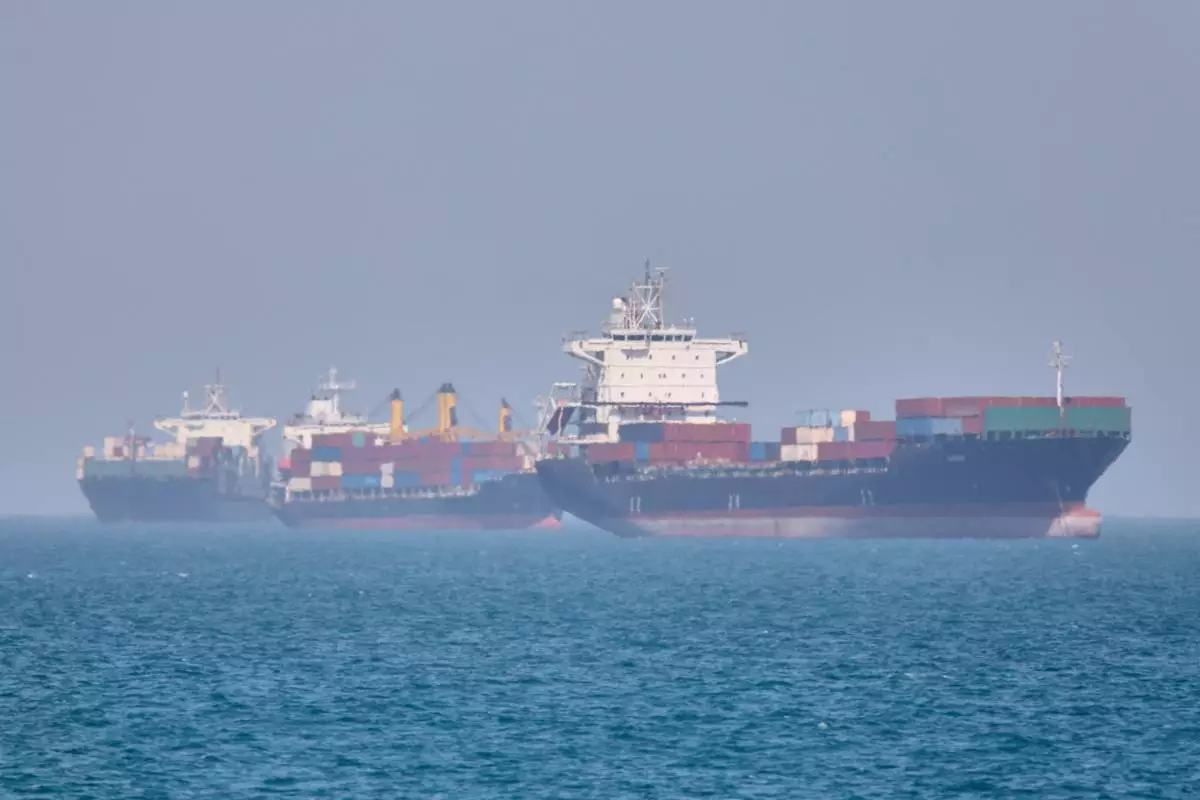
Container ships sit at anchor in the Strait of Hormuz off Bandar Abbas, Iran, Saturday, May 2, 2026.(Amirhosein Khorgooi/ISNA via AP)

Container ships sit at anchor in the Strait of Hormuz off Bandar Abbas, Iran, Saturday, May 2, 2026.(Amirhosein Khorgooi/ISNA via AP)

Recommended Articles