Skip to Content Facebook Feature Image

China builds world's largest agrometeorological observation network

China

China

China

China builds world's largest agrometeorological observation network

2026-03-24 17:13 Last Updated At:03-25 13:35

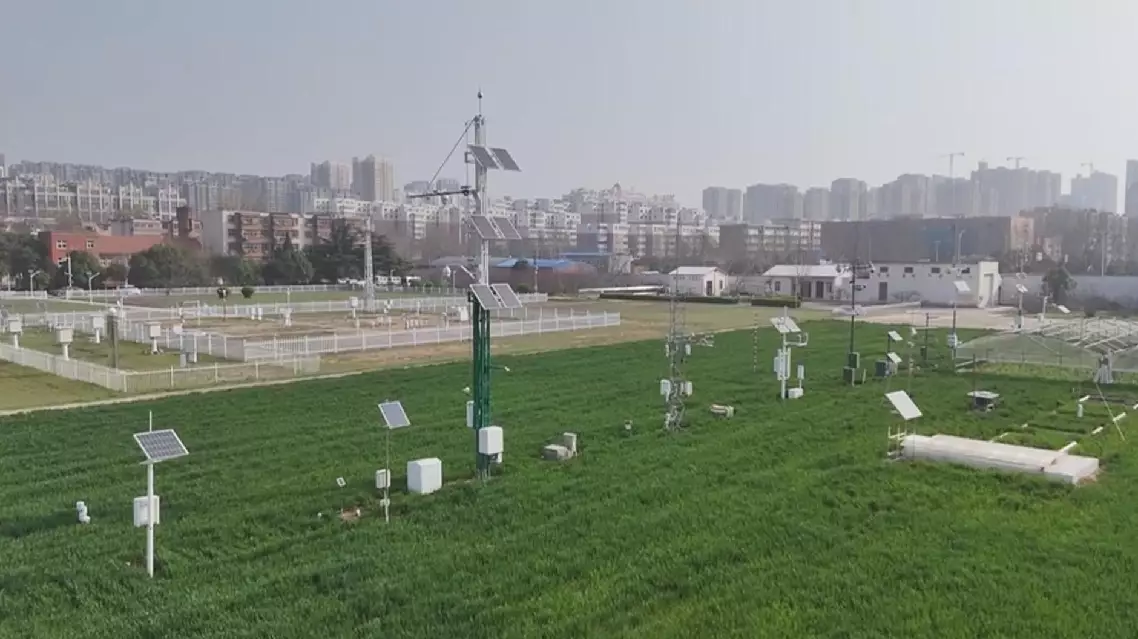
China has established the world's largest agrometeorological observation network, integrating space, sky and ground monitoring with cutting-edge technologies to drive the development of smart agriculture, according to the China Meteorological Administration.

As the country enters the peak season for spring plowing and sowing, the network is providing critical support for agricultural production.

In Henan Province, north China, the country's major grain-producing region, meteorological scientists are using data from 48 phenological observation stations to monitor wheat growth in real time. By analyzing key indicators such as leaf chlorophyll content, the system enables clear and accurate assessments of crop health. Combined with Fengyun meteorological satellites and drone-mounted remote sensing, the network automatically tracks crop height and growing conditions.

Henan has now achieved full meteorological monitoring coverage across its core grain-producing areas. Nationwide, the network includes 1,380 agrometeorological stations covering all major grain-producing regions, the largest system of its kind in the world.

The network is also integrated with data from the Ministry of Agriculture and Rural Affairs, facilitating resource sharing and collaborative analysis.

Powered by technologies such as artificial intelligence, laser sensing and remote sensing, China is now the world's only country capable of automatically collecting data on crop development stages, with accuracy reaching 90 percent. The system can also issue early warnings for rice-related physiological disasters up to 48 hours in advance.

The system's applications extend beyond yield forecasting and disaster assessment, providing critical data support for farmland quality monitoring and seed industry innovation.
China builds world's largest agrometeorological observation network


China builds world's largest agrometeorological observation network

The World Health Organization (WHO) said on Thursday that a clinical trial of two therapeutics had begun enrolling patients in the Democratic Republic of the Congo (DR Congo) to evaluate potential treatments for the Bundibugyo Ebola strain.

WHO Director-General Tedros Adhanom Ghebreyesus told a media briefing that the trial will evaluate the monoclonal antibody MBP134 and the antiviral drug remdesivir -- both alone and in combination -- to determine whether they can improve survival among patients diagnosed with Bundibugyo virus disease.

Patients enrolled will receive "comprehensive supportive care and close follow-up," Tedros said, adding that WHO is working to ensure access to the drugs should they prove safe and effective.

Meanwhile, Vasee Moorthy, acting lead for the Research and Development Blueprint in WHO's Office of the Chief Scientist, cautioned that it could take months and even go into next year to get the results, and more than 1,000 patients may need to be enrolled before a definitive answer emerges, or it could be earlier if there's a very high efficacy from the trial.

The trial came as the epidemic continues to expand, with an average of 38 new confirmed cases every day for the past two weeks.

According to the latest data released by the DR Congo government on Thursday, Ebola cases in the country had risen to 1,460, including 447 deaths.

A total of 595 patients were currently in isolation or hospitalized, while 213 patients had recovered. The rate of contact follow-up across the three affected provinces stood at 82.7 percent, the data showed.

WHO begins clinical trial to evaluate potential Ebola treatments in DR Congo

WHO begins clinical trial to evaluate potential Ebola treatments in DR Congo

Recommended Articles