Skip to Content Facebook Feature Image

Georgia could become the first state with weapons detection in all public schools

News

Georgia could become the first state with weapons detection in all public schools
News

News

Georgia could become the first state with weapons detection in all public schools

2026-03-25 00:46 Last Updated At:01:00

ATLANTA (AP) — Georgia could become the first state to require every student to be checked for weapons when arriving at a public school each day.

A bill is nearing passage that would require weapons detection systems in a further reaction to a 2024 school shooting that killed four.

More Images
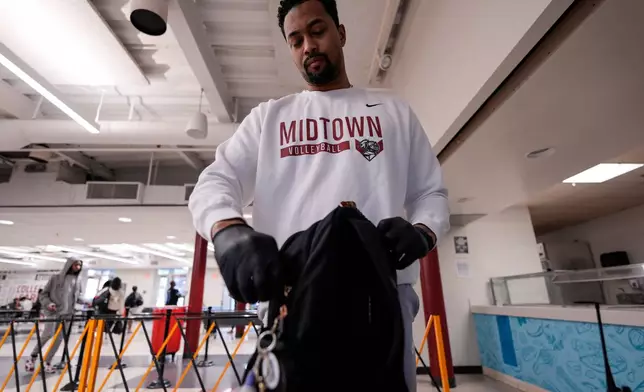
Athletic director Rod Hill checks a student's bag at Midtown High School, Friday, March 6, 2026, in Atlanta. (AP Photo/Mike Stewart)
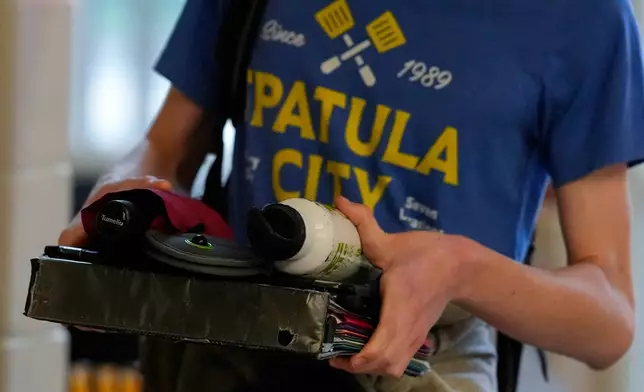
Athletic director Rod Hill checks a student's bag at Midtown High School, Friday, March 6, 2026, in Atlanta. (AP Photo/Mike Stewart)

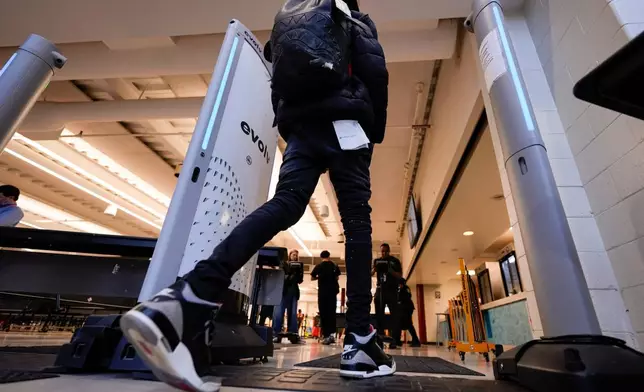
A student walks through a secure entrance at Midtown High School, Friday, March 6, 2026, in Atlanta. (AP Photo/Mike Stewart)
A student walks through a secure entrance at Midtown High School, Friday, March 6, 2026, in Atlanta. (AP Photo/Mike Stewart)

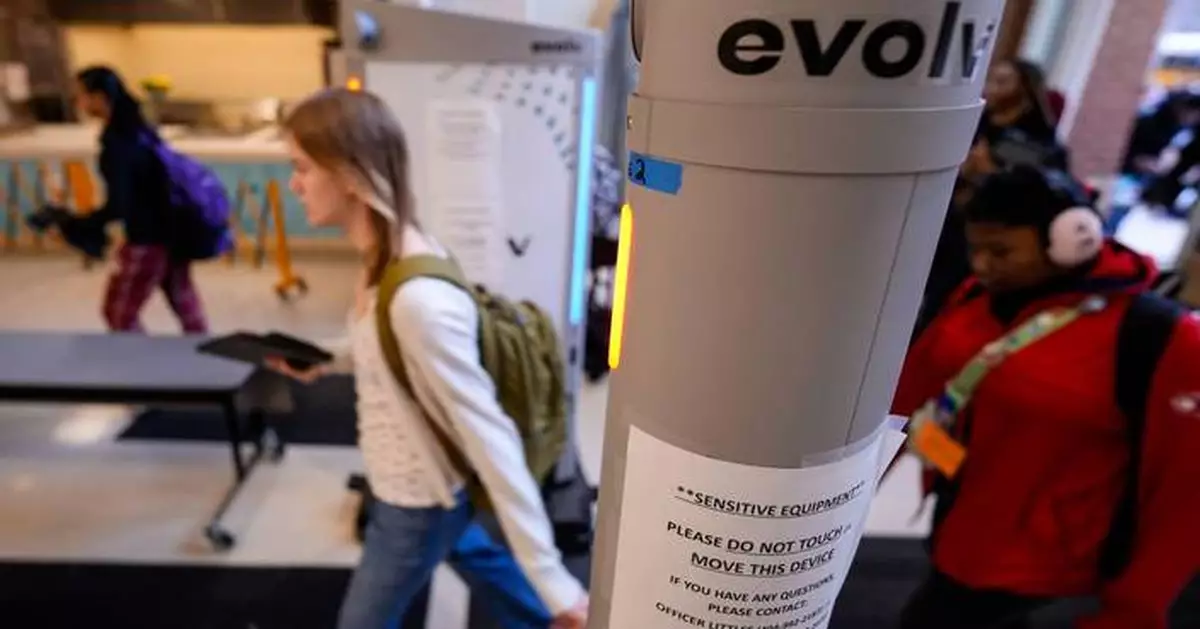
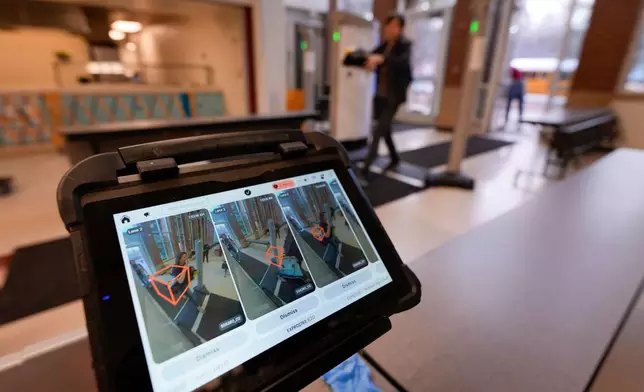
An alert resolution tablet is seen in the security area at Midtown High School, Friday, March 6, 2026, in Atlanta. (AP Photo/Mike Stewart)
An alert resolution tablet is seen in the security area at Midtown High School, Friday, March 6, 2026, in Atlanta. (AP Photo/Mike Stewart)

A student walks through security at Midtown High School, Friday, March 6, 2026, in Atlanta. (AP Photo/Mike Stewart)
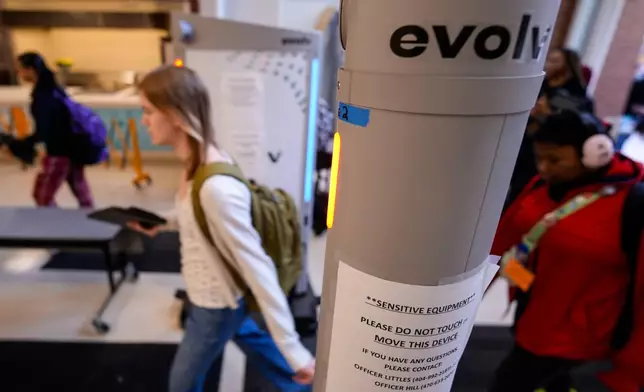
A student walks through security at Midtown High School, Friday, March 6, 2026, in Atlanta. (AP Photo/Mike Stewart)

Students enter a security checkpoint at Midtown High School, Friday, March 6, 2026, in Atlanta. (AP Photo/Mike Stewart)

Students enter a security checkpoint at Midtown High School, Friday, March 6, 2026, in Atlanta. (AP Photo/Mike Stewart)

“That rifle would have never reached our hallways," said Daria Lezczynska, a junior at Apalachee High School in Winder, where the shooting took place. “Lives would have been saved. Families would not be grieving, Students like me would not be carrying this trauma.”

Some schools have long used metal detectors or required students to carry clear backpacks to cut down on weapons. But a new generation of technology marries computer analysis with cameras or the same electromagnetic fields as metal detectors to detect knives and guns. The systems have spread rapidly through schools, arenas, stadiums and hospitals.

“It’s very commonplace for me to walk through a weapons detection system when I enter into a courthouse," said Chuck Efstration, the bill's sponsor and Republican house majority leader who represents the Apalachee campus. "Georgia’s students and educators deserve similar security with weapons detection systems inside of every Georgia public school.”

There’s little rigorous research nationwide proving that weapons detectors prevent school shootings. In Georgia, there are questions about who will pay what can be $10,000 or more per system. School employees must staff checkpoints and search bags. And even supporters of the systems say searchers can become dulled by a multitude of false alarms and miss the few actual weapons. Some question whether weapons detectors are necessary in elementary schools, as Efstration's bill mandates. And those who find Georgia's gun laws too permissive say installing weapons detectors everywhere is a form of surrender, accepting that society will be awash in guns and violence.

A Senate committee on Monday passed an amended version of Efstration’s bill, meaning it needs final votes in the Senate and House in the closing days of Georgia's 2026 legislative session before reaching Republican Gov. Brian Kemp’s desk for his signature or veto.

It's unclear how many schools nationwide use weapons detectors. A U.S. Department of Education survey found that in the 2021-2022 school year, 6.2% of all schools and 14.2% of high schools nationwide required random metal detector checks. Only 2.4% of all schools and 6.2% of high schools required daily metal detector checks. More schools required clear bookbags or banned bookbags than required daily metal detector checks. Checks were more likely to be required when a school was in a city, when the majority of students were nonwhite, and when large majorities of students were poor.

Atlanta's school district spent more than $4 million to roll out new systems in 2021 in middle and high schools, replacing old-style metal detectors. District Police Chief Ronald Applin said officials wanted something that students could move through more quickly, saying traditional detectors were “too cumbersome.”

Applin said guns found at Atlanta schools fell from 32 the year before the new system to four so far this year.

The 1,700 students at Midtown High School typically hold their laptops in the air as they pass through detection gates, with a computer screen telling employees whether a bag needs a secondary search.

“It’s not real adversarial at the metal detector," said School Resource Officer Meredith Littles. "A lot of people get worried about the dynamics of what that looks like. But it’s very non-intrusive.”

One key question is how sensitive to make the system, said Nikita Ermolaev, a research engineer at IPVM, which tests and researches security technology. Too sensitive, and alarms go off for everything. Not sensitive enough, and weapons slip through. And trying to maintain vigilance is a challenge.

“You have 100 alarms and the first 99 of them are false alarms on laptops or binders, right? You’re naturally going to assume that the 100th alarm is also going to be on something benign,” Ermolaev said. “And that’s how sometimes weapons such as guns or knives can go through the system.”

Then there's the cost. Georgia gives each public school campus $50,000 a year for school safety, but many districts are already using that money to pay on-campus officers. House budget writers have proposed borrowing an additional $50 million for grants to districts.

“While we absolutely think weapons detection is imperative, it can only be made possible with appropriate funding,” said Gretchen Walton, an assistant superintendent in Cobb County, which with 103,000 students is Georgia's second-largest school system.

Others, including some Democrats, see the focus on weapons detection as misplaced. They say Georgia should be looking to limit children's access to guns.

“We have allowed guns and weapons of war to become more available than a pack of gum in this state, then act confused when people keep dying,” said Democratic state Rep. Bryce Berry, a public school teacher who voted against the bill in the House. “Let’s stop hiding behind procedure and politics and pretending that the threat our children face is some vague, mysterious force.”
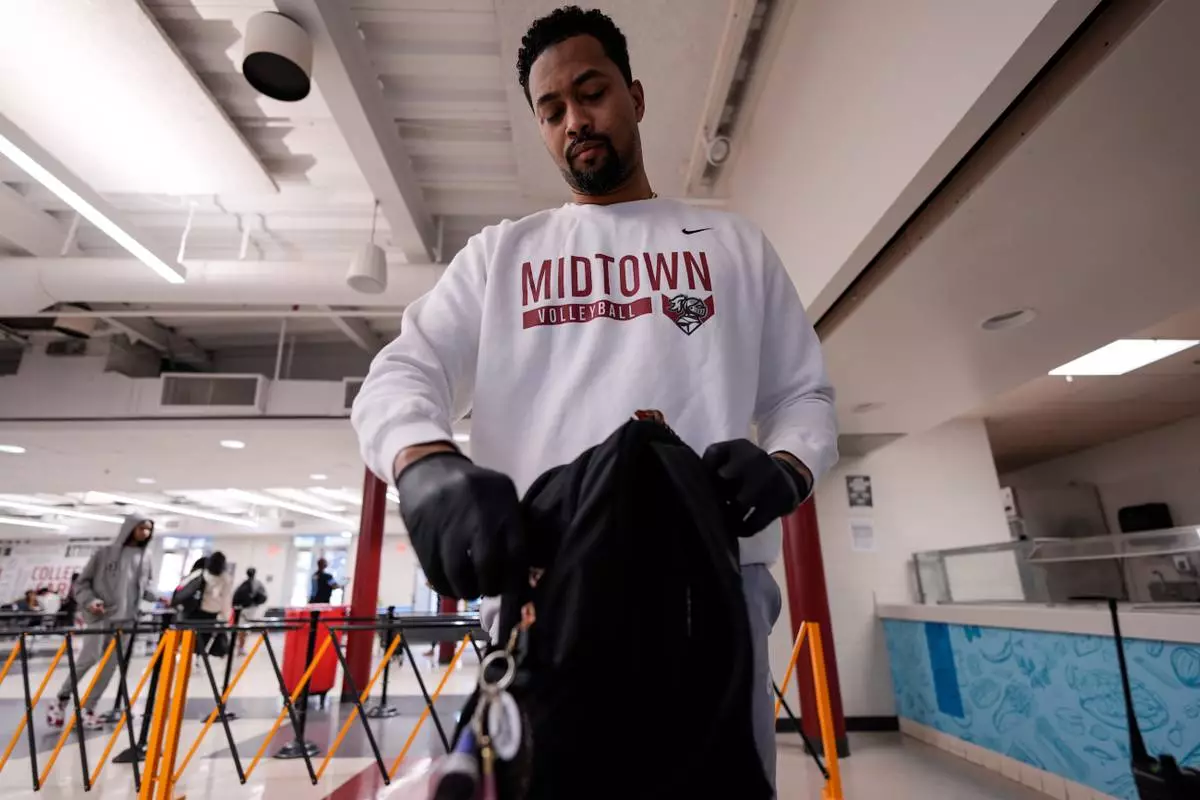
Athletic director Rod Hill checks a student's bag at Midtown High School, Friday, March 6, 2026, in Atlanta. (AP Photo/Mike Stewart)
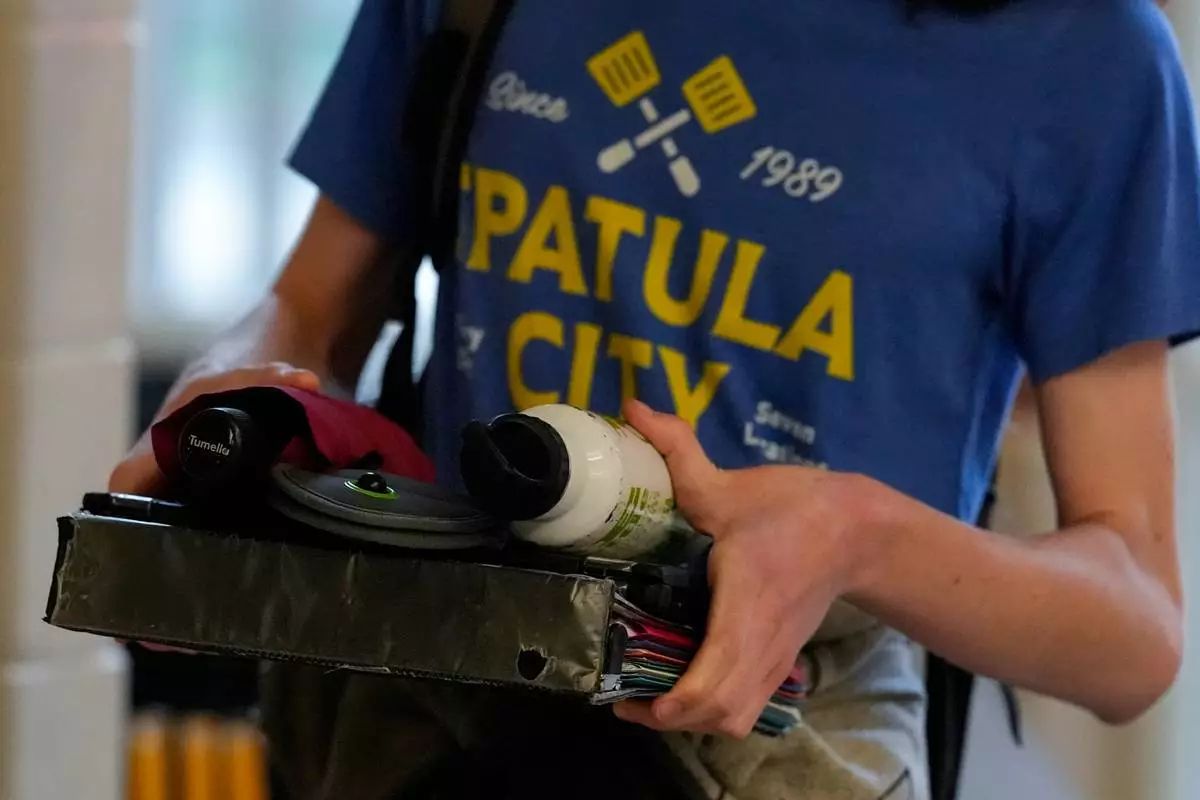
Athletic director Rod Hill checks a student's bag at Midtown High School, Friday, March 6, 2026, in Atlanta. (AP Photo/Mike Stewart)

A student walks through a secure entrance at Midtown High School, Friday, March 6, 2026, in Atlanta. (AP Photo/Mike Stewart)
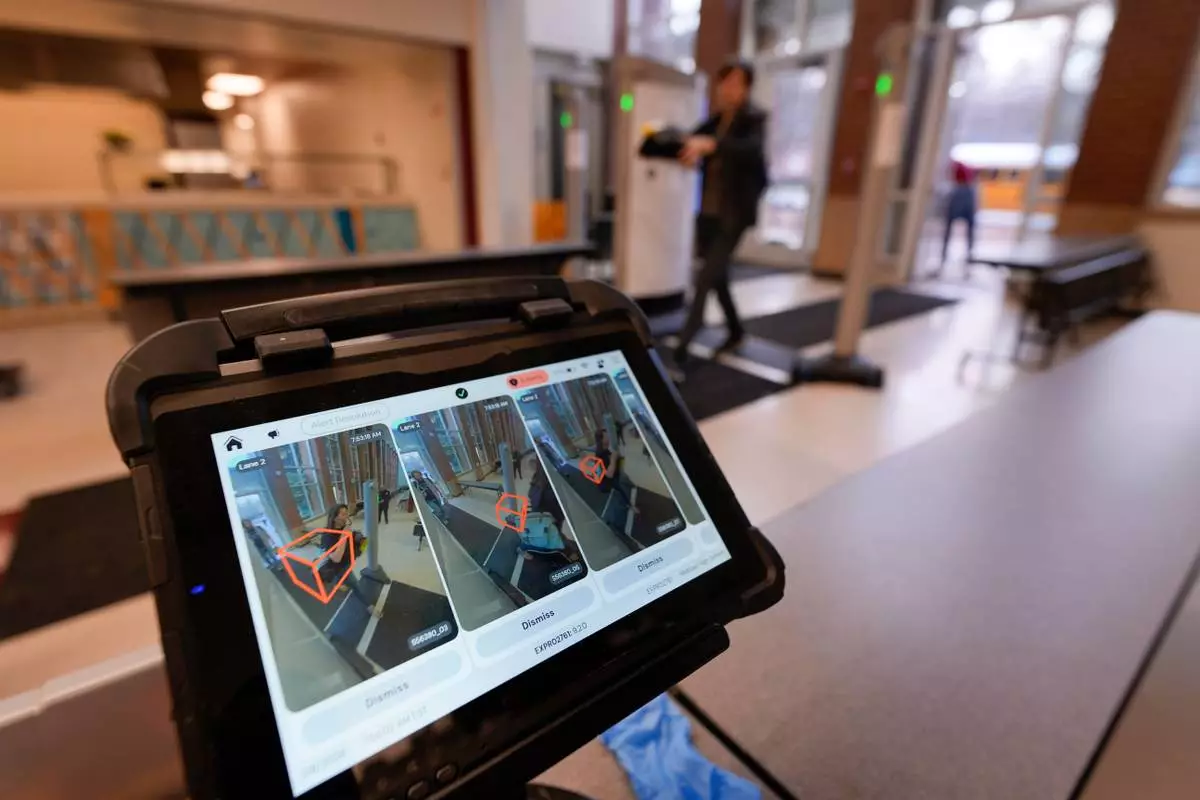
A student walks through a secure entrance at Midtown High School, Friday, March 6, 2026, in Atlanta. (AP Photo/Mike Stewart)

An alert resolution tablet is seen in the security area at Midtown High School, Friday, March 6, 2026, in Atlanta. (AP Photo/Mike Stewart)
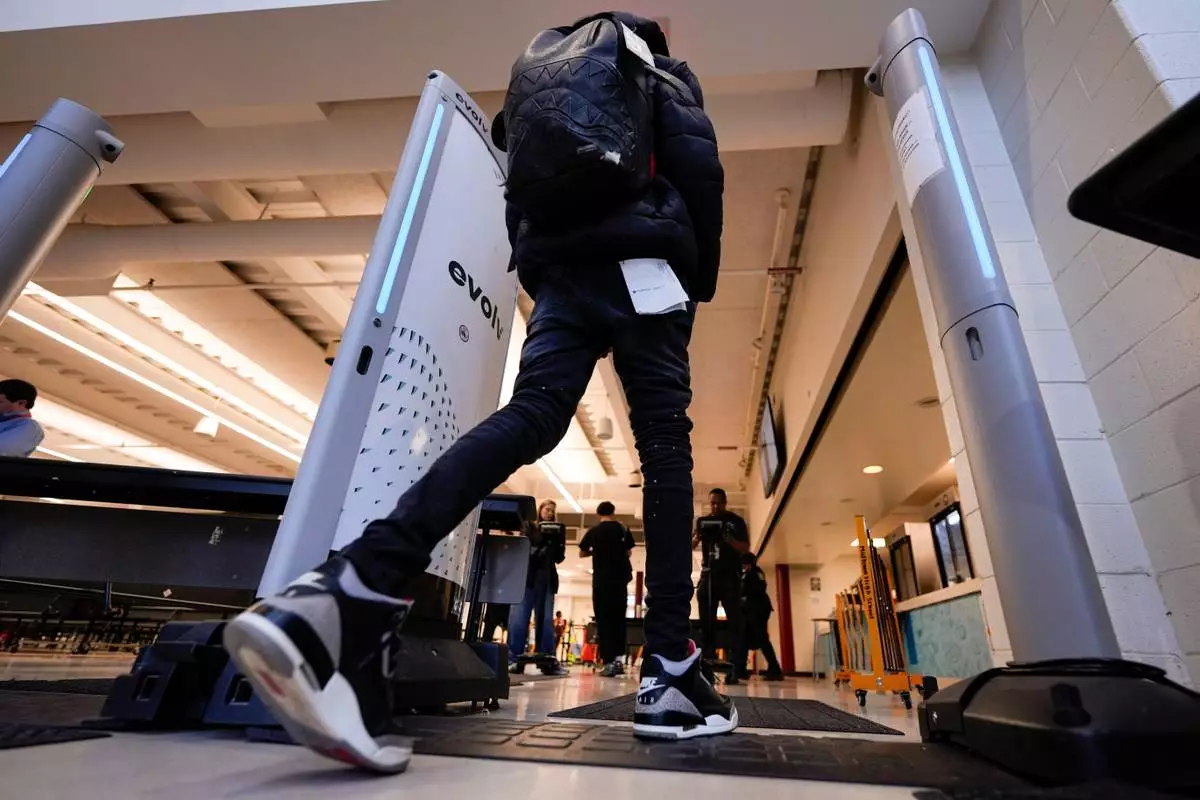
An alert resolution tablet is seen in the security area at Midtown High School, Friday, March 6, 2026, in Atlanta. (AP Photo/Mike Stewart)

A student walks through security at Midtown High School, Friday, March 6, 2026, in Atlanta. (AP Photo/Mike Stewart)
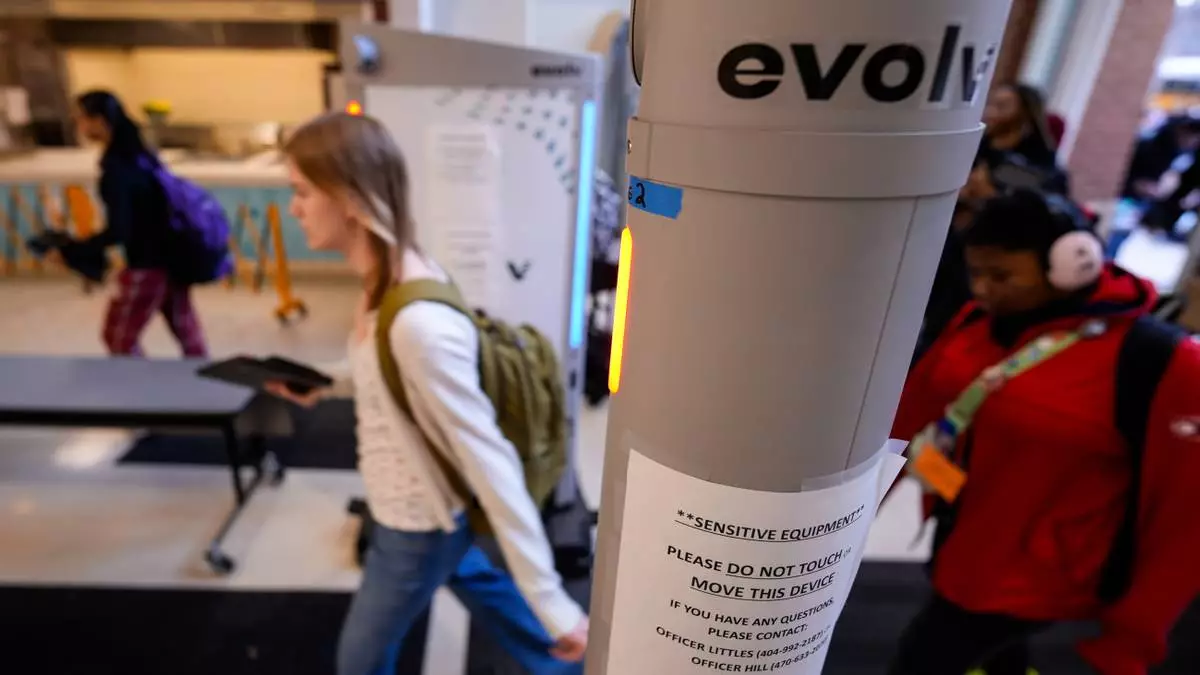
A student walks through security at Midtown High School, Friday, March 6, 2026, in Atlanta. (AP Photo/Mike Stewart)

Students enter a security checkpoint at Midtown High School, Friday, March 6, 2026, in Atlanta. (AP Photo/Mike Stewart)
Students enter a security checkpoint at Midtown High School, Friday, March 6, 2026, in Atlanta. (AP Photo/Mike Stewart)
NEW YORK (AP) — The U.S. stock market is swinging between losses and gains Tuesday as uncertainty continues about how long the war with Iran will last.

The S&P 500 initially dropped 0.8% in the morning and erased much of its surge from Monday. But it trimmed that loss by afternoon trading and was down 0.1%, as of 12:50 p.m. Eastern time. The Dow Jones Industrial Average added 86 points, or 0.2%, while the Nasdaq composite fell 0.5%.

Markets have been on a roller coaster since President Donald Trump raised hopes that the war with Iran could end soon when he said Monday that the United States and Iran held productive talks “regarding a complete and total resolution of our hostilities in the Middle East.” His announcement, which came just before Wall Street opened for trading, caused financial markets worldwide to flip immediately.

It calmed worries that the war may cause a long-term disruption to the oil and natural gas industry in the Persian Gulf, one big enough to send a blast of inflation to the region’s customers worldwide.

But the market got both encouraging and discouraging signals about the war on Tuesday. On one side, attacks continued in the Middle East after Iran denied having direct talks with the United States. On the other, Pakistan’s Prime Minister Shehbaz Sharif wrote on X that his country is ready to “facilitate meaningful and conclusive talks” to end the Iran war.

After all that, the price for a barrel of Brent crude oil rose 3.9% to $103.82, a day after slumping more than 10%. Benchmark U.S. crude rose 4.6% to $92.16 per barrel and clawed back some of its own 10.3% plunge from the day before.

In the bond market, Treasury yields returned to rising and upped the pressure on financial markets worldwide. Higher yields make mortgages and other kinds of borrowing more expensive for households and for businesses, which slows the economy. They also hurt prices for all kinds of investments, from stocks to gold to cryptocurrencies.

High Treasury yields and disruption in the bond market were factors that Trump named a year ago when he backed off his initial threats for global tariffs made on “Liberation Day.” The moves caused critics to allege that Trump always chickens out, or “TACO,” if financial markets show enough pain.

The yield on the 10-year Treasury rose to 4.37% from 4.34% late Monday and from just 3.97% before the war.

The yield on the two-year Treasury, which more closely tracks expectations for what the Federal Reserve will do with overnight interest rates, rose to 3.89% from 3.83% late Monday.

The Fed came into this year with expectations of resuming its cuts to interest rates, which would give the economy a boost. But oil prices have jumped so much and the threat of high inflation is so large that traders have nearly erased their bets for a cut to rates this year. Instead, some are even betting on the possibility that the Fed may have to hike rates by December, according to data from CME Group.

Higher interest rates would slow the economy, but they would also help keep a lid on inflation.

On Wall Street, Estee Lauder dropped 9.7% to one of the market's sharpest losses after it confirmed it’s in merger talks with Spanish cosmetics company Puig. The potential deal could put such brands as MAC, Clinique, Charlotte Tilbury and Apivita together under one company. Estee Lauder said no final decision has been made yet.

On the winning side of Wall Street was Smithfield Foods. Its stock rose 4.8% after the meat company reported stronger profit and revenue for the latest quarter than analysts expected.

Stocks of oil-related companies also helped to lift the market after crude prices rebounded. Exxon Mobil rallied 2.8%, and ConocoPhillips gained 2.3%.

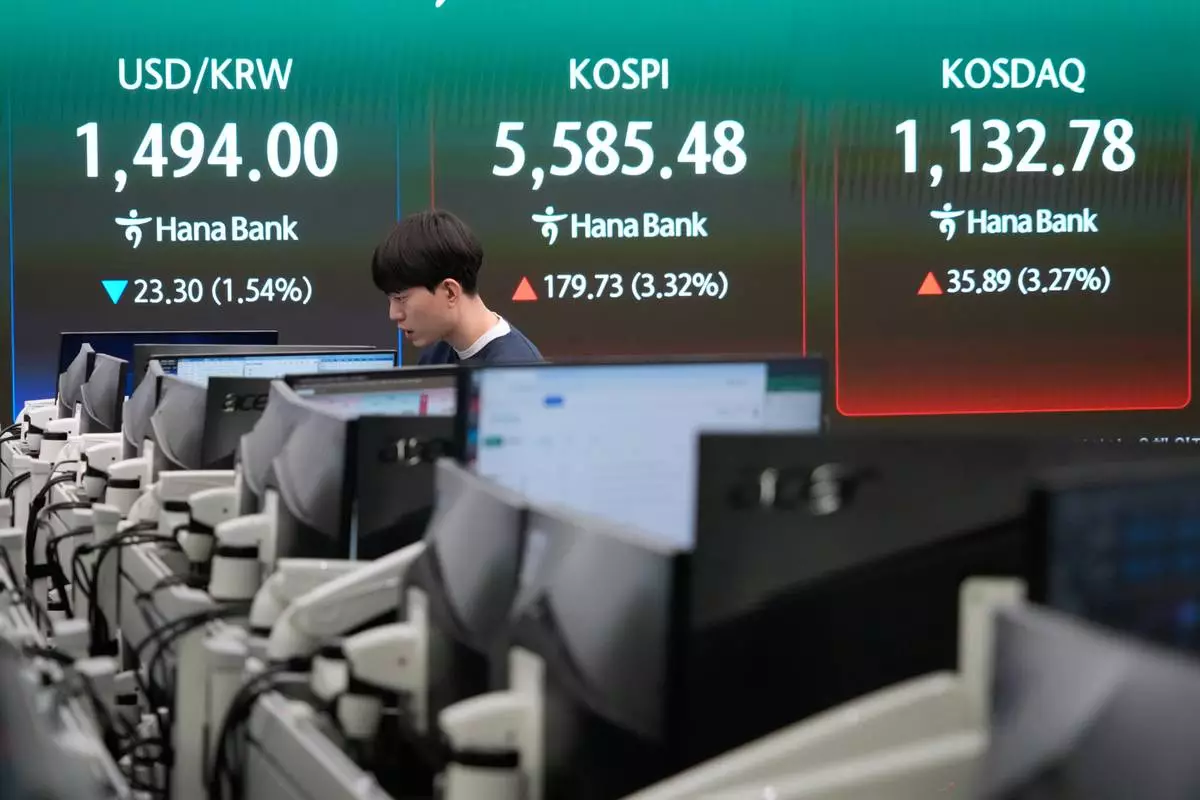
In stock markets abroad, indexes were mixed in Europe. Asian stocks rose in their first chance to trade following Trump’s announcement about talks with Iran. Hong Kong’s Hang Seng jumped 2.8%, and South Korea’s Kospi climbed 2.7% for two of the world’s larger moves.

AP Business Writers Yuri Kageyama and Matt Ott contributed.

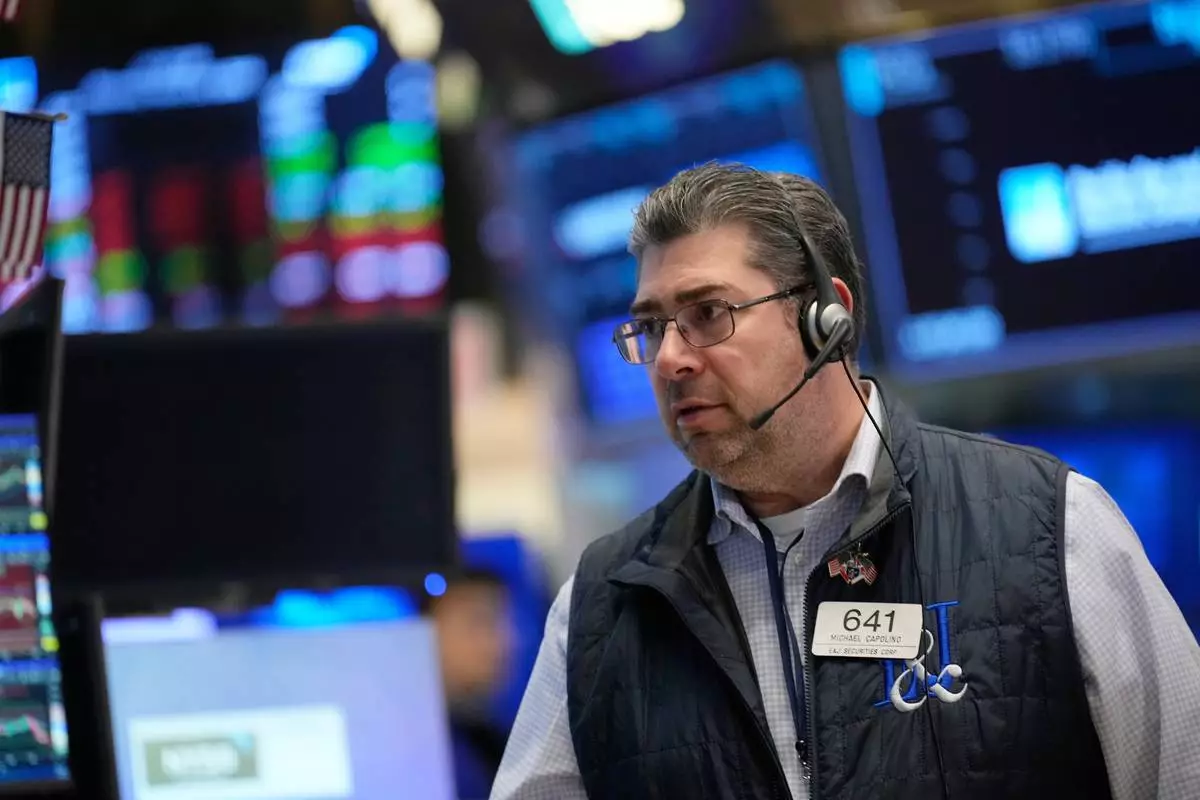
Michael Capolino works on the floor at the New York Stock Exchange in New York, Thursday, March 19, 2026. (AP Photo/Seth Wenig)

Michael Capolino works on the floor at the New York Stock Exchange in New York, Thursday, March 19, 2026. (AP Photo/Seth Wenig)

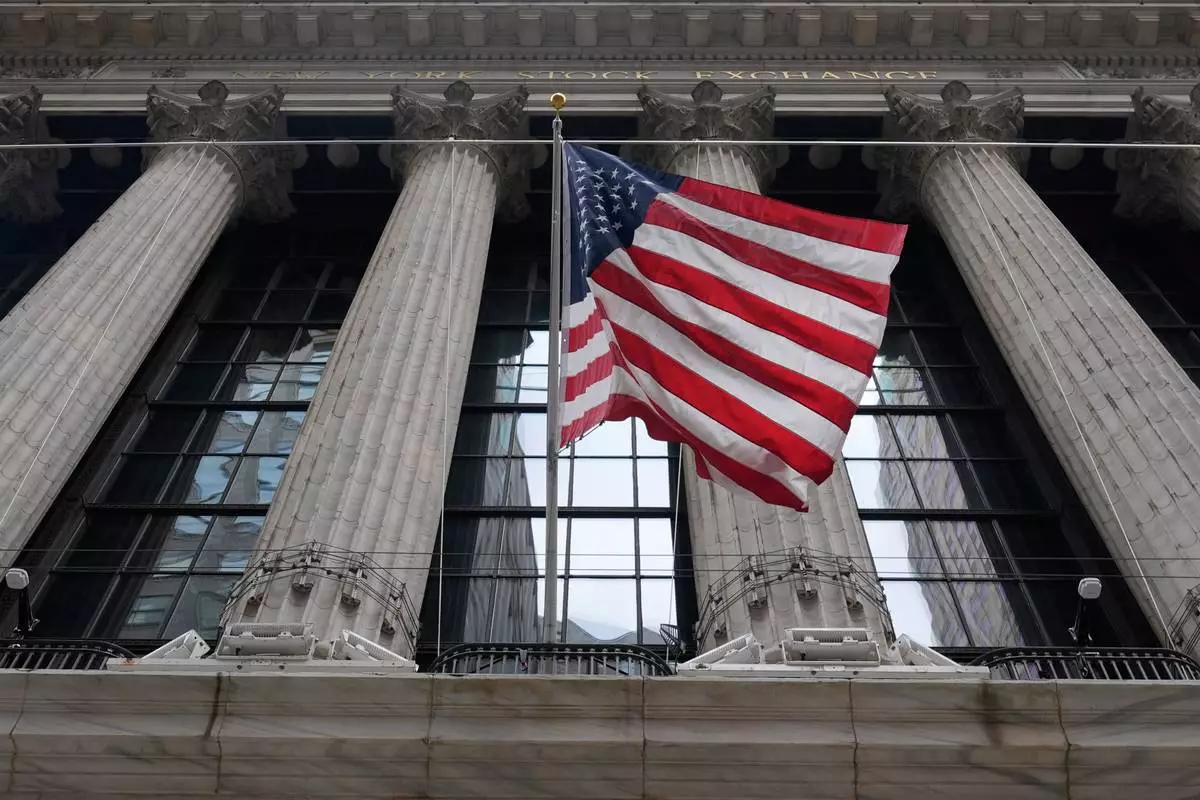
The New York Stock Exchange is seen in New York, Thursday, March 19, 2026. (AP Photo/Seth Wenig)

The New York Stock Exchange is seen in New York, Thursday, March 19, 2026. (AP Photo/Seth Wenig)

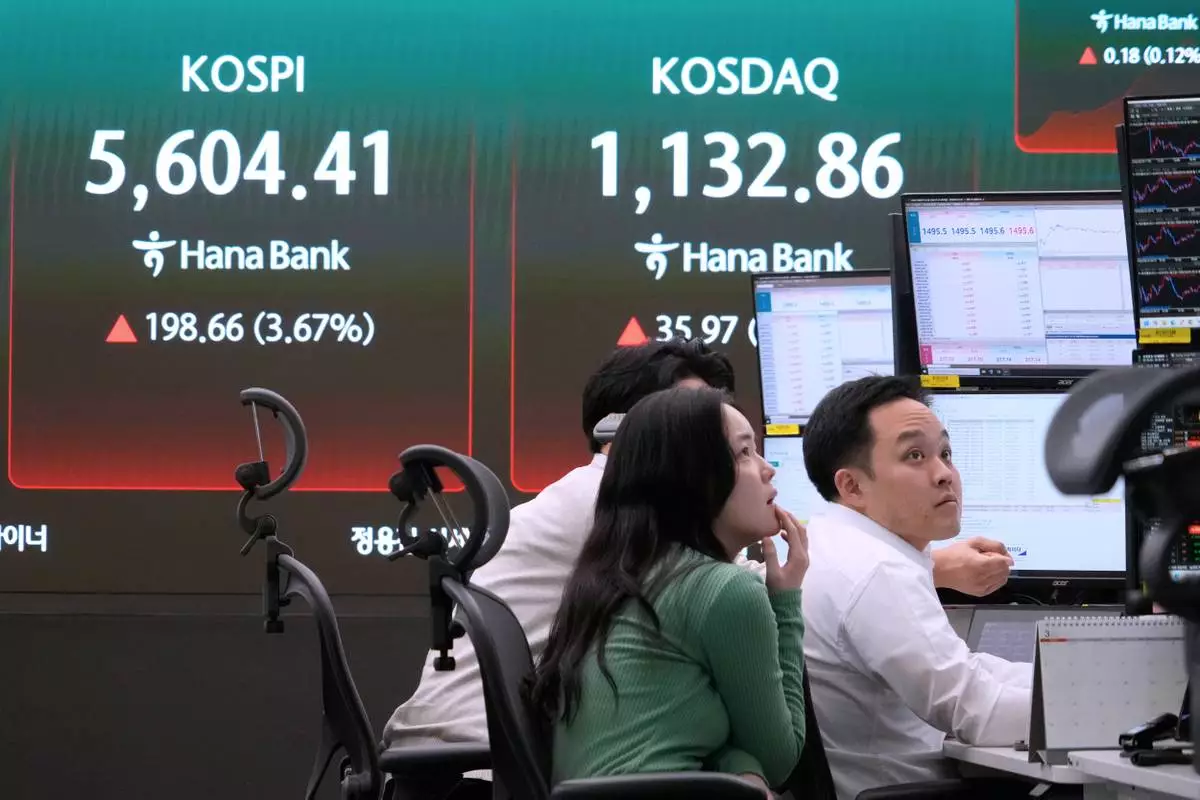
A currency trader watches monitors near a screen showing the Korea Composite Stock Price Index (KOSPI), top center, and the foreign exchange rate between U.S. dollar and South Korean won, top center left, at the foreign exchange dealing room of the Hana Bank headquarters in Seoul, South Korea, Tuesday, March 24, 2026. (AP Photo/Ahn Young-joon)

A currency trader watches monitors near a screen showing the Korea Composite Stock Price Index (KOSPI), top center, and the foreign exchange rate between U.S. dollar and South Korean won, top center left, at the foreign exchange dealing room of the Hana Bank headquarters in Seoul, South Korea, Tuesday, March 24, 2026. (AP Photo/Ahn Young-joon)

Currency traders watch monitors near a screen showing the Korea Composite Stock Price Index (KOSPI), left, at the foreign exchange dealing room of the Hana Bank headquarters in Seoul, South Korea, Tuesday, March 24, 2026. (AP Photo/Ahn Young-joon)

Currency traders watch monitors near a screen showing the Korea Composite Stock Price Index (KOSPI), left, at the foreign exchange dealing room of the Hana Bank headquarters in Seoul, South Korea, Tuesday, March 24, 2026. (AP Photo/Ahn Young-joon)

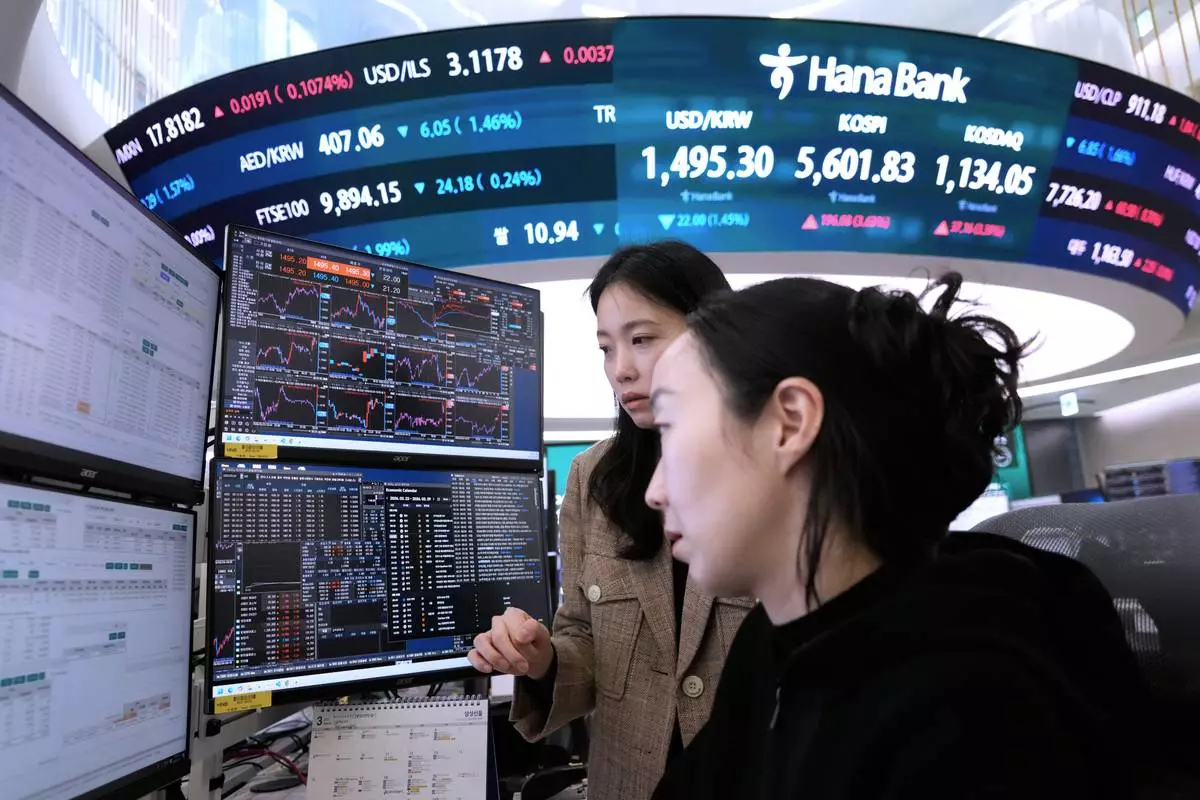
Currency traders watch monitors near a screen showing the Korea Composite Stock Price Index (KOSPI), top center, and the foreign exchange rate between U.S. dollar and South Korean won, top center left, at the foreign exchange dealing room of the Hana Bank headquarters in Seoul, South Korea, Tuesday, March 24, 2026. (AP Photo/Ahn Young-joon)

Currency traders watch monitors near a screen showing the Korea Composite Stock Price Index (KOSPI), top center, and the foreign exchange rate between U.S. dollar and South Korean won, top center left, at the foreign exchange dealing room of the Hana Bank headquarters in Seoul, South Korea, Tuesday, March 24, 2026. (AP Photo/Ahn Young-joon)

Recommended Articles