HONOLULU (AP) — Crews on Tuesday began evaluating damage from a surprise downpour that sent floodwaters raging through a neighborhood near downtown Honolulu — the latest bout in a series of storms and flooding that have pummeled the state over the past two weeks.
Residents along Oahu's North Shore, famous for its big wave surfing, were cleaning up from the worst flooding to hit Hawaii in two decades when a storm Monday unleashed several inches of rain on the southern part of the island. Reddish-brown torrents gushed along roads in the Manoa Valley, a few miles east of downtown Honolulu, sweeping away parked cars and swamping much of the neighborhood.
“I was shocked to see how much flash flooding there was in my area,” said resident Andrew Phomsouvanh, who recorded video of streets transformed into a confluence of rapids. “The water just keeps coming.”
Natalie Aczon had gone to the drugstore to pick up some medication for her mother on Monday. By the time she left the store some 15 minutes later, water was roaring down the street next to the shopping center.
“People came running out from Longs and one of the guys actually said, ‘That’s my white car.’ And it had elevated,” she said.
The ferocity of Monday's downpour even took National Weather Service meteorologists aback. They knew that lingering instability from a powerful winter storm system called a “Kona low” could yield more rain, but their models aren't good at predicting how much moisture can remain in such systems, said forecaster Cole Evans.
“When you think it's over it's not quite over,” he said Tuesday.
The downpour, which dumped 2 to 4 inches (5 to 10 centimeters) of rain per hour, was highly localized: One rain gauge in the upper part of the valley recorded 6 inches (15 centimeters), while the airport a few miles away got just one-hundredth of an inch (less than a millimeter).
Honolulu Mayor Rick Blangiardi called it a “classic rain bomb,” and he said that earlier in the day, the skies were sunny.
“We had no warning,” he said Tuesday as he toured the damage.
The Kona low was moving off to the east, Evans said, and it should not pose further risk of bursts like Monday's burst. Flood watches were in effect for parts of Maui and the Big Island.
There were no immediate reports of deaths or serious injuries, but authorities said hundreds of homes on Oahu's North Shore had been damaged by last week's flooding, which came as heavy rains fell on soil already saturated by downpours from a winter storm a week earlier.
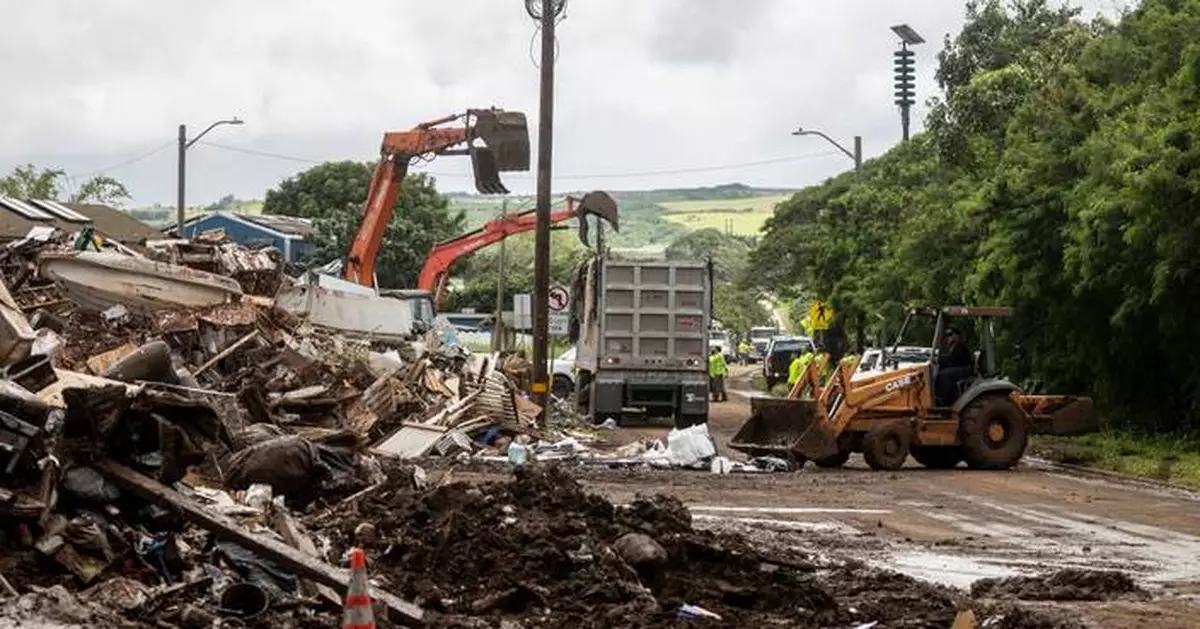
More than 230 people had to be rescued. The water pushed houses off their foundations, floated cars out of parking spots and left walls, floor and counters covered with thick, reddish volcanic mud.
Evacuation orders covered 5,500 people north of Honolulu, and some residents fled on surfboards as water reached waist or chest high.
Farms around the state reported more than $9.4 million worth of damage as of Monday, according to a survey conducted by Agriculture Stewardship Hawaii, the Hawaii Farm Bureau and other organizations.
Even before Monday, Gov. Josh Green said the cost of the storm could top $1 billion, including damage to airports, schools, roads, homes and a Maui hospital in Kula. He called it the state’s most serious since flooding since 2004, when floods in Manoa inundated homes and a University of Hawaii library.
Green's office said Tuesday he had submitted a major disaster declaration request to the Trump administration.
Molly Pierce, a spokesperson for the Oahu Emergency Management Agency, said that in addition to volunteers and public workers who have been cleaning up, a contract company had arrived to begin collecting, sorting and removing large piles of debris.
She called the storm system “extremely unusual” but that officials were cautiously optimistic Tuesday that the rains are finally ending.
“Most of us have not seen something that just keeps going like this,” Pierce said. “We feel like we keep getting punched down. But we'll keep getting back up.”
The intensity and frequency of heavy rains in Hawaii have increased amid human-caused global warming, experts say.
Johnson reported from Seattle. Associated Press writer Mark Thiessen in Anchorage, Alaska, and Gabriela Aoun Angueira in San Diego contributed to this report.
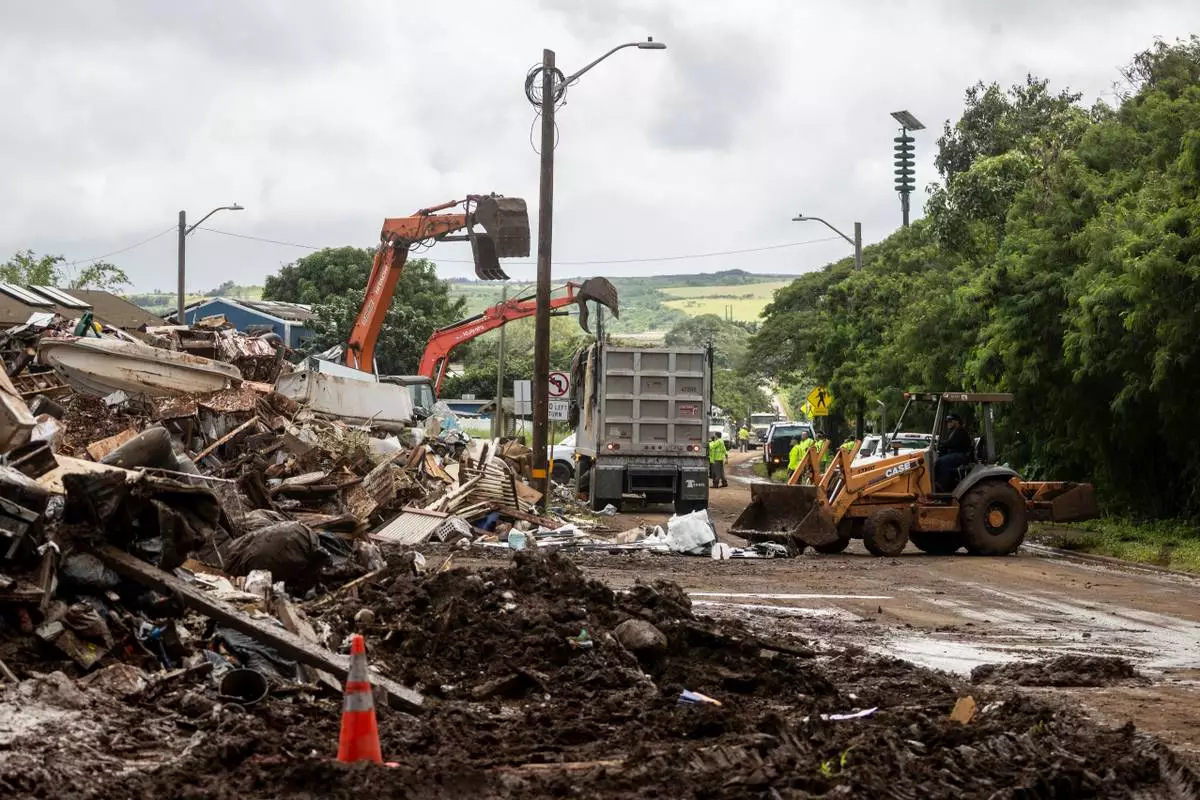
Excavators place debris onto trucks at a roundabout turned debris triage point by residents after the flood in Waialua, Hawaii Monday, March 23, 2026. (Stephen Lam/San Francisco Chronicle via AP)
MIAMI (AP) — Secretary of State Marco Rubio testified in court that he had no knowledge that former Florida congressman David Rivera was lobbying on behalf of Venezuela's government — as prosecutors later alleged — when he met with his longtime friend to discuss U.S. policy toward the South American country several times at the start of the first Trump administration.
“I would’ve been shocked” had I known, Rubio said in almost three hours of testimony Tuesday at Rivera's federal trial in Miami.
Rivera and an associate were charged in 2022 with money laundering and failing to register as a foreign agent after being awarded a $50 million lobbying contract by then-leader Nicolás Maduro’s government.
Prosecutors allege that the goal of the lobbying effort was to persuade the White House to normalize relations with Venezuela, while Rivera's attorneys argue that the three-month contract, which ended before Rivera met with Rubio, was focused exclusively on luring Exxon Mobil back to Venezuela — commercial work that is generally exempt from the Foreign Agents Registration Act.
As part of his work, Rivera and his co-defendant are accused of trying to arrange meetings for then-Foreign Minister Delcy Rodríguez — now Venezuela’s acting president — in Dallas, New York, Washington and Caracas, Venezuela, with White House officials, members of Congress and the chief executive officer of Exxon.
In sometimes deeply personal testimony Tuesday, Rubio discussed at length friendships that date back to the start of his political career as an aide to Bob Dole's 1996 presidential campaign and a West Miami council member.
Testifying in a packed courtroom with heightened security, Rubio said he and Rivera became “very close” when they overlapped as members of the Florida legislature. The two Cuban-American Republicans co-owned a house in Tallahassee, celebrated family events together and ardently opposed Venezuela's socialist government when both went to Washington at the same time — Rubio elected to the Senate, Rivera to the House.
So when Rivera texted Rubio in July 2017 that he needed to see him urgently to discuss Venezuela, they agreed to meet the next day, a Sunday, at a friend’s home in Washington where the then-senator was staying with his family, Rubio said.
At the meeting, Rivera informed Rubio that he was working with Raul Gorrín, a media magnate in Venezuela, on what he described as a plan for Maduro to step aside.
“I was skeptical,” said Rubio, adding that the Maduro government was full of “double dealers” constantly pitching unrealistic plans to unseat Maduro. “But if there was a 1% chance it was real, and I had a role to play alerting the White House, I was open to doing that.”
Rubio said he had no knowledge Rivera was himself working for Maduro as prosecutors would later allege. Rubio said he doubted Gorrín would betray Maduro even when the former congressman opened his laptop and showed millions of dollars in a Chase bank account that he was told were payments from the businessman to Venezuela's opposition.
“It was an impressive amount,” Rubio said. “He didn't tell me whose account it was. He said it was to support the opposition.”
Two days later, borrowing talking points provided by Rivera, Rubio wrote and delivered a speech on the Senate floor signaling the U.S. would not retaliate against Venezuelan insiders who worked to push Maduro from power.
“He provided me with insight into some of the key phrases that regime insiders would’ve wanted to hear to know this was serious,” Rubio testified. “No vengeance, no retribution.”
Rubio also spoke to Donald Trump, alerting the president in his first term that there may be something “brewing” with Venezuela.
But the peacemaking effort collapsed almost immediately. At a second meeting at a Washington hotel, Gorrín failed to produce a promised letter from Maduro to Trump that he wanted Rubio to hand-deliver to the president.
“It was a total waste of my time,” Rubio testified.
Shortly afterward, Trump imposed heavy sanctions on Maduro and members of his inner circle for their decision to go forward with what Rubio called a “fake election” to empower a constituent assembly that undercut the opposition-controlled legislature.
By that time, the senator hewed closely to the Trump administration's hard line. He taped a rare 10-minute address to the Venezuelan people in July 2017, a day after the divisive election, that was broadcast exclusively on Gorrín's Globovision network.
“For Nicolás Maduro, who I am sure is watching, the current path you are on will not end well for you,” Rubio said in the televised address.
On the stand, Rubio said that had he known Rivera was working with Gorrín on behalf of Maduro, he never would have agreed to deliver the address on the network.
But Rivera said Rubio's testimony backed his defense that as a lifelong opponent of communism he never worked to strengthen Maduro's grip on power.
“Marco Rubio made it abundantly clear today that everything we worked on together in 2017 was meant to remove Maduro from power in Venezuela," he said in a statement.
Throughout his testimony Rubio, a lawyer, spoke calmly and in command of granular details of U.S. policy toward Venezuela over the past decade, even as he struggled to recall the specifics of his text exchanges with Rivera on Venezuela matters.
His testimony was highly unusual. Not since Labor Secretary Raymond Donovan testified at a Mafia trial in 1983 has a sitting member of the president’s Cabinet taken the stand in a criminal trial.
As if to underscore the uniqueness of his appearance in federal court, Rivera's attorney, Ed Shohat, asked Rubio to sign a copy of his 2012 autobiography, “An American Son,” at the conclusion of his testimony.
Rivera and his co-defendant, political consultant Esther Nuhfer, are among a small number of friends and family Rubio thanks in the acknowledgement section of his memoir.
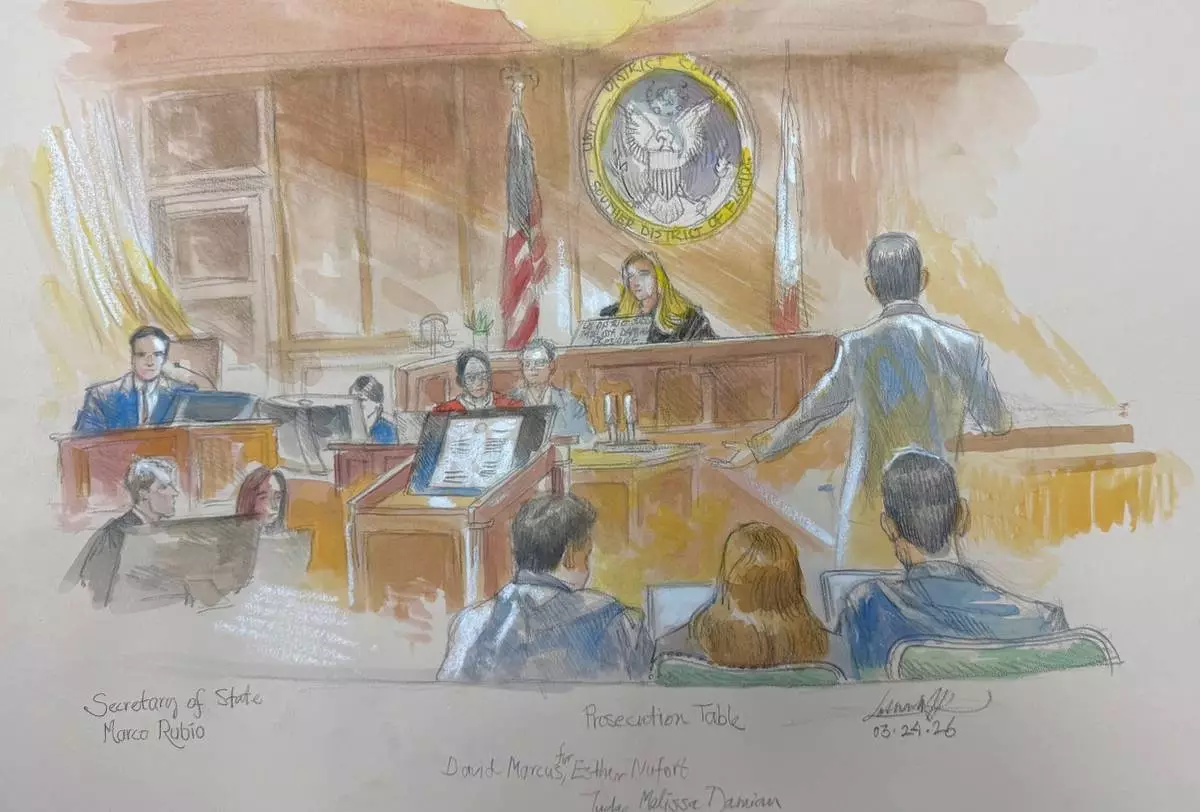
In this courtroom sketch Secretary of State Marco Rubio testifies during the trial of former Florida congressman David Rivera in District Court Judge Melissa Damian's courtroom, Tuesday, March 24, 2026, in Miami. (Lothar Speer via AP)
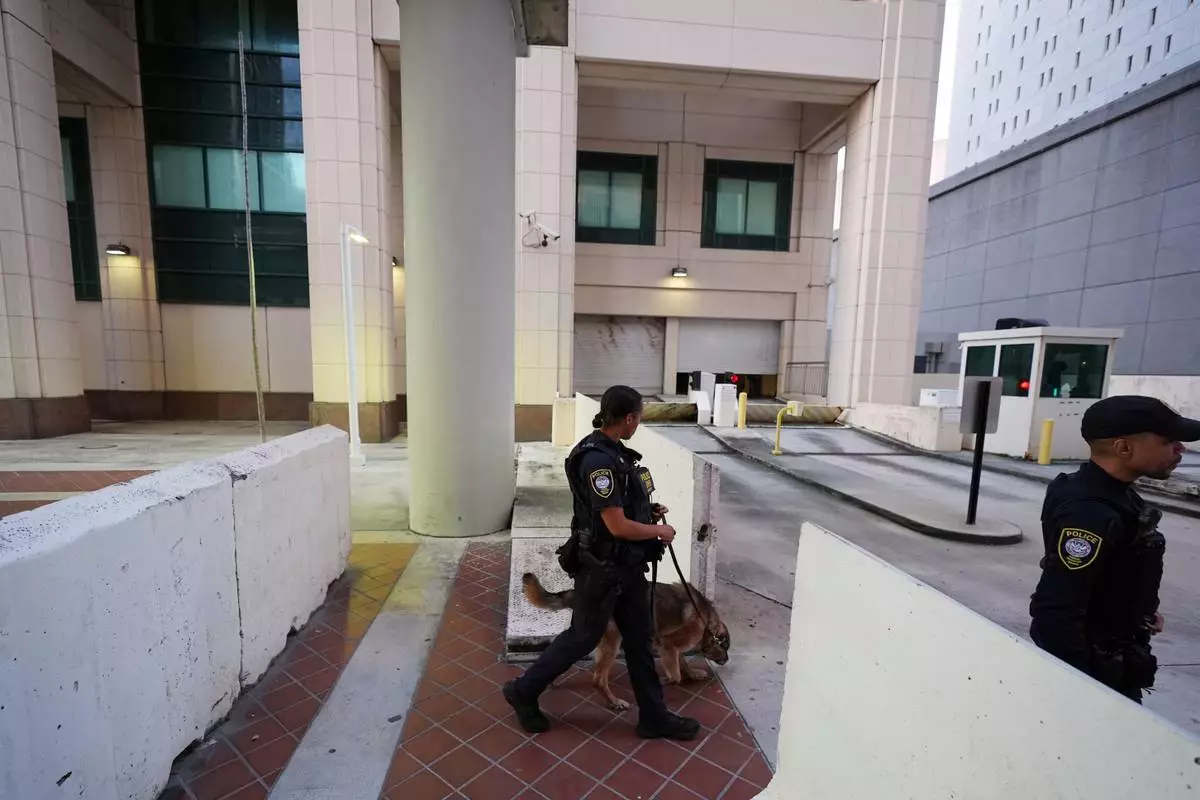
Police with a canine check outside the James Lawrence King Federal Building, where Secretary of State Marco was expected to testify in the trial of his former roommate David Rivera, Tuesday, March 24, 2026, in Miami. (AP Photo/Rebecca Blackwell)
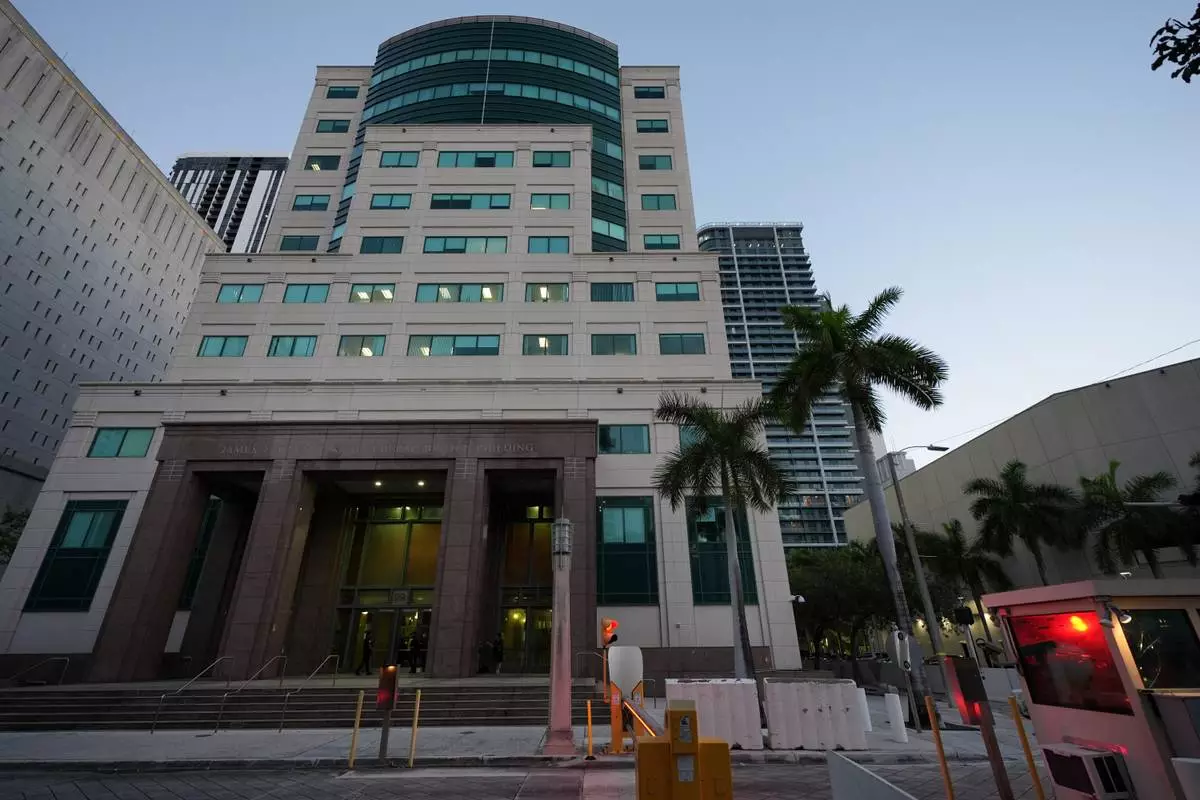
The sun rises outside the James Lawrence King Federal Building, where Secretary of State Marco was expected to testify in the trial of his former roommate David Rivera, Tuesday, March 24, 2026, in Miami. (AP Photo/Rebecca Blackwell)
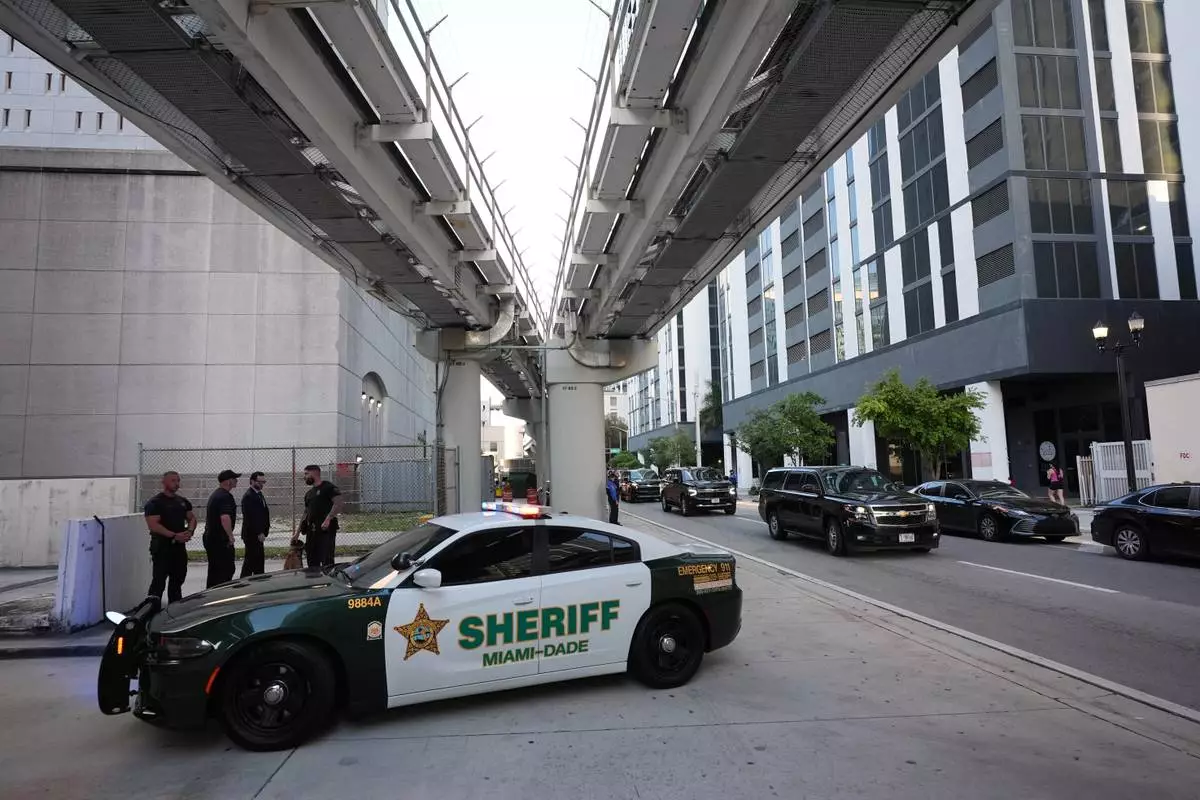
A convoy carrying Secretary of State Marco Rubio arrives at the James Lawrence King Federal Building where Rubio was set to testify in the trial of his former roommate David Rivera, Tuesday, March 24, 2026, in Miami. (AP Photo/Rebecca Blackwell)
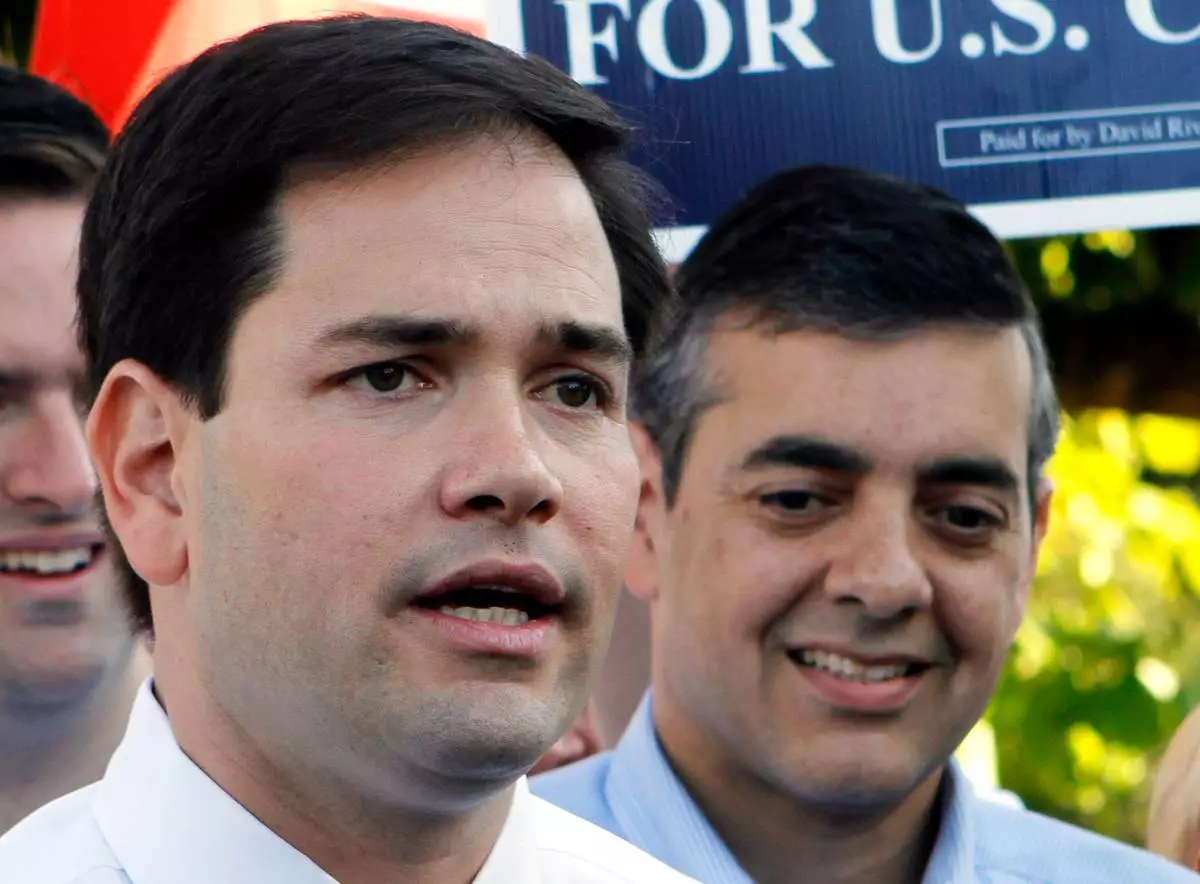
FILE - Then Republican U.S. Senate candidate Marco Rubio, left, accompanied by then Republican candidate for Congress David Rivera, talks to reporters in Miami, Oct. 20, 2010. (AP Photo/Alan Diaz, File)