Skip to Content Facebook Feature Image

The NFL proposes contingencies for replacement refs in hopes of avoiding another 'Fail Mary'

Sport

The NFL proposes contingencies for replacement refs in hopes of avoiding another 'Fail Mary'
Sport

Sport

The NFL proposes contingencies for replacement refs in hopes of avoiding another 'Fail Mary'

2026-03-25 05:54 Last Updated At:06:11

The NFL is preparing for the possibility of replacement officials in the 2026 season, proposing a rule change for one season that would allow the replay center in New York to correct any “clear and obvious” mistakes by on-field officials in case of a work stoppage.

The competition committee released its proposed rule changes for next season on Tuesday, including some small tweaks to the kickoff rule and allowing the replay center to eject players for flagrant acts on plays that were not penalized on the field.

The changes will be considered by the owners at next week's league meetings in Arizona and would need to be approved by at least 24 of the 32 teams to be implemented.

The biggest proposal regards the contingency if there is a work stoppage with the officials and the league once again uses replacement officials as it did to start the 2012 season. The current collective bargaining agreement with the NFL and the NFL Referees Association expires on May 31.

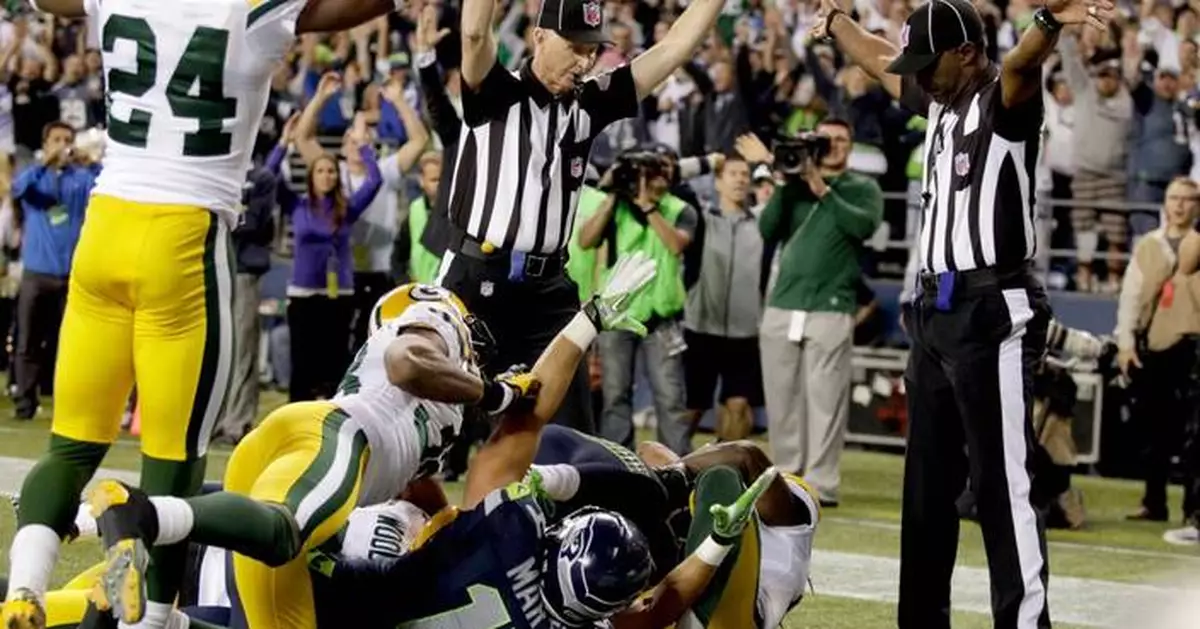
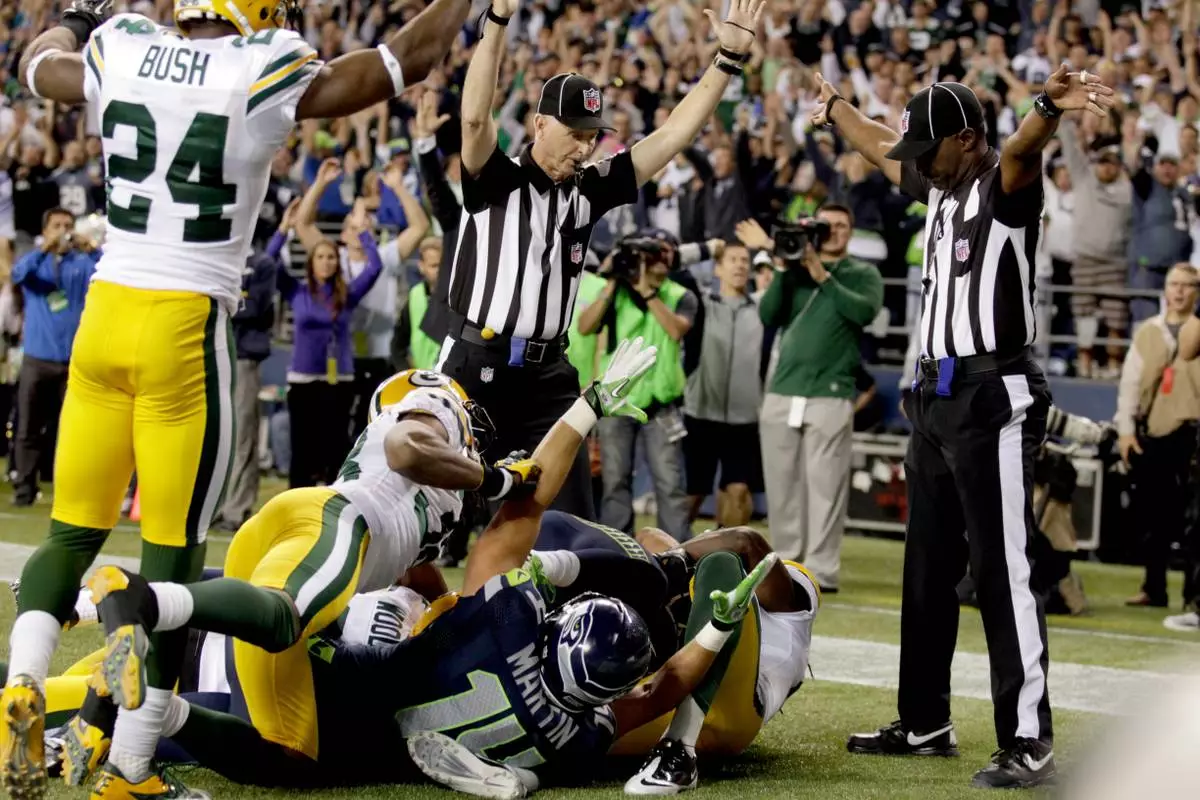
The NFL used replacement officials for the first three weeks of the 2012 season with several mistakes and bad calls being made. The tipping point came at the end of a Monday night game in Week 3 between Green Bay and Seattle when the Seahawks won the game on a disputed TD catch known as the “Fail Mary.” The league later said the touchdown should have been negated for offensive pass interference.

The outrage reached the White House with President Barack Obama calling for the lockout to end, which it did a few days later, prompting an apology to fans from Commissioner Roger Goodell.

Under the proposal from the competition committee, the replay center in New York would be able to advise the on-field officials on any missed roughing the passer or intentional grounding penalty, as well as any act that would have led to an ejection had a penalty been called.

The replay center also can intervene to overturn calls that were made on several penalties, including illegal contact, face masks, roughing the passer, horse-collar tackles and intentional grounding. The replay center could also assist to overturn pass interference calls when there is clear evidence that there was “advertent tangling of feet when both players were playing the ball or neither player was playing the ball.”

In the final two minutes of either half or for all of overtime, the replay center would be allowed to overturn or throw a flag on any unnecessary roughness or an unsportsmanlike conduct for throwing a punch, forearm or kick; as well as leaping or leverage penalties on kicks.

The replay center can also correct wrong calls based on running into or roughing the kicker.

The committee also proposed allowing the officiating center in New York to eject players for committing a flagrant or non-football act on the field even it wasn't called for a penalty. Under the old rules, the replay center could only intervene in those cases when the on-field officials had called a penalty.

This proposal comes after Pittsburgh receiver DK Metcalf wasn't ejected from a game at Detroit last season when he got into an altercation with a heckling fan. Because the on-field officials didn't see the play when Metcalf swiped at the fan and throw a flag, the replay center was unable to eject Metcalf. The league did suspend him for two games, but he was able to remain in the game at the time.

The committee also proposed several minor tweaks to the new kickoff rule that is entering its third season, including allowing teams to declare an onside kick at any point in the game. The original rule in 2024 limited onside kicks to the fourth quarter when a team is trailing. The change last year allowed a trailing team to declare an onside kick at any point and now a team can declare an onside kick no matter the score.

The committee also proposed a small change to how the receiving team lines up to receive kickoffs and made changes to the touchback on kicks that start from the 50 instead of the 35 following a personal foul penalty.

Under the rule last year, the kicking team was incentivized to kick out of bounds from the 50 to give the receiving team the ball on the 25 instead of the 35 for a touchback. Under the new proposal, touchbacks on kicks from the 50 will be spotted at the 20.

There were also a few proposals to change bylaws for off-field rules.

The committee also proposed giving the league the latitude to alter the date of the roster cutdown day, which is currently the Tuesday following the final exhibition games, to accommodate an international game in Week 1. The Los Angeles Rams and San Francisco 49ers are set to open the regular season in Australia and this gives the league the option to alter those dates based on when the teams travel to Australia.

The committee also proposed making the Saturday and Sunday of Labor Day weekend as business days, allowing for the 24-hour waiver period for players to go into effect on those days instead of waiting until Monday.

The committee also proposed allowing players who began training camp on the physically unable to perform list and were kept on the PUP list after roster cutdown day to be allowed to open their 21-day practice window after Week 2 of the regular season. The players still can't be put on the active roster until after missing four games but they now are able to practice sooner.

The owners also could vote on two proposals made last week by teams, including one by Cleveland to allow draft picks to be traded five years into the future instead of three and one by Pittsburgh to allow teams to have up to five video or phone calls with potential free agents during the negotiating window before the start of the league year. That was allowed on a trial basis this year and the Steelers are proposing for the rule to be permanent.

AP NFL: https://apnews.com/hub/NFL
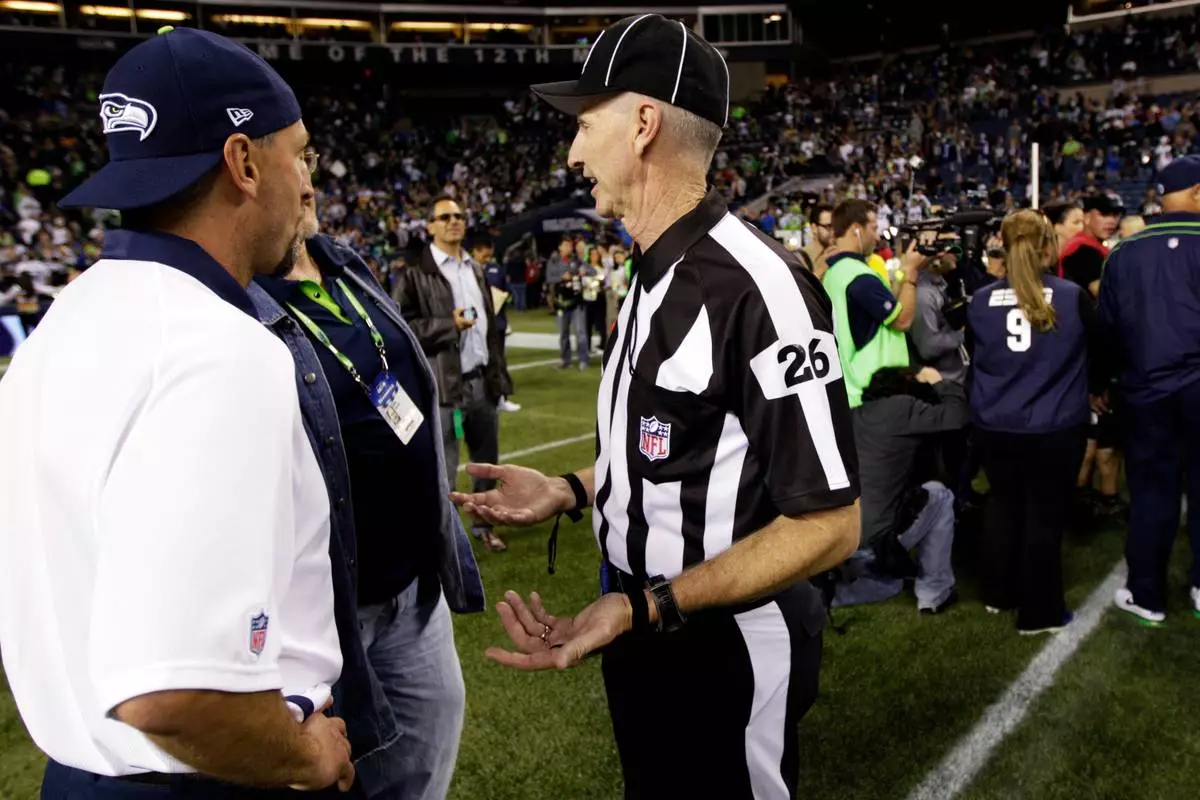
FILE - Official Lance Easley (26) gestures on the field following the Seattle Seahawks' 14-12 win over the Green Bay Packers in an NFL football game, Monday, Sept. 24, 2012, in Seattle. (AP Photo/Ted S. Warren, File)
FILE - Official Lance Easley (26) gestures on the field following the Seattle Seahawks' 14-12 win over the Green Bay Packers in an NFL football game, Monday, Sept. 24, 2012, in Seattle. (AP Photo/Ted S. Warren, File)

FILE - Officials signal a touchdown by Seattle Seahawks wide receiver Golden Tate, obscured, on the last play of an NFL football game against the Green Bay Packers, Monday, Sept. 24, 2012, in Seattle. (AP Photo/Stephen Brashear, File)

FILE - Officials signal a touchdown by Seattle Seahawks wide receiver Golden Tate, obscured, on the last play of an NFL football game against the Green Bay Packers, Monday, Sept. 24, 2012, in Seattle. (AP Photo/Stephen Brashear, File)
WASHINGTON (AP) — Minnesota officials sued the Trump administration on Tuesday for access to evidence they say they need to independently investigate three shootings by federal officers, including the killings of Renee Good and Alex Pretti.

The lawsuit claims that the federal government reneged on its promise to cooperate with state investigations after the surge of federal law enforcement in Minneapolis. State officials are seeking a court order demanding that the Trump administration comply.

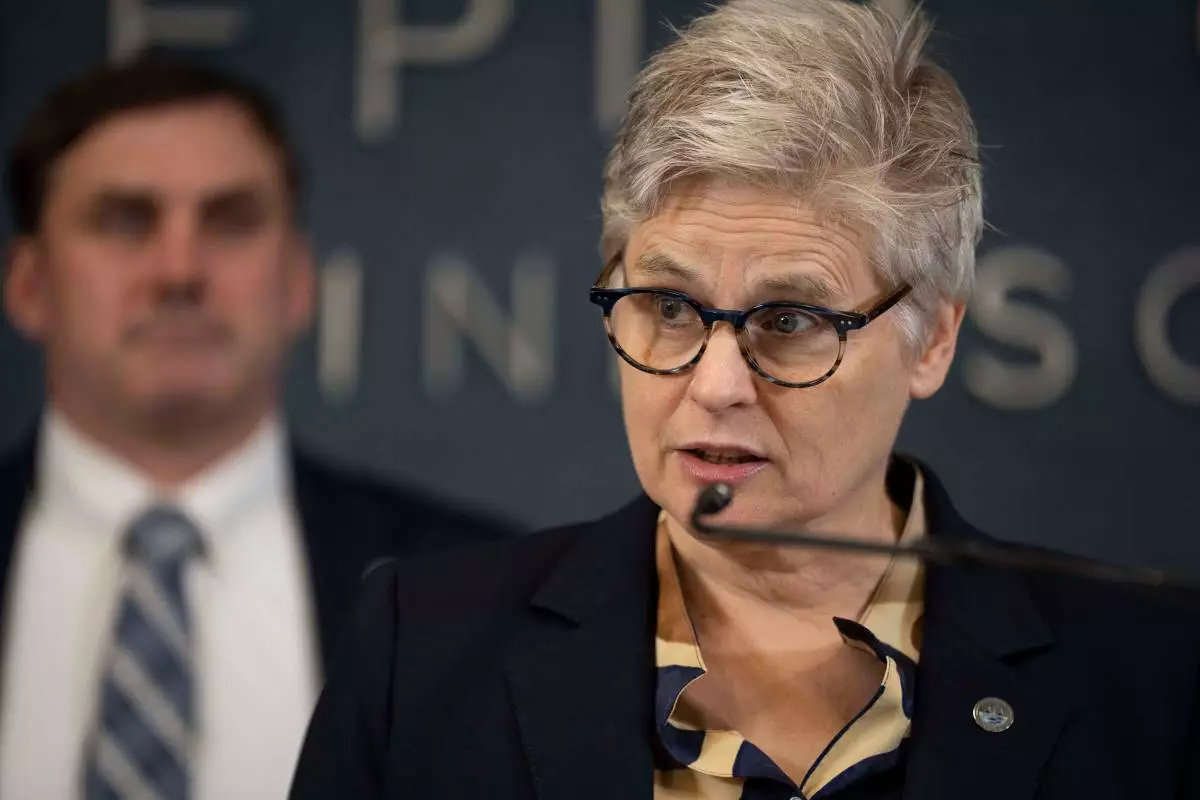
“We are prepared to fight for transparency and accountability that the federal government is desperate to avoid,” Hennepin County Attorney Mary Moriarty told reporters.

The lawsuit marks an escalation in the clash between Minnesota leaders and the Trump administration over the investigations into the high-profile shootings by federal officers that sparked public outcry and protests. The Trump administration has suggested that Minnesota officials don’t have jurisdiction to investigate, but state officials insist they need to conduct their own probes because they don’t trust the federal government to investigate itself.

“There has to be an investigation any time a federal agent or a state agent takes the life of a person in our community,” Moriarty said.

The administration sent thousands of officers to the Minneapolis and St. Paul area for the immigration crackdown as part of President Donald Trump’s national deportation campaign. The Department of Homeland Security considered its largest immigration enforcement operation ever a success but it was staunchly criticized by Minnesota’s leaders who raised questions over officers’ conduct.

There continues to be fallout from Operation Metro Surge in the form of a Homeland Security shutdown, as Democrats in Congress hold up funding in an effort to secure restraints on Trump’s immigration agenda.

An email seeking comment was sent to Justice Department. A DHS spokesperson said in an email Tuesday that all shootings are reviewed by an appropriate law enforcement agency, followed by an independent review within the agency.

The Justice Department in January said it was opening a federal civil rights investigation into Pretti’s killing but has said a similar federal probe was not warranted in the killing of Good. The decision in Good’s case marked a sharp departure from past administrations, which moved quickly to investigate shootings of civilians by law enforcement officials for potential civil rights offenses.

Deputy Attorney General Todd Blanche has said that the department’s Civil Rights Division does not investigate every law enforcement shooting and that there have to be circumstances and facts that “warrant an investigation.”

DHS said Tuesday that Customs and Border Patrol is conducting its own internal investigation of the Pretti case. On Good, DHS said the matter remains under investigation but that footage shows Good impeded law enforcement operations and weaponized her vehicle, leading the officer to act in self-defense.

Minnesota's lawsuit also demands access to evidence in a third case — that of Julio Cesar Sosa-Celis, who was shot and wounded in his right thigh by a federal agent in January.

Federal officials initially accused Sosa-Celis and another man of beating an Immigration and Customs Enforcement officer with a broom handle and a snow shovel. But federal prosecutors later dropped all charges against the men, and authorities opened a criminal investigation into whether two immigration officers lied under oath about the shooting.

Both officers are on administrative leave as ICE and DOJ conduct a joint review, DHS said Tuesday, adding in a statement that ICE is committed to transparency and accountability.

Minnesota’s lawsuit said the federal government is not permitted to “withhold investigative evidence for the purpose of shielding law enforcement officers from scrutiny where a State is investigating serious potential violations of its criminal laws, targeting its citizens, within its borders.”

Moriarty said Tuesday that the federal government “has adopted a policy of categorically withholding evidence,” calling the practice unprecedented and alarming. She said the lawsuit followed formal demands for evidence after the federal government blocked Minnesota investigators from accessing evidence related to the shootings.

Such cases by states against the federal government are highly unusual, said Rachel Moran, law professor at the University of St. Thomas in Minneapolis.

That is because local agencies don’t often try to investigate potential crimes by federal officers, and also because the federal government rarely refuses to cooperate. The opposite, where state officials might try to obstruct federal agents, used to be more common during the civil rights era, Moran said.

“The state should have a chance at success because, what their basic claim is, is that they have a right to review evidence regarding a possible crime,” Moran said. “They have not only a right, but an obligation to investigate whether officers have committed crimes in their jurisdiction.”

Either outcome of the lawsuit could have significant implications for federal and state power. If a federal judge grants the state’s request, Moran said, that provides legal support for state and local officials to investigate federal officers. If the federal government is allowed to withhold evidence, it could discourage federal and state cooperation, she said.

Fingerhut reported from Des Moines, Iowa. AP reporter Sarah Raza in Sioux Falls, South Dakota, contributed.

Hennepin County Attorney Mary Moriarty speaks during a news conference at the Hennepin County Government Center on Aug. 14, 2025, in Minneapolis. (Renée Jones Schneider/Star Tribune via AP, File)

Hennepin County Attorney Mary Moriarty speaks during a news conference at the Hennepin County Government Center on Aug. 14, 2025, in Minneapolis. (Renée Jones Schneider/Star Tribune via AP, File)

Recommended Articles