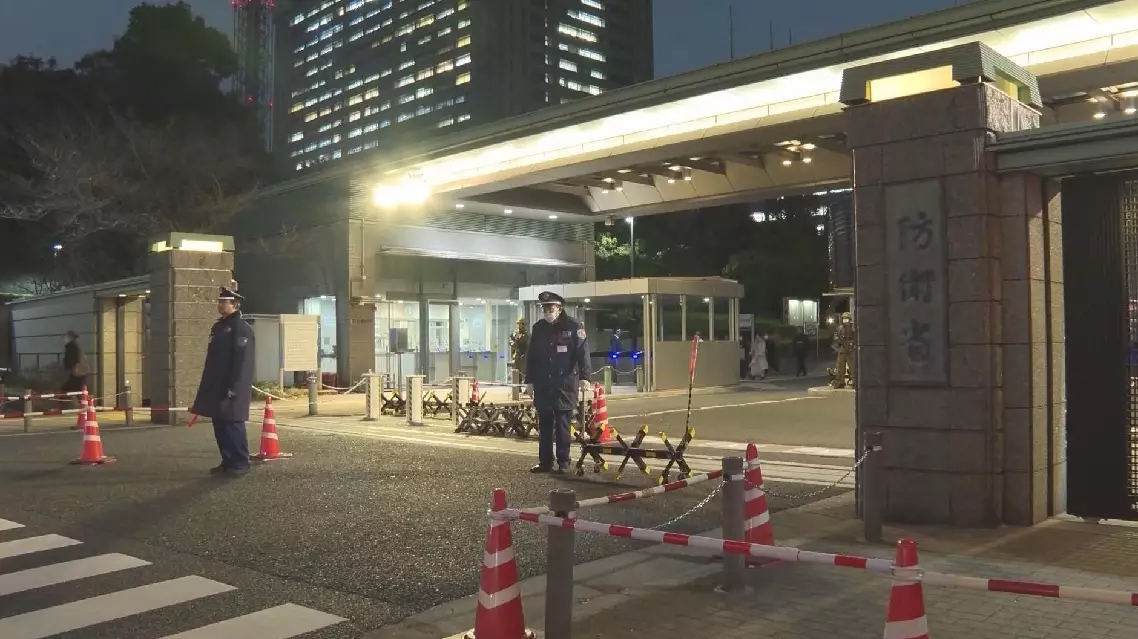
Japanese experts warned that the government's recent defense moves run counter to pacifism, raising concerns and warranting vigilance, after the country's Self-Defense Forces (SDF) launched a major restructuring on Monday.
Japan's SDF implemented a reorganization of its major units, aimed at strengthening military deployments in certain regions and expanding space and information warfare capabilities.
According to Japan's Ministry of Defense, among the key changes, the Maritime Self-Defense Force (MSDF) has abolished its Fleet Escort Force and Mine Warfare Force, reorganizing them into a Fleet Surface Force to achieve unified command. In addition, an Amphibious Mine Warfare Group has been established under the fleet, integrating minesweepers and transport vessels, with headquarters in Sasebo, Nagasaki Prefecture, Kyushu, in southwestern Japan.
Makoto Konishi, a former SDF member and military analyst, said the move signals the government's intention to make the MSDF more operational in real combat.
"Here, what is being strongly promoted is the strengthening of so-called mobile fleets. The purpose of this restructuring is to enable more efficient use of such fleets. It is not only about improving efficiency — I believe it also reflects an intention to deploy the MSDF as an actual combat force and utilize its capabilities in a more concentrated manner," he said.
In another major change, according to an announcement by Japan's defense ministry earlier in March, the Japan Air Self-Defense Force (ASDF) is set to establish the Space Operations Wing. The Space Operations Group, which currently has approximately 310 personnel engaged in outer space monitoring, among other operations, is expected to be expanded to around 670 personnel as a unit specializing in space.
The ministry also plans to reorganize the ASDF into the Air and Space Self-Defense Force in fiscal year 2026.
Hiroshi Shiratori, a professor at Hosei University, said the changes run counter to pacifist principles and warrant close attention.
"Allocating large-scale budgets in this way while establishing entirely new units that had never been envisioned before suggests that Japan's long-held pacifist stance is undergoing a significant shift," he said.
Shiratori said recent defense-related moves under the Takaichi administration are cause for concern.
"By strengthening the SDF and establishing new units with headquarters in Kyushu, it clearly cannot be said that these moves are unrelated to what Sanae Takaichi has referred to as a 'Taiwan contingency'. Until the administration of Fumio Kishida, Japan had been building a friendly 'strategic relationship of mutual benefit' with China, and under Shigeru Ishiba, Japan-China relations have been based on this framework. Why change this, I find it very regrettable," he said.
Japanese experts warn shift from pacifism following SDF overhaul