China's envoy to the United Nations (U.N.) on Tuesday called for an immediate and lasting ceasefire in Gaza and urged renewed international efforts toward a two-state solution.
Fu Cong, China's permanent representative to the U.N., also warned that escalating tensions across the Middle East have dealt a heavy blow to regional stability and the global economy in his remarks at a U.N. Security Council meeting on the situation in the Middle East, including the Palestinian question.
Fu's remarks came as U.N. Deputy Special Coordinator for the Middle East Peace Process Ramiz Alakbarov presented the quarterly update on the implementation of U.N. Security Council Resolution 2334 calling on Israel to stop its settlement activities in the occupied Palestinian territory, including East Jerusalem.
The Chinese envoy said the Palestinian question is deteriorating at an accelerated pace, with ongoing hostilities in Gaza and expanding settlement activities in the West Bank undermining the basis for a two-state solution.
"The international community must not allow the Palestinian question to be marginalized once again. Irreversible actions must be taken to implement the two-state solution and support the realization of independent statehood for Palestine at an early date. The United Nations has the responsibility to play a leading role in this process. China will continue to work with the rest of the international community to promote a comprehensive and lasting ceasefire in Gaza, end the humanitarian disaster there, implement the two-state solution, and return justice to Palestine, tranquility to the people and peace to the Middle East," he said.
U.N. Security Council Resolution 2334, adopted by the Security Council in 2016, affirms that "the establishment by Israel of settlements in the Palestinian territory occupied since 1967, including East Jerusalem, has no legal validity and constitutes a flagrant violation under international law and a major obstacle to the achievement of the two-state solution and a just, lasting and comprehensive peace."
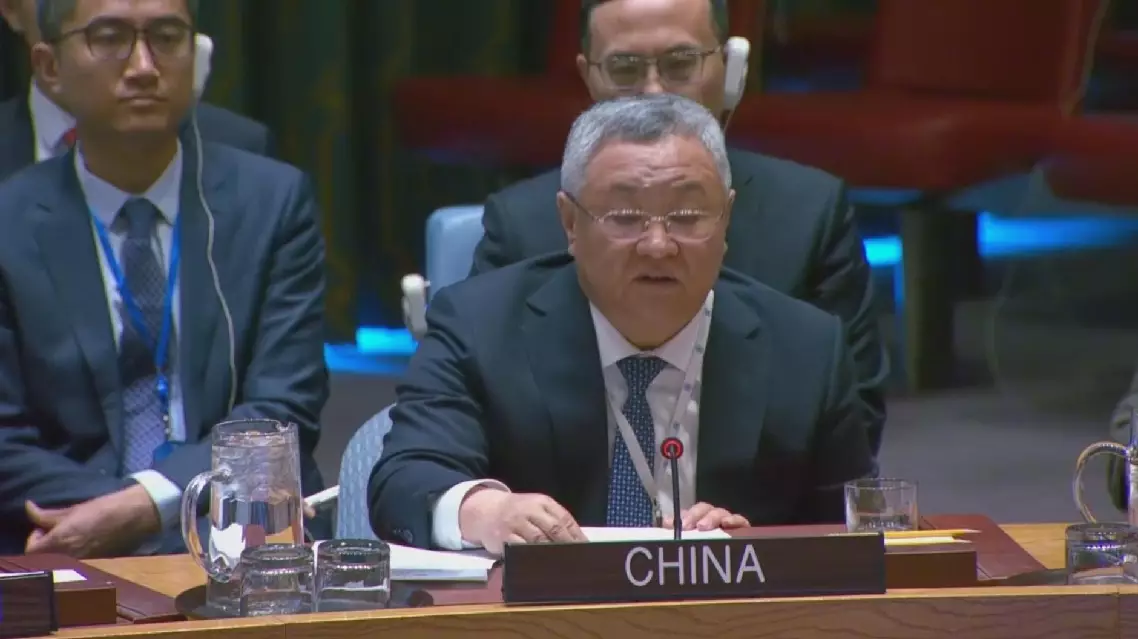
China urges comprehensive, lasting Gaza ceasefire at Security Council meeting
Slovenia has become the first European Union member state to bring in fuel rationing as a way of managing disruption to supply caused by the conflict in the Middle East.
Under the new measure, customers with private vehicles will be restricted to 50 liters per day with a 200-liter limit for companies and other special cases such as farmers. The government had already begun releasing strategic reserves in an effort to stabilize the market.
Across the country, long queues have formed at petrol stations, with some locations reporting limited availability of diesel. Notices warning customers about shortages have become increasingly common, reflecting the strain on supply chains.
Despite the visible pressure, many drivers said they are not engaging in panic buying.
"I think that's nonsense. Even if the price goes up ten cents it is not a disaster," said Robert, a motorcyclist.
Others, however, expressed concern over how the situation has been handled.
"I wish they would have released fuel reserves sooner and bought more reserves of the fuel for which we knew a month ago there was going to be difficulties," said Severin, a car driver.
Even with the release of strategic fuel reserves, logistical challenges remain a key issue. Many distributors store fuel outside the country, and transport capacity has struggled to keep pace with the recent spike in demand.
Analysts said consumption has increased sharply, driven in part by behavior linked to previous crises.
"They still remember 2022, when the prices were higher for a longer period of time, so they are hoarding the gasoline if they can. They're buying as much as they can, and I think that's the main reason," said Karel Lipnik, a financial analyst at Delo, a national daily newspaper in Slovenia.
Cross-border demand is also contributing to the strain. Slovenia's relatively low fuel prices compared to neighboring countries have attracted foreign buyers, further increasing consumption.
"Slovenia has the lowest price within all the neighboring countries, and it's also spring, so a lot of farmers buy gasoline to do some farming on the fields," Lipnik said.
While fuel prices in Slovenia remain state-regulated, the impact of global market disruptions is becoming increasingly evident. Analysts warned that the period of stable and relatively low fuel prices may be coming to an end, as external shocks continue to influence supply and demand.
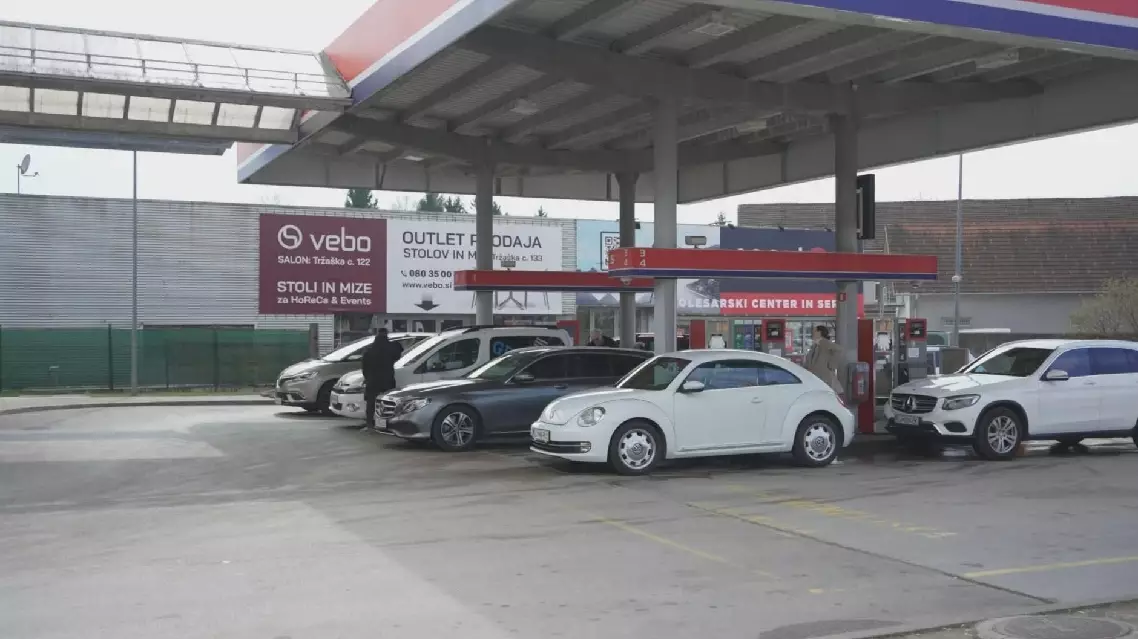
Slovenia caps fuel purchases amid energy shortage