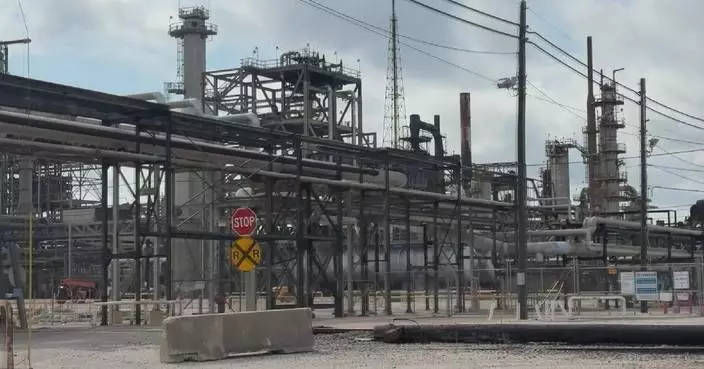
Rising costs of agricultural fertilizers, triggered by ongoing tensions in the Middle East, are threatening Africa's fragile food security.
The Strait of Hormuz connects major oil and fertilizer producers in the Middle East to markets around the world. Any disruption there quickly spreads across global supply chains.
Natural gas, a key ingredient in fertilizer production, has become more expensive since the war on Iran began on Feb. 28, pushing fertilizer prices even higher. In sub-Saharan Africa, the impact could be severe.
Countries like Sudan, Somalia, Tanzania, and Mozambique rely heavily on imported fertilizers -- much of it coming through this route. At the same time, fertilizer use across the region is already among the lowest in the world.
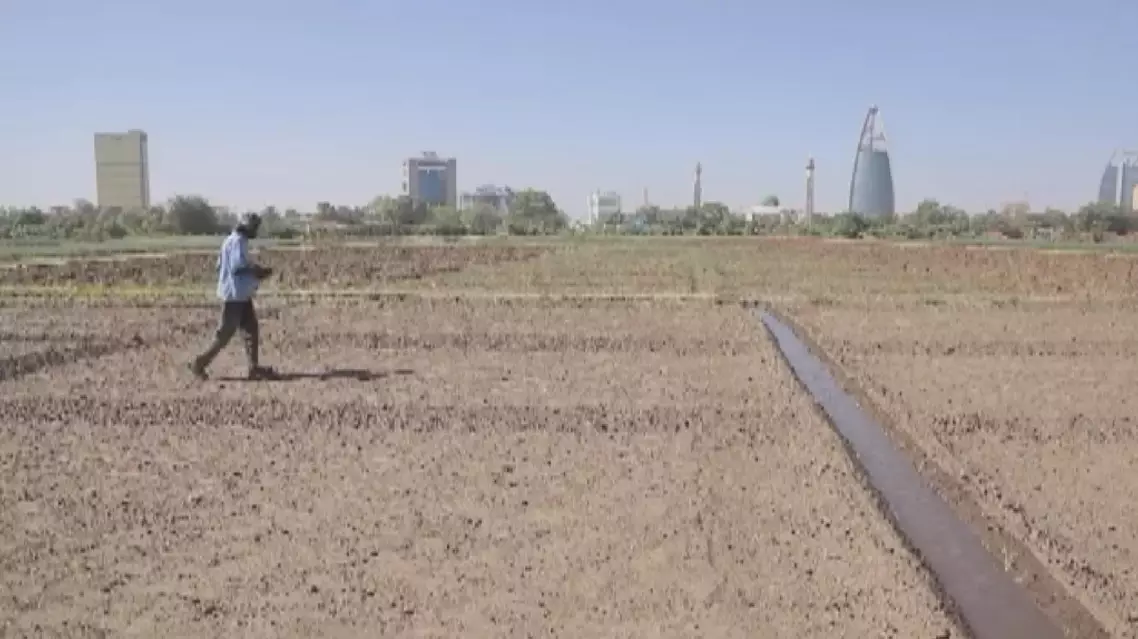
Farmers in Port Sudan, a port city on the Red Sea coast in eastern Sudan, are facing mounting uncertainty. With fertilizer prices rising and supplies tightening, many may be forced to cut back on planting. That could mean smaller harvests in the months ahead, and greater pressure on already fragile food systems.
"We are already struggling to afford fertilizer. If prices go higher or supplies stop, we won't be able to produce enough food," said Yaseen Ibnawf, a local farmer in Sudan.
For smallholder farmers, higher prices mean reduced usage, which often leads to lower crop yields.
An economist has warned of a "cascading crisis" as fertilizer becomes costly, increasing the risk of hunger.
"Supply disruptions, combined with rising energy costs, are making fertilizers unaffordable for vulnerable regions, increasing the risk of hunger and economic instability. Sudan can find alternative markets to sustain the production, but the rising cost will impact the supply and the agricultural output," said Mohamed Al-Nayer, an economic analyst.
Experts say that the consequences could extend beyond agriculture, affecting food prices, household incomes, and national economies.
Rising costs of fertilizer threaten Africa's food security
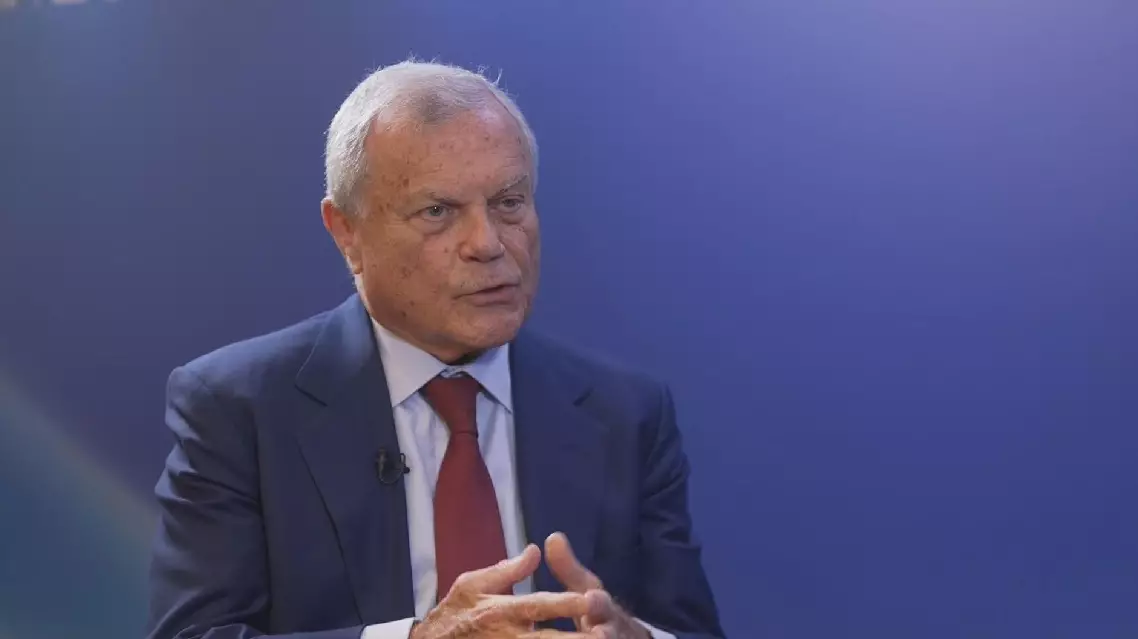
Martin Sorrell, Founder and Executive Chairman of S4 Capital, has warned that global business leaders are navigating an era of profound uncertainty, with geopolitical tensions, shifting alliances, and technological bifurcation reshaping the economic landscape.
Speaking at the China Development Forum in Beijing, the veteran advertising executive said the world is moving away from the globalization model of recent decades toward a more fragmented, multipolar system. He highlighted that uncertainty now dominates the global mood, noting that Chinese officials are positioning China as a comparatively stable option for global investors.
"People are very uncertain; I think obviously you heard the Chinese premier and they're building a story around China being a more stable alternative. But having said that, the world is a very uncertain place, so it's a very different world, a very volatile world, an uncertain world, and companies in those situations tend to pull in their horns. The Chinese premier presented China as a more stable alternative. And of course, China is growing quite rapidly in a global context and now growing quite rapidly from a very high base of 20 trillion dollars, and then PPP terms are arguably the biggest, so it's a very strong base," said Sorrell.
Beyond the broader macro mood, Sorrell said the most consequential shift for corporate strategy is the emerging split in technology -- particularly in artificial intelligence -- alongside intensifying geopolitical risk.
"The difficulty for companies is that we're starting to see two systems. Broadly, the AI systems in America are higher costs and closed systems -- (as a) generalization. In China, they're lower cost, the DeepSeek or Kimi or MiniMax, whatever. But I think increasingly what we're seeing here in China is global companies almost build walls around their Chinese operations for security reasons, data reasons, privacy, whatever. But it's two systems. And before the war in the Middle East, the Saudis and the UAE, the Emirates were building an alternate system, obviously on the back of their energy resources. It's going to be a world where technological deployment is going to be very, very important for efficiency and effectiveness," he explained.
As geopolitical tensions add volatility to energy markets, Sorrell said competitive advantage in the AI era will increasingly hinge on reliable, low-cost power, one area where China has built momentum.
"Many people have said that one thing China did right, it is green revolution. Considering the supply shock of the well on energy, yes, absolutely. China has made enormous strides in terms of new energy, renewable, green energy, and obviously that puts China in a very strong position with the AI revolution in access to cheaper sources of energy," he said.
Business leader warns of global uncertainty as CEOs recalibrate for bifurcated world order