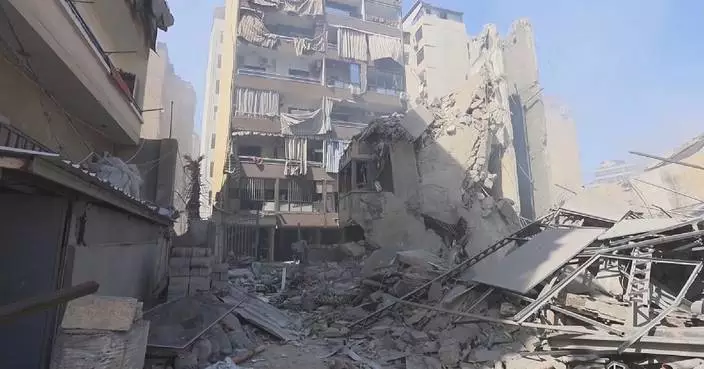
A former Israeli government negotiator said Israel is likely to continue obstructing U.S.-Iran negotiations, while a prolonged conflict in the Middle East could keep global commodity prices elevated.
Briefing reporters at the White House on Tuesday, U.S. President Donald Trump said that U.S. Vice President JD Vance, Secretary of State Marco Rubio, White House envoy Steve Witkoff and Trump's son-in-law Jared Kushner are involved in the talks with Iran, adding that Tehran would like "to make a deal."
On Monday, Trump said Washington had "major points of agreement" with Iran during talks over the weekend, but refused to name the Iranian negotiator the United States talked with, saying Washington had spoken to a "top person" in Iran.
The Iranian Foreign Ministry on Monday denied having negotiations with the United States, the country's official IRNA news agency reported.
In an exclusive interview with China Global Television Network (CGTN), Daniel Levy, a former Israeli government negotiator and advisor, expressed skepticism over potential U.S.-Iran ceasefire talks, saying Israel is likely to obstruct the negotiation process and that a lack of professional expertise in the U.S. negotiating team could further complicate efforts.
Levy said Israel has been a key factor in the failure of U.S.-Iran negotiations.
"One of the things Israel has effectively done for its own purposes thus far is to try to create a bar for necessary conditions and outcomes in negotiations between the U.S. and Iran, which is intentionally set at a place that cannot be achieved. In other words, Israel, to put it in blunt, simple terms, Israel has been one of the key contributors to ensuring negotiations fail," he said.
He cited the failure of the Iran nuclear deal, formally known as the Joint Comprehensive Plan of Action (JCPOA), to support his view.
The JCPOA was once an important multilateral diplomatic achievement endorsed by Security Council Resolution 2231. However, the United States unilaterally withdrew from the JCPOA in 2018, imposed unilateral sanctions on Iran, and pursued a policy of "maximum pressure."
"When negotiations did succeed with the JCPOA agreement under the Obama administration, Israel worked very hard to get that agreement nullified. It succeeded during the first Trump administration. Whenever negotiations have been entered back into Israel, not just Israel, by the way, there is a cohort -- of course, we must not deny American agency -- there's a cohort, neoconservatives, hawks inside the U.S. administration who have also pushed a maximalist position. You have to also factor in that the American team is deeply unqualified to conduct these negotiations. They haven't brought expertise into the room. The team of Witkoff and Kushner fail, fail, fail in terms of their negotiations," he said.
The former Israeli advisor also rejected claims that U.S. mediation efforts in Gaza could be considered a success, saying that Israeli military operations are ongoing in the region and continue to cause casualties.
"Some people point to Gaza as being a success. Gaza are is still sixty percent occupied by Israel. Gaza is still a place where Israel conducts military actions and kills Palestinians every day," said the analyst.
Turning to the broader economic implications, Levy warned that sustained tensions in the region could drive up global commodity prices for an extended period.
"Iran has demonstrated a capacity to do exactly what it says it will do. And in this instance it is said that if its energy infrastructure is impacted, then the energy infrastructure that maintains the American presence in the region, it's quite clear that that would involve GCC states in particular, that would be impacted. And that's the moment at which some of the expectations and predictions on the market, some of the things that we've heard from the head of the International Energy Agency in terms of where energy prices might go, how devastating the knock on effect to the global economy, costs of fuel but also food, fertilizer that would be taken to the next stage. And it may be taken to the stage where it is irreversible for an awfully long period of time," he said.
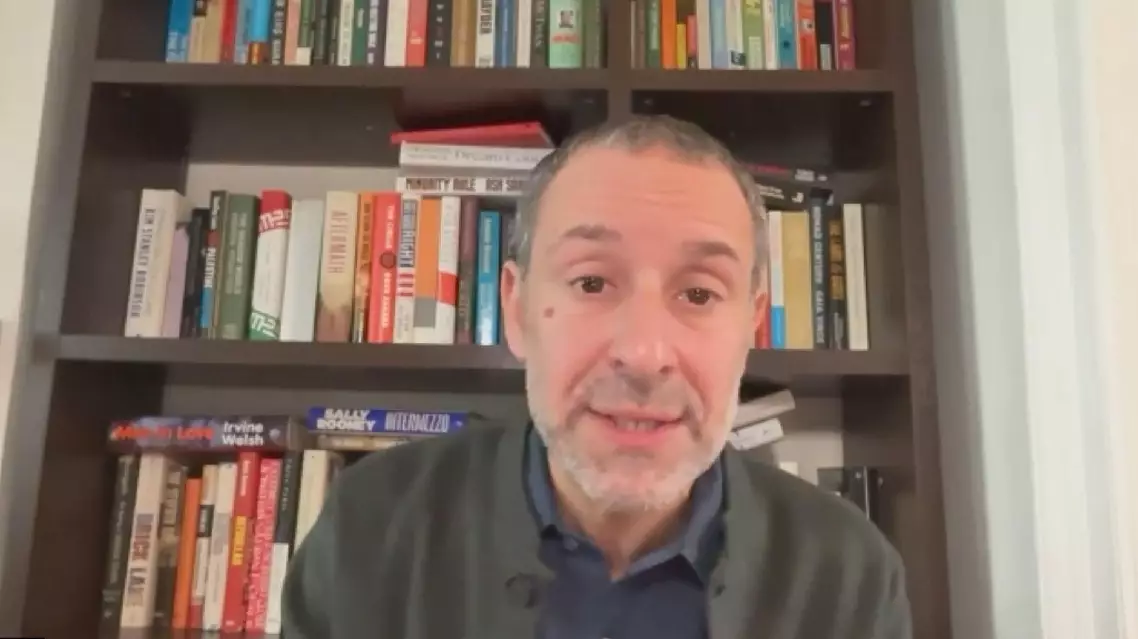
Israel likely to hinder US-Iran talks: analyst
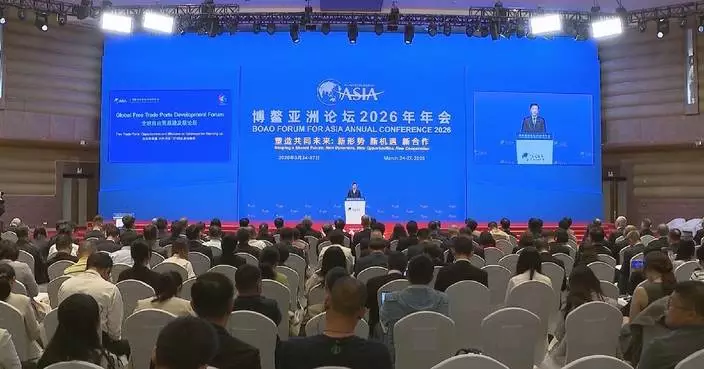
China's strategic focus on building a modern industrial system will give rise to a new phase of innovation in the country, said guests at the Boao Forum for Asia (BFA) Annual Conference 2026, which opened on Tuesday in the southern Chinese province of Hainan.
This year's BFA annual conference is unfolding in Boao, a coastal town in Hainan's Qionghai City, where leaders from government, business and academia all over the world gather to gain deeper insights into the country's 15th Five-Year Plan (2026-2030).
It comes less than two weeks after the annual session of the National People's Congress (NPC), China's top legislature, formally reviewed and adopted the plan, a sweeping blueprint to guide the country's economic and social development for the second half of this decade, amid rising geopolitical tensions, economic fragmentation, and technological changes.
Forum participants are paying strong attention to China's push toward building a modern industrial system through scientific and technological innovation, particularly in frontier areas that offer both strategic resilience and growth multipliers, such as advanced manufacturing, semiconductors, next-generation information technology, and quantum technology.
During a sub-forum on China's high-quality development on Tuesday, a Chinese economist shed light on how China strives to achieve industrial transformation and upgrading in the years ahead, while emphasizing that the country is committed to sharing development opportunities with the rest of the world.
"During the 15th Five-Year Plan period, a key focus will be on the transformation and upgrading of traditional industries, that is, by enhancing the output and competitiveness of existing industries through innovation. Therefore, I believe this represents a relatively new feature of innovation during this period: placing equal emphasis on emerging industries and on leveraging new technologies to transform traditional industries," said Jiang Xiaojuan, honorary president of the China Industrial Economics Association.
Foreign guests speaking at the forum said that China is currently among the global leaders in multiple sectors such as artificial intelligent, biopharmaceutical, and clean energy. They believe that the country will build on its existing strengths and make more sci-tech breakthroughs in these frontier fields in the coming five years, thus remaining a highly attractive destination for foreign investment.
"My advice to any foreign company, how to do business in China? It's very easy: read the Five-Year Plan. It tells you what are the sectors that the government will encourage. So, if you are a foreign company and you do semiconductor, come to China. Semiconductor, technology, new energy vehicles, batteries, study physics of matter -- this is where China welcomes," said Michele Geraci, former undersecretary of state at the Italian Ministry of Economic Development.
Another Chinese expert reaffirmed that the 15th Five-Year Plan also underscores that China will consistently deepen high-standard opening-up, pursue win-win cooperation with other countries, and remain committed to sharing the fruits of its high-quality development with the rest of the world.
"Chinese modernization has an important characteristic, which I would call 'open-source modernization.' In other words, we are following a development path that differs from those of the past. In the past, some Western countries, after achieving development, would pull up the ladder they had climbed to prevent other countries from developing, because they wanted to monopolize development for themselves. What China is doing now, however, is that after achieving its own development, it extends that ladder further out to enable, encourage and assist other nations to achieve development as well," said Zheng Yongnian, dean of the School of Public Policy at the Chinese University of Hong Kong, Shenzhen.
Since its establishment in 2001, the BFA has functioned as an international platform for China to present its domestic policy priorities to a global audience.
The theme for this year is "Shaping a Shared Future: New Dynamics, New Opportunities, New Cooperation." The event runs through Friday.
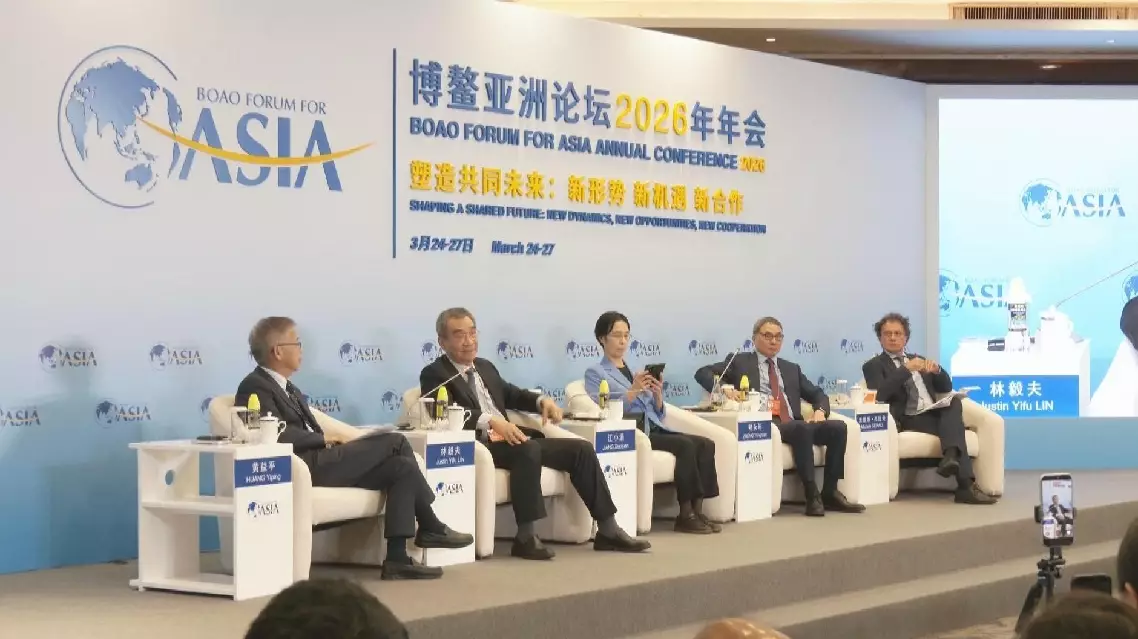
China's industrial modernization to drive new phase of innovation: Boao Forum speakers