The 2026 Zhongguancun Forum (ZGC Forum) Annual Conference opened in Beijing on Wednesday, under the theme of "Full Integration Between Technological and Industrial Innovation."
Chinese Vice Premier Ding Xuexiang delivered a speech at the opening ceremony, reaffirming China's commitment to deepening high-standard opening-up and pursuing all-win cooperation with other countries in its scientific and technological development.
"Scientific and technological advancement is a global and contemporary issue. Opening-up and cooperation is the only right way forward. We should join hands to tear down the barriers that restrict the flow of innovation factors such as knowledge, technology, human resources and capital, and foster an open, fair, equitable and non-discriminatory environment for international scientific and technological development," Ding said.
This year's ZGC Forum Annual Conference will run through Sunday.
More than 1,000 guests from over 100 countries and regions are expected to participate in the conference, which features more than 100 events.
Founded in 2007, the Zhongguancun Forum has evolved into a global, comprehensive open and high-level international event for enhancing global innovation in science and technology.
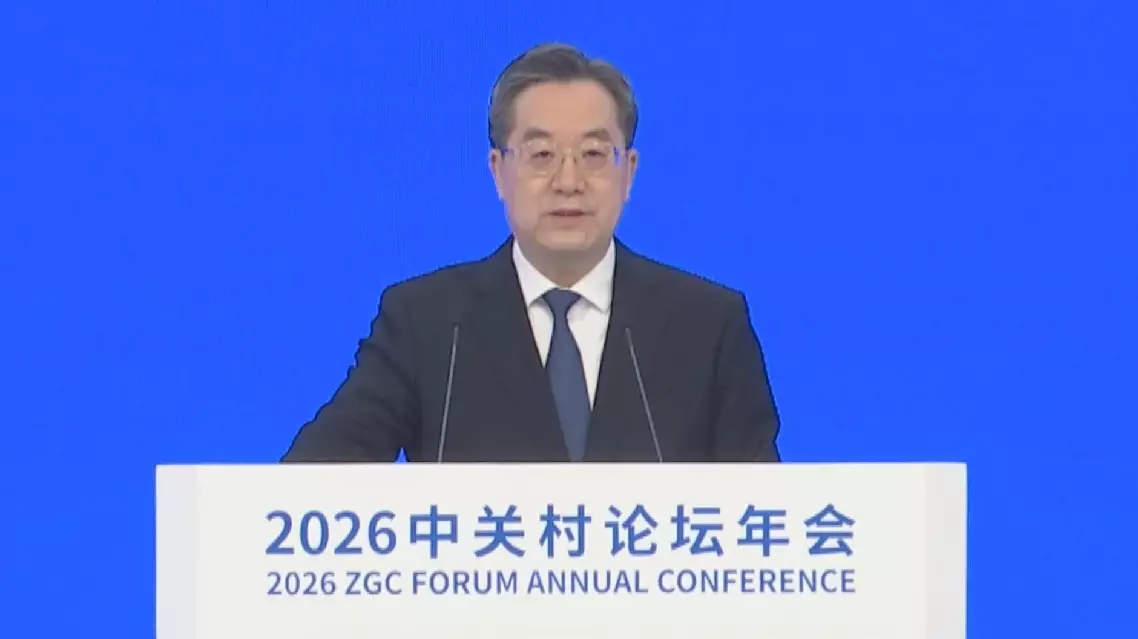
2026 Zhongguancun Forum Annual Conference opens in Beijing
A former Israeli government negotiator said Israel is likely to continue obstructing U.S.-Iran negotiations, while a prolonged conflict in the Middle East could keep global commodity prices elevated.
Briefing reporters at the White House on Tuesday, U.S. President Donald Trump said that U.S. Vice President JD Vance, Secretary of State Marco Rubio, White House envoy Steve Witkoff and Trump's son-in-law Jared Kushner are involved in the talks with Iran, adding that Tehran would like "to make a deal."
On Monday, Trump said Washington had "major points of agreement" with Iran during talks over the weekend, but refused to name the Iranian negotiator the United States talked with, saying Washington had spoken to a "top person" in Iran.
The Iranian Foreign Ministry on Monday denied having negotiations with the United States, the country's official IRNA news agency reported.
In an exclusive interview with China Global Television Network (CGTN), Daniel Levy, a former Israeli government negotiator and advisor, expressed skepticism over potential U.S.-Iran ceasefire talks, saying Israel is likely to obstruct the negotiation process and that a lack of professional expertise in the U.S. negotiating team could further complicate efforts.
Levy said Israel has been a key factor in the failure of U.S.-Iran negotiations.
"One of the things Israel has effectively done for its own purposes thus far is to try to create a bar for necessary conditions and outcomes in negotiations between the U.S. and Iran, which is intentionally set at a place that cannot be achieved. In other words, Israel, to put it in blunt, simple terms, Israel has been one of the key contributors to ensuring negotiations fail," he said.
He cited the failure of the Iran nuclear deal, formally known as the Joint Comprehensive Plan of Action (JCPOA), to support his view.
The JCPOA was once an important multilateral diplomatic achievement endorsed by Security Council Resolution 2231. However, the United States unilaterally withdrew from the JCPOA in 2018, imposed unilateral sanctions on Iran, and pursued a policy of "maximum pressure."
"When negotiations did succeed with the JCPOA agreement under the Obama administration, Israel worked very hard to get that agreement nullified. It succeeded during the first Trump administration. Whenever negotiations have been entered back into Israel, not just Israel, by the way, there is a cohort -- of course, we must not deny American agency -- there's a cohort, neoconservatives, hawks inside the U.S. administration who have also pushed a maximalist position. You have to also factor in that the American team is deeply unqualified to conduct these negotiations. They haven't brought expertise into the room. The team of Witkoff and Kushner fail, fail, fail in terms of their negotiations," he said.
The former Israeli advisor also rejected claims that U.S. mediation efforts in Gaza could be considered a success, saying that Israeli military operations are ongoing in the region and continue to cause casualties.
"Some people point to Gaza as being a success. Gaza are is still sixty percent occupied by Israel. Gaza is still a place where Israel conducts military actions and kills Palestinians every day," said the analyst.
Turning to the broader economic implications, Levy warned that sustained tensions in the region could drive up global commodity prices for an extended period.
"Iran has demonstrated a capacity to do exactly what it says it will do. And in this instance it is said that if its energy infrastructure is impacted, then the energy infrastructure that maintains the American presence in the region, it's quite clear that that would involve GCC states in particular, that would be impacted. And that's the moment at which some of the expectations and predictions on the market, some of the things that we've heard from the head of the International Energy Agency in terms of where energy prices might go, how devastating the knock on effect to the global economy, costs of fuel but also food, fertilizer that would be taken to the next stage. And it may be taken to the stage where it is irreversible for an awfully long period of time," he said.
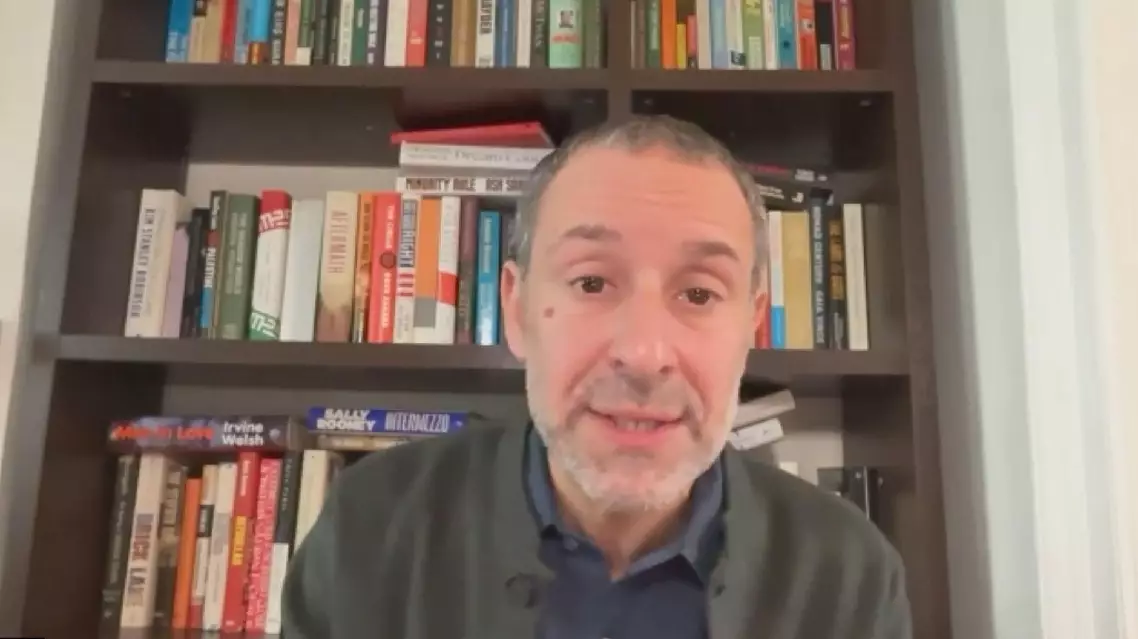
Israel likely to hinder US-Iran talks: analyst