WASHINGTON (AP) — Most Americans believe recent U.S. military action against Iran has gone too far, and many are worried about affording gasoline, according to a new AP-NORC poll.
As the war launched by the U.S. and Israel continues in its fourth week, the survey from The Associated Press-NORC Center for Public Affairs Research indicates that while President Donald Trump's approval rating is holding steady, the conflict could be swiftly turning into a major political liability for his Republican administration.
While Trump is deploying more warships and troops to the Middle East, about 59% of Americans say U.S. military action in Iran has been excessive.
Meanwhile, 45% are “extremely” or “very” concerned about being able to afford gas in the next few months, up from 30% in an AP-NORC poll conducted shortly after Trump won reelection with promises that he would improve the economy and lower the cost of living.
There is significant support for at least one of the president’s objectives, which is preventing Iran from obtaining a nuclear weapon. About two-thirds of Americans say that should be an “extremely” or “very” important foreign policy goal for the U.S. However, they are just as likely to say it's important to keep U.S. oil and gas prices from rising — a juxtaposition that could be difficult for the White House to manage.
About 4 in 10 U.S. adults continue to approve of Trump's performance as president, which is unchanged from last month. His approval on foreign policy, while slightly lower than his overall approval, also largely held steady.
Trump has left unclear his next steps on Iran. Despite escalating threats, he's also suggested diplomatic talks could resolve the fighting. Americans remain broadly apprehensive about Trump’s ability to make the right decisions on the use of military force outside the U.S., and they mostly oppose more aggressive steps, such as deploying ground forces.
Keeping the price at the pump down is the rare goal that unites Americans in both major political parties.
About three-quarters of Republicans and about two-thirds of Democrats say it’s highly important to prevent U.S. oil and gas prices from going up.
However, concern about the current situation isn't evenly felt. Only about 3 in 10 Republicans said they're “extremely” or “very” worried about affording gas in the next few months, as opposed to about 6 in 10 Democrats.
Trump’s focus on Iran's nuclear program also appears more compelling to Republicans than to Democrats. About two-thirds of Americans say the U.S. should prioritize keeping Iran from obtaining a nuclear weapon, but about 8 in 10 Republicans say this is at least “very” important, compared with about half of Democrats.
The war has exacerbated political debates over the role that Israel should play in U.S. foreign policy, especially since Israeli Prime Minister Benjamin Netanyahu was a leading voice for attacking Iran. Only about 4 in 10 U.S. adults say preventing Iran from threatening Israel should be a high priority.
Toppling Iran's leaders is viewed as slightly less important. Only about 3 in 10 say it's at least “very” important for the U.S. to replace Iran’s government with one that’s friendlier to U.S. interests.
As Trump provides mixed messages on whether the Iran war will end soon, about 9 in 10 Democrats and about 6 in 10 independents say the Iran attacks have “gone too far.”
Republicans are more divided. About half of Republicans say the U.S. military action has been “about right,” but relatively few want to see it go further. Only about 2 in 10 Republicans say the U.S. military action has not gone far enough, while about one-quarter say it’s gone too far.
Recent AP-NORC polling has found that about 6 in 10 Americans say Trump has “gone too far” on a range of issues, including his approach to tariffs and presidential power. That number, which is broadly reflective of his overall approval, signals that while Trump's actions in Iran are unpopular, it's still comparable to other controversial moves he's taken as president.
Further entrenching the U.S. in the war could change that, depending on what happens next. About 6 in 10 Americans “somewhat” or “strongly” oppose deploying U.S. troops on the ground to fight Iran, including about 8 in 10 Democrats and roughly half of Republicans. Just under half of Americans oppose airstrikes targeting Iranian leaders and airstrikes against military targets in Iran, while about 3 in 10 are in favor and about 3 in 10 don't have an opinion.
About half of U.S. adults have “only a little” trust or “none at all” in Trump when it comes to making the right decisions about the use of military force outside the U.S., in line with an AP-NORC poll from February.
About 34% of U.S. adults approve of the way Trump is handling foreign policy, similar to 36% in February. That measure has been consistent in recent months despite a cascade of actions, including confrontations over Greenland and an attack on Venezuela, that have generated controversy at home and abroad.
It's also very similar to Trump's approval on Iran in the new poll, which found that 35% of Americans have a positive view of his handling of that issue.
The AP-NORC poll of 1,150 adults was conducted March 19-23 using a sample drawn from NORC’s probability-based AmeriSpeak Panel, which is designed to be representative of the U.S. population. The margin of sampling error for adults overall is plus or minus 4 percentage points.
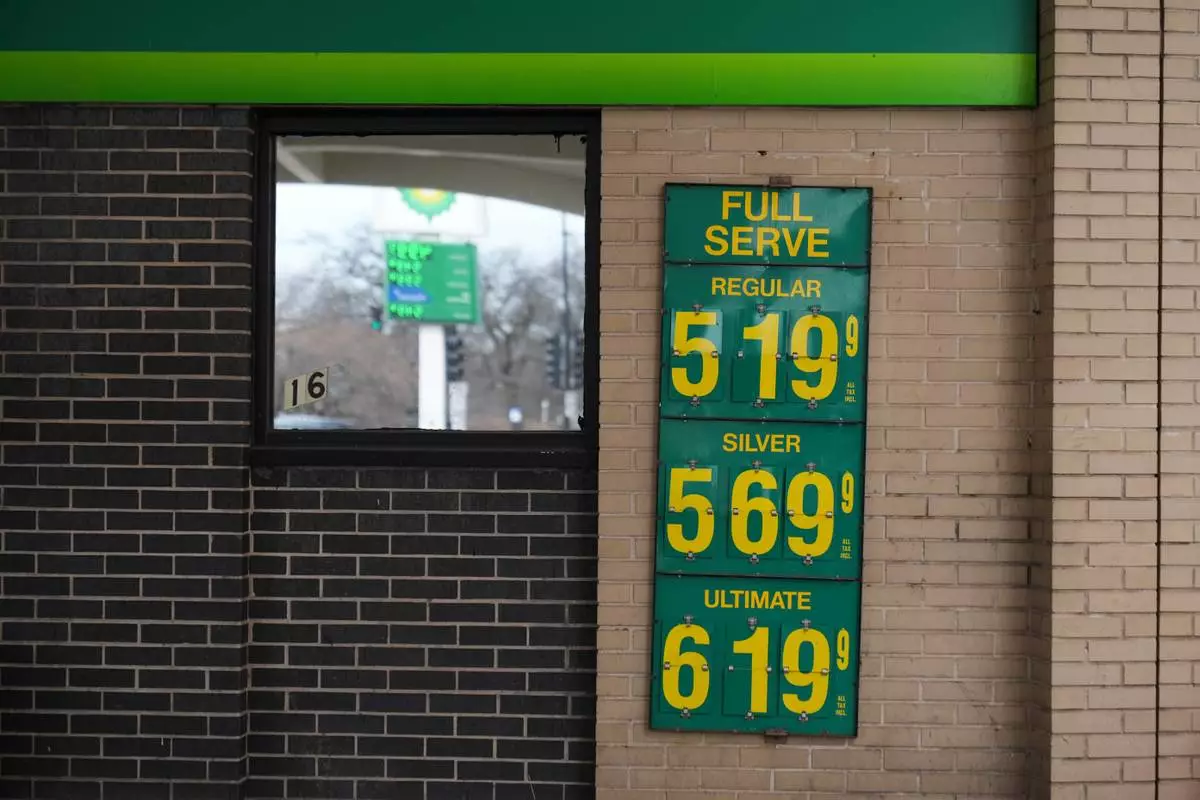
Gas prices are displayed at a station Tuesday, March 24, 2026, in Chicago. (AP Photo/Erin Hooley)
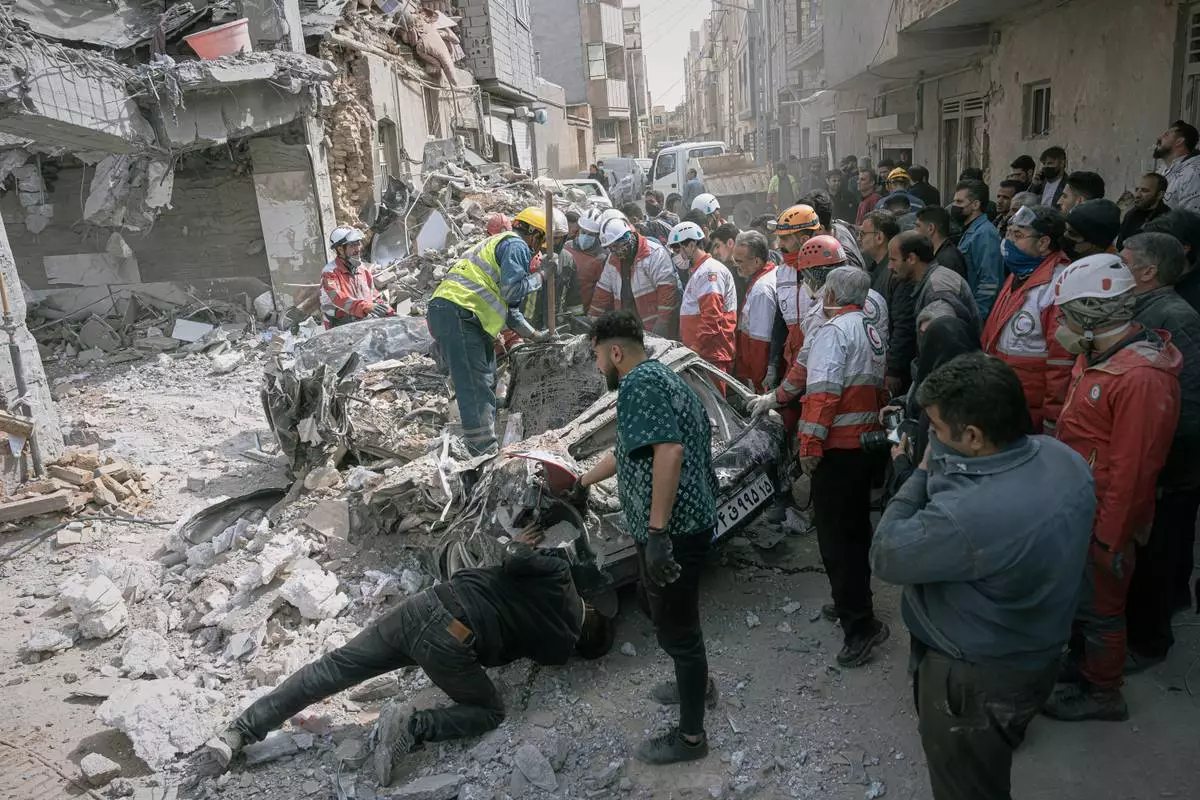
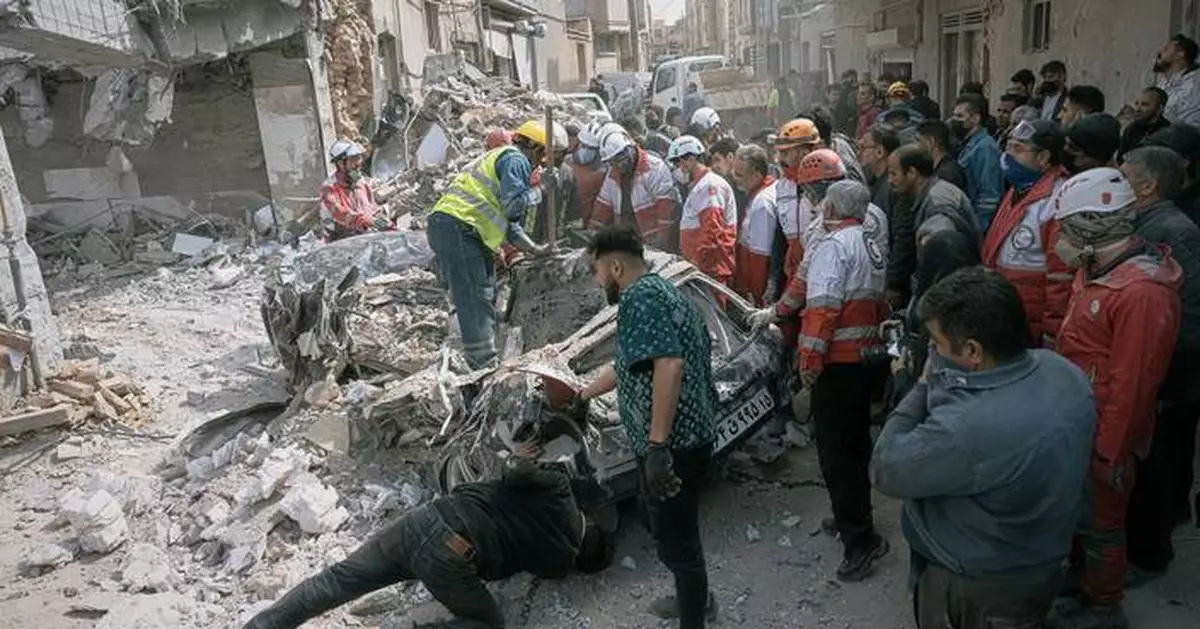
First responders inspect a destroyed car at the site of a residential building hit in an overnight strike during the U.S.-Israeli military campaign in Tabriz, East Azerbaijan Province, northwestern Iran, Tuesday, March 24, 2026. (AP Photo/Matin Hashemi)