WASHINGTON (AP) — President Donald Trump's special envoy to Belarus recently revealed that he helped ingratiate himself with the country's autocratic leader by echoing Alexander Lukashenko's disdain for Europe with vulgar language and by negotiating his way through a boozy lunch during their first meeting.
The envoy, John Coale, who has been charged with working to win the release of hundreds of political prisoners from the East European country, said State Department officials advised him before the initial meeting with Lukashenko that he likes to “yuck it up, so we yucked it up.”
"About a half-hour, 45 minutes into it, I am trying to get the feel of who this guy is and how to communicate," Coale said at a recent appearance at Arizona State University's McCain Institute. “He starts complaining about the Europeans — Europeans this, Europeans that. So — and this is kind of crude and I’m sorry for the language — but I said to him, ‘Yeah, they’re a bunch of p———.’ So, I had him in my hand from then on.”
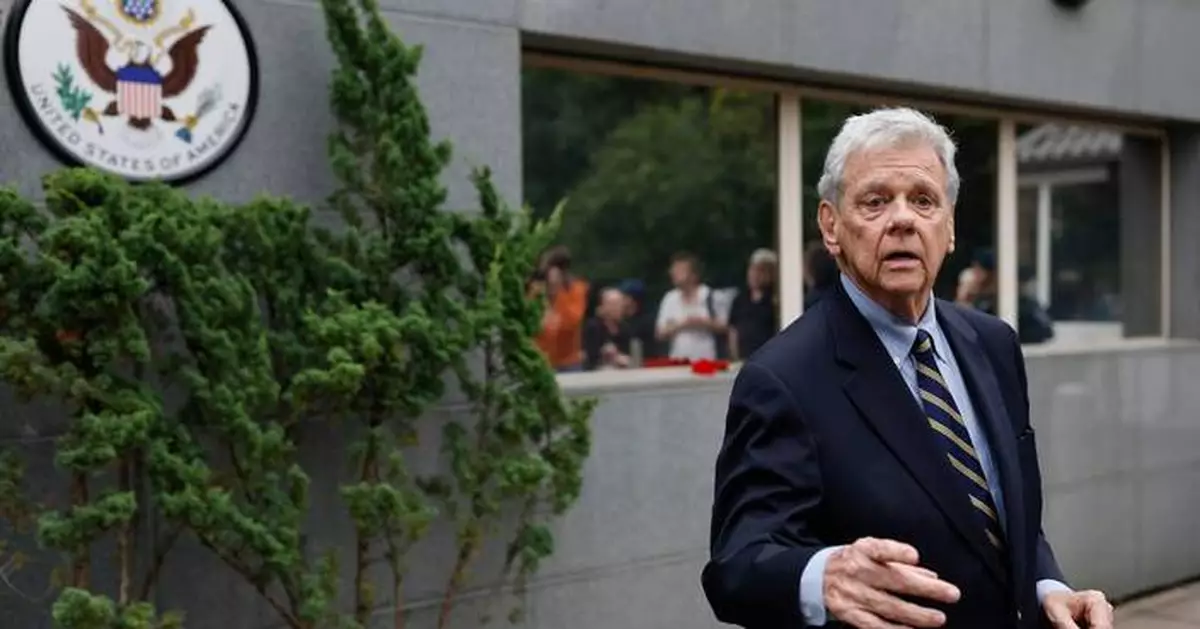
Coale offered the anecdote as a window into his efforts to build a relationship with the Belarusian leader, who is closely tied to Russian President Vladimir Putin and has sought to improve relations with the West since Trump's return to the White House.
Coale in an interview on Wednesday defended his rhetoric. “If I have to use locker room language to get 500 political prisoners released, I will do it every time," he told The Associated Press.
In 2016, a recording of Trump using the same vulgarity caused a major controversy during the president's first run for the White House, leading to a rare apology from Trump, who described it as private “locker room talk.”
To be certain, Coale is not the first U.S. diplomat to use less than diplomatic language about Europeans.
In 2014, Victoria Nuland, at the time the top U.S. diplomat for European and Eurasian affairs, apologized after a recording of a snippet of private conversation leaked in which she used salty language to vent about Europe’s hesitant policy over the pro-democracy protests in Ukraine. In 2003, State Department spokesman Richard Boucher faced heat in the early months of the Iraq War for dismissively referring to France, Germany, Belgium and Luxembourg — countries that opposed U.S. policy in Iraq — as the “chocolate makers.”
And Trump has sparred with European leaders over a long list of issues, including tariffs, contributions to NATO and his desire to acquire Greenland.
Coale, a Maryland attorney, was appointed by Trump in March 2025 as his deputy special envoy to Ukraine. In June, he help win the release of 14 political prisoners from Belarus. Months later, Trump announced he was elevating Coale to serve as his special envoy to Belarus. He is married to TV journalist Greta Van Susteren.
The envoy, during a conference on hostage-taking and arbitrary detention hosted by the non-profit think tank named after the late Sen. John McCain, made the case that his “very direct” diplomacy is reaping benefits with Lukashenko.
Lukashenko has ruled the nation of 9.5 million with an iron fist for more than three decades, and the country has been sanctioned repeatedly by Western countries — both for its political oppression and for allowing Moscow to use its territory in the full-scale invasion of Ukraine in 2022.
Belarus has released hundreds of political prisoners in exchange for sanctions relief since Trump returned to the White House as Lukashenko has sought to build better relations with the U.S. under the Republican leader.
Coale said his first meeting with Lukashenko stretched into a two-hour lunch, during which he poured shots of vodka on to the floor when his host wasn't looking to avoid becoming intoxicated. Coale joked he managed to limit himself to two shots, but said that some of his State Department colleagues who joined him at the meeting drank many more.
“All these toasts started — I can’t get hammered,” Coale said. "Of course, there were a couple State Department guys who drank all eight toasts and they were hammered.”
Lukashenko’s rule was challenged after a 2020 presidential election, when tens of thousands poured into the streets to protest a vote they viewed as rigged. They were the largest demonstrations since Belarus became independent following the 1991 collapse of the Soviet Union.
In an ensuing crackdown, tens of thousands were detained, with many beaten by police. Prominent opposition figures either fled the country or were imprisoned.
Five years after the mass demonstrations, Lukashenko won a seventh term last year in an election that the opposition called a farce.
More recently, Belarus has freed some political prisoners to try to win favor with the West, including Nobel Peace Prize laureate Ales Bialiatski and prominent opposition figures Siarhei Tsikhanouski, Viktar Babaryka and Maria Kolesnikova.
Last week, Lukashenko ordered the release of 250 political prisoners as part of a deal with Washington that lifted some U.S. sanctions, the latest step in the isolated leader’s effort to improve ties with the West. It was the largest one-time release of political prisoners in the country.
Lukashenko pardoned the prisoners after meeting with Coale in Minsk. Coale hailed the release as a “significant humanitarian milestone” and a testament to Trump’s “commitment to direct, hard-nosed diplomacy.”
The McCain Institute event took place days before the latest release of political prisoners. Coale predicted then that the Trump administration would be able to win the release of all of political prisoners by the end of the year.
“I'd be willing to bet on that,” said Coale, who added he was planning additional trips to Belarus in the near future that he expected to result in the release of a “couple hundred” more political prisoners. “I think this type of diplomacy that Donald Trump has pushed forward does work.”
AP Diplomatic Writer Matt Lee contributed to this report.

In this photo released by Belarusian presidential press service, Belarusian President Alexander Lukashenko, right, and U.S. Presidential envoy John Coale talk during their meeting in Minsk, Belarus, Thursday, March 19, 2026. (Belarusian Presidential Press Service via AP)

FILE - U.S. Presidential envoy John Coale, speaks to journalists outside the U.S. Embassy in Vilnius, Lithuania, Sept. 11, 2025, ahead of the arrival of released prisoners from Belarus. (AP Photo/Mindaugas Kulbis, file)
LOS ANGELES (AP) — Meta and YouTube must pay millions in damages to a 20-year-old woman after a jury decided the social media giant and video streamer designed their platforms to hook young users without concern for their well being.
The California jury's decision Wednesday in a first-of-its-kind lawsuit could influence the outcome of thousands of similar lawsuits accusing social media companies of deliberately causing harm.
The plaintiff, known by her initials KGM, testified at trial that she became addicted to social media as a child and that this addiction exacerbated her mental health struggles. After more than 40 hours of deliberations, a majority of jurors agreed and awarded her $3 million in damages.
Jurors later recommended an additional $3 million in punitive damages after deciding the companies acted with malice, oppression or fraud in harming children with their platforms. The judge has final say over how much damages are awarded.
It’s the second verdict against Meta this week, after a jury in New Mexico determined the company harms children’s mental health and safety, in violation of state law.
Meta, the parent of Instagram and Facebook, and Google-owned YouTube issued statements disagreeing with the verdict and vowed to explore their legal options, which include appeals.
Google spokesperson Jose Castañeda said the verdict misrepresents YouTube “which is a responsibly built streaming platform, not a social media site.” A Meta spokesperson said teen mental health is “profoundly complex and cannot be linked to a single app.”
Peter Ormerod, an associate professor of law at Villanova University, called the verdict “a momentous development" but noted it’s just "one step in a much longer saga” and that he doesn't expect to see large changes to the platforms immediately.
“I don’t think it is an unequivocal victory and I think there’s a long way to go before you see something akin to the master settlement that this is often analogized to in the tobacco and opioid litigation,” he said. To get to that kind of significant change in the platforms' operation, Ormerod said Meta and YouTube would likely have to lose their legal arguments on appeal and additional bellwether trials, or test cases, like this one would have to go against them.
The jury determined that Meta and YouTube were negligent in the design or operation of their respective platforms, and that the negligence was a substantial factor in causing harm to the plaintiff.
They also determined each company knew their platforms could be dangerous when used by a minor, and agreed that they failed to adequately warn of that danger, further contributing to the plaintiff's harm.
Only nine of the 12 jurors had to agree on each claim against each defendant. Two jurors consistently disagreed with the other 10 on whether the companies should be held liable, but a majority of the jury agreed on all seven claims against each company.
The jurors also decided Meta held more responsibility for harm to KGM, or Kaley, as her lawyers called her during the trial. The jury said Meta shouldered 70% of the responsibility while YouTube bore the remaining 30%. That division was reflected in the breakdown of the $3 million in punitive damages, with the jury deciding on $2.1 million from Meta and $900,000 from YouTube.
Meta and YouTube were the two remaining defendants in the case. TikTok and Snap settled before the trial began.
One juror, who did not feel comfortable sharing her full name, said to reporters outside the courtroom that Mark Zuckerberg's testimony, and how he “changed it back and forth,” did not “sit well” with the jury.
She also said they landed on the $6 million in damages even though some jurors were advocating for a higher amount because they were concerned about giving the sole plaintiff a larger lump sum all at once. But the jury still wanted the companies to understand they felt their practices were not acceptable.
“We wanted them to feel it,” she said.
Jurors listened to about a month of lawyers’ arguments, testimony and evidence, and they heard from Kaley, as well as Meta leaders Zuckerberg and Adam Mosseri. YouTube’s CEO, Neal Mohan, was not called to testify.
Kaley said she began using YouTube at age 6 and Instagram at age 9. She told the jury she was on social media “all day long” as a child.
Lawyers representing Kaley, led by Mark Lanier, were tasked with proving that the respective defendants’ negligence was a substantial factor in causing Kaley’s harm. They pointed to specific design features they said are designed to “hook” young users, like the “infinite” nature of feeds that allowed for an endless supply of content, autoplay features, and notifications.
The jurors were told not to take into account the content of the posts and videos Kaley viewed because tech companies are shielded from legal responsibility for posted content, based on Section 230 of the 1996 Communications Decency Act.
Meta argued that Kaley's mental health struggles were not connected to her social media use and pointed to her turbulent home life. Meta also said “not one of her therapists identified social media as the cause” of her mental health issues. But the plaintiffs did not have to prove that social media caused Kaley’s struggles — only that it was a “substantial factor” in causing her harm.
YouTube focused more on the nature of the platform, arguing that it's a video platform akin to television rather than a social media platform. The company also mentioned her declining YouTube use as she aged. According to their data, she spent about one minute a day on average watching YouTube Shorts since its inception. YouTube Shorts, which launched in 2020, delivers short-form, vertical videos with the “infinite scroll” feature that plaintiffs argued was addictive.
Lawyers representing both platforms also pointed to their safety features and guardrails for users to monitor and customize their use.
The Los Angeles case was filed by a single plaintiff against Meta, YouTube, TikTok and Snap. After the latter two settled, her lawyers argued that Meta and YouTube were addictive by design, and that they especially target young users.
“The reason why this case is consequential is not the individual case, but the way that it’s a bellwether test case that might guide the resolution of other lawsuits,” said Sarah Kreps, a professor and director of Cornell University’s Tech Policy Institute.
“There are thousands pending, and hundreds in California. So the concern if you’re a social media platform is, as this case goes, so might these others," she said. "I think the reason why they would be concerned, and I’ve seen this analogy with the tobacco lawsuits, is that once you have this type of verdict in one case, it just opens the floodgates for so many more.”
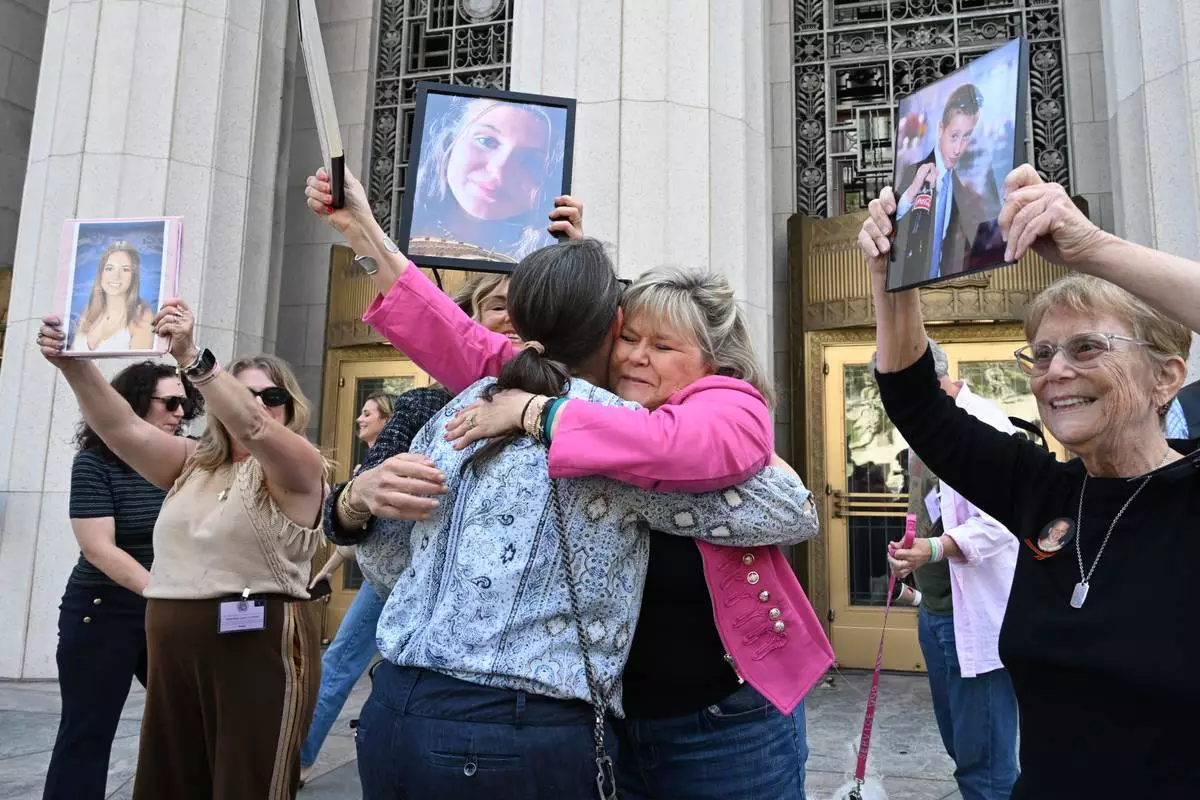
Lori Schott, center right, embraces Mary Rodee after the verdict in a landmark trial over whether social media platforms deliberately addict and harm children at Los Angeles Superior Court, Wednesday, March 25, 2026, in Los Angeles. (AP Photo/William Liang)
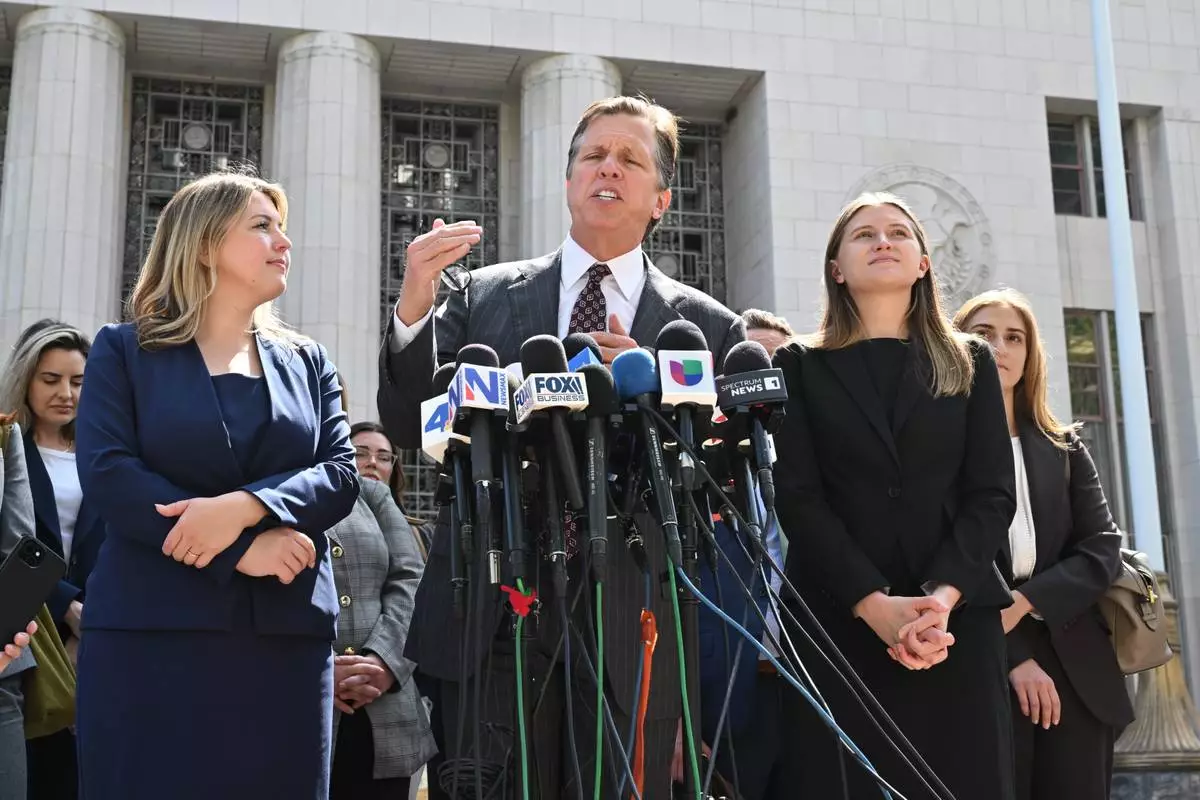
Attorney Mark Lanier speaks during a news conference after the verdict in a landmark trial over whether social media platforms deliberately addict and harm children at Los Angeles Superior Court, Wednesday, March 25, 2026, in Los Angeles. (AP Photo/William Liang)
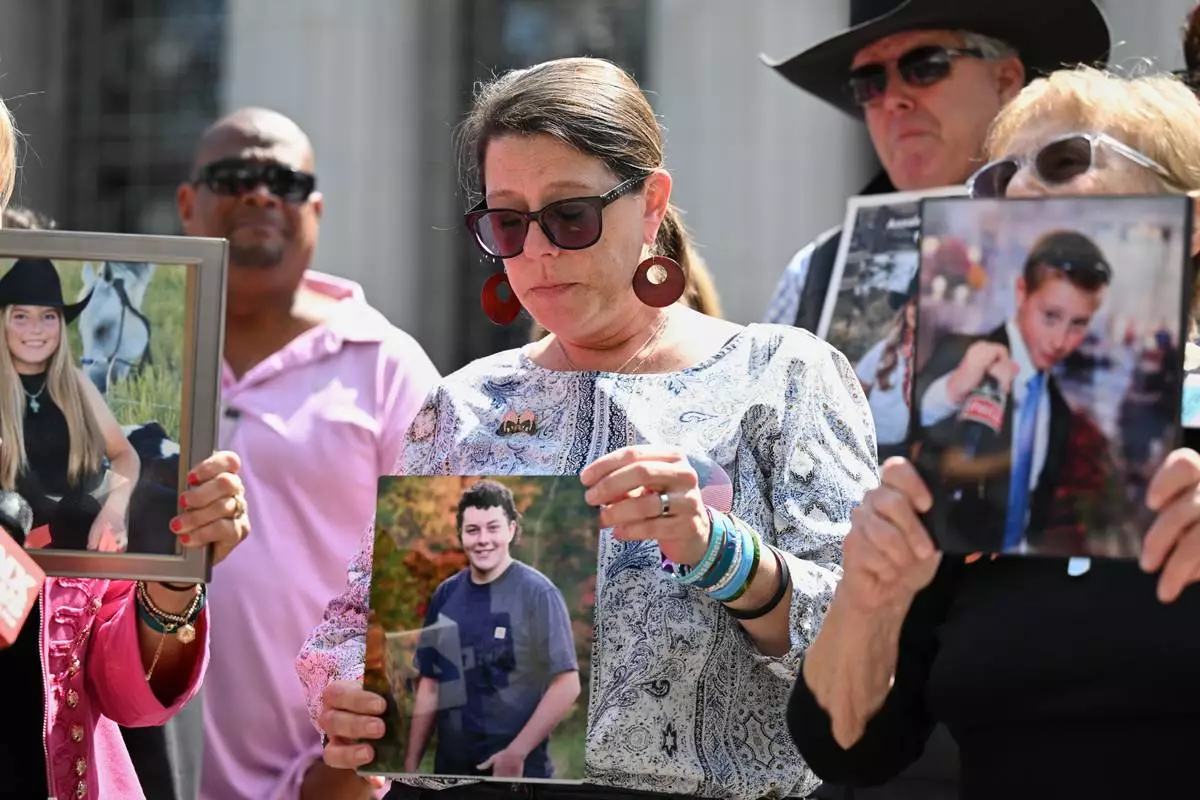
Mary Rodee holds a photo of her son Riley after the verdict in a landmark trial over whether social media platforms deliberately addict and harm children at Los Angeles Superior Court, Wednesday, March 25, 2026, in Los Angeles. (AP Photo/William Liang)
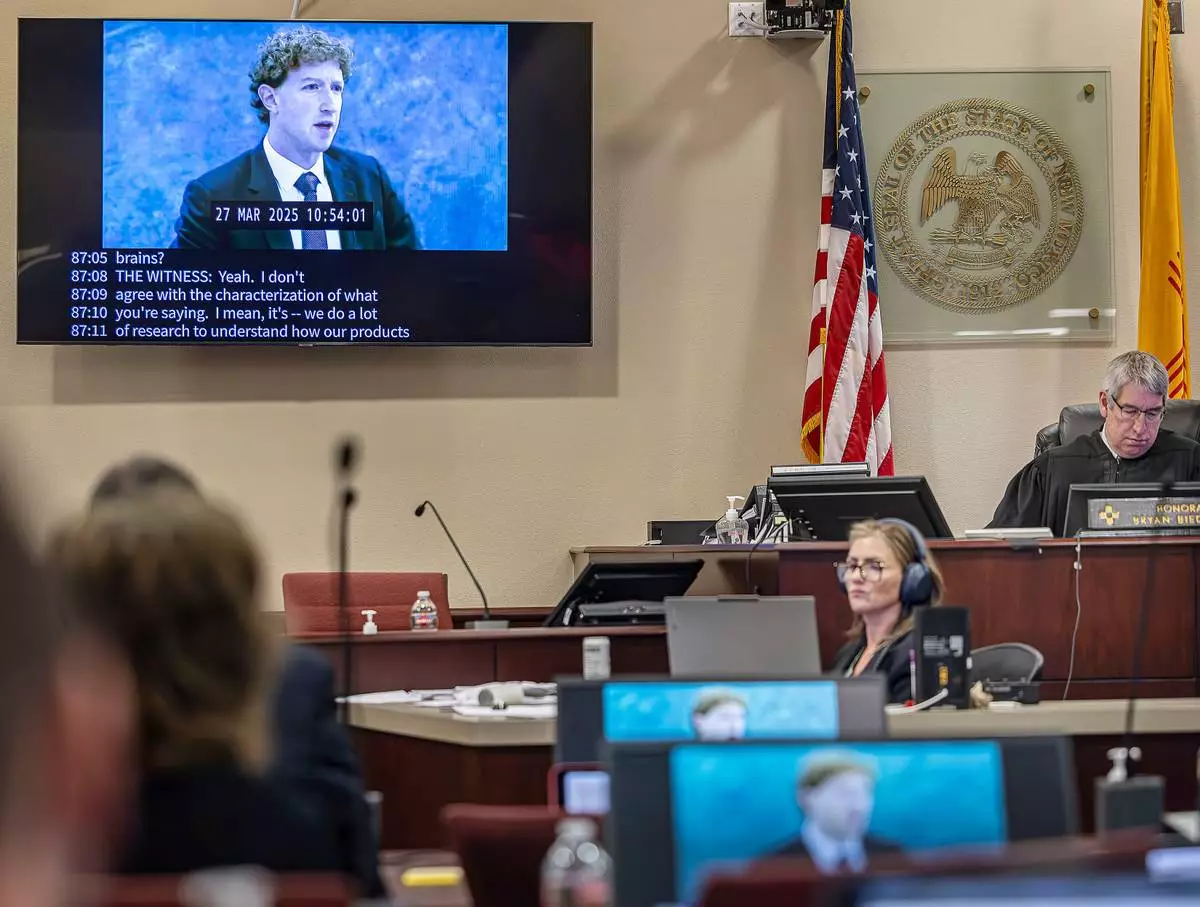
A recording of Meta Founder and CEO Mark Zuckerberg's deposition is played for the jurors on Wednesday, March 4, 2026, in Santa Fe, N.M. (Jim Weber/Santa Fe New Mexican via AP, Pool)
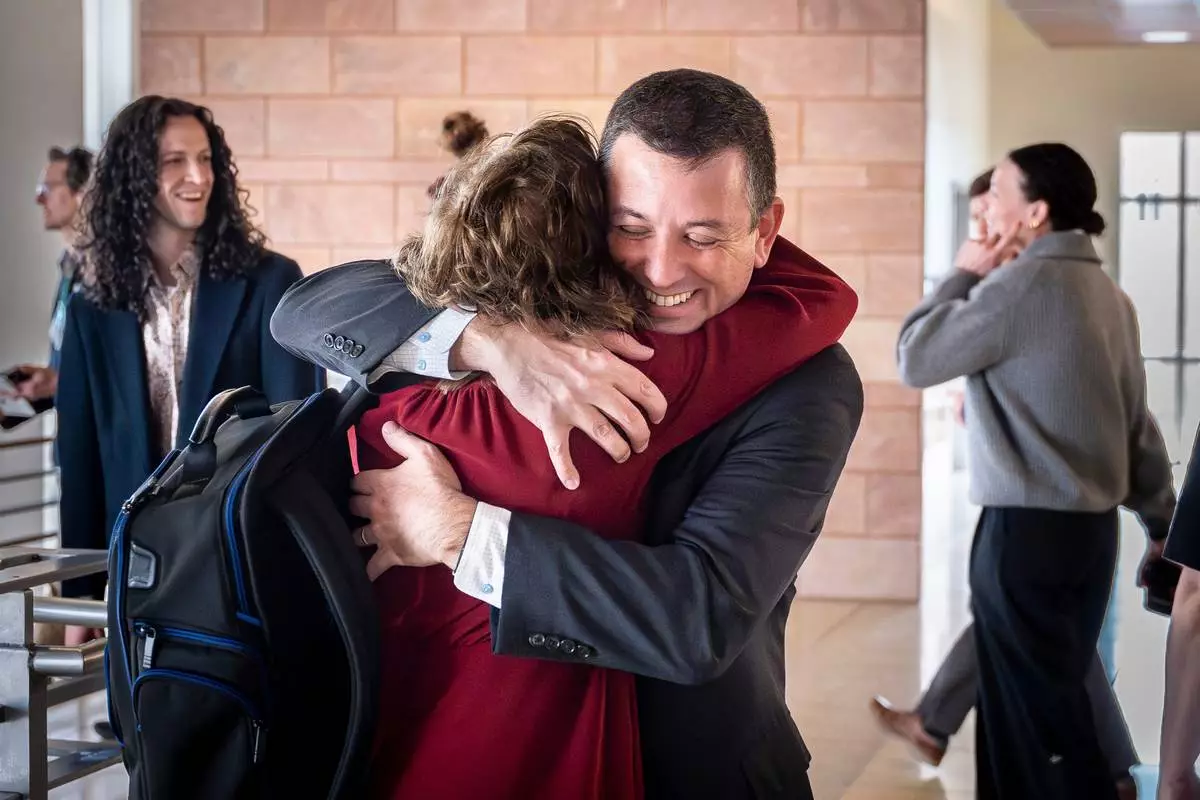
Civil litigator David Ackerman embraces New Mexico state attorney Linda Singer following a landmark verdict where the jury found Meta willfully violated New Mexico's consumer protection laws and are ordered to pay the state $375 million in damages, Tuesday, March 24, 2026 , in Santa Fe, N.M. (Nathan Burton/Santa Fe New Mexican via AP, Pool)
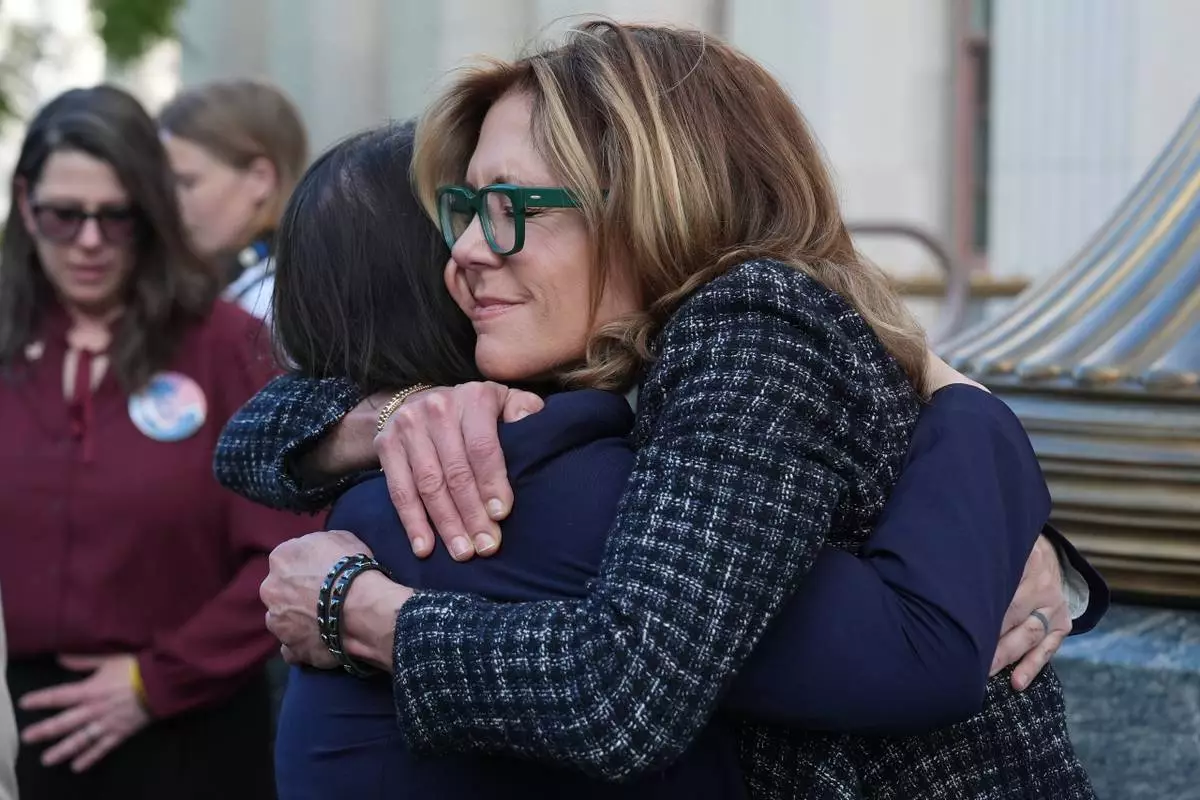
Laura Marquez-Garrett, attorney for SMVLC (Social Media Victims Law Center), embraces Julianna Arnold, right, parent, outside Los Angeles Superior Court on Thursday, March 12, 2026. (AP Photo/Damian Dovarganes)
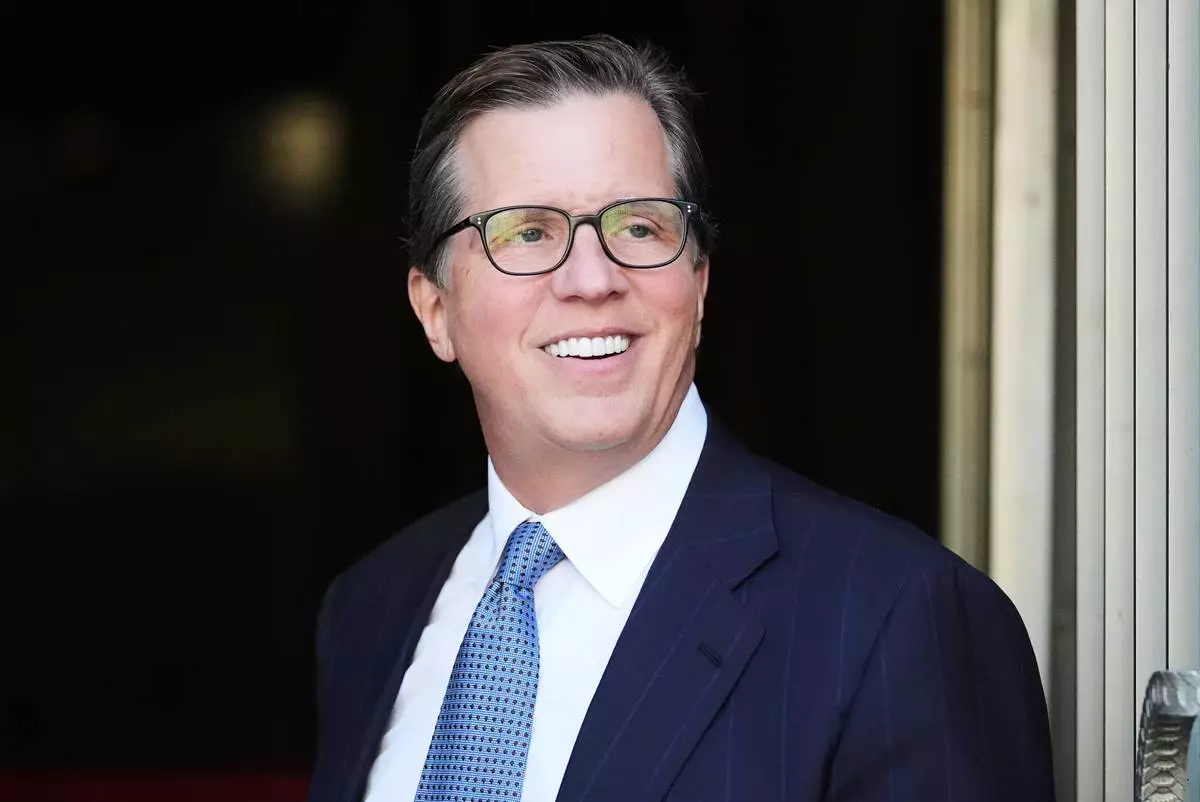
Plaintiffs attorney Mark Lanier arrives for closing arguments in a landmark trial over whether social media platforms deliberately addict and harm children on Thursday, March 12, 2026, in Los Angeles. (AP Photo/Damian Dovarganes)