TAMPA, Fla.--(BUSINESS WIRE)--Mar 25, 2026--
The NRP Group, a vertically integrated, best-in-class developer, builder and manager of multifamily housing, today announced the appointment of Taylor Lindsley to Vice President of Development, Florida. In his new role, Lindsley will spearhead new project origination and drive a strong pipeline of market‑rate development opportunities. Lindsley will report to Brett Gelsomino, Senior Vice President of Development in Florida, joining a team of collaborative, high-performing industry leaders committed to meaningful, community-driven development.
This press release features multimedia. View the full release here: https://www.businesswire.com/news/home/20260325885591/en/
“Taylor’s combination of development expertise, financial acumen and on‑the‑ground experience in the Florida market makes him an exceptional addition to our team,” said Gelsomino. “He brings years of experience in project origination and overseeing complex deal pipelines with both precision and vision, aligning perfectly with the standard of excellence we uphold at The NRP Group. We’re thrilled to welcome Taylor and look forward to the impact his leadership will have on our growing portfolio across the state.”
As VP of Development, Lindsley is responsible for overseeing all aspects of suburban and urban multifamily development across Florida, tapping into a wide network of brokers, owners, architects, attorneys and public‑sector partners to accelerate deals and expertly navigate zoning, entitlement and site‑plan approvals. Partnering closely with Gelsomino, Lindsley will also help shape the region’s strategic vision while staying at the forefront of market trends, deal flow and regulatory shifts that fuel continued growth.
Lindsley brings considerable experience in commercial real estate development across multifamily, industrial and retail sectors in Florida to his new role. Prior to joining The NRP Group, Lindsley served as Development Manager, Florida, at Milhaus, a development, construction and property management firm specializing in Class-A multifamily projects across the U.S.
Lindsley led the origination and execution of Milhaus's multifamily development efforts across the state of Florida where he oversaw the full lifecycle of projects, including land acquisition, entitlements, financial modeling, design coordination and construction delivery. His experience includes rezoning and municipal negotiations, leading multidisciplinary consultant and design teams, preparing investment materials and feasibility analyses for capital raises, coordination of Certificate of Occupancy and tenant move-ins with Property Management. Prior to Milhaus, Lindsley managed industrial and retail developments at Wadsworth Development Group in Arizona. He began his career in general contracting at JE Dunn Construction, supporting the delivery of large scale commercial projects in healthcare and advanced manufacturing exceeding $500M. During his tenure, Lindsley managed the majority of self-perform scopes in the field, where he developed a strong foundation in construction execution, complex scheduling, budgeting and quality control.
“I’m incredibly excited to step into this new role and join a firm with NRP’s exceptional reputation for delivering high‑quality communities and making a meaningful impact in residents’ lives,” Lindsley said. “Florida’s housing market continues to present dynamic growth opportunities, and I’m eager to help shape developments that reflect the modern and flexible living environments today’s residents demand. This is a tremendous opportunity to contribute to a mission‑driven organization that pairs thoughtful design with a true commitment to positive, measurable change.”
Lindsley holds a Masters in Real Estate Development (MRED) degree from Arizona State University’s W.P. Carey School of Business and a Bachelor of Science degree in Construction Management from Colorado State University. Lindsley remains active in the industry through Urban Land Institute (ULI) Tampa Bay’s Young Leaders Group and mentorship programs, reinforcing his commitment to professional growth and regional market engagement.
The state of Florida remains a priority focus for The NRP Group. The company has a robust portfolio of market-rate and affordable developments across the state, including 6,357 rental homes delivered in markets including Fort Myers, Venice, St. Petersburg, Tampa and Orlando.
Taylor Lindsley will begin serving in his new role as Vice President of Development, Florida, effective immediately.
About The NRP Group
The NRP Group is a vertically integrated developer, owner, builder, and manager of best-in-class multifamily housing with a mission to create exceptional rental housing communities for individuals and families, regardless of income. Since its founding in 1994, NRP has developed more than 68,000 apartment homes and currently manages over 33,000 residential units. Through its disciplined approach to vetting opportunities, NRP has established a track record of delivering impressive returns for investors. The company’s formidable size and depth of talent provide the experience and infrastructure necessary to execute developments of varying degrees of complexity and scope in both urban-infill and suburban locations, including market-rate, affordable, mixed-income, and senior housing.
The NRP Group has been consistently named a largest developer and builder in the U.S. on the NMHC “Top 50” lists, the Top 5 on the Multi-Housing News’ “Top Multifamily Developers” list, named a Top Affordable Housing Developer by Affordable Housing Finance, and is a five-time recipient of NAHB’s Best Multifamily Development Firm of the Year award. The NRP Group has become the top multifamily developer in the U.S. that creates both affordable and market-rate housing at a national scale. Based on over 30 years of experience and expertise, NRP provides construction and property management services to outside owners and developers. For additional information, visit www.nrpgroup.com.

Taylor Lindsley (Photo Credit: The NRP Group)
DUBAI, United Arab Emirates (AP) — Iran on Wednesday dismissed an American plan to pause the war in the Middle East and launched more attacks on Israel and Gulf Arab countries, including an assault that sparked a huge fire at Kuwait International Airport.
Iran's defiance came as Israel launched airstrikes on Tehran and as the United States deployed paratroopers and more Marines to the region.
Iranian state television’s English-language broadcaster, Press TV, quoted an anonymous official as saying Iran rejected America’s ceasefire proposal. Press TV’s report came after Pakistan transmitted the proposal to Iran.
“Iran will end the war when it decides to do so and when its own conditions are met," Press TV quoted the official as saying. The official added Tehran will continue its “heavy blows” across the Mideast.
Earlier, two officials from Pakistan described the 15-point U.S. proposal broadly, saying it addressed sanctions relief, a rollback of Iran’s nuclear program, limits on missiles and reopening the Strait of Hormuz, through which a fifth of the world’s oil is shipped.
An Egyptian official involved in the mediation efforts said the proposal also includes restrictions on Iran’s support for armed groups. The officials spoke on condition of anonymity to discuss details not yet released.
Some of those points were nonstarters in negotiations before the war: Iran has insisted it won’t discuss its ballistic missile program or its support of regional militias, which it views as key to its security. And its ability to control passage through the Strait of Hormuz represents one of its biggest strategic advantages.
Iran’s attacks on regional energy infrastructure along with its restrictions on the strait have sent oil prices skyrocketing and sparked fears of a global energy crisis, in turn putting pressure on the U.S. to find a way to end the chokehold and calm markets.
At least 1,000 troops from the 82nd Airborne Division will be sent to the Mideast in the coming days, three people with knowledge of the plans told The Associated Press. They spoke on condition of anonymity to discuss sensitive military plans.
The paratroopers are trained to jump into hostile or contested areas to secure key territory and airfields.
The Pentagon is also in the process of sending about 5,000 more Marines, trained in amphibious assaults, and thousands of sailors to the region.
Mediators are pushing for possible in-person talks between the Iranians and the Americans, perhaps as soon as Friday in Pakistan, the Egyptian and Pakistani officials said.
Trump has said the U.S. is “in negotiations right now” and that the participants included special envoy Steve Witkoff, his son-in-law Jared Kushner, Secretary of State Marco Rubio and Vice President JD Vance. He has not disclosed who from Iran they are in contact with, but said "the other side, I can tell you, they’d like to make a deal.”
Press TV, like all of Iran's state TV channels is controlled by hard-liners. It cited an Iranian five-point plan for a ceasefire from the official who rejected the US proposal. That plan included a halt to killings of its officials, means to make sure no other war is waged against it, reparations for the war, the end of hostilities and Iran’s “exercise of sovereignty over the Strait of Hormuz.”
Those measures, particularly reparations and its continued chokehold over the Strait of Hormuz, likely will be unacceptable to the White House as energy supplies worldwide remain affected by the war.
While Iran and Oman both have territory in the Strait of Hormuz, its narrow shipping channels are viewed as international waters through which all ships can travel.
Israeli officials, who have been advocating for Trump to continue the war against Iran, were surprised by the submission of a ceasefire plan, according to a person who was briefed on the contours of the proposal and spoke on condition of anonymity because they were not authorized to speak publicly.
Any talks between the U.S. and Iran would face monumental challenges. It’s not clear who in Iran’s government has the authority to negotiate — or would be willing to, as Israel has vowed to continue killing the country’s leaders.
Iran remains highly suspicious of the United States, which twice under the Trump administration has attacked during high-level diplomatic talks, including with the Feb. 28 strikes that started the current war.
“We have a very catastrophic experience with U.S. diplomacy,” Iranian Foreign Ministry spokesperson Esmail Baghaei told India Today on Tuesday.
The Israeli military said Wednesday afternoon it had completed several waves of airstrikes in Tehran. The army also said that as part of its strikes a day earlier it targeted an Iranian submarine development center in Isfahan.
“There have been some days when the bombings are so intense you can’t do anything,” a 26-year-old graduate student in Tehran said, adding his friends mostly stayed at home. He spoke on condition of anonymity because of security fears.
Missile alert sirens sounded multiple times in Israel as Iran launched its own attacks.
Drone and rocket fire from the Iran-back Hezbollah militant group continued unabated. Since entering the fighting, the group has fired rockets into northern Israel around the clock each day, disrupting the lives of hundreds of thousands of people.
Iran also kept up the pressure on its Gulf Arab neighbors. Saudi Arabia’s Defense Ministry saying it had destroyed at least eight drones in the kingdom’s oil-rich Eastern Province, and missile alert sirens sounding in Bahrain.
Kuwait said it shot down multiple drones but the General Civil Aviation Authority said one hit a fuel tank at Kuwait International Airport, sparking a fire that sent a huge plume of smoke into the sky.
Iran’s death toll has passed 1,500, its Health Ministry has said. Israel says 20 people have died in the war, including two soldiers in Lebanon. At least 13 U.S. military members have been killed, along with more than a dozen civilians in the occupied West Bank and Gulf Arab states.
Authorities say more than 1,000 people have died in Lebanon, where Israel has targeted the Iran-linked Hezbollah militant group, which has also fired on Israel.
In Iraq, where Iranian-supported militant groups have also entered the conflict, 80 members of the security forces have been killed, a top security adviser, Khalid al-Yaqoubi, said.
The news of potential negotiations drove down the price of oil. Brent crude oil, the international standard, has neared $120 a barrel during the conflict but was trading below $100 Wednesday. It is still up around 35% from the start of the war.
Reports of efforts to end fighting also buoyed stock markets, with the S&P 500 rising just over 1% in early trading.
Economists and leaders have warned of far-reaching effects if energy prices remain high — from rising prices on food and other basics to higher rates for mortgages and auto loans.
A big driver of the spike in the oil price has been Iran’s stranglehold on the Strait of Hormuz. Iran has allowed a small number of ships through the strait, but has said no ships from the U.S., Israel or countries seen as linked to them can pass.
Asked in the interview with India Today whether Iran was charging ships for passage, Baghaei, the Iranian Foreign Ministry spokesperson, said “absolutely.” He did not elaborate.
Madhani reported from Washington, Rising from Bangkok and Ahmed from Islamabad. Associated Press writers Samy Magdy in Cairo, Natalie Melzer in Tel Aviv, Israel, Qassim Abdul-Zahra in Baghdad, and E. Eduardo Castillo in Beijing contributed to this report.

Dog salon workers take cover with the dogs in a bomb shelter as air raid sirens warn of incoming Iranian missile strikes in Ramat Gan, Israel, Wednesday, March 25, 2026. (AP Photo/Oded Balilty)
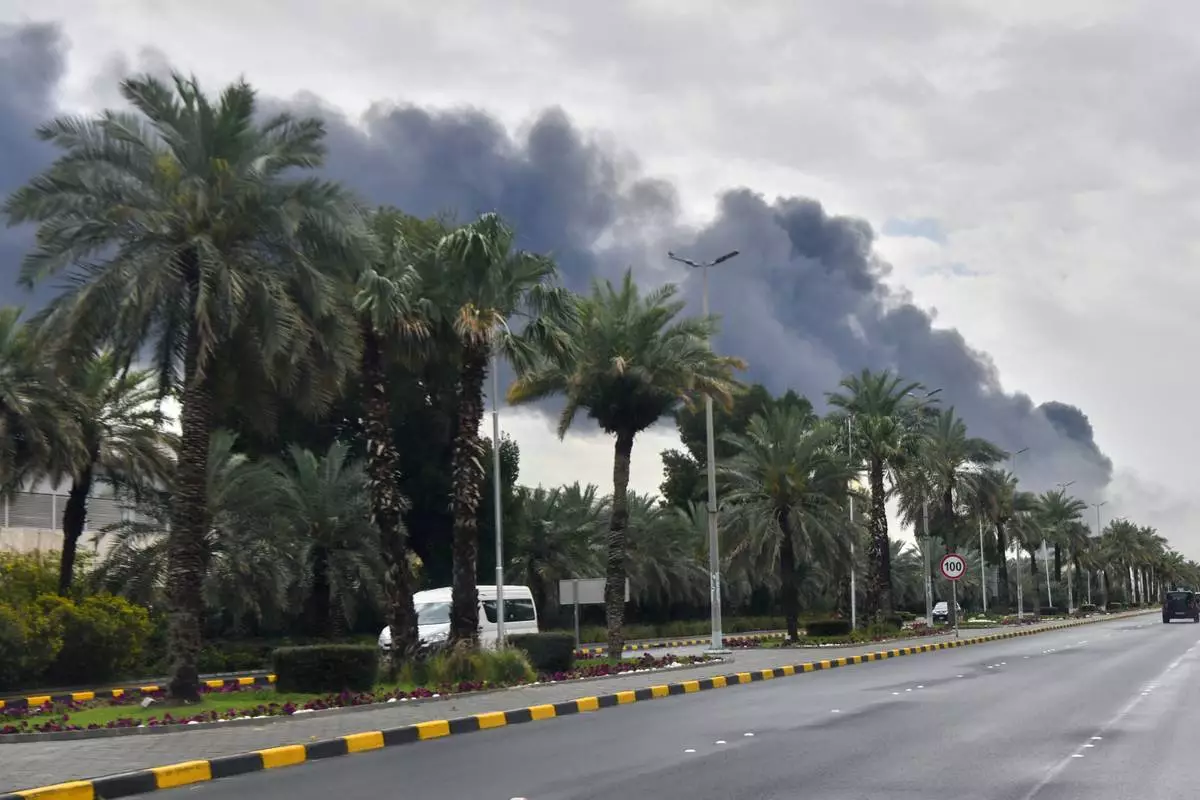
Smoke rises from Kuwait international airport after a drone strike on fuel storage in Kuwait City, Kuwait, Friday, Wednesday, March 25, 2026. (AP Photo)
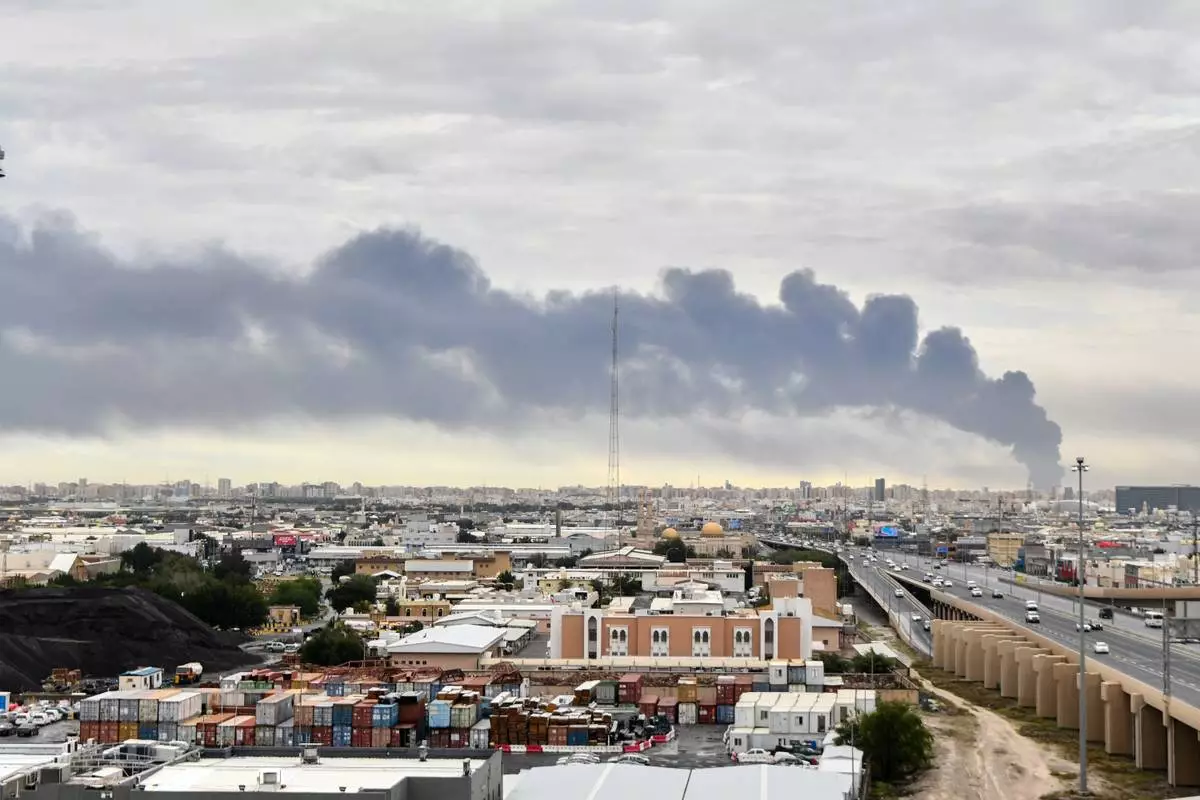
Smoke rises from Kuwait international airport after a drone strike on fuel storage in Kuwait City, Kuwait, Friday, Wednesday, March 25, 2026. (AP Photo)
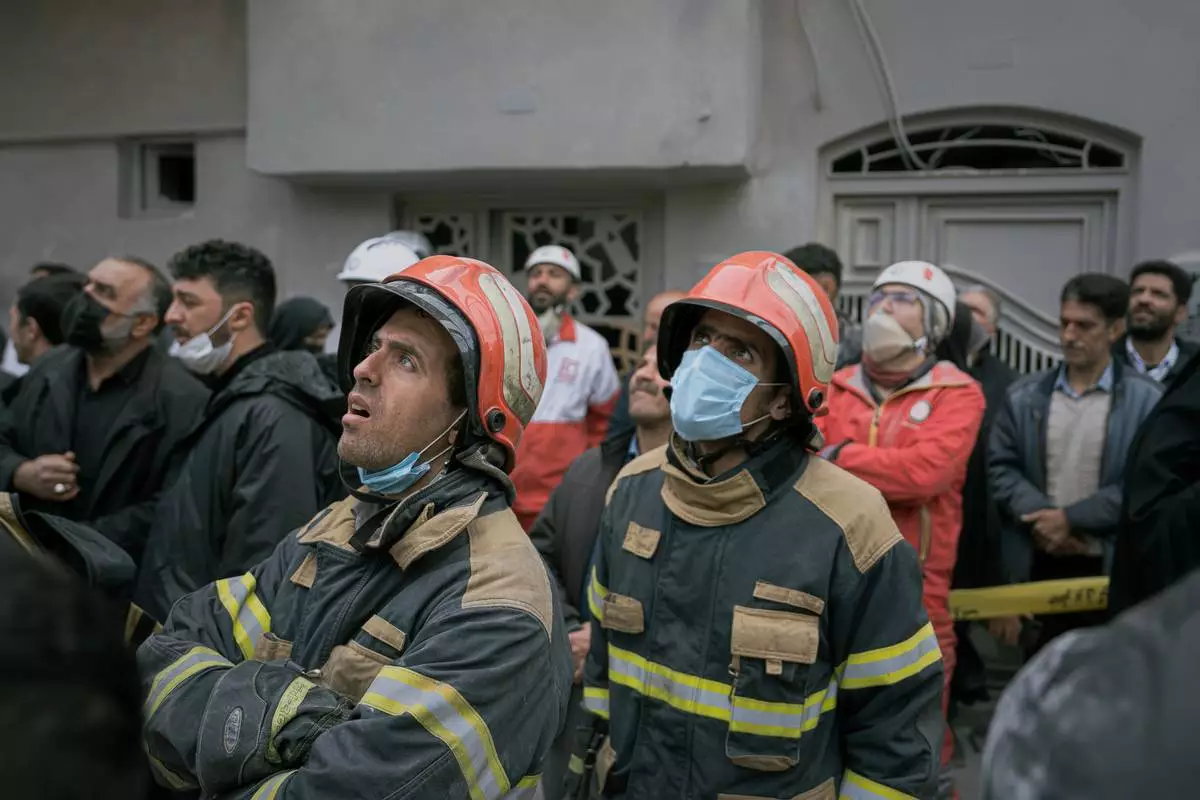
Firefighters look on as volunteers and first responders inspect the rubble and search for victims at a residential building hit in an overnight strike during the U.S.-Israeli military campaign in Tabriz, East Azerbaijan Province, northwestern Iran, Tuesday, March 24, 2026. (AP Photo/Matin Hashemi)
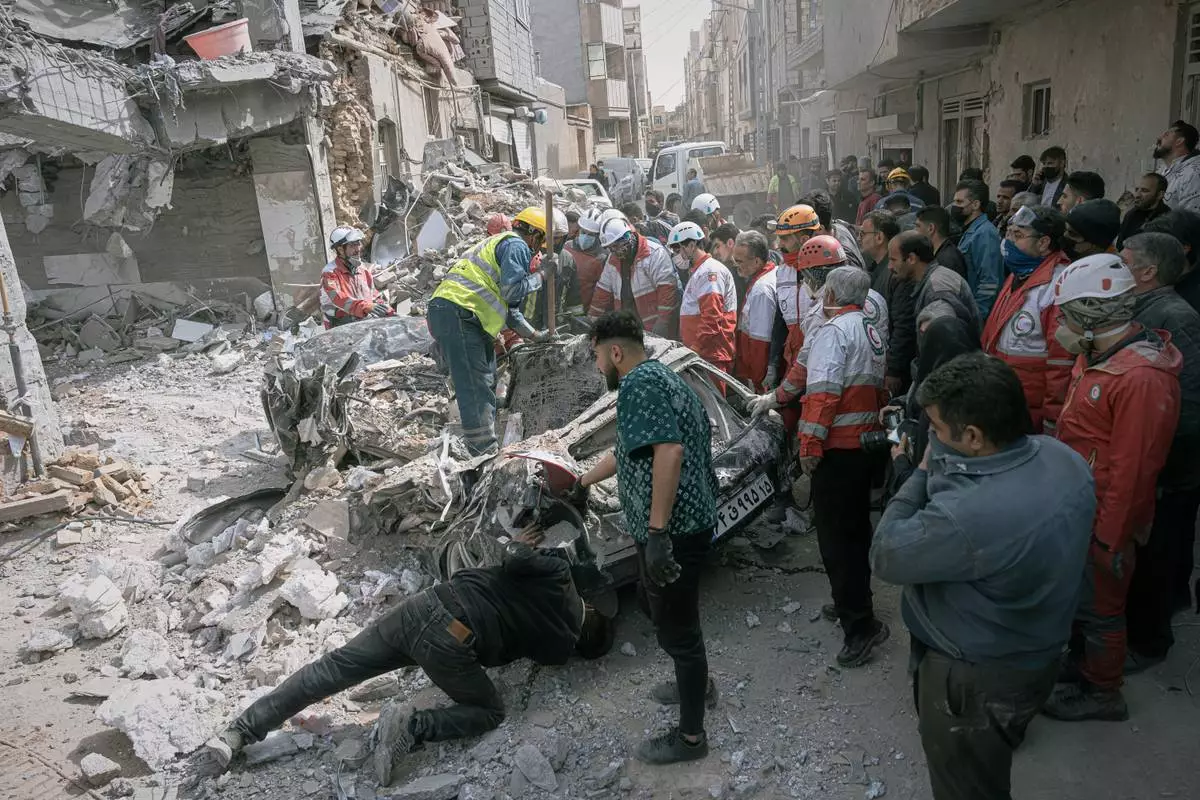
First responders inspect a destroyed car at the site of a residential building hit in an overnight strike during the U.S.-Israeli military campaign in Tabriz, East Azerbaijan Province, northwestern Iran, Tuesday, March 24, 2026. (AP Photo/Matin Hashemi)