BOISE, Idaho (AP) — Idaho lawmakers are considering a bill that would make it a crime for transgender people to use the bathroom that matches their gender identity — even inside privately owned businesses.
At least 19 states, including Idaho, already have laws barring transgender people from using bathrooms and changing rooms that align with their gender in schools and, in some cases, other public places. The LGBTQ+ advocacy organization Movement Advancement Project’s tracking of the laws shows that three other states — Florida, Kansas and Utah — have made it a criminal offense in some circumstances to violate the bathroom laws.
But none of the others apply as broadly to private businesses as the Idaho bill, which covers any “place of public accommodation,” meaning any business or facility that serves the public. The state's Republican supermajority Senate is expected to vote on the bill this week, deciding whether to send it to Gov. Brad Little's desk.
If the law is passed, anyone who enters a public facility like a bathroom or locker room designated for the opposite sex could be sentenced to a year in jail for a misdemeanor first offense, or up to five years in prison for a felony second offense. That's a longer sentence than Idaho imposes for a first drunken driving conviction or for displaying offensive sexual material in public.
Protecting those spaces is a “matter of safety” and “decency,” said Republican Sen. Ben Toews told a Senate committee last week.
“Private spaces such as restrooms, changing areas and showers are sex-separated for a reason,” Toews said. “Individuals in these vulnerable settings have a reasonable expectation of privacy and security.”
The bill does carve out several exceptions. Athletic coaches, people responding to emergencies, people supervising inmates, custodians, and people helping children who need bathroom assistance get a pass. So does someone who is “in dire need” of a bathroom, if the bathroom they use is the only one that is reasonably available at the time.
Law enforcement groups including the Idaho Fraternal Order of Police and the Idaho Chiefs of Police Association oppose the bill, which they say would place officers in impossible positions, tasking them with visually determining someone's biological sex or their level of “dire need.” The Idaho Sheriff's Association asked lawmakers to require that people first ask any suspected violator to leave the bathroom before calling authorities, but lawmakers refused.
Heron Greenesmith, deputy policy director at Transgender Law Center, said the “dire need” exception could be especially hard to assert — and that the idea that a person can use a public restroom only in an emergency is dehumanizing.
“How does one prove that one was going to poop on the floor?” they asked.
John Bueno, a transgender student at the University of Idaho and a member of the student group Queer Inclusion Society, said the school has lots of single-use restrooms, which helps mitigate the logistical impacts of the bill. But the legislation would likely lead to more unwanted “profiling” of people, whether they are transgender or not, she said.
“It’s this cultural attitude of getting other Americans to habitually be narcing on one other and doing this sort of ‘transvestigating’ — that is what these kinds of bills promote,” Bueno said.
It all comes down to an effort to disenfranchise transgender people, Bueno said.
“This will increasingly deter queer individuals from Idaho universities and the state as a whole,” she said. “Which to be fair, is probably the primary purpose.”
Nikson Matthews, a transgender man with a beard, told a panel of lawmakers last week that the bill would force him into the women's restroom, where his masculine appearance puts him at risk of aggression from people who think he's intruding.
“It creates a crime — but that is not based on conduct or harm,” Matthews said. “It is based on presence, and to justify that you have to accept that someone’s presence alone is traumatizing and harmful enough to criminalize.”
It could also make it difficult for transgender people to work, said Boise resident Laura Volgert.
“People might be able to hold it for an hour if they're at a restaurant for lunch or at a grocery store,” she told lawmakers during a committee hearing. “They can't be expected to hold it for a full eight-hour shift.”
That's the point of these types of laws, said Greenesmith, to “make it untenable to go to the movies, to go to the doctor, to go to the bank.”
Proponents say that isn't the case.
Suzanne Tabert, a Sandpoint resident, said the bill is about “maintaining, clear, enforceable boundaries” so that women and children can feel safe.
“If we lose the ability to protect based on biological sex, we lose our most effective tool for preventing harassment, voyeurism and other sex crimes before they occur,” she said.
She later continued, “This legislation is not about how an individual identifies, nor does it seek to target or malign the transgender community. Rather it upholds a universal standard of privacy.”
Bathrooms are not the only place where lawmakers have been placing restrictions on transgender people in the name of protecting women and girls. At least 25 states bar transgender women and girls from some women's and girl’s sports competitions. And at least 27 states have laws restricting or banning gender-affirming care for minors.
Expanding all of these policies are priorities for President Donald Trump, too.
The only widely reported arrest of someone on charges of violating transgender bathroom restrictions was part of a protest in Florida last year.
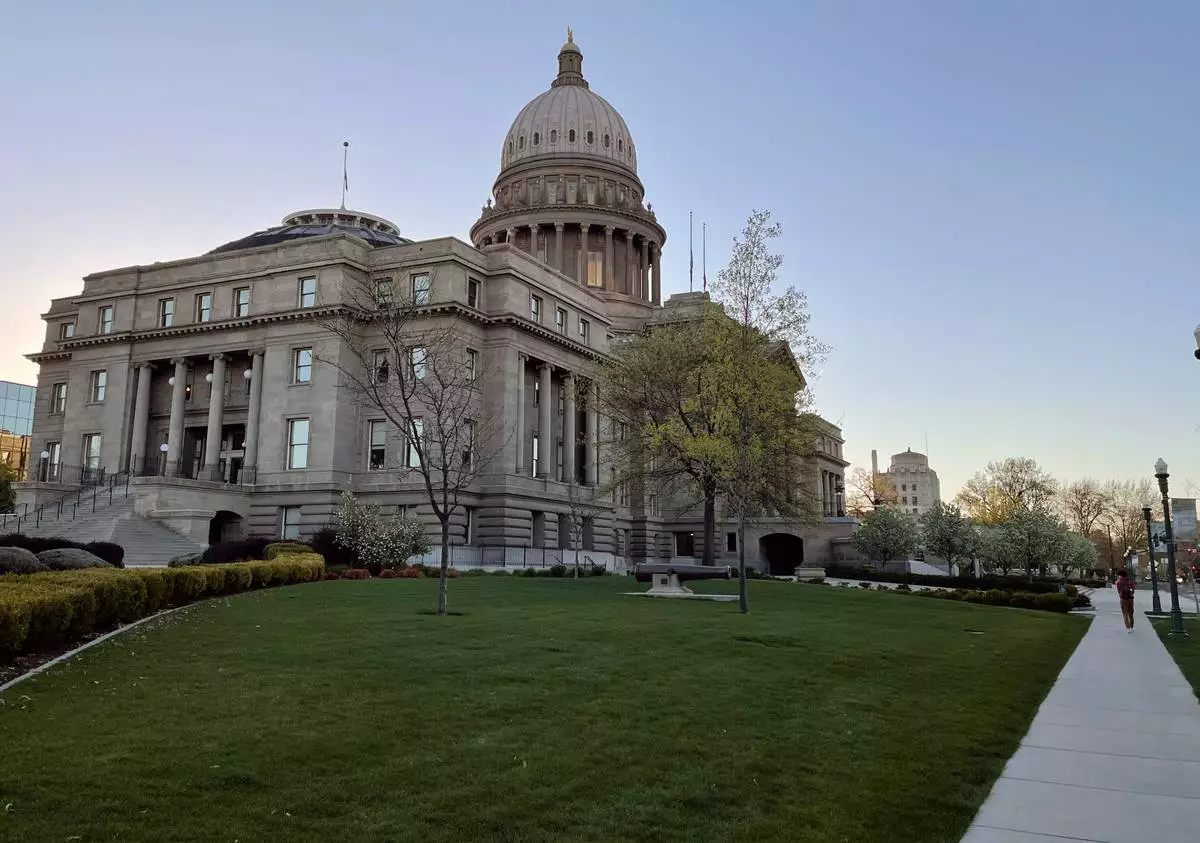
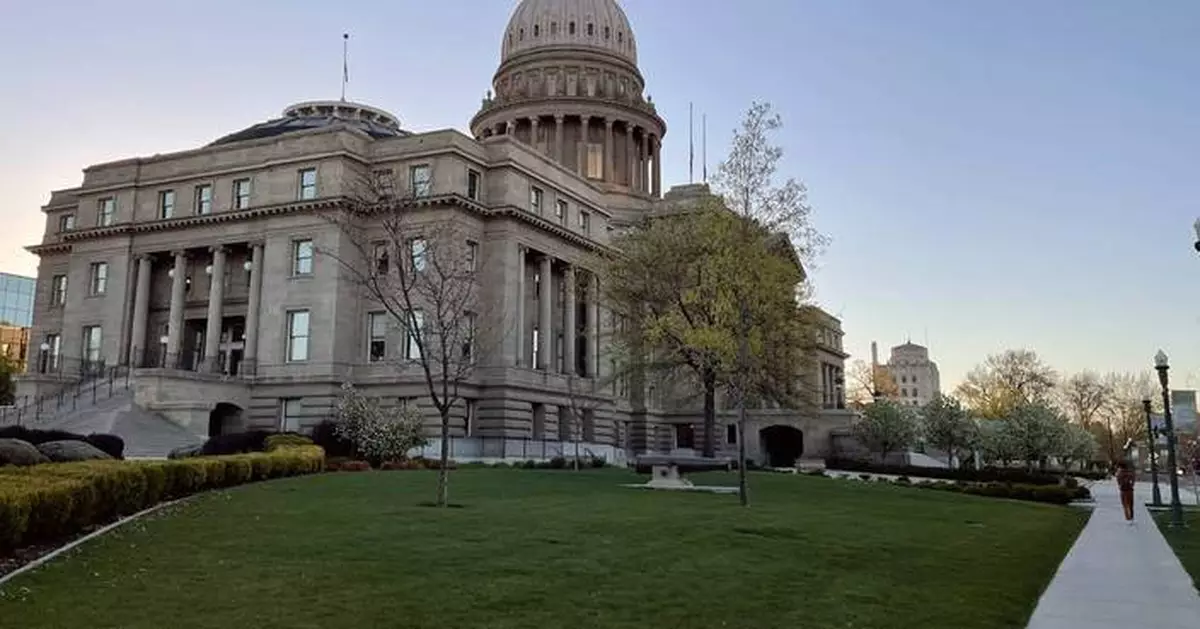
FILE - The Idaho Statehouse is seen at sunrise on April 20, 2021, in Boise, Idaho. (AP Photo/Keith Ridler, File)
NEW YORK (AP) — A U.S. judge pressed the Trump administration Thursday about its basis for barring Venezuela’s government from paying former President Nicolás Maduro's legal fees in the drug trafficking case that has put him behind bars in New York.
As Maduro and Cilia Flores, his wife and co-defendant, looked on in jail uniforms, his lawyers argued that the U.S. is violating the deposed leader’s constitutional rights by blocking Venezuelan government money from being used for the couple's legal costs. The U.S. government hasn't let the funds flow because of sanctions against the South American country.
Judge Alvin Hellerstein questioned why the prosecution's argument still stands, now that U.S. and Venezuelan relations have warmed somewhat. Since Maduro's capture by U.S. military forces in January, Venezuela and the U.S. have reestablished diplomatic relations, Washington has eased economic sanctions on Venezuela’s crucial oil industry, and the U.S. has dispatched a chargé d’affaires to Caracas.
“We have changed the situation in Venezuela,” Hellerstein observed, suggesting that the argument for continuing to block the defense funds has changed with it: “The current paramount goal and need and constitutional right is the right to defense.”
He didn't issue a ruling, however, nor say when he will.
As supporters and opponents rallied outside, Maduro and Flores made their first court appearance since a January arraignment at which he declared: “I am not guilty. I am a decent man, the constitutional president of my country.” Flores has also pleaded not guilty.
A 25-page indictment accused Maduro and others of working with drug cartels and members of the military to facilitate the shipment of thousands of tons of cocaine into the U.S. He and Flores also are accused of ordering kidnappings, beatings and murders of those who owed them drug money or undermined their trafficking operation. If convicted, they face life in prison.
Maduro and Flores are being jailed at a Brooklyn detention center, and neither has asked to be released on bail. Hellerstein has yet to set a trial date.
In a noisy scene outside the courthouse, contrasting groups of protesters chanted, blew horns and beat drums and cowbells. Among Maduro critics, one person waved a sign reading “Maduro rot in prison.” On the other side of a metal barrier, people held signs reading “Free President Maduro.”
In Caracas Thursday morning, hundreds of people gathered at a public plaza, including ruling party supporters, state employees and civilian militia members. One attendee, retiree Eduardo Cubillan, said he was there to pray for Maduro and Flores and condemn the violation of Venezuela’s sovereignty during the Jan. 3 operation.
“We hope that in the United States, if justice truly exists, a trial will be held that will lead to President Maduro’s freedom, because this kidnapping violated international legal principles, and we want justice to be served,” Cubillan, 80, said.
Maduro, 63, and Flores, 69, continue to enjoy some support in Venezuela, with murals and billboards across Caracas demanding their return. While Maduro's ruling party remains in power, he has slowly been erased from the government of Delcy Rodríguez, Venezuela's acting president.
Rodríguez has replaced senior officials including Maduro’s faithful defense minister and attorney general. She has reorganized agencies, appointed ambassadors and eliminated tenets of the self-proclaimed socialist movement that has ruled Venezuela for more than two decades.
In court, Assistant U.S. Attorney Kyle Wirshba noted that the sanctions, in place long before Maduro and Flores were charged, were driven by allegations that the Maduro regime was cracking down on free speech and plundering Venezuelan wealth.
Allowing them to use Venezuelan government funds to defend themselves in a case arising from that conduct would “undermine the sanctions,” Wirshba said.
The U.S. has said Maduro can use personal funds to pay his lawyers. He has said he doesn't have the money.
Maduro lawyer Barry Pollack contended that if Maduro got public defenders, investigating and preparing his case would sap legal resources meant for people who can’t afford their own attorneys. That doesn’t make sense, he contended, in “a case where you have someone other than the U.S. taxpayer standing ready, willing and able to fund that defense.”
Pollack wanted the case dismissed, but Hellerstein ruled out doing so — at least for now. The judge said Pollack could revisit the request if the Treasury Department doesn’t relent on its decision to bar Venezuela from paying Maduro's legal fees.
In a court filing last month, Pollack said the Treasury Department’s Office of Foreign Assets Control, which administers sanctions, flip-flopped on a decision to let Venezuela pay for his legal fees. The office approved the arrangement Jan. 9, Pollack said, but then rescinded it without explanation less than three hours later.
During a Cabinet meeting Thursday in Washington, President Donald Trump accused Maduro of being a “major purveyor of drugs coming into our country.”
Trump said Maduro would be given “a fair trial.”
Maduro and Flores were seized in a middle-of-the-night raid on their Caracas home.
Post-Maduro, everyday life for most Venezuelans remains the same.
Many public sector employees earn just about $160 per month, while the average private sector worker makes about $237. Last year the annual inflation rate soared to 475%, according to Venezuela’s central bank, putting the cost of food and other essentials beyond the reach of many.
Garcia Cano reported from Caracas. Associated Press writer Dave Collins in Hartford, Connecticut, contributed to this report.
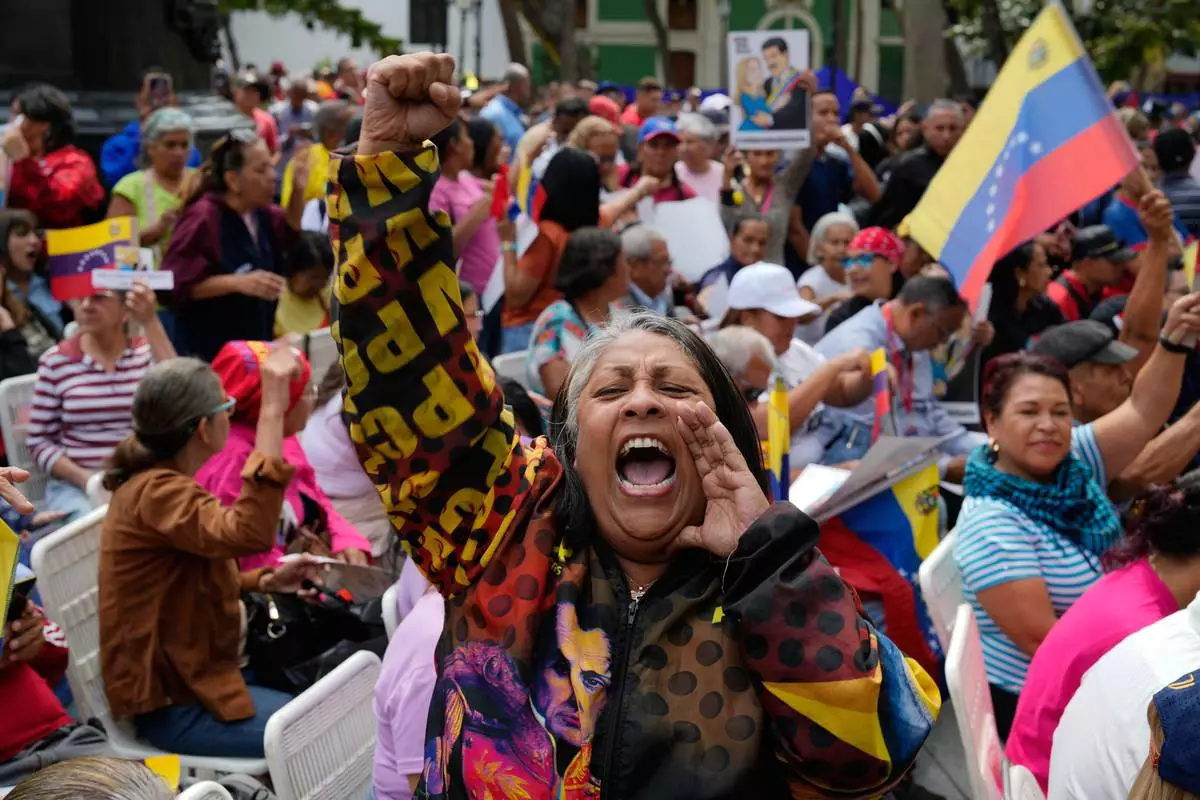
A woman screams during a government-organized event to watch former President Nicolas Maduro and first lady Cilia Flores appear in a New York court on a screen in Caracas, Venezuela, Thursday, March 26, 2026. (AP Photo/Ariana Cubillos)
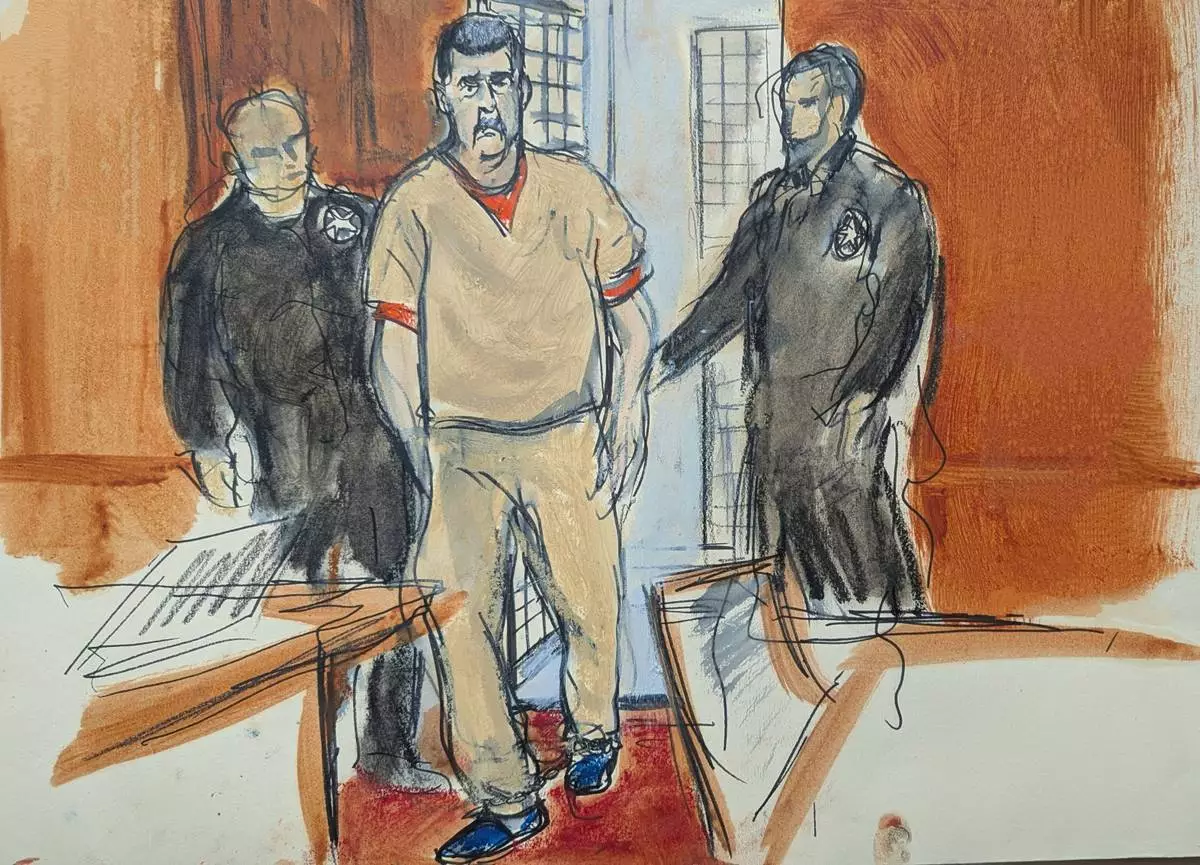
Former Venezuelan President Nicolas Maduro is escorted into a Manhattan federal courtroom, Thursday, March 26, 2026, in New York. (Elizabeth Williams via AP)
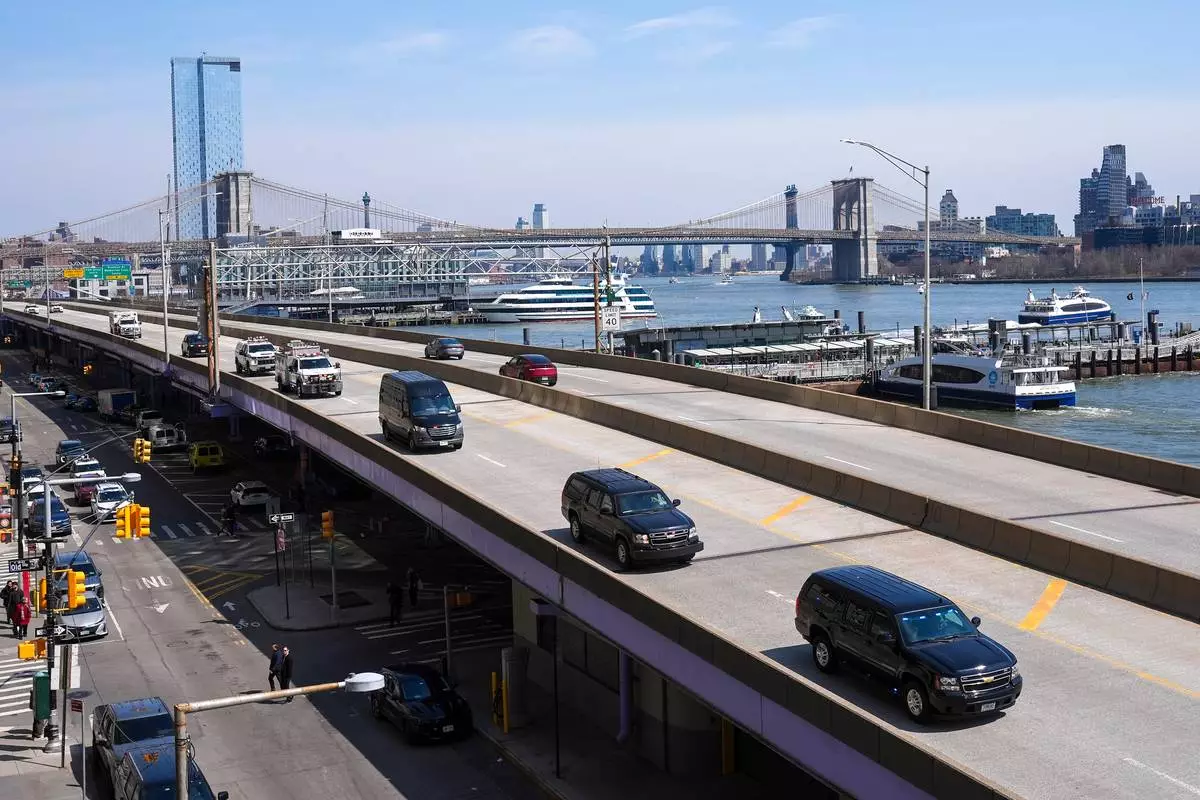
A motorcade carrying former Venezuela President Nicolas Maduro makes its way along FDR Drive after departing Manhattan federal court after a pre-trial hearing in Maduro's drug trafficking case, Thursday, March 26, 2026, in New York. (AP Photo/Seth Wenig)
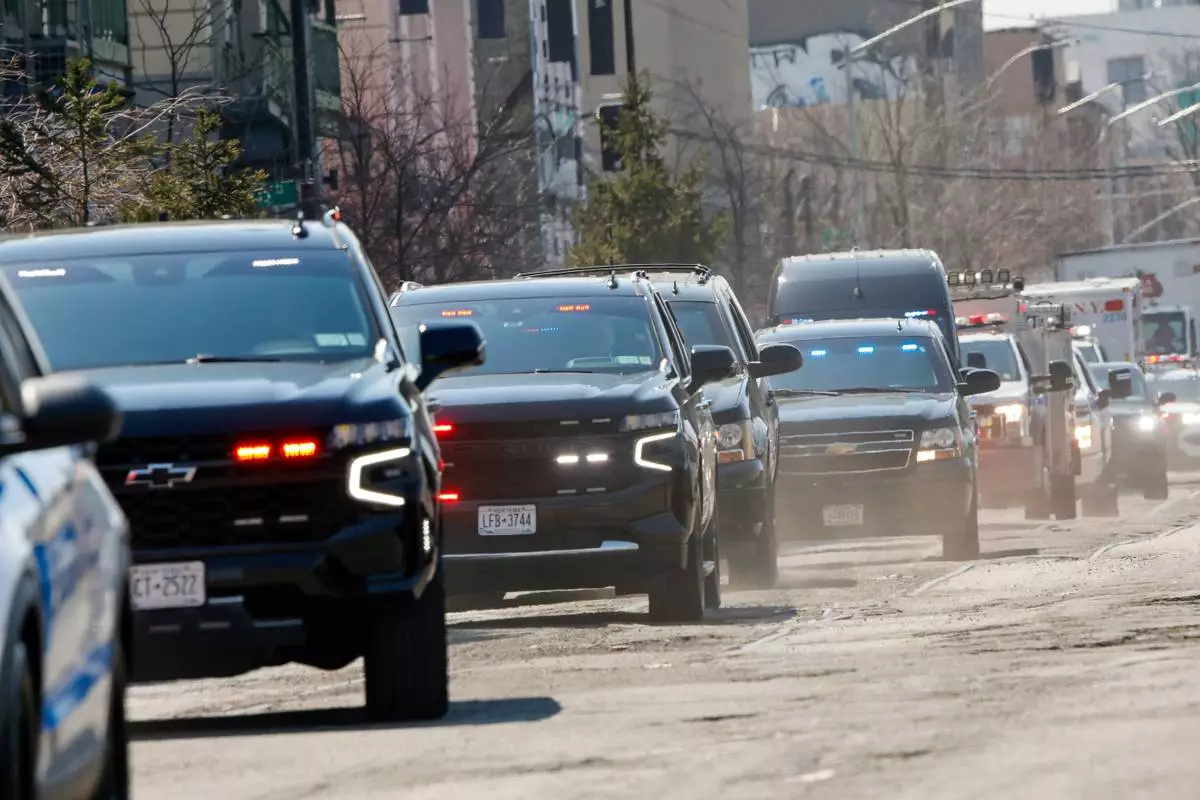
A motorcade carrying former Venezuela President Nicolas Maduro arrives at the Metropolitan Detention Center in the Brooklyn Borough of New York, after a pre-trial hearing iin Maduro's drug trafficking case, Thursday, March 26, 2026, in Manhattan Federal Court in New York.(AP Photo/Stefan Jeremiah)
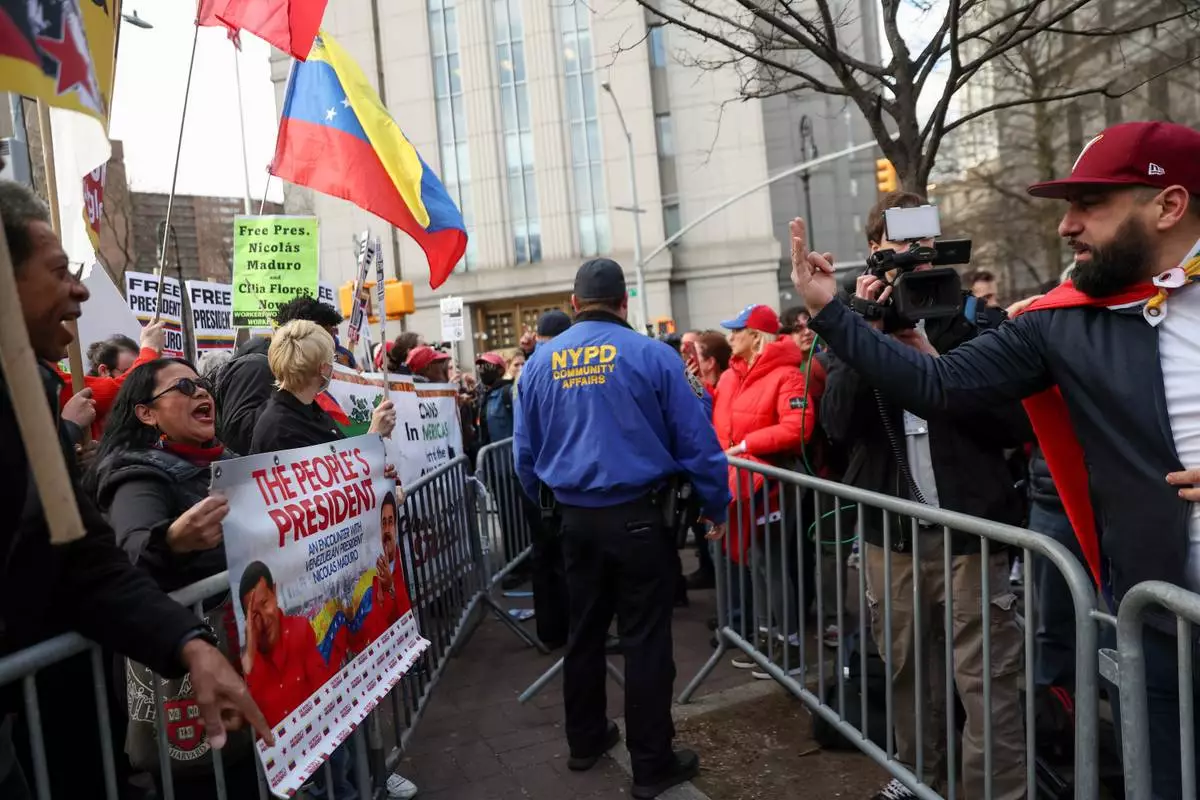
Demonstrators protest outside Manhattan federal court before a pre-trial hearing in former Venezuela President Nicolas Maduro's drug trafficking case, Thursday, March 26, 2026, in New York. (AP Photo/Heather Khalifa)
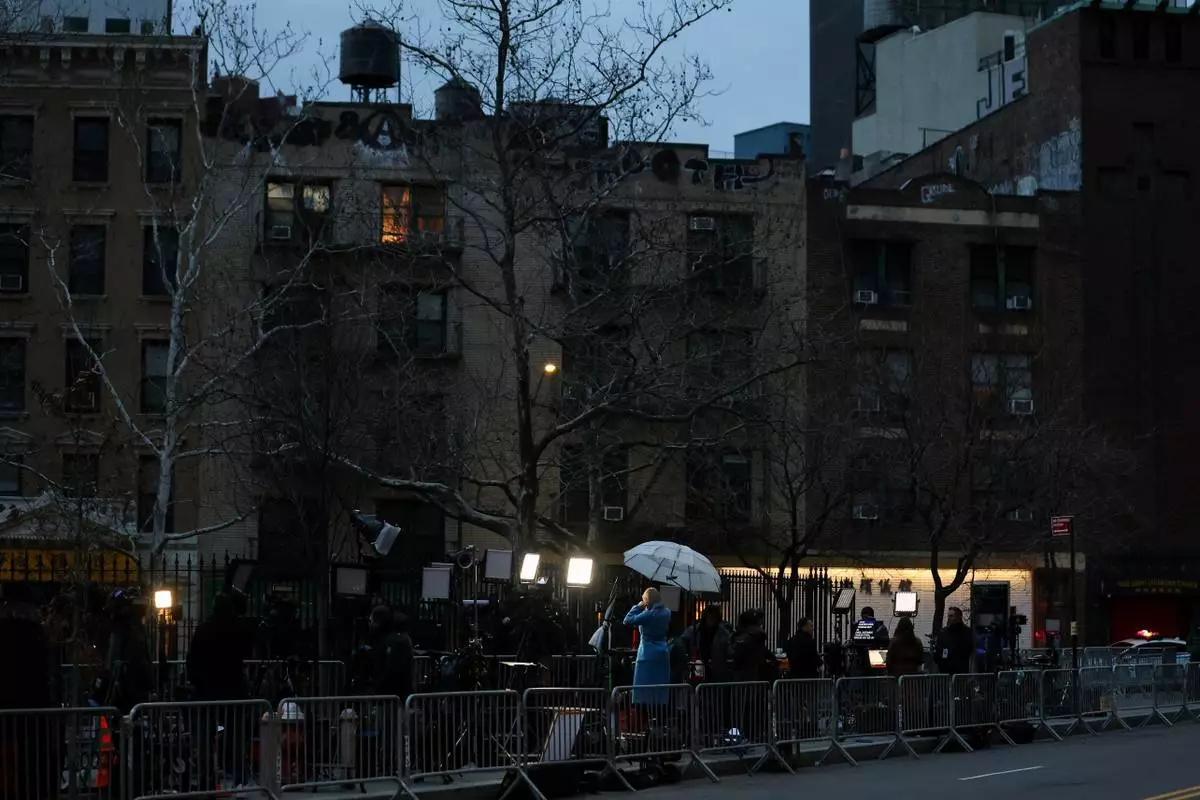
Members of the media set up across the street from Manhattan federal court in preparation for a pre-trial hearing in former Venezuela President Nicolas Maduro's drug trafficking case, Thursday, March 26, 2026, in New York. (AP Photo/Heather Khalifa)
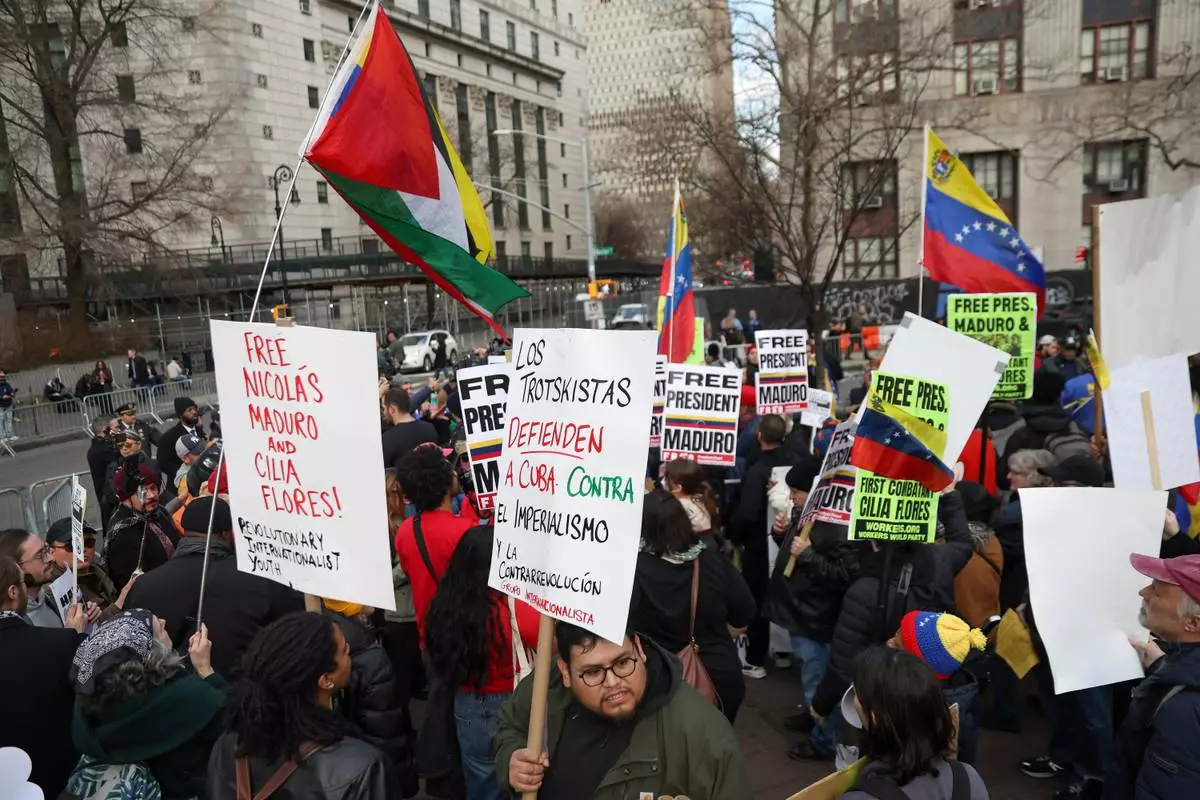
Demonstrators protest outside Manhattan federal court before a pre-trial hearing in former Venezuela President Nicolas Maduro's drug trafficking case, Thursday, March 26, 2026, in New York. (AP Photo/Heather Khalifa)
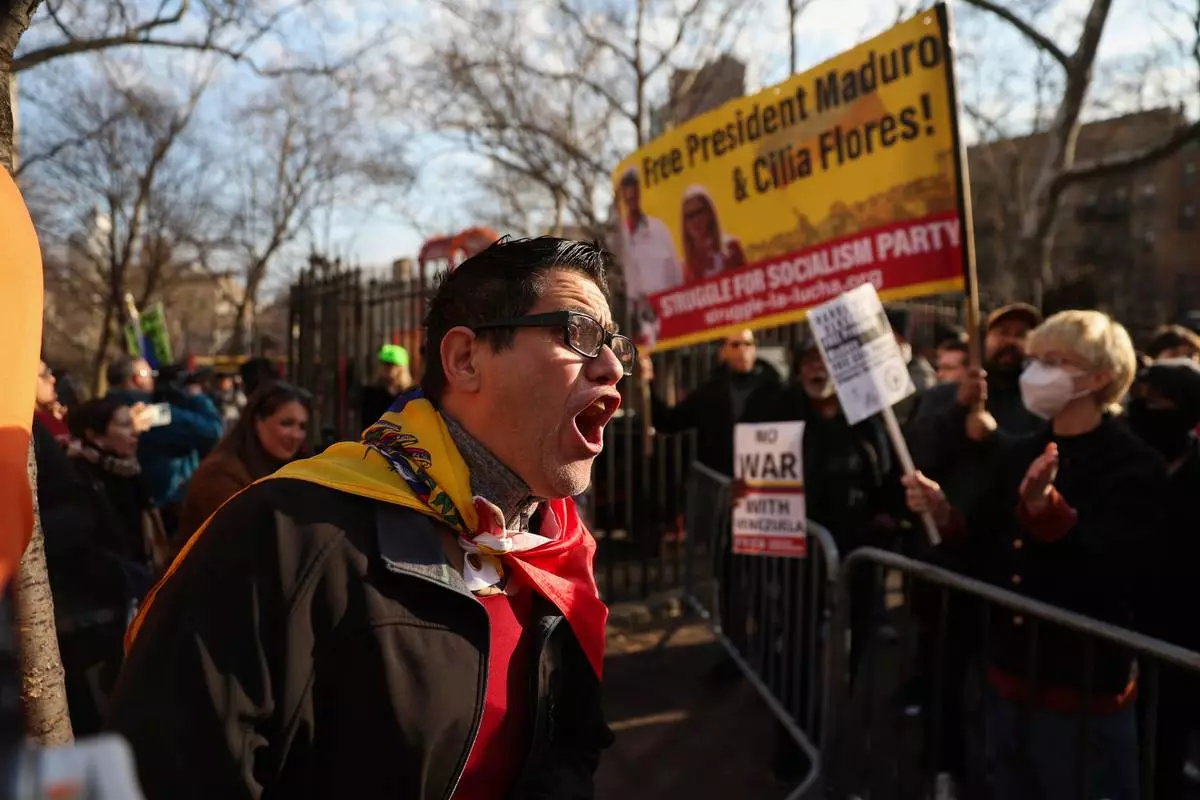
Demonstrators protest outside Manhattan federal court before a pre-trial hearing in former Venezuela President Nicolas Maduro's drug trafficking case, Thursday, March 26, 2026, in New York. (AP Photo/Heather Khalifa)
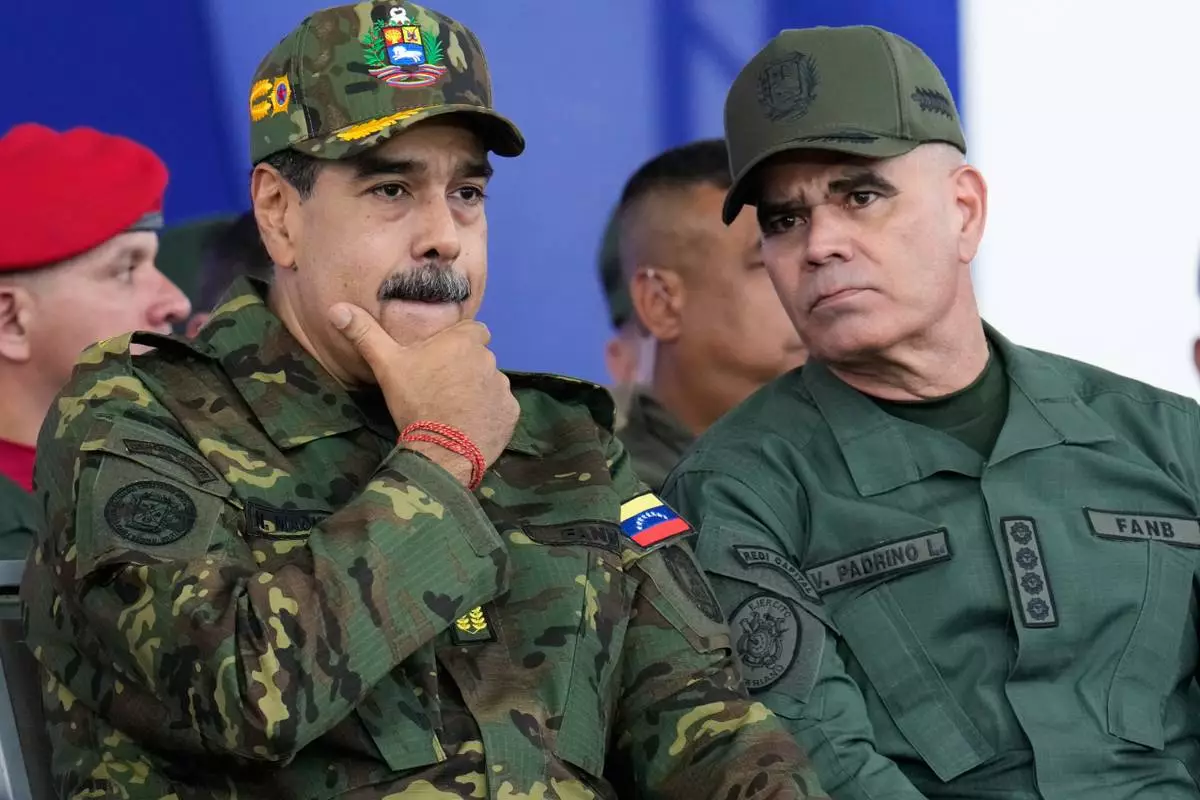
FILE - Venezuelan President Nicolas Maduro, left, and Defense Minister Vladimir Padrino Lopez attend a government-organized civic-military march in Caracas, Venezuela, Nov. 25, 2025. (AP Photo/Ariana Cubillos, File)