For years, parents, teenagers, pediatricians, educators and whistleblowers have pushed the idea that social media is detrimental to young people's mental health and can lead to addiction, eating disorders, sexual exploitation and suicide.
For the first time, juries in two states took their side.
In Los Angeles on Wednesday, a jury found both Meta and YouTube liable for harms to children using their services. In New Mexico, a jury determined that Meta knowingly harmed children’s mental health and concealed what it knew about child sexual exploitation on its platforms.
Tech watchdog groups, families and children’s advocates cheered the jury decisions.
“The era of Big Tech invincibility is over,” said Sacha Haworth, executive director of The Tech Oversight Project. “After years of gaslighting from companies like Google and Meta, new evidence and testimony have pulled back the curtain and validated the harms young people and parents have been telling the world about for years.”
While it's too soon to tell if this week's outcomes will lead to fundamental changes in how social media platforms treat their young users, the dual verdicts signal a changing tide of public perception against tech companies that is likely to lead to more lawsuits and regulation. For years, they have argued that the harms their platforms cause to children are a mere byproduct, unintentional and inevitable consequences of broader societal issues or bad actors taking advantage of safeguards. They pushed against the notion that psychological harms could be the result of social media use and downplayed research that showed otherwise.
When asked about whether people tend to use a platform or product more if it’s addictive during his testimony in the Los Angeles trial, Meta CEO Mark Zuckerberg said “I’m not sure what to say to that. I don’t think that applies here.”
The verdicts show the public's growing willingness to hold the companies responsible for harms and demand meaningful changes in how they operate. What's not apparent, at least not yet, is whether the companies will take heed. Both Meta and Google said they disagree with the verdicts and are exploring legal options, including appeals.
Arturo Béjar, a former Meta engineering director who raised alarms about Instagram's harms inside the company for years before testifying in Congress in 2023, said jury trials “level the playing field” for these trillion-dollar companies. But he cautioned that it will take actual regulation to rein them in.
“One thing that I saw working inside the company that effectively led to behavior change was when an attorney general or the FTC stepped in and required things of the company,” he said. “Both New Mexico and Los Angeles and all the attorneys general that are part of this process have really an extraordinary opportunity and the ability to ask for meaningful change.”
While both cases focused on harms to children, there are key differences between the two. New Mexico's lawsuit was filed by state Attorney General Raúl Torrez in 2023. State investigators built their case by posing as children on social media, then documenting sexual solicitations they received as well as Meta’s response. The jury was asked to determine if Meta violated New Mexico's consumer protection law.
The Los Angeles case had a single plaintiff, who goes by the initials KGM, against Meta, Google's YouTube, TikTok and Snap. TikTok and Snap settled before trial. The plaintiff in this case argued that the platform design features of the two remaining defendants, Meta and YouTube, were designed to be addictive, especially for young users. Because thousands of families have filed similar lawsuits, KGM and a handful of other plaintiffs have been selected for bellwether trials — essentially test cases for both sides to see how their arguments play out before a jury, eventually leading to a broader settlement reminiscent of the Big Tobacco and opioid trials.
By focusing on deliberate design choices and product liability, the lawsuits were able to sidestep Section 230, which generally exempts internet companies from liability for the material users post on their services. Past lawsuits, which have focused on how the platforms distributed content, often failed on these grounds.
“For the first time, courts have held social media platforms accountable for how their product design can harm users,” said Nikolas Guggenberger, an assistant professor of law at the University of Houston Law Center. “This is a new legal territory that could reshape an industry long shielded by Section 230. Platforms will have to rethink their focus on engagement at any cost, which has outlived itself.”
The final outcome of the cases could take years to resolve pending appeals and settlement agreements, but experts say the shift in the public's sentiment and understanding of social media's dangers is already happening. In a 2025 Pew Research Center poll, for instance, 48% of teens said social media harms people their age. In 2022, only 32% said the same.
Amid social media's reckoning, however, artificial intelligence chatbots are emerging as the next frontier in the fight to make technology safer for young people.
“You can ban today's harm, but how do you know what tomorrow is going to bring?” said Sarah Kreps, a professor and director of Cornell University’s Tech Policy Institute. Whether it's another social media app, AI or some other new technology, she added, new things will crop up.
“And people will flock to those because where there’s demand you will see a supply come to meet that demand,” she said.

Lori Schott, center, is embraced as she holds up a photo of her daughter Annalee Schott, after the verdict in a landmark trial over whether social media platforms deliberately addict and harm children at Los Angeles Superior Court, Wednesday, March 25, 2026, in Los Angeles. (AP Photo/William Liang)
U.S. President Donald Trump said Wednesday that a deal to end the Iran war is near, after Tehran dismissed his 15-point ceasefire plan and issued its own sweeping demands to stop fighting as it launched more attacks on Israel and Gulf Arab countries.
Two officials from Pakistan described the 15-point U.S. proposal broadly, saying it included sanctions relief, a rollback of Iran’s nuclear program, limits on missiles and reopening the Strait of Hormuz, through which a fifth of the world’s oil is normally shipped.
Iran issued its own plan via state TV, which includes a halt to killings of its officials, means to make sure no other war is waged against it, reparations for the war, the end of hostilities, and Iran’s sovereignty over the Strait of Hormuz.
“No negotiations have happened with the enemy until now, and we do not plan on any negotiations,” Iran’s foreign minister later told state TV.
Trump insisted at a Republican fundraiser Wednesday night that talks were underway with Iran's leaders.
“They are negotiating, by the way, and they want to make a deal so badly, but they’re afraid to say it because they figure they’ll be killed by their own people,” Trump said.
The death toll from the war has risen to more than 1,500 people in Iran, nearly 1,100 people in Lebanon, 20 in Israel and 13 U.S. military members, as well as a number of civilians on land and sea in the Gulf region. Millions of people in Lebanon and Iran have been displaced.
Here is the latest:
The comment by Sultan al-Jaber, who leads the massive state-run Abu Dhabi National Oil Co., signaled the hardening rhetoric of the United Arab Emirates as the war nears its one-month mark.
“Weaponizing the Strait of Hormuz is not an act of aggression against one nation,” al-Jaber said in a speech for an event hosted by the Middle East Institute in Washington.
“It is economic terrorism against every consumer, every family that depends on affordable energy and food. When Iran holds Hormuz hostage, every nation pays the ransom, at the gas pump, at the grocery store and at the pharmacy. No country can be allowed to destabilize the global economy in this way. Not now. Not ever.”
Sirens sounded about an hour after sunrise across a large swath of central Israel, including areas around Tel Aviv and Jerusalem, and in the occupied West Bank.
Israel’s military said early Thursday morning that Iran had launched missiles toward the country.
The first such alert of the day came after an unusually long lull of more than 14 hours.
Hezbollah rocket fire, however, remained constant overnight in northern Israel, and once reached the Tel Aviv area overnight.
Iran is running a “de facto ‘toll booth’ regime” in Strait of Hormuz, controlling which ships come through and getting payment for their safe passage, a leading shipping intelligence firm said Thursday.
Lloyd’s List Intelligence published an analysis highlighting Iran’s practices through the strait.
It described vessels having to provide manifests, crew details and their destination to Iran’s paramilitary Revolutionary Guard.
The information goes to the Guard’s “Hormozgan Provincial Command for sanctions screening, cargo alignment checks that currently prioritizes oil over all other commodities, and for what is described as ‘geopolitical vetting,’” Lloyd’s List said.
“While not all ships are paying a direct toll at least two vessels have and the payment is settled in yuan,” Lloyd’s List said, referring to China’s national currency.
Such payments likely would run afoul of American and European sanctions on the Guard, a key power center within Iran that controls its ballistic missile arsenal and was key in suppressing nationwide protests in January.
Iran has not directly explained the process for ships to go through the strait, though a Foreign Ministry spokesperson appeared to acknowledge Tehran was receiving payments for some ships in an interview.
Fuel prices in Thailand surged Thursday after the government lifted a cap on diesel prices and reduced fuel subsidies.
The majority of fuel types rose by 6 baht ($0.18) per liter.
Diesel prices jumped by about 18%.
The increase is expected to hit the industrial and transportation sectors particularly hard and has raised concerns about a ripple effect on the cost of goods.
Videos and photos shared on social media showed long lines forming at gas stations after the price hike was announced late Wednesday night.
Thai Prime Minister Anutin Charnvirakul said earlier this week the government would allow fuel prices to adjust in line with global market rates, aiming to manage demand following a surge in panic buying.
Australia has temporarily restricted some Iranians from traveling to the country for fear that they would be unwilling or unable to return to their homeland because of the war.
The restrictions apply from Thursday for six months to Iranian Visitor (Subclass 600) visa holders.
These visas have been issued to more than 7,000 Iranians who intend to visit Australia for tourism, business or to see family.
“When you get a sudden conflict like has happened with Iran, who have a large number of people who’ve been issued visas who, if they applied now, would in fact not be eligible,” Immigration Minister Tony Burke told Parliament on Thursday.
Authorities will use the six months to reassess visa applicants. An unknown number will be exempt.
Activists in Iran reported heavy strikes early Thursday morning around Isfahan, a city some 330 kilometers (205 miles) south of Iran’s capital, Tehran.
The pro-reform newspaper Ham Mihan reported online about strikes in the area.
Isfahan is home to a major Iranian air base and other military sites, as well as one of the nuclear sites bombed by the United States during the 12-day war between Israel and Iran in June.
The semiofficial Fars news agency, close to the paramilitary Revolutionary Guard, described the attacks as targeting “two residential areas,” without elaborating.
Earlier, Israel’s military said it had completed “a wide-scale wave of strikes” across Iran, including in Isfahan.
A missile alert sounded on mobile phones in Dubai, United Arab Emirates, on Thursday morning.
Saudi Arabia’s Defense Ministry said it intercepted multiple drones over its oil-rich Eastern Province on Thursday morning.
Kuwait reported it was working to intercept incoming Iranian fire early Thursday morning.
Bahrain sounded its missile alert sirens early Thursday morning.
The United Arab Emirates air defenses early Thursday also worked to intercept incoming fire.
U.S. forces have hit more than 10,000 targets so far in the Iran war, the head of the American military’s Central Command said.
U.S. Navy Adm. Brad Cooper made the comments in a video released early Thursday by Central Command.
“If you combine what we’ve accomplished with the success of our Israeli ally, together, we have struck thousands more,” Cooper said. “Our precision strikes have overwhelmed Iranian air defenses and our combat flights are having tangible effects.”
Cooper added that the U.S. has destroyed 92% of “the Iranian navy’s largest vessels.”
“They’ve now lost the ability to meaningly project naval power and influence around the region and around the world,” Cooper said.
Iran maintains its chokehold on the Strait of Hormuz, the narrow mouth of the Persian Gulf, through drone and missile attacks on shipping, however.
Cooper also said the U.S. has struck over two-thirds of Iran’s munitions plants.
“Today, we have damaged or destroyed over two-thirds of Iran’s missile, drone and naval production facilities and shipyards — and we’re not done yet,” he said. “We are on a path to completely eliminate Iran’s wider military manufacturing apparatus.”
Satellite photos analyzed by The Associated Press, though delayed by two weeks by Planet Labs PBC, have shown Israeli and U.S. strikes targeting shipyards and missile facilities.
Iran has not acknowledged any of its materiel losses through the war.
German Defense Minister Boris Pistorius described the Iran war as an economic “catastrophe” and said Germany did not want to get “sucked into” the conflict.
Pistorius said on Thursday Germany was ready to help secure any peace once that was achieved and appealed for a ceasefire as soon as possible.
“To make it crystal clear, this war is a catastrophe for the world’s economies,” Pistorius told reporters at the Australian Parliament House.
“From the beginning on, we have not been consulted before. Nobody asked us before. It’s not our war and therefore we don’t want to get sucked into that war,” Pistorius added.
Pistorius addressed the media in the national capital Canberra following a meeting with his Australian counterpart Richard Marles.
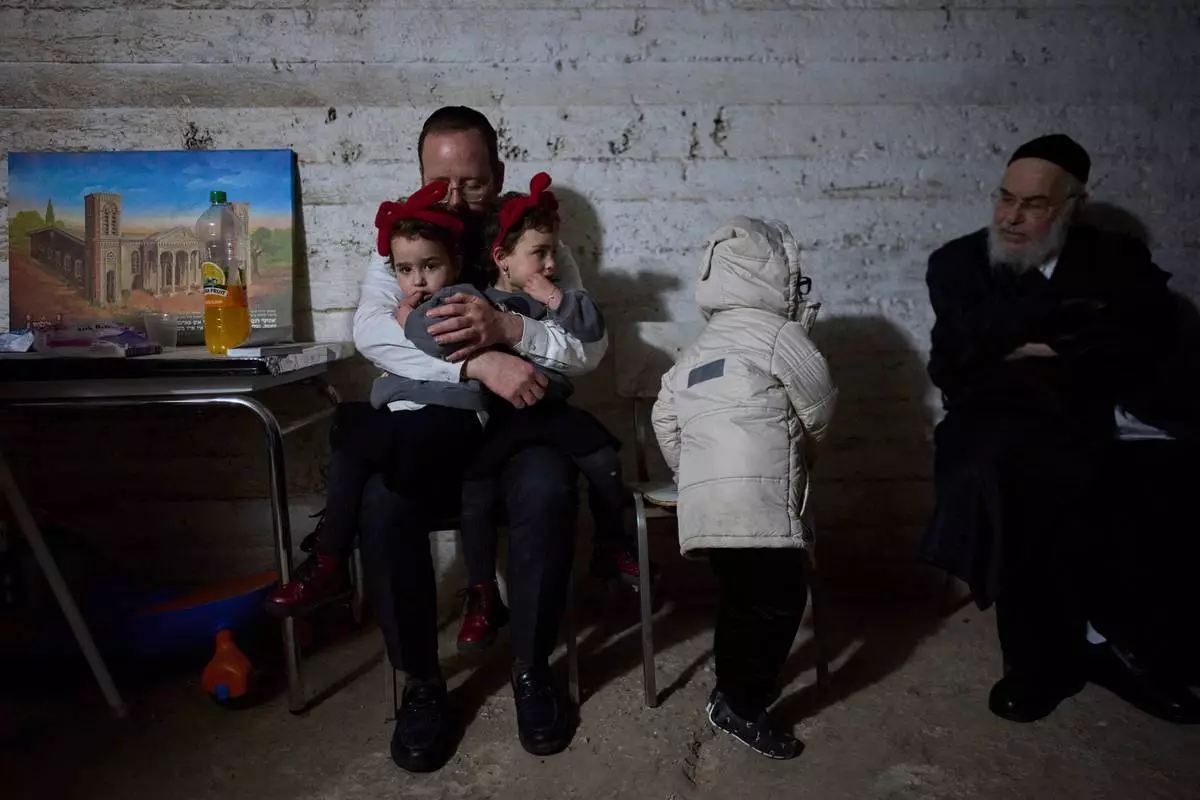
People take cover in a bomb shelter as air raid sirens warn of incoming Iranian missile strikes in Bnei Brak, Israel, Wednesday, March 25, 2026. (AP Photo/Ohad Zwigenberg)
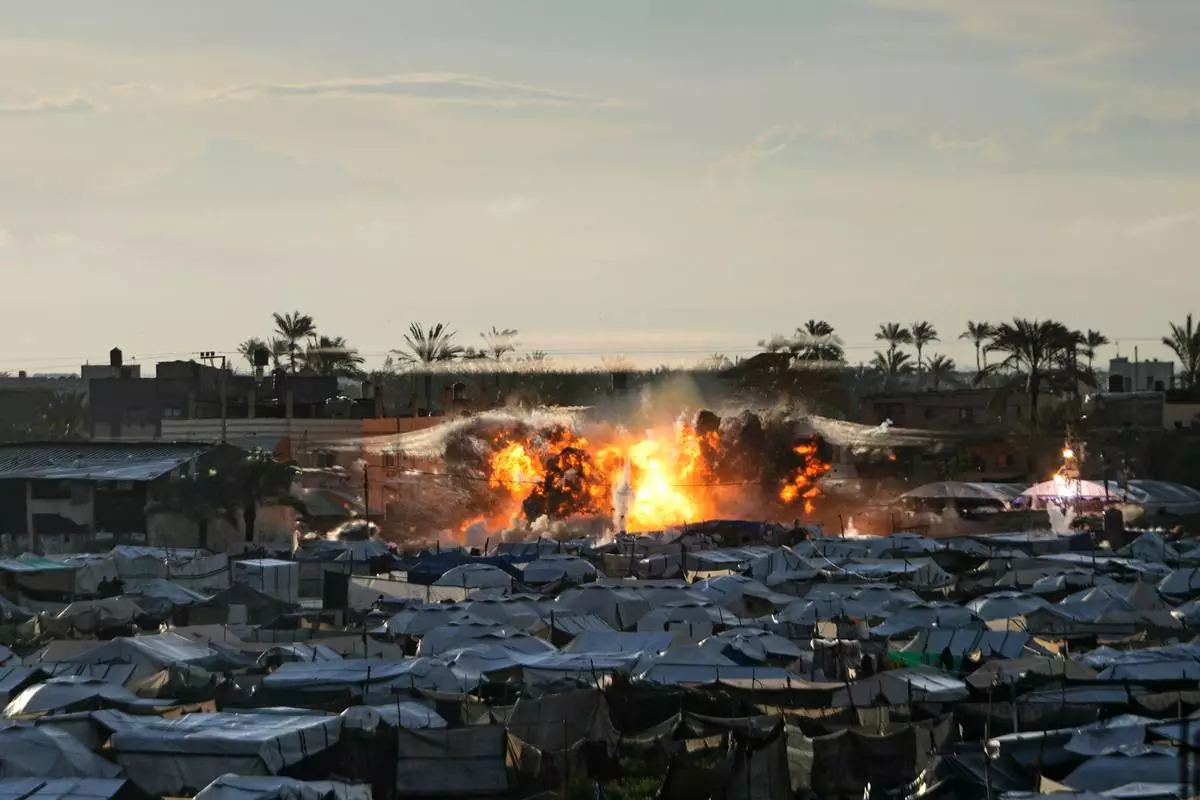
Smoke and flames rise following an Israeli military strike on a target in Deir al-Balah, central Gaza Strip, Wednesday, March, 25, 2026.(AP Photo/Abdel Kareem Hana)
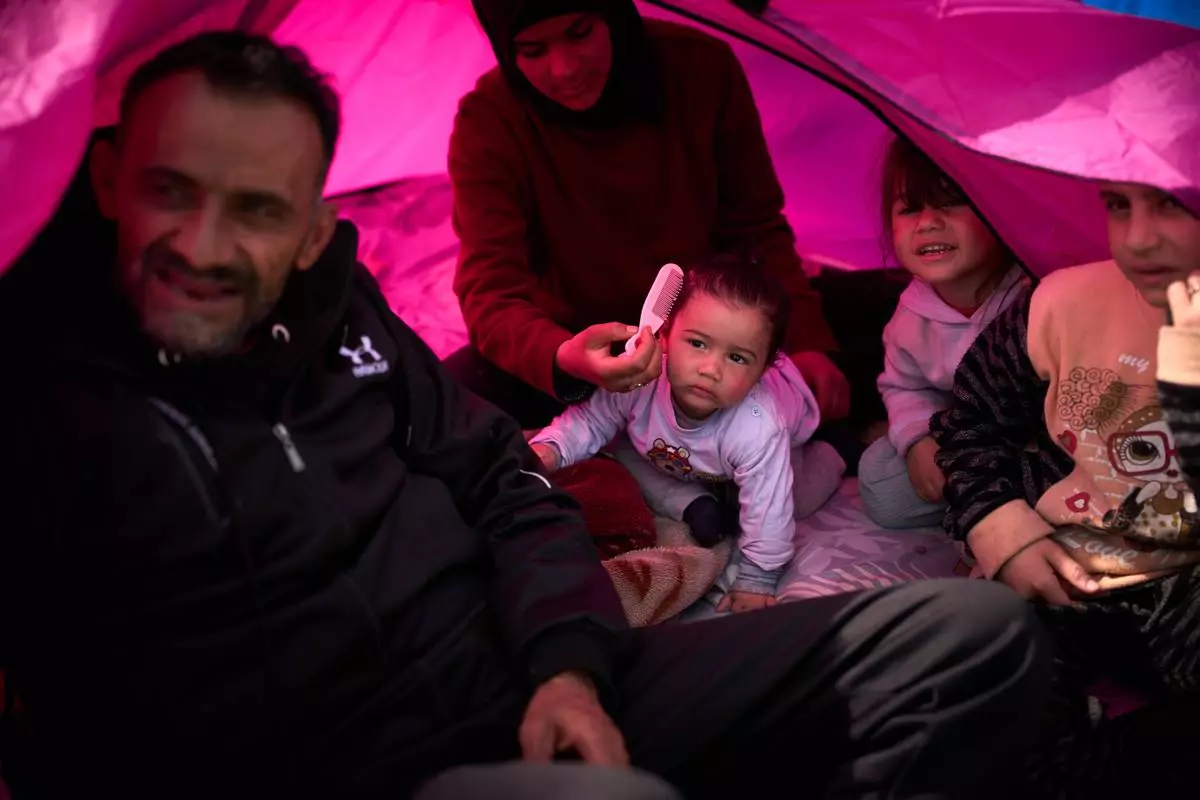
Members of the displaced Abd el-Hajj family, and two of their cousins, right, who fled Israeli strikes in southern Lebanon, sit inside a tent used as a shelter in Beirut, Lebanon, Wednesday, March 25, 2026. (AP Photo/Emilio Morenatti)
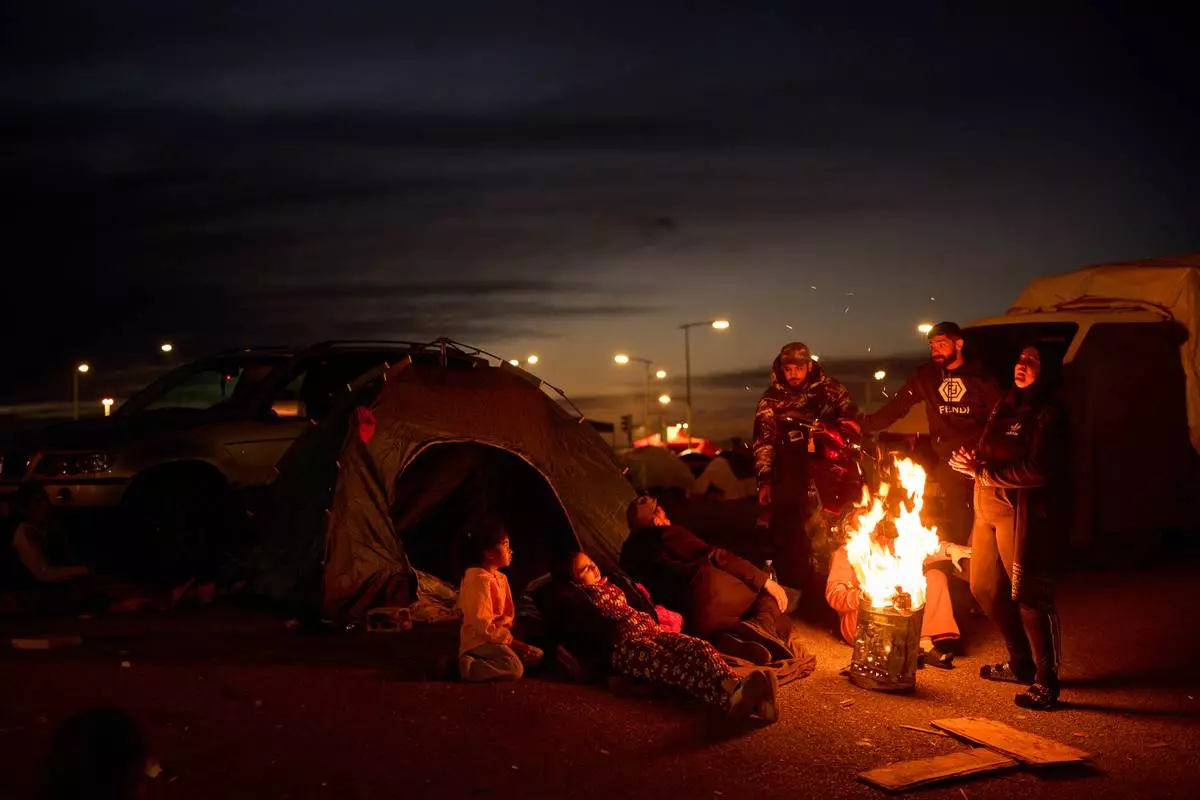
Members of a family, who fled Israeli strikes in southern Lebanon, sit around a bonfire outside a tent used as a shelter in Beirut, Lebanon, Wednesday, March 25, 2026. (AP Photo/Emilio Morenatti)
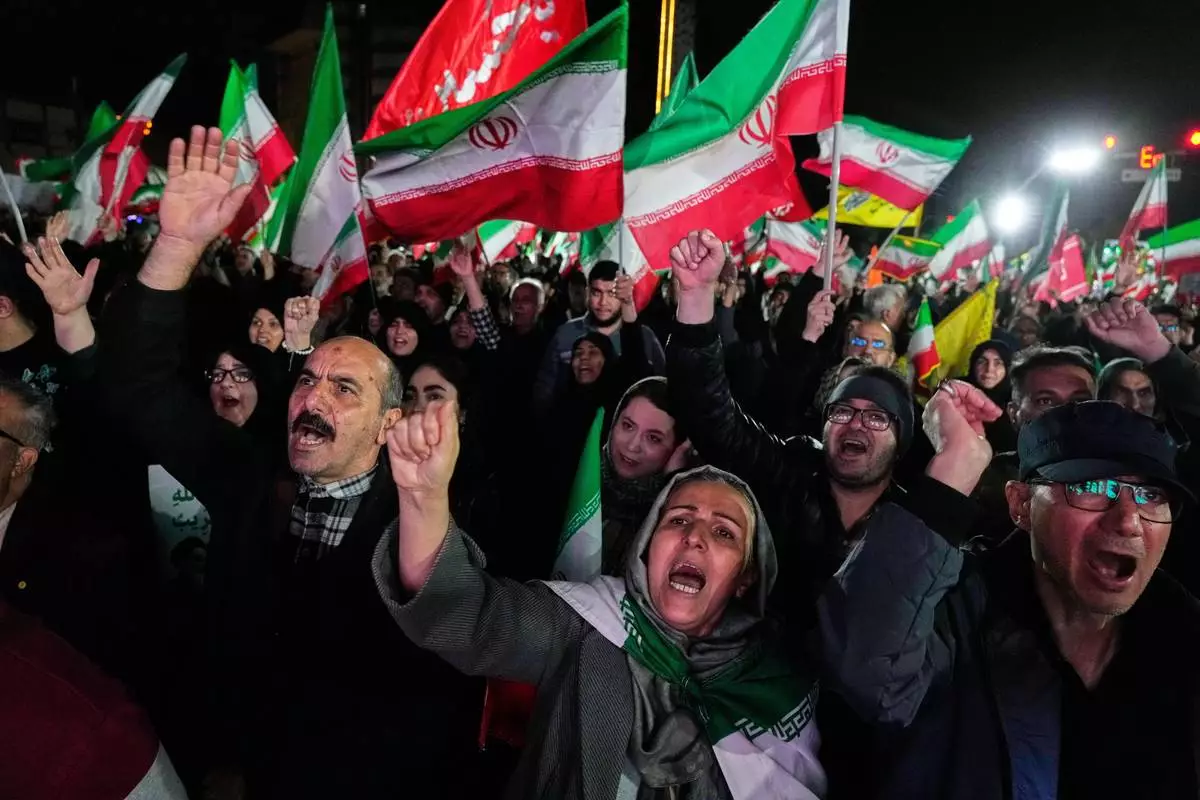
Pro-government supporters chant slogans and wave Iranian flags during a rally, in a square in western Tehran, Iran, Wednesday, March 25, 2026. (AP Photo/Vahid Salemi)