BARCELONA, Spain--(BUSINESS WIRE)--Mar 26, 2026--
Hytera Communications, a leading global provider of critical communications technologies and solutions, unveiled the PNC660 450MHz MCX Smart Device – an advanced mission-critical terminal for private 450MHz LTE and 5G networks at MWC Barcelona. Combining broadband voice, video, and data services with multi-layer security, the PNC660 450MHz enables reliable communications across wide operational areas while supporting evolving mission-critical broadband needs.
This press release features multimedia. View the full release here: https://www.businesswire.com/news/home/20260325346069/en/
The device has also been whitelisted by 450connect, validating its compatibility with dedicated 450MHz broadband networks and readiness for commercial deployment for power, energy providers, and other critical infrastructure.
Wide-Area Coverage with Dedicated 450MHz Networks
The 450MHz spectrum offers excellent propagation and building penetration, enabling wide-area coverage with fewer base stations. Many critical infrastructure operators deploy private LTE and 5G networks on Band 31 and Band 72 to ensure dedicated capacity for mission-critical communications. The PNC660 450MHz supports multiple QCI classes (65, 67, 69, 70), allowing precise quality-of-service prioritization so essential personnel can communicate even during network congestion. With eMBMS multicast support, group communications remain reliable and high-quality, extending traditional push-to-talk into broadband scenarios.
Multi-Layer Security for Mission-Critical Operations
Security is key to the PNC660 450MHz. Its multi-layer architecture spans hardware, bootloader, operating system, framework, and application layers. Sensitive operational data is protected through robust encryption, secure key management, and tamper-resistant design, ensuring information integrity even if devices are physically compromised. Centralized mobile device management enables secure configuration, application control, and compliance monitoring, providing a trusted platform for frontline personnel.
Real-Time Audio and Video for Situational Awareness
The PNC660 450MHz delivers 97 dB audio at 5 cm with AI noise cancellation, ensuring clear communication in substations, power plants, and transmission sites. Its 50 MP wide-angle camera with 6-axis stabilization and low-light optimization captures clear video and voices from up to 10 m away, supporting evidence collection and field monitoring.
With a single tap, frontline personnel can instantly switch from push-to-talk voice to live video streaming, transmitting real-time visuals to command centers without navigating complex menus – enabling faster, more informed decision-making.
Optimized Performance and Field Reliability
Beyond audio and video capabilities, the PNC660 450MHz delivers seamless multitasking, low-latency performance, and rugged reliability. Its ruggedized design, long battery life, and operational modes tailored to different scenarios keep personnel connected and protected in harsh environments, while secure device management ensures operational control and compliance.
“We’re proud that the PNC660 450MHz has been whitelisted by 450connect, confirming it’s ready for reliable, secure mission-critical operations,” said Leo He, Product Director at Hytera. “We’ll keep investing in 450MHz technologies to offer the trusted communication tools frontline teams need.”
For details about the PNC660 450MHz MCX Smart Device, please visit Hytera website.
About Hytera
Hytera Communications Corporation Limited (SZSE: 002583) is a leading global provider of critical communications technologies and solutions. Hytera has been serving worldwide users for over three decades with its innovative portfolio of two-way radios, PMR & LTE convergent communications, fast-deploy communications, body-worn cameras, control room systems, and more.

Hytera PNC660 450MHz MCX Smart Device for mission-critical 450 MHz networks.
TENERIFE, Canary Islands (AP) — The first plane carrying passengers from the hantavirus-hit cruise ship left Spain’s Canary Islands on Sunday for Madrid, where they will be taken to a military hospital.
Spanish nationals were the first to leave the MV Hondius, which remains anchored off Tenerife, the largest island in the Spanish archipelago off West Africa's coast. The ship arrived hours earlier.
None of the more than 140 people on the Hondius has shown symptoms of the virus, Spain’s health ministry, the World Health Organization and cruise company Oceanwide Expeditions said.
WHO Director-General Tedros Adhanom Ghebreyesus sought to reassure the public, repeating on Sunday that the risk for the general public from the outbreak remained low.
Even so, those disembarking and personnel working at the port of Granadilla in Tenerife wore protective gear during the evacuation process, including face masks, hazmat suits and respirators.
Spanish Health Minister Mónica García said that the operation was proceeding normally.
Passengers and some crew members from more than 20 nationalities on board will be evacuated throughout Sunday into Monday.
After reaching Madrid, those evacuated on the first plane will be under quarantine, Spanish health authorities say. Only the 14 Spanish nationals on board will quarantine in the country.
Authorities have said the passengers and crew members disembarking will be checked for symptoms, have no contact with the local population and will only be taken off the ship once evacuation flights are ready to fly them to their destinations. Tedros and Spain’s health and interior ministers are supervising the operation in Tenerife.
Pope Leo XIV on Sunday thanked the Canary Islands for allowing the arrival of the Hondius.
Hantavirus usually spreads when people inhale contaminated residue of rodent droppings and isn’t easily transmitted between people. But the Andes virus detected in the cruise ship outbreak may be able to spread between people in rare cases. Symptoms usually show between one and eight weeks after exposure.
Three people have died since the outbreak, and five passengers who left the ship are infected with hantavirus, which can cause life-threatening illness.
Passengers and crew members disembarking are leaving behind their luggage, and are allowed to take only a small bag with essential items, a cellphone, a charger, and documentation.
Some crew, as well as the body of a passenger who died on board, will remain on the ship, which will sail on to Rotterdam, Netherlands, where it will undergo disinfection, Spanish authorities said.
The expected sailing time to Rotterdam is around five days, the cruise company said.
The U.S., the United Kingdom and the Netherlands will send planes to evacuate their citizens. Americans on board will be quarantined at a medical center in Nebraska.
Twenty-nine people will be on board the Dutch charter flight, including Dutch nationals and people of other nationalities, the Dutch Foreign Ministry said.
Five French passengers will be repatriated Sunday, and will be hospitalized for 72 hours for monitoring, after which they will quarantine at home for 45 days, France's Foreign Ministry said.
U.K. passengers and crew will be hospitalized for observation once they are flown home, British authorities say.
Australia is sending a plane, expected to arrive on Monday, to evacuate its nationals and those from nearby countries such as New Zealand, García said. Its plane will be the last to leave Tenerife, she said.
Norway has sent an ambulance plane to Tenerife with personnel trained to transport patients with high-risk infections, its Directorate for Civil Protection told public broadcaster NRK.
The ambulance plane is owned by the European Union, but operated by Norway.
British Army medics have parachuted onto the remote South Atlantic territory of Tristan da Cunha, where one of the 221 residents has a suspected case of hantavirus.
The patient was a passenger on the MV Hondius and disembarked last month.
The U.K. defense ministry says a team of six paratroopers and two medical clinicians jumped Saturday from a Royal Air Force transport plane, which also dropped oxygen and medical equipment.
Tristan da Cunha is Britain’s most remote inhabited overseas territory, about 1,500 miles (2,400 kilometers) from the nearest inhabited island, St. Helena. The group of volcanic islands has no airstrip and is usually accessible only by boat on a six-day voyage from Cape Town, South Africa.
Meanwhile, a Spanish woman in the southeastern province of Alicante suspected of being infected tested negative for hantavirus, Spanish health authorities said Saturday.
The woman was a passenger on the same flight as the Dutch woman who died in Johannesburg after traveling on the cruise ship.
Suman Naishadham reported from Madrid. Angela Charlton in Paris, Jill Lawless in London, and Kirsten Grieshaber in Berlin, contributed to this report.
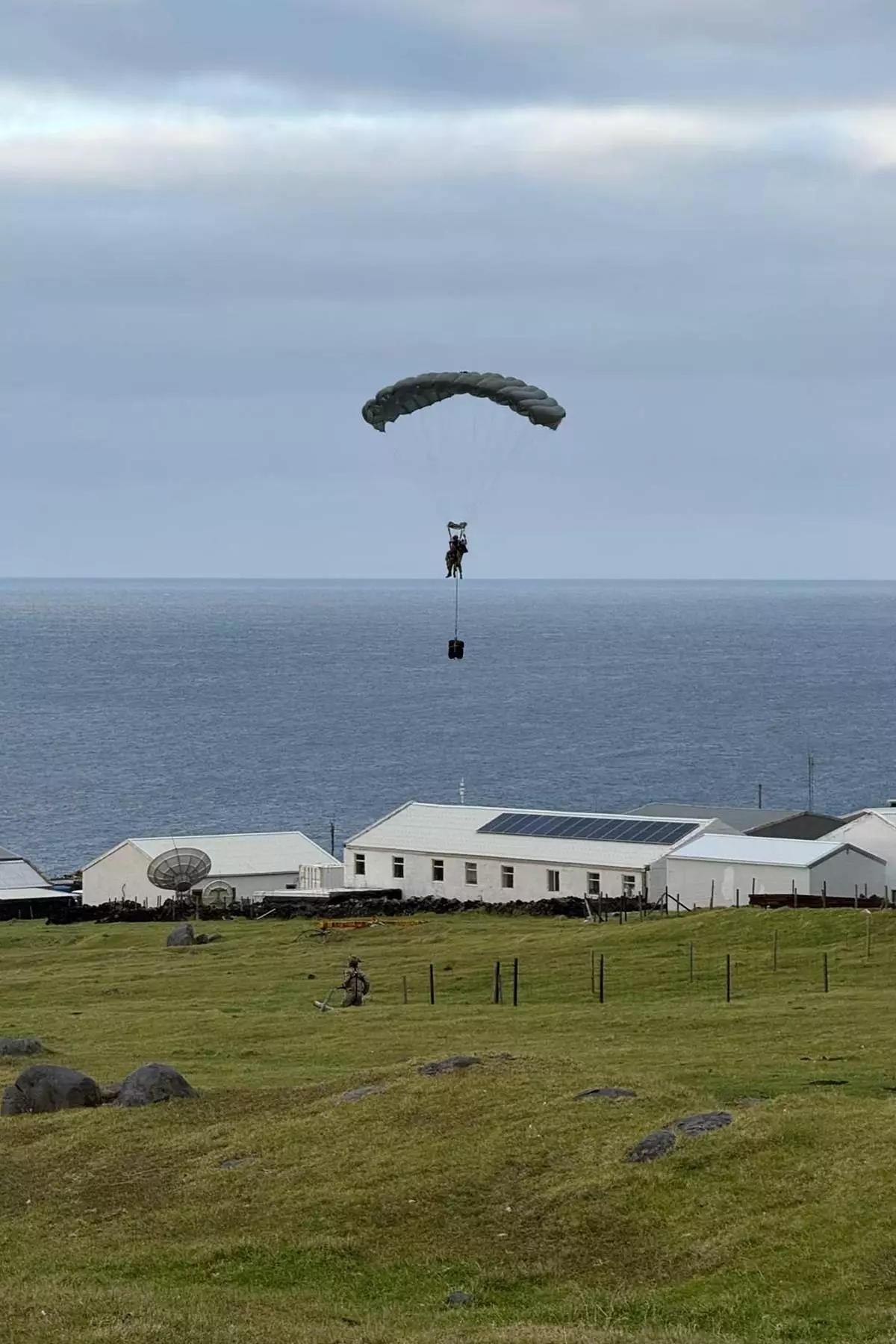
British Army medics parachute onto the south Atlantic territory of Tristan da Cunha, where one of the 221 residents has a suspected case of hanatavirus, Saturday, May 9, 2026. (British Ministry of Defence via AP)
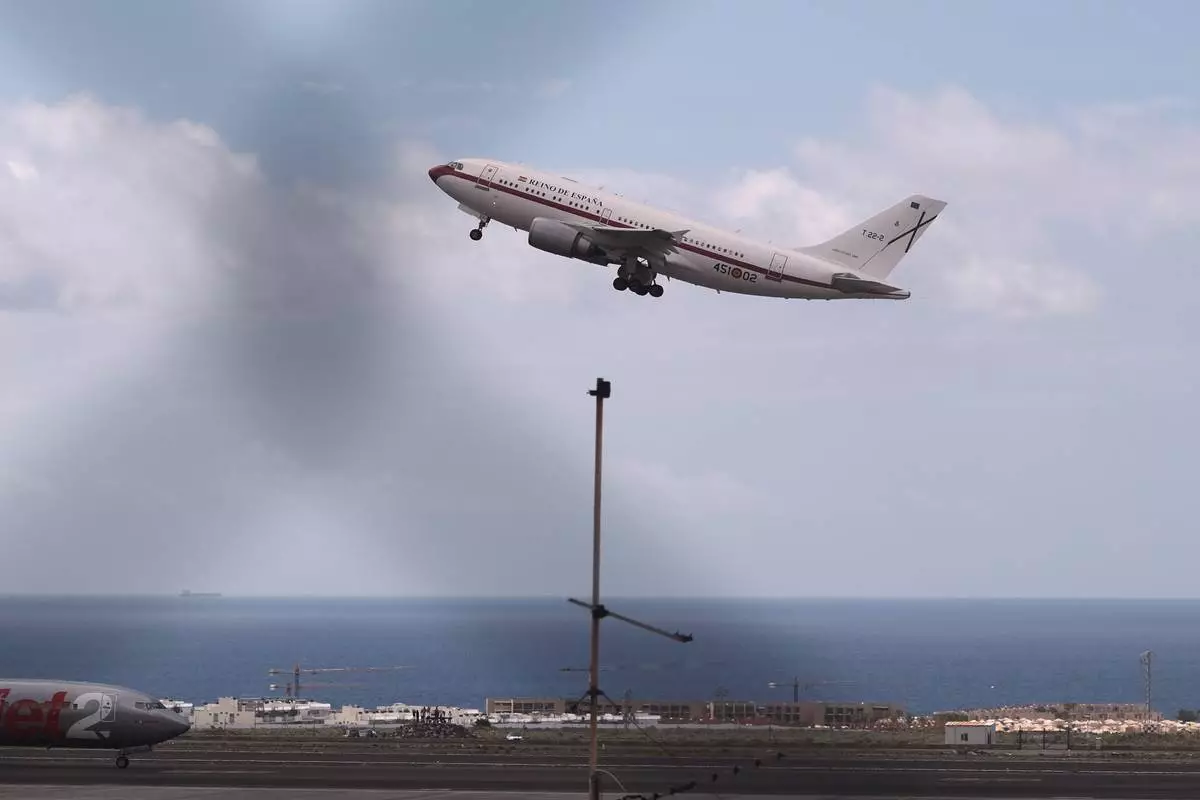
A Spanish government plane takes off with passengers from the hantavirus-stricken cruise ship MV Hondius at the airport in Tenerife, Canary Islands, Spain, Sunday, May 10, 2026. (AP Photo/Arturo Rodriguez)
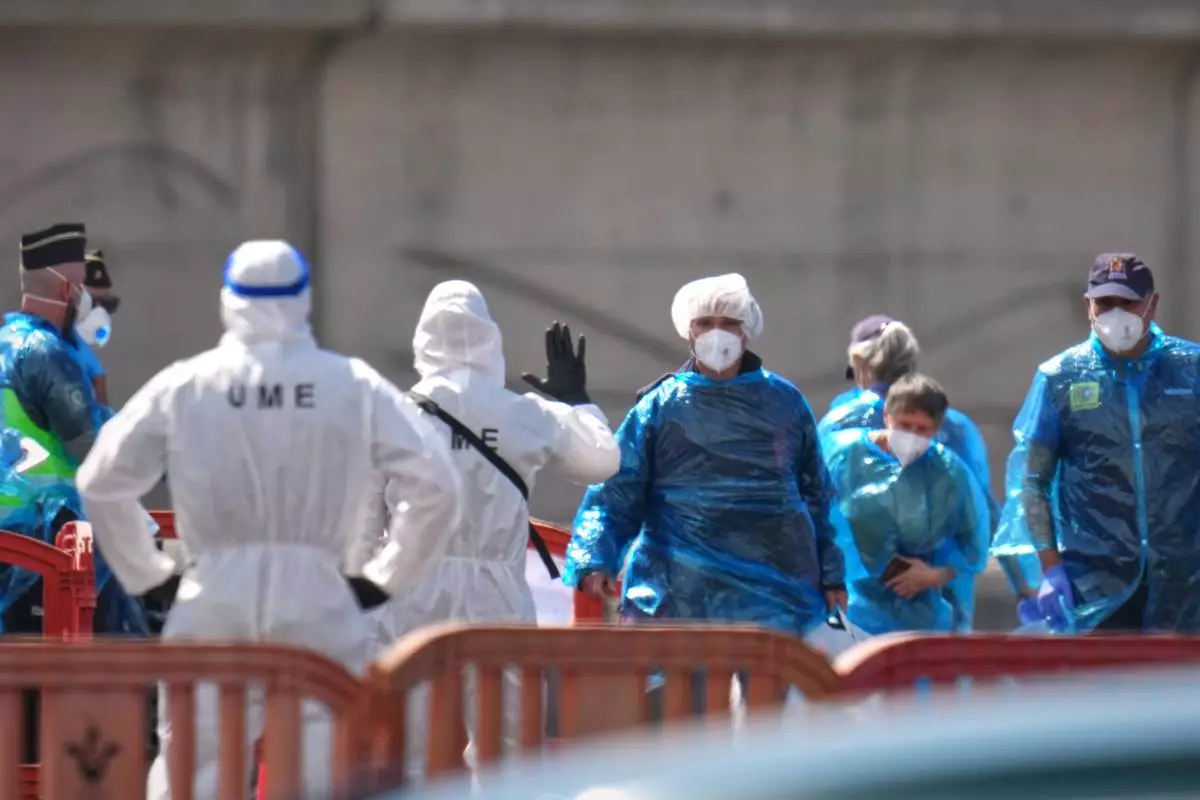
Passengers are disembarked from the hantavirus-stricken cruise ship MV Hondius at the port of Granadilla in Tenerife, Canary Islands, Spain, Sunday, May 10, 2026. (AP Photo/Manu Fernandez)
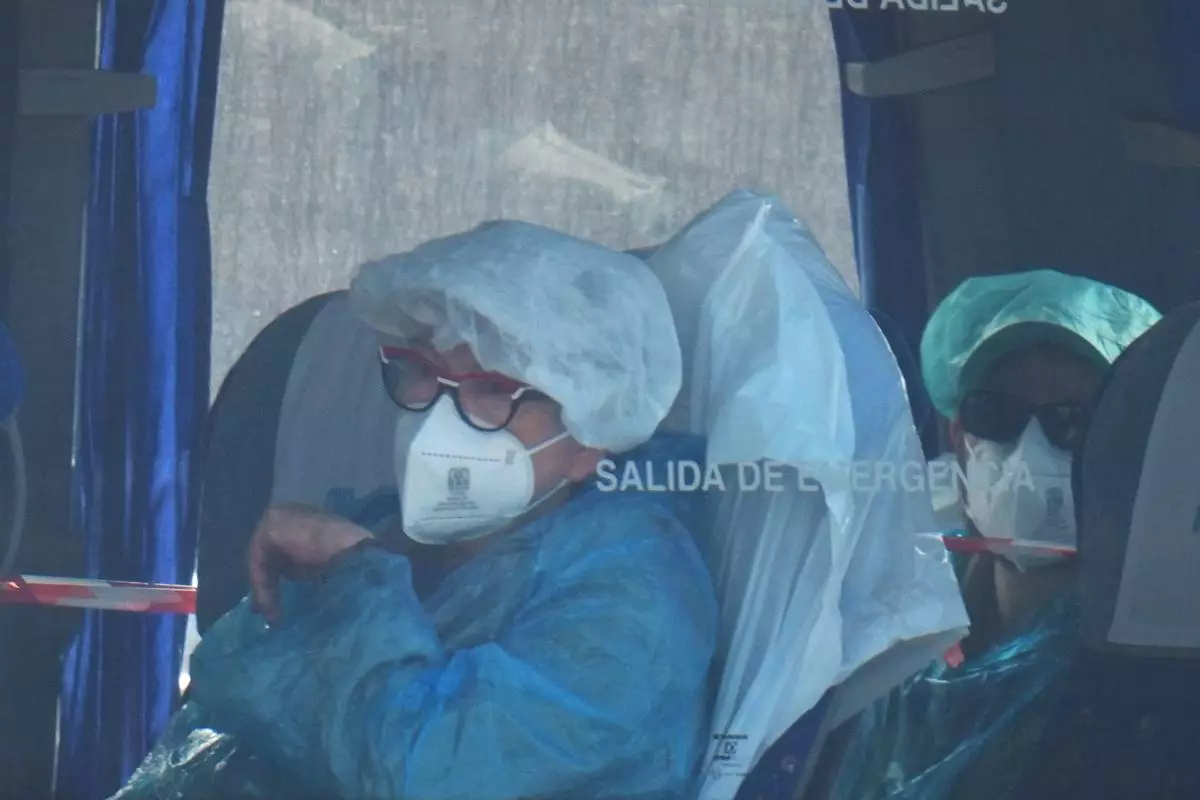
Passengers sit inside a bus after being disembarked from the hantavirus-stricken cruise ship MV Hondius at the port of Granadilla in Tenerife, Canary Islands, Spain, Sunday, May 10, 2026. (AP Photo/Manu Fernandez)
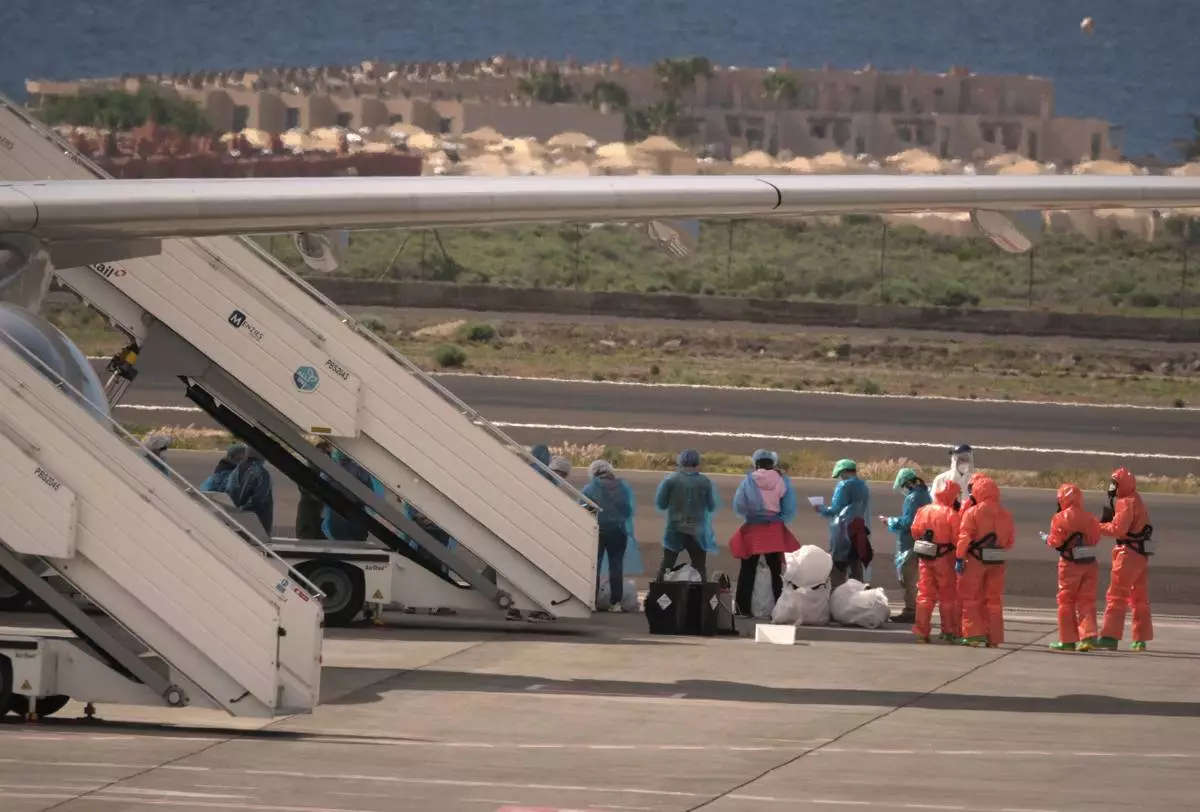
Passengers stand next to a Spanish government plane after disembarking from the hantavirus-stricken cruise ship MV Hondius at the airport in Tenerife, Canary Islands, Spain, Sunday, May 10, 2026. (AP Photo/Arturo Rodriguez)
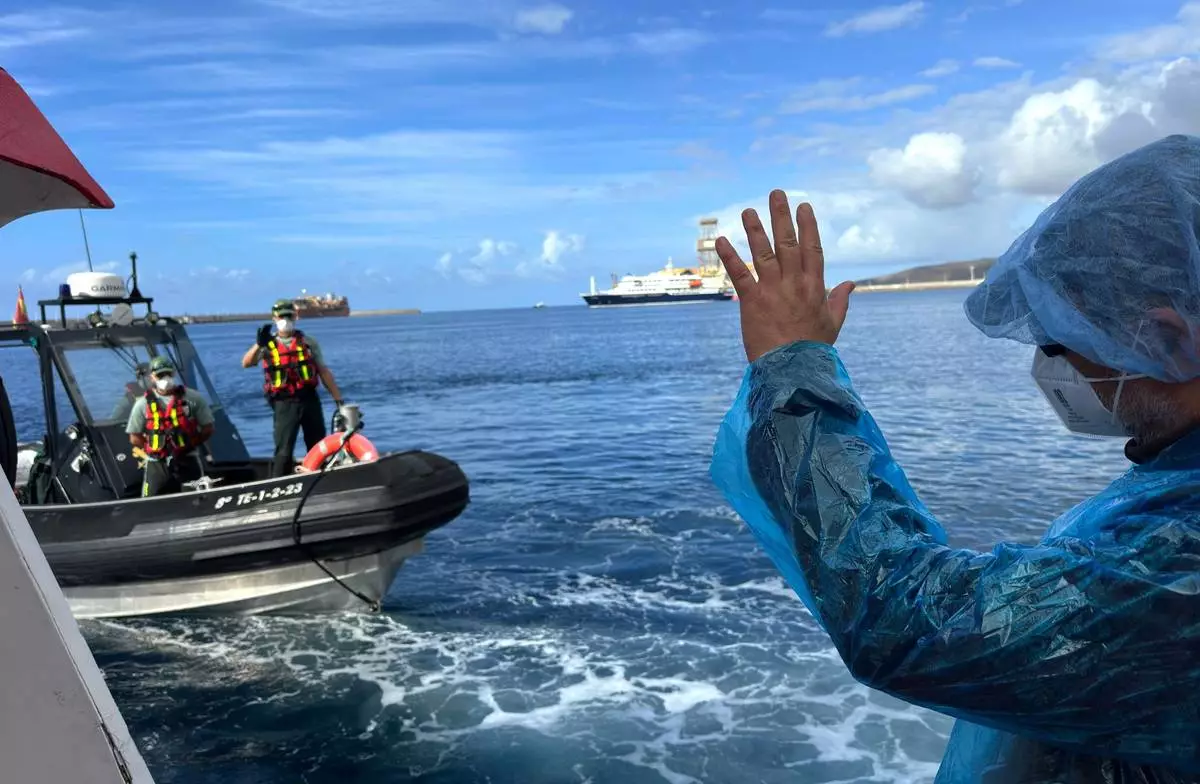
A passenger waves to the Guardia Civil officers as they are disembarked from the hantavirus-stricken cruise ship MV Hondius at the port of Granadilla in Tenerife, Canary Islands, Spain, Sunday, May 10, 2026. (AP Photo)
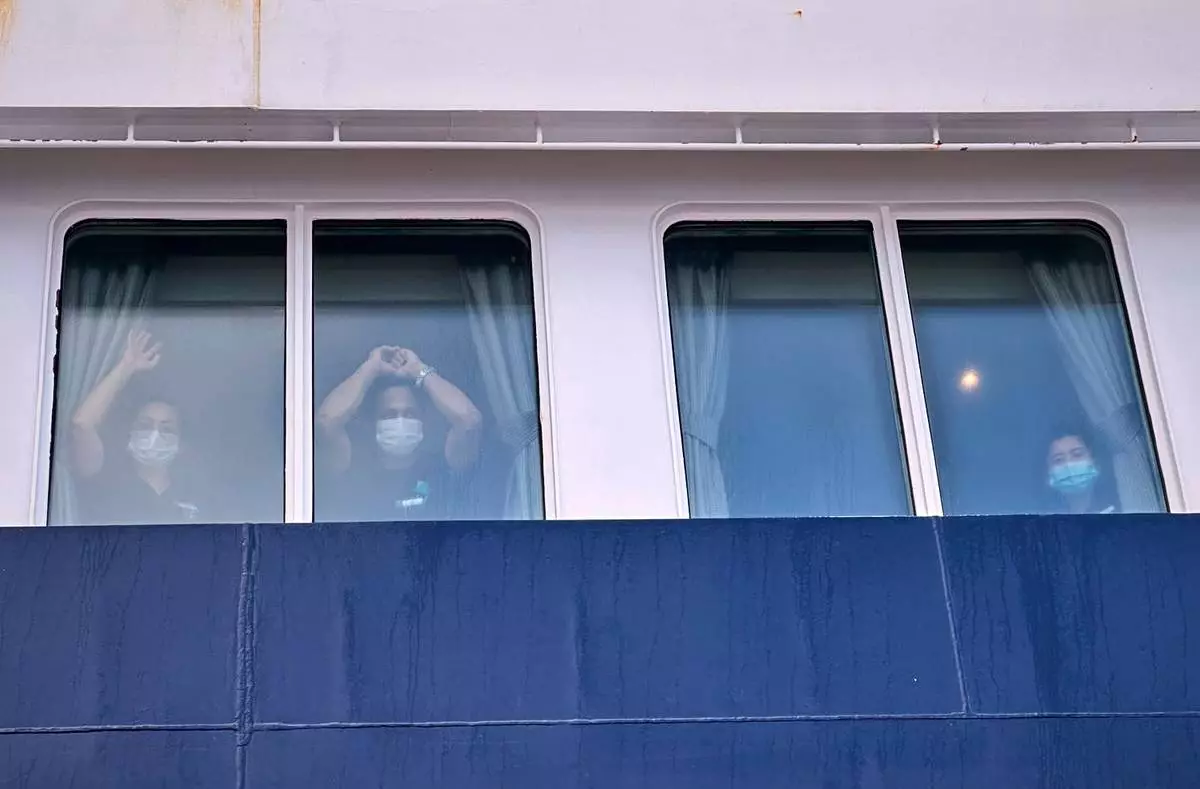
Passengers watch as others are disembarked from the hantavirus-stricken cruise ship MV Hondius at the port of Granadilla in Tenerife, Canary Islands, Spain, Sunday, May 10, 2026. (AP Photo)
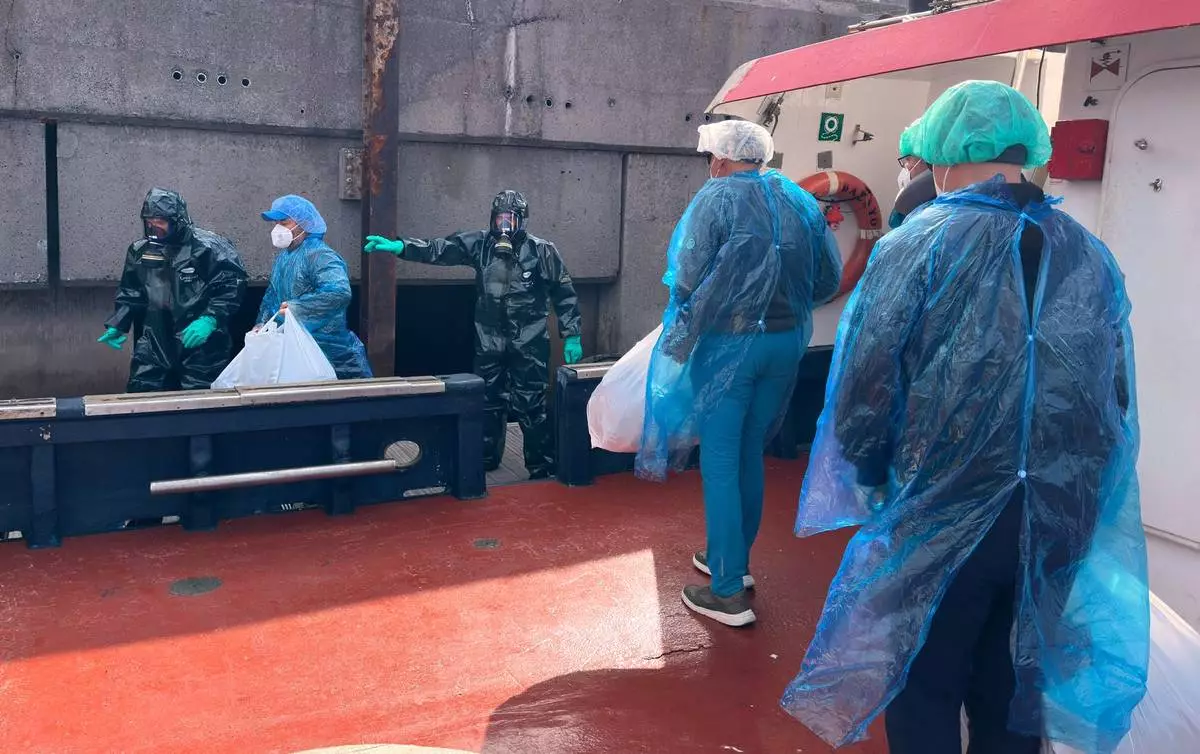
Passengers are disembarked from the hantavirus-stricken cruise ship MV Hondius at the port of Granadilla in Tenerife, Canary Islands, Spain, Sunday, May 10, 2026. (AP Photo)

Passengers are disembarked from the hantavirus-stricken cruise ship MV Hondius at the port of Granadilla in Tenerife, Canary Islands, Spain, Sunday, May 10, 2026. (AP Photo/Manu Fernandez)
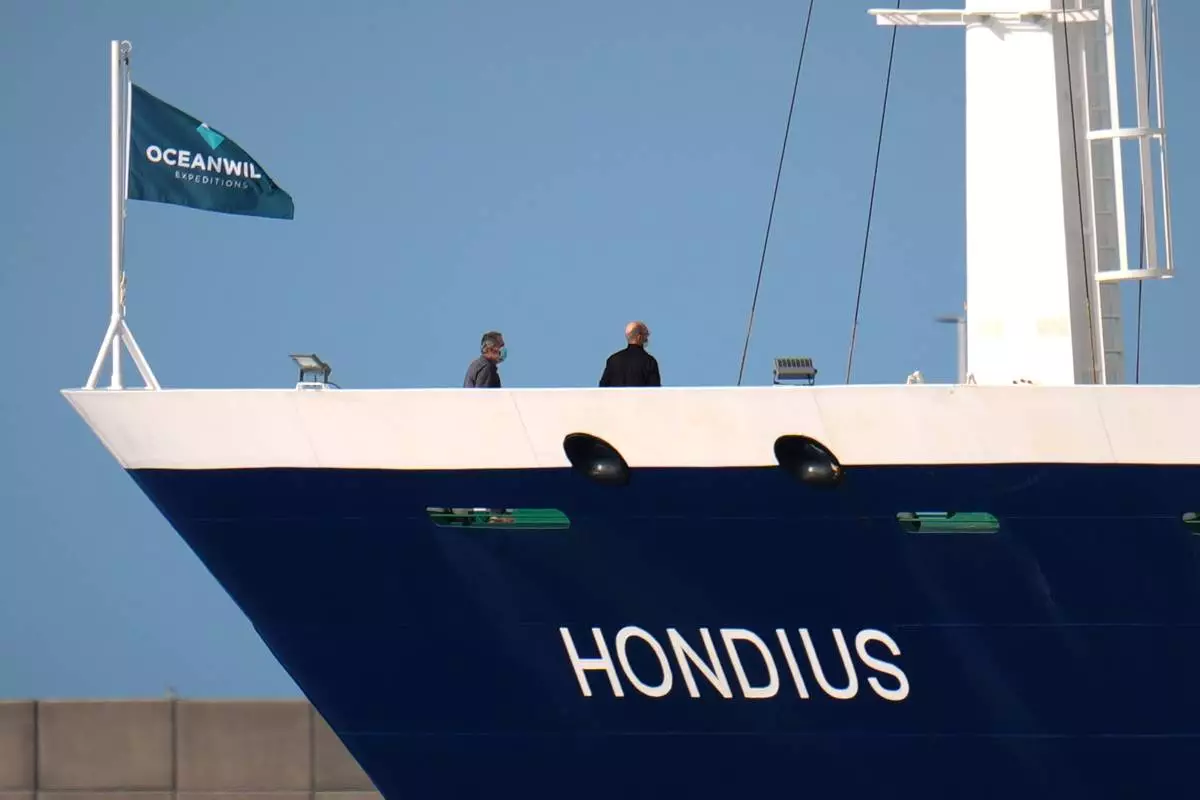
Passengers stand on the deck of the hantavirus-stricken cruise ship MV Hondius after its arrival at the port of Granadilla in Tenerife, Canary Islands, Spain, Sunday, May 10, 2026. (AP Photo/Manu Fernandez)
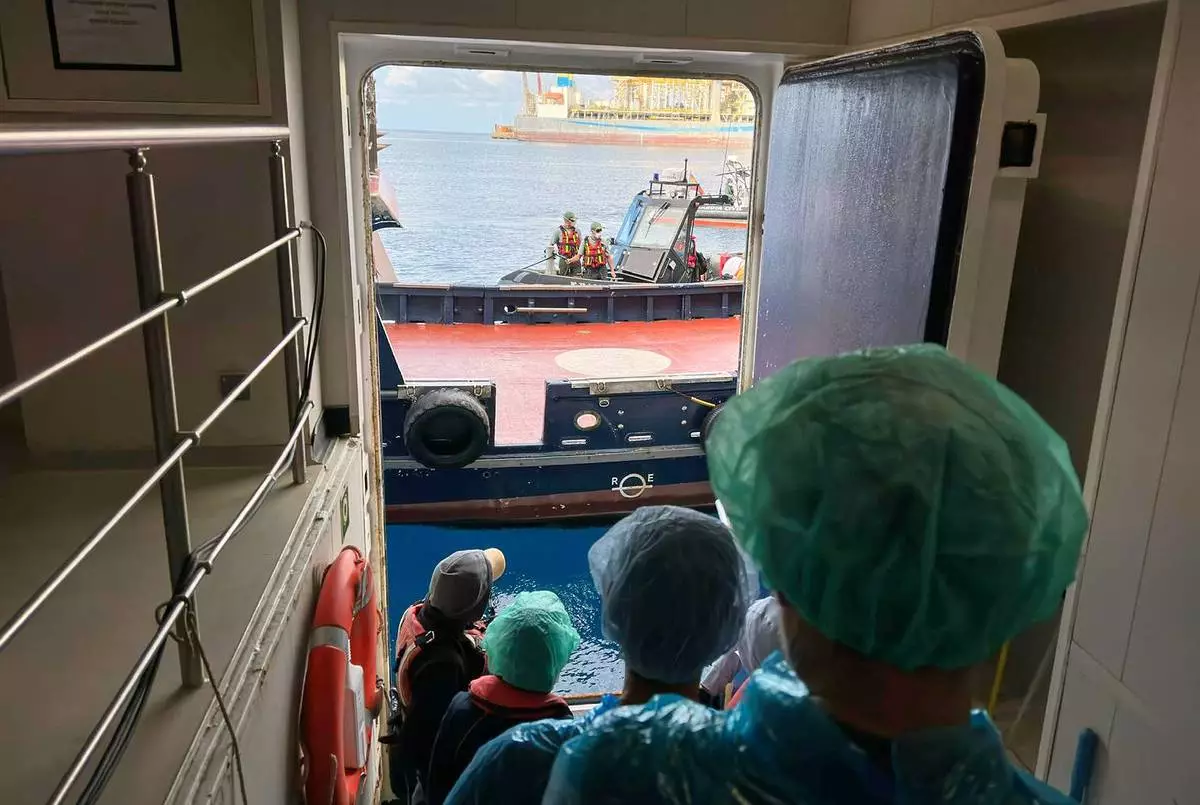
Passengers are being disembarked from the hantavirus-stricken cruise ship MV Hondius at the port of Granadilla in Tenerife, Canary Islands, Spain, Sunday, May 10, 2026. (AP Photo)

A Civil Guard border police stands guard following the arrival of hantavirus-stricken cruise ship MV Hondius at the port of Granadilla in Tenerife, Canary Islands, Spain, Sunday, May 10, 2026. (AP Photo)
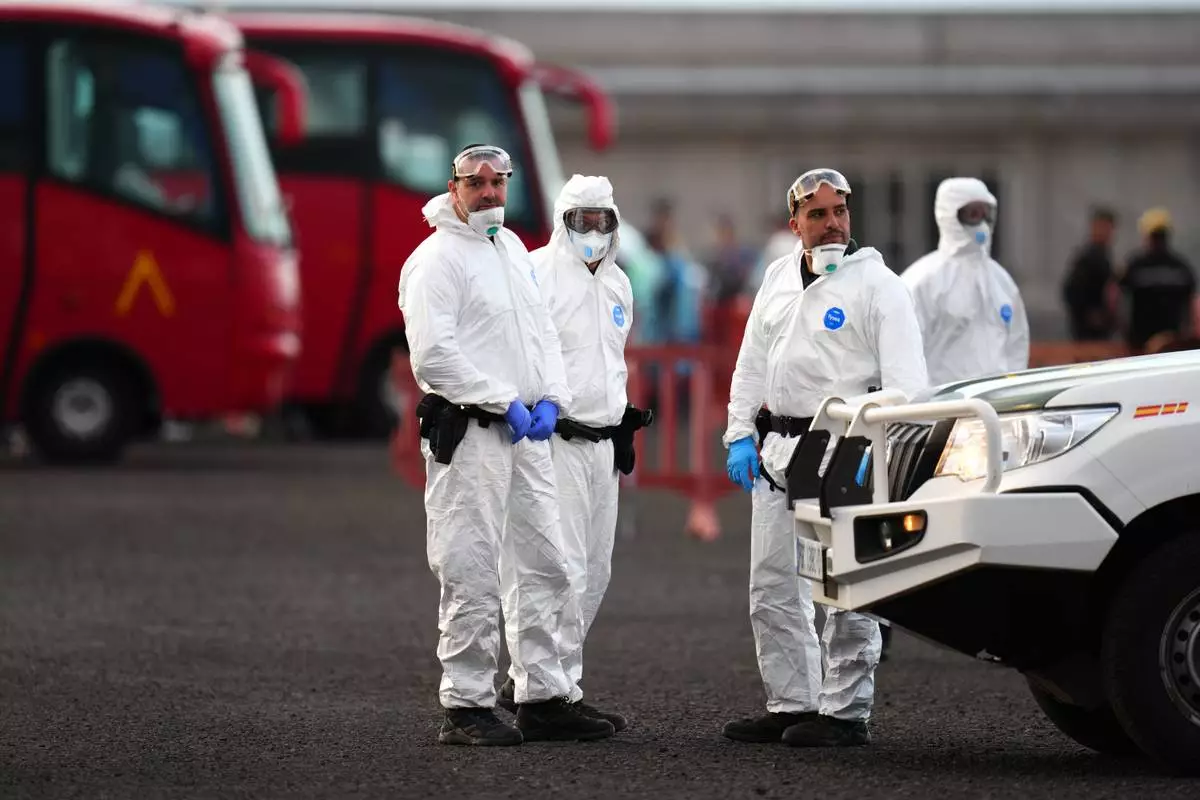
Civil Guard border police officers following the arrival of hantavirus-stricken cruise ship MV Hondius at the port of Granadilla in Tenerife, Canary Islands, Spain, Sunday, May 10, 2026. (AP Photo)
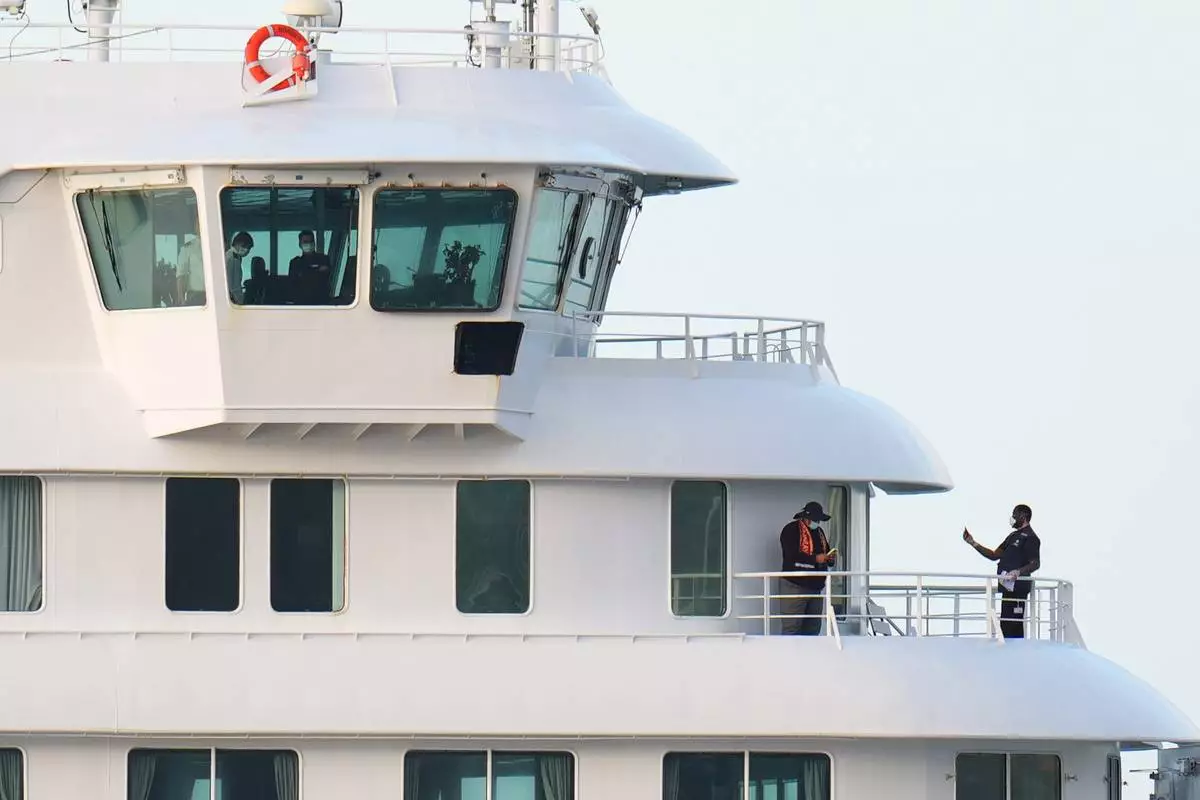
Passengers and crew at the hantavirus-stricken cruise ship MV Hondius after arriving at the port of Granadilla in Tenerife, Canary Islands, Spain, Sunday, May 10, 2026. (AP Photo/Manu Fernandez)
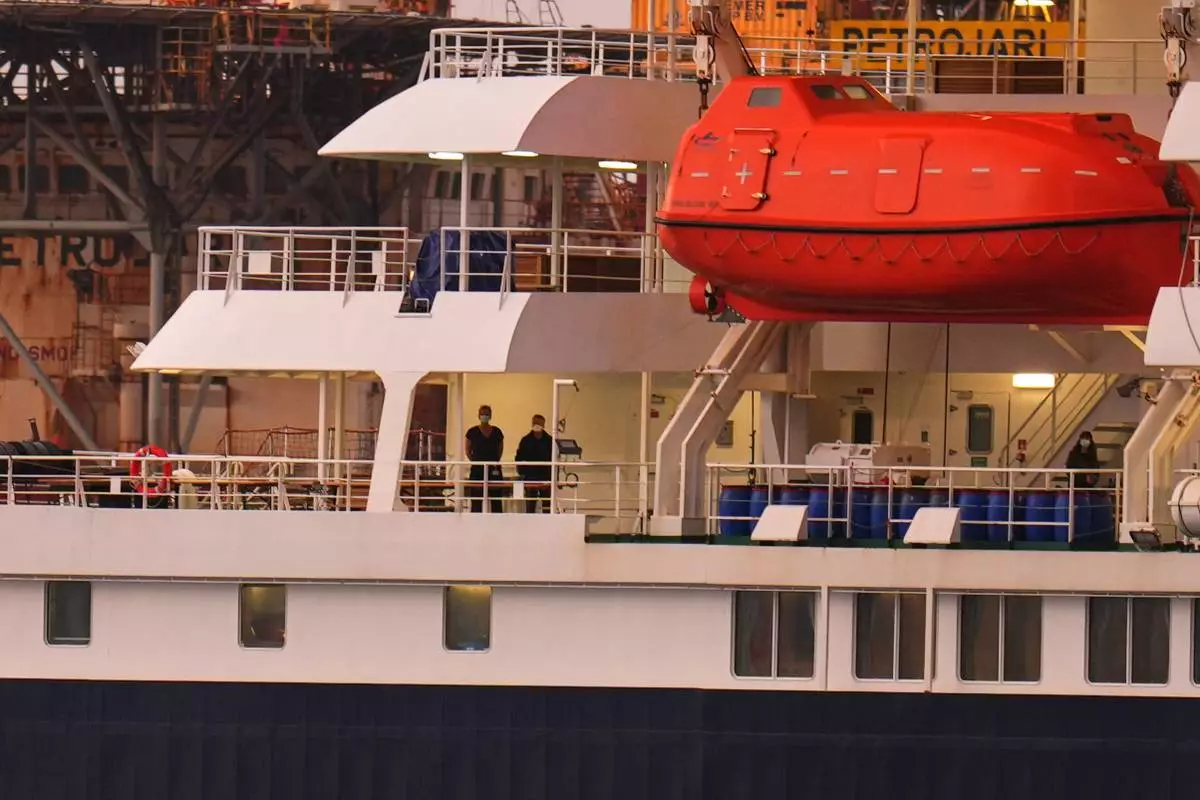
Passengers at the hantavirus-stricken cruise ship MV Hondius after arriving at the port of Granadilla in Tenerife, Canary Islands, Spain, Sunday, May 10, 2026. (AP Photo/Manu Fernandez)
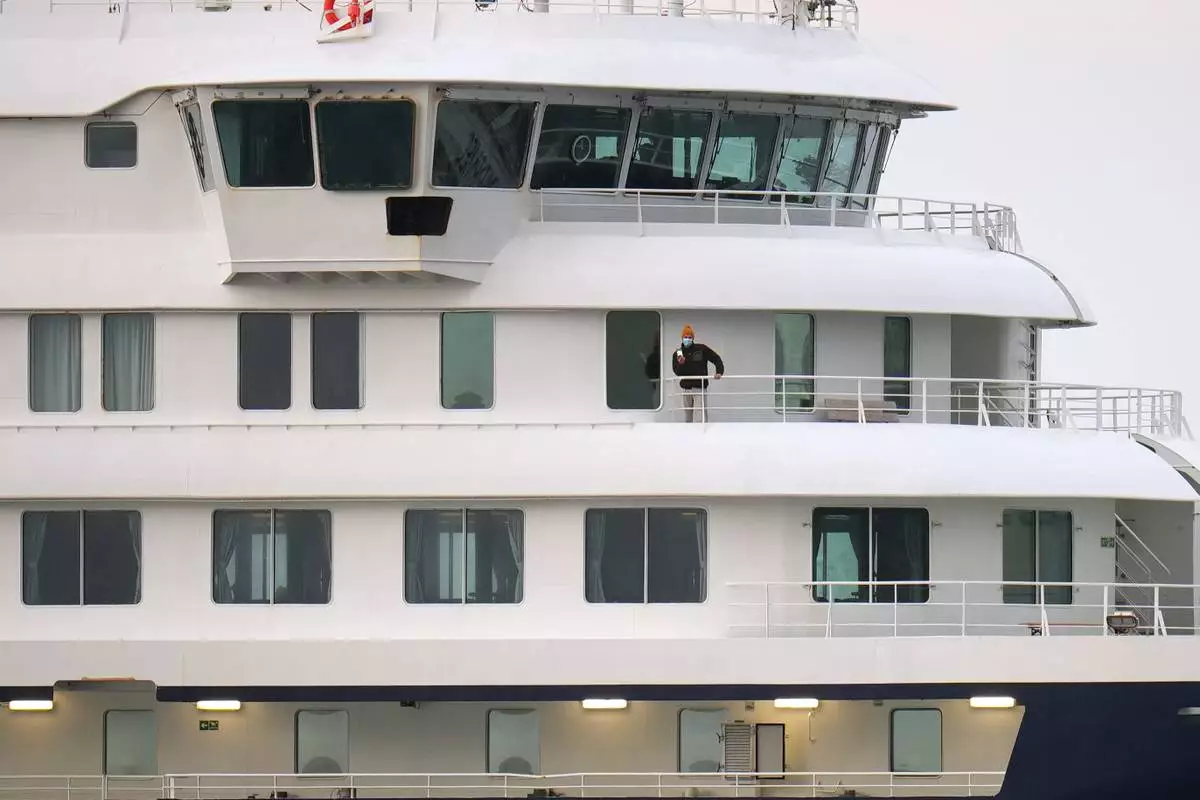
A passenger stands at the hantavirus-stricken cruise ship MV Hondius after its arrival at the port of Granadilla in Tenerife, Canary Islands, Spain, Sunday, May 10, 2026. (AP Photo/Manu Fernandez)
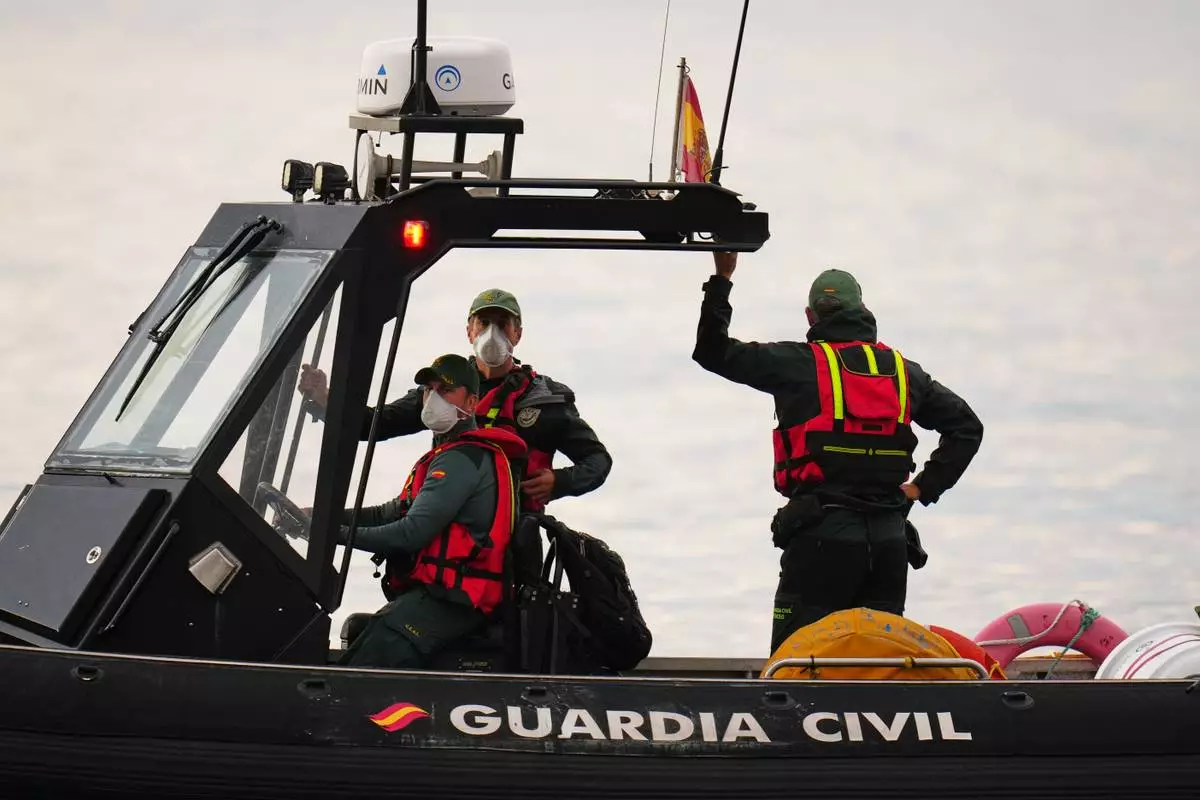
Civil Guard officers patrol next to the hantavirus-stricken cruise ship MV Hondius after its arrival at the port of Granadilla in Tenerife, Canary Islands, Spain, Sunday, May 10, 2026. (AP Photo/Manu Fernandez)
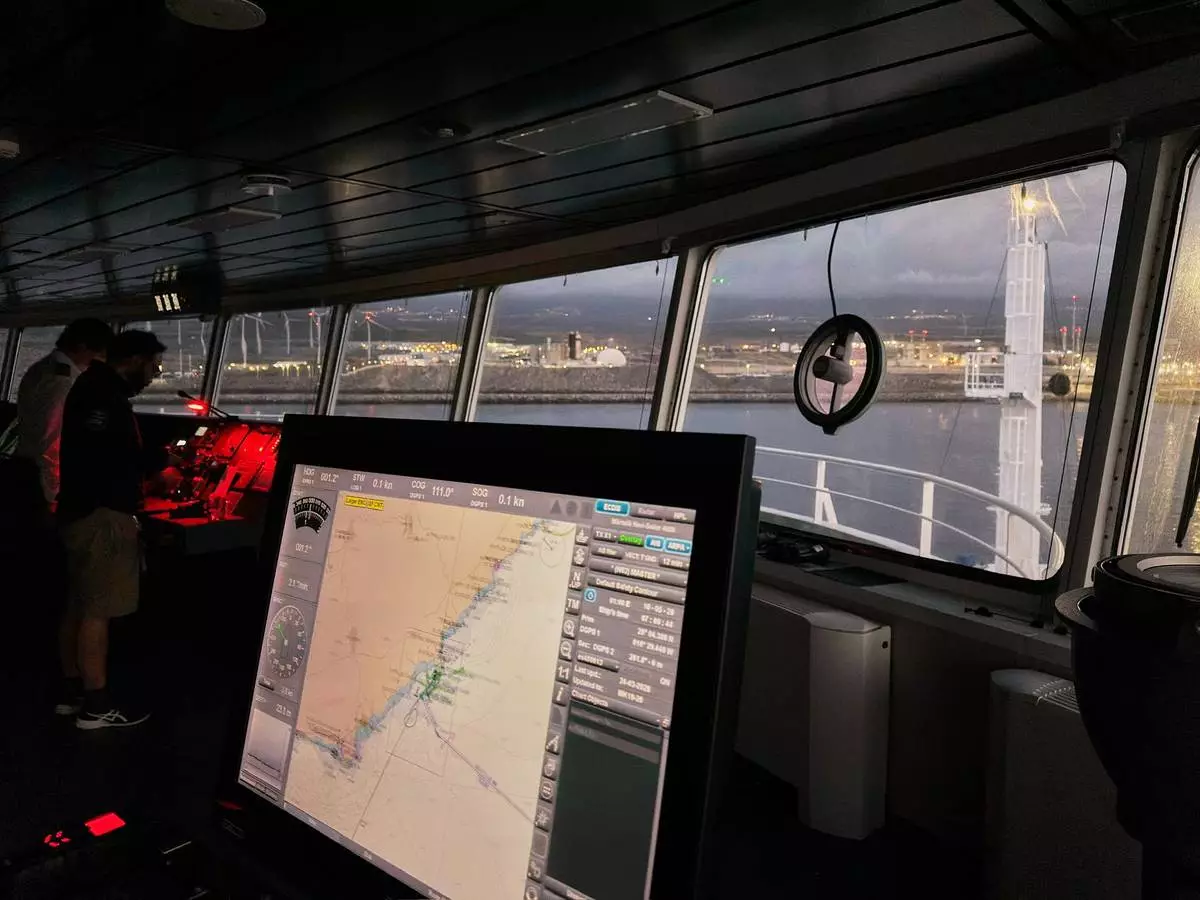
View from the bridge of the hantavirus-stricken cruise ship MV Hondius after its arrival at the port of Granadilla in Tenerife, Canary Islands, Spain, Sunday, May 10, 2026. (AP Photo)
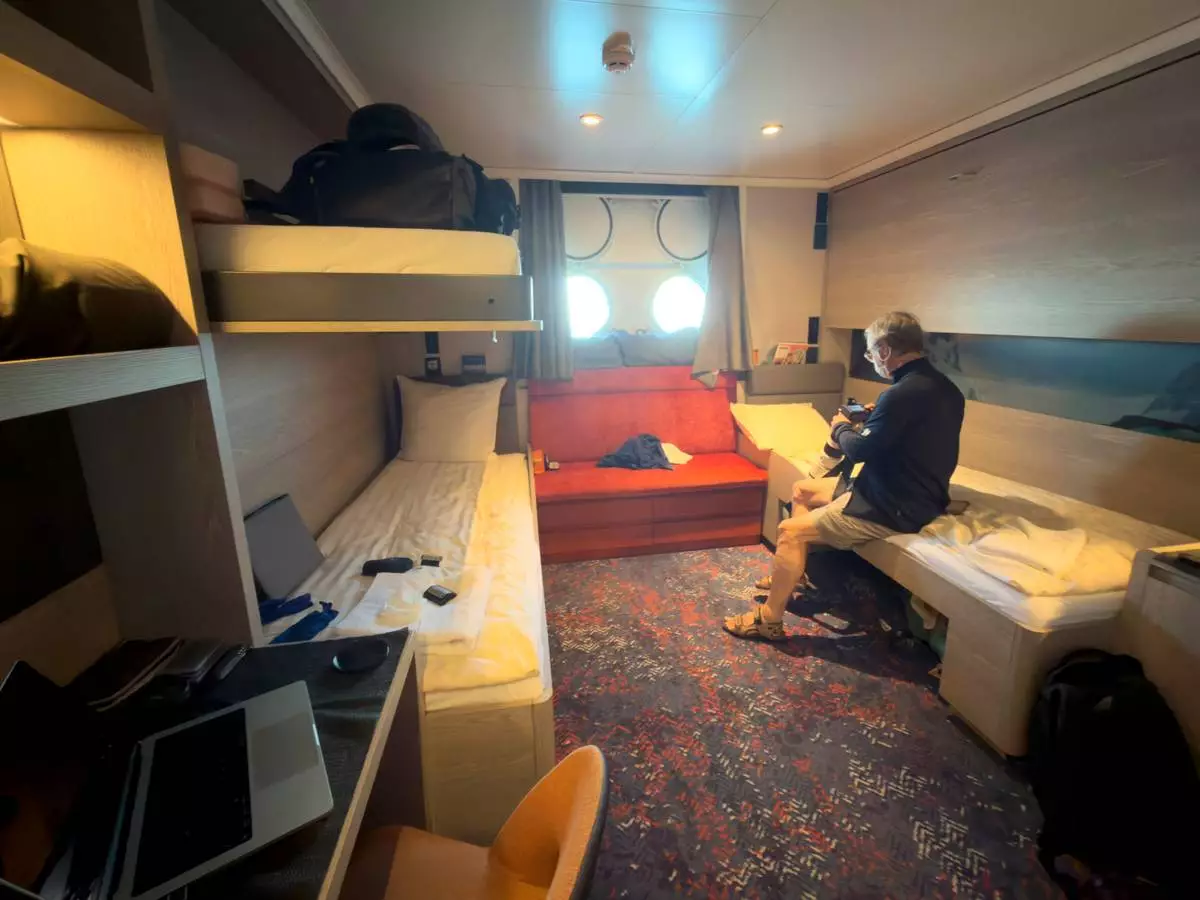
A passenger checks his camera inside his cabin on the hantavirus-stricken cruise ship, MV Hondius, during the voyage to Spain's port of Tenerife, May 6, 2026. (AP Photo)
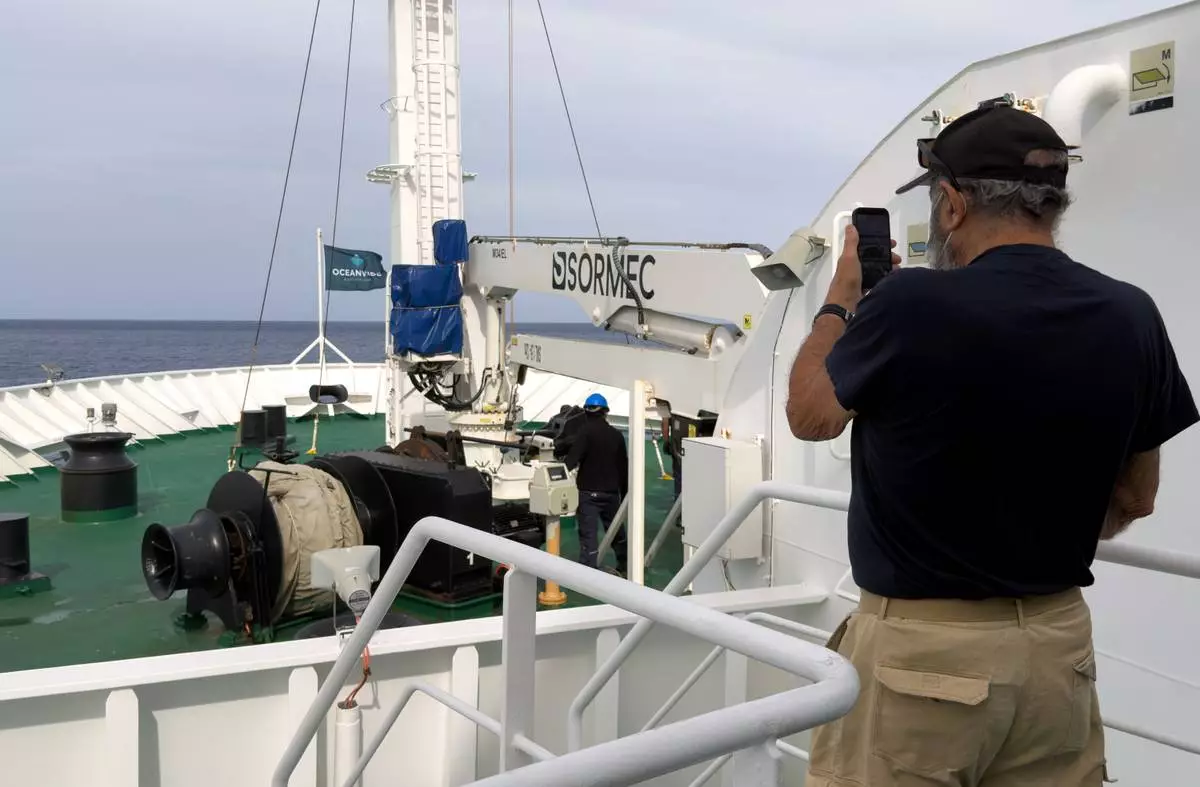
A passenger on the the hantavirus-stricken cruise ship, MV Hondius, takes a photo of the ship's weighing anchor in Praia, during the voyage to Spain's port of Tenerife, May 6, 2026. (AP Photo)
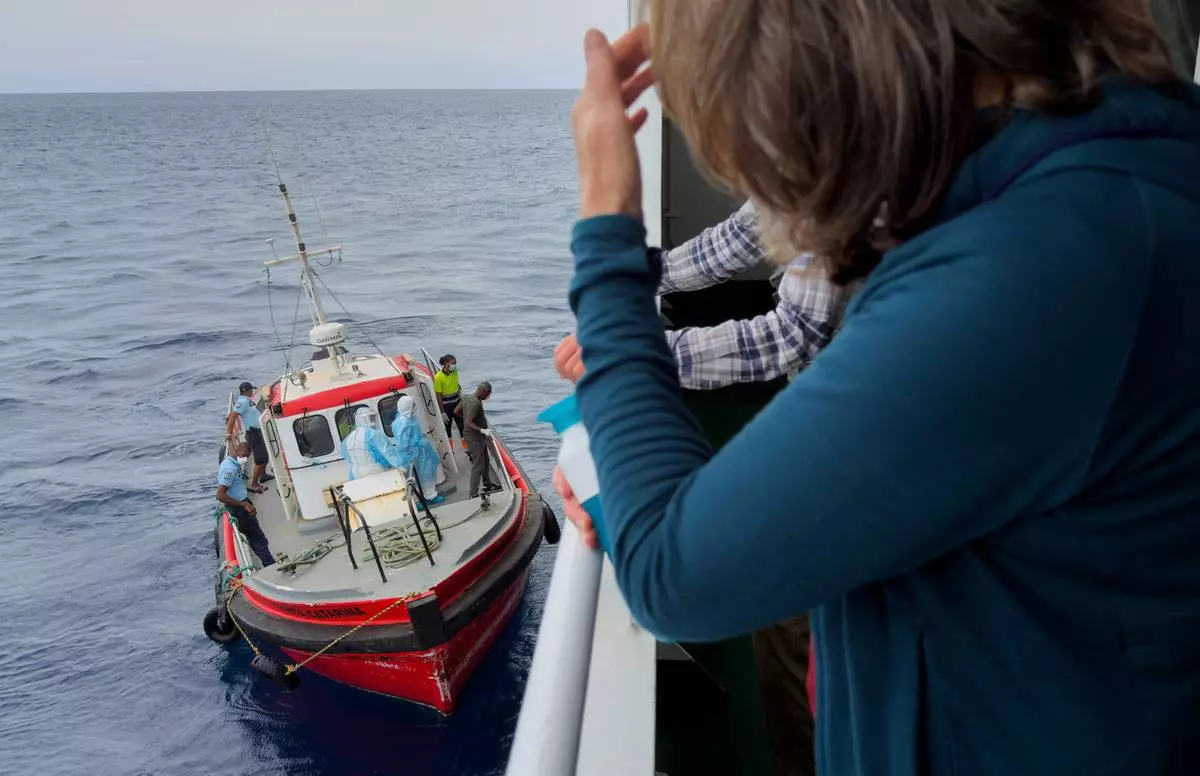
Passengers on the the hantavirus-stricken cruise ship, MV Hondius, watch epidemiologists board the boat in Praia, during their voyage to Spain's port of Tenerife, May 6, 2026. (AP Photo)
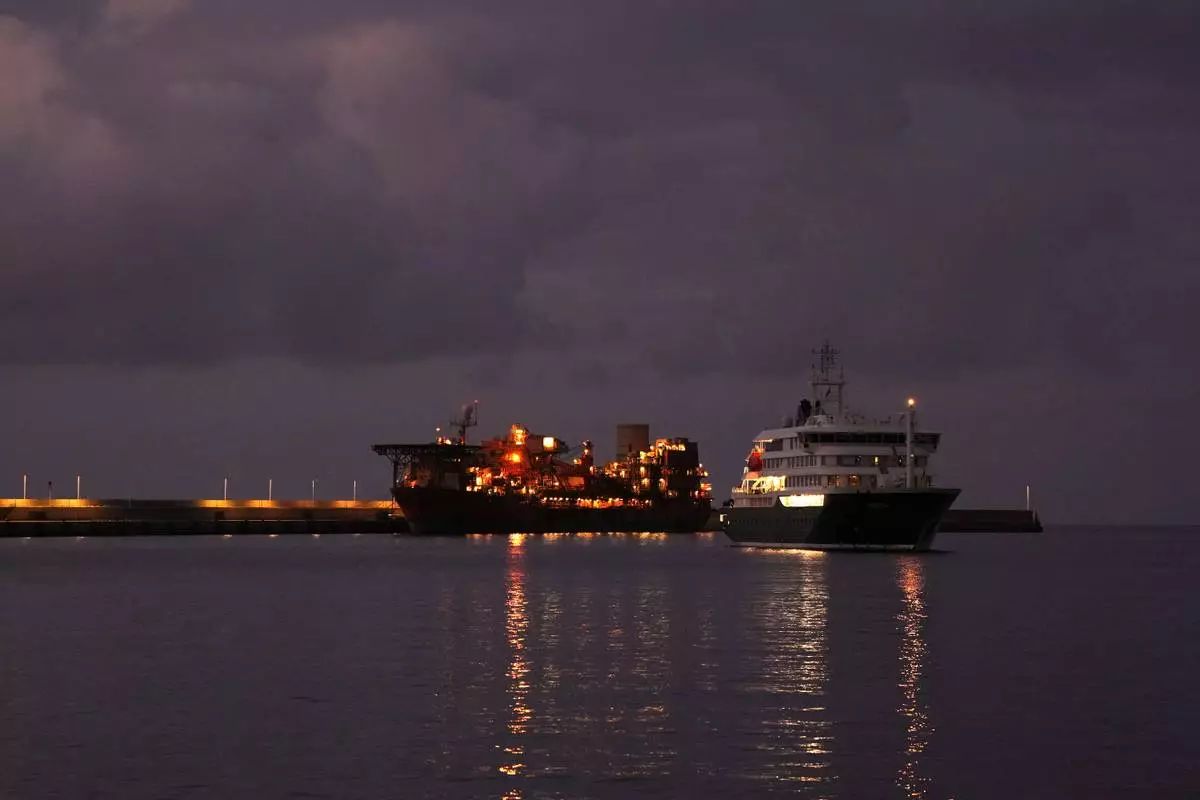
The hantavirus-stricken cruise ship MV Hondius is seen at anchor after arriving at the port of Granadilla in Tenerife, Canary Islands, Spain, Sunday, May 10, 2026. (AP Photo/Manu Fernandez)
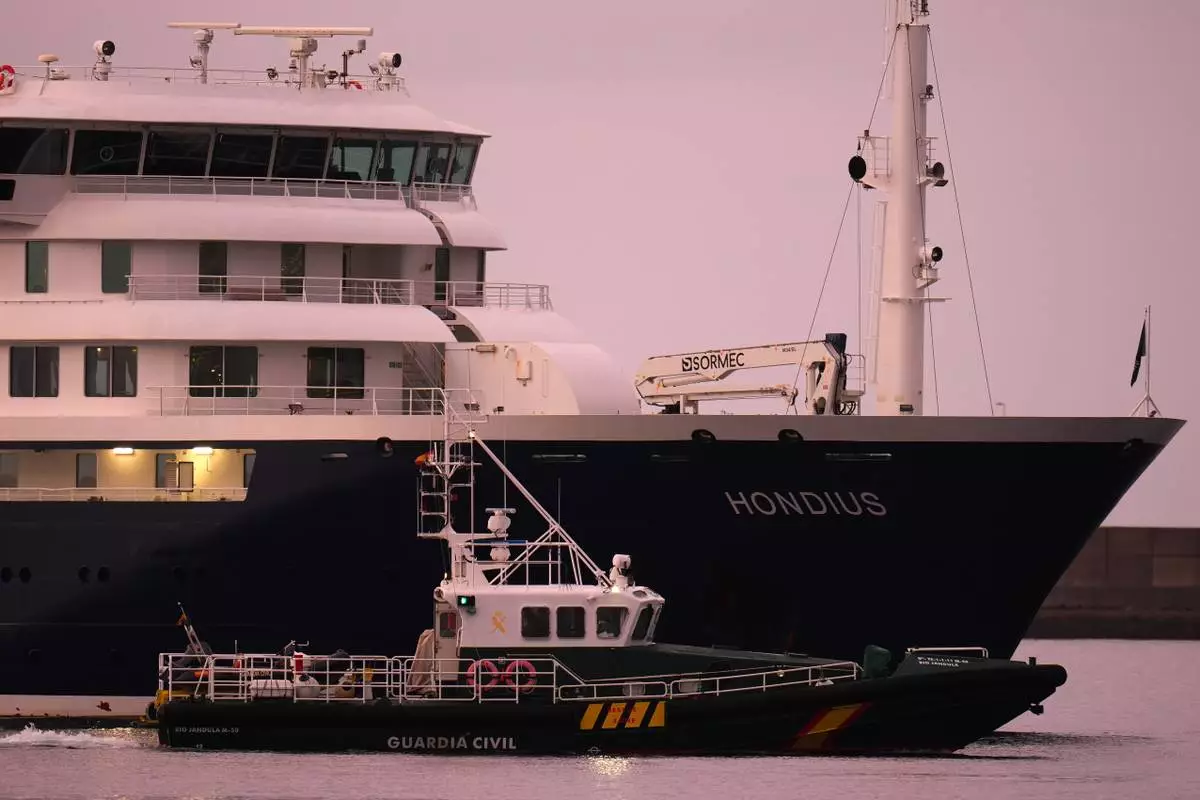
The hantavirus-stricken cruise ship MV Hondius is seen at anchor after arriving at the port of Granadilla in Tenerife, Canary Islands, Spain, Sunday, May 10, 2026. (AP Photo/Manu Fernandez)
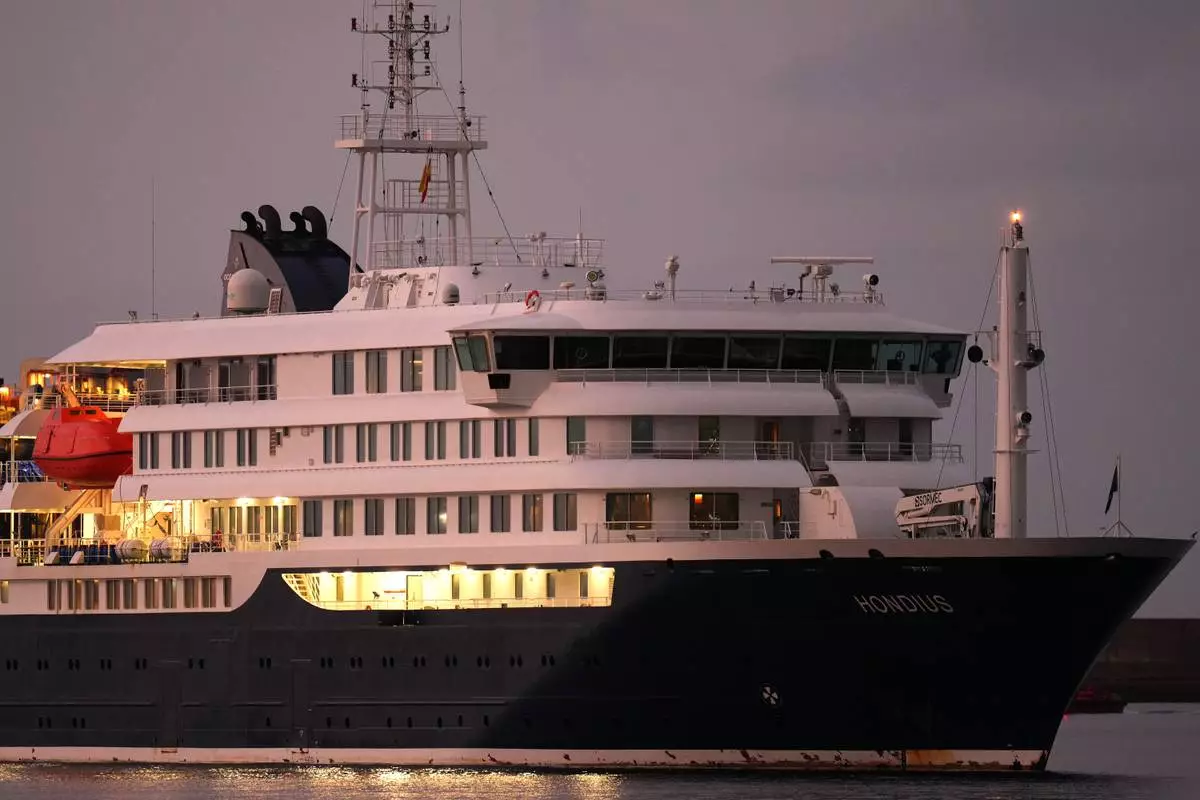
The hantavirus-stricken cruise ship MV Hondius is seen at anchor after arriving at the port of Granadilla in Tenerife, Canary Islands, Spain, Sunday, May 10, 2026. (AP Photo/Manu Fernandez)
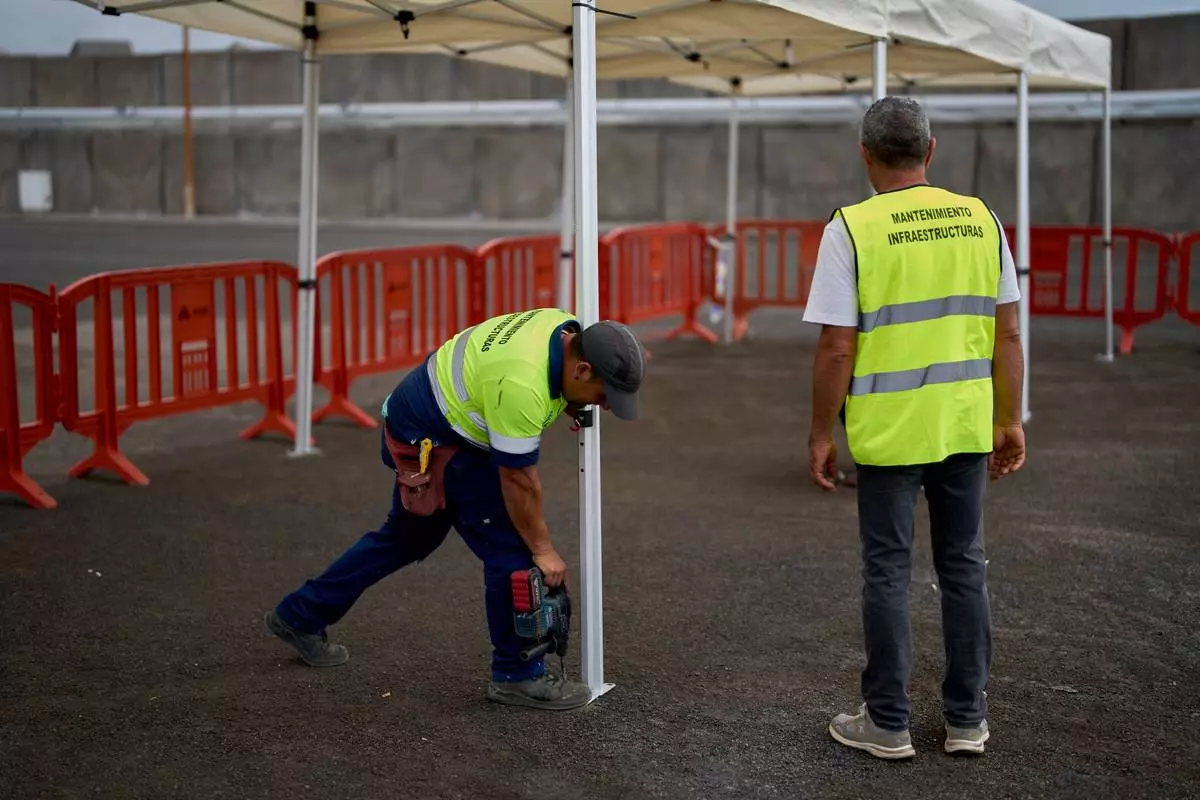
Workers set up temporary shelters in the area where passengers from the MV Hondius cruise ship are expected to arrive at the port of Granadilla in Tenerife, Canary Islands, Spain, Saturday, May 9, 2026. (AP Photo/Manu Fernandez)

Tedros Adhanom Ghebreyesus, Director-General of the World Health Organization, speaks to the media near the area where passengers from the MV Hondius are expected to arrive at the port of Port of Granadilla in Tenerife, Saturday, May 9, 2026. (AP Photo/Manu Fernandez)
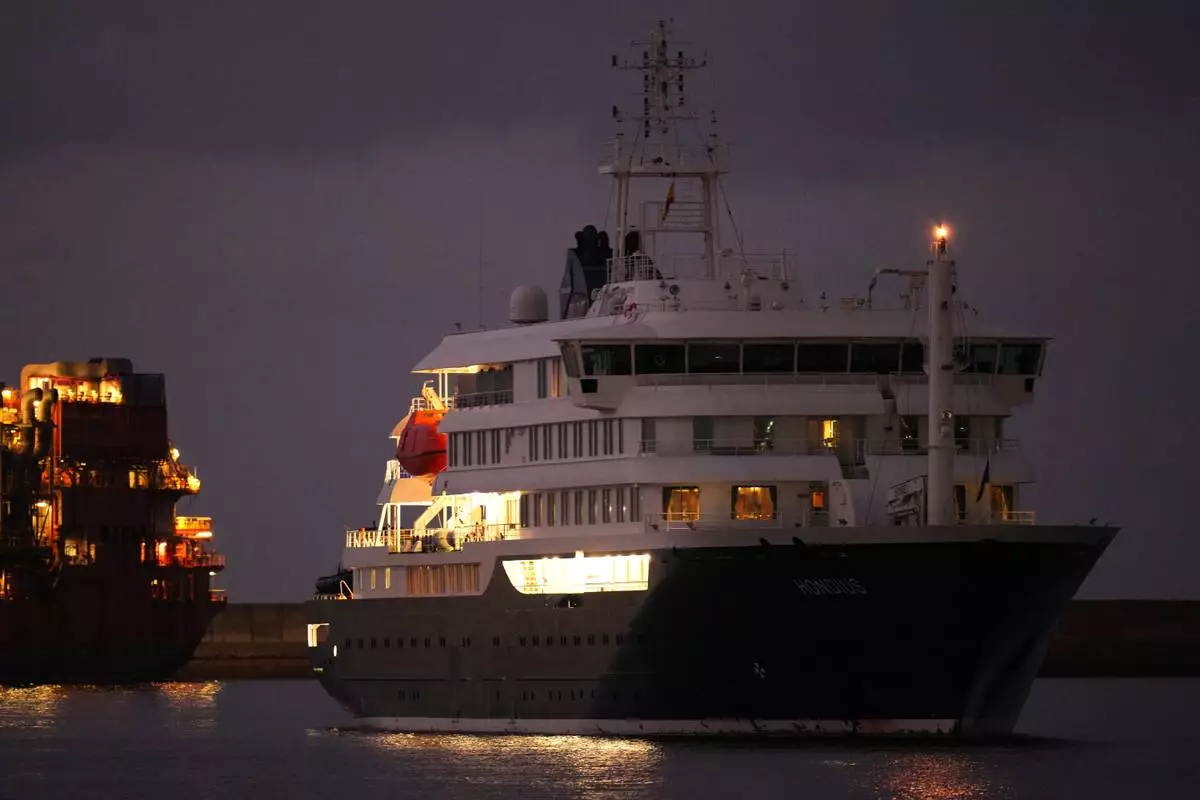
The hantavirus-stricken cruise ship MV Hondius is seen at anchor after arriving at the port of Granadilla in Tenerife, Canary Islands, Spain, Sunday, May 10, 2026. (AP Photo/Manu Fernandez)