Skip to Content Facebook Feature Image

How the war in Iran is landing with Republicans, according to a new AP-NORC poll

News

How the war in Iran is landing with Republicans, according to a new AP-NORC poll
News

News

How the war in Iran is landing with Republicans, according to a new AP-NORC poll

2026-03-26 21:55 Last Updated At:22:01

It's costing more and more to gas up the hot rods that Donnie Beson has spent a lifetime tinkering with. He's not questioning his support for President Donald Trump, but he feels as though the war in Iran has distracted the Republican president from the issues that got him elected.

“Come on, Trump. Worry about us," said Beson, 68, of Woodland Park, Colorado. "We’re in a billion-dollar-a-day war. It’s like, ‘Man, you forgot about the other stuff, and you got to take care of that first.’”

More Images
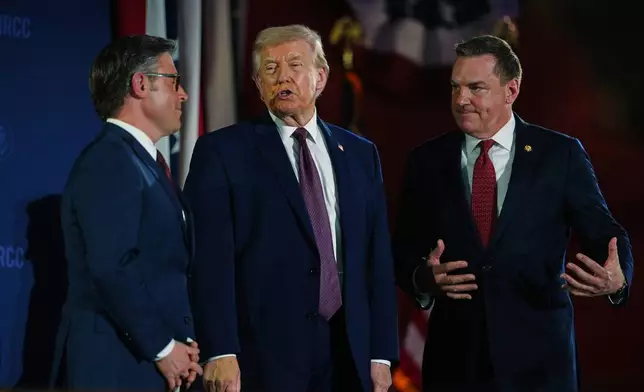
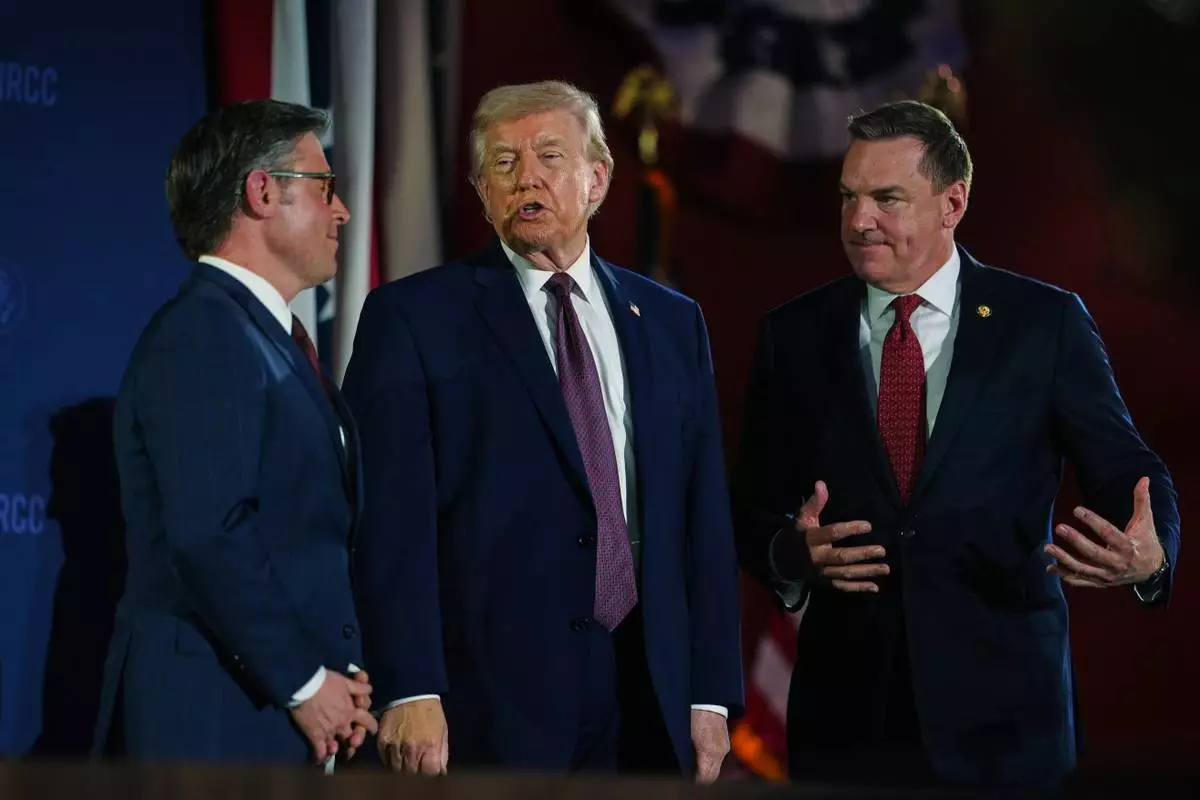
President Donald Trump talks with House Speaker Mike Johnson of La., and Rep. Richard Hudson, R-N.C., chair of the Naational Republican Congressional Committee (NRCC), at the annual fundraising dinner, Wednesday, March 25, 2026, at Union Station in Washington. (AP Photo/Julia Demaree Nikhinson)
President Donald Trump talks with House Speaker Mike Johnson of La., and Rep. Richard Hudson, R-N.C., chair of the Naational Republican Congressional Committee (NRCC), at the annual fundraising dinner, Wednesday, March 25, 2026, at Union Station in Washington. (AP Photo/Julia Demaree Nikhinson)
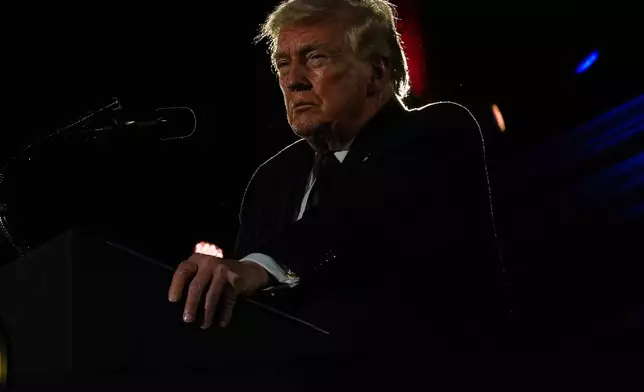
President Donald Trump speaks at the National Republican Congressional Committee's (NRCC) annual fundraising dinner, Wednesday, March 25, 2026, at Union Station in Washington. (AP Photo/Julia Demaree Nikhinson)

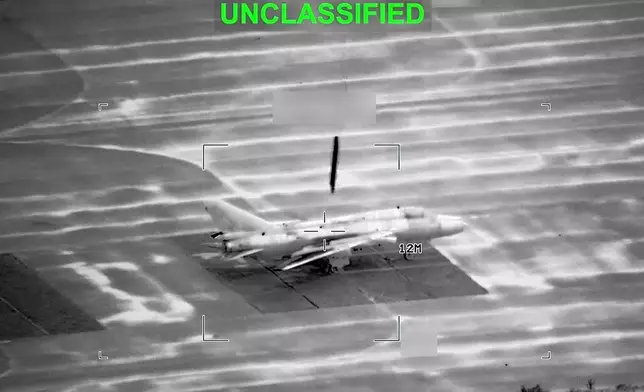
President Donald Trump speaks at the National Republican Congressional Committee's (NRCC) annual fundraising dinner, Wednesday, March 25, 2026, at Union Station in Washington. (AP Photo/Julia Demaree Nikhinson)

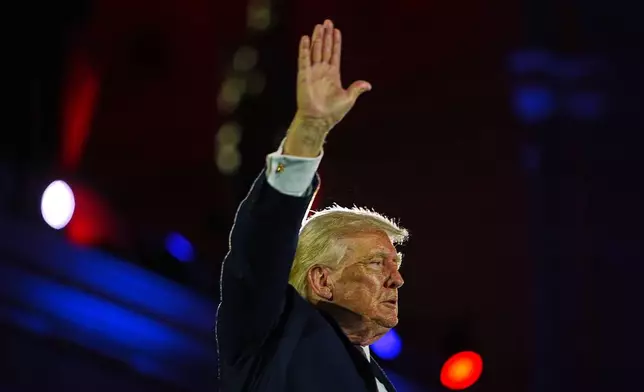
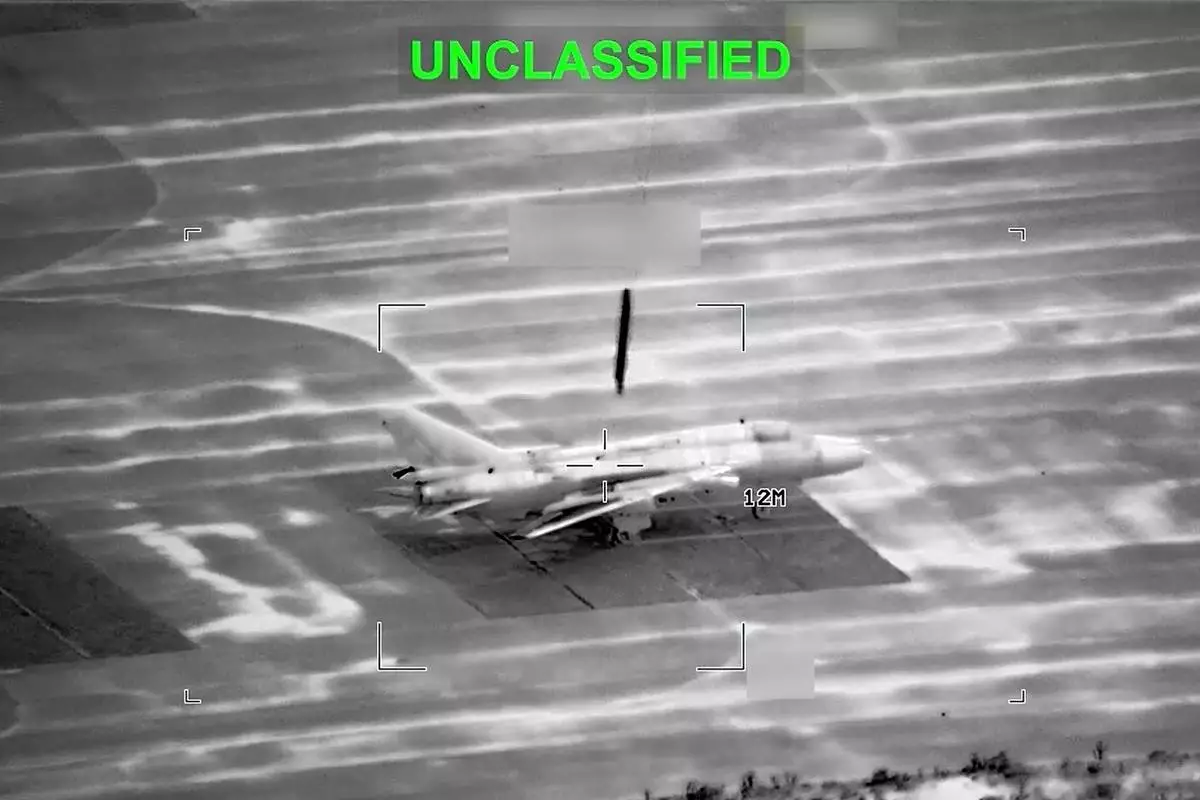
This partially redacted image from video provided by U.S. Central Command shows a military aircraft in Iran shortly before it was struck by a missile fired by U.S. forces on Sunday, March 1, 2026. (U.S. Central Command via AP)
This partially redacted image from video provided by U.S. Central Command shows a military aircraft in Iran shortly before it was struck by a missile fired by U.S. forces on Sunday, March 1, 2026. (U.S. Central Command via AP)

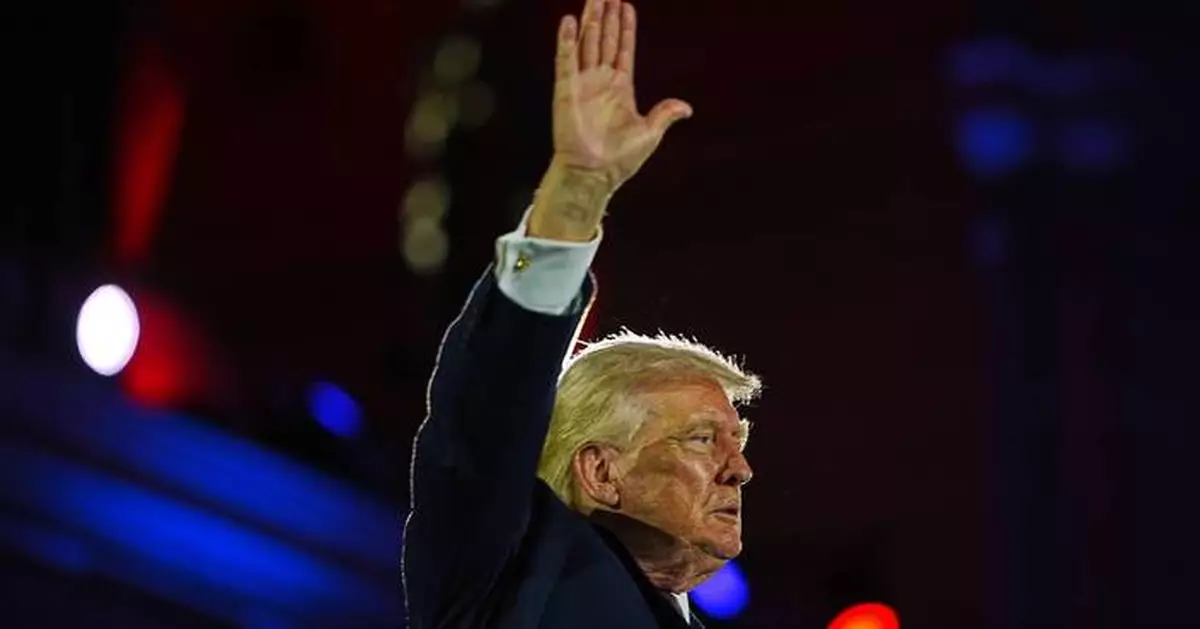
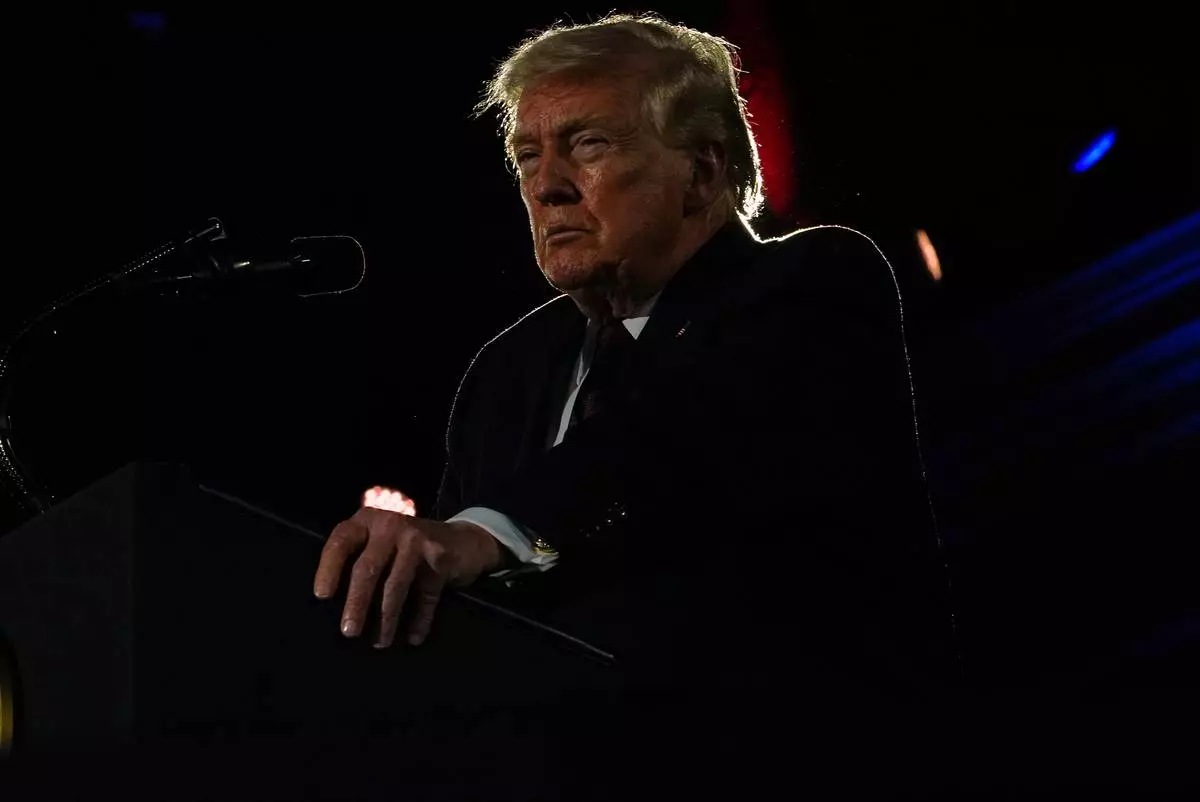
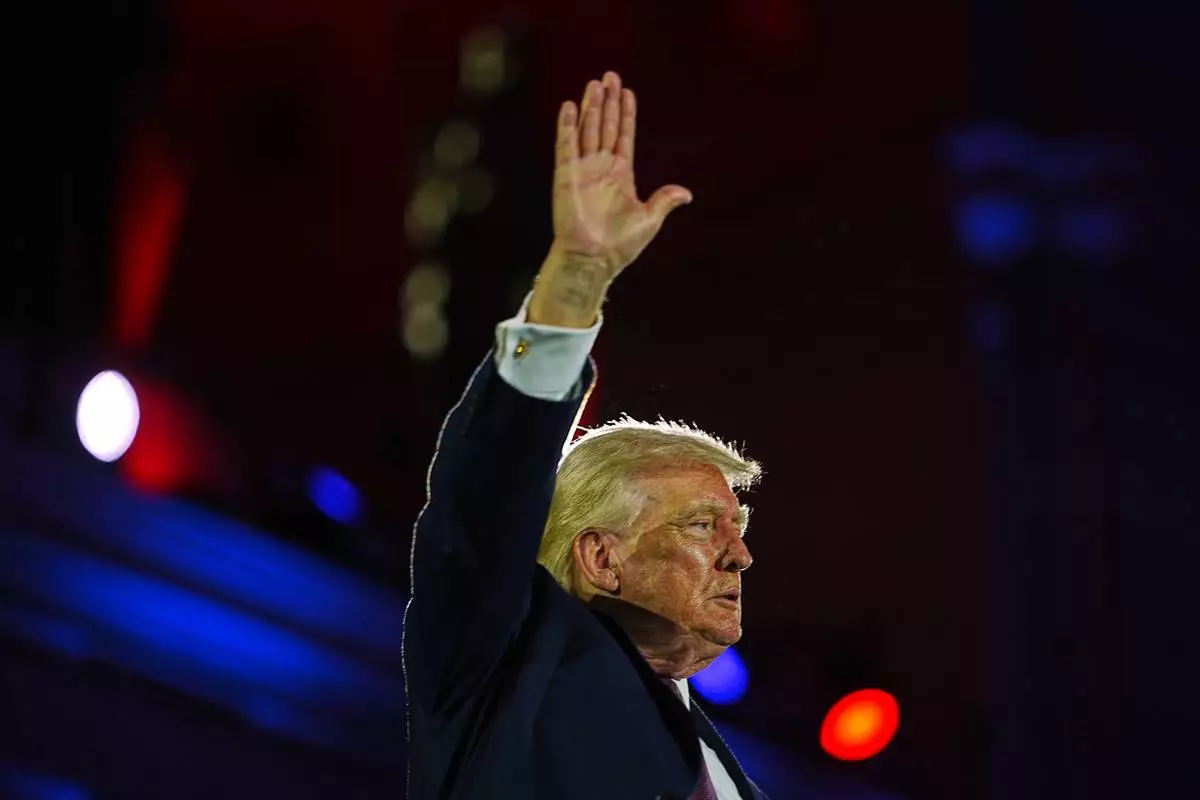
President Donald Trump waves after speaking at the National Republican Congressional Committee's (NRCC) annual fundraising dinner, Wednesday, March 25, 2026, at Union Station in Washington. (AP Photo/Julia Demaree Nikhinson)

President Donald Trump waves after speaking at the National Republican Congressional Committee's (NRCC) annual fundraising dinner, Wednesday, March 25, 2026, at Union Station in Washington. (AP Photo/Julia Demaree Nikhinson)

Trump still has deep support among Republicans, but a new poll from The Associated Press-NORC Center for Public Affairs Research indicates that the president risks frustrating his voters during a midterm election year if the United States gets involved in the kind of prolonged war in the Middle East that he promised to avoid.

Although 63% of Republicans back airstrikes against Iranian military targets, the survey found, only 20% back deploying American ground troops.

Rising gas prices could also pose a problem for Trump. The cost of oil and gas has soared since the Iran war began nearly four weeks ago, adding more financial pressure when many Americans are already worried about affording essentials. About 6 in 10 Republicans say they're at least “somewhat” concerned about being able to afford gas in the next few months, according to the poll, though they’re less worried than the rest of the country.

About three-quarters of Republicans approve of Trump's handling of the presidency, and a similar 70% approve of how he’s handling Iran.

Those ratings are in line with Republicans' support for Trump's foreign policy generally and his approach to Cuba, where he's recently ratcheted up pressure to change the island's leadership.

Many Republicans continue to have “a great deal” or “quite a bit” of trust in the president to make the right decisions on foreign issues. About half place a high level of trust in him when it comes to the use of military force outside the U.S. Roughly the same percentage of Republicans have a high level of trust on his dealings with adversaries and allies.

Sharon Fuller, 68, is a firm backer of the president and approves of his handling of the job, as well as the war in Iran.

A retired hospital analyst from Ocklawaha, Florida, Fuller expressed some reservations about the war but called Trump a “huge patriot” and said she’s been impressed with how the stock market has done since he became president again.

“I don’t really agree with the war, but on the other hand, I think it’s a necessity at this point,” she said.

Republicans stand out from Americans overall in their support for the war. A recent Quinnipiac University poll found that about 8 in 10 registered voters who are Republicans think the war with Iran will make the world “safer,” compared with about one-third of voters overall.

The vast majority of Republicans in the AP-NORC poll, 81%, say it's “extremely” or “very” important for the U.S. to prevent Iran from obtaining a nuclear weapon, lending support to one of the goals that Trump has articulated since the war began. But only about half of Republicans see replacing Iran's government with leaders who are more friendly to the U.S. as a high priority.

Stephen Hauss, 40, is a state Agriculture Department employee in Camden, Delaware, where he manages environmental programs. Hauss described his political views as libertarian-leaning, and he voted for Trump in 2024. But the start of the Iran war has changed his views about the president.

“Before the war I was just kind of like, ‘OK, like, I voted for him. I got to give him, like, some benefit of the doubt,’” he said.

Now, Hauss said he can't support the U.S. trying to change the leadership of another country. He added, “I don’t think I am on board with this anymore.”

Other efforts to get the U.S. more involved in Iran could complicate matters further for Trump. Only about 2 in 10 Republicans favor deploying U.S. ground troops to fight Iran, while about one-third don't have an opinion and about half are opposed.

Thomas Sweeney, 76, is a retired chemical engineer from Frisco, Texas, who voted for Trump three times. An Army officer veteran, Sweeney said he can't get behind the war, which has brought down his overall view of the president.

“I’m not happy. I am frustrated,” he said. “Soldiers are very, very precious. You just don’t go in there and waste lives.”

The rising cost of oil and gas is another vulnerability for Trump, even within his own party. About three-quarters of Republicans say it's “extremely” or “very” important for U.S. foreign policy to keep gas prices down, which could increasingly be at odds with their support for the war.

About 3 in 10 Republican registered voters in the Quinnipiac University poll say the price of gasoline has been a “very" or “somewhat” serious problem for their family lately.

If high gas prices linger, they could create even more frustration for Trump supporters who hoped the president would bring down the cost of everyday goods.

Fuller, the Florida Republican, said there’s no chance she’d vote for Democrats, but she had a message for Trump.

“I’d like him to see what he can do to get prices down for, quote, the working people and myself now living on a fixed income,” she said.

The AP-NORC poll of 1,150 adults was conducted March 19-23 using a sample drawn from NORC’s probability-based AmeriSpeak Panel, which is designed to be representative of the U.S. population. The margin of sampling error for adults overall is plus or minus 4 percentage points and for Republicans is plus or minus 6.7 percentage points.
President Donald Trump talks with House Speaker Mike Johnson of La., and Rep. Richard Hudson, R-N.C., chair of the Naational Republican Congressional Committee (NRCC), at the annual fundraising dinner, Wednesday, March 25, 2026, at Union Station in Washington. (AP Photo/Julia Demaree Nikhinson)
President Donald Trump talks with House Speaker Mike Johnson of La., and Rep. Richard Hudson, R-N.C., chair of the Naational Republican Congressional Committee (NRCC), at the annual fundraising dinner, Wednesday, March 25, 2026, at Union Station in Washington. (AP Photo/Julia Demaree Nikhinson)
President Donald Trump speaks at the National Republican Congressional Committee's (NRCC) annual fundraising dinner, Wednesday, March 25, 2026, at Union Station in Washington. (AP Photo/Julia Demaree Nikhinson)

President Donald Trump speaks at the National Republican Congressional Committee's (NRCC) annual fundraising dinner, Wednesday, March 25, 2026, at Union Station in Washington. (AP Photo/Julia Demaree Nikhinson)

This partially redacted image from video provided by U.S. Central Command shows a military aircraft in Iran shortly before it was struck by a missile fired by U.S. forces on Sunday, March 1, 2026. (U.S. Central Command via AP)
This partially redacted image from video provided by U.S. Central Command shows a military aircraft in Iran shortly before it was struck by a missile fired by U.S. forces on Sunday, March 1, 2026. (U.S. Central Command via AP)

President Donald Trump waves after speaking at the National Republican Congressional Committee's (NRCC) annual fundraising dinner, Wednesday, March 25, 2026, at Union Station in Washington. (AP Photo/Julia Demaree Nikhinson)
President Donald Trump waves after speaking at the National Republican Congressional Committee's (NRCC) annual fundraising dinner, Wednesday, March 25, 2026, at Union Station in Washington. (AP Photo/Julia Demaree Nikhinson)
NEW YORK (AP) — Doubt is taking over again on Wall Street from hope about a possible end to the war with Iran, and stocks are back to sinking as oil prices rise on Thursday.

The S&P 500 fell 0.8% and more than erased its gain from the day before. The Dow Jones Industrial Average was down 256 points, or 0.6%, as of 9:35 a.m. Eastern time, and the Nasdaq composite was 1.1% lower.

Stock markets fell even more in much of Asia and Europe. They’re the latest flip - flops in an exhausting week that began with President Donald Trump’s announcement of productive talks about ending the war, which only led to Iran’s public dismissal. Iran issued its own plan for a ceasefire, which includes reparations for the war.

On Thursday, fighting continued, and Iran and the United States appeared at an impasse. Thousands more U.S. troops neared the region, while Tehran tightened its grip on the crucial Strait of Hormuz.

The narrow waterway typically sees a fifth of the world’s oil sail through it to exit the Persian Gulf and reach customers worldwide. The secretary-general of a bloc of Gulf Arab countries said Iran is charging fees for ships to safely transit the strait.

A barrel of Brent crude oil climbed 3.9% to $101.03 as hopes dimmed for a potential return to normal for the strait. That’s up from roughly $70 before the war began. Benchmark U.S. crude climbed 4.1% to $94.01 per barrel.

“They better get serious soon, before it is too late,” Trump said on his social media network about Iran’s negotiators, “because once that happens, there is NO TURNING BACK, and it won’t be pretty!”

The jump in oil prices worsened worries about high inflation and sent Treasury yields higher in the bond market.

The yield on the 10-year Treasury rose to 4.36% from 4.33% late Wednesday and from just 3.97% before the war started. That leap has already sent rates higher for mortgages and other kinds of loans for U.S. households and businesses, which slows the economy.

A report on Thursday morning said slightly more U.S. workers filed for unemployment benefits last week, though the number is still low compared with historical figures.

Usually, a slowing job market can encourage the Federal Reserve to cut interest rates to juice the economy. But hopes have cratered for a possible cut to interest rates this year, even though traders came into 2026 forecasting several. That’s because lower interest rates can worsen inflation, and the worry is centered on the spike in oil prices.

On Wall Street, Meta Platforms and Alphabet were two of the heaviest weights on the market. They had held relatively steady the day before, when a jury found Instagram and YouTube liable in a landmark social media addiction trial.

The financial penalties were small compared with the companies’ vast profits, but it could be a watershed moment that invites more lawsuits.

Meta Platforms fell 2.8%, while Alphabet sank 2%.

Commercial Metals fell 1.5% after the maker of steel rebar and other products reported a weaker profit for the latest quarter than analysts expected. CEO Peter Matt said bad weather hurt its North American operations during the quarter, but underlying market conditions looked favorable.

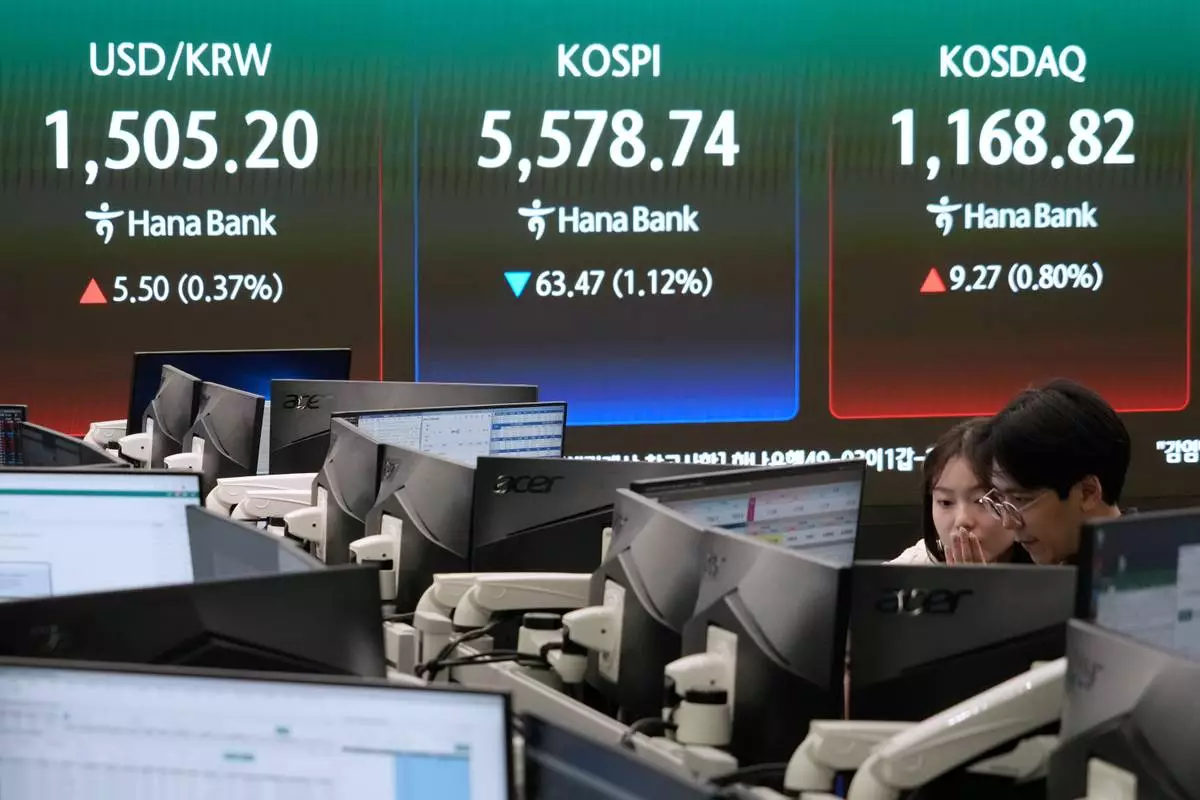
In stock markets abroad, Germany’s DAX lost 1.6%, Hong Kong’s Hang Seng sank 1.9% and South Korea’s Kospi dropped 3.2%. Japan’s Nikkei 225 had one of the world’s milder losses, at 0.3%.

AP Business Writers Chan Ho-him and Matt Ott contributed.

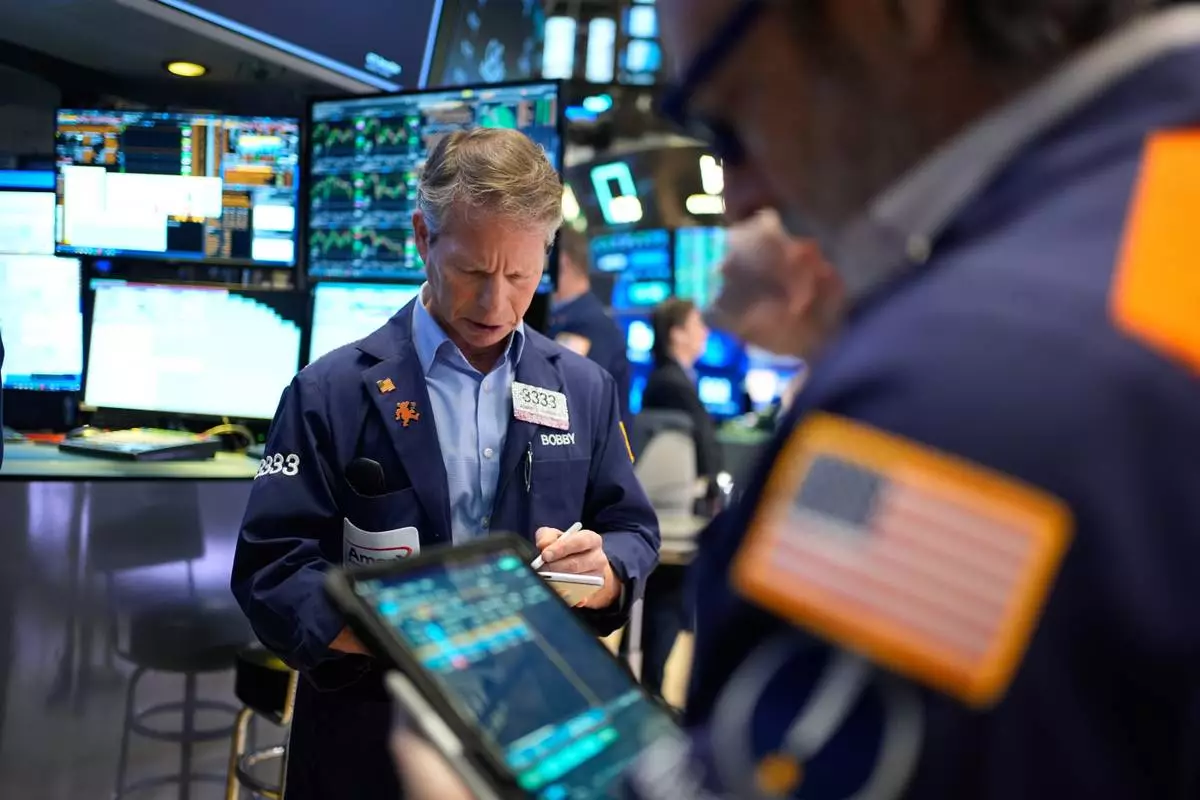
Bobby Charmak works on the floor at the New York Stock Exchange in New York, Wednesday, March 25, 2026. (AP Photo/Seth Wenig)

Bobby Charmak works on the floor at the New York Stock Exchange in New York, Wednesday, March 25, 2026. (AP Photo/Seth Wenig)

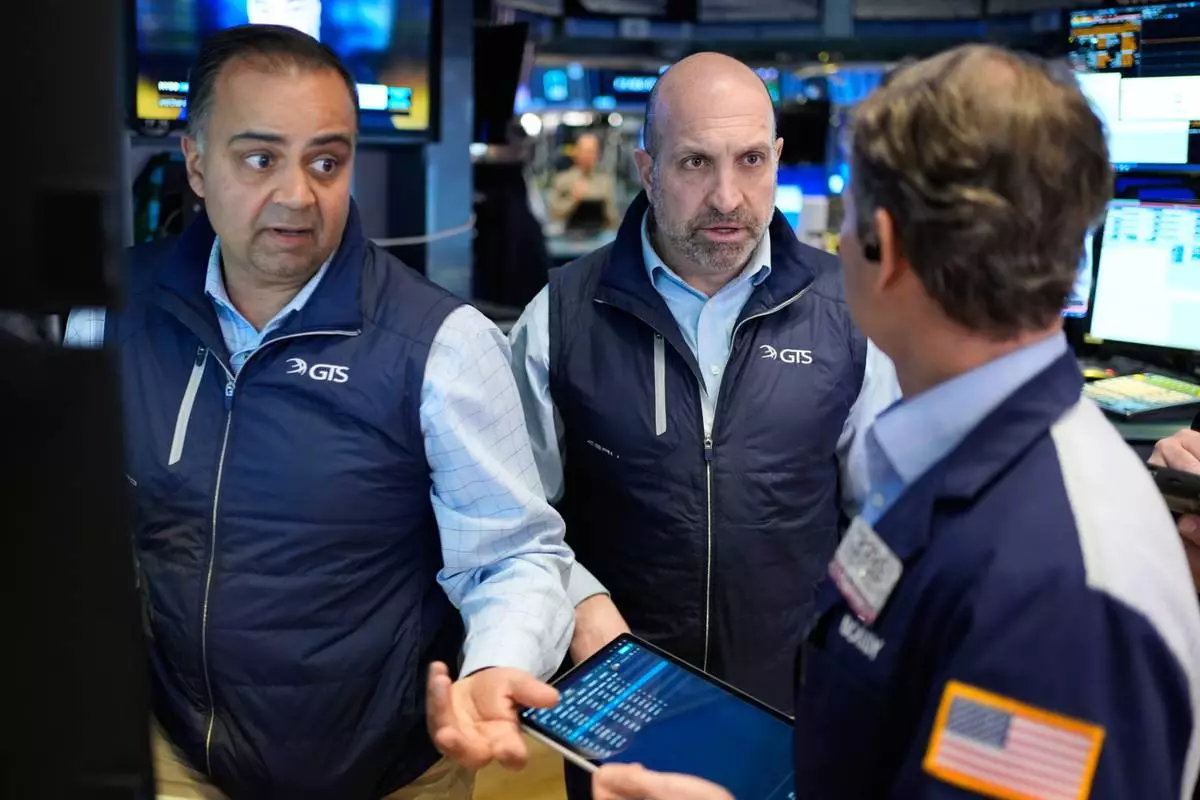
James Denaro, center, and Dilip Patel, left, work on the floor at the New York Stock Exchange in New York, Wednesday, March 25, 2026. (AP Photo/Seth Wenig)

James Denaro, center, and Dilip Patel, left, work on the floor at the New York Stock Exchange in New York, Wednesday, March 25, 2026. (AP Photo/Seth Wenig)

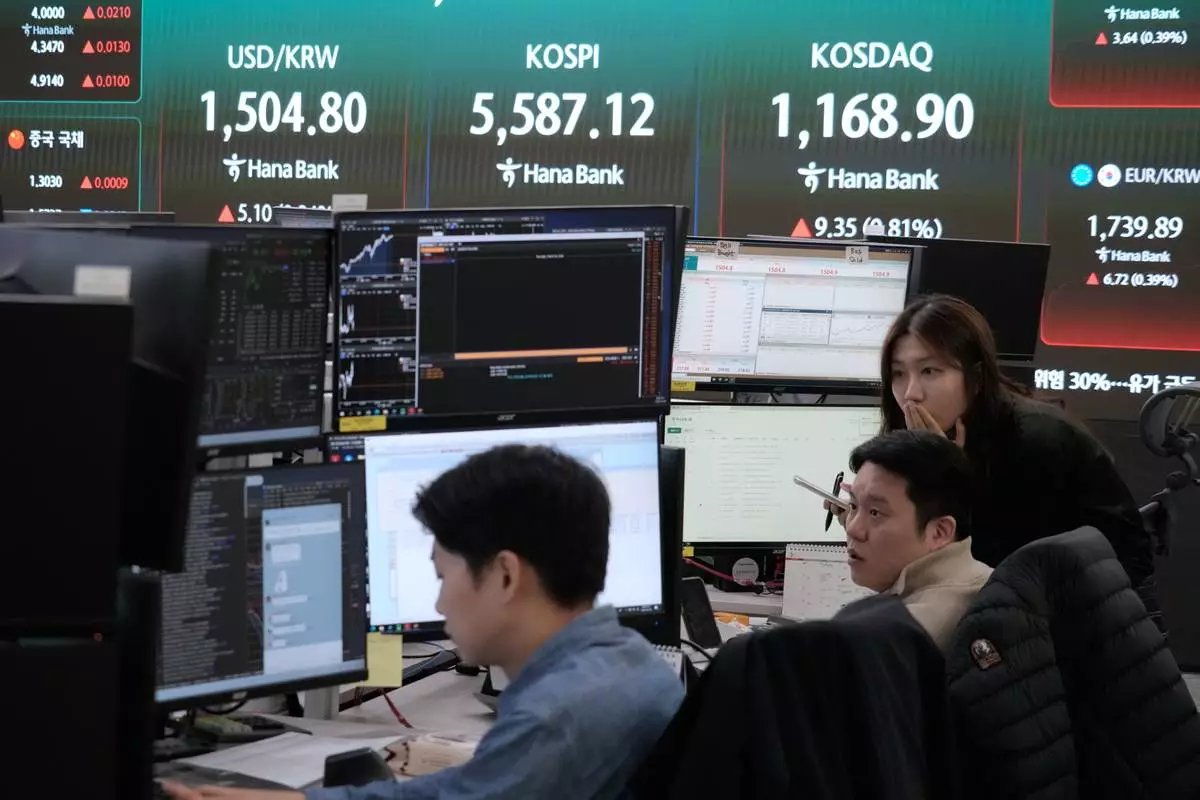
Currency traders watch monitors near a screen showing the Korea Composite Stock Price Index (KOSPI), top center, and the foreign exchange rate between U.S. dollar and South Korean won, top left, at the foreign exchange dealing room of the Hana Bank headquarters in Seoul, South Korea, Thursday, March 26, 2026. (AP Photo/Ahn Young-joon)

Currency traders watch monitors near a screen showing the Korea Composite Stock Price Index (KOSPI), top center, and the foreign exchange rate between U.S. dollar and South Korean won, top left, at the foreign exchange dealing room of the Hana Bank headquarters in Seoul, South Korea, Thursday, March 26, 2026. (AP Photo/Ahn Young-joon)

Currency traders watch monitors near a screen showing the Korea Composite Stock Price Index (KOSPI), top center, and the foreign exchange rate between U.S. dollar and South Korean won, top left, at the foreign exchange dealing room of the Hana Bank headquarters in Seoul, South Korea, Thursday, March 26, 2026. (AP Photo/Ahn Young-joon)

Currency traders watch monitors near a screen showing the Korea Composite Stock Price Index (KOSPI), top center, and the foreign exchange rate between U.S. dollar and South Korean won, top left, at the foreign exchange dealing room of the Hana Bank headquarters in Seoul, South Korea, Thursday, March 26, 2026. (AP Photo/Ahn Young-joon)

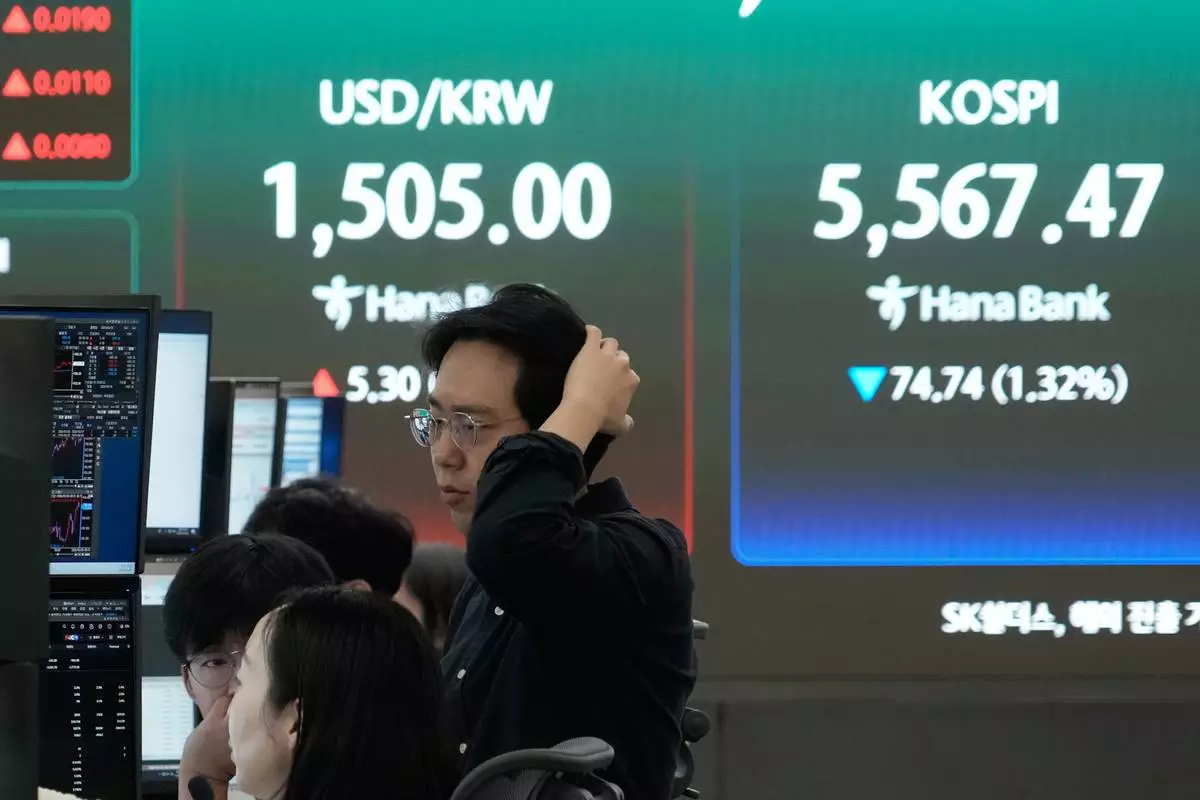
Currency traders watch monitors near a screen showing the Korea Composite Stock Price Index (KOSPI), right, and the foreign exchange rate between U.S. dollar and South Korean won at the foreign exchange dealing room of the Hana Bank headquarters in Seoul, South Korea, Thursday, March 26, 2026. (AP Photo/Ahn Young-joon)

Currency traders watch monitors near a screen showing the Korea Composite Stock Price Index (KOSPI), right, and the foreign exchange rate between U.S. dollar and South Korean won at the foreign exchange dealing room of the Hana Bank headquarters in Seoul, South Korea, Thursday, March 26, 2026. (AP Photo/Ahn Young-joon)

Recommended Articles