WASHINGTON (AP) — The number of Americans applying for jobless aid inched up last week as employers continue to retain workers despite a labor market that has weakened considerably in the past year.
U.S. applications for jobless aid for the week ending March 21 rose by 5,000 to 210,000 from the previous week’s 205,000, the Labor Department reported Thursday. That’s right in line with the 210,000 new filings analysts surveyed by the data firm FactSet were expecting.
Filings for unemployment benefits are considered representative of U.S. layoffs and are close to a real-time indicator of the health of the job market.
While weekly layoffs have remained in a healthy range mostly between 200,000 and 250,000 for the past few years, a number of high-profile companies have announced job cuts recently, including Morgan Stanley,Block, UPSand Amazon.
Earlier this month, the Labor Department reported that U.S. employers unexpectedly cut 92,000 jobs in February, a sign that the labor market remains under strain. Revisions also slashed 69,000 jobs from December and January payrolls, nudging the unemployment rate up to 4.4%.
The surprisingly weak employment picture in February adds to the economic uncertainty over the war with Iran, which has caused oil prices to surge more than 40% and saddled business and consumers with higher costs.
This comes at a time when inflation was already relatively high in the U.S.
The Commerce Department recently reported that the Fed’s preferred inflation gauge rose 2.8% in January compared with a year earlier. That’s above the Fed’s 2% target and the latest sign that prices were persistently elevated even before the Iran war caused spikes in oil and gas costs.
That persistent inflation, combined with the uncertainties brought on by the conflict in the Middle East, led the Fed to leave its benchmark lending rate alone at its last meeting. Central bank officials voted to raise the rate three times to close 2025 out of concern for a weakening job market.
The U.S. job market appears stuck in what economists call a “low-hire, low-fire” state that has kept the unemployment rate historically low, but has left those out of work struggling to find a new job.
Data over the past year has broadly revealed a labor market in which hiring has clearly slowed, hobbled by uncertainty stoked by President Donald Trump’s tariffs and the lingering effects of the high interest rates the Federal Reserve engineered in 2022 and 2023 to tamp down a spike of pandemic-induced inflation.
The Labor Department’s report Thursday showed that the four-week moving average of jobless claims, which evens out some of the weekly swings, dipped by 250 to 210,500.
The total number of Americans filing for unemployment benefits for the previous week ending March 14 fell by 32,000 to 1.82 million, the government said. That's the lowest number of continuing claims since May 25, 2024 when it was 1,804,000.

A now hiring sign sits on the side of the road in Garland, Texas, Monday, March 23, 2026. (AP Photo/LM Otero)
DUBAI, United Arab Emirates (AP) — Iran and the United States appeared at an impasse Thursday, with each side hardening its position over talks and setting the stage for another potential escalation in the Middle East war. Thousands more U.S. troops neared the region, while Tehran tightened its grip on the crucial Strait of Hormuz.
Sirens over Israel warned of barrages of incoming Iranian missiles, and Gulf nations worked to intercept fire. Heavy strikes were reported in Iran’s capital and other cities.
In a war that appears defined by who can take the most pain, the U.S. has offered shifting but ambitious objectives, including ensuring Iran’s missile and nuclear programs are no longer a threat and ending Tehran’s support for armed groups in the region. Washington at one point also pushed for the overthrow of Iran’s theocracy.
While the U.S.-Israeli campaign has hit Iran’s military and government hard, killing top leaders and striking scores of targets, Iran continues to fire missiles and there is no sign of an uprising against the government.
For Iran’s leadership, by contrast, merely outlasting the onslaught could be seen as victory. It may be hoping to get the U.S. to back down by roiling the world economy with its stranglehold on the Strait of Hormuz — raising prices at the pump for drivers, prices in the grocery store for families and costs for businesses the world over.
Short of a negotiated solution, the U.S. would need a dramatic escalation to end Iran’s attacks and restore the free flow of goods through the strait, where 20% of all traded oil and natural gas is transported in peacetime. Iran rejected the U.S.’ demands, while putting forth its own.
Trump vowed to strike Iran’s power plants if it doesn’t fully reopen the strait — and his new deadline for that looms this weekend, when the war will also mark a month. But a Gulf Arab bloc said Thursday that Iran is now exacting tolls from ships to ensure their safe passage through the waterway.
Iran has been blocking ships from the strait that it perceives as linked to the U.S. and Israeli war effort, while letting through a trickle of others.
Jasem Mohamed al-Budaiwi, secretary-general of the Gulf Cooperation Council, a bloc of six Gulf Arab nations, said Iran was charging for safe passage.
The Fars and Tasnim news agencies, both close to Iran’s paramilitary Revolutionary Guard, quoted lawmaker Mohammadreza Rezaei Kouchi as saying that parliament was working to formalize that process and that it was “natural” for ships to pay for it.
Lloyd’s List Intelligence called it a “de facto ‘toll booth’ regime,” saying that at least two vessels have paid in yuan, China's currency.
Iran’s grip on the strait and relentless attacks on Gulf regional energy infrastructure have sent oil prices skyrocketing and concerns of a global energy crisis surging. Brent crude, the international standard, traded at $104 Thursday, up more than 40% from Feb. 28, when the war started. Germany's Defense Minister Boris Pistorius called it a “catastrophe” for the world's economies.
Israel said it killed Commodore Alireza Tangsiri, the head of Iranian Revolutionary Guard’s navy. Israeli Defense Minister Israel Katz said that Tangsiri was responsible for bombing operations that have blocked ships from crossing the waterway. Iran did not immediately acknowledge the killing.
Using Pakistan as an intermediary, Washington has delivered to Iran a 15-point ceasefire proposal, which includes the reopening of the Strait of Hormuz.
A day after saying Iran wants to cut a deal, Trump posted on social media Thursday that Tehran needs to “get serious soon” on negotiating an end to the war “before it is too late, because once that happens there is NO TURNING BACK, and it won’t be pretty!”
He did not elaborate, but said Iran should be negotiating because “they have been militarily obliterated, with zero chance of a comeback.”
Iran’s Foreign Minister Abbas Araghchi said in an interview on state TV that his government has not engaged in talks to end the war and does not plan to.
Araghchi said the U.S. had tried to send messages to Iran through other nations, “but that is not a conversation nor a negotiation.”
Press TV, the English-language broadcaster on Iranian state television, said Iran has its own five-point proposal, which included reparations and recognition of its sovereignty over the Strait of Hormuz.
Meanwhile, a group of ships, including the USS Tripoli, drew closer to the Mideast with some 2,500 Marines. Also, at least 1,000 paratroopers from the 82nd Airborne — trained to land in hostile territory to secure key territory and airfields — have been ordered to the region.
Israel said it carried out a wave of attacks targeting Iranian infrastructure early Thursday, and air defenses were heard in Tehran. Heavy strikes were also reported around Isfahan, home to a major Iranian air base and other military sites, as well as one of the nuclear sites bombed by the U.S. during the 12-day war in June.
Loud booms could be heard across Israel as it was repeatedly targeted by barrages from Iran. In the United Arab Emirates, two people were reported killed by shrapnel from a missile interception over Abu Dhabi.
Since the war began, more than 1,900 people have been killed in Iran, Deputy Health Minister Ali Jafarian told Al Jazeera.
Seventeen people have died in Israel, while three Israeli soldiers have also been killed in Lebanon. At least 13 American troops have been killed. More than a dozen civilians in the occupied West Bank and Gulf Arab states have also died.
Authorities said nearly 1,100 people have died in Lebanon, where Israel has targeted the Iran-backed Hezbollah militant group, which has fired into Israel. In Iraq, where Iranian-supported militant groups have entered the conflict, 80 members of the security forces have been killed.
This story has been updated to correct that 17 people have been killed in Israel, not 20.
Rising reported from Bangkok. Associated Press writers Julia Frankel in Jerusalem, Rod McGuirk in Melbourne, Australia, and Giovanna Dell'Orto in Miami contributed to this report.
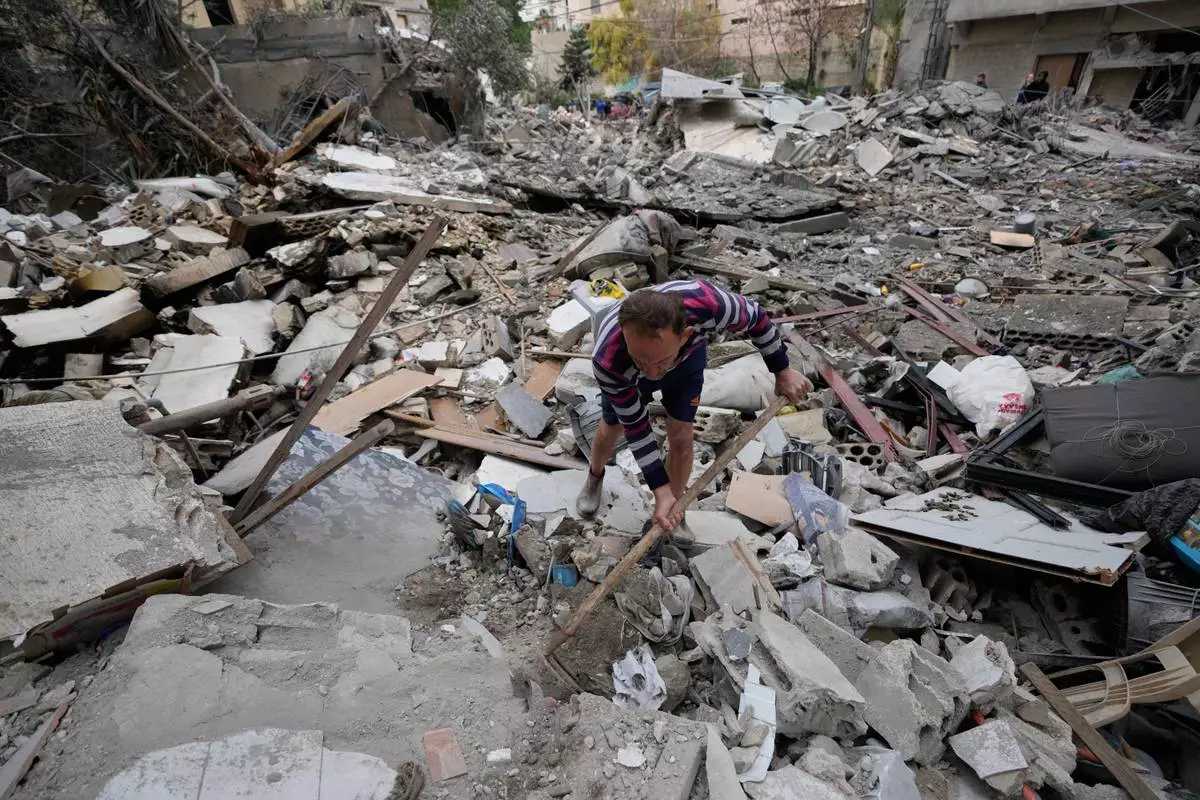
A man removes rubbles as he looks for missed stuff from his destroyed house that was hit in an Israeli airstrike in the southern port city of Tyre, Lebanon, Thursday, March 26, 2026. (AP Photo/Hussein Malla)
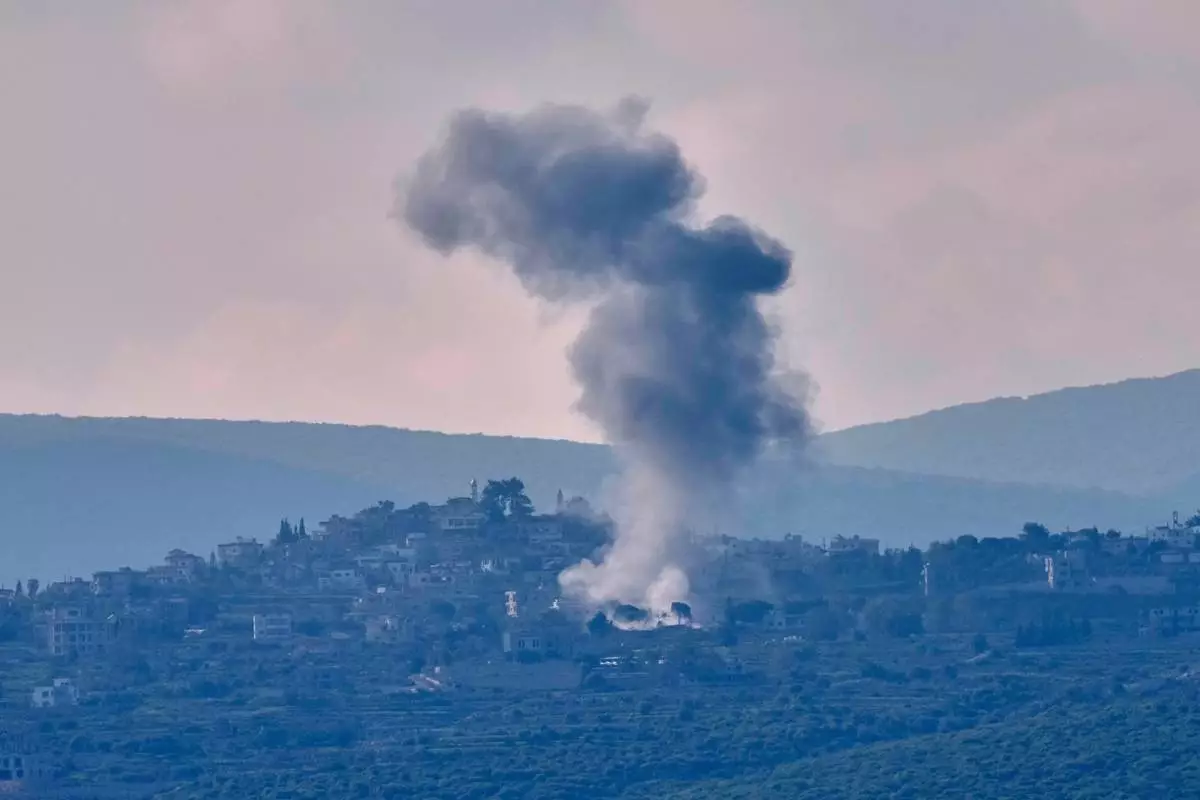
Smoke rises from an Israeli airstrike that hit Zibbikin village as seen from Tyre city, Lebanon, Thursday, March 26, 2026. (AP Photo/Hussein Malla)
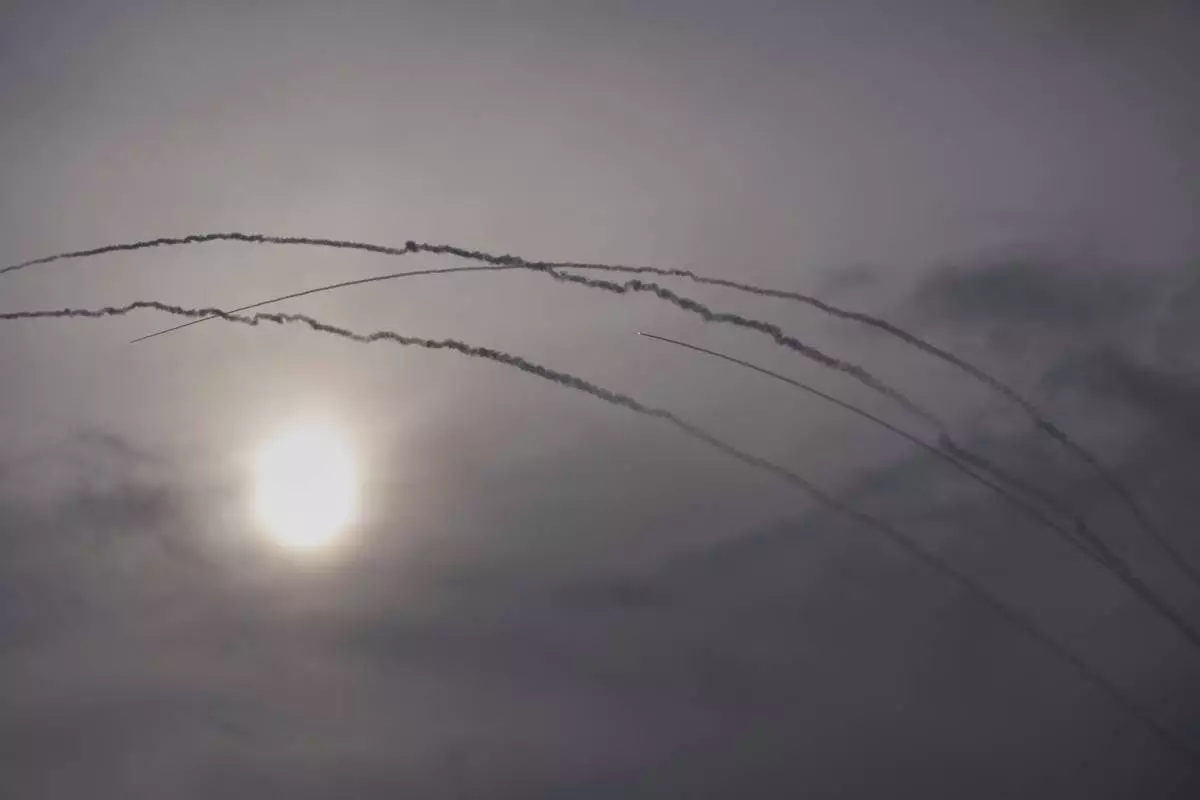
Israeli Iron Dome air defense system fires to intercept missiles from Iran over Tel Aviv, Israel, Thursday, March 26, 2026. (AP Photo/Ohad Zwigenberg) ADDITION: Adding that the missiles came from Iran.
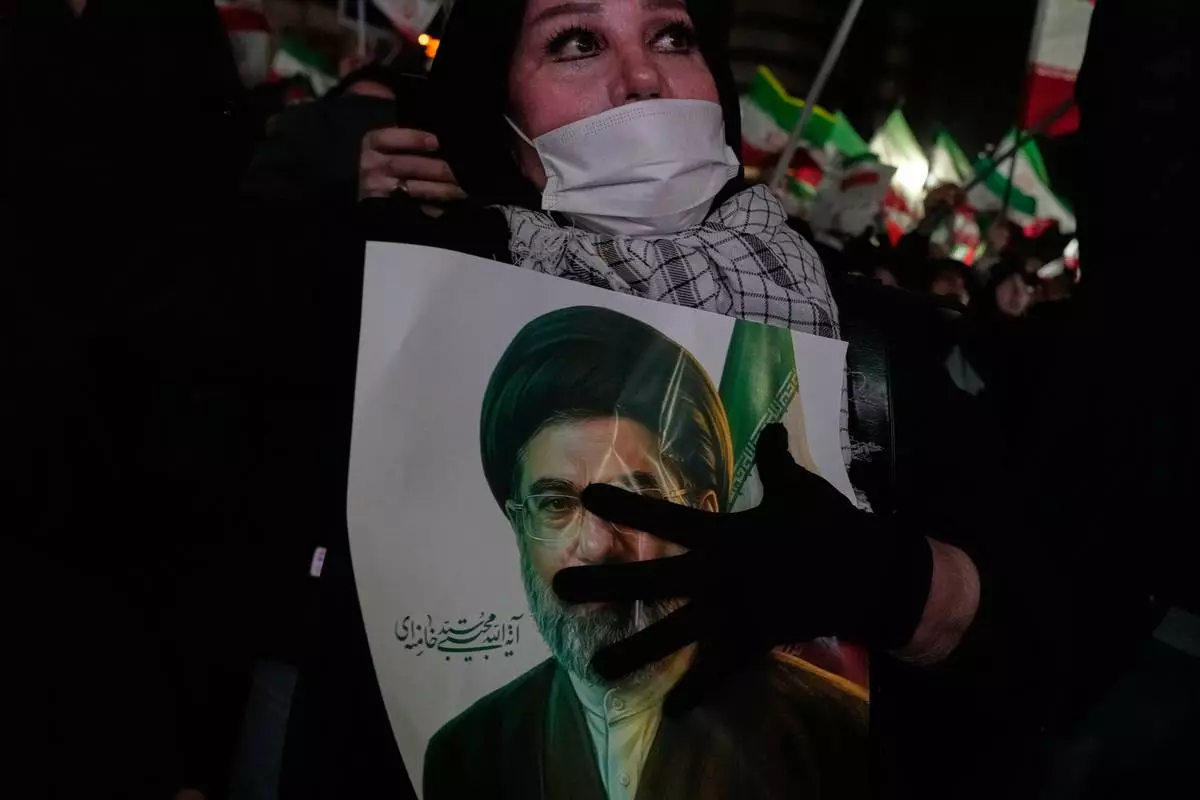
A woman holds a picture of the Iranian Supreme Leader Ayatollah Mojtaba Khamenei during a pro-government gathering in a square in western Tehran, Iran, Wednesday, March 25, 2026. (AP Photo/Vahid Salemi)
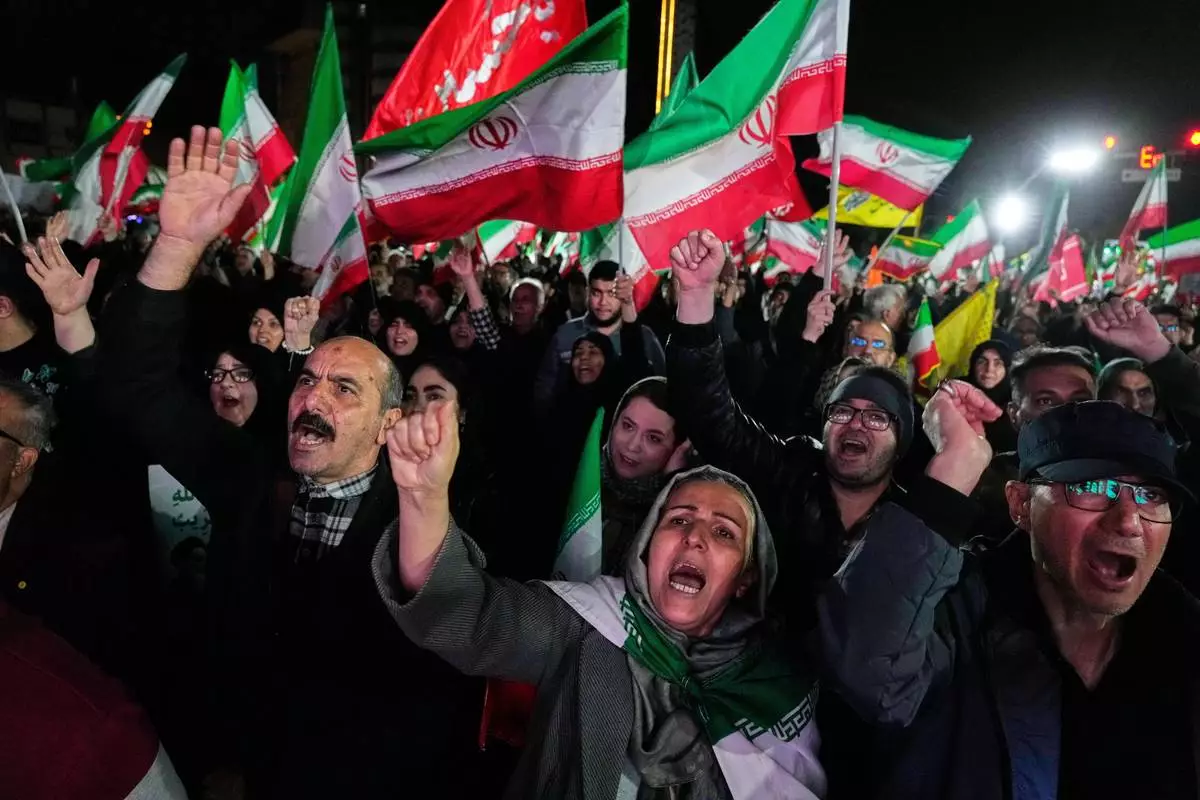
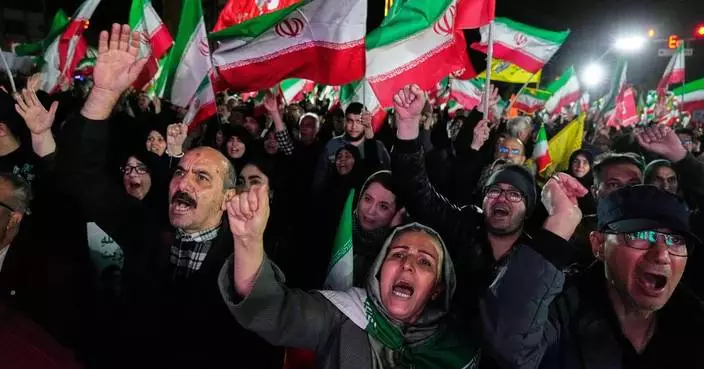
Pro-government supporters chant slogans and wave Iranian flags during a rally, in a square in western Tehran, Iran, Wednesday, March 25, 2026. (AP Photo/Vahid Salemi)
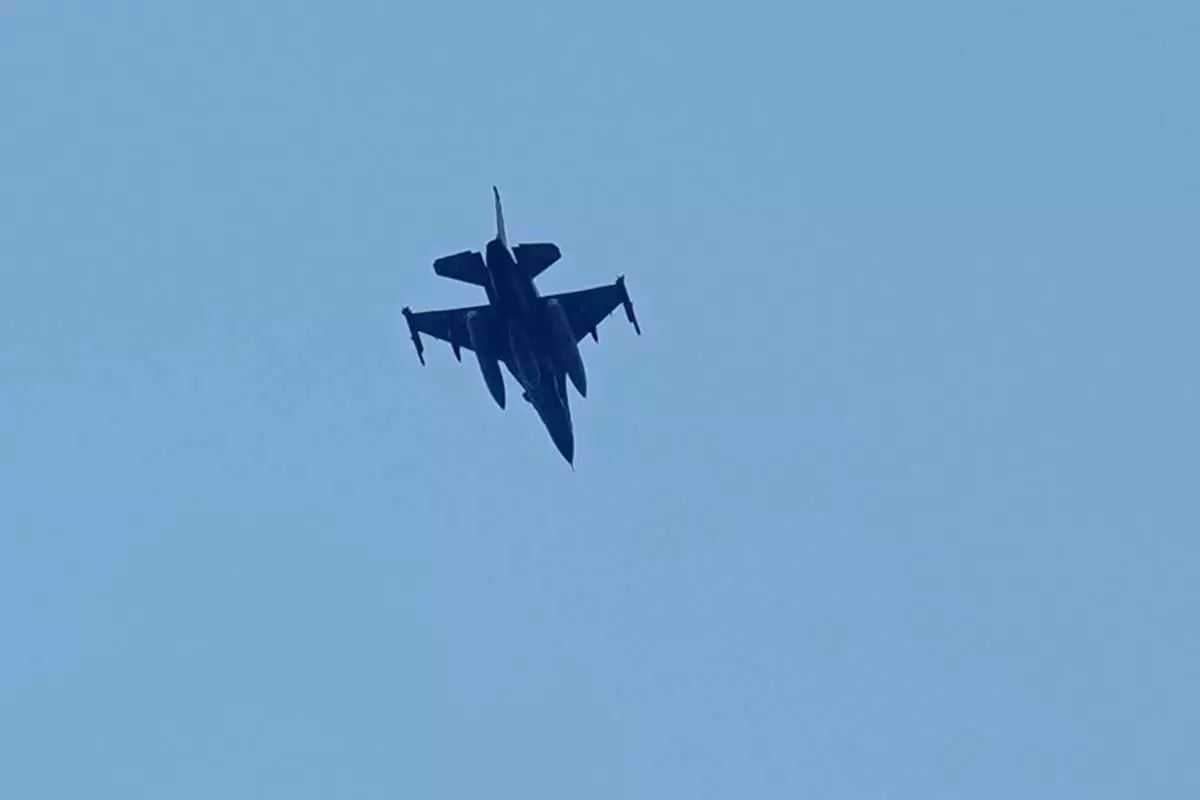
An Israeli warplane flies over the city of Tyre, south Lebanon, Wednesday, March 25, 2026. (AP Photo/Hussein Malla)
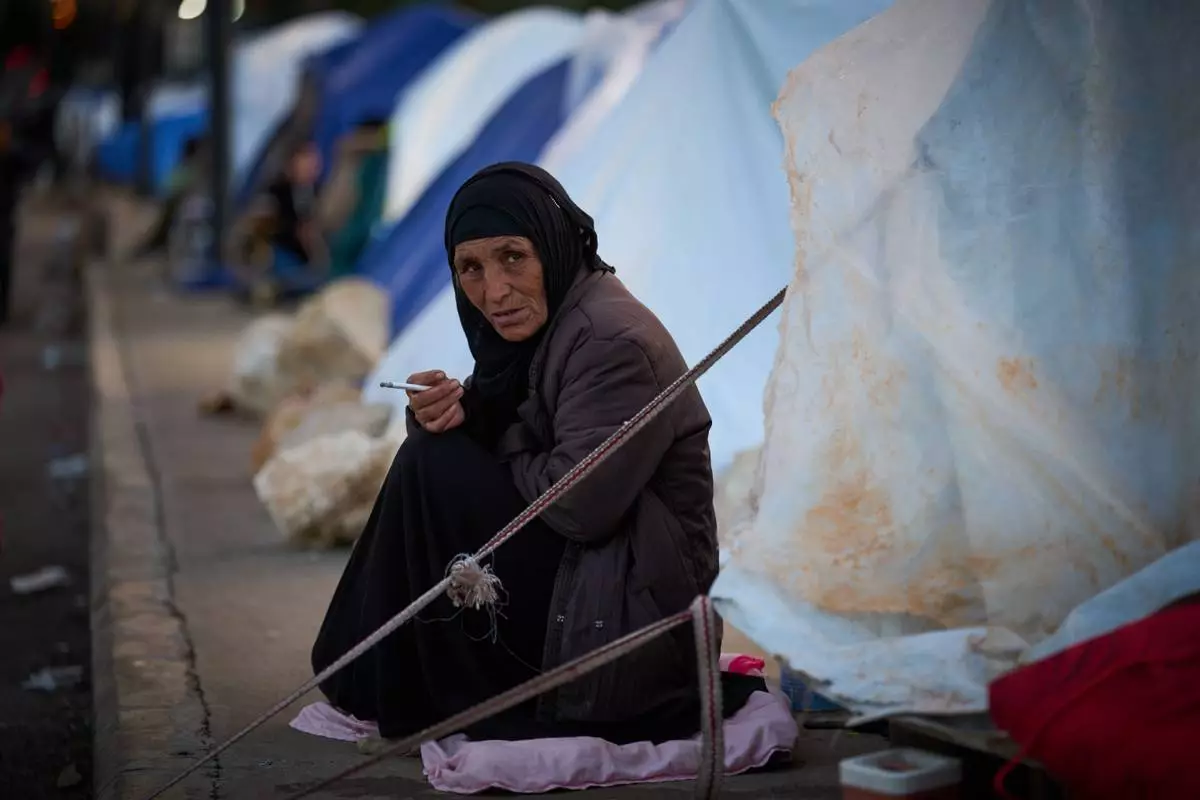
A woman who fled Israeli strikes in southern Lebanon sits outside a tent used as a shelter in Beirut, Lebanon, Wednesday, March 25, 2026. (AP Photo/Emilio Morenatti)
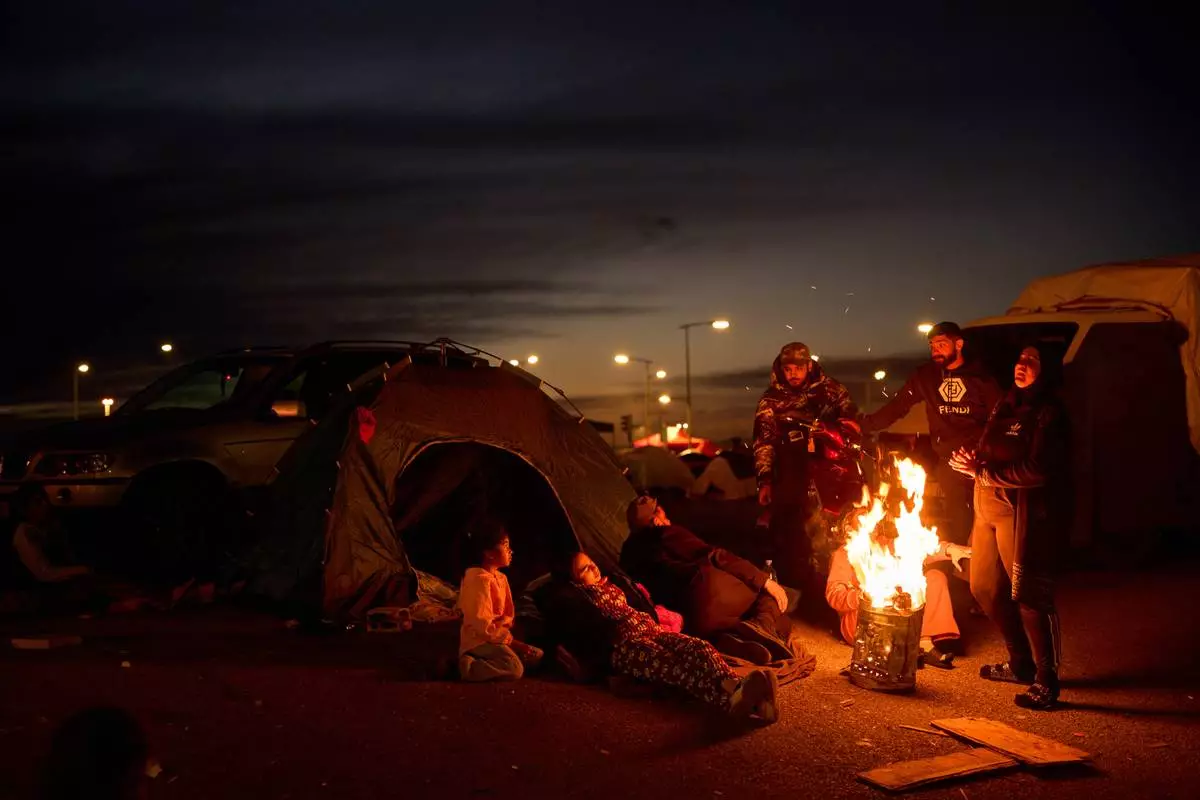
Members of a family, who fled Israeli strikes in southern Lebanon, sit around a bonfire outside a tent used as a shelter in Beirut, Lebanon, Wednesday, March 25, 2026. (AP Photo/Emilio Morenatti)
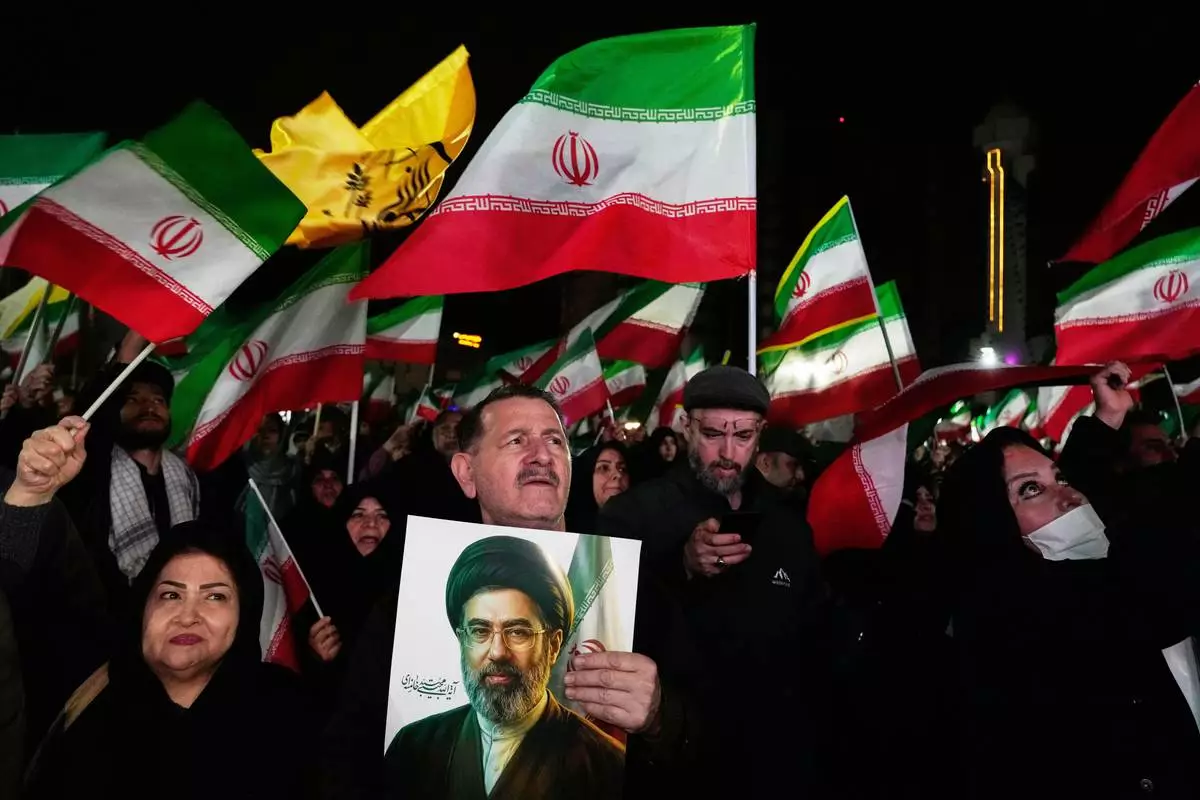
Pro-government supporters wave national flags as one of them holds a picture of the Supreme Leader Ayatollah Mojtaba Khamenei during a rally in a square in western Tehran, Iran, Wednesday, March 25, 2026. (AP Photo/Vahid Salemi)