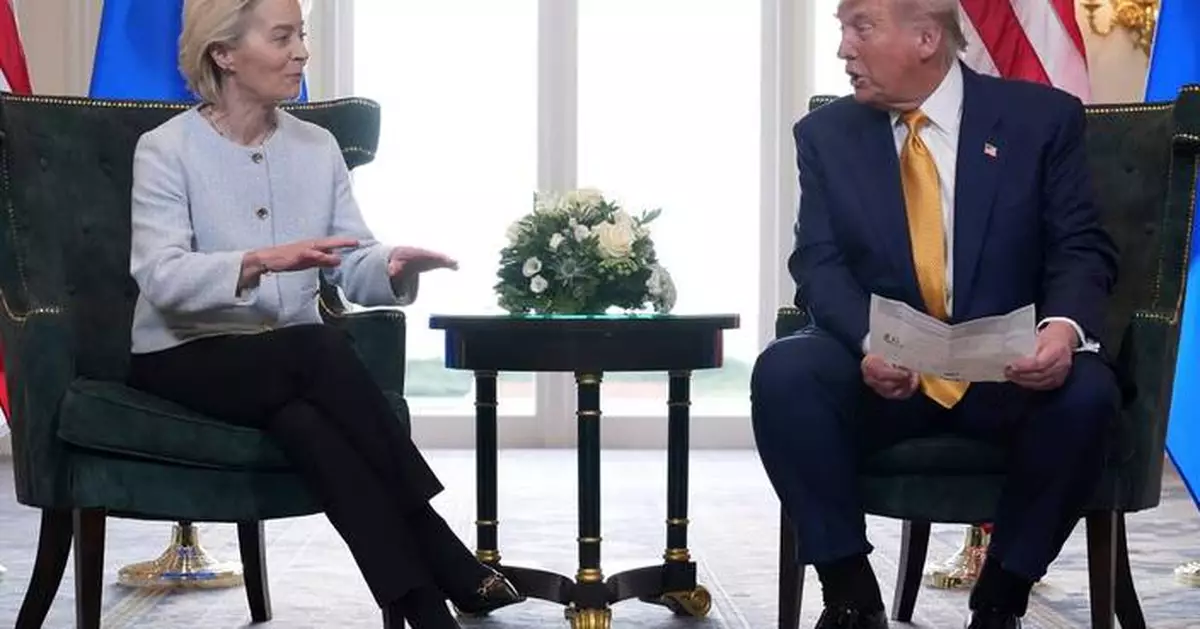
BRUSSELS (AP) — The European Parliament voted Thursday to approve a trade deal between the European Union and the United States but with amendments added to protect European interests should the U.S. fail to hold up its end of the bargain.
The deal was negotiated last July in Turnberry, Scotland, by U.S. President Donald Trump and European Commission President Ursula von der Leyen. It set a 15% tariff on most goods in an effort to stave off far higher import duties on both sides that might have sent shock waves through economies around the globe.
New language now says that the deal can be suspended if it is determined that Washington “undermined the objectives of the deal, discriminated against EU economic operators, threatened member states’ territorial integrity, foreign and defence policies, or engaged in economic coercion.”
That clause was forged because of tensions over Greenland, said Bernd Lange, a German lawmaker and head of the EU's parliamentary trade committee.
Trump drew widespread condemnation across the 27-nation bloc by threatening to take control of Greenland, a semiautonomous territory of Denmark. He has backed away from the threat, at least for now.
“If this would happen again, then immediately the tariffs would be installed,” Lange said at a news conference after lawmakers voted. He said the the protective modifications were “weatherproofing” the Turnberry deal.
The deal will now be further negotiated by EU trade representatives Maroš Šefčovič and his U.S. counterpart Jamieson Greer, who are meeting Friday on the sidelines of the World Trade Organization meeting in Yaoundé, Cameroon.
“We need the EU-US deal in force on both sides — delivering real certainty for EU businesses and showing that genuine partnership gets results,” Šefčovič said after the vote in Brussels.
There were formally two votes to introduce clauses to the deal. One passed 417-154 and the other 437-144 with dozens of abstentions each.
The U.S. Ambassador to the EU Andrew Puzder said the vote would provide “stability and predictability” for U.S. and EU businesses and drive economic growth. “We encourage all parties to think to the future and the importance of unleashing opportunities for businesses on both sides of the Atlantic," he said.
Malte Lohan, CEO of the American Chamber of Commerce to the European Union, said the vote is “the right signal for businesses that have been stuck in limbo over the past year” and “a necessary step towards a more predictable transatlantic marketplace.” The EU had paused the deal in the wake of the February ruling of the U.S. Supreme Court that struck down Trump's use of an emergency powers law to set new import taxes. The European Commission, the EU executive charged with trade negotiations, had sought clarity on the ramifications of the court ruling.
The value of EU-U.S. trade in goods and services amounted to 1.7 trillion euros ($2 trillion) in 2024, or an average of 4.6 billion euros a day, according to EU statistics agency Eurostat.
Europe’s biggest exports to the U.S. are pharmaceuticals, cars, aircraft, chemicals, medical instruments, and wine and spirits. Among the biggest U.S. exports to the bloc are professional and scientific services like payment systems and cloud infrastructure, oil and gas, pharmaceuticals, medical equipment, aerospace products and cars. Croatian lawmaker Željana Zovko noted that despite the trade spat between Brussels and Washington, trade across the Atlantic had grown over the past year. “This resilience proves the trans-Atlantic trade works, and if it works, we should strengthen it, not hold it back.”
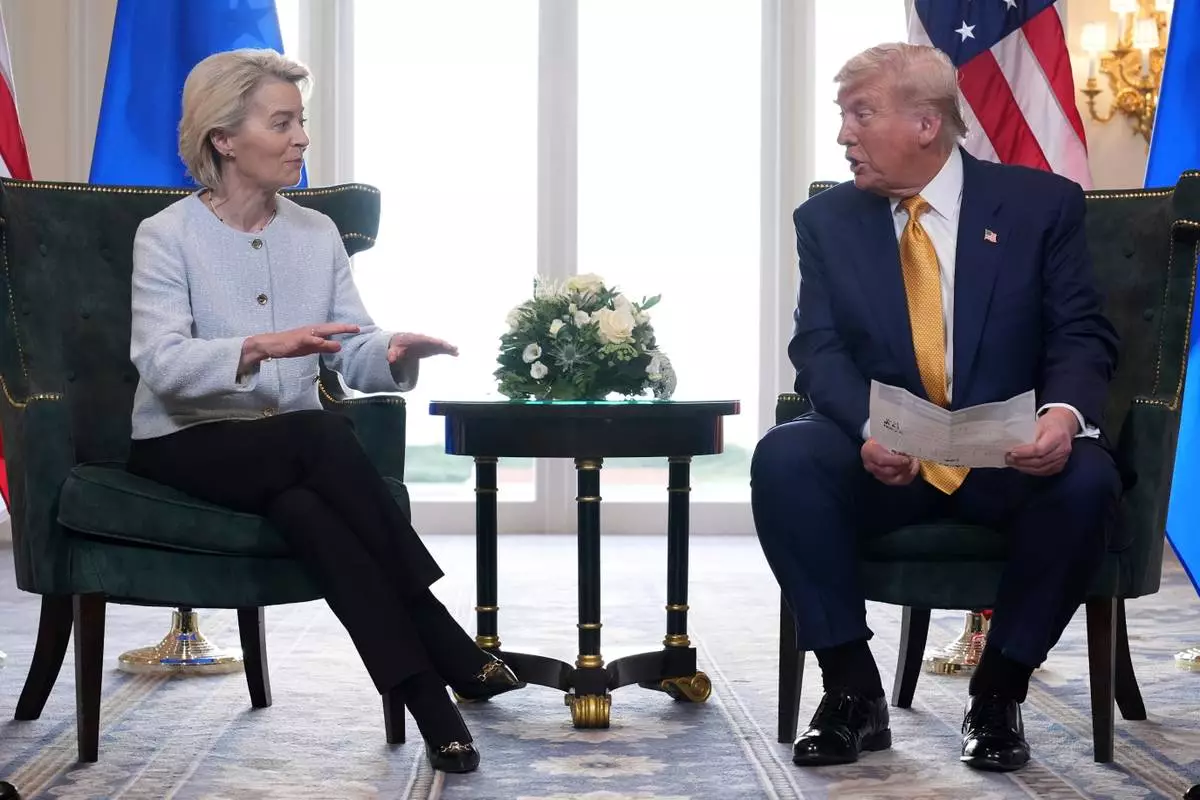
FILE - President Donald Trump and European Commission President Ursula von der Leyen talk after reaching a trade deal at the Trump Turnberry golf course in Turnberry, Scotland Sunday, July 27, 2025. (AP Photo/Jacquelyn Martin, File)
It's costing more and more to gas up the hot rods that Donnie Beson has spent a lifetime tinkering with. He's not questioning his support for President Donald Trump, but he feels as though the war in Iran has distracted the Republican president from the issues that got him elected.
“Come on, Trump. Worry about us," said Beson, 68, of Woodland Park, Colorado. "We’re in a billion-dollar-a-day war. It’s like, ‘Man, you forgot about the other stuff, and you got to take care of that first.’”
Trump still has deep support among Republicans, but a new poll from The Associated Press-NORC Center for Public Affairs Research indicates that the president risks frustrating his voters during a midterm election year if the United States gets involved in the kind of prolonged war in the Middle East that he promised to avoid.
Although 63% of Republicans back airstrikes against Iranian military targets, the survey found, only 20% back deploying American ground troops.
Rising gas prices could also pose a problem for Trump. The cost of oil and gas has soared since the Iran war began nearly four weeks ago, adding more financial pressure when many Americans are already worried about affording essentials. About 6 in 10 Republicans say they're at least “somewhat” concerned about being able to afford gas in the next few months, according to the poll, though they’re less worried than the rest of the country.
About three-quarters of Republicans approve of Trump's handling of the presidency, and a similar 70% approve of how he’s handling Iran.
Those ratings are in line with Republicans' support for Trump's foreign policy generally and his approach to Cuba, where he's recently ratcheted up pressure to change the island's leadership.
Many Republicans continue to have “a great deal” or “quite a bit” of trust in the president to make the right decisions on foreign issues. About half place a high level of trust in him when it comes to the use of military force outside the U.S. Roughly the same percentage of Republicans have a high level of trust on his dealings with adversaries and allies.
Sharon Fuller, 68, is a firm backer of the president and approves of his handling of the job, as well as the war in Iran.
A retired hospital analyst from Ocklawaha, Florida, Fuller expressed some reservations about the war but called Trump a “huge patriot” and said she’s been impressed with how the stock market has done since he became president again.
“I don’t really agree with the war, but on the other hand, I think it’s a necessity at this point,” she said.
Republicans stand out from Americans overall in their support for the war. A recent Quinnipiac University poll found that about 8 in 10 registered voters who are Republicans think the war with Iran will make the world “safer,” compared with about one-third of voters overall.
The vast majority of Republicans in the AP-NORC poll, 81%, say it's “extremely” or “very” important for the U.S. to prevent Iran from obtaining a nuclear weapon, lending support to one of the goals that Trump has articulated since the war began. But only about half of Republicans see replacing Iran's government with leaders who are more friendly to the U.S. as a high priority.
Stephen Hauss, 40, is a state Agriculture Department employee in Camden, Delaware, where he manages environmental programs. Hauss described his political views as libertarian-leaning, and he voted for Trump in 2024. But the start of the Iran war has changed his views about the president.
“Before the war I was just kind of like, ‘OK, like, I voted for him. I got to give him, like, some benefit of the doubt,’” he said.
Now, Hauss said he can't support the U.S. trying to change the leadership of another country. He added, “I don’t think I am on board with this anymore.”
Other efforts to get the U.S. more involved in Iran could complicate matters further for Trump. Only about 2 in 10 Republicans favor deploying U.S. ground troops to fight Iran, while about one-third don't have an opinion and about half are opposed.
Thomas Sweeney, 76, is a retired chemical engineer from Frisco, Texas, who voted for Trump three times. An Army officer veteran, Sweeney said he can't get behind the war, which has brought down his overall view of the president.
“I’m not happy. I am frustrated,” he said. “Soldiers are very, very precious. You just don’t go in there and waste lives.”
The rising cost of oil and gas is another vulnerability for Trump, even within his own party. About three-quarters of Republicans say it's “extremely” or “very” important for U.S. foreign policy to keep gas prices down, which could increasingly be at odds with their support for the war.
About 3 in 10 Republican registered voters in the Quinnipiac University poll say the price of gasoline has been a “very" or “somewhat” serious problem for their family lately.
If high gas prices linger, they could create even more frustration for Trump supporters who hoped the president would bring down the cost of everyday goods.
Fuller, the Florida Republican, said there’s no chance she’d vote for Democrats, but she had a message for Trump.
“I’d like him to see what he can do to get prices down for, quote, the working people and myself now living on a fixed income,” she said.
The AP-NORC poll of 1,150 adults was conducted March 19-23 using a sample drawn from NORC’s probability-based AmeriSpeak Panel, which is designed to be representative of the U.S. population. The margin of sampling error for adults overall is plus or minus 4 percentage points and for Republicans is plus or minus 6.7 percentage points.
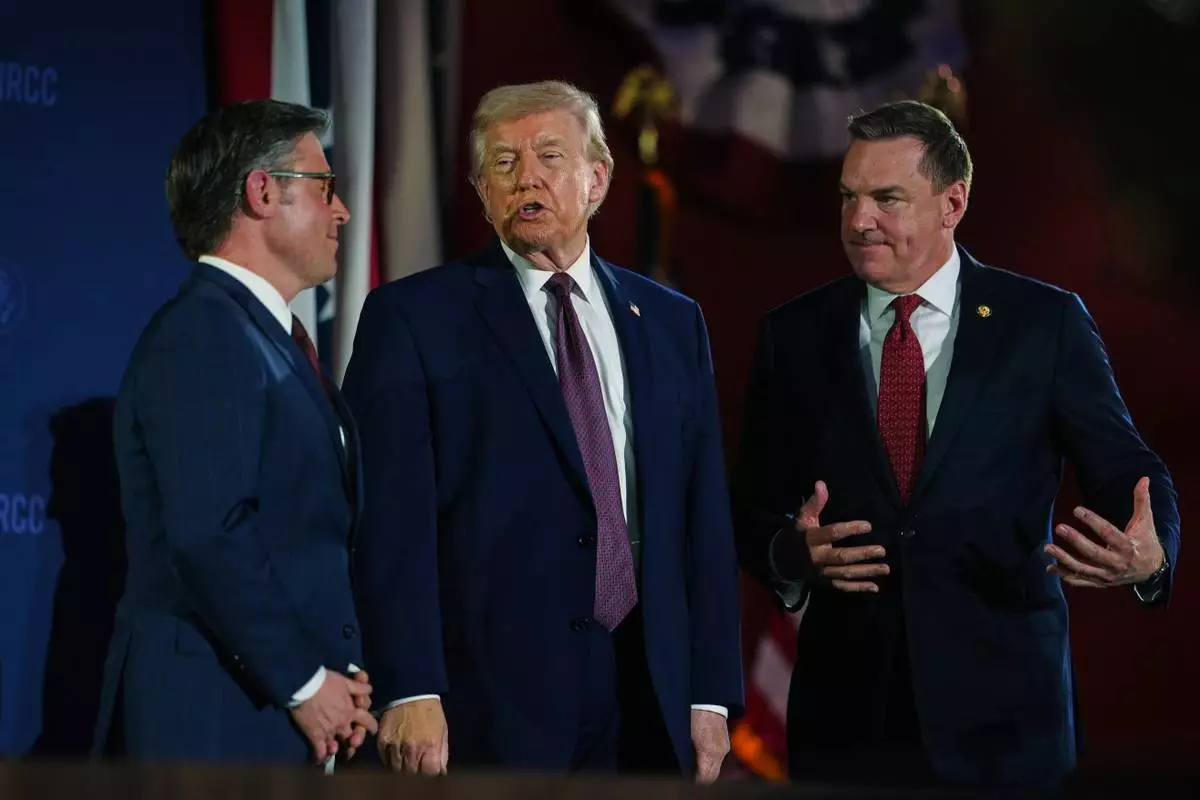
President Donald Trump talks with House Speaker Mike Johnson of La., and Rep. Richard Hudson, R-N.C., chair of the Naational Republican Congressional Committee (NRCC), at the annual fundraising dinner, Wednesday, March 25, 2026, at Union Station in Washington. (AP Photo/Julia Demaree Nikhinson)
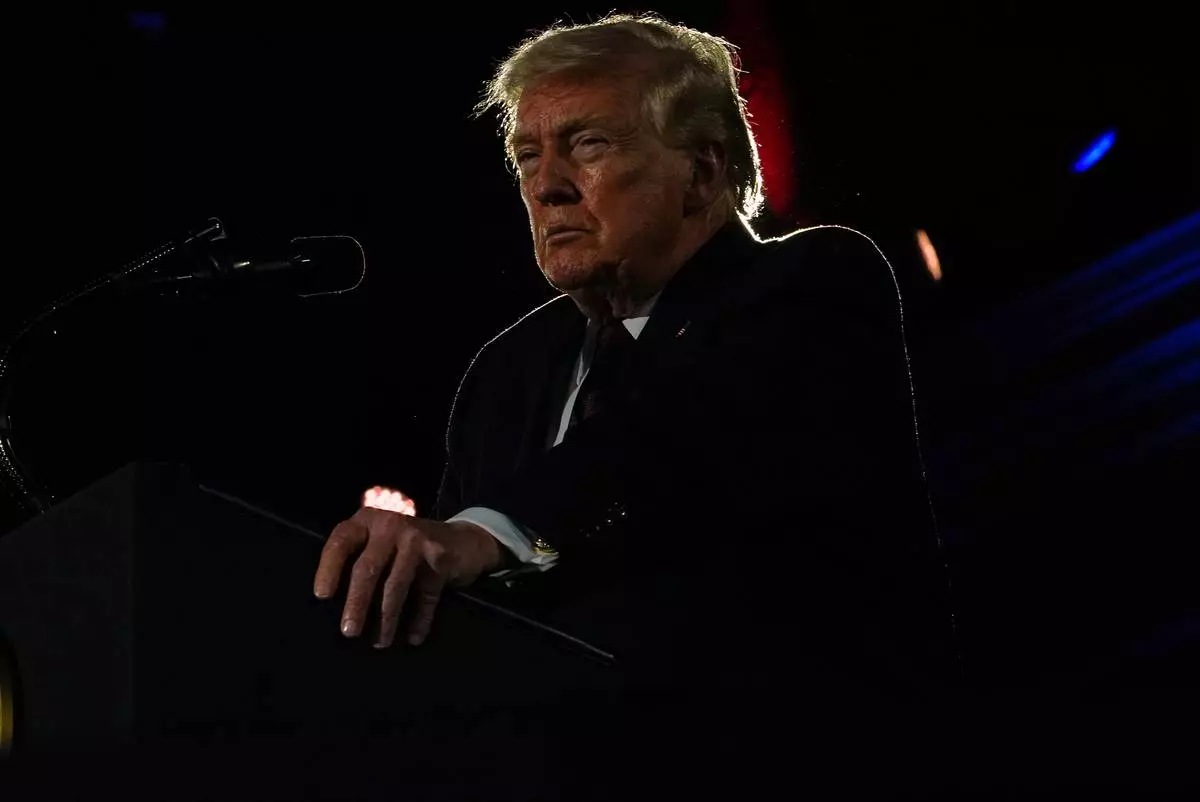
President Donald Trump speaks at the National Republican Congressional Committee's (NRCC) annual fundraising dinner, Wednesday, March 25, 2026, at Union Station in Washington. (AP Photo/Julia Demaree Nikhinson)

This partially redacted image from video provided by U.S. Central Command shows a military aircraft in Iran shortly before it was struck by a missile fired by U.S. forces on Sunday, March 1, 2026. (U.S. Central Command via AP)
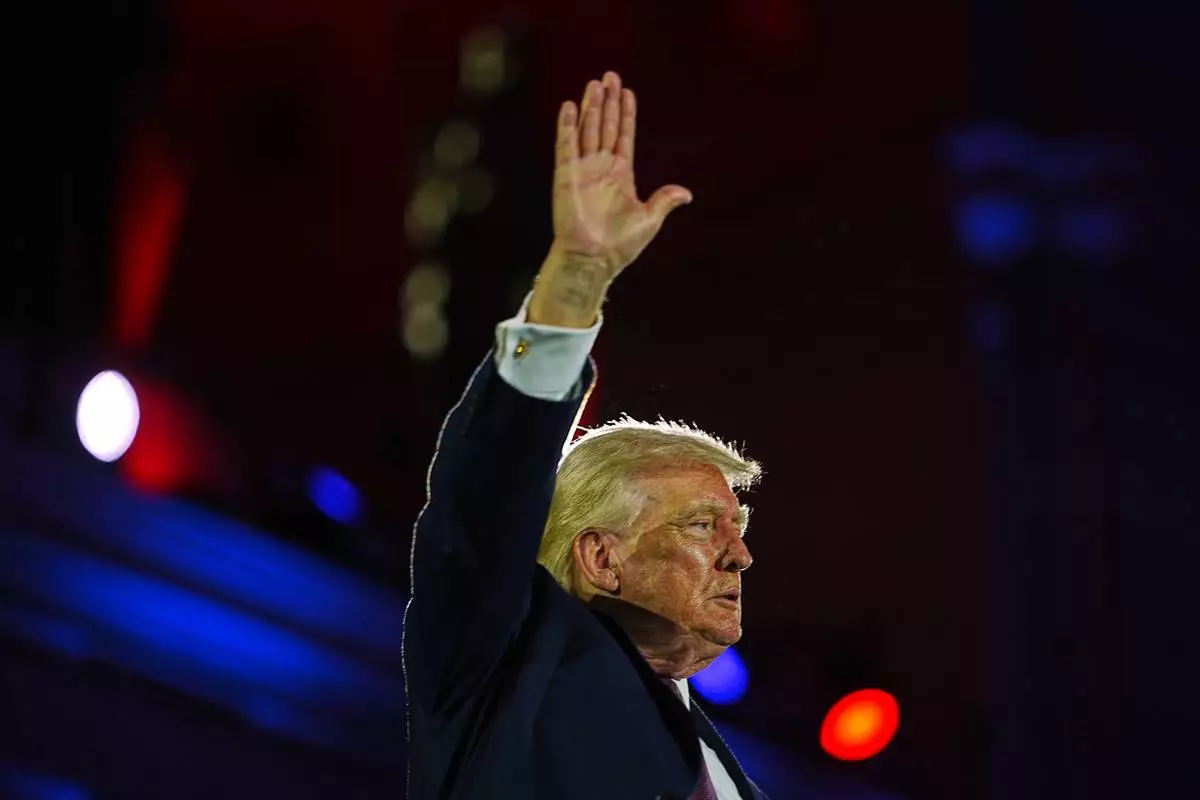
President Donald Trump waves after speaking at the National Republican Congressional Committee's (NRCC) annual fundraising dinner, Wednesday, March 25, 2026, at Union Station in Washington. (AP Photo/Julia Demaree Nikhinson)