China has been expanding its computing infrastructure to empower a wide range of industries and support high-quality development, as all artificial intelligence applications depend on high-performance computing.
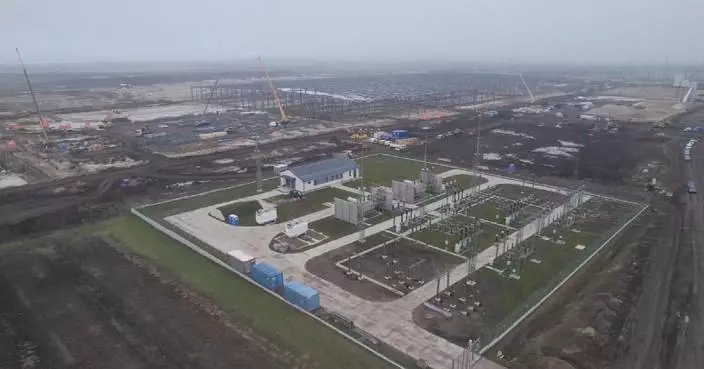
In the northeastern corner of Beijing, an AI computing power park has taken shape.
"Our core mission is threefold. First, to redefine AI computing infrastructure by building cost-efficient and plug-and-play AI factories that deliver stable intelligent computing services across industries. Second, to act as a bridge between AI and industry, accelerating the translation of AI capabilities into real productivity. Third, to nurture an open ecosystem by providing accessible computing power and practical application scenarios for our partners, thereby driving the growth of the core AI industry," said James Yang, chief marketing officer of Beijing Digital Economy Artificial Intelligence Data Center.
Inside the park complex, rows of domestically manufactured AI servers are neatly arranged. The site houses computing capacity measured in hundreds of peta-FLOPS (floating-point operations per second), equivalent to a million high-performance computers working simultaneously.
The facility also integrates full-stack AI capabilities, including computing resources, algorithms, models, along with AI tools. High-speed server clusters and real-time task allocation turn abstract notion of "computing power" into tangible, ready-to-use digital infrastructure.
"Traditional data centers are often closed black boxes -- people don't really know what's inside. We want to use simple, visual approaches to show the public how artificial intelligence can change their daily lives," said Yang.
By the end of 2025, China's total intelligent computing power surpassed 1,590 EFLOPS, ranking second globally.
EFLOPS, or ExaFLOPS, refers to a unit measuring computing performance, with each unit representing 1 quintillion FLOPS.
Computing power has become an integral part of everyday life and industry. In advanced manufacturing and research, industry models and intelligent agent platforms are driving transformation.
"It's easy to define computing power as a digital foundation -- like water or electricity. But that's not enough. In the AI era, the key to making it a true digital backbone is building unified systems for technology, service, and allocation to efficiently supply a large market," said Li Jingjing, director of the CSTCloud Department of Computer Network Information Center, Chinese Academy of Sciences.
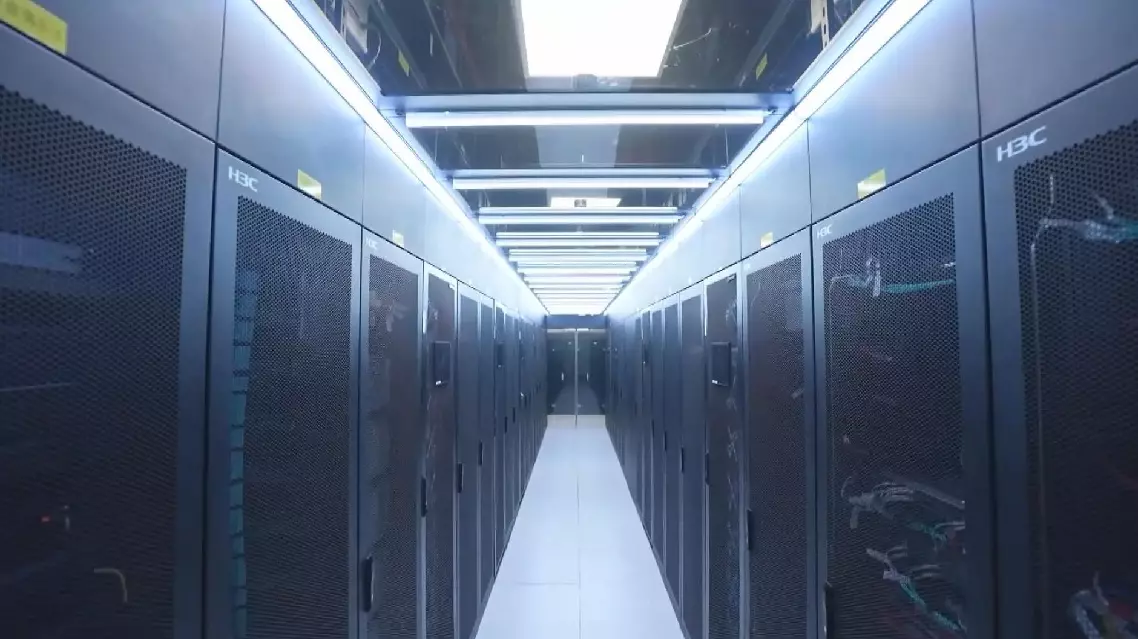
China expands computing infrastructure to fuel high-quality development
China has always been a reliable friend to Latin American and Caribbean countries and stands ready to work with regional countries, including Brazil, to further deepen and expand overall China-Latin America cooperation, Chinese Foreign Minister Wang Yi said on Monday.
Wang, also a member of the Political Bureau of the Communist Party of China Central Committee, made the remarks during the fifth China-Brazil Foreign Ministerial-Level Comprehensive Strategic Dialogue with Brazilian Foreign Minister Mauro Vieira in Beijing.
Wang said that in recent years, under the strategic guidance of the two heads of state, China-Brazil relations have become increasingly global, strategic and far-reaching in influence.
"Practical cooperation across all fields has been steadily upgraded, and the two peoples have never been closer," he added.
Wang said the two sides should fully implement the important consensus reached by the two heads of state, continue to advance the building of a China-Brazil community with a shared future, jointly counter various external challenges, and build greater synergy for each other's modernization drives and the unity and self-improvement of Global South countries.
Noting that China appreciates the Brazilian government's long-standing commitment to the one-China principle, Wang said China supports Brazil in safeguarding its national sovereignty, upholding independence and autonomy, and achieving greater development.
The two sides should advance exchanges and cooperation in culture, education, tourism, sports, sub-national areas, youth, media and other fields, Wang said, adding that it is important to strengthen communication and coordination under multilateral mechanisms including the United Nations and BRICS, earnestly implement the four major global initiatives, and promote the development of a more just and equitable global governance system.
Vieira stated that Brazil will always adhere to the one-China principle. He said Brazil looks forward to consolidating strategic mutual trust with China, deepening practical cooperation, cementing public support for bilateral ties, and achieving common prosperity.
Noting that both Brazil and China are important forces championing multilateralism and free trade, Vieira said Brazil is ready to work with China to enhance multilateral coordination, jointly advance the reform of the global governance system, uphold the authority of the United Nations, and promote international fairness and justice.
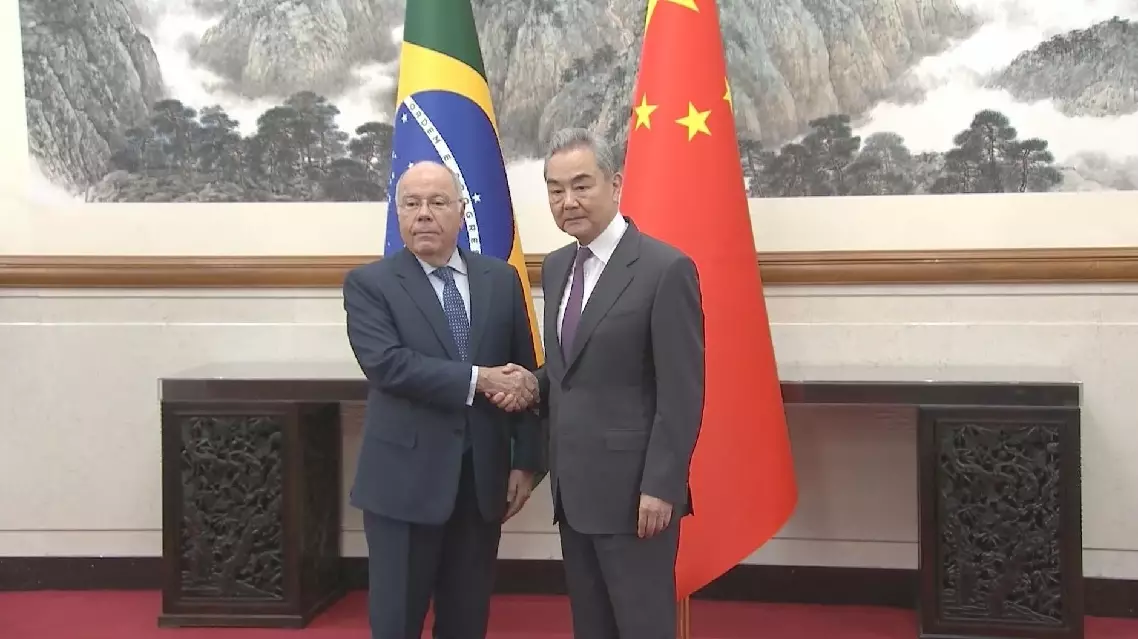
China ready to work with Brazil to further expand overall China-Latin America cooperation: Chinese FM
China ready to work with Brazil to further expand overall China-Latin America cooperation: Chinese FM