FORT LAUDERDALE, Fla. (AP) — A man who fled to China after leaving an explosive device outside MacDill Air Force Base in Tampa has been indicted along with his sister in Florida on federal charges, and their mother has been detained pending deportation for overstaying her visa, a federal prosecutor said Thursday.
Alen Zheng, 20, and Ann Mary Zheng, 27, were charged Wednesday in separate federal indictments. The sister was arrested upon her return from China, where she had flown with her brother after the threat. Both have U.S. citizenship, U.S. Attorney Gregory Kehoe said during a news conference.
The device didn’t detonate, but “could have potentially been very deadly,” Kehoe said.
Alen Zheng faces 40 years in prison if convicted of attempting to damage government property and unlawfully making and possessing the explosive device. Ann Mary Zheng faces 30 years if found guilty of witness tampering and being an accessory after the fact to the crime, by allegedly selling the car he used to drop off the package, Kehoe said.
A federal public defender declined to comment on the charges against the siblings.
The suspicious package went undiscovered for nearly a week, but the investigation developed very quickly after it was found on March 16, Kehoe said.
Agents determined that Alen Zheng actually planted the device on March 10 and made a 911 call minutes later saying there was a bomb at the base, he said. Then he and his sister sold their Mercedes-Benz SUV, bought tickets to China, and were gone by March 12th.
Air Force personnel had searched the sprawling base without discovering the device initially. When it was found outside the visitors center, investigators kicked into high gear. They used phone data to connect the 911 call to Alen Zheng, and spotted the SUV on surveillance video. By the time they reached CarMax, the car had been vacuumed and cleaned, but they were still able to find evidence including residue matching the explosive, Kehoe said.
Agents also searched the family's home and reported finding explosive device components. Meanwhile, the device found outside the base's gate was flown by helicopter to an FBI lab in Huntsville, Alabama, for further examination, FBI Special Agent in Charge Matthew Fodor said.
Kehoe said he's not sure if the siblings also have Chinese citizenship. He said they have no immediate evidence that Alen Zheng was working on behalf of the Chinese government or any other country. “We’re exploring every avenue we can to get him back to the United States,” Kehoe said.
The U.S. Central Command is located at MacDill and is responsible for U.S. military operations in the Middle East, Central Asia and parts of South Asia. MacDill is one of the U.S. bases that has been on heightened alert since the war in Iran began.
Another man was arrested earlier this week on charges of making threatening phone calls to the base days after the device was discovered, though investigators haven’t accused that caller of planting any devices. There was no immediate connection between that caller and the Zhengs.
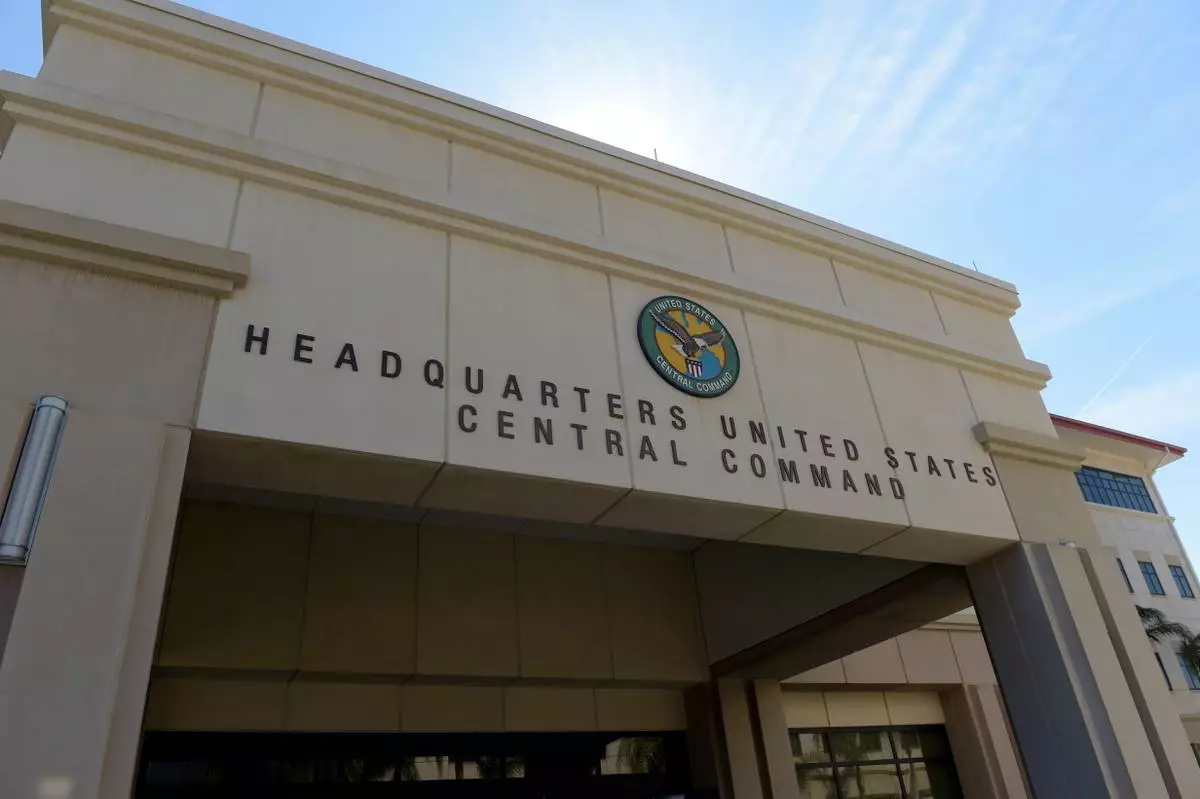
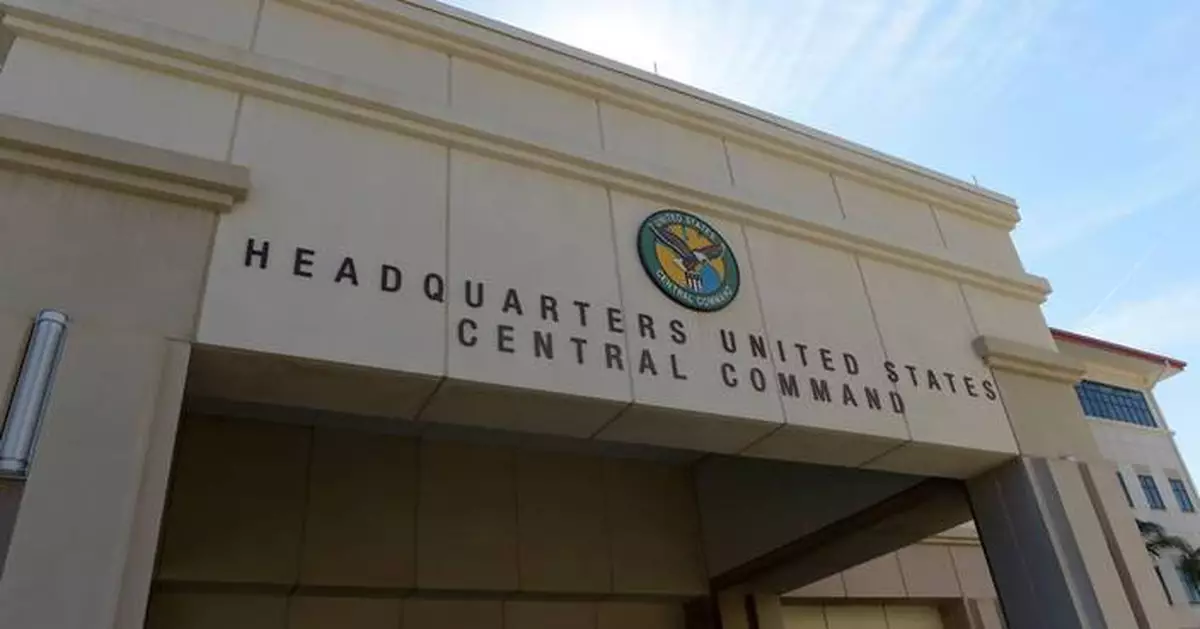
File - The U.S. Central Command at MacDill Air Force Base is seen, Feb. 6, 2017, in Tampa, Fla. (AP Photo/Susan Walsh, File)
NEW YORK (AP) — A U.S. judge pressed the Trump administration Thursday about its basis for barring Venezuela’s government from paying former President Nicolás Maduro's legal fees in the drug trafficking case that has put him behind bars in New York.
As Maduro and Cilia Flores, his wife and co-defendant, looked on in beige jail uniforms, his lawyers argued that the U.S. is violating the deposed leader’s constitutional rights by blocking Venezuelan government money from being used for the couple's legal costs. The U.S. government hasn't let the funds flow because of sanctions against the South American country.
Judge Alvin Hellerstein questioned why the prosecution's argument still stands, now that U.S. and Venezuelan relations have warmed. Since Maduro's capture by U.S. military forces in January, Venezuela and the U.S. have reestablished diplomatic relations, Washington has eased economic sanctions on Venezuela’s crucial oil industry, and the U.S. has dispatched a chargé d’affaires to Caracas.
“We have changed the situation in Venezuela,” Hellerstein observed, suggesting that the argument for continuing to block the defense funds has changed with it: “The current paramount goal and need and constitutional right is the right to defense.”
He didn't issue a ruling, however, nor say when he will.
As supporters and opponents rallied outside, Maduro and Flores made their first court appearance since a January arraignment at which he declared: “I am not guilty. I am a decent man, the constitutional president of my country.” Flores has also pleaded not guilty.
A 25-page indictment accused Maduro and others of working with drug cartels and members of the military to facilitate the shipment of thousands of tons of cocaine into the U.S. He and Flores also are accused of ordering kidnappings, beatings and murders of those who owed them drug money or undermined their trafficking operation. If convicted, they face life in prison.
Maduro and Flores remain jailed in Brooklyn, and neither has asked to be released on bail. Hellerstein has yet to set a trial date.
In a noisy scene outside the Manhattan courthouse, contrasting groups of demonstrators chanted, blew horns and beat drums and cowbells. Among Maduro critics, one person waved a sign reading “Maduro rot in prison.” On the other side of a metal barrier, people held signs reading “Free President Maduro.”
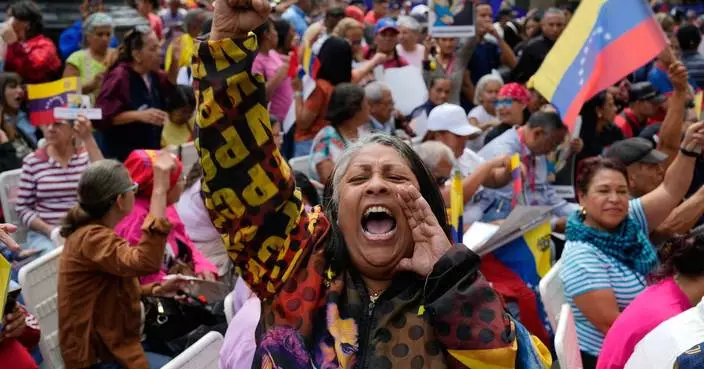
In Caracas, hundreds of people gathered at a public plaza, including ruling party supporters, state employees and civilian militia members. One attendee, retiree Eduardo Cubillan, said he was there to pray for Maduro and Flores and condemn the violation of Venezuela’s sovereignty during the Jan. 3 operation.
“We hope that in the United States, if justice truly exists, a trial will be held that will lead to President Maduro’s freedom, because this kidnapping violated international legal principles, and we want justice to be served,” Cubillan, 80, said.
Maduro, 63, and Flores, 69, continue to enjoy some support in Venezuela, with murals and billboards across Caracas demanding their return. But while Maduro's ruling party remains in power, he has slowly been erased from the government of Delcy Rodríguez, Venezuela's acting president.
Rodríguez has replaced senior officials including Maduro’s faithful defense minister and attorney general. She has reorganized agencies, appointed ambassadors and eliminated tenets of the self-proclaimed socialist movement that has ruled Venezuela for more than two decades.
In court Thursday, Hellerstein cut off Flores’ lawyer, Mark Donnelly, when he referred to her as “the first lady,” telling him: “There are no titles to be used in this court.”
As the hearing was ending, Maduro held up two fingers in a “V,” a gesture that has become a symbol in Venezuela — portrayed in murals with the slogan “Nosotros Venceremos,” or “We Shall Overcome,” since he flashed it upon arriving in New York in January.
“Hasta mañana,” he said, shaking hands with Pollack before officers escorted him out.
In court, Assistant U.S. Attorney Kyle Wirshba noted that the sanctions, in place long before Maduro and Flores were charged, were driven by allegations that Maduro's government was cracking down on free speech and plundering Venezuelan wealth.
Allowing them to use Venezuelan government funds to defend themselves in a case arising from that conduct would “undermine the sanctions,” Wirshba said.
The U.S. has said Maduro and Flores can use personal funds to pay his lawyers. They have said they don't have the money.
Maduro lawyer Barry Pollack contended that if Maduro got public defenders, investigating and preparing his case would sap legal resources meant for people who can’t afford their own attorneys. That doesn’t make sense, he contended, in “a case where you have someone other than the U.S. taxpayer standing ready, willing and able to fund that defense.”
Pollack wants the case thrown out, but Hellerstein ruled out doing so — at least for now, saying he didn't want to consider “such a serious step” when another remedy is available. He said Pollack could revisit the request if the Treasury Department doesn’t relent on its decision to bar Venezuela from paying Maduro's legal fees.
In a court filing last month, Pollack said the Treasury Department’s Office of Foreign Assets Control, which administers sanctions, flip-flopped on a decision to let Venezuela pay for his legal fees. The office approved the arrangement Jan. 9, Pollack said, but then rescinded it without explanation less than three hours later.
During a Cabinet meeting Thursday in Washington, President Donald Trump accused Maduro of being a “major purveyor of drugs coming into our country.”
Trump said Maduro would be given “a fair trial.”
Maduro and Flores were seized in a middle-of-the-night raid on their Caracas home.
Post-Maduro, everyday life for most Venezuelans remains the same.
Many public sector employees earn just about $160 per month, while the average private sector worker makes about $237. Last year the annual inflation rate soared to 475%, according to Venezuela’s central bank, putting the cost of food and other essentials beyond the reach of many.
Garcia Cano reported from Caracas. Associated Press writer Dave Collins in Hartford, Connecticut, contributed to this report.
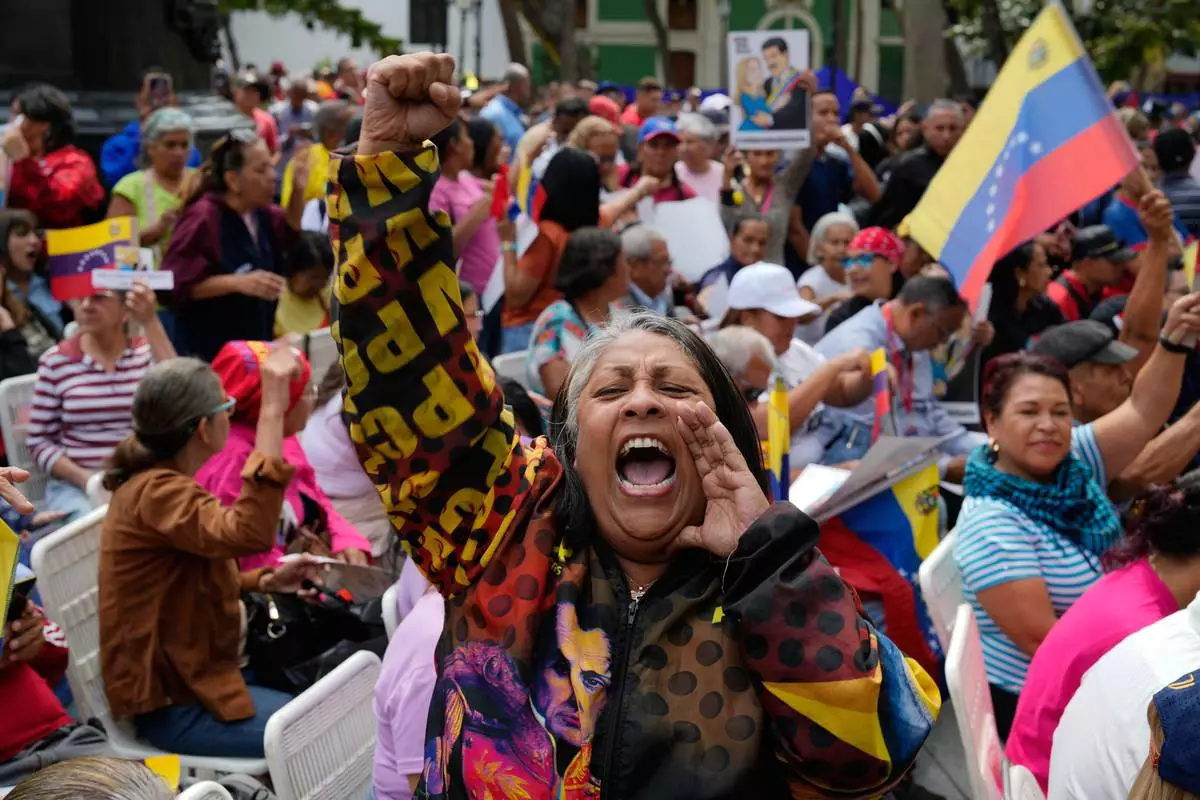
A woman screams during a government-organized event to watch former President Nicolas Maduro and first lady Cilia Flores appear in a New York court on a screen in Caracas, Venezuela, Thursday, March 26, 2026. (AP Photo/Ariana Cubillos)
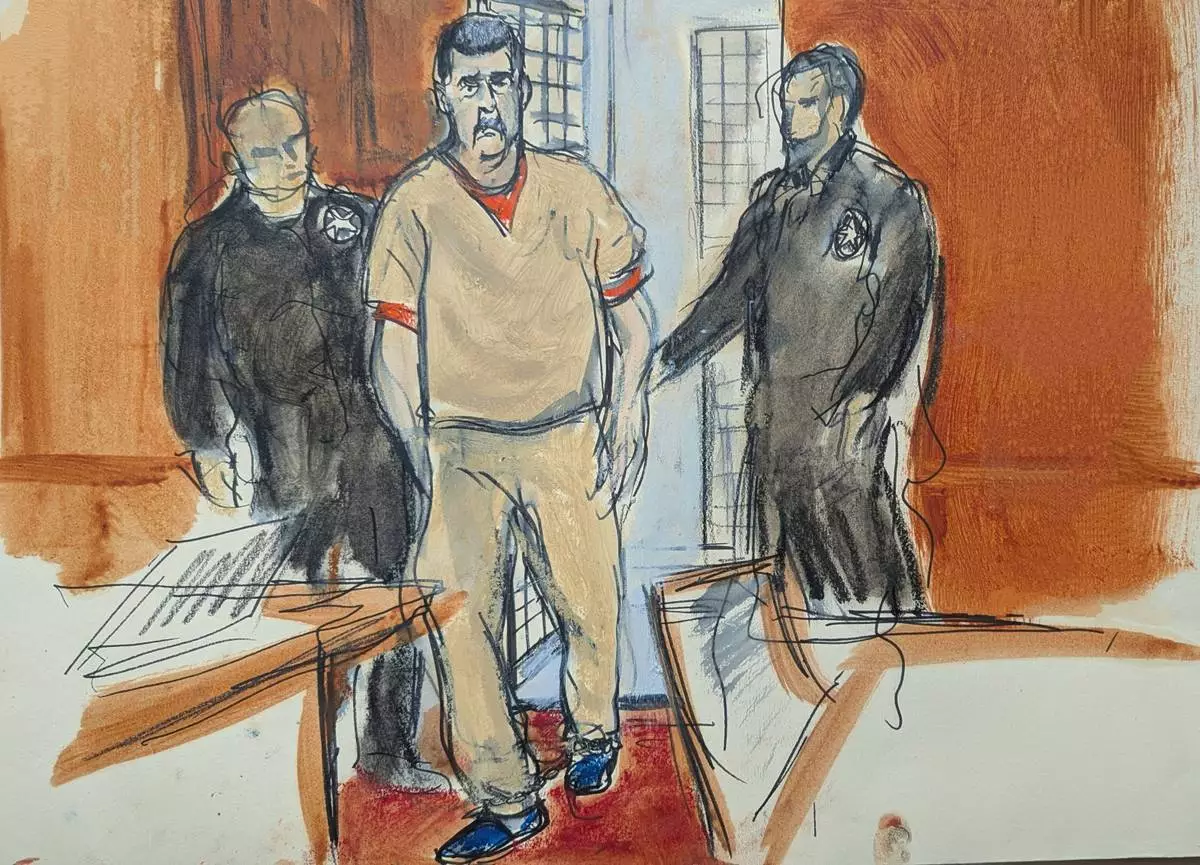
Former Venezuelan President Nicolas Maduro is escorted into a Manhattan federal courtroom, Thursday, March 26, 2026, in New York. (Elizabeth Williams via AP)
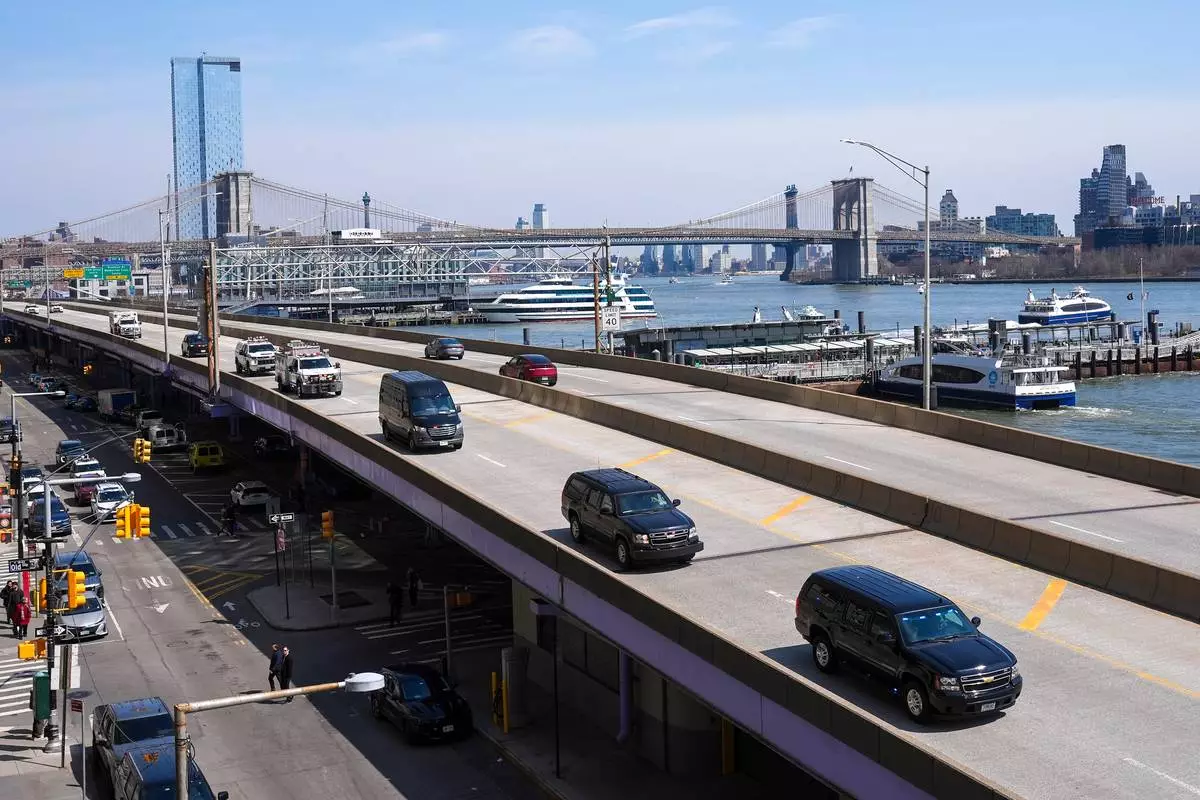
A motorcade carrying former Venezuela President Nicolas Maduro makes its way along FDR Drive after departing Manhattan federal court after a pre-trial hearing in Maduro's drug trafficking case, Thursday, March 26, 2026, in New York. (AP Photo/Seth Wenig)
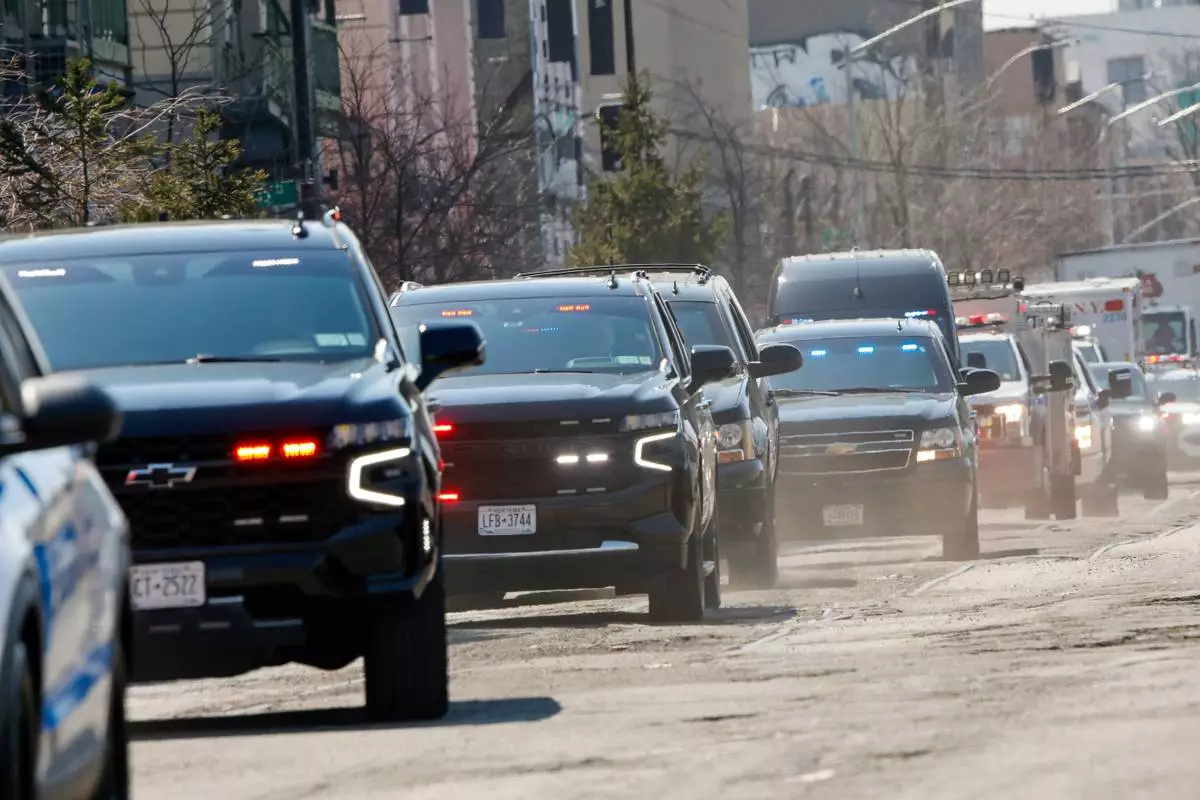
A motorcade carrying former Venezuela President Nicolas Maduro arrives at the Metropolitan Detention Center in the Brooklyn Borough of New York, after a pre-trial hearing iin Maduro's drug trafficking case, Thursday, March 26, 2026, in Manhattan Federal Court in New York.(AP Photo/Stefan Jeremiah)
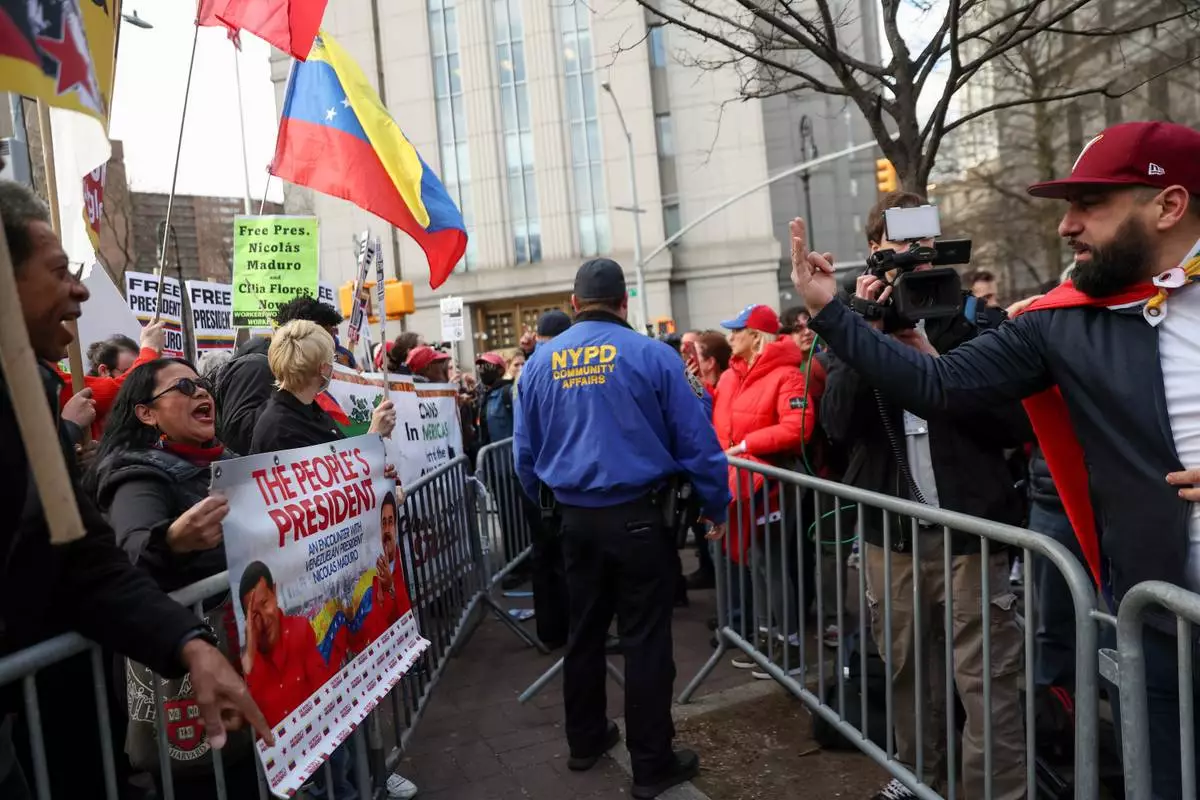
Demonstrators protest outside Manhattan federal court before a pre-trial hearing in former Venezuela President Nicolas Maduro's drug trafficking case, Thursday, March 26, 2026, in New York. (AP Photo/Heather Khalifa)
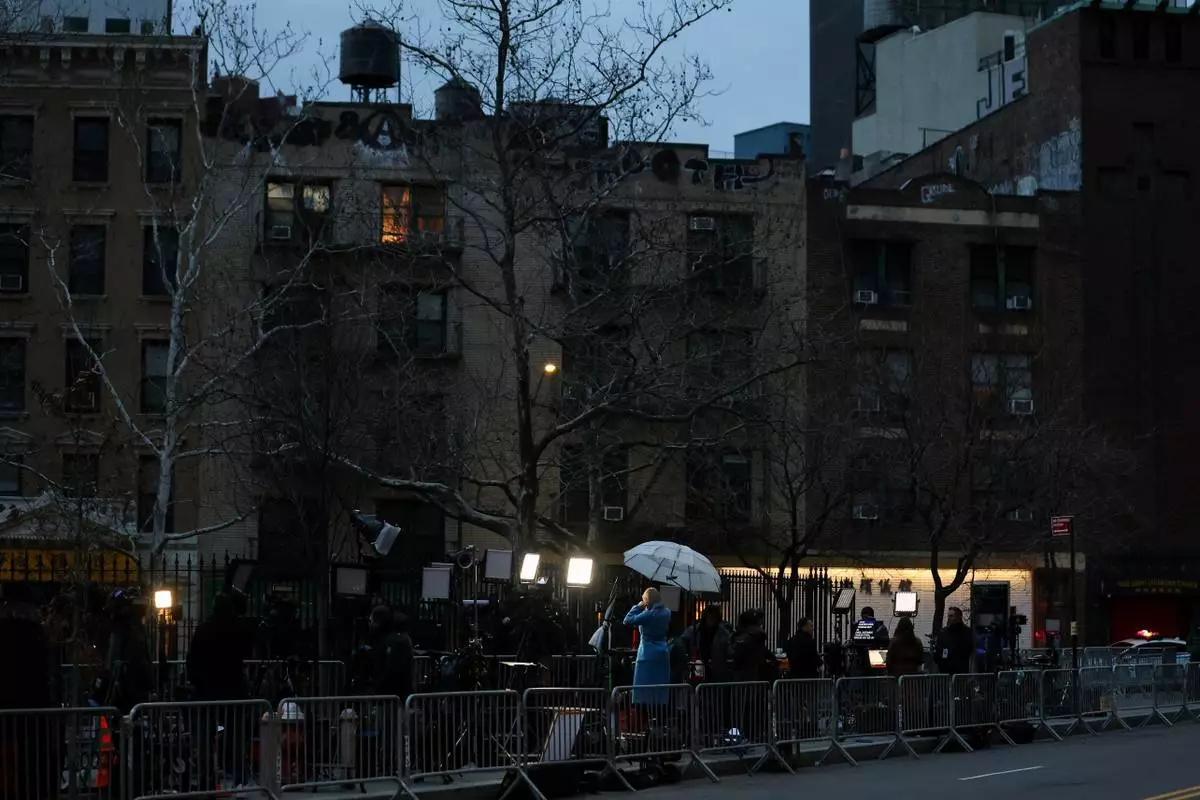
Members of the media set up across the street from Manhattan federal court in preparation for a pre-trial hearing in former Venezuela President Nicolas Maduro's drug trafficking case, Thursday, March 26, 2026, in New York. (AP Photo/Heather Khalifa)
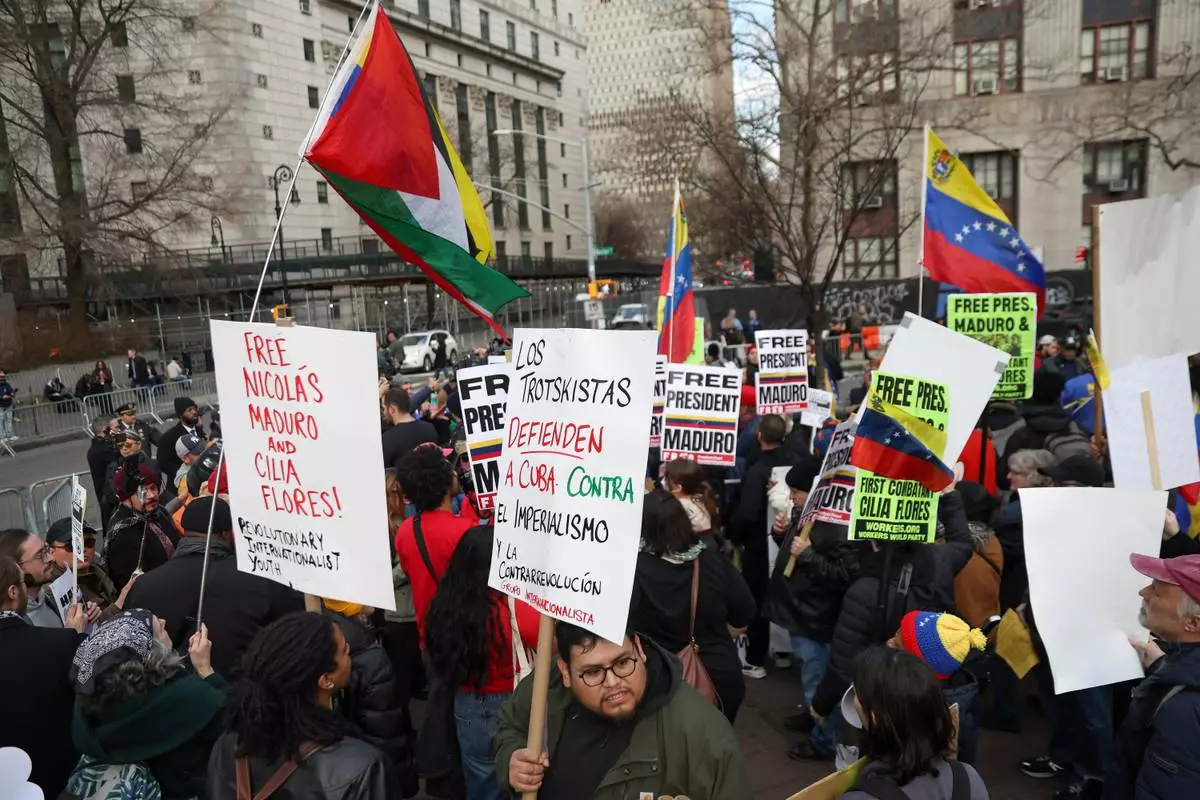
Demonstrators protest outside Manhattan federal court before a pre-trial hearing in former Venezuela President Nicolas Maduro's drug trafficking case, Thursday, March 26, 2026, in New York. (AP Photo/Heather Khalifa)
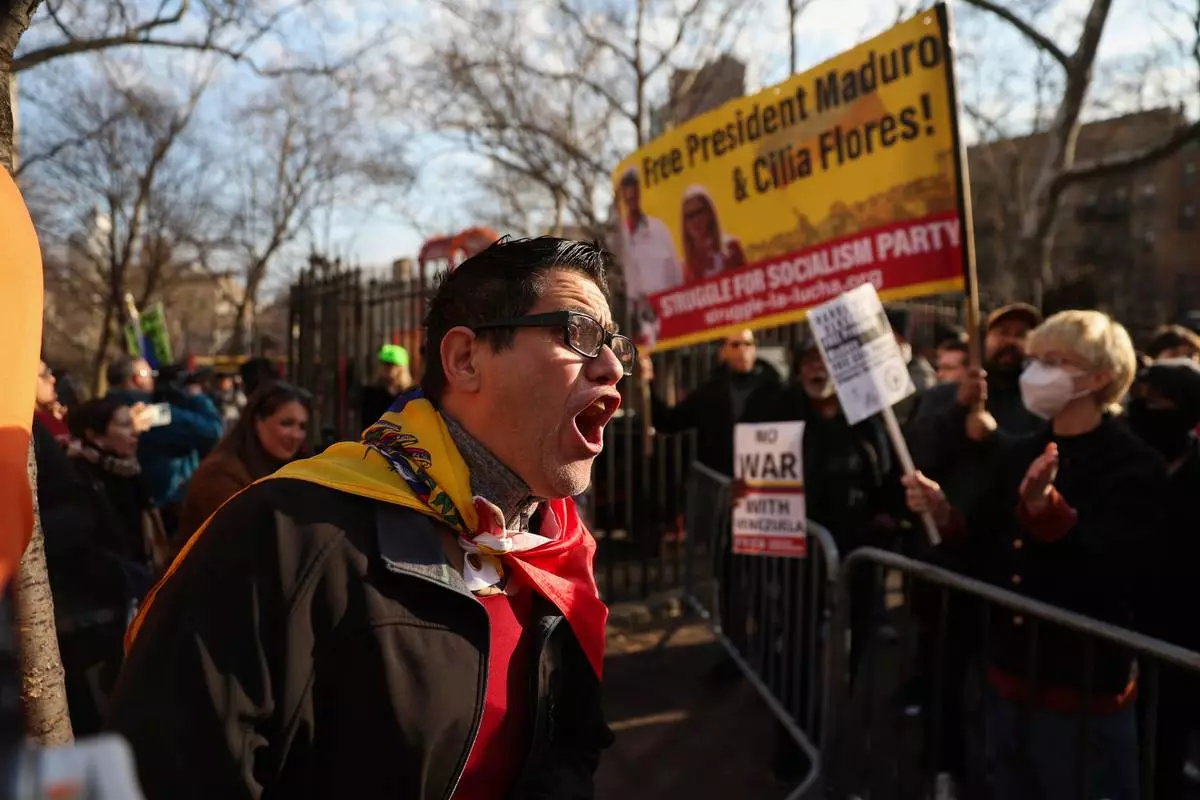
Demonstrators protest outside Manhattan federal court before a pre-trial hearing in former Venezuela President Nicolas Maduro's drug trafficking case, Thursday, March 26, 2026, in New York. (AP Photo/Heather Khalifa)
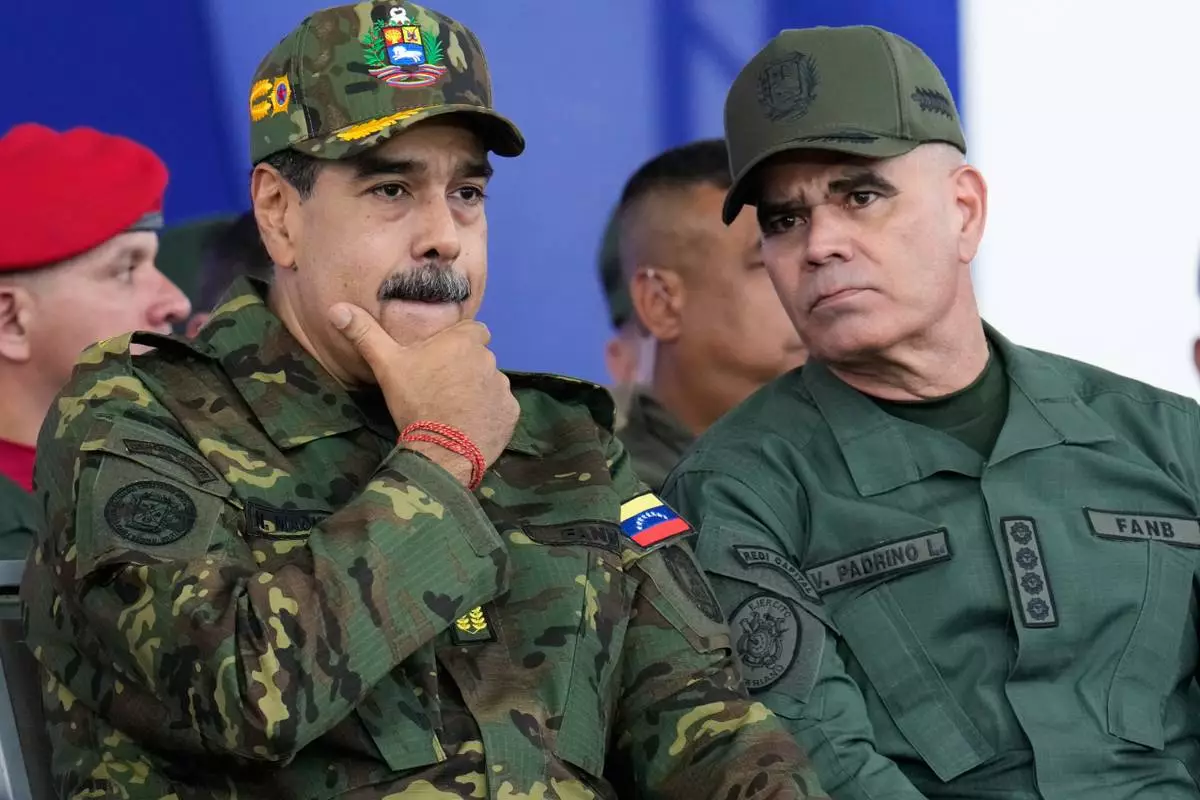
FILE - Venezuelan President Nicolas Maduro, left, and Defense Minister Vladimir Padrino Lopez attend a government-organized civic-military march in Caracas, Venezuela, Nov. 25, 2025. (AP Photo/Ariana Cubillos, File)