MADRID (AP) — Noelia Castillo, a Spanish woman who sought euthanasia and fought a protracted legal battle with her family over her right to do so, received life-ending medicine on Thursday in Barcelona. She was 25.
EDITOR’S NOTE — This story includes discussion of suicide. If you or someone you know needs help, international helplines can be found at www.iasp.info/suicidalthoughts.
For nearly two years, Castillo pursued her right to die after her father put up a lengthy legal battle when a medical body in Catalonia approved her request for euthanasia in 2024.
As the family's struggle unfolded, Castillo’s case was closely followed in Spain, which passed legislation in 2021 enshrining the right to euthanasia and medically assisted suicide for patients meeting certain conditions. Castillo's young age, the public battle waged by her family to stop her and the circumstances that led her to seek euthanasia animated public opinion as the courts ultimately ruled in favor of her right to end her life.
“At last, I’ve managed it, so let’s see if I can finally rest now,” Castillo told Spanish broadcaster Antena 3 in an interview that aired Wednesday. "I just cannot go on anymore."
Castillo's parents opposed her decision up until the end, and were represented by the conservative Catholic organization Abogados Cristianos. The Catholic organization on Thursday confirmed that she had died at a Barcelona hospital where a small group of people had gathered outside the facility.
Attorney Polonia Castellanos, president of Abogados Cristianos, said Castillo's family was deeply disappointed with the outcome, and believed the Spanish government had abandoned and failed their daughter by allowing her to die.
“Death is the last option, especially when you’re very young," Castellanos said.
Castillo struggled with psychiatric illness since she was a teenager, and tried taking her life twice, she said, the second time after she was sexually assaulted. The injuries she suffered from her second suicide attempt in 2022 left her unable to use her legs and in a wheelchair.
The Associated Press does not identify people who say they have been sexually assaulted unless they come forward publicly, as Castillo has done.
In April 2024, Castillo solicited euthanasia with an independent body in Catalonia made up of doctors, lawyers and bioethics experts who deliberate on the application of Spain’s law.
The body approved Castillo’s request based on assessments that evaluated her condition as serious and incurable, and that the 25-year-old had severe, chronic and debilitating suffering.
Spain legalized physician-assisted suicide and euthanasia in 2021 for those suffering from terminal illness and for people with unbearable permanent conditions. The process involves submitting two requests in writing followed up by consultations with medical professionals not previously involved in the case. The law faced intense criticism from conservative political parties and the Catholic Church.
Castillo’s father appealed the Catalan body’s decision, and a court in August 2024 suspended the euthanasia request while it deliberated. Through Abogados Cristianos, Castillo's father argued that his daughter's mental illness rendered her incapable of making the decision to end her life.
When a Barcelona court ruled in favor of Castillo’s right to euthanasia, her father’s lawyers appealed again, with the case eventually reaching Spain’s Supreme Court. In January, the court upheld Castillo’s rights. Abogados Cristianos made a final attempt to halt the procedure by appealing to the European Court of Human Rights, which denied the request earlier this month.
Before Castillo died Thursday, Castellanos repeated her client's view that Castillo had a personality disorder, and said the case was an example of the euthanasia law failing citizens.
“I think this is proof of the failure of the law and that it has to be urgently repealed," she said. “We’ve been told it was a law for very extreme cases, for people who were very ill, who were practically dying. Here we see that it’s being used to end the life ... of a girl of only 25 years who has her whole life ahead of her and who has a treatable illness.”
Speaking to Spanish TV, Castillo said she did not want her family to be around when she died, claiming that she was misunderstood. She acknowledged the glaring media spotlight that her case had drawn.
“None of my family is in favor of euthanasia, obviously, because I'm another pillar of the family," she said, adding, “but what about the pain that I've suffered all of these years?”
A disability rights group in Madrid called for a review of Spain's euthanasia law, adding that it was essential to improve resources for those with disabilities, chronic illnesses or situations of high dependency.
“Before facilitating death, the system must effectively guarantee the conditions for living with dignity," said Javier Font, president of the Federation of Associations of People with Physical and Organic Disabilities of Madrid, in a statement.
Spain is among nine European countries with laws that allow people experiencing unbearable suffering to access assisted dying, according to Dignity in Dying, a U.K.-based rights group that advocates in favor of euthanasia and medically assisted suicide. The criteria vary by country.
Medically-assisted suicide involves patients themselves taking a lethal drink or medication that has been prescribed by a doctor while euthanasia involves doctors or health practitioners, under strict conditions, actively killing patients who meet certain conditions by giving them a lethal injection at their request.
Since Spain adopted its euthanasia law, 1,123 people have been administered life-ending medicine through the end of 2024, according to the country's health ministry.
Castillo said she never questioned her decision as she had to reassert her desire to end her life. The calculus for her was simple.
“The happiness of a father or a mother should not precede the happiness of a daughter."
A previous version of the story incorrectly stated that Spain is among nine European Union countries with laws allowing some people to access to assisted dying. This version corrects it to say it is among nine European countries.
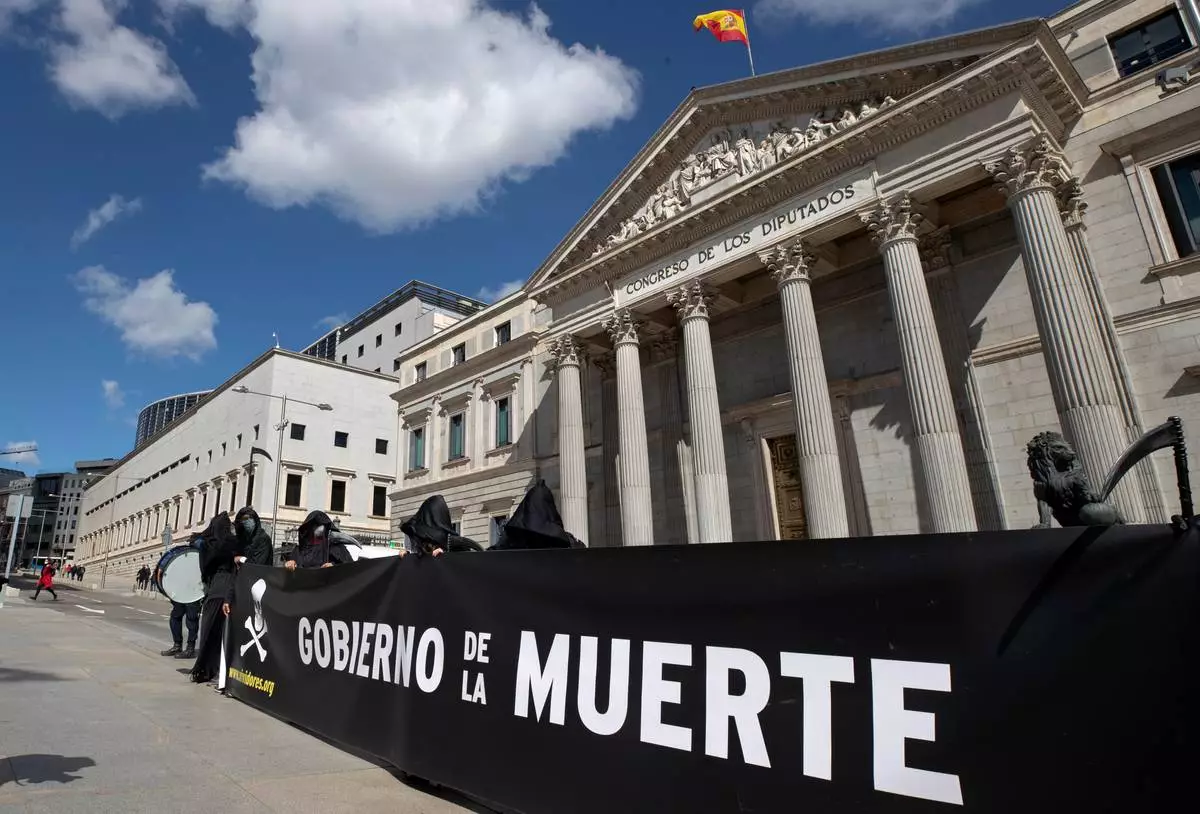
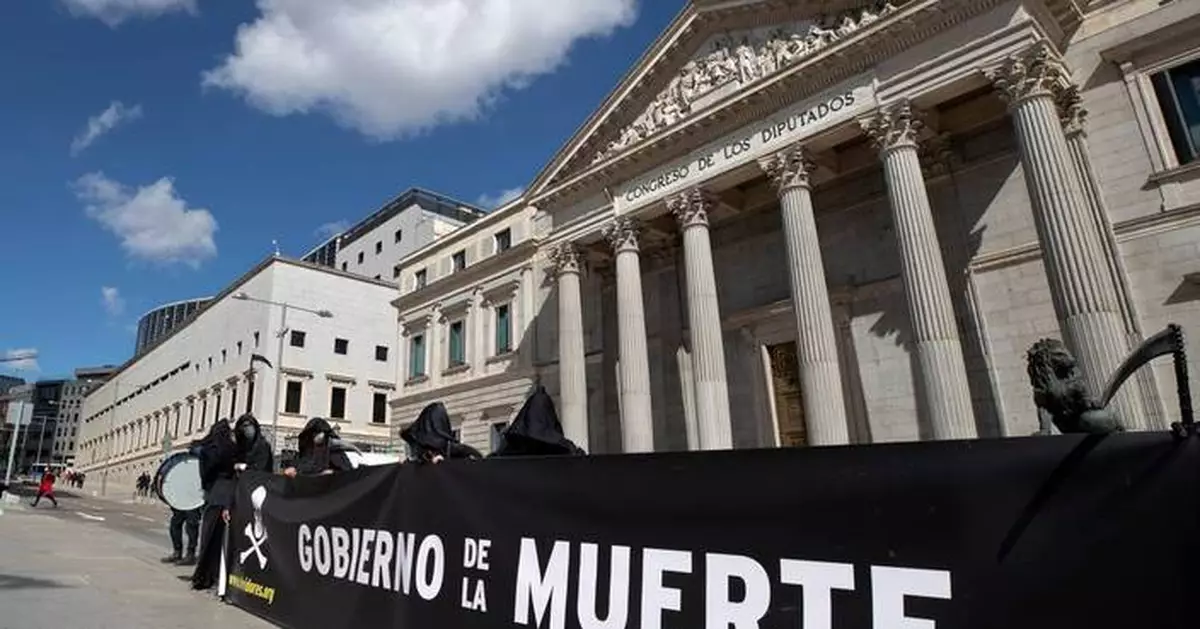
FILE - Anti euthanasia protesters stand outside the Spanish Parliament in Madrid, Spain, Thursday, March 18, 2021. Banner in Spanish reads: 'Government of Death'. (AP Photo/Paul White, File)
DUBAI, United Arab Emirates (AP) — Iran and the United States appeared at an impasse Thursday, hardening their positions over ceasefire talks and setting the stage for another potential escalation in the Middle East war as thousands more U.S. troops neared the region.
Meanwhile, President Donald Trump extended his deadline for Iran to open the Strait of Hormuz to April 6, and Tehran tightened its grip on the crucial strait while Israel poured more troops into southern Lebanon to fight the Iran-backed militant group Hezbollah.
Sirens over Israel warned of barrages of incoming Iranian missiles, and Gulf nations worked to intercept fire. Heavy strikes were reported in Iran’s capital and other cities.
In a war that appears defined by who can take the most pain, the U.S. has offered shifting objectives, including ensuring Iran’s missile and nuclear programs are no longer a threat and ending Tehran’s support for armed groups in the region. Washington at one point also pushed for the overthrow of Iran’s theocracy.
While the U.S.-Israeli campaign has hit Iran’s military and government hard, killing top leaders and striking scores of targets, Iran continues to fire missiles, and there is no sign of an uprising against the government.
For Iran’s leadership, by contrast, merely outlasting the onslaught could be seen as victory. It may be hoping to get the U.S. to back down by roiling the world economy with its stranglehold on the the strait, which has disrupted oil and natural gas shipments and raised prices worldwide for energy and other goods.
Short of a negotiated solution, the U.S. would need a dramatic escalation to end Iran’s attacks and restore the free flow of goods through the strait, where 20% of all traded oil and natural gas is transported in peacetime. Iran rejected a ceasefire proposal put forth by the U.S., while putting forth its own demands.
Trump has vowed to strike Iran’s power plants if it does not fully reopen the strait. His new deadline pulls back on his earlier threat to bombing Iran’s energy plants if Tehran did not open the critical waterway.
Iran had threatened to retaliate against the region’s vital infrastructure, like desalination facilities, if Trump followed through. Trump said he was holding off on carrying out his threat because talks aimed at ending the conflict are going “very well.”
A Gulf Arab bloc said Thursday that Iran is now exacting tolls from ships to ensure their safe passage through the waterway.
Iran has been blocking ships from the strait that it perceives as linked to the U.S. and Israeli war effort, while letting through a trickle of others. Trump said during a Cabinet meeting Thursday that Iran is allowing some oil tankers through as a sign of good faith for talks.
Jasem Mohamed al-Budaiwi, secretary-general of the Gulf Cooperation Council, a bloc of six Gulf Arab nations, said Iran was charging for safe passage.
Lloyd’s List Intelligence called it a “de facto ‘toll booth’ regime,” saying that at least two vessels have paid in yuan, China's currency.
Iran’s grip on the strait and relentless attacks on Gulf energy infrastructure have sent Brent crude, the international standard, up more than 40% since the war started.
Israel said it killed the head of the Iranian Revolutionary Guard’s navy, Commodore Alireza Tangsiri, and the country’s naval intelligence chief, Behnam Rezaei. Israeli Defense Minister Israel Katz said Tangsiri was responsible for bombing operations that have blocked ships from crossing the Strait of Hormuz. Iran did not immediately acknowledge the killings.
Using Pakistan as an intermediary, Washington has delivered to Iran a 15-point “action list,” Trump envoy Steve Witkoff confirmed Thursday, calling it a framework for a possible peace deal. Witkoff said there were “strong signs” the U.S. could “convince Iran that this is the inflection point, with no good alternatives for them other than more death and destruction.”
A day after saying Iran wants to cut a deal, Trump posted on social media Thursday that Tehran needs to “get serious soon” on negotiating an end to the war “before it is too late.”
Press TV, the English-language broadcaster on Iranian state television, said Iran has its own five-point proposal, which includes reparations and recognition of its sovereignty over the Strait of Hormuz.
But Iran’s Foreign Minister Abbas Araghchi said in an interview on state TV that his government has not engaged in talks to end the war and does not plan to. He said the U.S. had tried to send messages to Iran through other nations, “but that is not a conversation nor a negotiation.”
Egypt is also acting as a go-between, according to Egyptian Foreign Minister Badr Abdelatty, who said Thursday that his country sees a desire from both sides “for calm, for the exploration of negotiations.”
As the diplomatic efforts went on, a group of ships, including the USS Tripoli, drew closer to the Mideast with some 2,500 Marines. Also, at least 1,000 paratroopers from the 82nd Airborne — trained to land in hostile territory to secure key territory and airfields — have been ordered to the region.
Ali Bahreini, Iran's top envoy to U.N. institutions in Geneva, warned Thursday that any U.S. and Israeli attempt to mount a ground invasion of Iran would be a “big” mistake.
The Israeli army said Thursday it had deployed the 162nd Division into southern Lebanon, joining thousands of troops that already have moved there since the war erupted. Israel says the open-ended invasion is aimed at protecting its northern border towns from Hezbollah attacks and uprooting the militant group from the area.
Israel also said it carried out a wave of attacks targeting Iranian infrastructure early Thursday. Heavy strikes were also reported around Isfahan, home to a major Iranian air base and other military sites, as well as one of Iran's nuclear sites.
Witnesses told The Associated Press that power is out in some areas of Iran’s capital Tehran, though no official reports have been released yet. Witnesses had earlier reported the sounds of heavy strikes and fighter jets overhead.
Loud booms could be heard across Israel as it was repeatedly targeted by barrages from Iran. Israel’s emergency service said a man in his 30s was killed near the northern coastal city of Nahariya after a wave of strikes that came from Lebanon. In the United Arab Emirates, two people were reported killed by shrapnel from a missile interception over Abu Dhabi.
Israeli military spokesperson Brig. Gen. Effie Defrin said Thursday that the army needs another 15,000 soldiers, roughly half of them combat troops, to be at full strength for its multiple missions. Israel can call up tens of thousands of reservists, but repeated deployments have drawn pushback, with many citing exhaustion and financial strain.
Since the war began, more than 1,900 people have been killed in Iran, Deputy Health Minister Ali Jafarian told Al Jazeera.
Eighteen people have died in Israel, while three Israeli soldiers have also been killed in Lebanon. At least 13 American troops have been killed. More than a dozen civilians in the occupied West Bank and Gulf Arab states have also died.
Authorities said more than 1,100 people have died in Lebanon, where Israel has targeted the Iran-backed Hezbollah militant group, which has fired into Israel. In Iraq, where Iranian-supported militant groups have entered the conflict, 80 members of the security forces have been killed.
This story has been updated to correct the death toll in Israel, and that a Trump envoy says there are strong signs Iran can be persuaded it has no option but a deal.
Rising reported from Bangkok. Associated Press writers Julia Frankel, Koral Saeed and Sam Metz in Jerusalem, Rod McGuirk in Melbourne, Australia, Jamey Keaten in Geneva and Giovanna Dell'Orto in Miami contributed to this report.
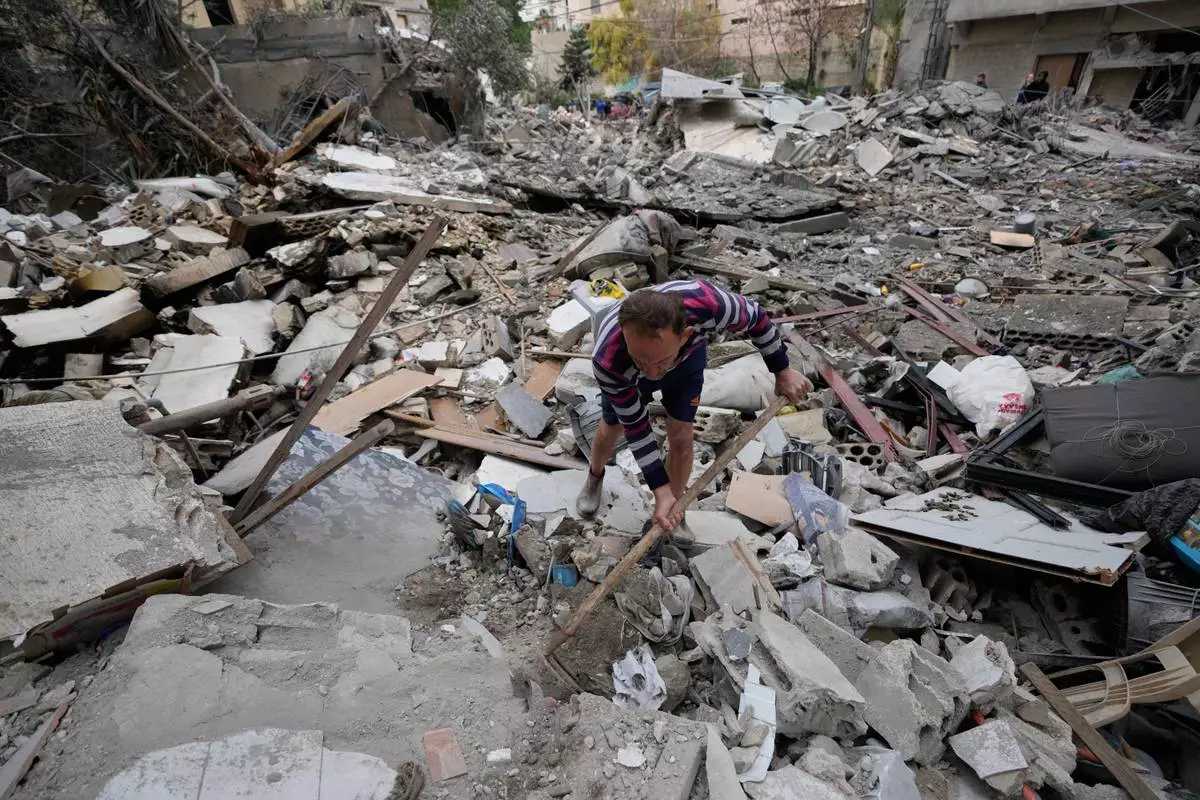
A man removes rubbles as he looks for missed stuff from his destroyed house that was hit in an Israeli airstrike in the southern port city of Tyre, Lebanon, Thursday, March 26, 2026. (AP Photo/Hussein Malla)
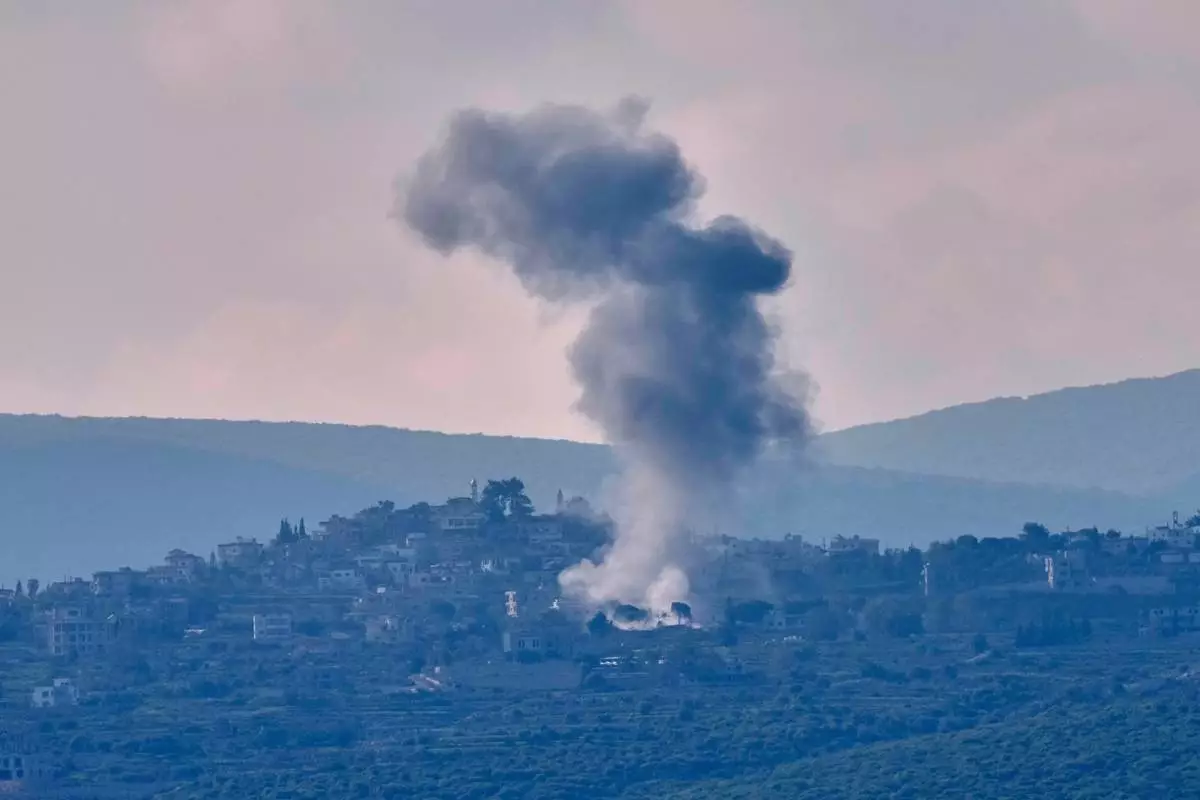
Smoke rises from an Israeli airstrike that hit Zibbikin village as seen from Tyre city, Lebanon, Thursday, March 26, 2026. (AP Photo/Hussein Malla)
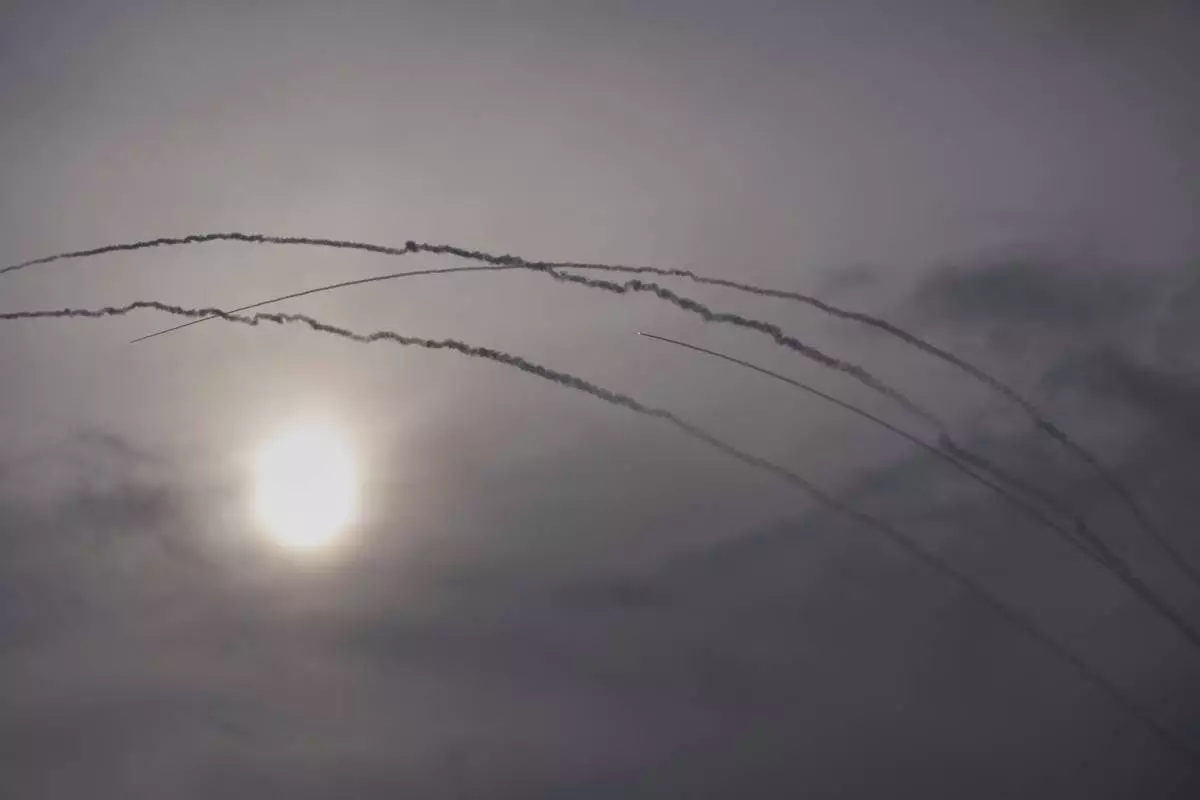
Israeli Iron Dome air defense system fires to intercept missiles from Iran over Tel Aviv, Israel, Thursday, March 26, 2026. (AP Photo/Ohad Zwigenberg) ADDITION: Adding that the missiles came from Iran.
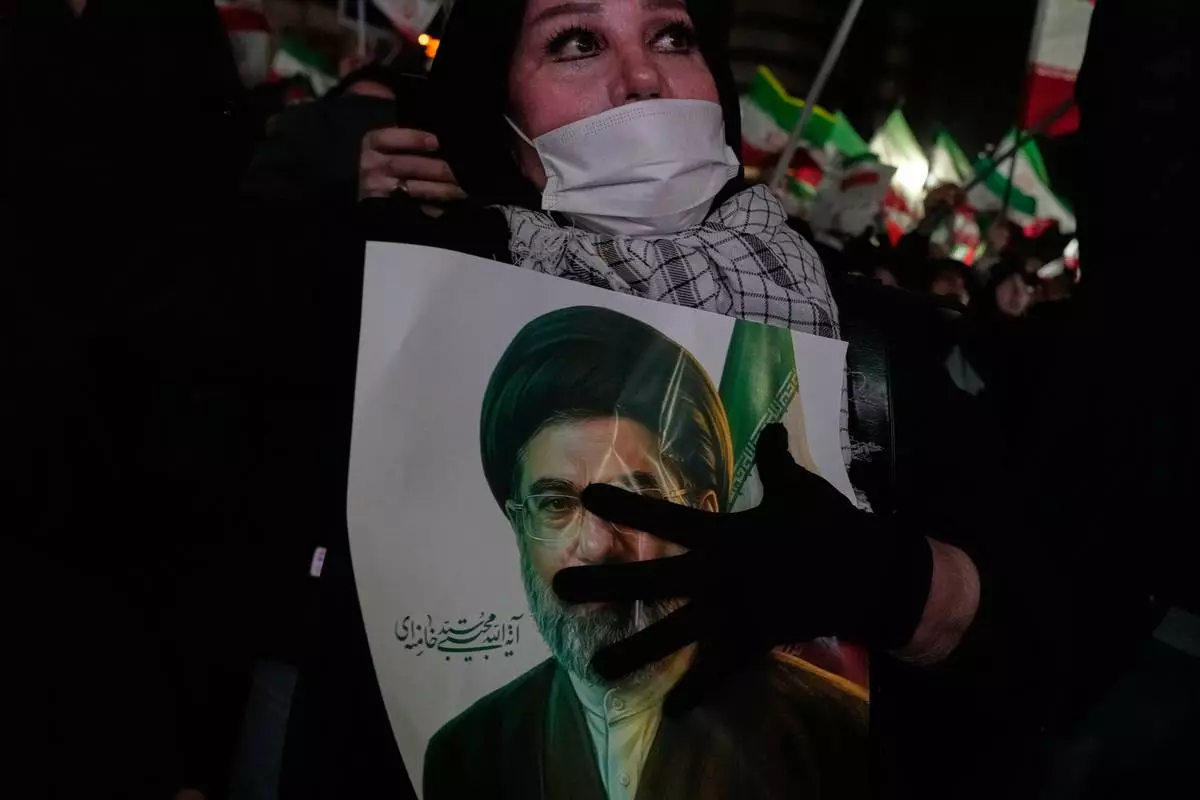
A woman holds a picture of the Iranian Supreme Leader Ayatollah Mojtaba Khamenei during a pro-government gathering in a square in western Tehran, Iran, Wednesday, March 25, 2026. (AP Photo/Vahid Salemi)
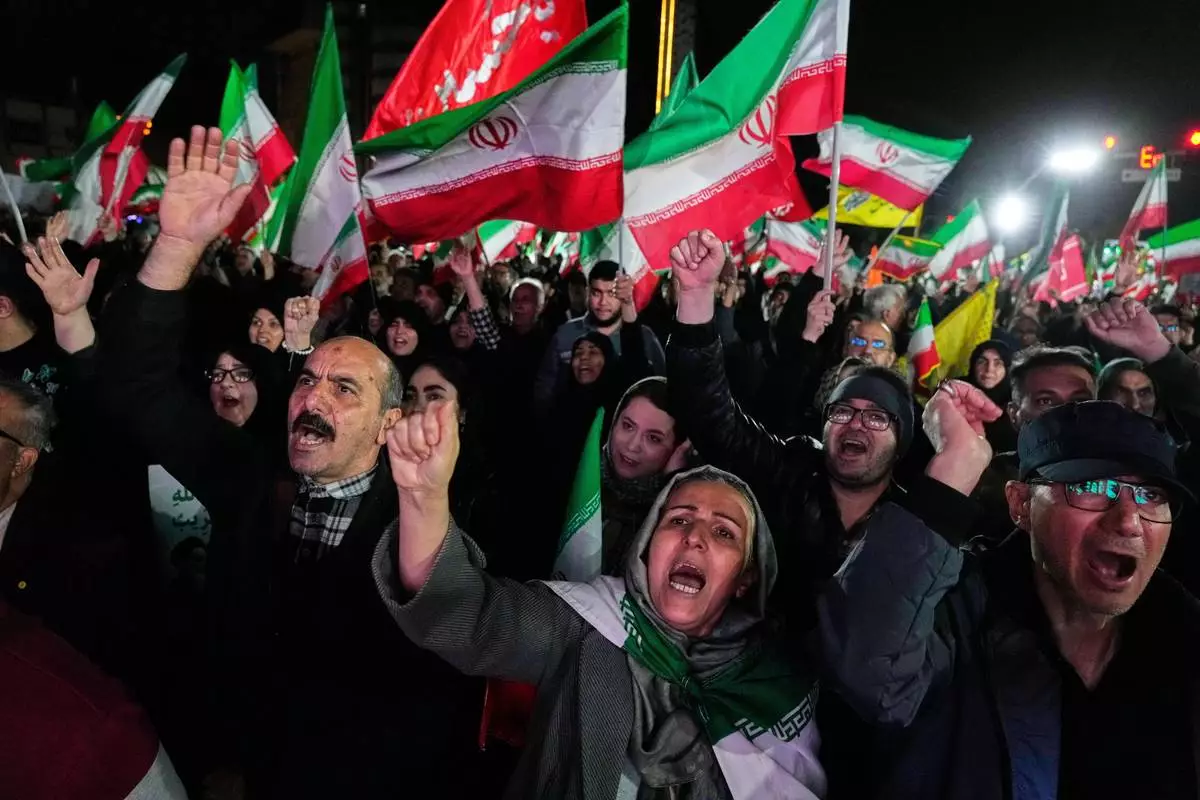
Pro-government supporters chant slogans and wave Iranian flags during a rally, in a square in western Tehran, Iran, Wednesday, March 25, 2026. (AP Photo/Vahid Salemi)
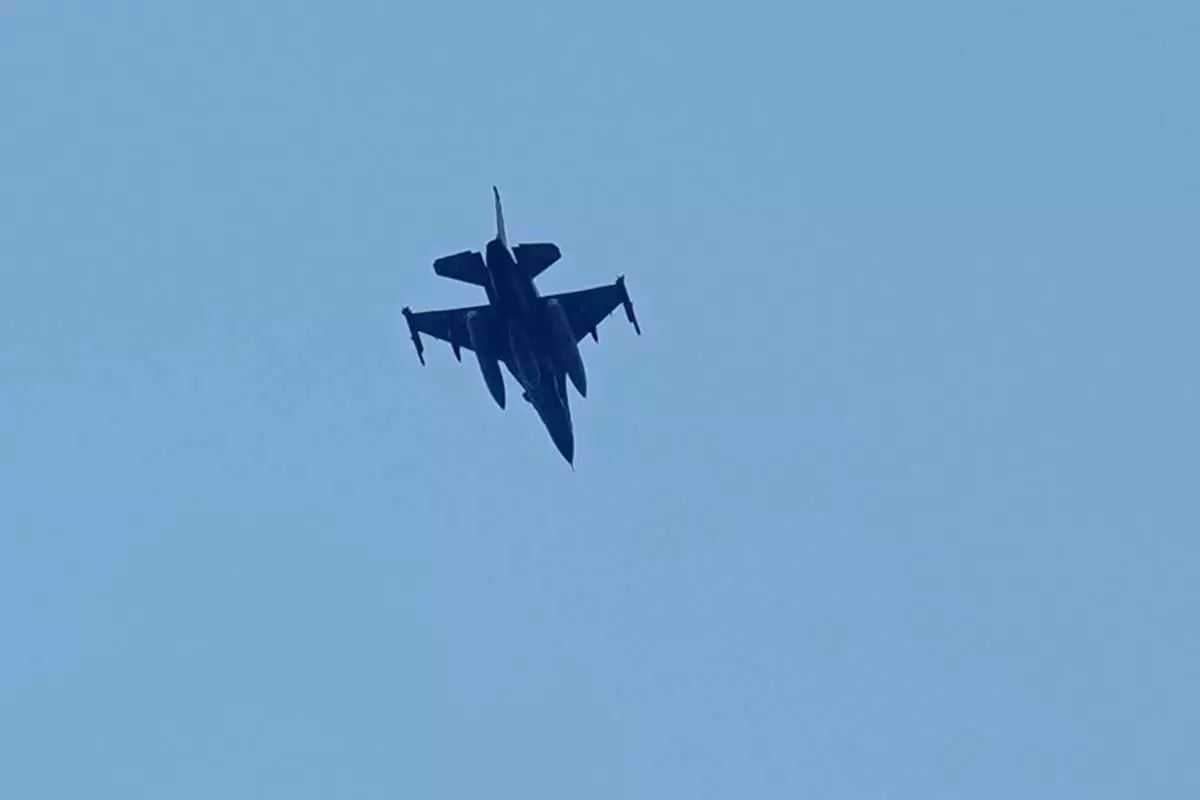
An Israeli warplane flies over the city of Tyre, south Lebanon, Wednesday, March 25, 2026. (AP Photo/Hussein Malla)
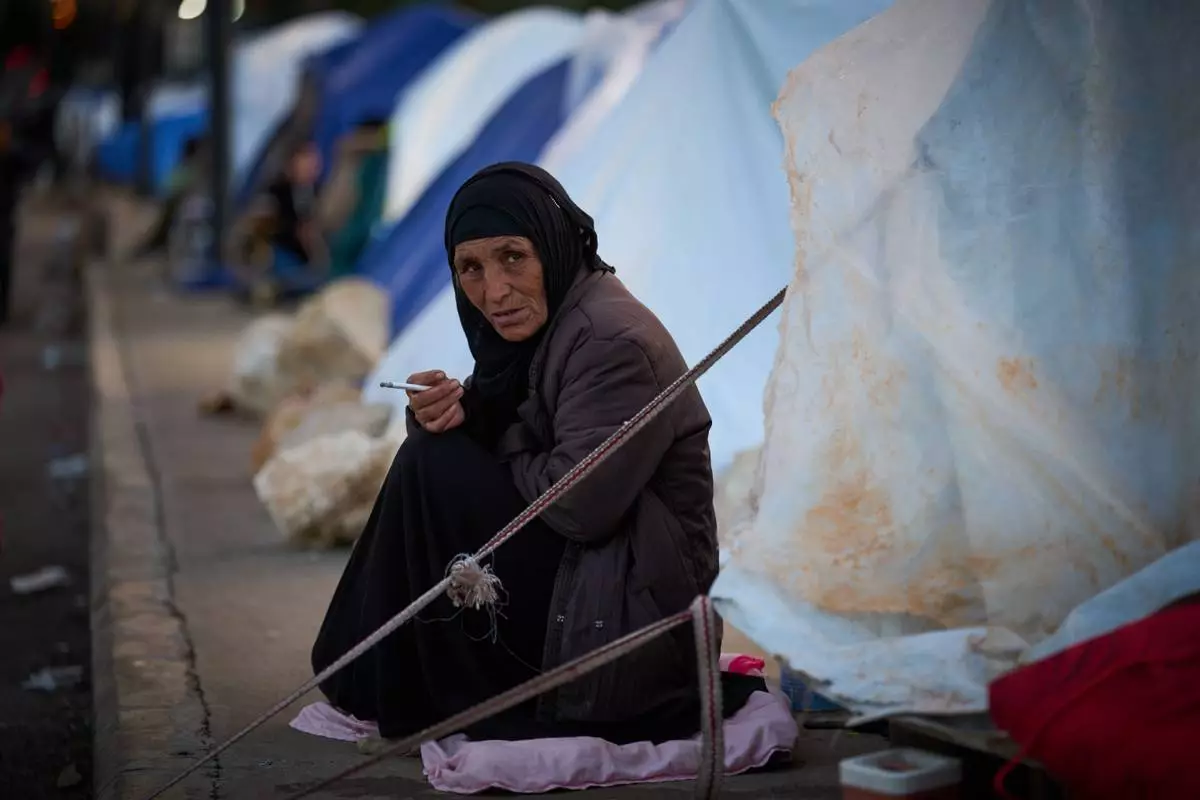
A woman who fled Israeli strikes in southern Lebanon sits outside a tent used as a shelter in Beirut, Lebanon, Wednesday, March 25, 2026. (AP Photo/Emilio Morenatti)
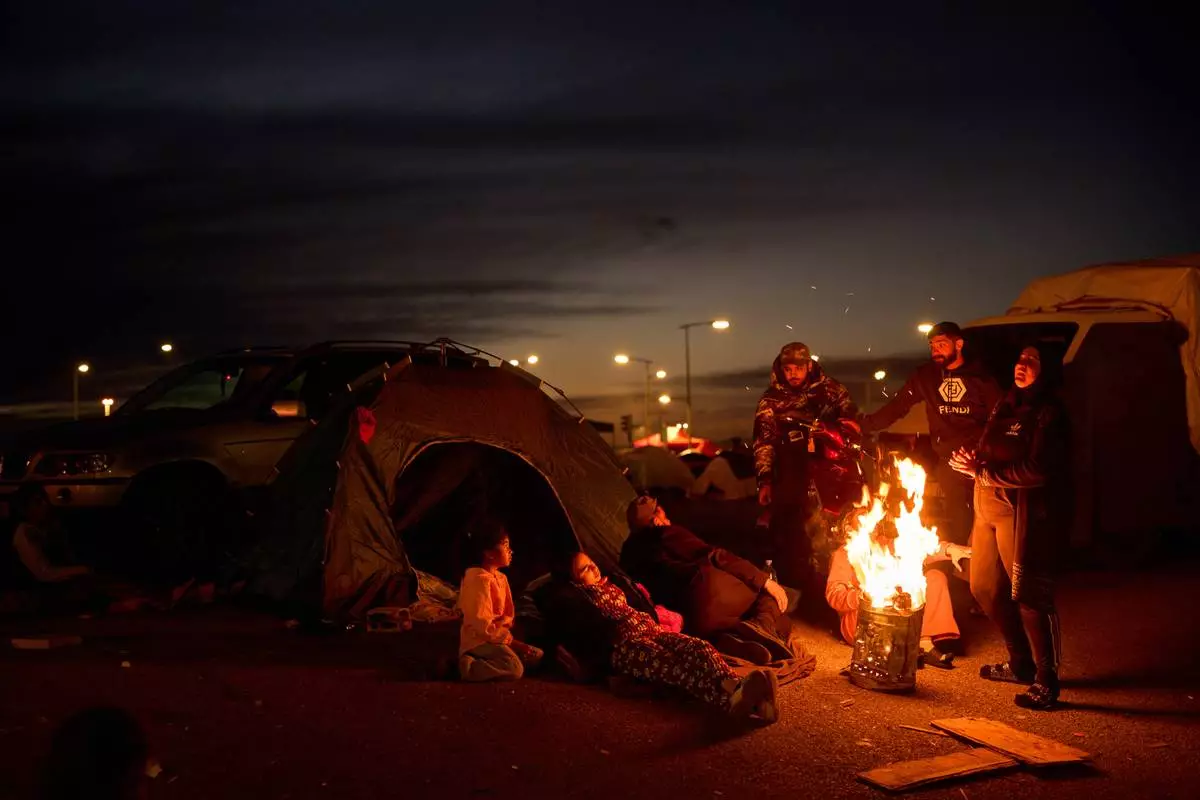
Members of a family, who fled Israeli strikes in southern Lebanon, sit around a bonfire outside a tent used as a shelter in Beirut, Lebanon, Wednesday, March 25, 2026. (AP Photo/Emilio Morenatti)
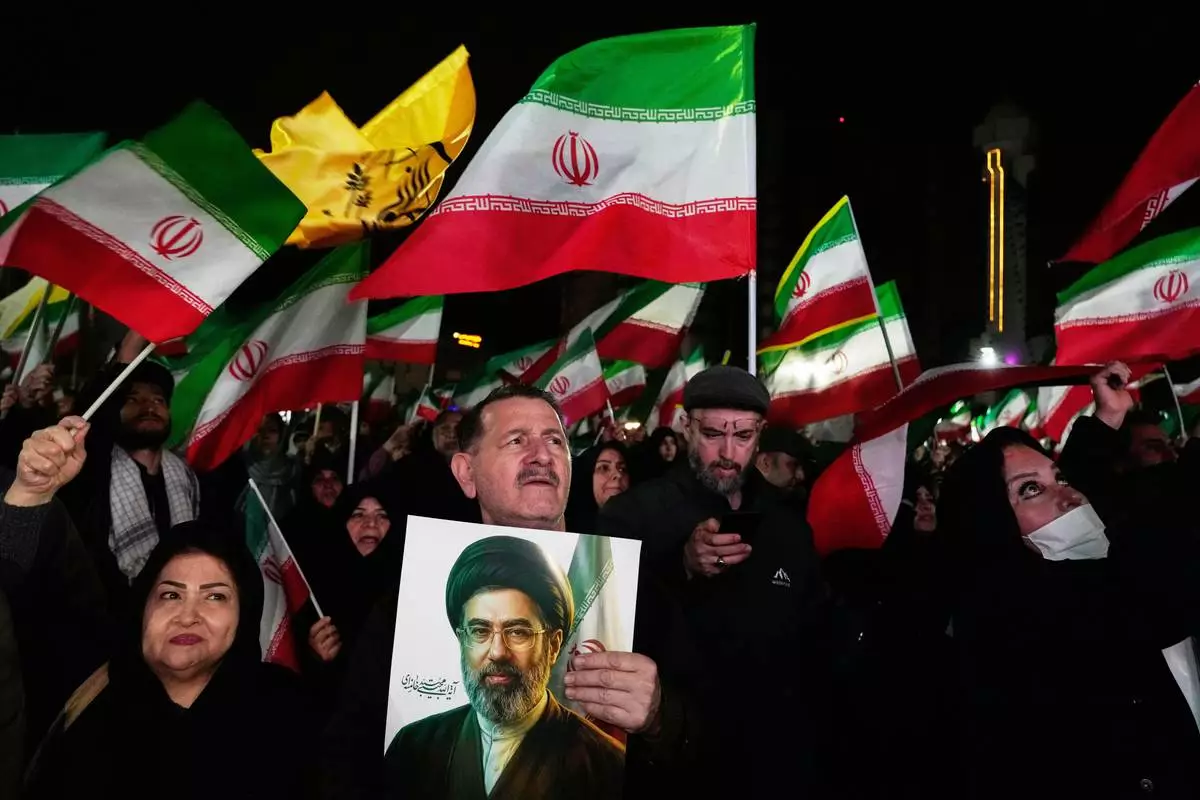
Pro-government supporters wave national flags as one of them holds a picture of the Supreme Leader Ayatollah Mojtaba Khamenei during a rally in a square in western Tehran, Iran, Wednesday, March 25, 2026. (AP Photo/Vahid Salemi)