WASHINGTON (AP) — President Donald Trump may believe the adage that the pen is mightier than the sword — as long as it's a Sharpie.
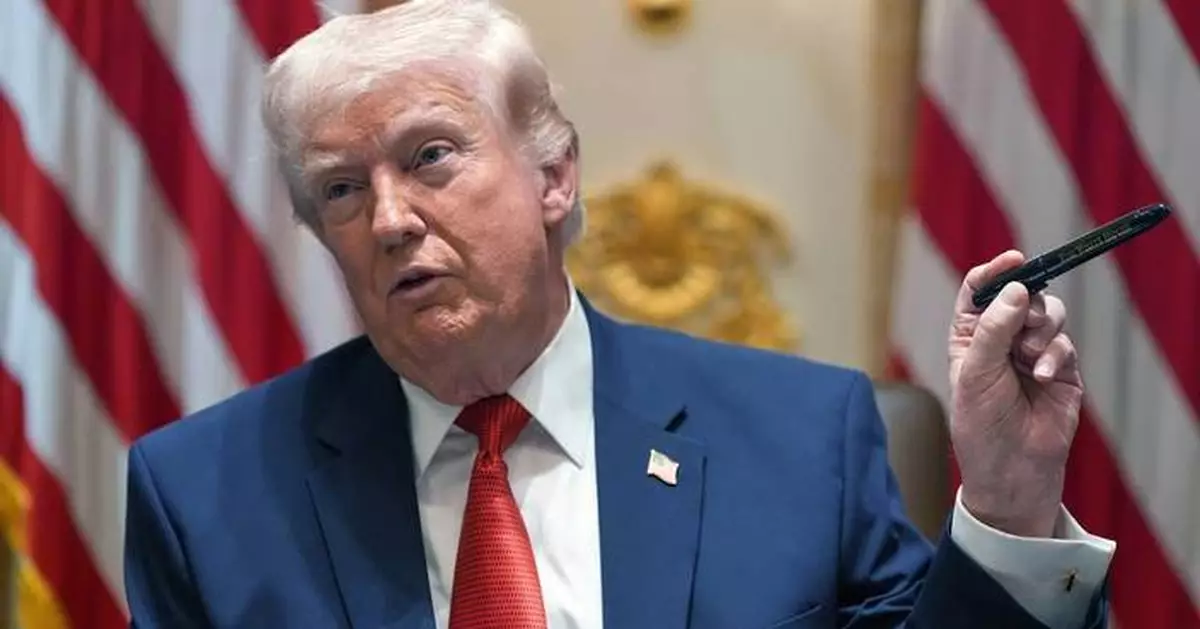
During a Cabinet meeting Thursday that discussed the war in Iran, record-long security lines at many of the nation's top airports, rising oil prices and skittish stock markets, the president interjected by holding up a custom-made black and gold Sharpie and offering a long story about how his preferred marker came to be a White House fixture.
“See this pen right here?” Trump said at the start of a roughly five-minute, on-and-off diatribe on the Sharpie. “This pen is an interesting example.”
It was one of several lengthy asides the president made during the meeting that sometimes felt especially jarring given how many more important things his top advisers could have been discussing.
The Sharpie monologue came after Defense Secretary Pete Hegseth, envoy Steve Witkoff, Vice President JD Vance and Secretary of State Marco Rubio offered sobering comments about missile strikes, Tehran's uranium enrichment efforts and the U.S. troops that remain in harm's way.
The president offered the winding tale as an example of how his business sense can lead to better, cheaper outcomes in federal spending. He was also seeking to drive home his broader, long-standing criticism that renovations to the Federal Reserve building in Washington are too expensive.
“We’ve gotta get our priorities straight,” Trump said.
The anecdote began with Trump insisting that the White House was once stocked with “beautiful” ballpoint pens that cost $1,000 each.
That presented a problem, Trump said, when, during ceremonial bill signings, he would hand out pens as keepsakes to lawmakers, supporters and various others who helped make new legislation possible. Recipients even included children, whom he lamented did not know the value of what they'd been gifted.
“Sometimes you have 30, 40 people,” Trump said.
Despite being known for a love of all things ostentatious — including the sprawling, $400 million White House ballroom he demolished the East Wing to build — Trump said giving away so many expensive pens meant “I feel guilty by nature.”
“I love the government like I love myself, economically,” Trump said. “I want to save money.”
The president said he worked with a marker maker and worried about giving the company involved too much publicity — only to divulge that it was Sharpie, a longtime favorite of his, drawing laughs from his Cabinet.
For decades as a celebrity businessman, Trump used the pens to sign autographs or mark up newspaper clippings and send them with personalized notes written in the telltale thick black ink. And, as president, Trump has continued to wield Sharpies to sign executive orders, proclamations and bills.
Trump said he contacted the company and was told that they could make a black pen with the White House logo in gold and that they wouldn't charge for it. Trump said he insisted on paying $5 per marker. Online searches reveal that typical Sharpies sell for usually $1 to $2 apiece.
“The head of Sharpie gets a call. I don’t even know who the hell he is. He said, ‘Is this really the president?’” Trump said.
It was the most attention the marker has gotten at the White House since the “ Sharpiegate ” scandal involving Hurricane Dorian during Trump’s first term. Still, Sharpie’s manufacturer, Atlanta-based Newell Brands, said in a statement that it didn’t have any information about the conversation Trump described, but that Sharpies are used by current and past U.S. presidents, elected officials, celebrities, athletes, and artists, among others.
Trump summed it up as “a business story.”
“For $5, I get a much better pen than for $1,000, and I can hand them out,” he said. “And, honestly, they’ve become hot as a pistol, so what can I tell you?”
After concluding his Sharpie recollections, Trump took a moment to revel in his own storytelling ability before offering the floor to Treasury Secretary Scott Bessent.
“Good luck, Scott,” he said as the rest of the Cabinet laughed again.
“Well, sir,” Bessent offered, “as usual, you’re a tough act to follow.”
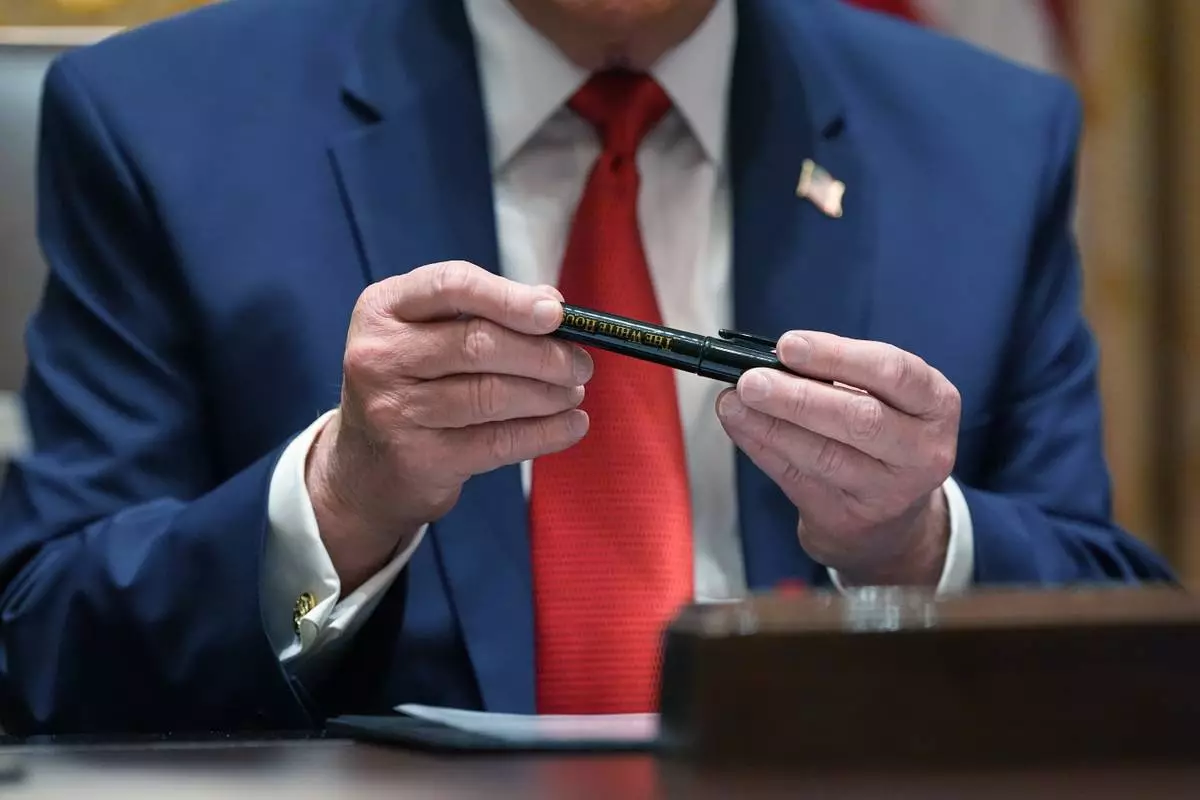
President Donald Trump holds a Sharpie pen he says was produced specifically for the White House during a Cabinet meeting at the White House, Thursday, March 26, 2026, in Washington. (AP Photo/Alex Brandon)
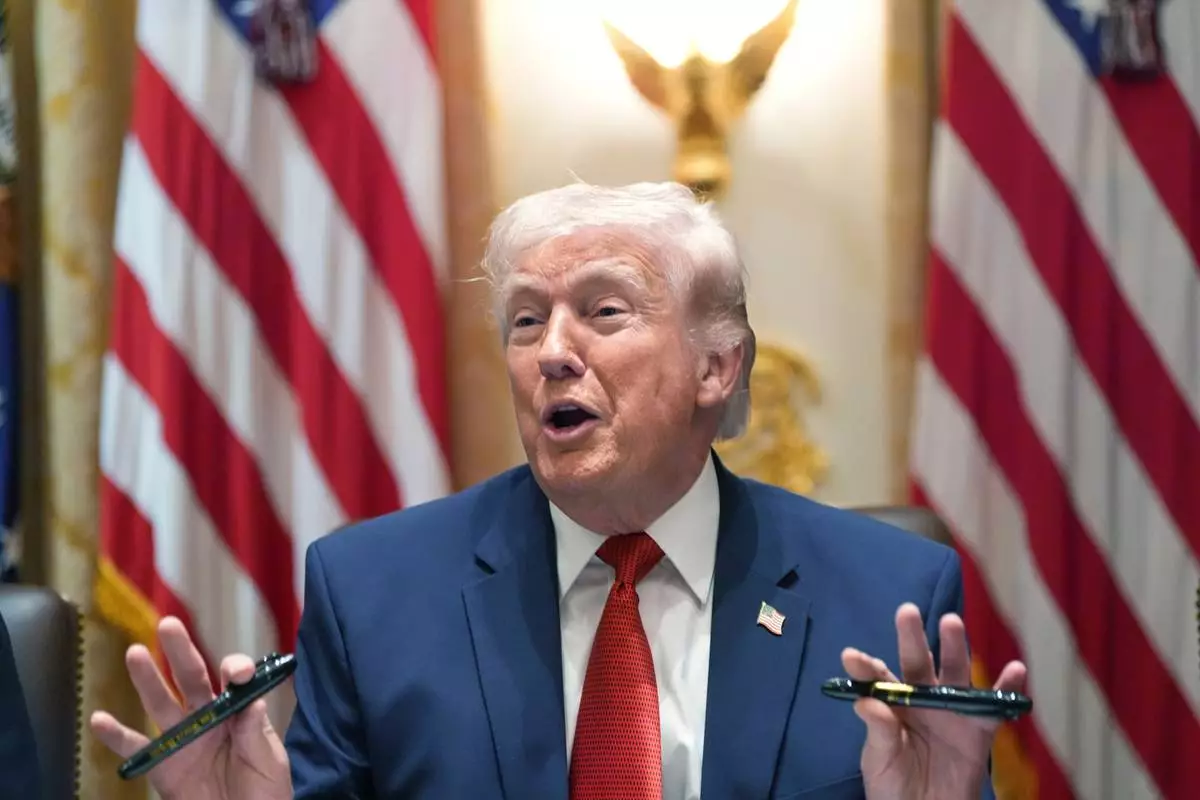
President Donald Trump speaks during a Cabinet meeting at the White House, Thursday, March 26, 2026, in Washington. (AP Photo/Alex Brandon)
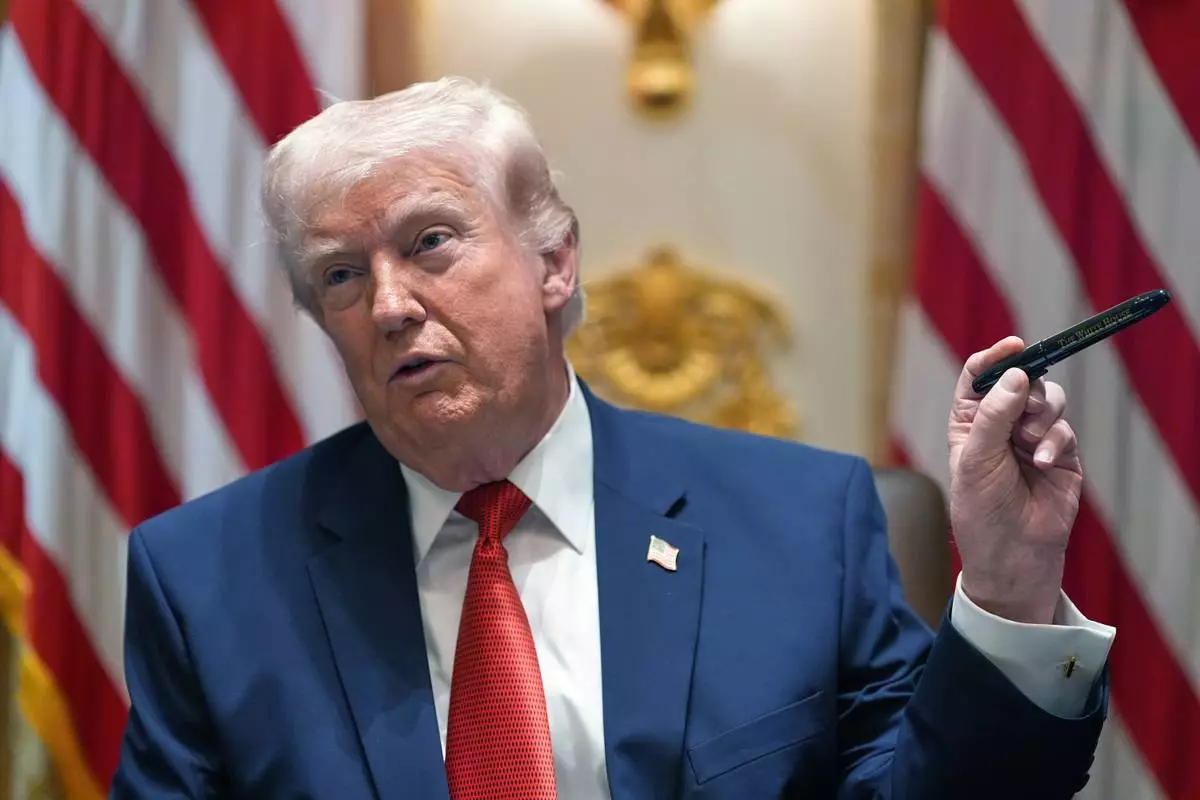
President Donald Trump speaks during a Cabinet meeting at the White House, Thursday, March 26, 2026, in Washington. (AP Photo/Alex Brandon)
NEW YORK (AP) — Stocks fell sharply Thursday, and oil prices rose as doubt took over again from hope on Wall Street about a possible end to the war with Iran.
The S&P 500 slumped 1.7% for its worst day since January and is back on track for a fifth straight losing week. That stretches back to before the Iran war began, and it would be the longest such losing streak in nearly four years.
The Dow Jones Industrial Average dropped 469 points, or 1%, and the Nasdaq composite sank 2.4% to fall more than 10% below its all-time high set early this year. That's a steep enough drop that professional investors have a name for it: a “correction.”
Stock markets likewise tumbled across much of Asia and Europe. They’re the latest flip - flops for financial markets in a week that began with big hopes after President Donald Trump said productive talks had taken place about ending the war. But Iran denied direct talks were underway and then dismissed a U.S. proposal for a ceasefire that was delivered via Pakistan.
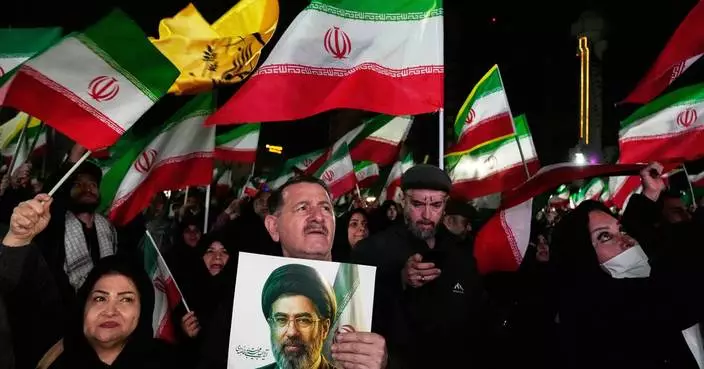
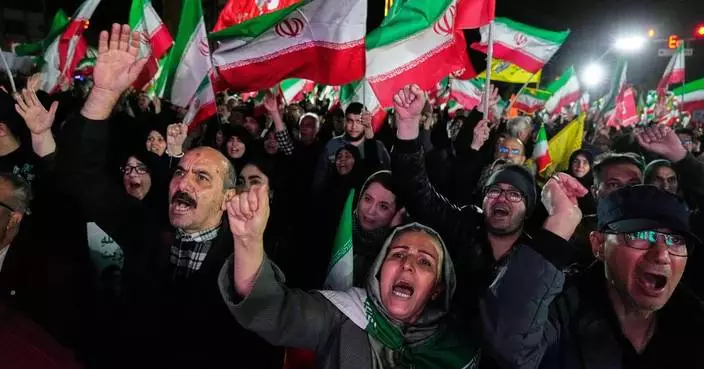
On Thursday, the fighting continued, and thousands more U.S. troops neared the region. Iran, meanwhile, tightened its grip on the crucial Strait of Hormuz. It may be creating something like a “toll booth” for tankers to get past the narrow waterway, which typically sees a fifth of the world’s oil exit the Persian Gulf through it to customers worldwide.
The price for a barrel of Brent crude oil climbed 4.8% to settle at $101.89 as hopes dimmed for a potential return to normal for the strait. That’s up from roughly $70 before the war began. Benchmark U.S. crude rose 4.6% to $94.48 per barrel.
“They better get serious soon, before it is too late,” Trump said on his social media network Thursday morning about Iran’s negotiators, “because once that happens, there is NO TURNING BACK, and it won’t be pretty!”
Just minutes after Wall Street finished its trading for the day, Trump softened his talk a bit. He said he was delaying his threat to “obliterate” Iranian power plants to April 6, allowing more time for talks.
“Talks are ongoing and, despite erroneous statements to the contrary by the Fake News Media, and others, they are going very well.”
After that, oil prices trimmed some of their gains, and Brent crude fell back toward $100 per barrel. Treasury yields also pared their big jumps in the bond market.
High Treasury yields and disruption in the bond market were big factors that Trump named a year ago when he backed off his initial threats for global tariffs made on “Liberation Day.” The moves caused critics to allege Trump always chickens out, or “TACO,” if financial markets show enough pain.
The yield on the 10-year Treasury jumped as high as 4.43% Thursday from 4.33% late Wednesday and from just 3.97% before the war started. That’s a significant leap for the bond market, and it’s already sent rates higher for mortgages and other kinds of loans for U.S. households and businesses, which slows the economy.
A report on Thursday morning said slightly more U.S. workers filed for unemployment benefits last week, though the number is still low compared with historical figures.
A slowing job market would typically encourage the Federal Reserve to cut interest rates to juice the economy. But hopes have cratered on Wall Street for a possible cut to interest rates this year, even though traders came into 2026 forecasting several. That’s because lower interest rates carry the risk of worsening inflation, and the spike in oil prices has heightened those worries.
On Wall Street, tech stocks were the heaviest weights on the market.
Meta Platforms fell 8%, and Alphabet sank 3.4% after each had held relatively steady the day before, when a jury found Instagram and YouTube liable in a landmark social-media addiction trial.
The financial penalties were small compared with the companies’ vast profits, but it could herald a watershed moment that invites more lawsuits.
Other Big Tech stocks also fell, including drops of 4.2% for Nvidia and 2% for Amazon. Apple was an outlier and inched up 0.1%.
Commercial Metals fell 4.7% after the maker of steel rebar and other products reported a weaker profit for the latest quarter than analysts expected. CEO Peter Matt said bad weather hurt its North American operations during the quarter, but underlying market conditions looked favorable.
All told, the S&P 500 fell 114.74 points to 6,477.16 and is 7.2% below its all-time high set a couple months ago. The Dow Jones Industrial Average dropped 469.38 to 45,960.11, and the Nasdaq composite sank 521.74 to 21,408.08.
In stock markets abroad, Germany’s DAX lost 1.5%, Hong Kong’s Hang Seng sank 1.9% and South Korea’s Kospi dropped 3.2%. Japan’s Nikkei 225 had one of the world’s milder losses, at 0.3%.
AP Business Writers Chan Ho-him and Matt Ott contributed.
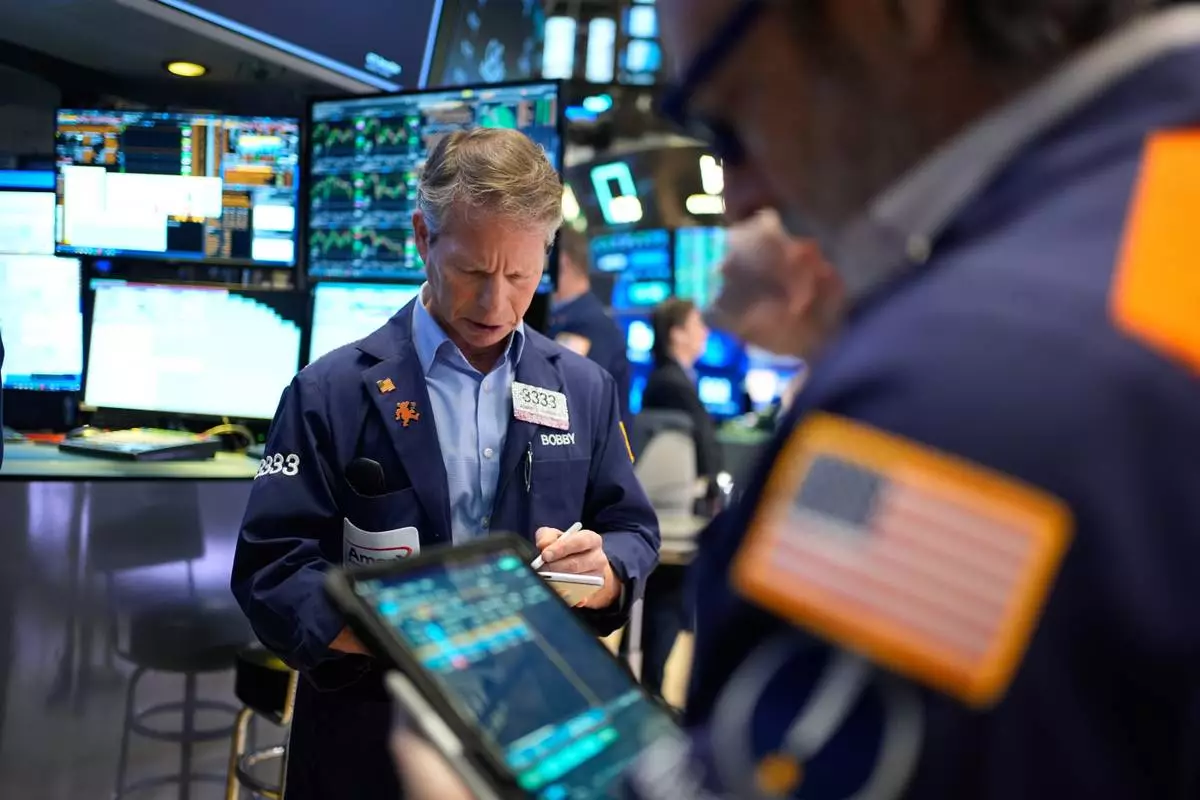
Bobby Charmak works on the floor at the New York Stock Exchange in New York, Wednesday, March 25, 2026. (AP Photo/Seth Wenig)
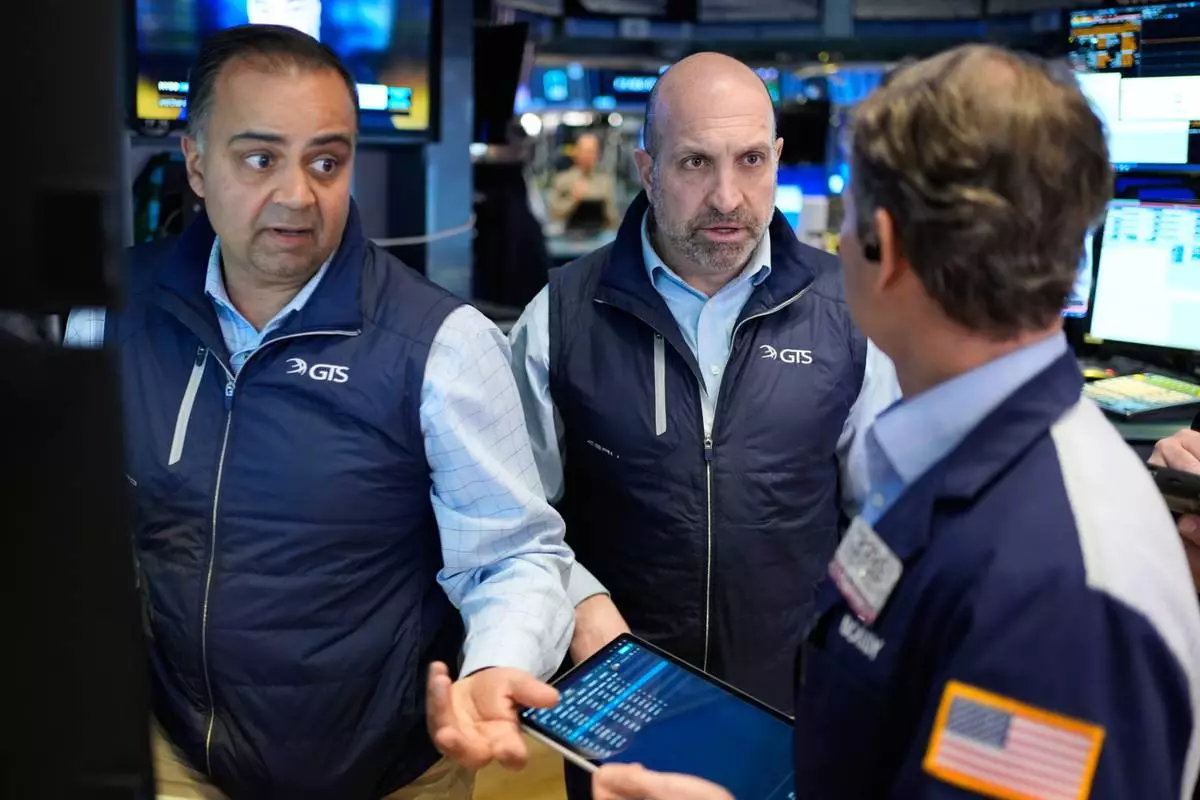
James Denaro, center, and Dilip Patel, left, work on the floor at the New York Stock Exchange in New York, Wednesday, March 25, 2026. (AP Photo/Seth Wenig)
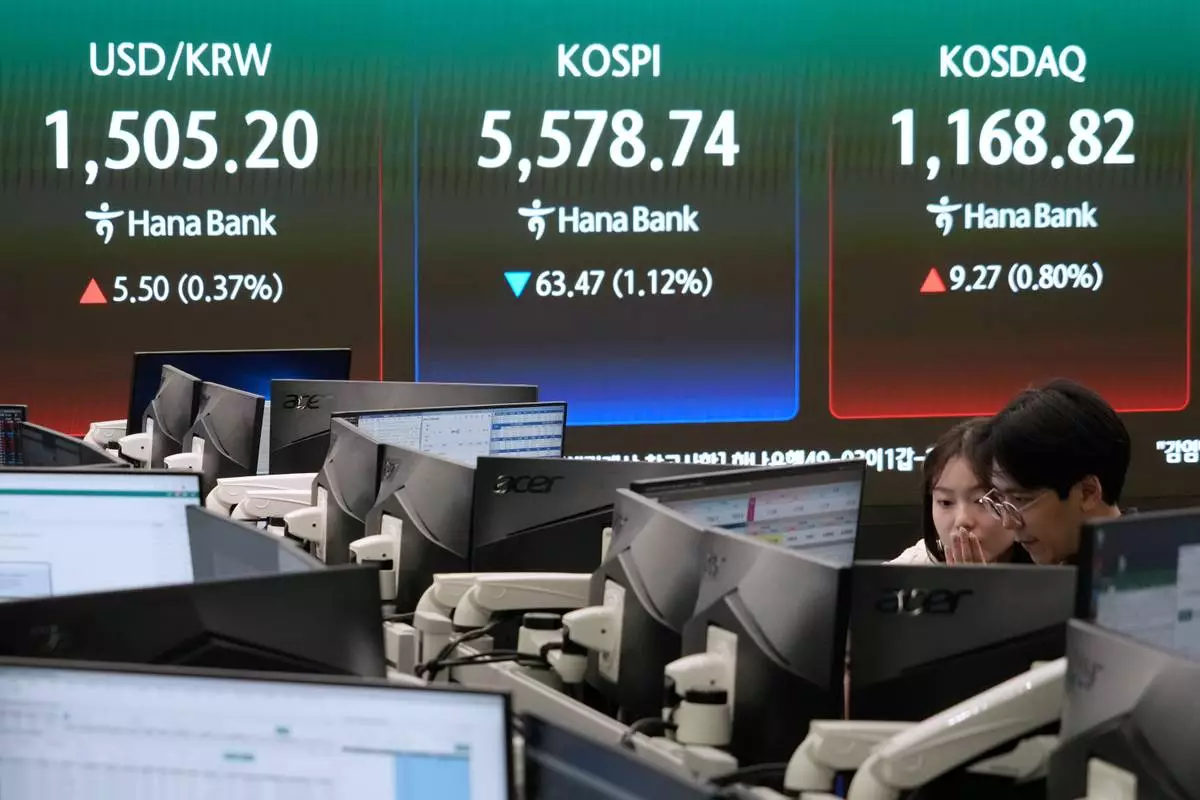
Currency traders watch monitors near a screen showing the Korea Composite Stock Price Index (KOSPI), top center, and the foreign exchange rate between U.S. dollar and South Korean won, top left, at the foreign exchange dealing room of the Hana Bank headquarters in Seoul, South Korea, Thursday, March 26, 2026. (AP Photo/Ahn Young-joon)
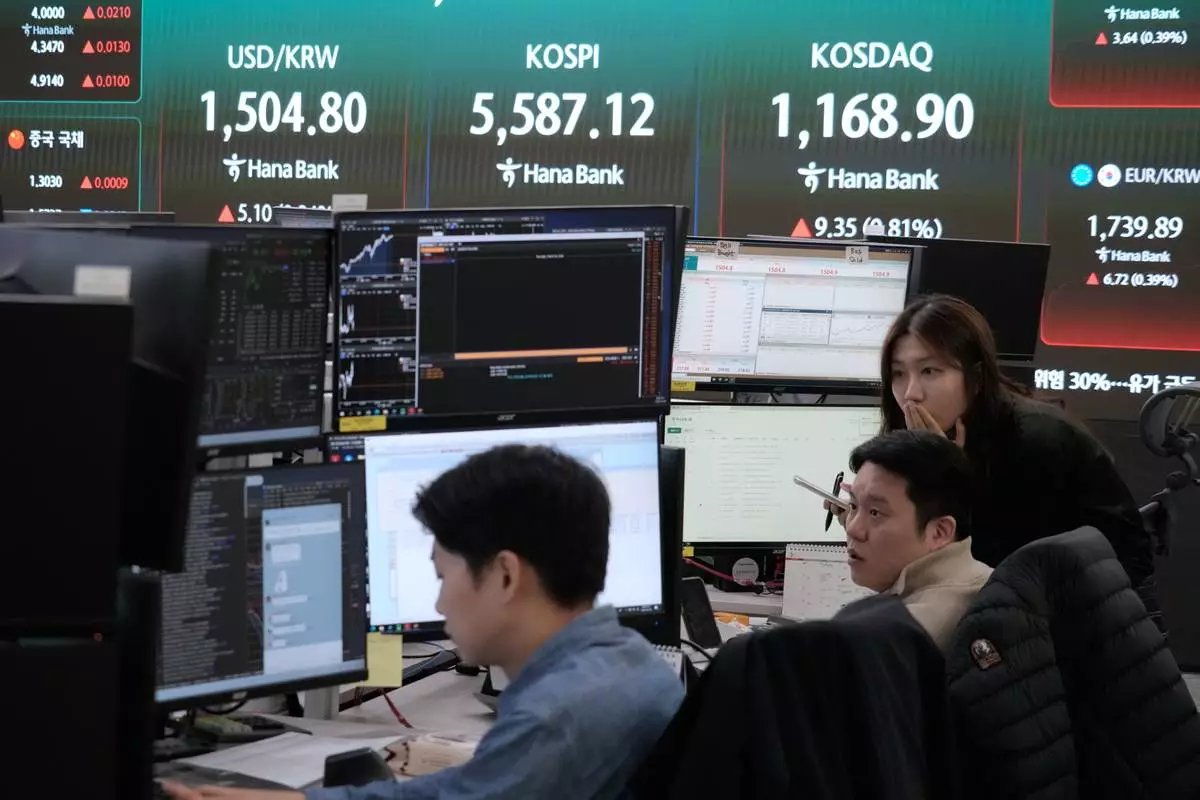
Currency traders watch monitors near a screen showing the Korea Composite Stock Price Index (KOSPI), top center, and the foreign exchange rate between U.S. dollar and South Korean won, top left, at the foreign exchange dealing room of the Hana Bank headquarters in Seoul, South Korea, Thursday, March 26, 2026. (AP Photo/Ahn Young-joon)
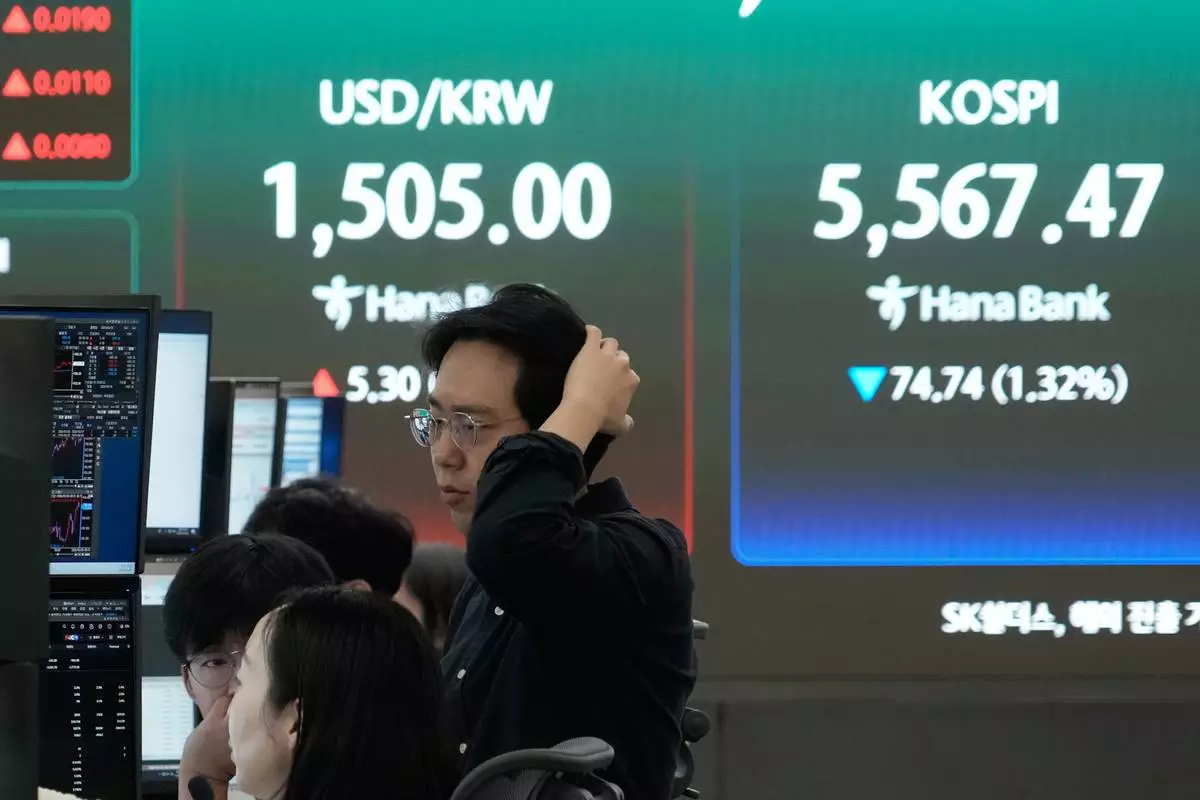
Currency traders watch monitors near a screen showing the Korea Composite Stock Price Index (KOSPI), right, and the foreign exchange rate between U.S. dollar and South Korean won at the foreign exchange dealing room of the Hana Bank headquarters in Seoul, South Korea, Thursday, March 26, 2026. (AP Photo/Ahn Young-joon)