LONDON & NEW YORK--(BUSINESS WIRE)--Mar 27, 2026--
Vertical Aerospace (“Vertical” or “Company”) [NYSE:EVTL], a global aerospace and technology company that is pioneering electric aviation, today announced it has selected Isoclima S.p.A., a global leader in high performance transparent solutions, as a strategic supplier for the Valo aircraft.
This press release features multimedia. View the full release here: https://www.businesswire.com/news/home/20260327737904/en/
Under the agreement, Isoclima will design and manufacture the full transparency suite for Valo, including pilot and passenger canopies and glazing systems. This long-term partnership provides supply stability and technical continuity as Vertical advances the Valo programme through certification, production and entry into commercial service.
Certification and Commercialisation
Aircraft transparencies are certification-critical components. For eVTOL aircraft, they must withstand high operational cycles, bird-strike requirements, structural loads and environmental stress - while maintaining exceptional visibility and durability.
Early engagement with a proven supplier is essential to protecting certification timelines and reducing programme risk. Isoclima’s vertically integrated capabilities, including in-house bird-strike testing and advanced modelling, will support the Valo programme into commercialisation.
A Proven Aerospace and Industrial Partner
Isoclima is a recognized global partner in aerospace transparencies, supplying certified glazing systems to global OEMs. Beyond aerospace, Isoclima also operates across high performance, safety-critical sectors, including civilian armored vehicles and high performance cars, defense and security, rail and high-speed mobility, high-end yachting, security architecture and advanced technologies collaborations.
This cross-sector expertise in complex, transparent solutions enables continuous innovation in materials, geometries, and performance, directly benefitting next generation aerospace platforms like Vertical in its strategy of partnering with experienced industrial suppliers capable of scaling production. The agreement further formalises the core supply chain for Valo, alongside Honeywell, Aciturri, Evolito and Syensqo.
Stuart Simpson, CEO at Vertical Aerospace, said:
“Delivering Valo requires world-class partners with deep certification expertise and proven manufacturing capability. Isoclima brings both. This partnership strengthens our supply chain and supports our path to bringing a certifiable, scalable aircraft to market.”
Liviana Forza, CEO, at Isoclima, said:
“We are proud to partner with Vertical Aerospace on the Valo programme. This collaboration reflects our commitment to enabling next-generation mobility through advanced, certified transparencies. Leveraging our aerospace heritage and cross-sector innovation capabilities, we are well positioned to support Valo from development through certification and into industrial scale production.”
About Vertical Aerospace
Vertical Aerospace is a global aerospace and technology company pioneering electric aviation. Vertical is creating a safer, cleaner, and quieter way to travel. Valo is a piloted, four-passenger, Electric Vertical Take-Off and Landing (eVTOL) aircraft, with zero operating emissions. Vertical is also developing a hybrid-electric variant, offering increased range and mission flexibility to meet the evolving needs of the advanced air mobility market.
Vertical combines partnerships with leading aerospace companies, including Honeywell, Syensqo and Aciturri, with its own proprietary battery and propeller technology to develop the world’s most advanced and safest eVTOL.
Vertical has c.1,500 pre-orders of Valo, with customers across four continents, including American Airlines, Avolon, Bristow, GOL and Japan Airlines. Certain customer obligations are expected to be fulfilled via third-party agreements. Headquartered in Bristol, UK, Vertical’s experienced leadership team comes from top-tier aerospace and automotive companies such as Rolls-Royce, Airbus, GM, and Leonardo. Together, they have previously certified and supported over 30 different civil and military aircraft and propulsion system.
About Isoclima
Isoclima Group is an international leader in the design, engineering, and production of high-performance transparent solutions for aerospace, civilian and military armored vehicles, high performance cars, yachting, rail, and security architecture.
Recognized worldwide for innovation, quality, and customization, Isoclima guarantees safety, strength combined with lightness – as required in aviation – complex curvatures, durability, excellent optical quality, and compliance with the most stringent regulations. The company collaborates with leading global players and continues to invest in cutting-edge technologies to ensure safety, performance, and sustainability.
Forward-Looking Statements
This press release contains forward-looking statements within the meaning of the U.S. Private Securities Litigation Reform Act of 1995 that relate to our current expectations and views of future events. We intend such forward-looking statements to be covered by the safe harbor provisions for forward-looking statements as contained in Section 27A of the Securities Act and Section 21E of the Exchange Act. Any express or implied statements contained in this press release that are not statements of historical fact may be deemed to be forward-looking statements, including, without limitation, statements regarding a long-term partnership with Isoclima for the design, development, qualification, and serial production of aircraft transparencies, Isoclima’s supply and obligations under the partnership agreement, the efficiencies, reliability and expertise expected, the design and manufacture of our aircraft and the hybrid-electric variant, certification and the commercialization of our aircraft and our ability to achieve regulatory certification of our aircraft product on any particular timeline or at all, the features and capabilities of the aircraft, business strategy and plans and objectives of management for future operations, including the building and testing of our prototype aircrafts on timelines projected, completion of the piloted test programme phases, selection of suppliers; the differential strategy compared to our peer group; expectations surrounding pre-orders and commitments; as well as statements that include the words “expect,” “intend,” “plan,” “believe,” “project,” “forecast,” “estimate,” “may,” “should,” “anticipate,” “will,” “aim,” “potential,” “continue,” “are likely to” and similar statements of a future or forward-looking nature. Forward-looking statements are neither promises nor guarantees, but involve known and unknown risks and uncertainties that could cause actual results to differ materially from those projected, including, without limitation, the other important factors discussed under the caption “Risk Factors” in our Annual Report on Form 20-F filed with the U.S. Securities and Exchange Commission (“SEC”) on March 11, 2025, as such factors may be updated from time to time in our other filings with the SEC. Any forward-looking statements contained in this press release speak only as of the date hereof and accordingly undue reliance should not be placed on such statements. We disclaim any obligation or undertaking to update or revise any forward-looking statements contained in this press release, whether as a result of new information, future events or otherwise, other than to the extent required by applicable law.

Isoclima will design and manufacture the full transparency suite for Vertical's Valo certification aircraft.
VAUX-DE-CERNAY, France (AP) — Group of Seven foreign ministers met on Friday in France to discuss the Russia-Ukraine conflict, with deep divisions apparent over the U.S.-Israeli war with Iran, following U.S. President Donald Trump’s repeated complaints that America’s allies have ignored or rejected requests for help in the military operation and in confronting Iran’s retaliatory attacks, including the closure of the Strait of Hormuz to most international shipping.
U.S. Secretary of State Marco Rubio joined his counterparts from the G7 just 24 hours after Trump's latest round of insults lobbed at NATO and as instability in oil markets persisted with the Iran war entering its fourth week along with uncertainty over the status of potential negotiations to end the crisis.
Most of America’s closest allies have greeted the war with deep skepticism, sentiments that were on display as the G7 foreign ministers met at a historic 12th-century abbey in Vaux-de-Cernay, outside Paris, even as they urged a diplomatic solution to resolve the situation.
As the diplomats gathered, France’s Minister of the Armed Forces Catherine Vautrin said the war in the Middle East “is not ours,” adding that the French position is strictly defensive.
“The aim is truly this diplomatic approach, which is the only one that can guarantee a return to peace,” she said on Europe 1 and CNews. “Many countries are concerned, and it is absolutely essential that we find a solution.”
British Foreign Secretary Yvette Cooper, meanwhile, said Britain also favored a diplomatic path, acknowledging differences with the United States. “We have taken the approach of supporting defensive action, but also we’ve taken a different approach on the offensive action that has taken place as part of this conflict,” she said.
Rubio already faced difficulties in trying to sell the U.S. strategy for the Iran conflict, but Trump’s vitriolic comments about NATO countries not stepping up to help the U.S. and Israel during a Cabinet meeting on Thursday will likely make it an even tougher task.
Of the G7 nations — besides the U.S. — Britain, Canada, France, Germany and Italy are members of the trans-Atlantic military alliance. Japan is the only one that is not.
“We are very disappointed with NATO because NATO has done absolutely nothing,” Trump said in comments echoed later by his top diplomat.
“Frankly, I think countries around the world, even those that are out there complaining about this a little bit, should actually be grateful that the United States has a president that’s willing to confront a threat like this,” Rubio said Thursday.
Rubio also still has work to do to smooth things over with allies like those in Europe that have faced criticism or outright threats from Trump and others in his Republican administration. The Europeans are still smarting over Trump's earlier demands to take over Greenland from NATO ally Denmark and are concerned about U.S. support for Ukraine in its war with Russia. The conflict in the Middle East has added another point of tension.
Shortly before leaving Washington, however, Rubio told reporters he was not concerned about G7 unhappiness with the war.
“I’m not there to make them happy,” he said. “I get along with all of them on a personal level, and we work with those governments very carefully, but the people I’m interested in making happy are the people of the United States. That’s who I work for. I don’t work for France or Germany or Japan.”
Trump has complained that he has not been able to rally support behind his war of choice in Iran and that NATO and most other allies have rejected his calls to help secure the Strait of Hormuz, where Iran's chokehold has disrupted oil shipments and pushed up energy prices.
“We’re there to protect NATO, to protect them from Russia. But they’re not there to protect us,” Trump said Thursday. He later added: “I never thought we needed them. I was more doing a test.”
Before the U.S. leader's comments, NATO Secretary-General Mark Rutte reiterated the increase in defense spending by alliance members — which Trump has urged — saying Europe and Canada had been “overreliant on U.S. military might” but a “shift in mindset” has taken hold.
Rutte said NATO has been clear that Iran cannot have a nuclear weapon and has “long recognized the threat Iran’s missile program posed to allies and their interests. And what the United States is currently doing is degrading those capabilities, both the nuclear and the missile.”
Iran has long insisted that its nuclear program is peaceful, and its ambassador to the International Atomic Energy Agency has said that the United States and Israel's “justification that Iran wants to develop nuclear weapons is simply a big lie.” The ambassador, Reza Najafi, has accused the U.S. and Israel of attacking ”Iran’s peaceful safeguarded nuclear facilities."
France is hosting the G7 meeting near Versailles and has been highly skeptical of the war. Besides Vautrin's comments on Friday, the chief of the French defense staff, Gen. Fabien Mandon, complained this week that U.S. allies had not been informed about the start of hostilities.
“They have just decided to intervene in the Near and Middle East without notifying us,” Mandon said, lamenting that the U.S. "is less and less predictable and doesn’t even bother to inform us when it decides to engage in military operations."
However, 35 countries joined military talks hosted by Mandon on how to reopen the Strait of Hormuz “once the intensity of hostilities has sufficiently decreased,” France’s Defense Ministry said.
Rubio said that with Iran threatening global shipping, countries that care about international law “should step up and deal with it.”
Similar sentiments to Mandon's have been expressed by other allies that also worry about the U.S. commitment to Ukraine as the Iran war closes in on four weeks.
“We must avoid further destabilization, secure our economic freedom and develop perspectives for an end of and the time after the hostilities,” German Foreign Minister Johann Wadephul said Thursday. “Our joint support for Ukraine ... must not crumble now. That would be a strategic mistake with a view to Euro-Atlantic security.”
Associated Press writers Lorne Cook in Brussels, John Leicester in Paris and Geir Moulson in Berlin contributed to this report.
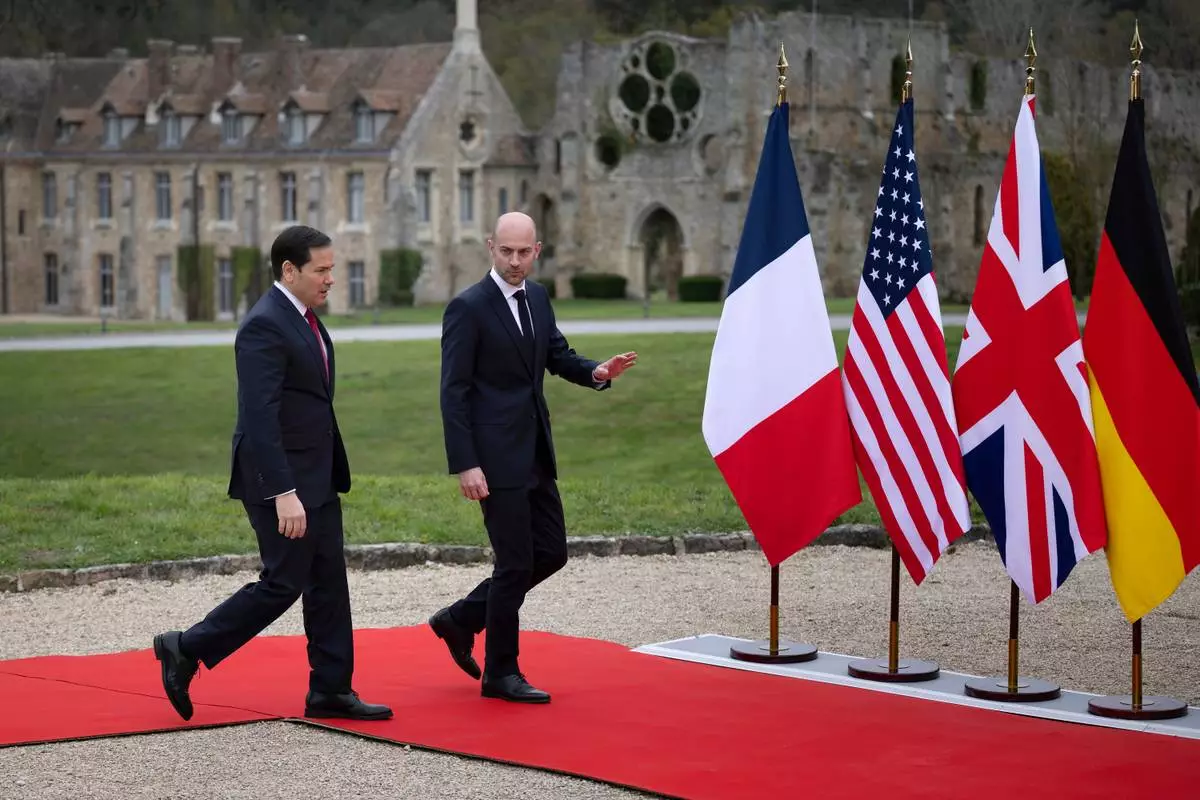
France's Foreign Affairs Minister Jean-Noel Barrot, right, welcomes U.S. Secretary of State Marco Rubio during a G7 Foreign Ministers' meeting at the Vaux-de-Cernay Abbey in Cernay-la-Ville outside Paris, Friday, March 27, 2026. (Brendan Smialowski/Pool Photo via AP)
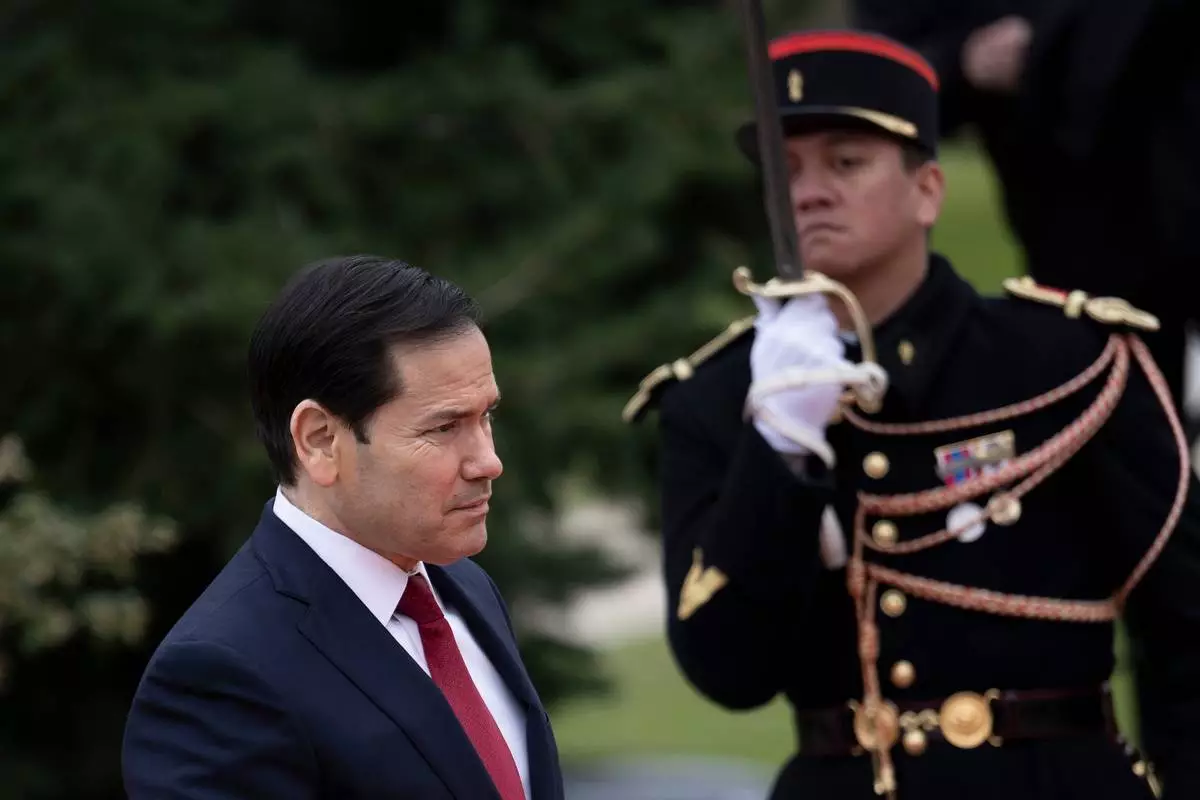
U.S. Secretary of State Marco Rubio arrives to attend a G7 Foreign Ministers' meeting at the Vaux-de-Cernay Abbey in Cernay-la-Ville outside Paris, Friday, March 27, 2026. (Brendan Smialowski/Pool Photo via AP)
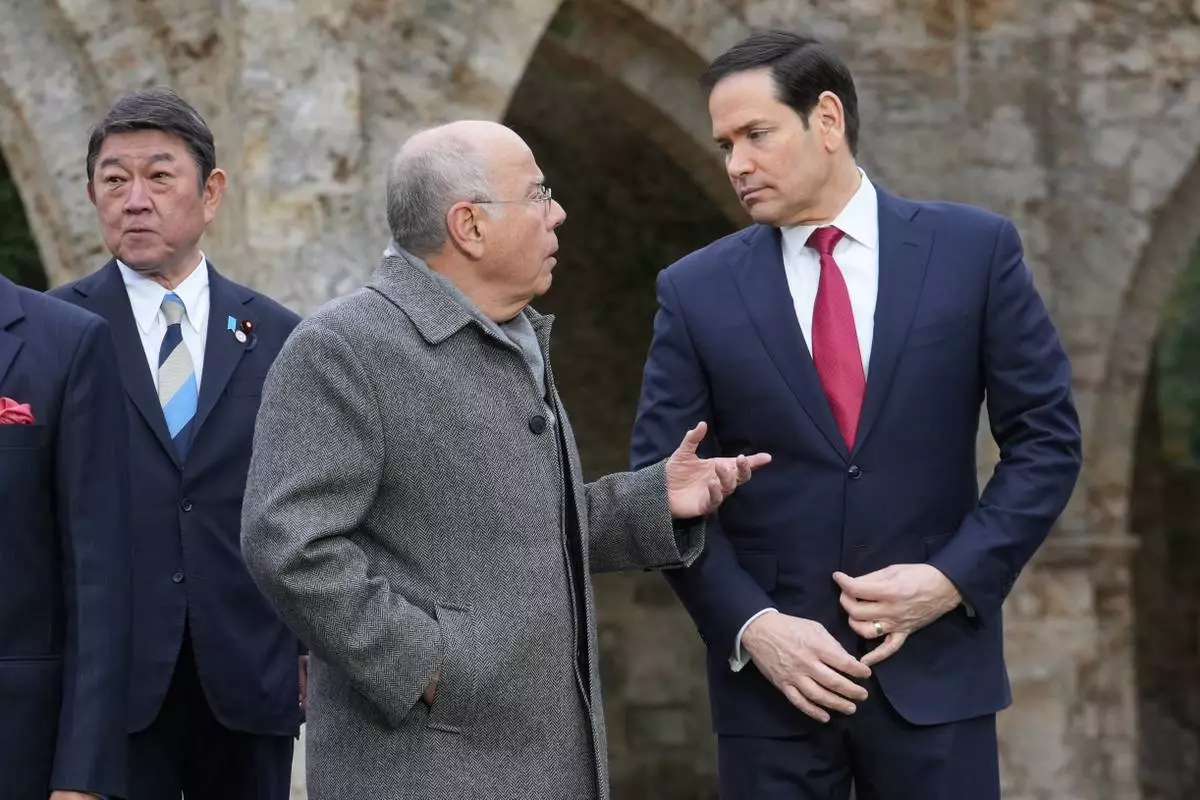
Brazil's Foreign Minister Mauro Vieira, left, and U.S. Secretary of State Marco Rubio talk during the G7 Foreign Ministers' meeting with partner countries in Cernay-la-Ville outside Paris, France, Friday, March 27, 2026. (AP Photo/Michel Euler)
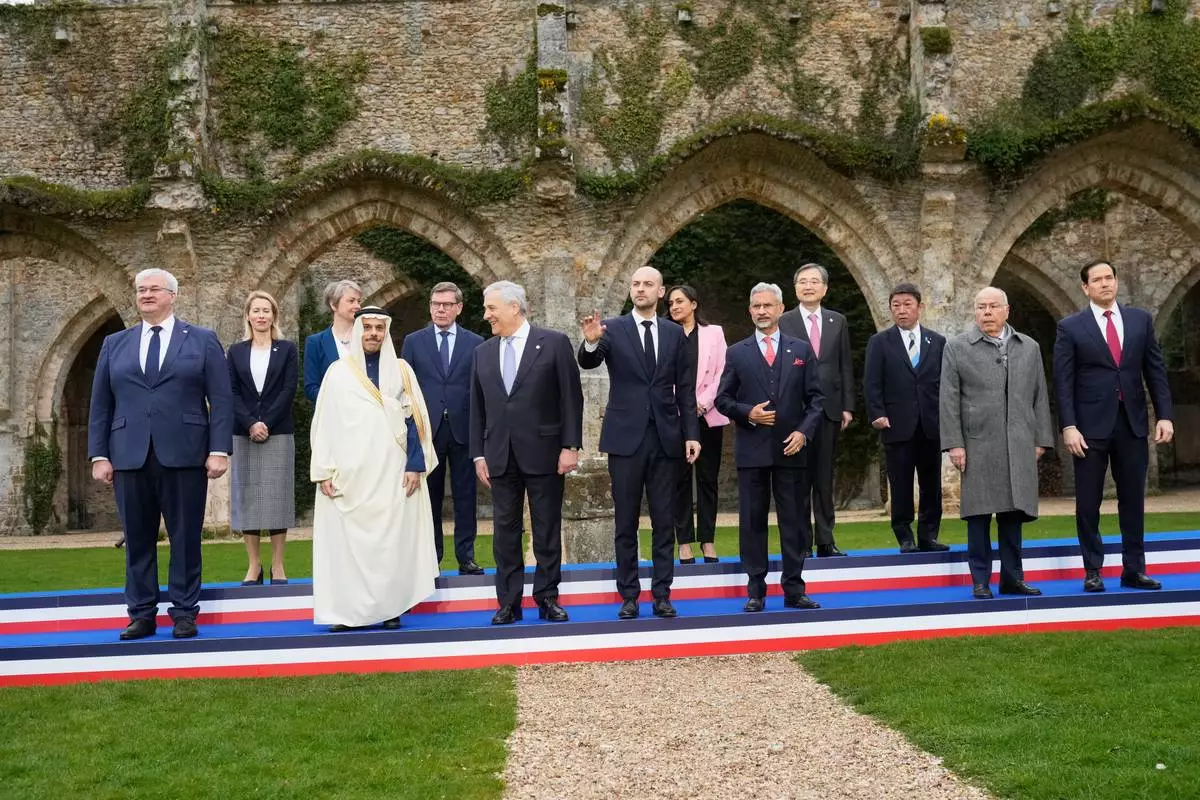
From left: Ukraine's Foreign Minister Andriy Sybiga, EU High Representative and Vice-President for Foreign Affairs and Security Policy Kaja Kallas, Britain's Foreign Secretary Yvette Cooper, Saudi Arabia's Foreign Minister Faisal bin Farhan, Germany's Foreign Minister Johann Wadephul, Italy's Foreign Minister Antonio Tajani, Canada's Foreign Minister Anita Anand, France's Foreign Affairs Minister Jean-Noel Barrot, South Korea's Foreign Minister Cho Hyun, India's Foreign Minister Subrahmanyam Jaishankar, Japan's Foreign Minister Toshimitsu Motegi, Brazil's Foreign Minister Mauro Vieira and U.S. Secretary of State Marco Rubio pose for a photo during the G7 Foreign Ministers' meeting with partner countries in Cernay-la-Ville outside Paris, France, Friday, March 27, 2026. (AP Photo/Michel Euler)
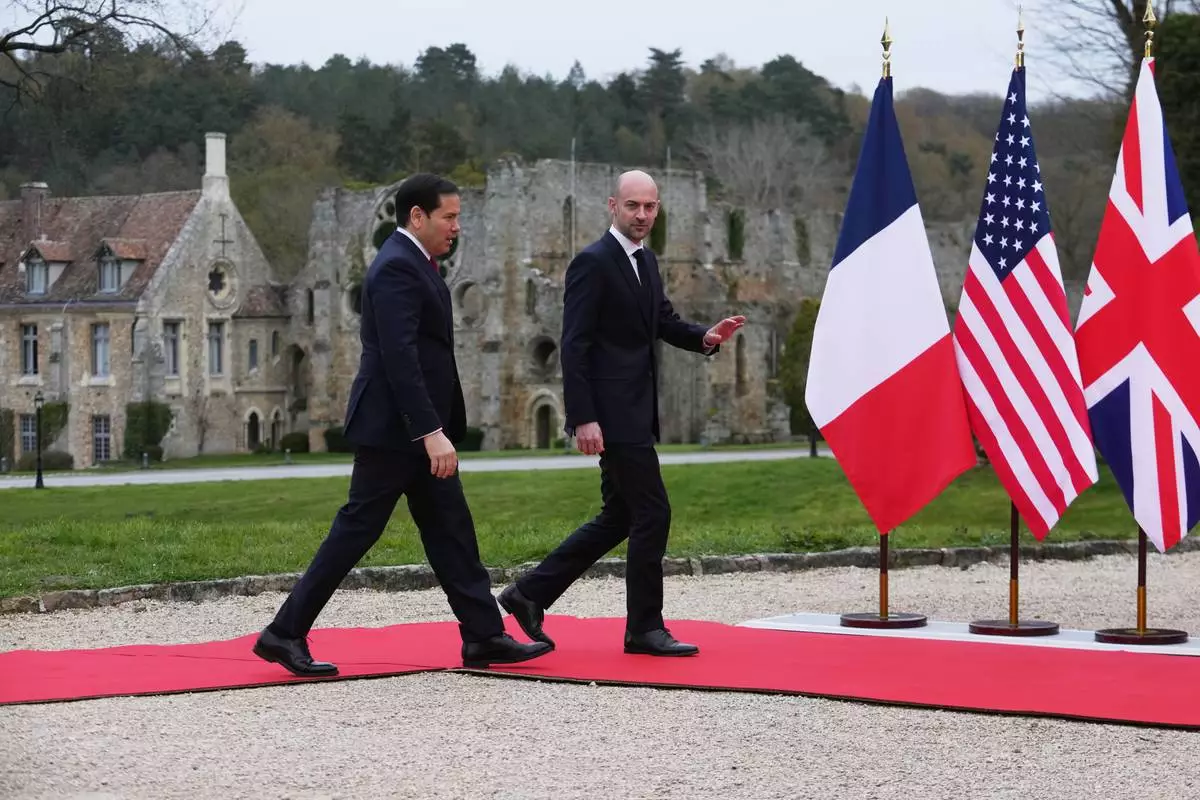
France's Foreign Affairs Minister Jean-Noel Barrot, right, greets U.S. Secretary of State Marco Rubio as he arrives at the G7 Foreign Ministers' meeting with partner countries in Cernay-la-Ville outside Paris, France, Friday, March 27, 2026. (AP Photo/Michel Euler)
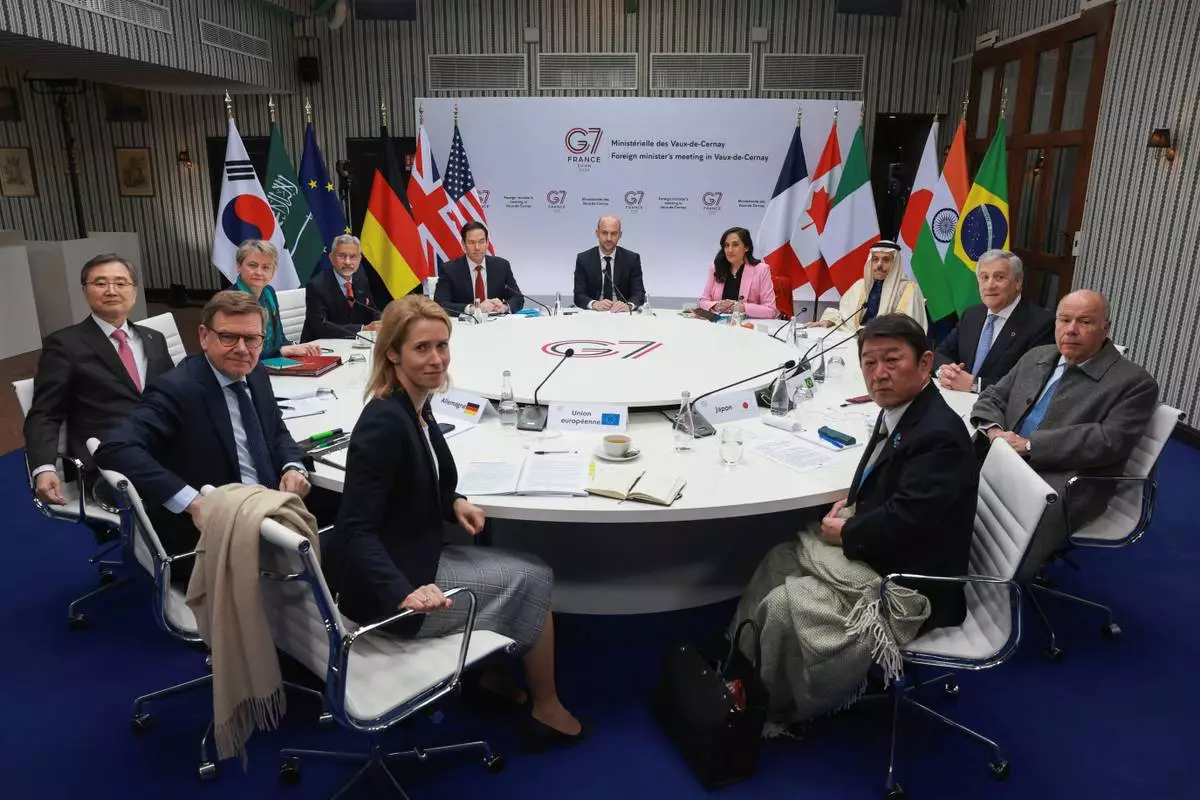
From bottom centre to left: EU High Representative and Vice-President for Foreign Affairs and Security Policy Kaja Kallas, Germany's Foreign Minister Johann Wadephul, South Korea's Foreign Minister Cho Hyun, Britain's Foreign Secretary Yvette Cooper, India's Foreign Minister Subrahmanyam Jaishankar, U.S. Secretary of State Marco Rubio, France's Foreign Affairs Minister Jean-Noel Barrot, Canada's Foreign Minister Anita Anand, Saudi Arabia's Foreign Minister Faisal bin Farhan, Italy's Foreign Minister Antonio Tajani, Brazil's Foreign Minister Mauro Vieira and Japan's Foreign Minister Toshimitsu Motegi attend talks during a G7 Foreign Ministers' meeting with Partner Countries in Cernay-la-Ville outside Paris, Friday, March 27, 2026. (Stephanie Lecocq/Pool Photo via AP)
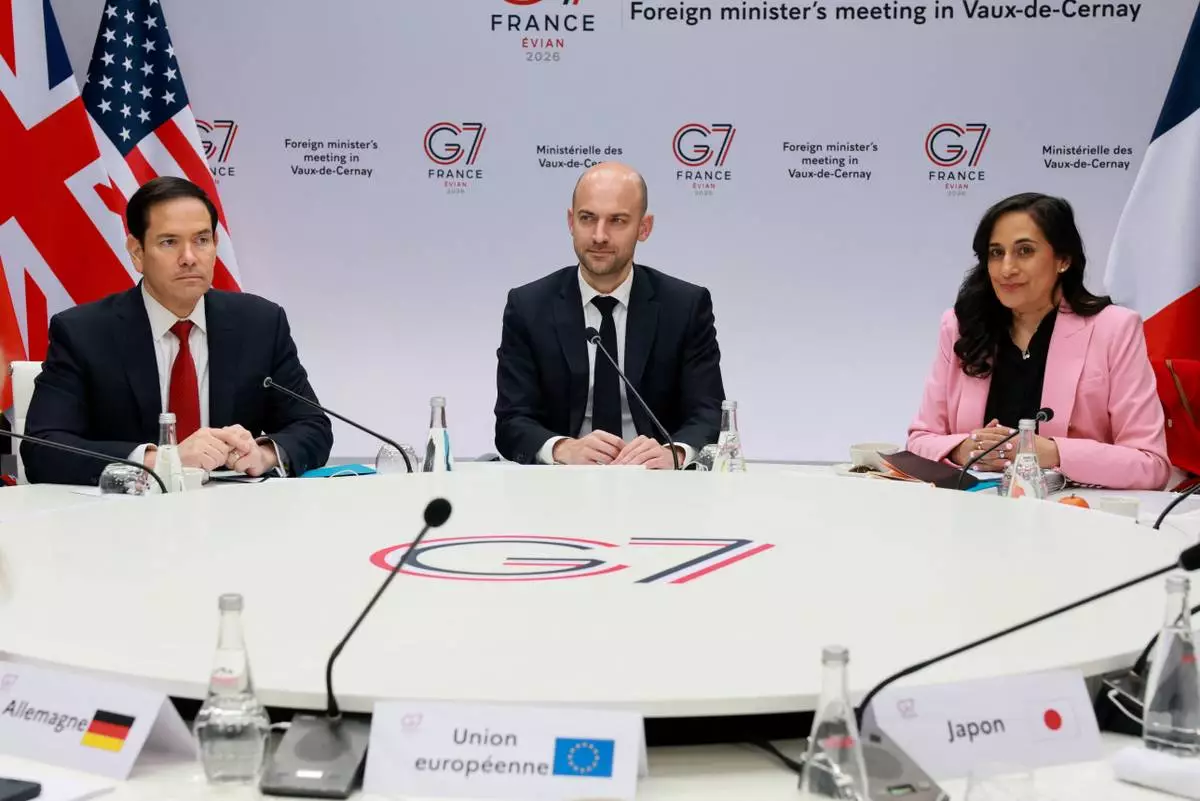
From left: U.S. Secretary of State Marco Rubio, France's Minister for Europe and Foreign Affairs Jean-Noel Barrot and Canada's Foreign Minister Anita Anand attend a working session on the second day of the G7 Foreign Ministers' Meeting in Cernay-la-Ville near Paris, March 27, 2026. (Stephanie Lecocq/Pool Photo via AP)
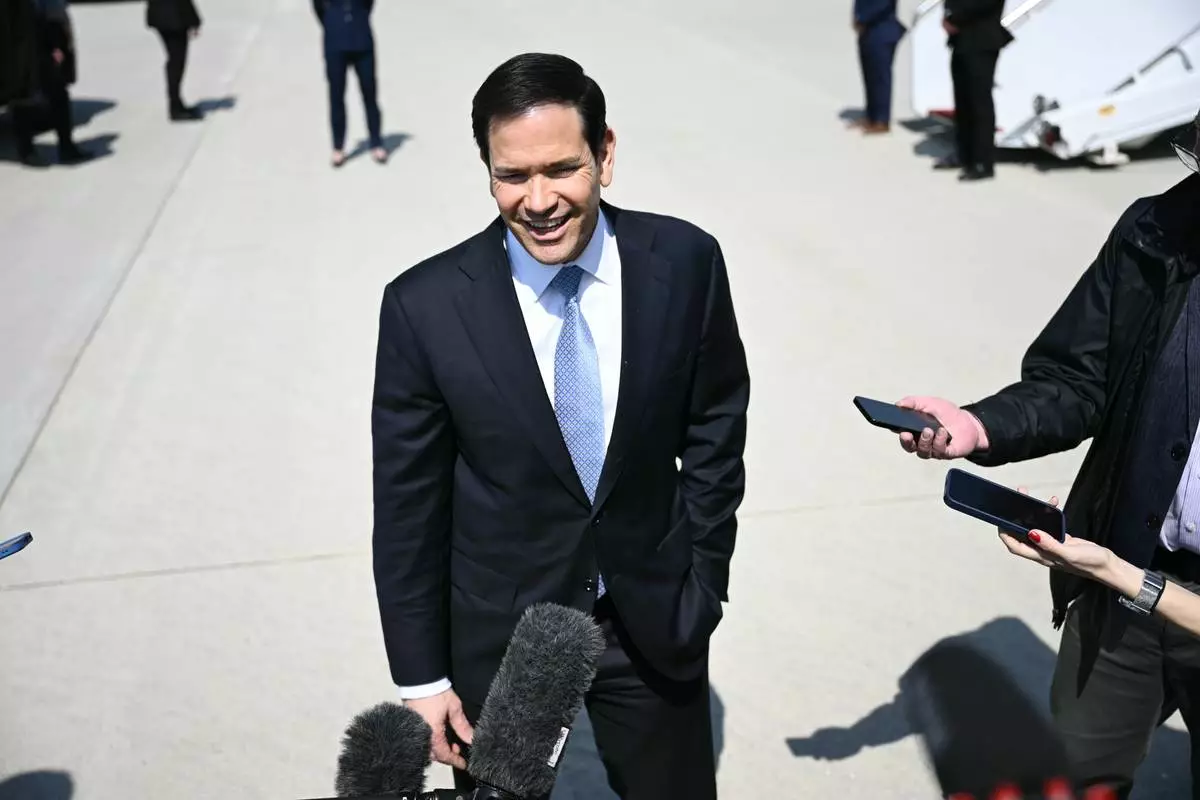
Secretary of State Marco Rubio speaks to reporters before boarding a plane at Joint Base Andrews, Md., Thursday, March 26, 2026. (Brendan Smialowski/Pool Photo via AP)
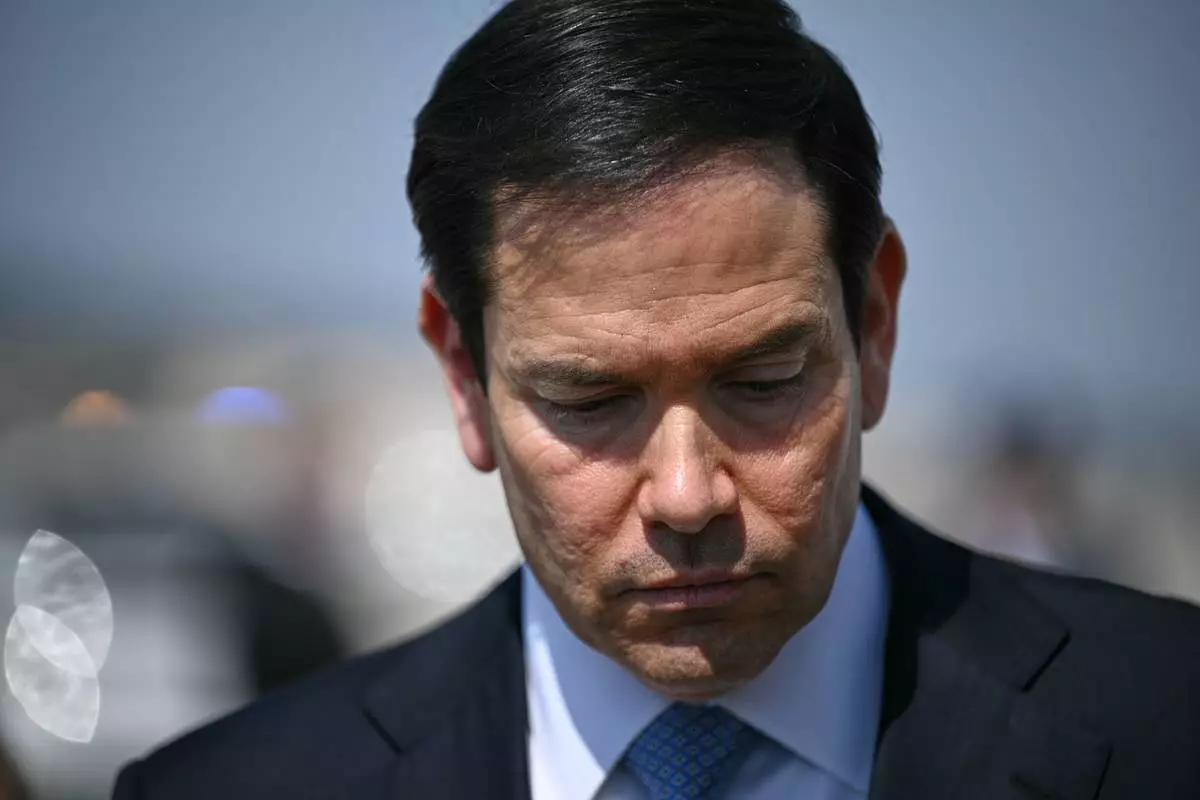
Secretary of State Marco Rubio speaks to reporters before boarding a plane at Joint Base Andrews, Md., Thursday, March 26, 2026. (Brendan Smialowski/Pool Photo via AP)
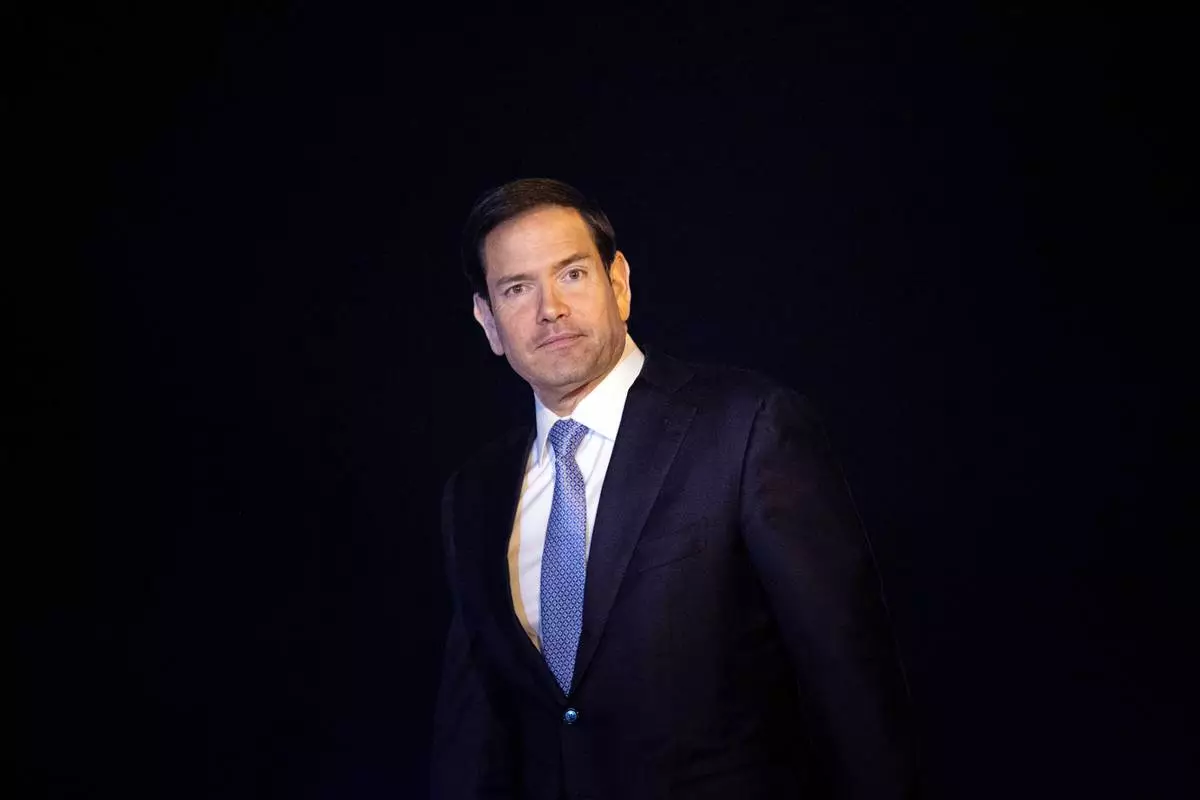
U.S. Secretary of State Marco Rubio arrives at Paris-Le Bourget Airport, in Le Bourget, France, early Friday, March 27, 2026, to take part in the G7 foreign ministers' meeting. (Brendan Smialowski/Pool Photo via AP)
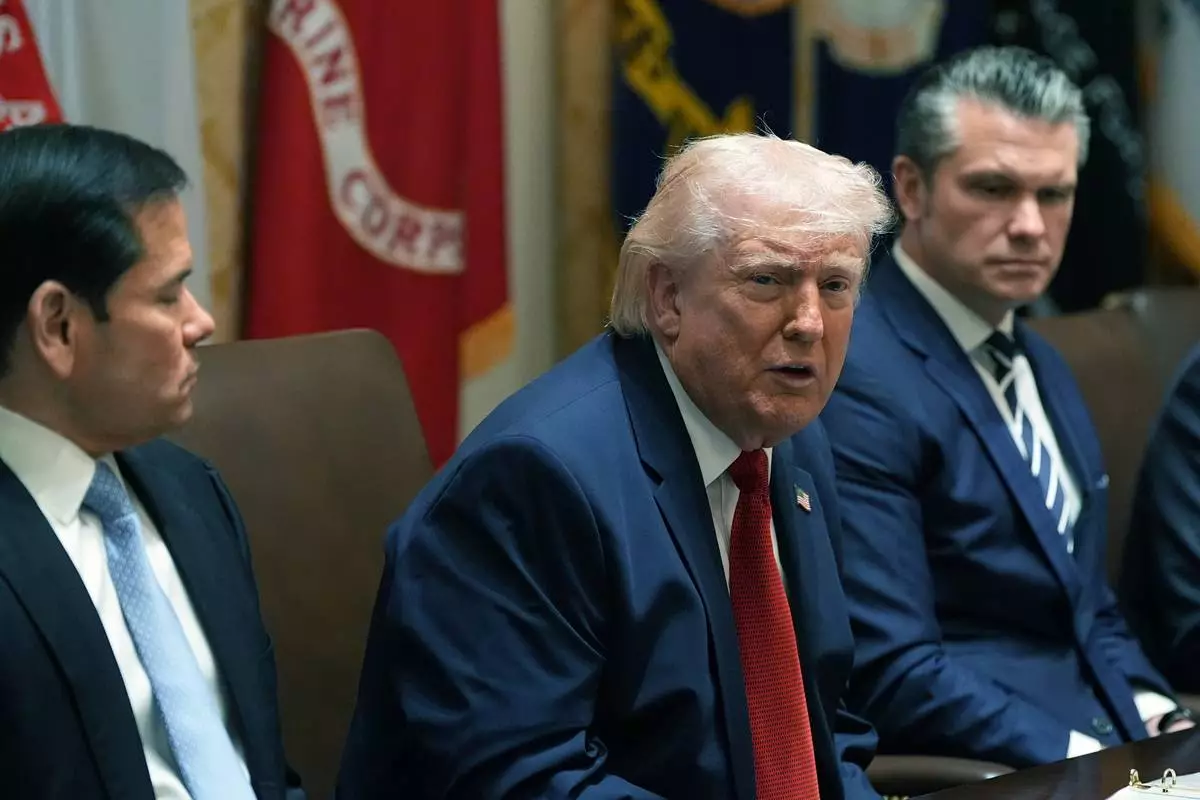
President Donald Trump speaks during a Cabinet meeting at the White House, Thursday, March 26, 2026, in Washington. From left are Secretary of State Marco Rubio, Trump and Secretary of Defense Pete Hegseth. (AP Photo/Alex Brandon)
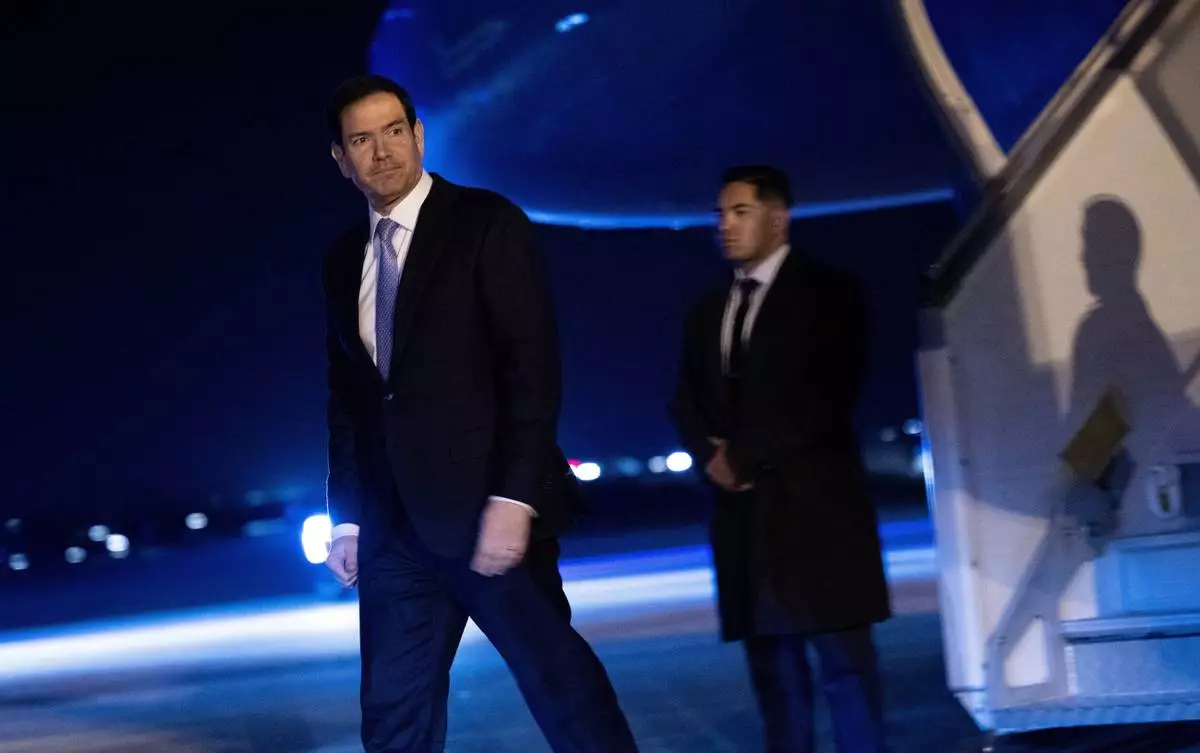
U.S. Secretary of State Marco Rubio arrives at Paris-Le Bourget Airport, in Le Bourget, France, early Friday, March 27, 2026, to take part in the G7 foreign ministers' meeting. (Brendan Smialowski/Pool Photo via AP)