The Hong Kong Science and Technology Parks Corporation (HKSTP) and the Hong Kong Monetary Authority (HKMA) today announced the winners of the IADS Developer Hackathon at the IADS Developer Conference held at the Hong Kong Science Park. The ceremony marks the successful conclusion of a six-month innovation journey that has further unleashed the potential of the Interbank Account Data Sharing (IADS) initiative.
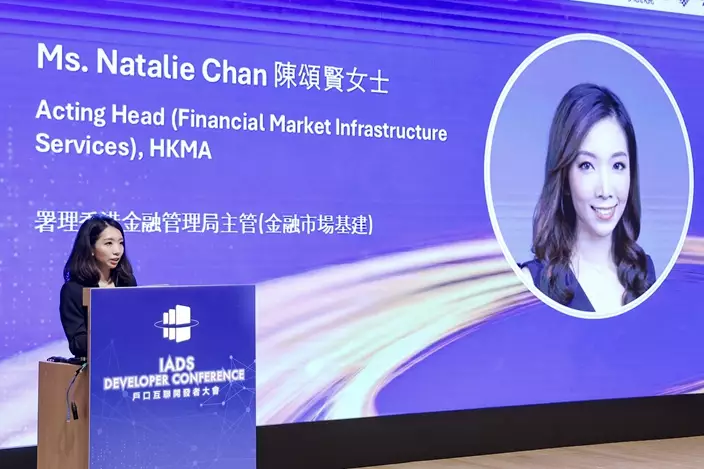
Ms Natalie Chan, Acting Head (Financial Market Infrastructure Services) of the Hong Kong Monetary Authority, delivers keynote speech at the IADS Developer Conference.
Launched in October 2025, the Hackathon brought together the banking industry and fintech firms to collaborate on innovative, secure, customer-consented solutions, leveraging the IADS to accelerate digital transformation in Hong Kong’s banking sector.
After a rigorous selection process and mentorship phase, five finalist teams presented their solutions today to a panel of judges.
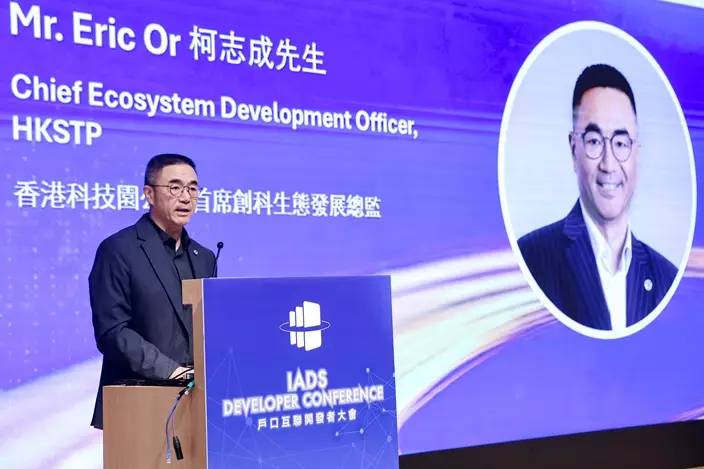
Mr Eric Or, Chief Ecosystem Development Officer of the Hong Kong Science and Technology Parks Corporation, delivers opening remarks at the IADS Developer Conference.
Mr Nelson Chow, Executive Director (Financial Infrastructure) of the HKMA, said, “The IADS Developer Hackathon has served as a catalyst for innovation in the banking sector. It has been truly encouraging to see participating teams deliver high-quality and practical solutions that open up new opportunities for financial services. Looking ahead, we will continue to strengthen collaboration with banks and fintech firms to drive the industry’s broader adoption of the IADS.”
Mr Eric Or, Chief Ecosystem Development Officer of the HKSTP, said, “The IADS Developer Hackathon reflects the strong collaborative spirit within Hong Kong’s innovation community. By connecting fintech talent with real industry needs, the Hackathon has helped accelerate new ideas that can enhance banking efficiency and user experience through secure data sharing. The HKSTP is proud to provide a sandbox testing platform and technical support for this competition, and we look forward to seeing these solutions contribute to Hong Kong’s fintech development.”
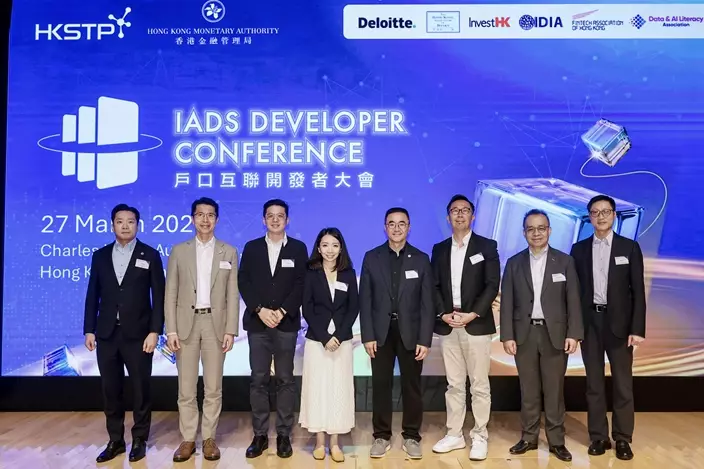
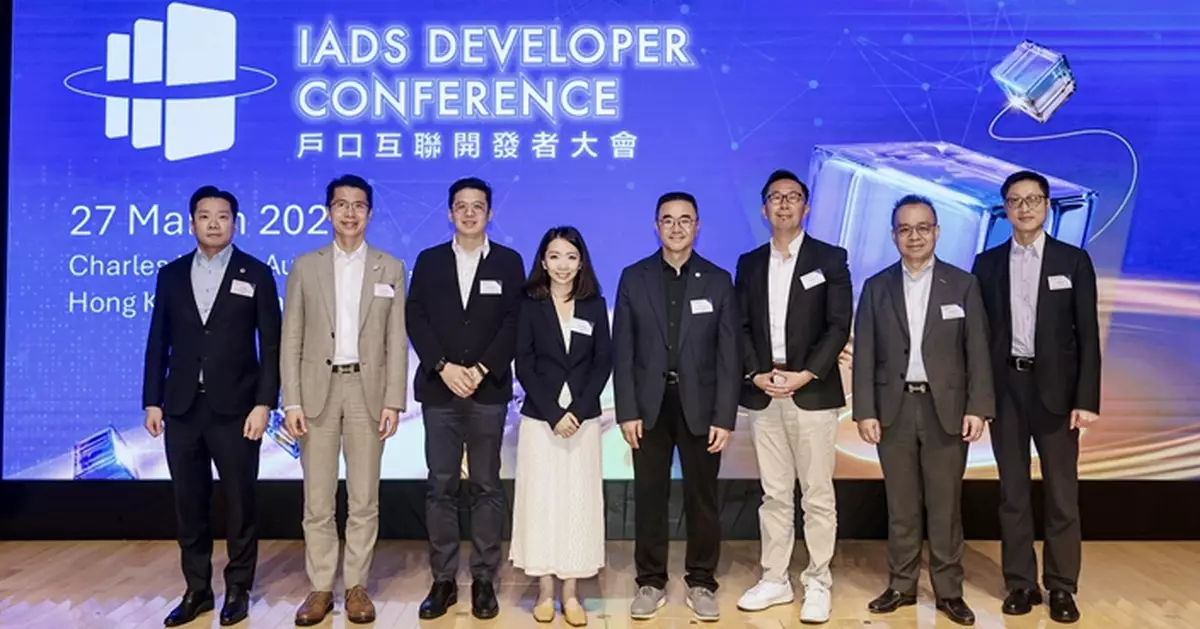
Ms Natalie Chan, Acting Head (Financial Market Infrastructure Services) of the Hong Kong Monetary Authority (fourth from left) and Mr Eric Or, Chief Ecosystem Development Officer of the Hong Kong Science and Technology Parks Corporation (forth from right), take a group photo with the judges.
Details of the winning teams are set out at the annex. For more information about the IADS initiative, please visit the HKMA website.
Hong Kong Science and Technology Parks Corporation (HKSTP), in partnership with German Industry and Commerce (GIC) and ADVANTAGE AUSTRIA, and supported by the Innovation, Technology and Industry Bureau, InvestHK and HKETO Berlin, led a delegation of eight Hong Kong Science Park companies to Germany and Austria from 21 to 25 September 2026 for a focused programme of business matching, ecosystem exchange and institutional engagement across Munich, Vienna and Graz. Bringing together government, industry, academia and innovation ecosystem partners, the mission deepened engagement with leading stakeholders, created new opportunities for cross-border collaboration and commercialisation in artificial intelligence (AI), new industralisation, and smart city, and reinforced Hong Kong’s role as a preferred platform for innovation exchange between Europe and Asia.
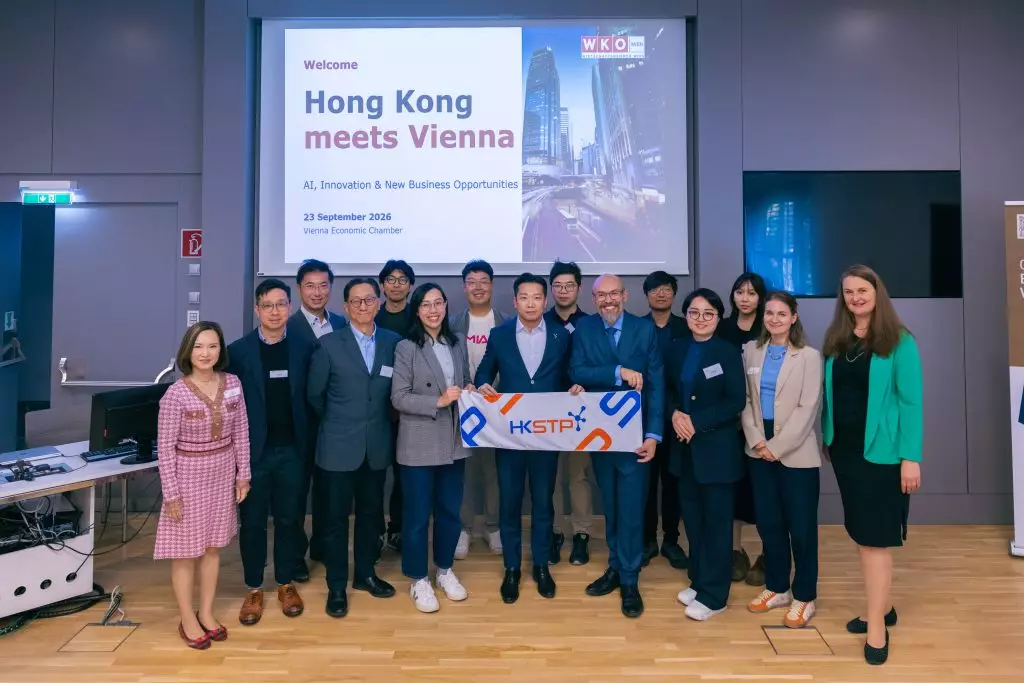
The high potential tech firms continued the week-long journey in Vienna and Graz, connected with leading Austrian research, industry and innovation organisations.
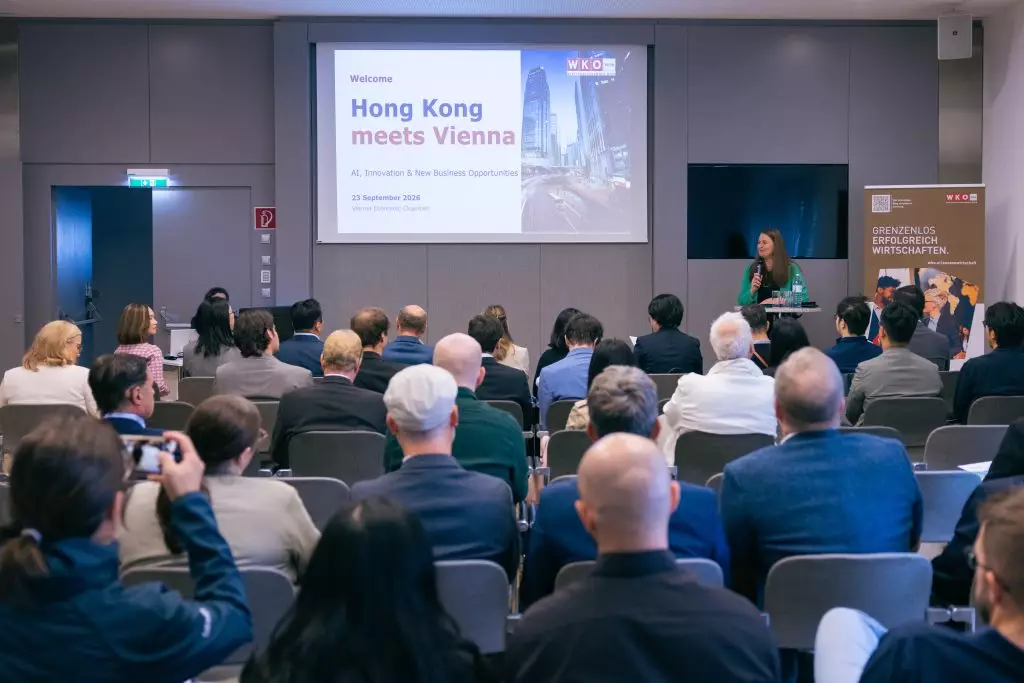
The high potential tech firms continued the week-long journey in Vienna and Graz, connected with leading Austrian research, industry and innovation organisations.
The delegation marked a major step forward in HKSTP’s growing engagement in Central Europe. As HKSTP’s first market-focused mission to Germany, Europe’s largest AI market and a leading enterprise technology hub, it built on earlier collaboration with ADVANTAGE AUSTRIA, including GO AUSTRIA Spring 2025 and 2026 and the renowned ViennaUP Festival, as well as more recent joint efforts with partners in Germany and Austria under Global Connect and the Global Innovation Exchange. The ongoing efforts created practical pathways for Hong Kong companies to explore partnerships, validate demand and expand into key European markets.
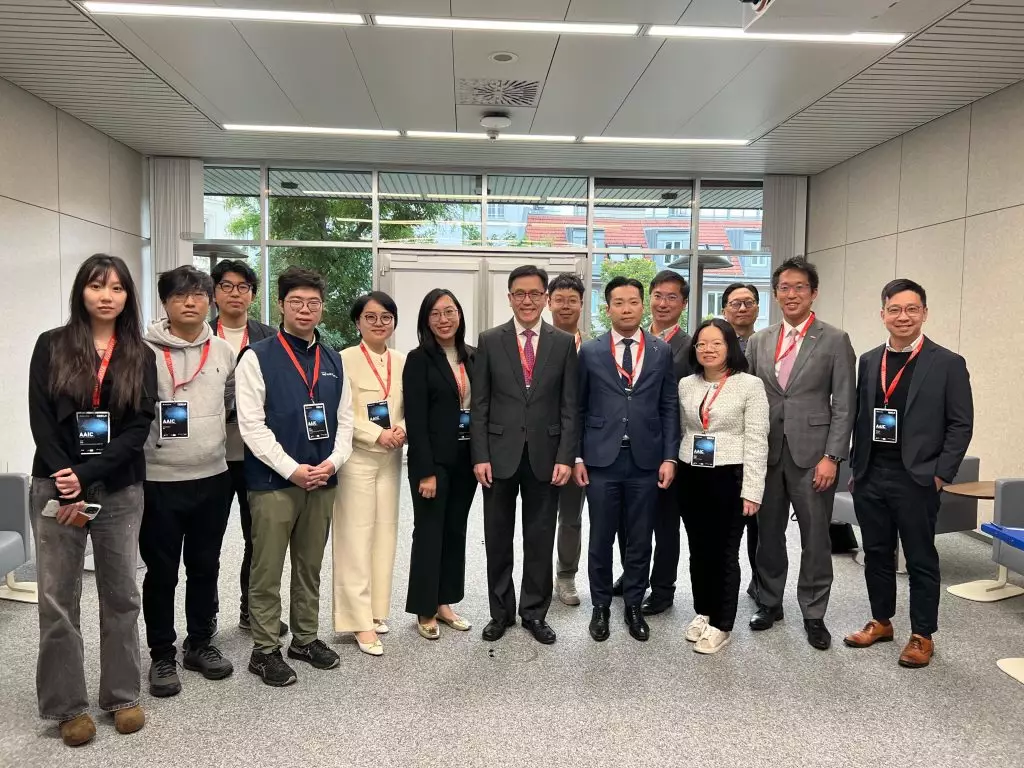
Professor Sun Dong, Secretary for Innovation, Technology and Industry, delivered a speech at the Applied Artificial Intelligence Conference 2026 (AAIC) in Vienna, Austria. He had an exchange with the HKSTP delegation to learn about their innovative solutions.
A key highlight was HKSTP’s participation in the Applied Artificial Intelligence Conference 2026 (AAIC) in Vienna, Austria, to connect with key industry partners and investors for potential business collaboration. Professor Sun Dong, Secretary for Innovation, Technology and Industry, delivered a speech titled “AAIC-Talk: Applied AI in Hong Kong and the Greater Bay Area: Innovation, Industrial Transformation and Opportunities for Collaboration with Austria” at the Austria’s flagship international AI business conference. He shared Hong Kong has elevated AI into a core industry and is emerging as one of the world's most dynamic innovation and technology (I&T) centres. He also invited Austria to partner in shaping AI's next chapter, and highlighting opportunities for collaboration between Hong Kong, the Greater Bay Area and Austria. During the Conference, Professor Sun had a brief exchange with park companies from the delegation participating in the Conference to learn about their innovative solutions.
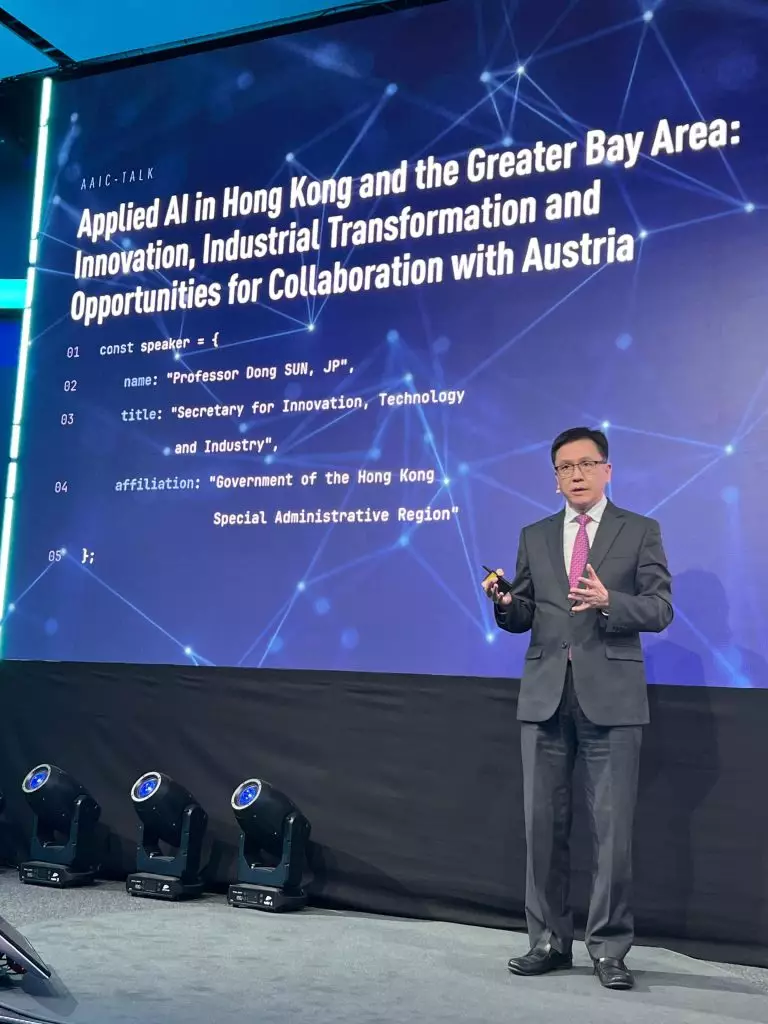
Professor Sun Dong, Secretary for Innovation, Technology and Industry, delivered a speech at the Applied Artificial Intelligence Conference 2026 (AAIC) in Vienna, Austria. He had an exchange with the HKSTP delegation to learn about their innovative solutions.
Mr Eric Or, Chief Ecosystem Development Officer of HKSTP, said, “HKSTP is committed to helping innovators scale beyond borders. Our inaugural delegation to Germany and the continuous connection with Austria highlights the value of strategic international engagement in opening doors for park companies to connect with leading industry, academic and investors in Europe. It also reflects Hong Kong’s unique role as a gateway for cross-border collaboration, underpinned by its distinct strengths as a super-connector and super value-adder. As HKSTP continues to expand its global outreach to further strengthen Hong Kong’s innovation links with global markets, and reinforce the city’s position as an international innovation and technology hub.”
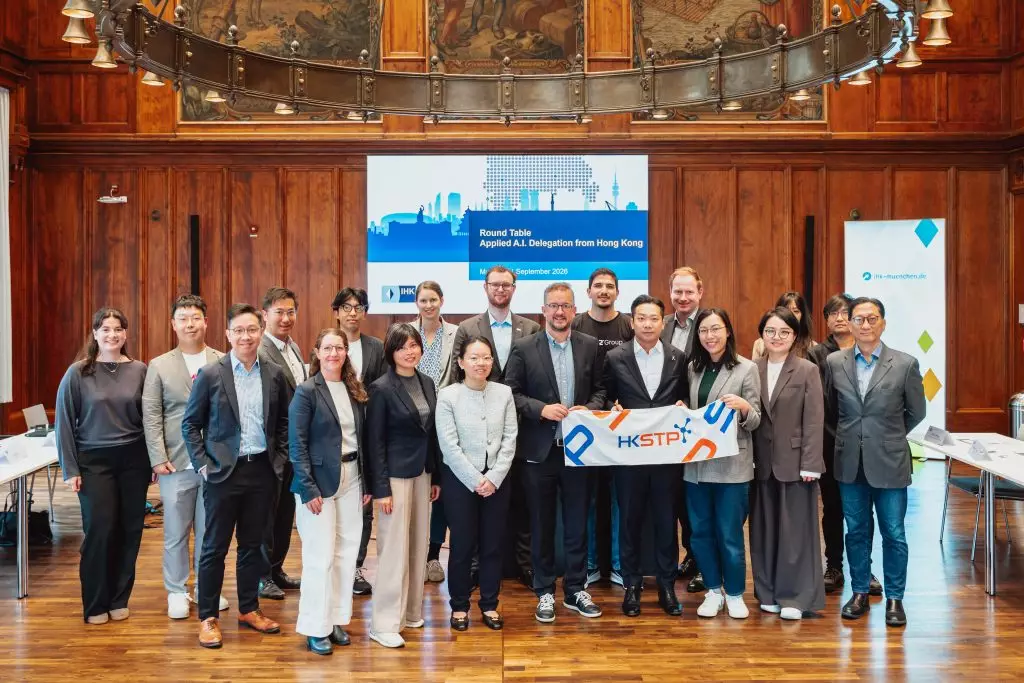
The delegation began in Munich and visited the Chamber of commerce and industry for Munich and upper Bavaria (IHK).
The delegation began in Munich, focusing on Germany’s industrial AI and enterprise innovation ecosystem, and engaging institutions including Chamber of commerce and industry for Munich and upper Bavaria (IHK), Siemens AI Lab, and the European Union’s top Technical University of Munich (TUM). Discussions centred on industrial AI, advanced manufacturing, technology translation and cross-border collaboration. The high potential tech firms continued the week long journey in Vienna and Graz, connected with leading Austrian research, industry and innovation organisations, including the leading Graz University of Technology (TU Graz), Austrian Institute of Technology and more.
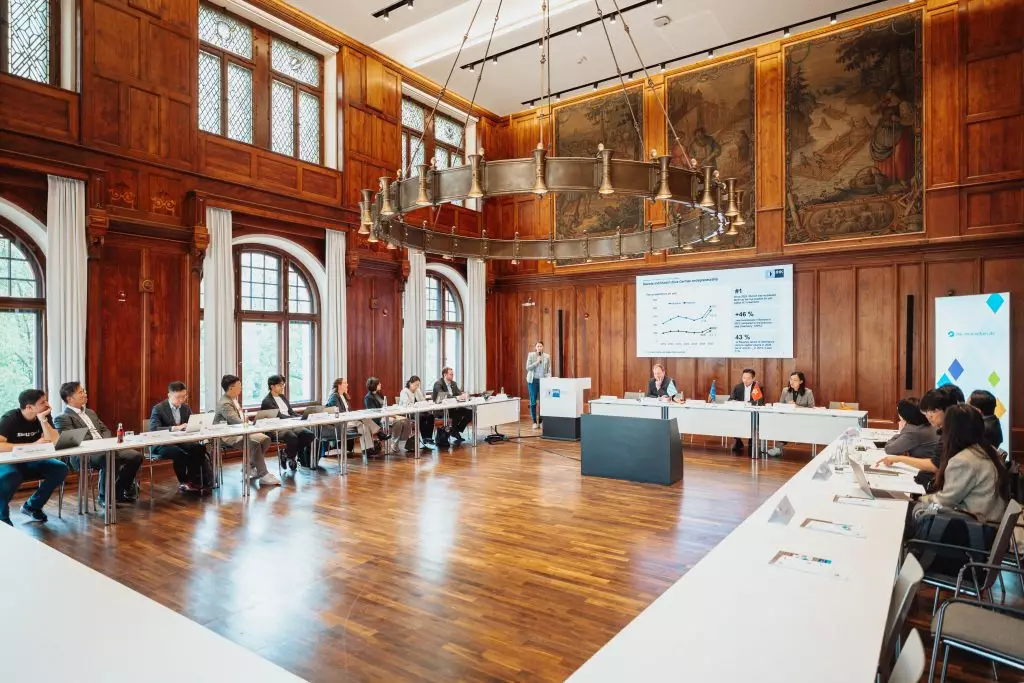
The delegation began in Munich and visited the Chamber of commerce and industry for Munich and upper Bavaria (IHK).
Highlighted innovations from the delegation:
GenAI-Powered Marketing - Amber International Holding Limited introduced MIA, its new agentic AI marketing platform designed to monitor markets, generate on-brand content and support distribution workflows with human approval.
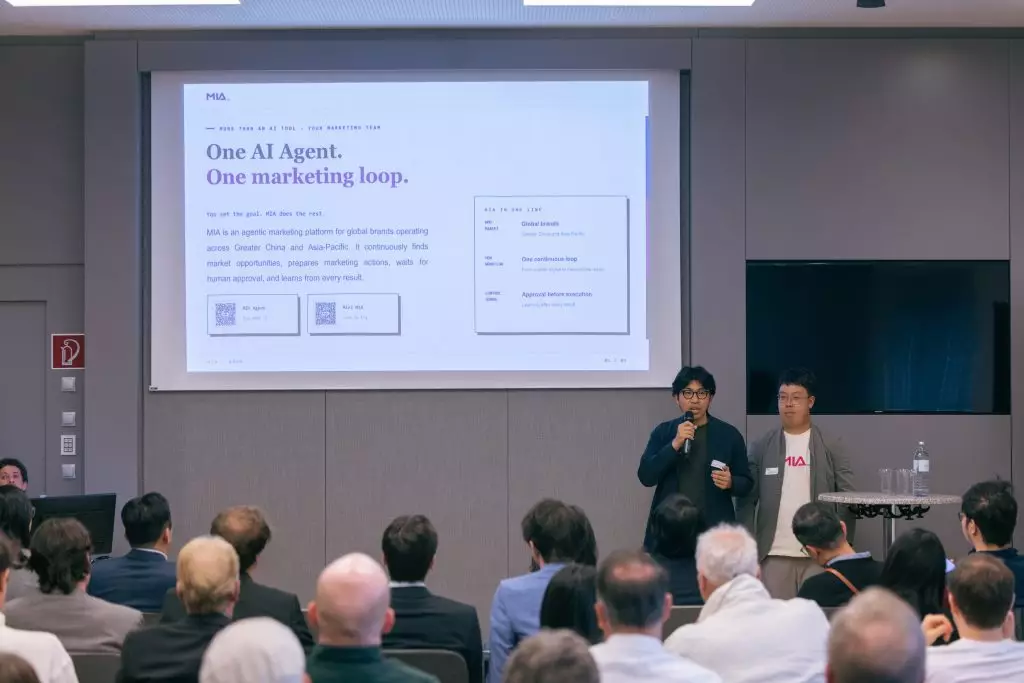
Amber International Holding Limited introduced MIA, its new agentic AI marketing platform designed to monitor markets, generate on-brand content and support distribution workflows with human approval.
Let AI run enterprises. Let AI do business - Echronos AI Group, a China-based innovator in industrial-grade AI Agentic OS, leverages the HKSTP ecosystem and Hong Kong’s global connectivity as a gateway for international expansion. The company introduced its flagship JovaAI platform to European industry leaders. Powered by proprietary semantic and multi-agent orchestration technologies, JovaAI coordinates complex enterprise workflows, from inquiry-to quote orchestration and cross-border customs planning to dynamic production rescheduling.
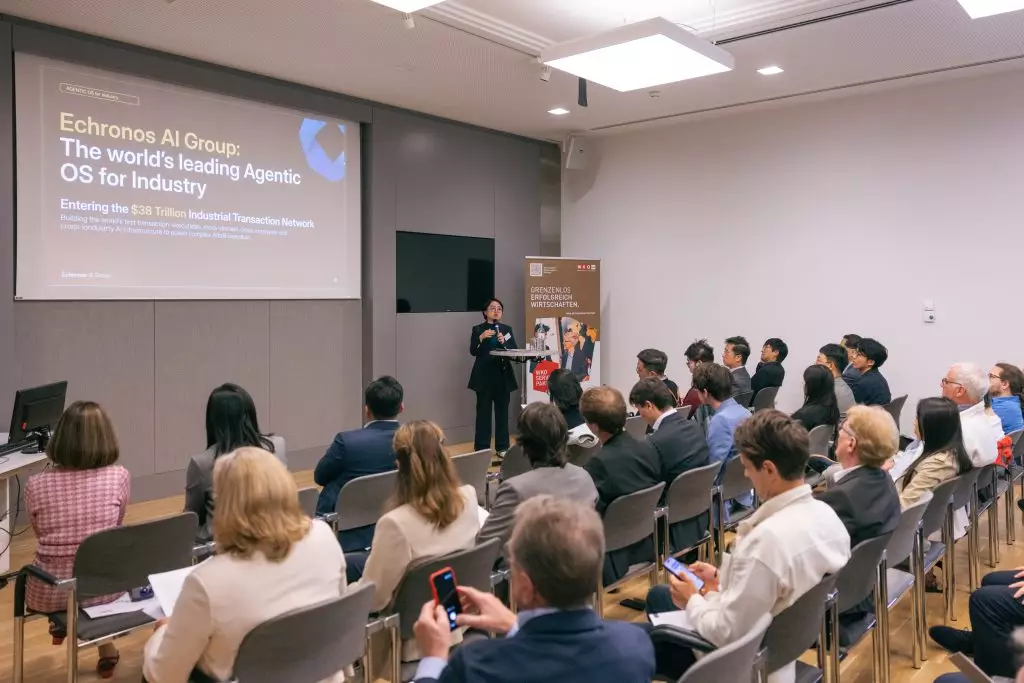
Echronos AI Group, a China-based innovator in industrial-grade AI Agentic OS, leverages the HKSTP ecosystem and Hong Kong’s global connectivity as a gateway for international expansion.
End-to-end AI Talent Solution - Neufast offers corporate AI strategy consulting and technical implementation for an agentic AI platform covering candidate sourcing, performance appraisals, and leadership development. It is expanding in Europe through partnerships with SAP SuccessFactors for enterprise business transformation and TÜV Rheinland for ISO27001 certification, with the support of the Austrian government’s Go Austria Plus programme by the Global Incubator Network Austria (GIN) and Austrian Research Promotion Agency (FFG).
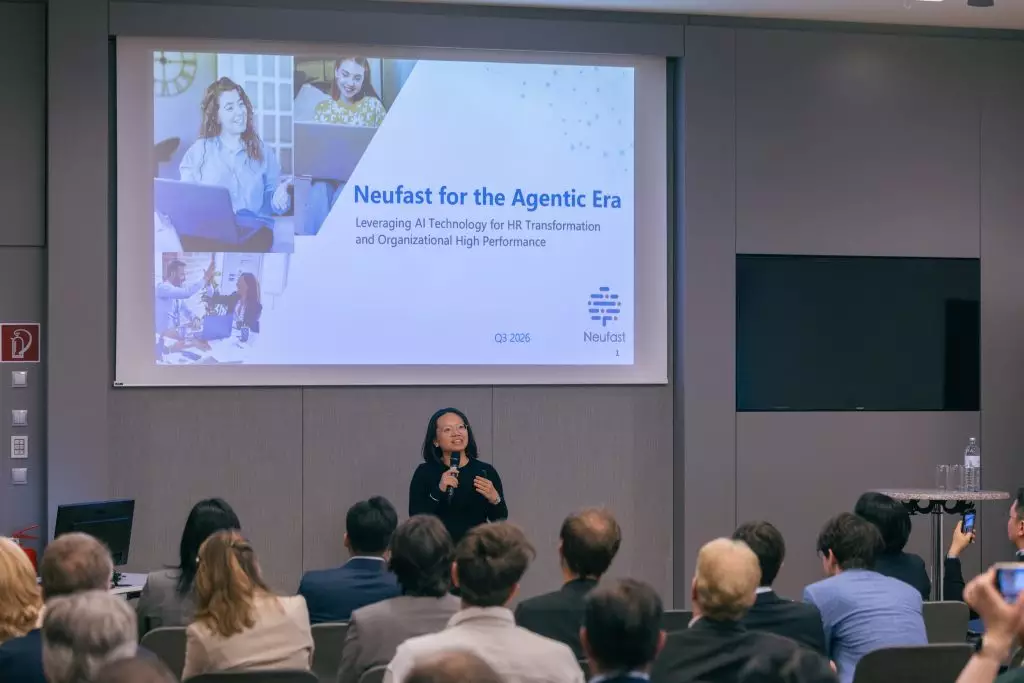
Neufast offers corporate AI strategy consulting and technical implementation for an agentic AI platform covering candidate sourcing, performance appraisals, and leadership development. It is expanding in Europe through participating in various programmes.
Together, these engagements in Germany and Austria deepened HKSTP’s ties with the regions’ innovation ecosystem and opened new opportunities for collaboration in applied AI, robotics, smart production and commercialisation between Hong Kong and Europe.