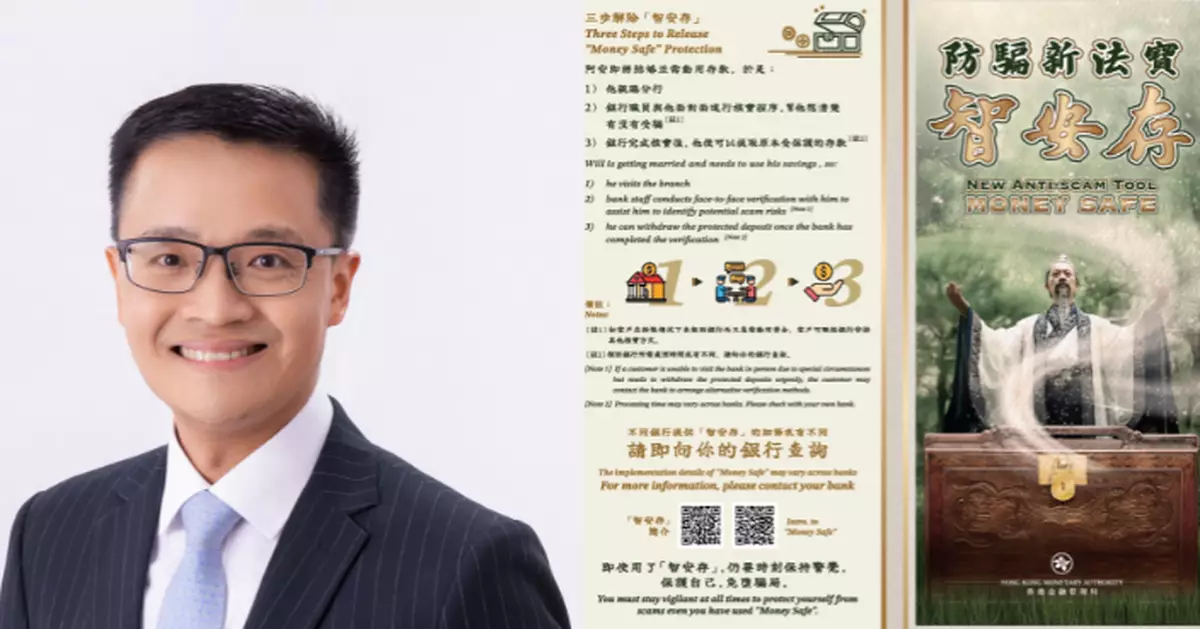
Launched at the end of last year, Money Safe had been used by nearly 8,200 customers as of late January, safeguarding a total of HKD$3.3 billion in deposits. Mr. Alan Au, the Executive Director (Banking Conduct) of the Hong Kong Monetary Authority (HKMA), stated in the interview with Bastille Post that no suspicious unlocking cases have been reported so far. He expected that with the enhanced promotion of Money Safe, its usage would steadily increase.
Mr. Alan Au, the Executive Director (Banking Conduct) of the Hong Kong Monetary Authority (HKMA)
In recent years, Hong Kong has continued to see a high number of fraud cases. According to the statistics of the Police, a total of 43,212 fraud cases were recorded in 2025, involving losses of approximately HKD$8.1 billion. Against this backdrop, asset protection has become increasingly critical. At the end of 2025, HKMA and the Hong Kong Association of Banks announced that all 28 retail banks, including digital banks, would fully offer Money Safe to individual clients by December 31.
Click to Gallery
Mr. Alan Au, the Executive Director (Banking Conduct) of the Hong Kong Monetary Authority (HKMA)
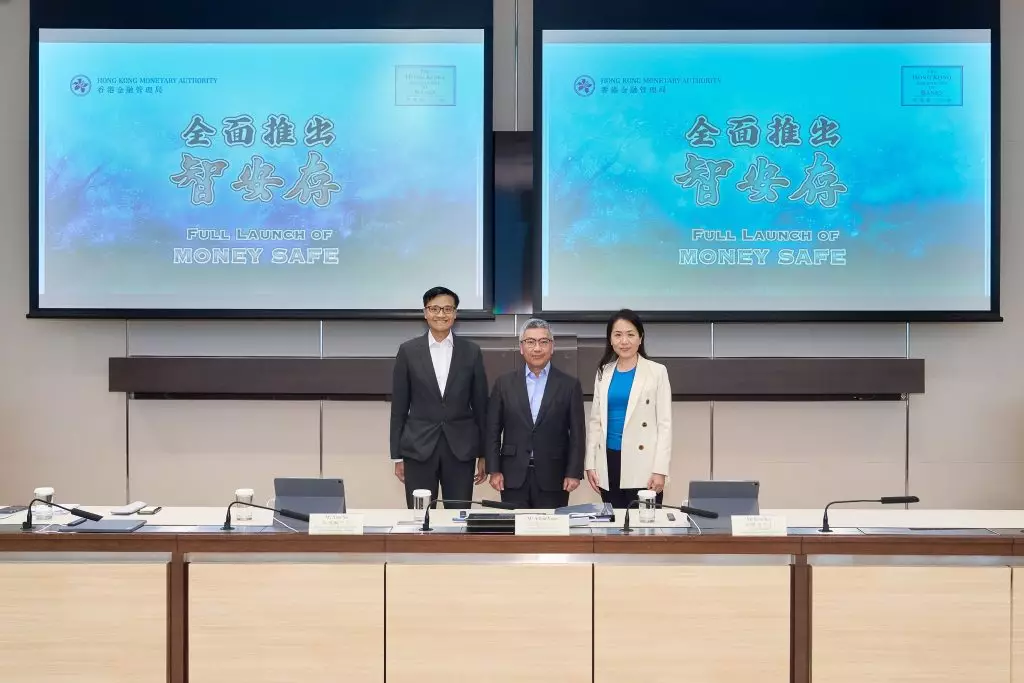
At the end of 2025, HKMA and the Hong Kong Association of Banks announced that all 28 retail banks, including digital banks, would fully offer Money Safe to individual clients by December 31.
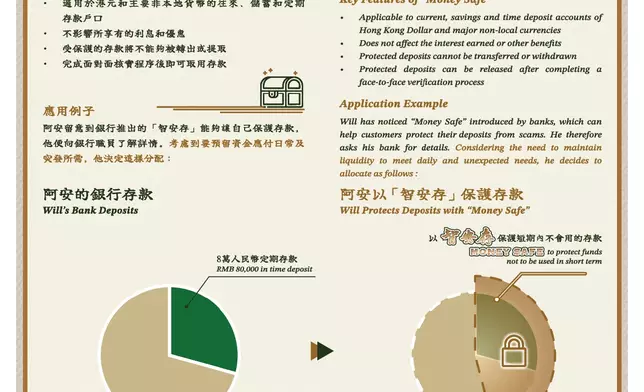
Money Safe functions like setting up a safe within a bank account, allowing clients to customize a protected deposit amount.
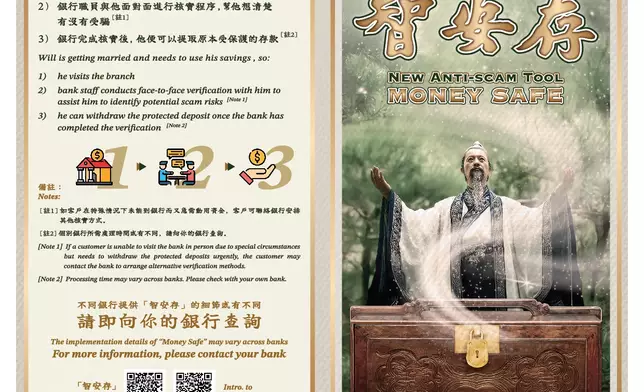
Regarding the unlocking process, clients must visit a branch for face-to-face verification before withdrawing or transferring deposits protected by Money Safe.
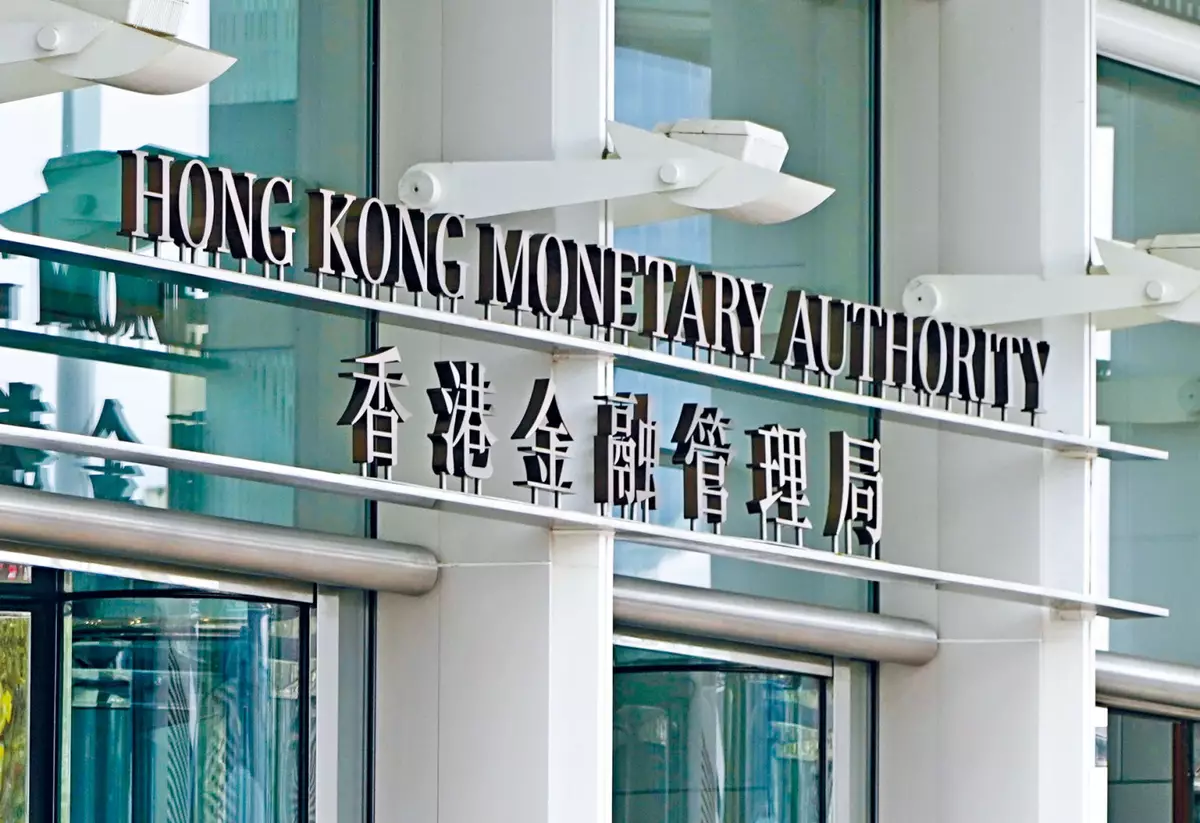
HKMA, Photo source: reference image
Multiple Platforms for Promotion
Mr. Au pointed out that many citizens proactively opted to use Money Safe after learning that banks would provide related services. To further raise public awareness of Money Safe, HKMA has released posters and promotional leaflets, and would issue TV promotional videos, and radio spots to strengthen its publicity campaign.
At the end of 2025, HKMA and the Hong Kong Association of Banks announced that all 28 retail banks, including digital banks, would fully offer Money Safe to individual clients by December 31.
Since last year, HKMA has been disseminating anti-fraud messages—including those related to Money Safe—through its bank branch network and digital platforms, 43 hospitals and clinics under the Hospital Authority (HA), and over 500 social welfare organizations. Mr. Au added that HKMA will continue to collaborate with stakeholders and promote Money Safe to the public via community networks. Banks will also step up their promotional efforts. All retail banks, including digital banks, will offer various incentives during the initial launch phase to encourage more customers to learn about and use Money Safe.
Elderly Make Up Most Scam Victims, Banks Proactively Intercept Fraud
Scam tactics continue to evolve, with the elderly often being the primary target of fraudsters. In the first nine months of 2025, a total of 2,586 telephone scam cases were recorded, of which 45% of the victims were aged 60 or above, incurring losses exceeding HKD$480 million.
Mr. Au stressed that the public requires comprehensive fraud prevention measures. As for frontline bank branch staff, they have remained vigilant in monitoring suspicious cases and frequently succeeded in dissuading customers from falling victim to scams. In one instance, an elderly client requested the transfer of several hundred thousand dollars to "repay a friend". Noticing that the client was unable to provide the recipient's name, and that the recipient's account was recently opened, with some abnormal situation occurring. Therefore, they suspected that the client had been scammed and eventually successfully persuaded the client not to make the transaction.
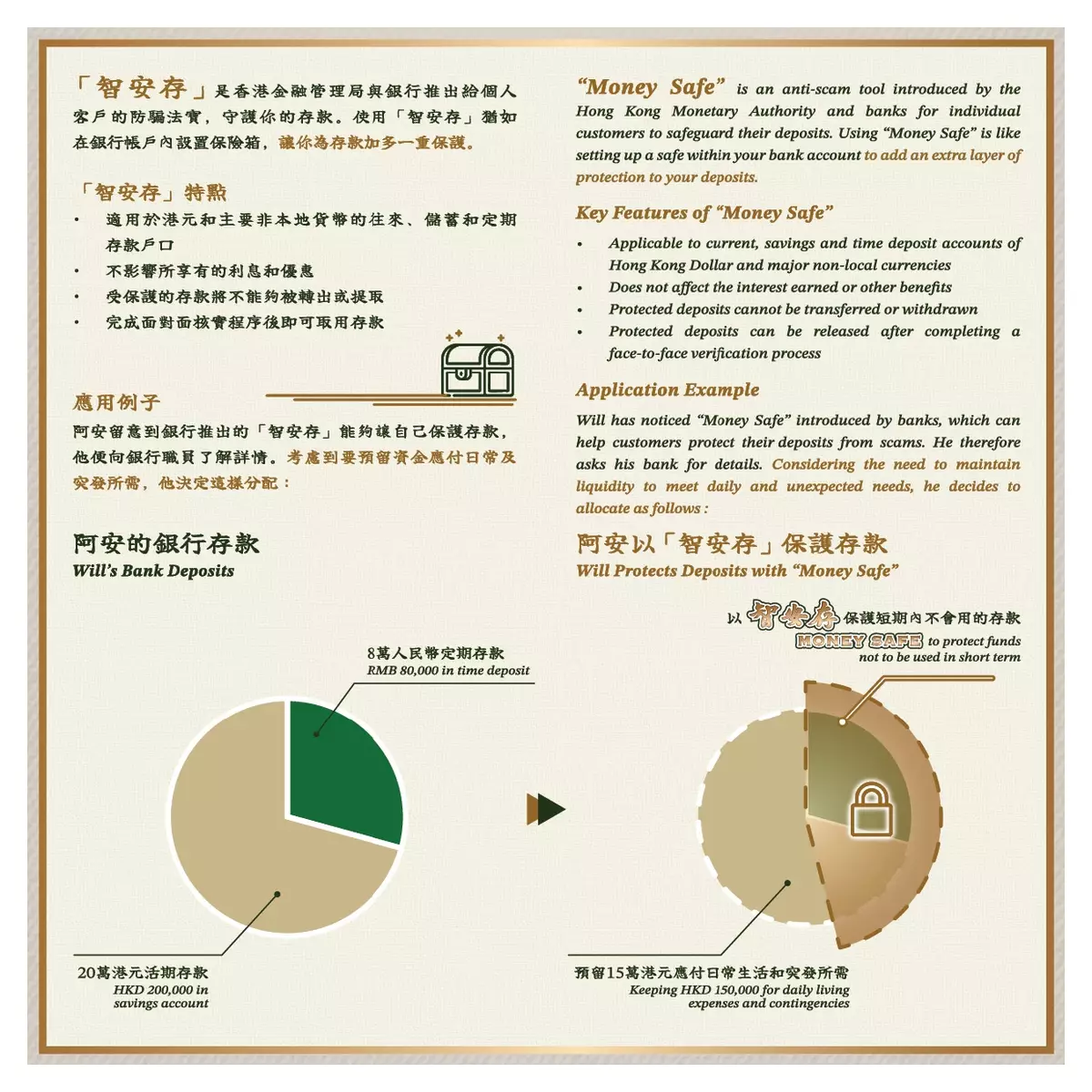
Money Safe functions like setting up a safe within a bank account, allowing clients to customize a protected deposit amount.
In another case, an elderly client appeared anxious while on a video call. Bank staff proactively inquired and learned that the client intended to reissue his online banking password and authorize a third party to conduct transfers. Since the client had paid multiple "handling fees" according to the instructions of a scammer who claimed to be a "telecom company employee", the bank staff contacted his family and froze the relevant account to prevent further losses with the client's consent.
Mr. Au added that a bank shared an instance in which a client was concerned that his account would be hacked. The bank immediately advised the client to use Money Safe, which ensures that deposits can only be withdrawn after the customer visits a branch in person. It's understood that, since banks fully launched Money Safe at the end of last year, no suspicious unlocking cases have been reported.
In-Person Branch Verification Ensures Account Safety
Money Safe functions like setting up a safe within a bank account, allowing clients to customize a protected deposit amount. When a client needs to access the protected deposit, the bank will conduct an in-person anti-fraud verification process, allowing the client an opportunity to reconsider whether they may be falling victim to a scam. Only after completing the verification can the client transfer or withdraw the protected deposit.
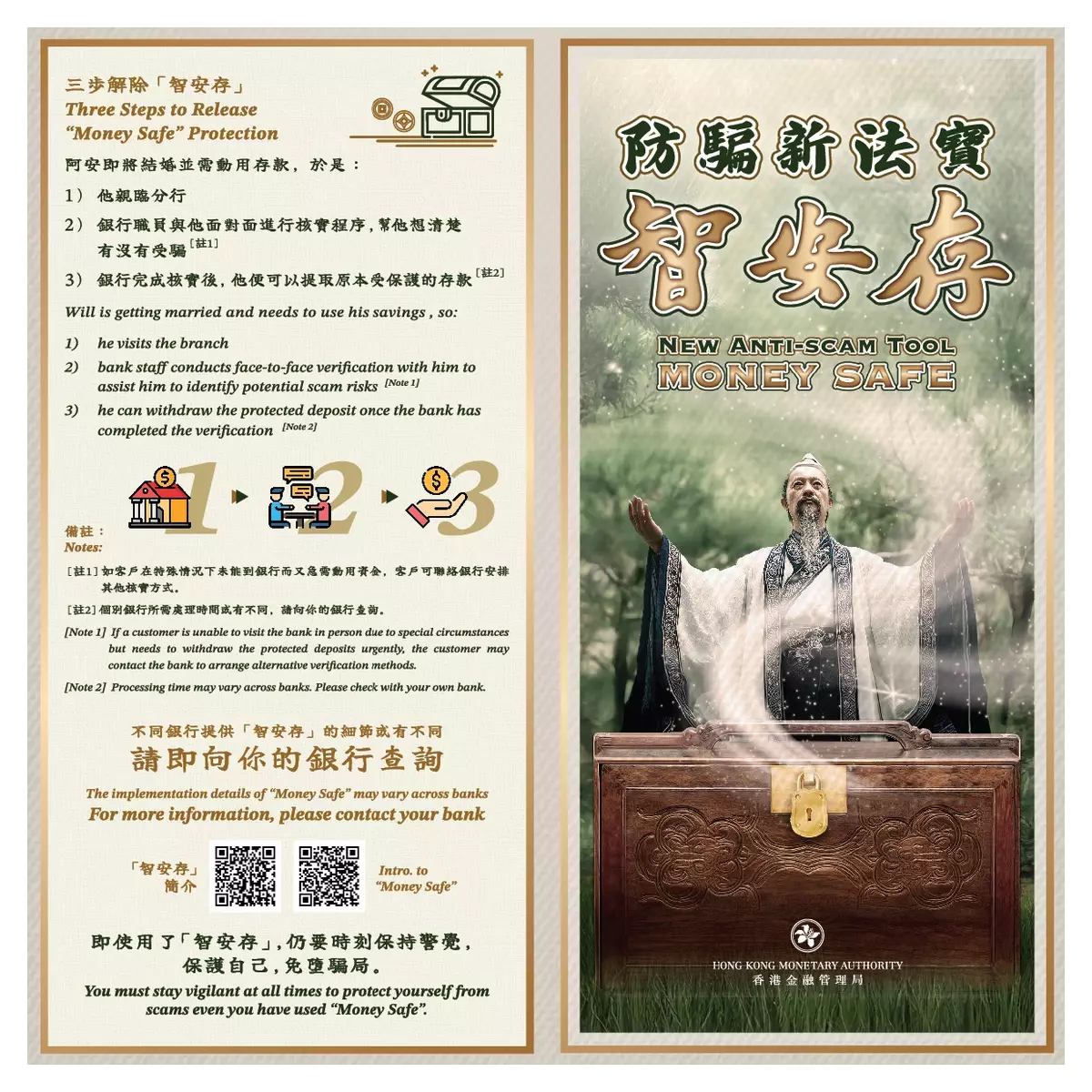
Regarding the unlocking process, clients must visit a branch for face-to-face verification before withdrawing or transferring deposits protected by Money Safe.
Regarding the unlocking process, Mr. Au explained that clients must visit a branch for face-to-face verification before withdrawing or transferring deposits protected by Money Safe. During verification, bank staff will need to inquire about the specific purpose of the transaction, to help clients to "have some time for careful thinking" and identify any suspicious factors. Moreover, the staff will also conduct further inquiries into individual situations and pay attention to whether the client was induced or pressured by a scammer to make the transaction.
The specific verification procedures will also be adjusted according to the evolving fraud tactics. HKMA has required banks to develop appropriate procedures for handling suspicious cases. If any suspicious situation is detected, the bank can immediately alert the client or seek assistance from the police as needed. Nevertheless, the final decision on whether to cancel Money Safe's protection and withdraw the deposit still rests with the client. Mr. Au reiterated that even with Money Safe, clients must remain vigilant at all times and stay alert to scams.
Flexible Handling of Special Situations
Addressing the situations where clients may be unable to visit a branch in person to unlock their Money Safe—such as when staying abroad or facing urgent financial needs—Mr. Au stated that HKMA had taken into account the balance between client convenience and security guarantee during the design phase. Banks are required to clearly explain the operation and cancellation processes before clients enable the service, reminding them to maintain sufficient funds to meet daily and emergency needs.
He further noted that when clients are unable to cancel the protection of Money Safe in person due to special circumstances—such as hospitalization or a serious accident in other regions—banks can adopt alternative yet equally effective measures, supplemented by additional verification procedures to confirm clients' identity and instructions, ensuring clients are properly protected. Banks will handle these situations on a case-by-case basis, with flexibility to guard against various tactics that scammers may attempt to exploit.
In processing the cancellation of Money Safe's protection, banks will confirm clients' instructions in accordance with the signing arrangements for the account, including joint accounts, as with the processing of other banking services. Mr. Au expressed confidence that banks will provide flexible arrangements based on clients’ needs and communicate with them to strike an optimal balance between fraud prevention and client assistance.
HKMA, Photo source: reference image