The San Diego Wave have acquired U.S. national team forward Catarina Macario from English club Chelsea.
Macario was signed through the 2030 season, the National Women's Soccer League club announced Friday. Her deal with the Wave is worth $8 million, according to published reports, making it among the biggest total contracts in league history.
To sign Macario, the Wave utilized the High Impact Player rule, which allows teams to exceed the salary cap for players that meet certain criteria.
Macario was born in Brazil but moved to San Diego when she was 12 and played for the San Diego Surf youth club. She went on to Stanford, where she won two national championships and was twice awarded the MAC Hermann Trophy as the nation’s best soccer player.
“This city has played such an important role in my journey, and the opportunity to come back and represent it means a lot to me," Marcario said in a statement. “From my first conversations with the Club, I felt the ambition and the vision for what we can accomplish together, including bringing trophies to this city.”
The Wave planned a news conference Friday morning to introduce Macario, who has played in Europe since 2021.
“Cat is a world-class player who has consistently performed at the highest levels of the game," said Camille Ashton, the Wave's sporting director and general manager. “She is an intelligent, technical and creative attacker with exceptional vision and composure in the final third. Her ability to unlock defenses and influence matches in multiple ways will further strengthen an already strong foundation as we continue building toward championship success.”
Macario decided to forgo her senior season at Stanford and turn pro, signing with Lyon. She played two seasons for the French club before she was acquired by Chelsea. Over the course of her professional career, she's scored 44 goals in 105 appearances.
Macario, who became a U.S. citizen in 2020, has 16 goals in 29 appearances with the national team. She had eight goals in 10 matches for the United States last year.
AP soccer: https://apnews.com/hub/soccer

FILE - United States' Catarina Macario in action during the first half of an international friendly soccer match against Jamaica, on June 3, 2025, in St. Louis. (AP Photo/Jeff Roberson, File)
NEW YORK (AP) — U.S. stocks are falling Friday as Wall Street stumbles toward the finish of a fifth straight losing week, which would be its longest such streak in nearly four years.
The S&P 500 sank 0.9% and deepened its losses a day after its worst drop since the war with Iran began. It's all the way back to where it was in August and is 8% below its all-time high set early this year.
The Dow Jones Industrial Average was down 423 points, or 0.9%, as of 10:05 a.m. Eastern time, and the Nasdaq composite was 1.3% lower.
The losses are a break from Wall Street’s pattern this week, where the U.S. stock market flip-flopped from gains to losses each day as hopes rose and fell about a possible end to the war.
Moments after the U.S. stock market finished its dismal Thursday of trading, President Donald Trump offered another potential signal for hope. He extended a self-imposed deadline to “obliterate” Iran’s power plants to April 6 if it doesn’t allow oil tankers to resume their exits from the Persian Gulf to the open ocean through the Strait of Hormuz.
Oil prices eased immediately after Trump’s announcement in a sign of hope in financial markets that some normalcy may return to the strait. But oil prices resumed their climb as the sun moved westward from Asia to Europe and back to Wall Street.
Despite Trump’s second announcement of a delay this week, fighting continued in the Middle East. Iran gave no signs of backing down, while Israel threatened to “escalate and expand” its attacks on Iran.
“The diplomatic dissonance this week between the U.S. and Iran dismayed investors,” said Doug Beath, global equity strategist at Wells Fargo Investment Institute. “By the end of the week, risk appetite could not withstand the fog of war.”
“Any further statements by Trump about a deal are white noise to the markets,” Jim Bianco, president and macro strategist at Bianco Research, wrote in a social media post. “Only if the IRANIANS say the talks are going well will it impact markets.”
The price for a barrel of Brent crude rose 2.2% to $104.13 and is up from roughly $70 before the war began. Benchmark U.S. crude rose 3% to $97.28 per barrel.
The fear in financial markets is that the war will disrupt the production and transport of oil and natural gas in the Persian Gulf for a long time. It could keep so much oil and gas out of the world’s markets that it sends a punishing wave of inflation through the global economy. Not only would it raise prices for drivers buying gasoline, it could push businesses that use any trucks, ships or planes to move their products to raise their own prices.
If the war continues until the end of June, strategists at Macquarie say the price of oil could reach $200 per barrel. So far, the highest oil prices have ever been gotten has been just above $147 during the summer of 2008. That’s when Iran’s testing of missiles, including one that could reach Israel, and strong demand for oil from China helped send prices spiking despite the Great Recession.
High gasoline prices and the war are already hitting confidence among U.S. consumers, whose spending makes up the bulk of the economy. Sentiment among them fell slightly more in March from February than economists expected, according to a survey by the University of Michigan.
U.S. consumers also said in the survey that worried about inflation jumping in the near future. They're bracing for inflation of 3.8% in the coming 12 months, up from 3.4% in February. That's the largest one-month increase in nearly a year.
Expectations of higher inflation can kick off a vicious cycle of behavior that only worsens inflation. Such worries have virtually eliminated hopes among traders that the Federal Reserve could cut interest rates this year to boost the economy. While lower rates would help give the job market and prices for investments an upward jolt, they would also risk making inflation worse.
Long-term Treasury yields rose even further in the bond market following Friday’s rise for oil prices. The yield for the 10-year Treasury climbed to 4.44% from 4.42% late Thursday and from just 3.97% before the war began.
That rise has already sent rates jumping for mortgages and for other loans taken by U.S. households and businesses, slowing the economy.
On Wall Street, most stocks fell, including two out of ever three in the S&P 500.
Among the few stocks to rise was Netflix, which added 0.3% a day after announcing price hikes for its services.
In stock markets abroad, indexes fell in Europe following a mixed finish in Asia.
AP Business Writers Chan Ho-him and Matt Ott contributed.
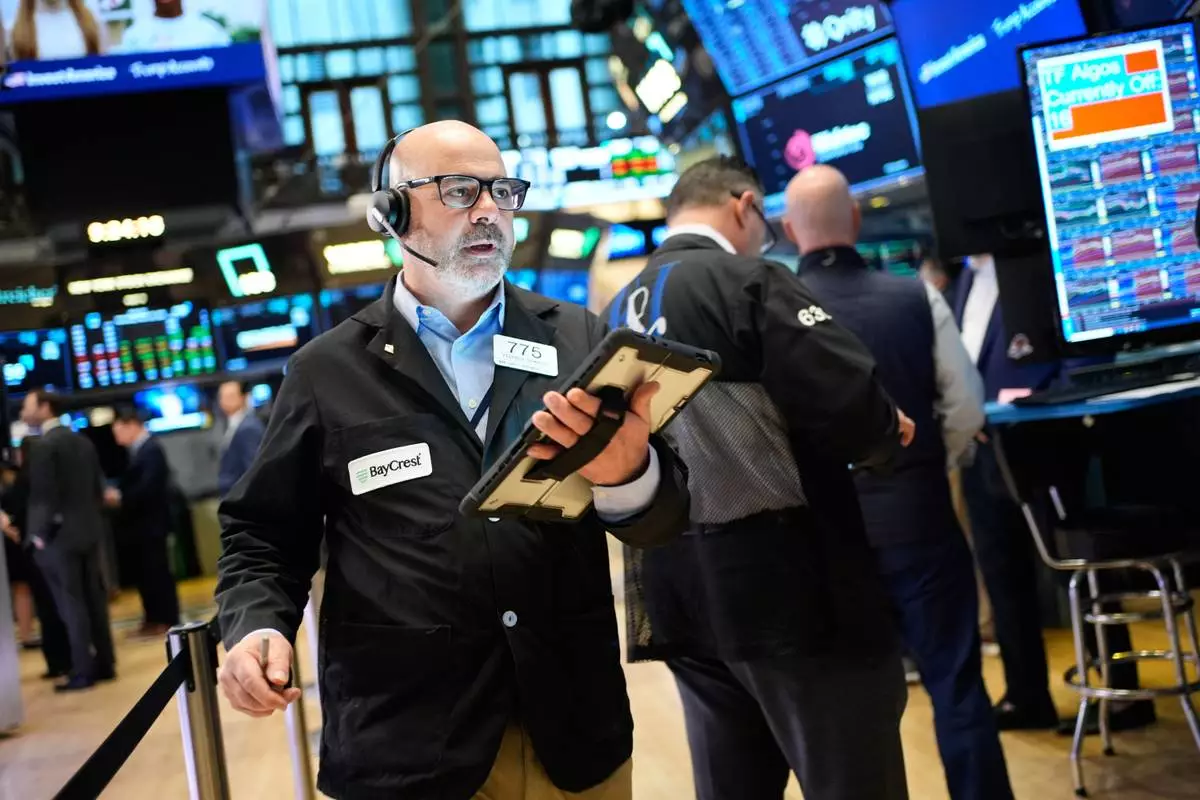
Federico DeMarco works on the floor at the New York Stock Exchange in New York, Wednesday, March 25, 2026. (AP Photo/Seth Wenig)

Federico DeMarco, right, and Dilip Patel work on the floor at the New York Stock Exchange in New York, Wednesday, March 25, 2026. (AP Photo/Seth Wenig)
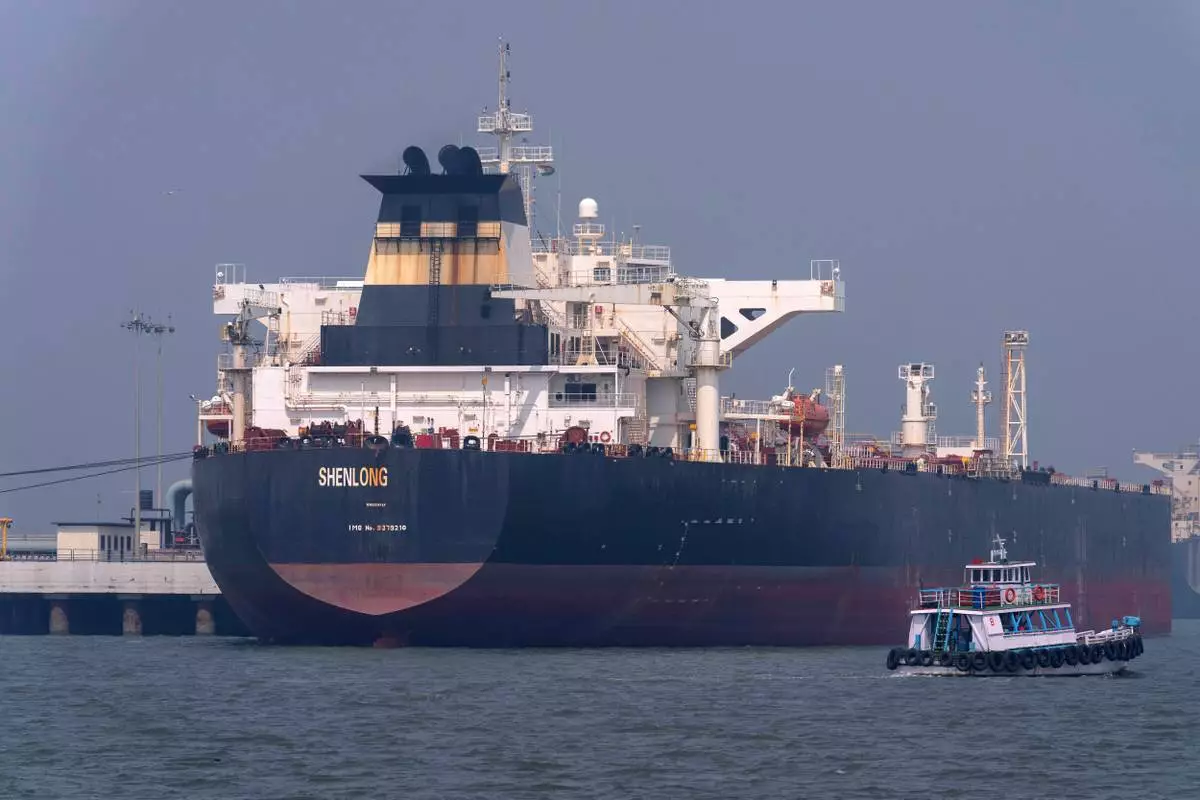
FILE - Liberia-flagged tanker Shenlong Suezmax, carrying crude oil from Saudi Arabia, that arrived clearing the Strait of Hormuz, is seen at the Mumbai Port in Mumbai, India, Thursday, March 12, 2026. (AP Photo/Rafiq Maqbool, File)

James Denaro, center, and Dilip Patel, left, work on the floor at the New York Stock Exchange in New York, Wednesday, March 25, 2026. (AP Photo/Seth Wenig)