NEW YORK (AP) — U.S. stocks are falling Friday as Wall Street stumbles toward the finish of a fifth straight losing week, which would be its longest such streak in nearly four years.
The S&P 500 sank 0.7% and deepened its losses a day after its worst drop since the war with Iran began. The Dow Jones Industrial Average was down 319 points, or 0.7%, as of 11:45 a.m. Eastern time, and the Nasdaq composite was 1.1% lower.
Click to Gallery
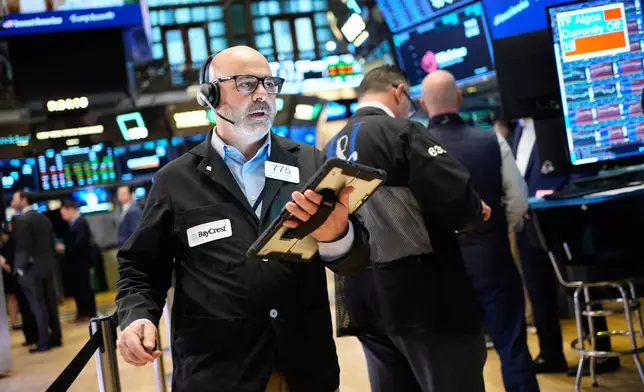
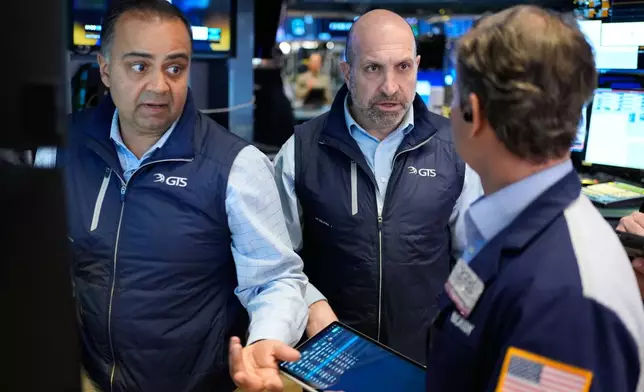
Federico DeMarco works on the floor at the New York Stock Exchange in New York, Wednesday, March 25, 2026. (AP Photo/Seth Wenig)
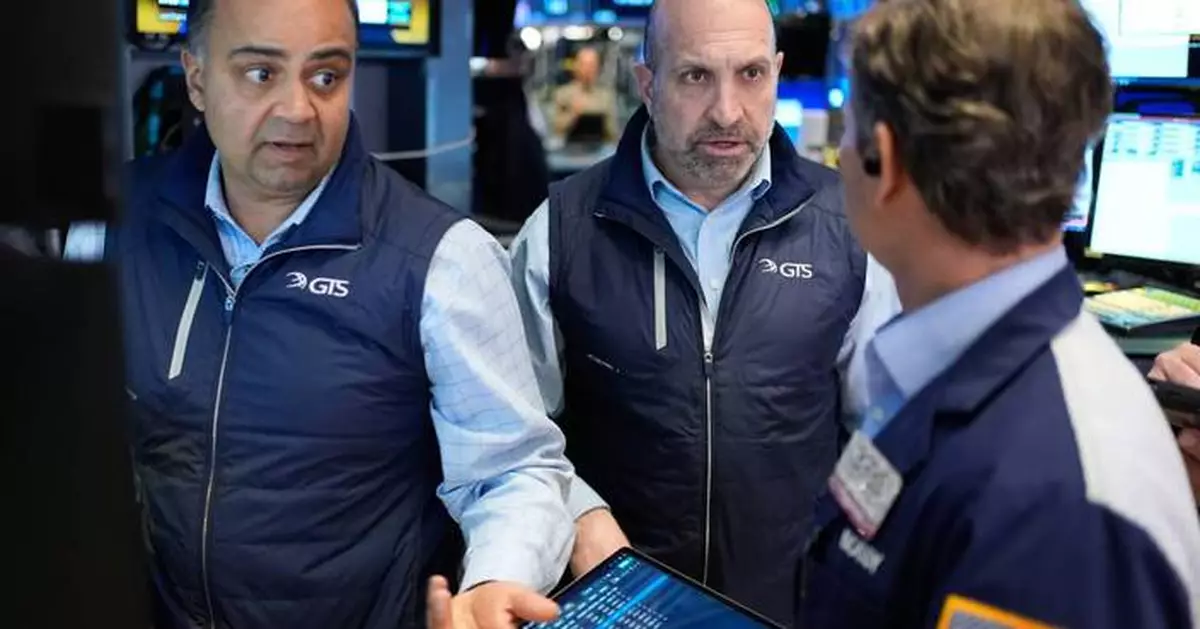
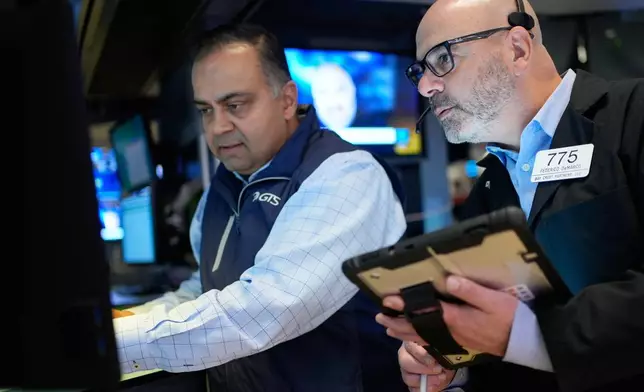
Federico DeMarco, right, and Dilip Patel work on the floor at the New York Stock Exchange in New York, Wednesday, March 25, 2026. (AP Photo/Seth Wenig)
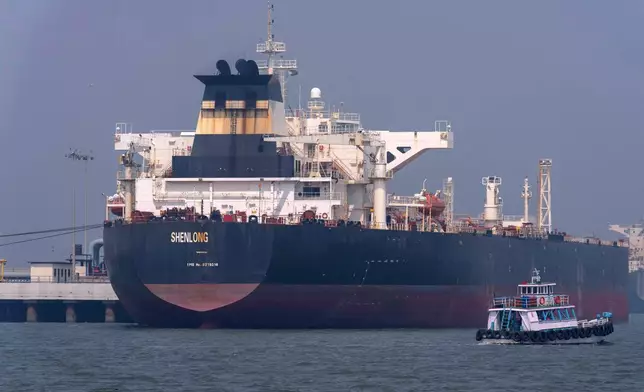
FILE - Liberia-flagged tanker Shenlong Suezmax, carrying crude oil from Saudi Arabia, that arrived clearing the Strait of Hormuz, is seen at the Mumbai Port in Mumbai, India, Thursday, March 12, 2026. (AP Photo/Rafiq Maqbool, File)
James Denaro, center, and Dilip Patel, left, work on the floor at the New York Stock Exchange in New York, Wednesday, March 25, 2026. (AP Photo/Seth Wenig)
The losses are a break from Wall Street’s pattern this week, where the U.S. stock market flip-flopped from gains to losses each day as hopes rose and fell about a possible end to the war.
Moments after the U.S. stock market finished trading on Thursday, President Donald Trump offered more potential for hope. He extended a self-imposed deadline to “obliterate” Iran’s power plants to April 6 if it doesn’t fully allow oil tankers to exit the Persian Gulf through the Strait of Hormuz to the open ocean.
Oil prices eased immediately afterward in a sign of hope that some normalcy may return to the strait. It was similar to the optimism that swept global markets after Trump said Monday, just before Wall Street opened for trading, that the United States and Iran had held productive talks.
But oil prices resumed their climb as trading moved westward from Asia to Europe and back to Wall Street on Friday. Despite Trump’s latest announcement of a delay, fighting continued in the Middle East. Iran gave no signs of backing down, while Israel threatened to “escalate and expand” its attacks on Iran.
“The diplomatic dissonance this week between the U.S. and Iran dismayed investors,” said Doug Beath, global equity strategist at Wells Fargo Investment Institute. “By the end of the week, risk appetite could not withstand the fog of war.”
“Any further statements by Trump about a deal are white noise to the markets,” Jim Bianco, president and macro strategist at Bianco Research, wrote in a social media post. “Only if the IRANIANS say the talks are going well will it impact markets.”
The price for a barrel of Brent crude rose 1.3% to $103.24 and is up from roughly $70 before the war began. Benchmark U.S. crude rose 3.3% to $97.64 per barrel.
The fear in financial markets is that the war will disrupt the Persian Gulf's energy industry for a long time. It could keep so much oil and natural gas out of the world’s markets that it sends a punishing wave of inflation through the global economy.
Not only would it raise prices for drivers buying gasoline, it could push businesses that use any trucks, ships or planes to move their products to raise their own prices. It would also make electricity from gas-fired power plants more expensive.
If the war continues until the end of June, strategists at Macquarie say the price of oil could reach $200 per barrel. The record is just above $147, reached during the summer of 2008. That’s when Iran’s testing of missiles, including one that could reach Israel, and strong demand for oil from China helped send prices spiking despite the Great Recession.
High gasoline prices and the war are already hitting confidence among U.S. consumers, whose spending makes up the bulk of the economy. Sentiment among them fell slightly more in March from February than economists expected, according to a survey by the University of Michigan.
U.S. consumers also said in the survey they're worried about inflation jumping in the near future. They're bracing for inflation of 3.8% in the coming 12 months, up from 3.4% in February. It's the largest one-month increase in nearly a year.
On Wall Street, the majority of stocks fell, including three out of every five in the S&P 500. The index, which is the main measure of the U.S. stock market's health, is nearly 8% below its all-time high set early this year.
Big Tech stocks were among the heaviest weights on the market, including drops of 3.1% for Amazon and 3.5% for Meta Platforms.
Companies selling things that are not essentials, which customers could stop buying if they're spending too much on gasoline, also sank sharply.
Norwegian Cruise Line Holdings lost 4.2%, Airbnb fell 4.6% and Lululemon Athletica dropped 3.5%.
Among the winners on Wall Street was Netflix, which added 0.3% a day after announcing price increases to its services in the United States.
In stock markets abroad, indexes were mixed across Europe and Asia.
In the bond market, Treasury yields swiveled.
The yield for the 10-year Treasury rose as high as 4.48% before pulling back to to 4.41%. That's down from 4.42% late Thursday, but it's still well above its 3.97% level from before the war began.
The rise since the war's start has already sent rates jumping for mortgages and for other loans taken by U.S. households and businesses, slowing the economy.
High Treasury yields and disruption in the bond market were big factors that Trump named a year ago when he backed off his initial threats for global tariffs made on “Liberation Day.” The moves caused critics to allege Trump always chickens out, or “TACO,” if financial markets show enough pain.
AP Business Writers Chan Ho-him and Matt Ott contributed.
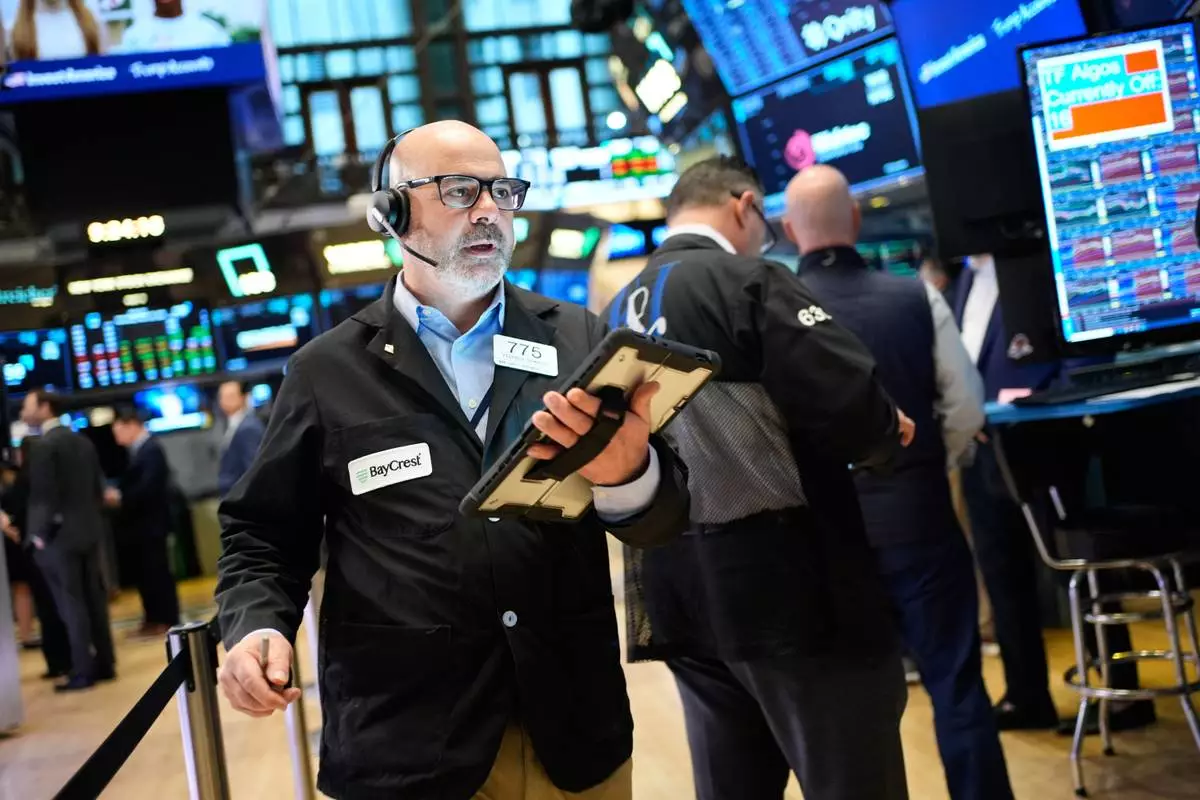
Federico DeMarco works on the floor at the New York Stock Exchange in New York, Wednesday, March 25, 2026. (AP Photo/Seth Wenig)
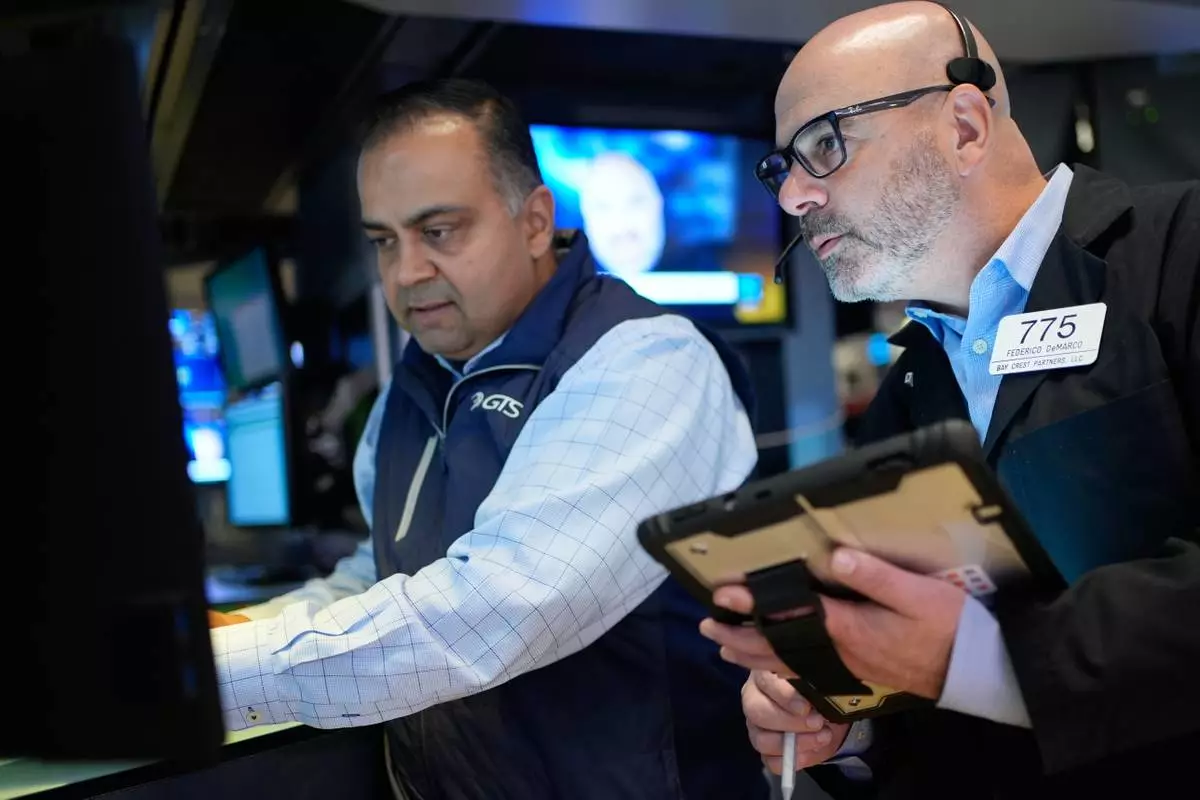
Federico DeMarco, right, and Dilip Patel work on the floor at the New York Stock Exchange in New York, Wednesday, March 25, 2026. (AP Photo/Seth Wenig)
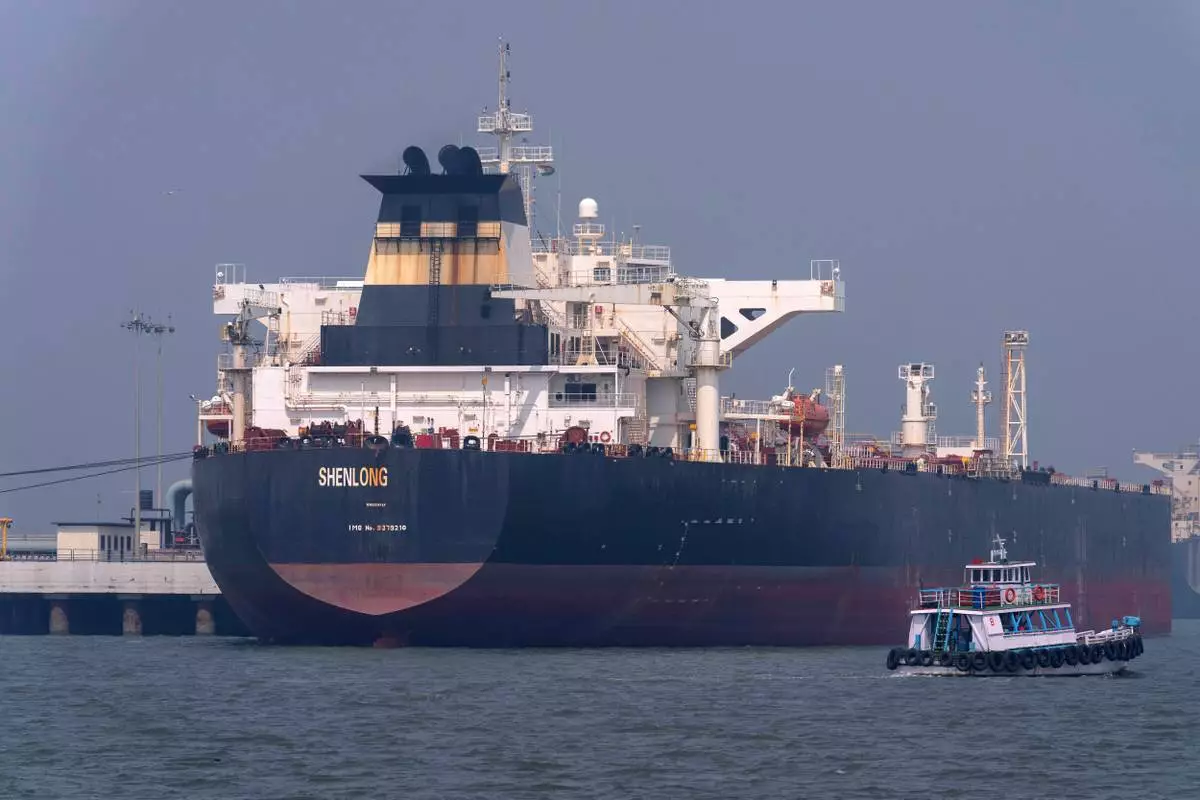
FILE - Liberia-flagged tanker Shenlong Suezmax, carrying crude oil from Saudi Arabia, that arrived clearing the Strait of Hormuz, is seen at the Mumbai Port in Mumbai, India, Thursday, March 12, 2026. (AP Photo/Rafiq Maqbool, File)
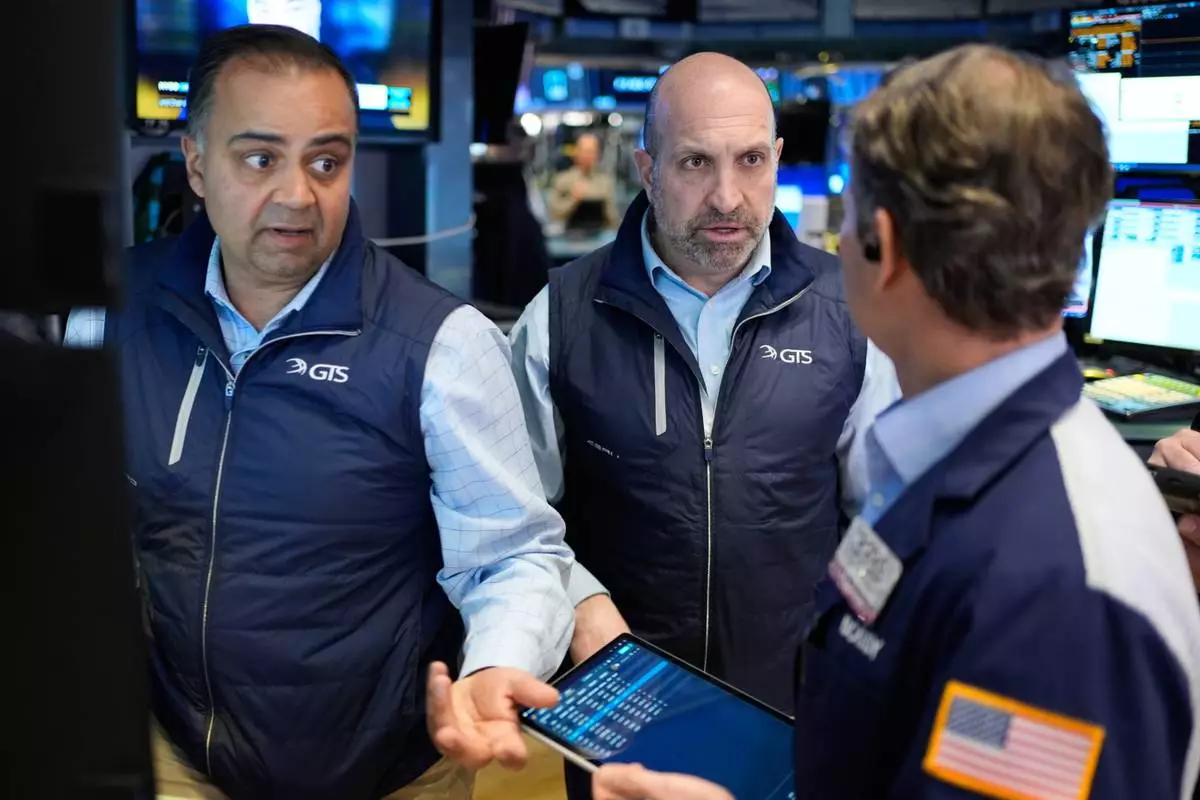
James Denaro, center, and Dilip Patel, left, work on the floor at the New York Stock Exchange in New York, Wednesday, March 25, 2026. (AP Photo/Seth Wenig)
VAUX-DE-CERNAY, France (AP) — Deep divisions were apparent over the Iran war as top diplomats from the Group of Seven countries met Friday in France following U.S. President Donald Trump’s repeated complaints that allies have ignored or rejected requests for help confronting Tehran's retaliation, including the closure of the Strait of Hormuz to most international shipping.
U.S. Secretary of State Marco Rubio joined his G7 counterparts a day after Trump lobbed his latest round of insults at NATO countries, making it even more difficult for America's top diplomat to try to sell the U.S. strategy for the Iran conflict. Four weeks into the war that the U.S. and Israel launched, the allies also face concerns about instability in the oil markets and uncertainty over potential negotiations to end the crisis.
Most of America’s closest allies have greeted the Iran war with deep skepticism, which was on display as the G7 foreign ministers gathered at a historic 12th-century abbey in Vaux-de-Cernay, outside Paris, even as they urged a diplomatic solution.
French Minister of the Armed Forces Catherine Vautrin said the war “is not ours,” adding that France's position is strictly defensive.
“The aim is truly this diplomatic approach, which is the only one that can guarantee a return to peace,” she said on Europe 1 and CNews. “Many countries are concerned, and it is absolutely essential that we find a solution.”
British Foreign Secretary Yvette Cooper said Britain also favored a diplomatic path, acknowledging differences with the United States.
“We have taken the approach of supporting defensive action, but also we’ve taken a different approach on the offensive action that has taken place as part of this conflict,” she said.
German Foreign Minister Johann Wadephul said he made “our position clear, namely that there is certainly a readiness on Germany’s part to play a role after the end of hostilities when it comes to ensuring the security of shipping in the Strait of Hormuz.”
He said his interest is “to broaden what we have as a common basis” regarding the conflict in the Middle East.
Trump has complained that NATO countries were not stepping up to help against Iran and that they and other allies have rejected his calls to take a role in securing the Strait of Hormuz, where Iran’s chokehold has disrupted oil shipments and pushed up energy prices.
“We are very disappointed with NATO because NATO has done absolutely nothing,” Trump said during a Cabinet meeting Thursday.
Of the G7 nations — besides the U.S. — Britain, Canada, France, Germany and Italy are members of the trans-Atlantic military alliance. Japan is the only one that is not.
“We’re there to protect NATO, to protect them from Russia. But they’re not there to protect us,” Trump added.
Russia's war in Ukraine also was a major topic at the G7 meeting, with U.S.-brokered talks persisting but making no breakthroughs and allies concerned that the new conflict in the Middle East will divert U.S. attention from a commitment to Ukraine.
Wadephul, the German foreign minister, said he made clear at the meeting that “there must be no cuts when it comes to maintaining Ukraine’s defense capability.”
Rubio said in a post on X with a photo of him meeting with other G7 diplomats that he “reiterated that President Trump is committed to reaching a ceasefire and negotiated settlement to the Russia-Ukraine war as soon as possible.”
Rubio, who chatted briefly with Ukrainian Foreign Minister Andrii Sybiha, also still has work to do to smooth things over with allies like those in Europe that have faced criticism or outright threats from Trump and others in his Republican administration.
The Europeans are still smarting over Trump's earlier demands to take over Greenland from NATO ally Denmark and are concerned about U.S. support for Ukraine in its war with Russia. The conflict in the Middle East has added another point of tension.
“Frankly, I think countries around the world, even those that are out there complaining about this a little bit, should actually be grateful that the United States has a president that’s willing to confront a threat like this,” Rubio said Thursday.
France is hosting the G7 meeting near Versailles and has been highly skeptical of the war. Besides Vautrin's comments on Friday, the chief of the French defense staff, Gen. Fabien Mandon, complained this week that U.S. allies had not been informed about the start of hostilities.
“They have just decided to intervene in the Near and Middle East without notifying us,” Mandon said, lamenting that the U.S. "is less and less predictable and doesn’t even bother to inform us when it decides to engage in military operations."
However, 35 countries joined military talks hosted by Mandon on how to reopen the Strait of Hormuz “once the intensity of hostilities has sufficiently decreased,” France’s Defense Ministry said.
Shortly before leaving Washington, Rubio told reporters that with Iran threatening global shipping, countries that care about international law “should step up and deal with it.”
He also said he was not concerned about G7 unhappiness with the Iran war.
“I’m not there to make them happy,” he said. “I get along with all of them on a personal level, and we work with those governments very carefully, but the people I’m interested in making happy are the people of the United States. That’s who I work for. I don’t work for France or Germany or Japan.”
Petrequin reported from Paris. Associated Press writers Lorne Cook in Brussels, John Leicester in Paris and Geir Moulson in Berlin contributed to this report.
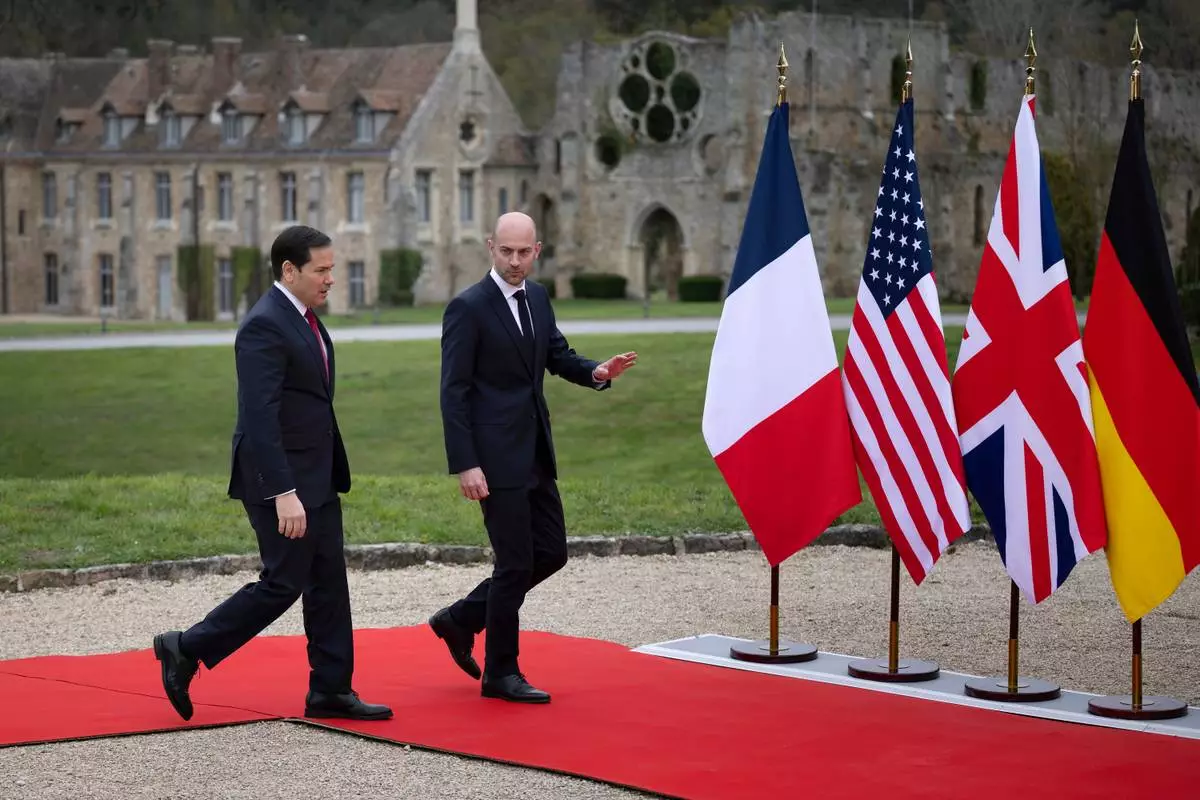
France's Foreign Affairs Minister Jean-Noel Barrot, right, welcomes U.S. Secretary of State Marco Rubio during a G7 Foreign Ministers' meeting at the Vaux-de-Cernay Abbey in Cernay-la-Ville outside Paris, Friday, March 27, 2026. (Brendan Smialowski/Pool Photo via AP)
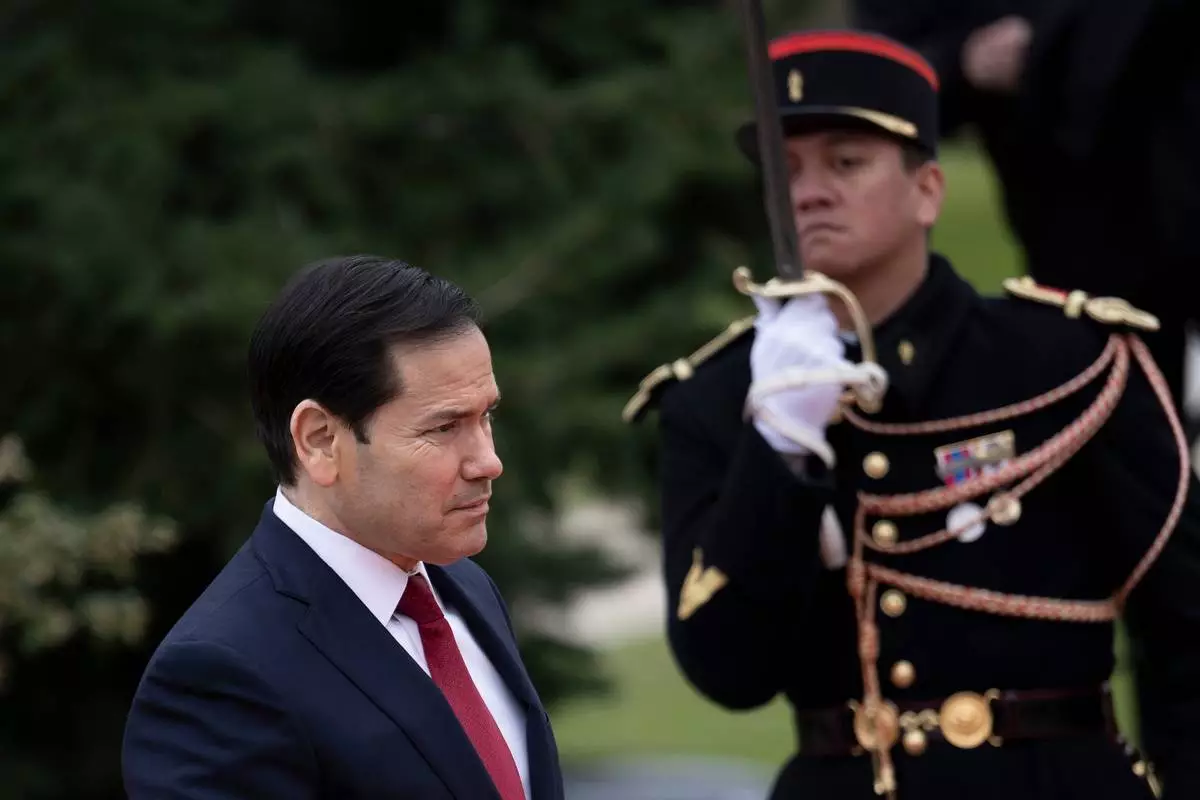
U.S. Secretary of State Marco Rubio arrives to attend a G7 Foreign Ministers' meeting at the Vaux-de-Cernay Abbey in Cernay-la-Ville outside Paris, Friday, March 27, 2026. (Brendan Smialowski/Pool Photo via AP)
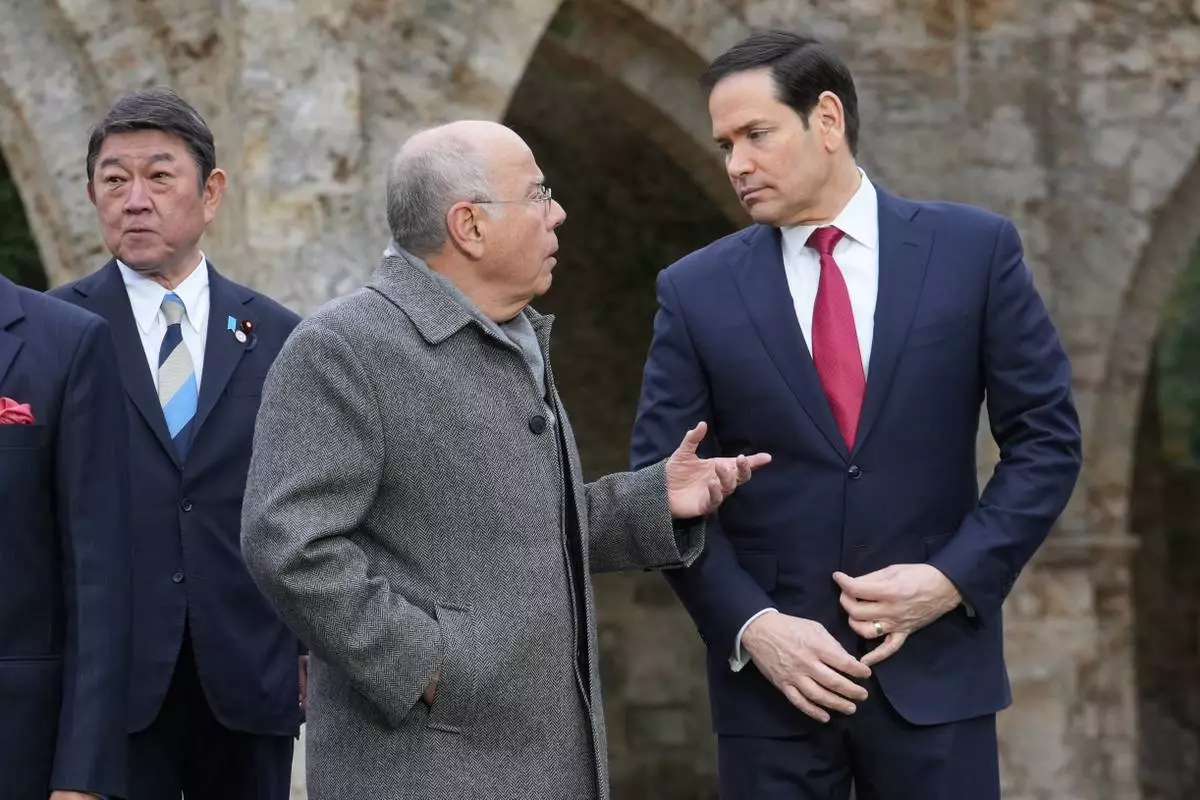
Brazil's Foreign Minister Mauro Vieira, left, and U.S. Secretary of State Marco Rubio talk during the G7 Foreign Ministers' meeting with partner countries in Cernay-la-Ville outside Paris, France, Friday, March 27, 2026. (AP Photo/Michel Euler)
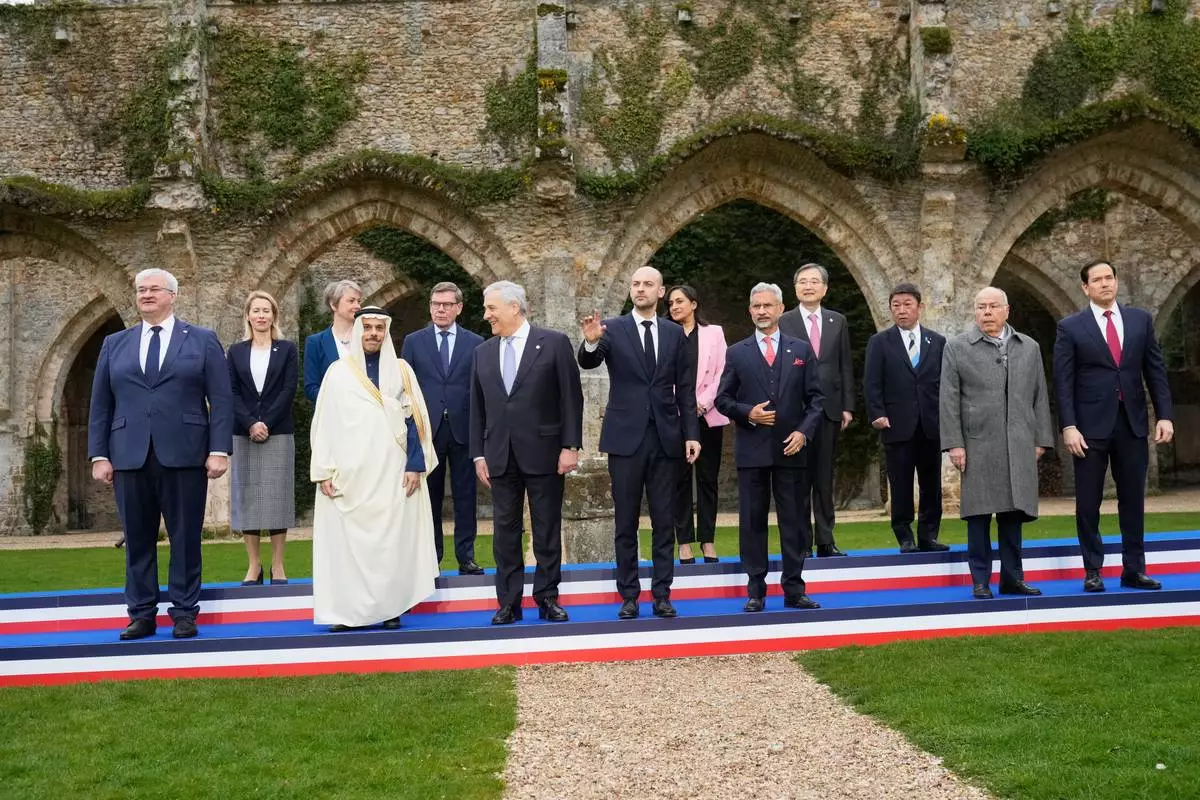
From left: Ukraine's Foreign Minister Andriy Sybiga, EU High Representative and Vice-President for Foreign Affairs and Security Policy Kaja Kallas, Britain's Foreign Secretary Yvette Cooper, Saudi Arabia's Foreign Minister Faisal bin Farhan, Germany's Foreign Minister Johann Wadephul, Italy's Foreign Minister Antonio Tajani, Canada's Foreign Minister Anita Anand, France's Foreign Affairs Minister Jean-Noel Barrot, South Korea's Foreign Minister Cho Hyun, India's Foreign Minister Subrahmanyam Jaishankar, Japan's Foreign Minister Toshimitsu Motegi, Brazil's Foreign Minister Mauro Vieira and U.S. Secretary of State Marco Rubio pose for a photo during the G7 Foreign Ministers' meeting with partner countries in Cernay-la-Ville outside Paris, France, Friday, March 27, 2026. (AP Photo/Michel Euler)
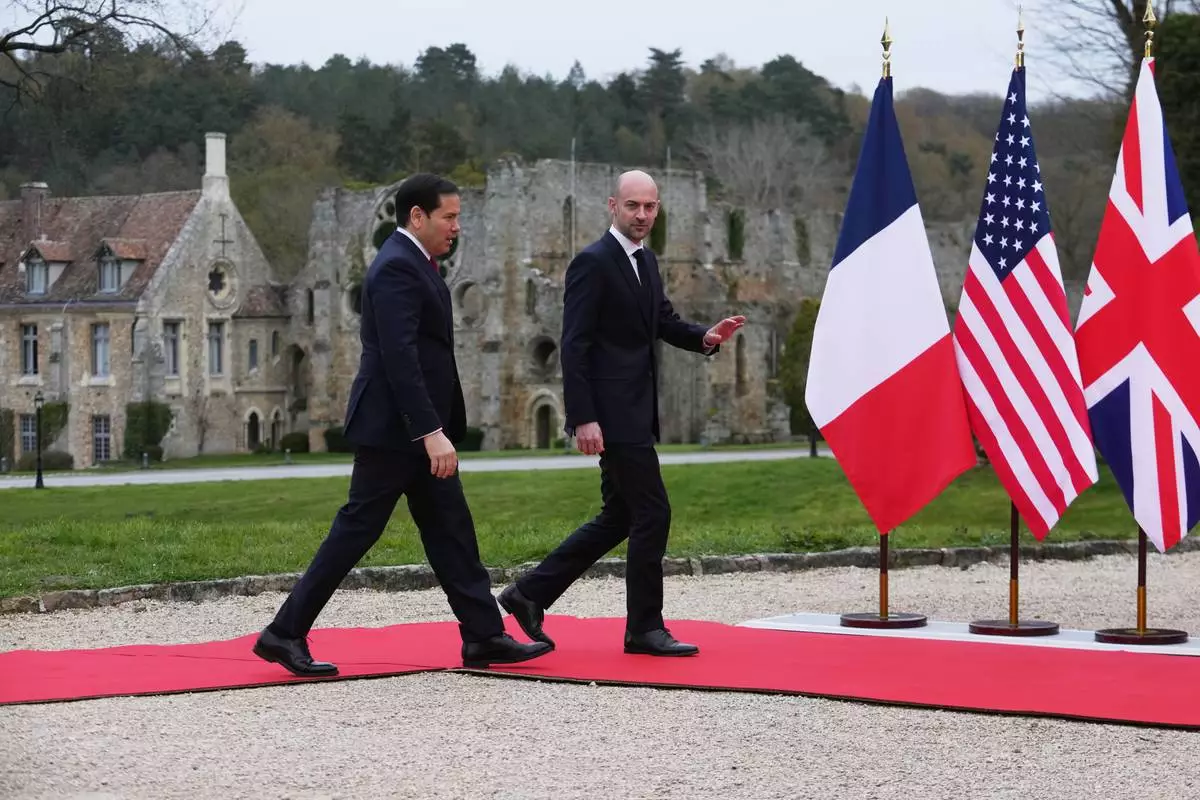
France's Foreign Affairs Minister Jean-Noel Barrot, right, greets U.S. Secretary of State Marco Rubio as he arrives at the G7 Foreign Ministers' meeting with partner countries in Cernay-la-Ville outside Paris, France, Friday, March 27, 2026. (AP Photo/Michel Euler)
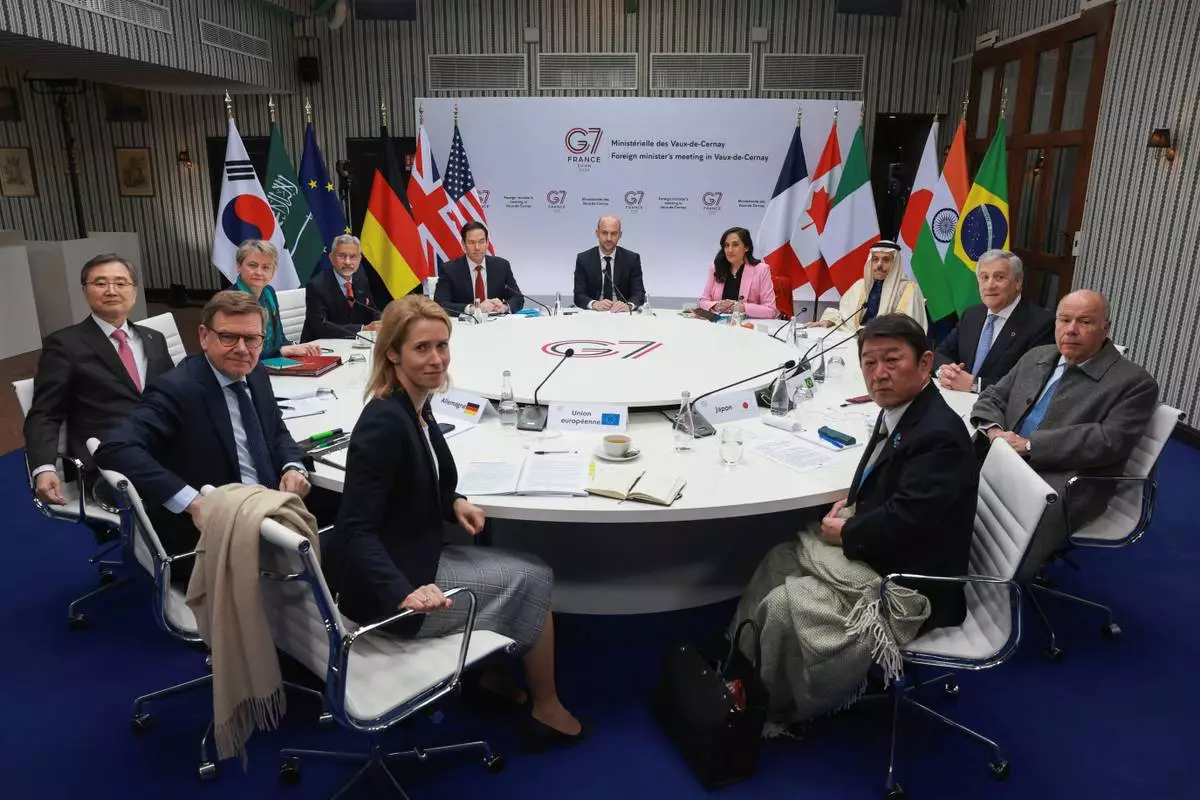
From bottom centre to left: EU High Representative and Vice-President for Foreign Affairs and Security Policy Kaja Kallas, Germany's Foreign Minister Johann Wadephul, South Korea's Foreign Minister Cho Hyun, Britain's Foreign Secretary Yvette Cooper, India's Foreign Minister Subrahmanyam Jaishankar, U.S. Secretary of State Marco Rubio, France's Foreign Affairs Minister Jean-Noel Barrot, Canada's Foreign Minister Anita Anand, Saudi Arabia's Foreign Minister Faisal bin Farhan, Italy's Foreign Minister Antonio Tajani, Brazil's Foreign Minister Mauro Vieira and Japan's Foreign Minister Toshimitsu Motegi attend talks during a G7 Foreign Ministers' meeting with Partner Countries in Cernay-la-Ville outside Paris, Friday, March 27, 2026. (Stephanie Lecocq/Pool Photo via AP)
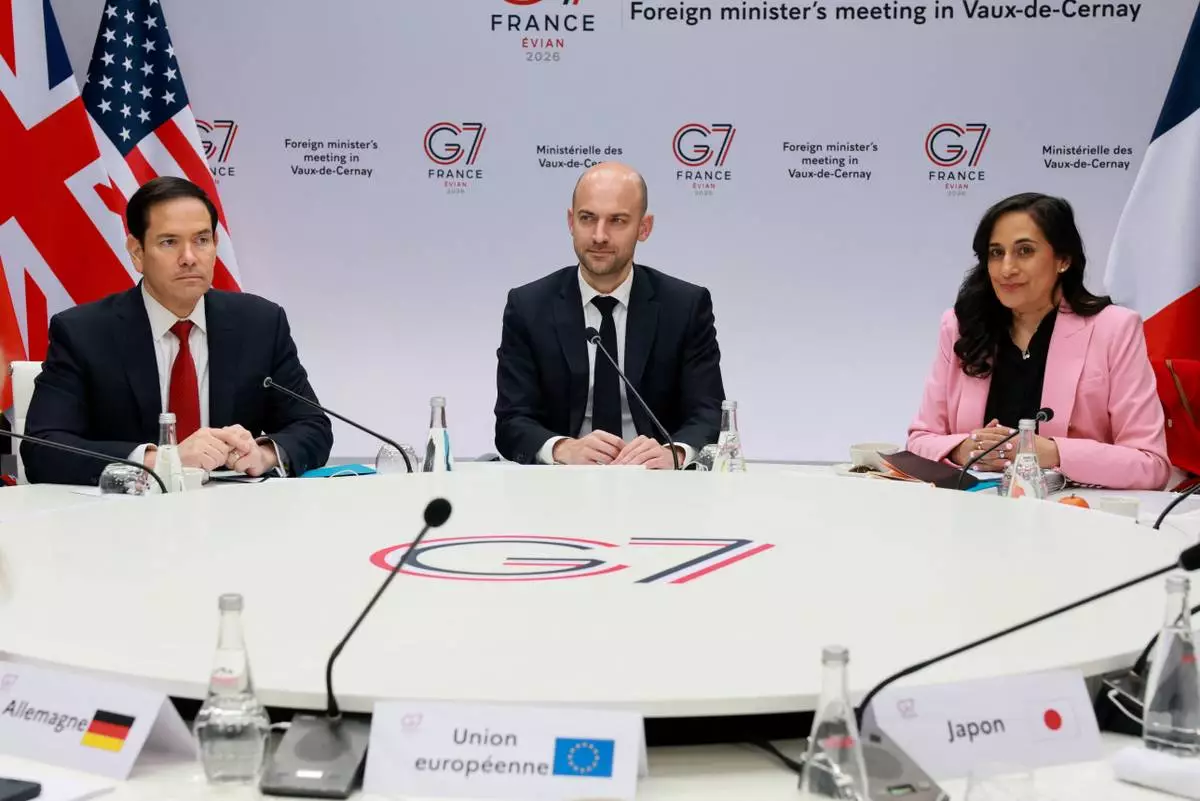
From left: U.S. Secretary of State Marco Rubio, France's Minister for Europe and Foreign Affairs Jean-Noel Barrot and Canada's Foreign Minister Anita Anand attend a working session on the second day of the G7 Foreign Ministers' Meeting in Cernay-la-Ville near Paris, March 27, 2026. (Stephanie Lecocq/Pool Photo via AP)
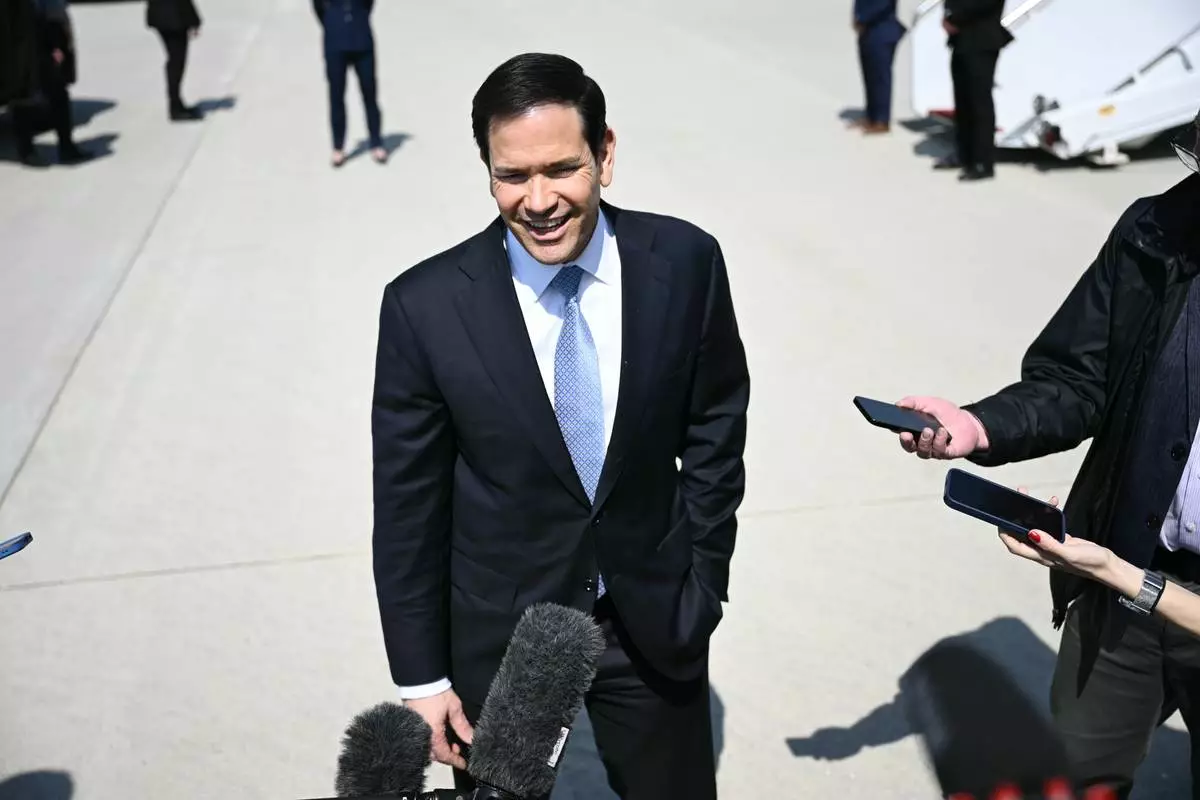
Secretary of State Marco Rubio speaks to reporters before boarding a plane at Joint Base Andrews, Md., Thursday, March 26, 2026. (Brendan Smialowski/Pool Photo via AP)
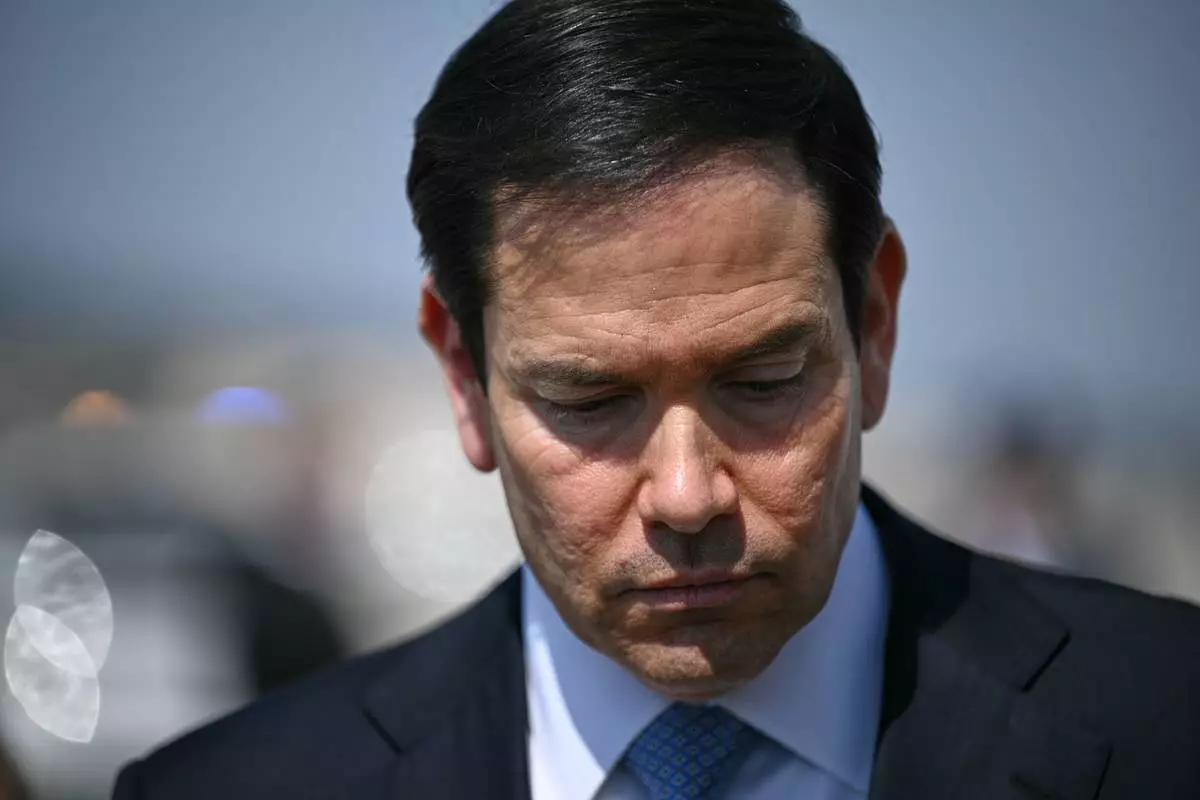
Secretary of State Marco Rubio speaks to reporters before boarding a plane at Joint Base Andrews, Md., Thursday, March 26, 2026. (Brendan Smialowski/Pool Photo via AP)
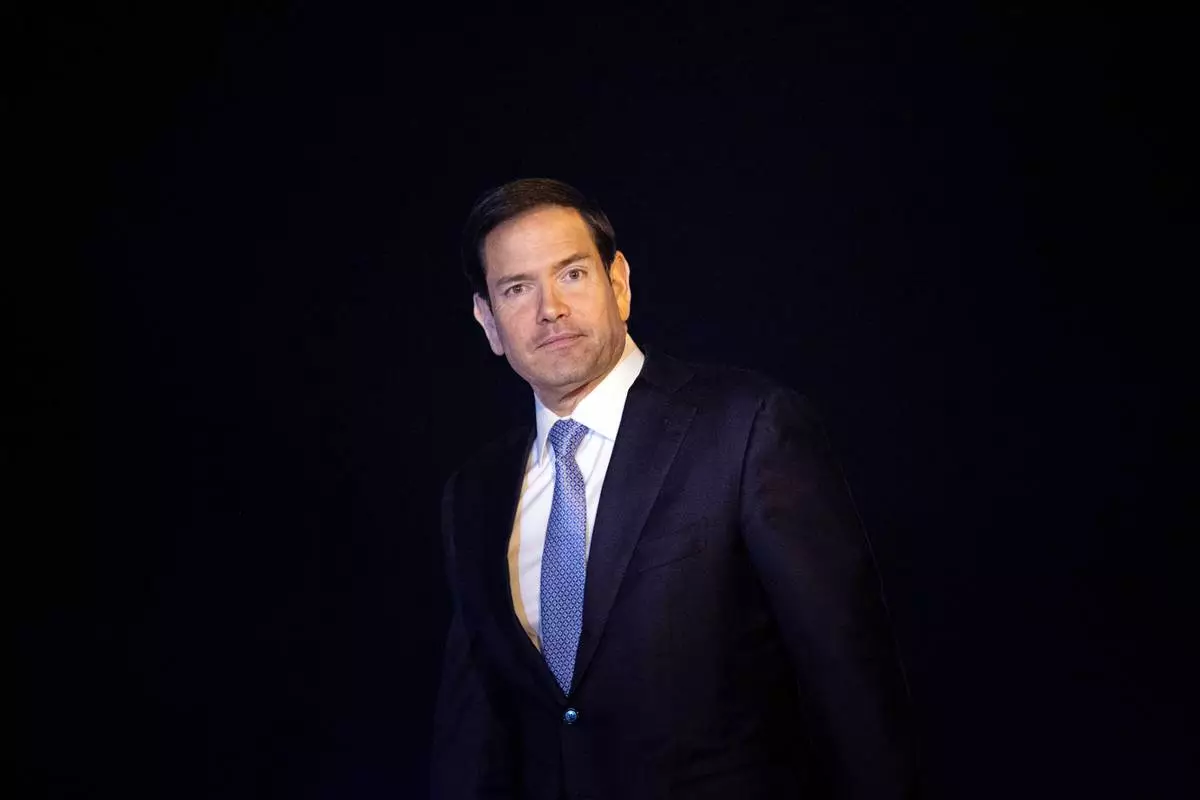
U.S. Secretary of State Marco Rubio arrives at Paris-Le Bourget Airport, in Le Bourget, France, early Friday, March 27, 2026, to take part in the G7 foreign ministers' meeting. (Brendan Smialowski/Pool Photo via AP)
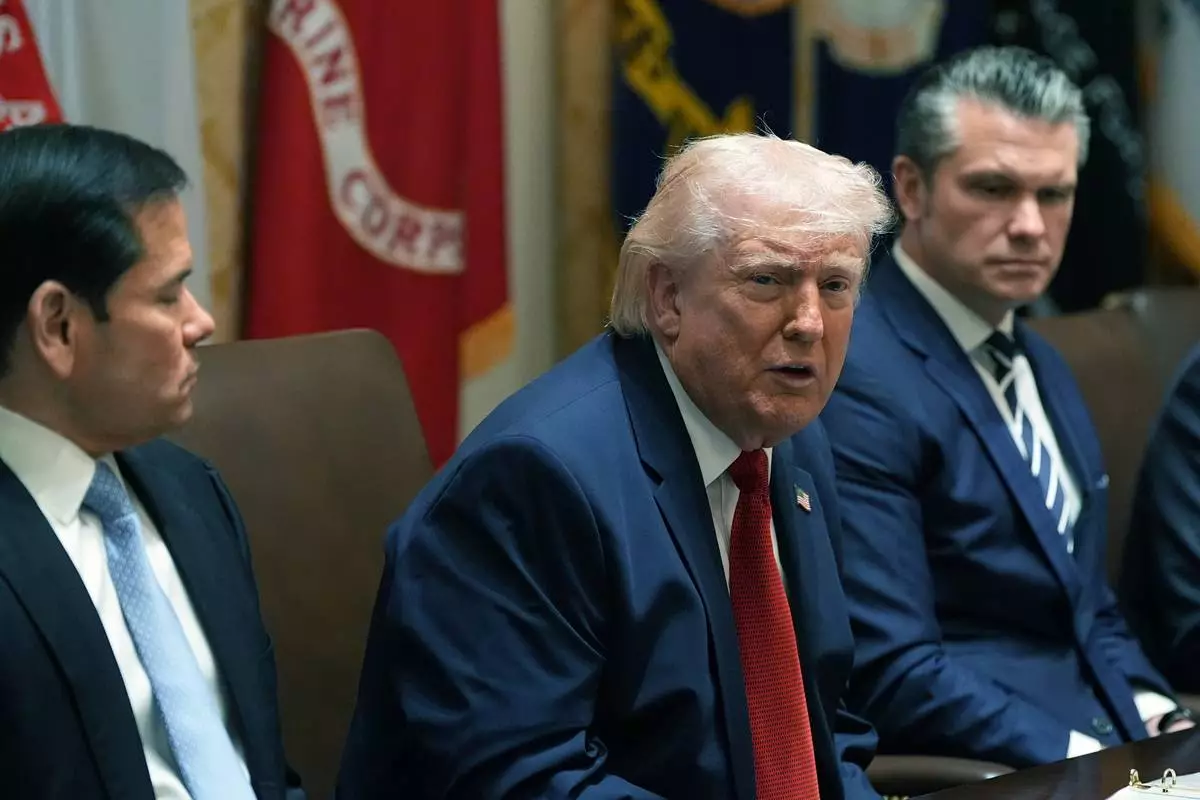
President Donald Trump speaks during a Cabinet meeting at the White House, Thursday, March 26, 2026, in Washington. From left are Secretary of State Marco Rubio, Trump and Secretary of Defense Pete Hegseth. (AP Photo/Alex Brandon)
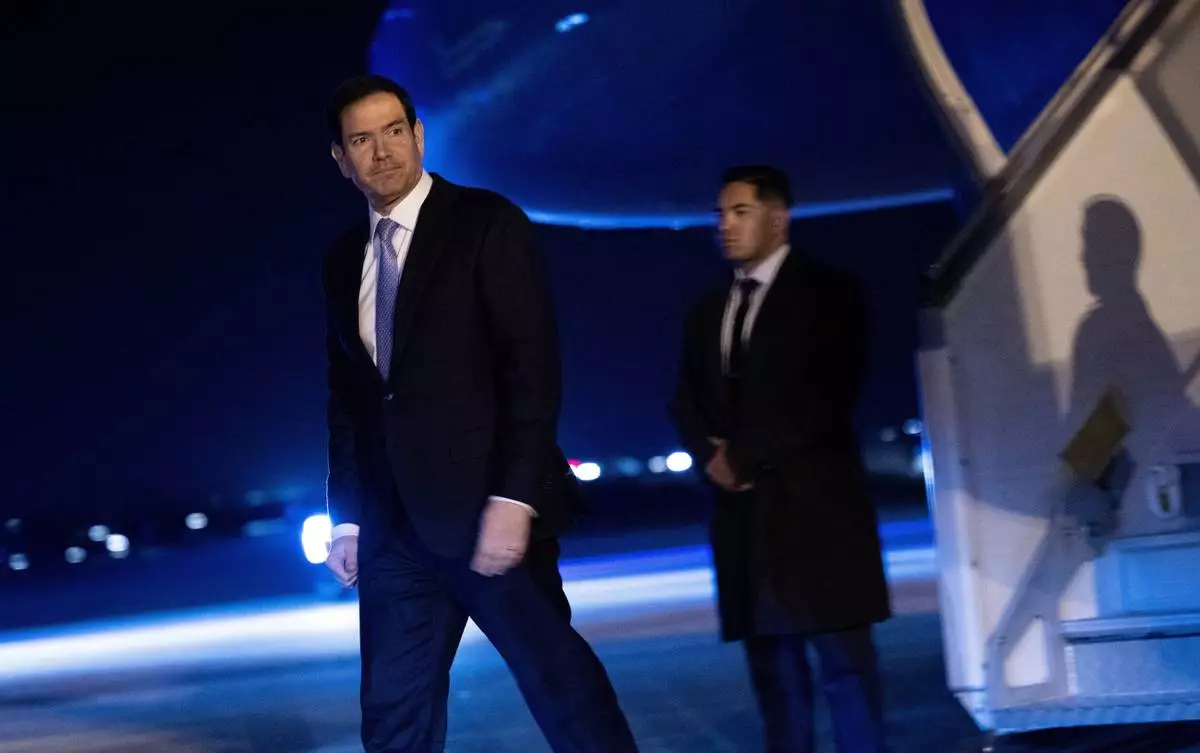
U.S. Secretary of State Marco Rubio arrives at Paris-Le Bourget Airport, in Le Bourget, France, early Friday, March 27, 2026, to take part in the G7 foreign ministers' meeting. (Brendan Smialowski/Pool Photo via AP)