JERUSALEM (AP) — The Hamas militant group is weighing a new proposal for disarming its fighters in Gaza, a major concession that would clear the way for U.S. President Donald Trump’s plan for rebuilding the war-ravaged territory.
How Hamas responds, expected in the coming days or weeks, has great implications for Gaza’s 2 million people, who have been living in a grim limbo since a ceasefire took effect nearly six months ago.
Hamas' founding charter calls for armed resistance against Israel, and it has been reluctant to give up an arsenal, including rockets, anti-tank missiles and explosives, that lies at the heart of its identity.
For that reason, it is far from certain the group will comply. Hamas has indicated it is unhappy with a U.S.-backed proposal currently under discussion. The U.S.-Israel war against Iran has further complicated the Gaza efforts, threatening more delays as it draws the region's attention.
In the meantime, key components of Trump’s plan — most critically, reconstruction of the devastated territory — remain on hold.
“The future of Gaza … is entirely dependent now on Hamas decommissioning its weapons,” Mike Waltz, the U.S. ambassador to the United Nations, told the Security Council this week. “We truly stand at an inflection point now.”
The Oct. 10 ceasefire aimed to halt more than two years of war and launch a broader process to end Hamas’ two-decade rule and rebuild Gaza.
The ceasefire has halted the heaviest fighting and increased the flow of badly needed humanitarian aid into Gaza, bringing some relief.
But Israeli strikes have killed nearly 700 Palestinians since the ceasefire, according to local health officials, and Israel still controls more than half of Gaza. Israel says its strikes are in response to violations of the truce.
The longer-term aspects of the 20-point U.S. ceasefire plan still have not been implemented.
They include the deployment of a U.N.-mandated international peacekeeping force and a foreign-trained Palestinian police force, the arrival of a recently appointed Palestinian technocratic committee to run Gaza’s daily affairs, further Israeli troop withdrawals and a years-long reconstruction plan.
Hamas’ disarmament is critical for all of these steps. Israeli Prime Minister Benjamin Netanyahu has said there will be no progress without disarmament, and many donor countries are reluctant to send cash or troops for the Gaza plan if there is a risk of renewed warfare.
Trump’s 20-point plan says that all of Hamas' "military, terror and offensive infrastructure, including tunnels and weapon production facilities” in Gaza must be destroyed. It also says that weapons must be placed “permanently beyond use.”
Israel and the U.S. say this language is clear and that Hamas must surrender all of its weapons.
Hamas has sought to differentiate between “heavy” weapons, such as rockets, and “light” weapons like rifles and pistols, Hamas officials and mediators say, speaking on condition of anonymity to discuss the negotiations.
It also wants to link any demilitarization to Israeli troop pullbacks.
Nickolay Mladenov, the director of the U.S.-backed Board of Peace, a new body led by Trump that is overseeing the ceasefire, told the U.N. Security Council this week that a proposal backed by mediator countries Turkey, Qatar and Egypt has been presented to Hamas.
“Serious discussions are underway as we speak,” he said.
Mladenov said the proposal calls for the “complete decommissioning” of all Hamas weapons and putting security in Gaza under the full control of the new technocratic committee.
He said disarmament would begin with the “most dangerous weapons,” including rockets, explosives and assault rifles and later move to “personal weapons.”
The process would be accompanied by staged Israeli withdrawals.
Disarmament offers “the only way forward” for reconstruction and success of the new Palestinian governing committee, Mladenov said. “For the people of Gaza, the implications are profound."
Hamas’ response has been cool.
Bassem Naim, a senior Hamas official, angrily accused Mladenov of siding with Israel. In a post Thursday on X, he said the envoy “is trying to be more royalist than the king himself, as he attempts to tie everything to the weapons dossier.”
Other Hamas officials, speaking on condition of anonymity to discuss the negotiations, said they had accepted the new proposal “in principle,” with reservations on some parts of the plan.
They said that the group’s response will include amendments that address their concerns including the lack of “crucial” guarantees that Israel will halt its attacks in Gaza and not resume the war.
It is unclear when Hamas will respond to the proposal.
The uncertainty signals that more delays, or worse, could lie ahead for war-weary Gaza’s population.
Israel’s two-year offensive, launched in response to Hamas’ Oct. 7, 2023, attack on southern Israel, flattened large swaths of Gaza and has displaced an estimated 90% of the population. Hundreds of thousands of people are still living in tents, unable to rebuild their homes or lives and heavily dependent on aid handouts.
If the negotiations drag on, that would mean delays in rebuilding Gaza and an increased risk of resuming the war.
Magdy reported from Cairo.
Follow AP coverage at https://apnews.com/hub/israel-hamas-war
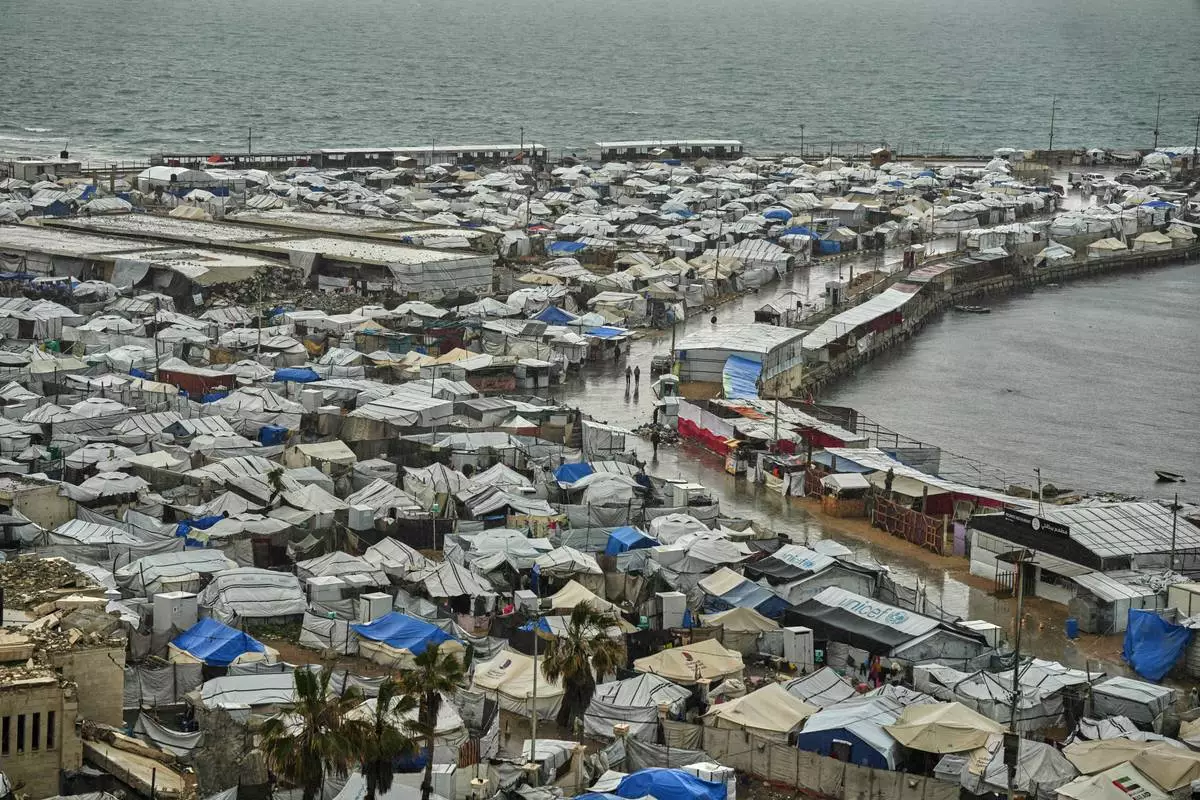
A tent camp for displaced Palestinians stretches across the Gaza City seaport, Wednesday, March 25, 2026. (AP Photo/Jehad Alshrafi)
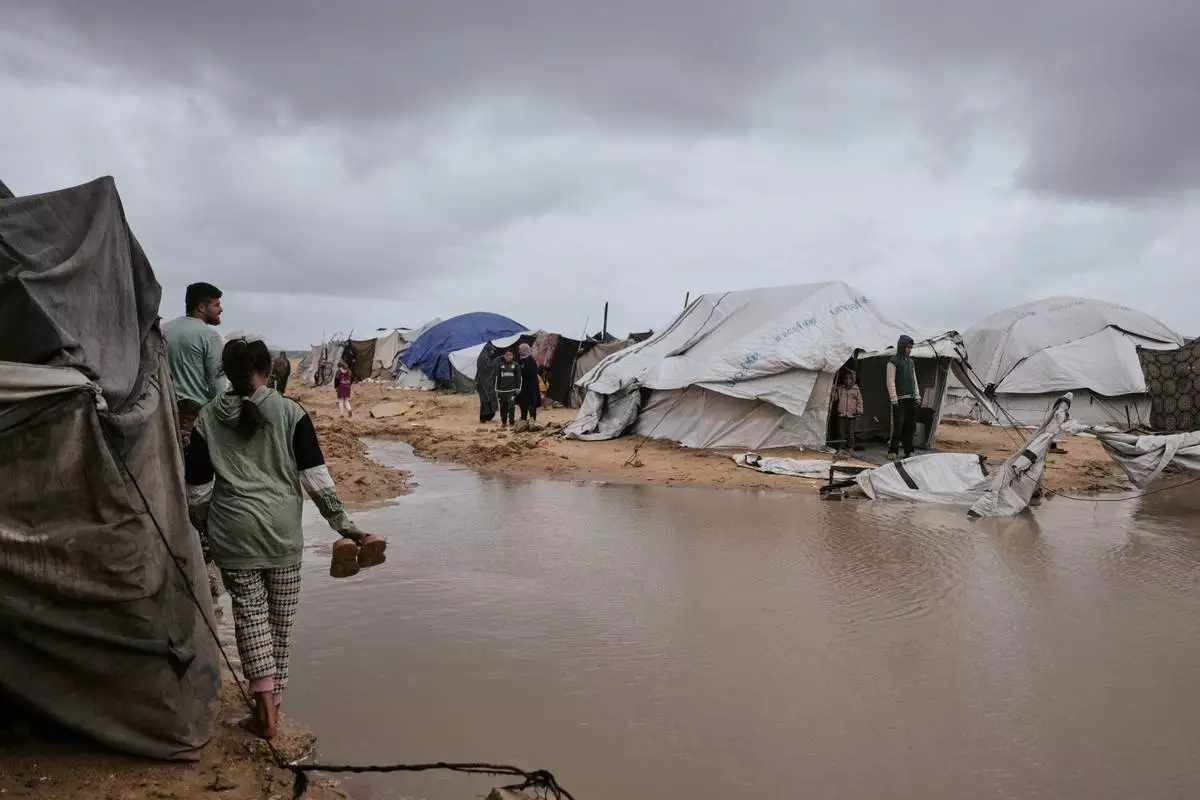
Palestinians walk through a flooded area in a temporary tent camp after heavy rainfall in Gaza City, Thursday, March 26, 2026 (AP Photo/Jehad Alshrafi)
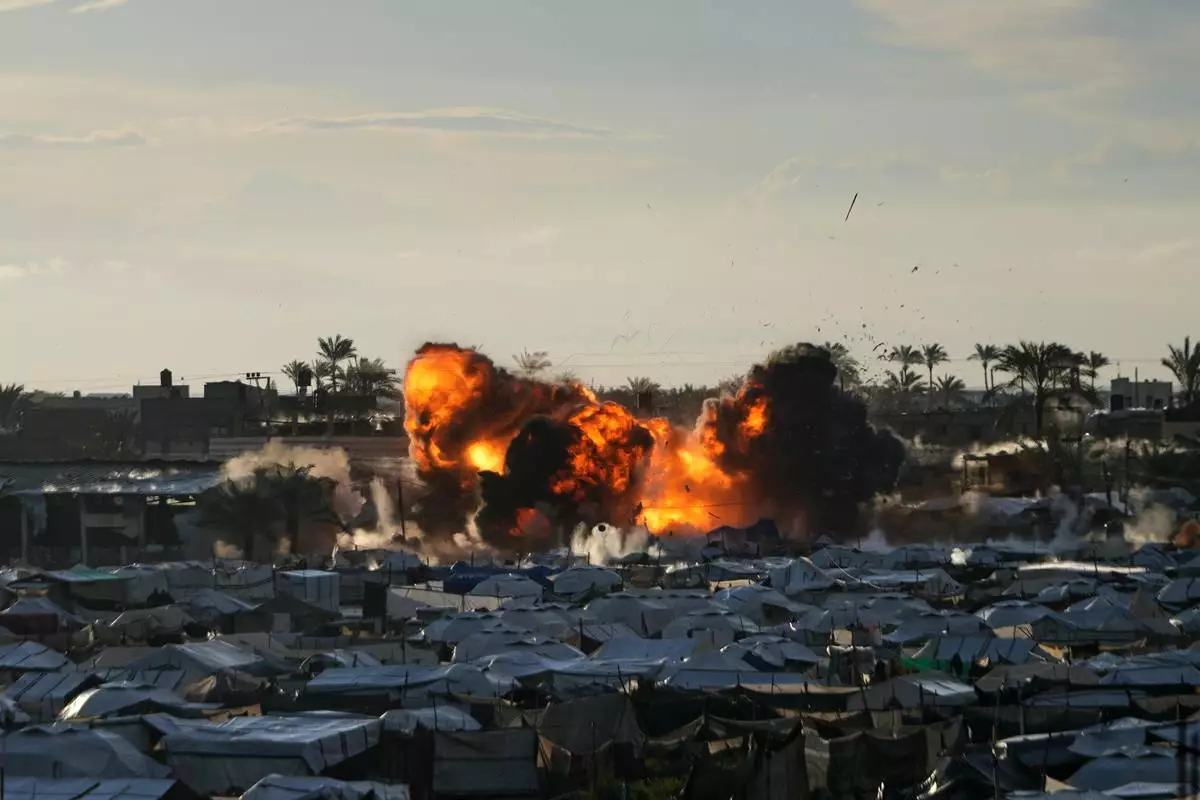
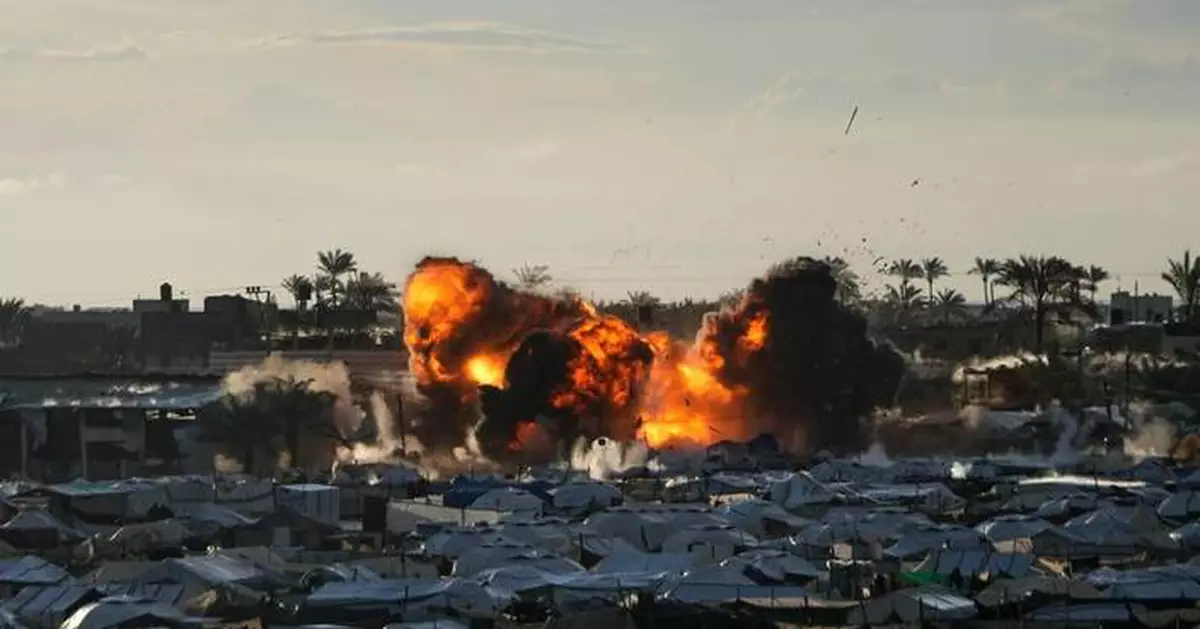
Smoke and flames rise following an Israeli military strike on a target next to a tent camp in Deir al-Balah, central Gaza Strip, Wednesday, March, 25, 2026.(AP Photo/Abdel Kareem Hana)
VAUX-DE-CERNAY, France (AP) — Deep divisions were apparent over the Iran war as top diplomats from the Group of Seven countries met Friday in France following U.S. President Donald Trump’s repeated complaints that allies have ignored or rejected requests for help confronting Tehran's retaliation, including the closure of the Strait of Hormuz to most international shipping.
U.S. Secretary of State Marco Rubio joined his G7 counterparts a day after Trump lobbed his latest round of insults at NATO countries, making it even more difficult for America's top diplomat to try to sell the U.S. strategy for the Iran conflict. Four weeks into the war that the U.S. and Israel launched, the allies also face concerns about instability in the oil markets and uncertainty over potential negotiations to end the crisis.
Most of America’s closest allies have greeted the Iran war with deep skepticism, which was on display as the G7 foreign ministers gathered at a historic 12th-century abbey in Vaux-de-Cernay, outside Paris, even as they urged a diplomatic solution.
French Minister of the Armed Forces Catherine Vautrin said the war “is not ours,” adding that France's position is strictly defensive.
“The aim is truly this diplomatic approach, which is the only one that can guarantee a return to peace,” she said on Europe 1 and CNews. “Many countries are concerned, and it is absolutely essential that we find a solution.”
British Foreign Secretary Yvette Cooper said Britain also favored a diplomatic path, acknowledging differences with the United States.
“We have taken the approach of supporting defensive action, but also we’ve taken a different approach on the offensive action that has taken place as part of this conflict,” she said.
German Foreign Minister Johann Wadephul said he made “our position clear, namely that there is certainly a readiness on Germany’s part to play a role after the end of hostilities when it comes to ensuring the security of shipping in the Strait of Hormuz.”
He said his interest is “to broaden what we have as a common basis” regarding the conflict in the Middle East.
Trump has complained that NATO countries were not stepping up to help against Iran and that they and other allies have rejected his calls to take a role in securing the Strait of Hormuz, where Iran’s chokehold has disrupted oil shipments and pushed up energy prices.
“We are very disappointed with NATO because NATO has done absolutely nothing,” Trump said during a Cabinet meeting Thursday.
Of the G7 nations — besides the U.S. — Britain, Canada, France, Germany and Italy are members of the trans-Atlantic military alliance. Japan is the only one that is not.
“We’re there to protect NATO, to protect them from Russia. But they’re not there to protect us,” Trump added.
Russia's war in Ukraine also was a major topic at the G7 meeting, with U.S.-brokered talks persisting but making no breakthroughs and allies concerned that the new conflict in the Middle East will divert U.S. attention from a commitment to Ukraine.
Wadephul, the German foreign minister, said he made clear at the meeting that “there must be no cuts when it comes to maintaining Ukraine’s defense capability.”
Rubio said in a post on X with a photo of him meeting with other G7 diplomats that he “reiterated that President Trump is committed to reaching a ceasefire and negotiated settlement to the Russia-Ukraine war as soon as possible.”
Rubio, who chatted briefly with Ukrainian Foreign Minister Andrii Sybiha, also still has work to do to smooth things over with allies like those in Europe that have faced criticism or outright threats from Trump and others in his Republican administration.
The Europeans are still smarting over Trump's earlier demands to take over Greenland from NATO ally Denmark and are concerned about U.S. support for Ukraine in its war with Russia. The conflict in the Middle East has added another point of tension.
“Frankly, I think countries around the world, even those that are out there complaining about this a little bit, should actually be grateful that the United States has a president that’s willing to confront a threat like this,” Rubio said Thursday.
France is hosting the G7 meeting near Versailles and has been highly skeptical of the war. Besides Vautrin's comments on Friday, the chief of the French defense staff, Gen. Fabien Mandon, complained this week that U.S. allies had not been informed about the start of hostilities.
“They have just decided to intervene in the Near and Middle East without notifying us,” Mandon said, lamenting that the U.S. "is less and less predictable and doesn’t even bother to inform us when it decides to engage in military operations."
However, 35 countries joined military talks hosted by Mandon on how to reopen the Strait of Hormuz “once the intensity of hostilities has sufficiently decreased,” France’s Defense Ministry said.
Shortly before leaving Washington, Rubio told reporters that with Iran threatening global shipping, countries that care about international law “should step up and deal with it.”
He also said he was not concerned about G7 unhappiness with the Iran war.
“I’m not there to make them happy,” he said. “I get along with all of them on a personal level, and we work with those governments very carefully, but the people I’m interested in making happy are the people of the United States. That’s who I work for. I don’t work for France or Germany or Japan.”
Petrequin reported from Paris. Associated Press writers Lorne Cook in Brussels, John Leicester in Paris and Geir Moulson in Berlin contributed to this report.
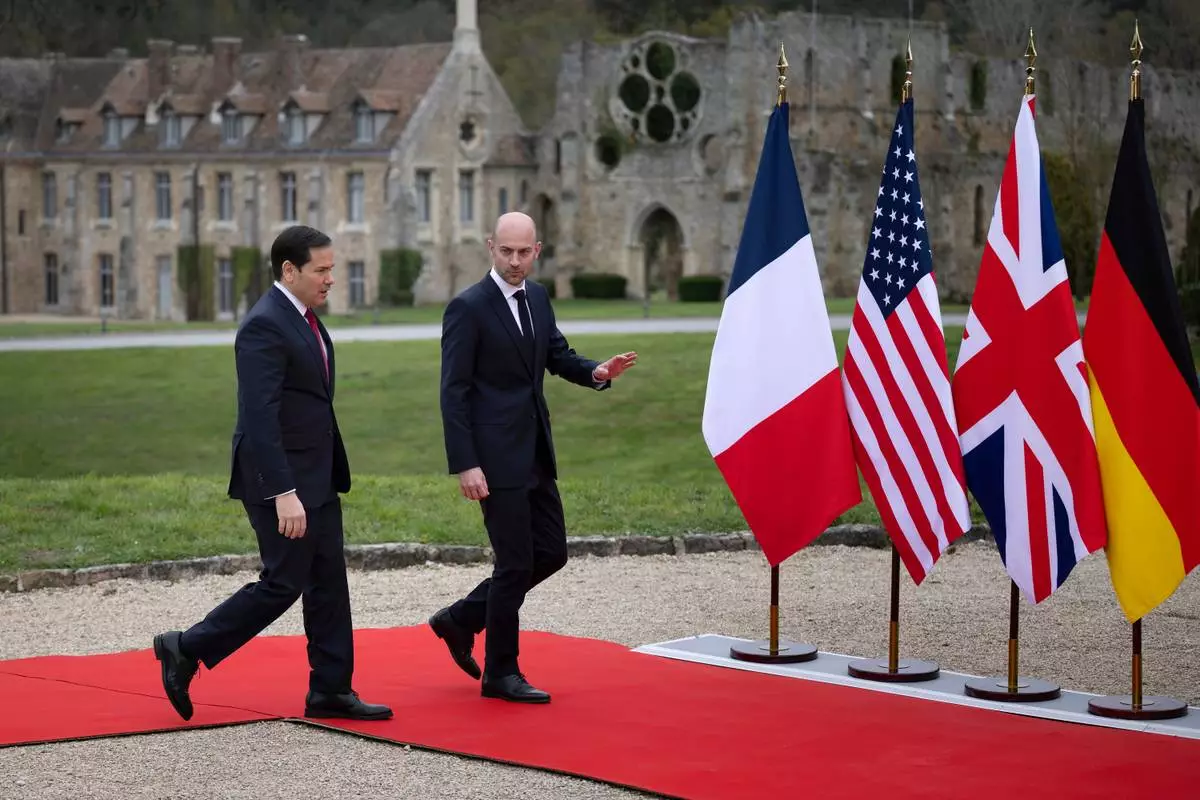
France's Foreign Affairs Minister Jean-Noel Barrot, right, welcomes U.S. Secretary of State Marco Rubio during a G7 Foreign Ministers' meeting at the Vaux-de-Cernay Abbey in Cernay-la-Ville outside Paris, Friday, March 27, 2026. (Brendan Smialowski/Pool Photo via AP)
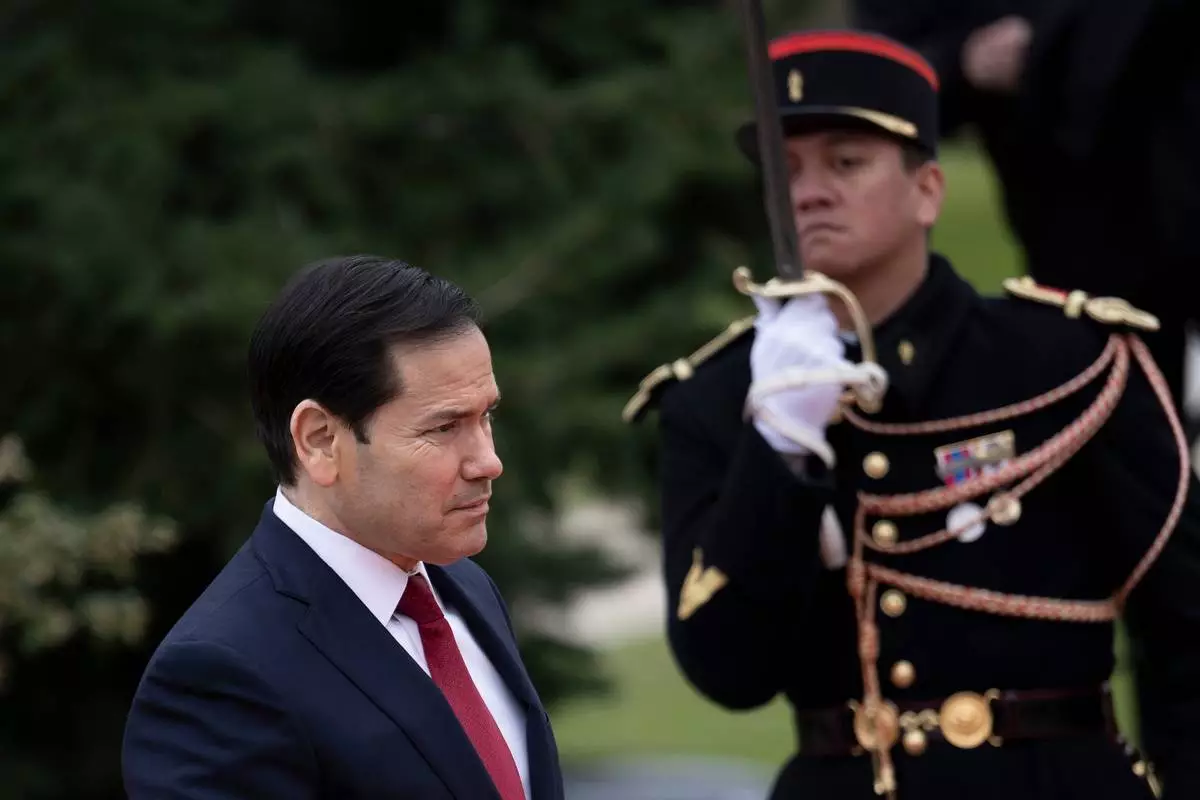
U.S. Secretary of State Marco Rubio arrives to attend a G7 Foreign Ministers' meeting at the Vaux-de-Cernay Abbey in Cernay-la-Ville outside Paris, Friday, March 27, 2026. (Brendan Smialowski/Pool Photo via AP)
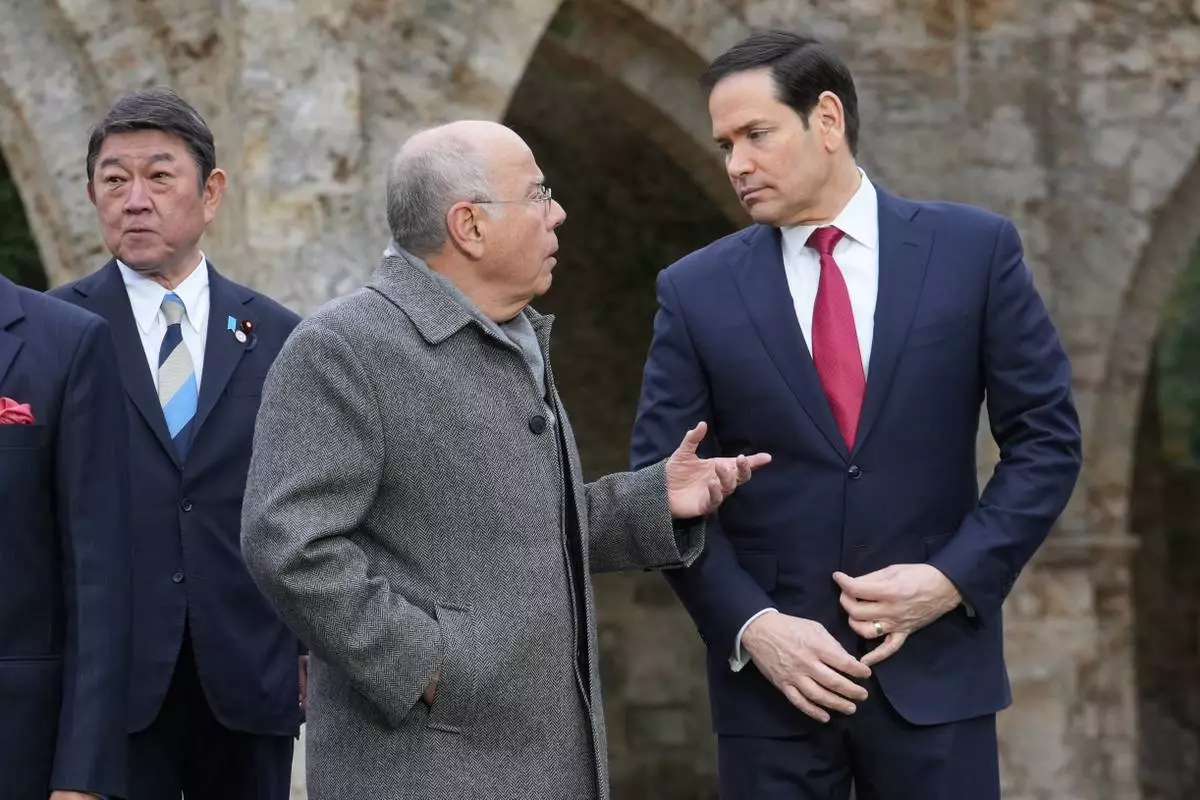
Brazil's Foreign Minister Mauro Vieira, left, and U.S. Secretary of State Marco Rubio talk during the G7 Foreign Ministers' meeting with partner countries in Cernay-la-Ville outside Paris, France, Friday, March 27, 2026. (AP Photo/Michel Euler)
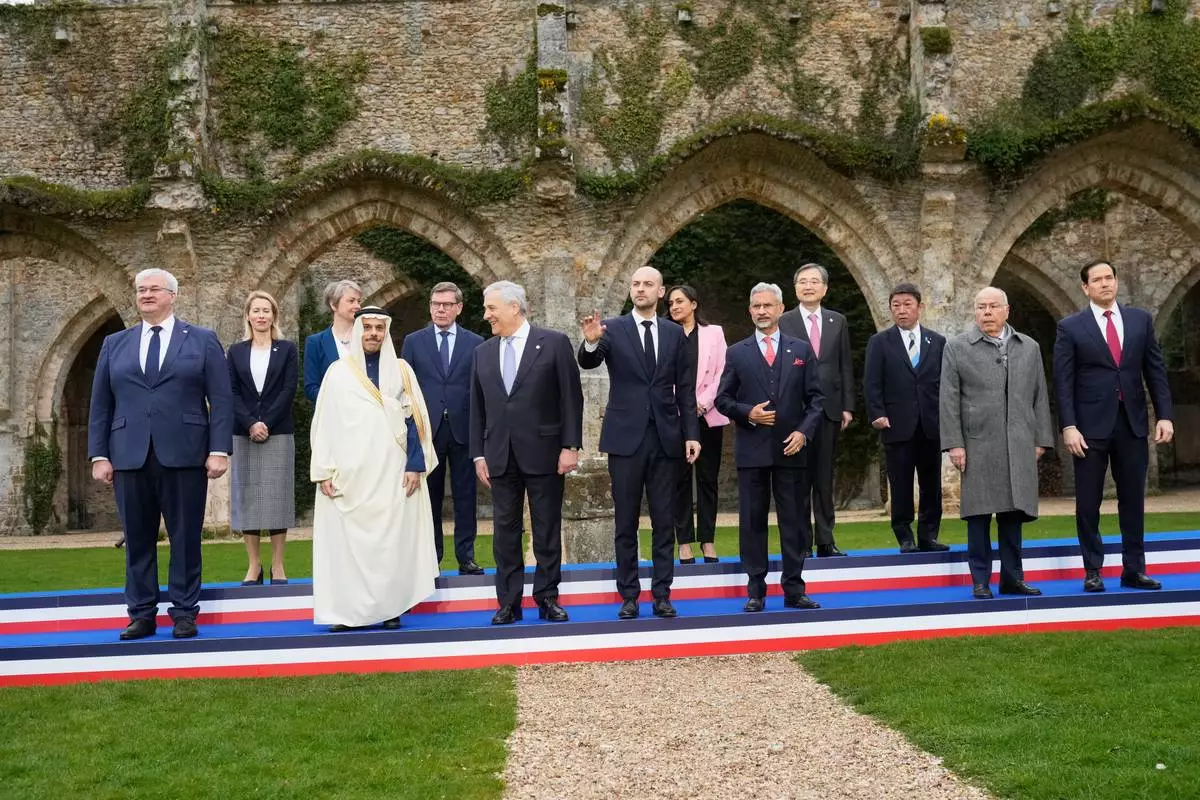
From left: Ukraine's Foreign Minister Andriy Sybiga, EU High Representative and Vice-President for Foreign Affairs and Security Policy Kaja Kallas, Britain's Foreign Secretary Yvette Cooper, Saudi Arabia's Foreign Minister Faisal bin Farhan, Germany's Foreign Minister Johann Wadephul, Italy's Foreign Minister Antonio Tajani, Canada's Foreign Minister Anita Anand, France's Foreign Affairs Minister Jean-Noel Barrot, South Korea's Foreign Minister Cho Hyun, India's Foreign Minister Subrahmanyam Jaishankar, Japan's Foreign Minister Toshimitsu Motegi, Brazil's Foreign Minister Mauro Vieira and U.S. Secretary of State Marco Rubio pose for a photo during the G7 Foreign Ministers' meeting with partner countries in Cernay-la-Ville outside Paris, France, Friday, March 27, 2026. (AP Photo/Michel Euler)
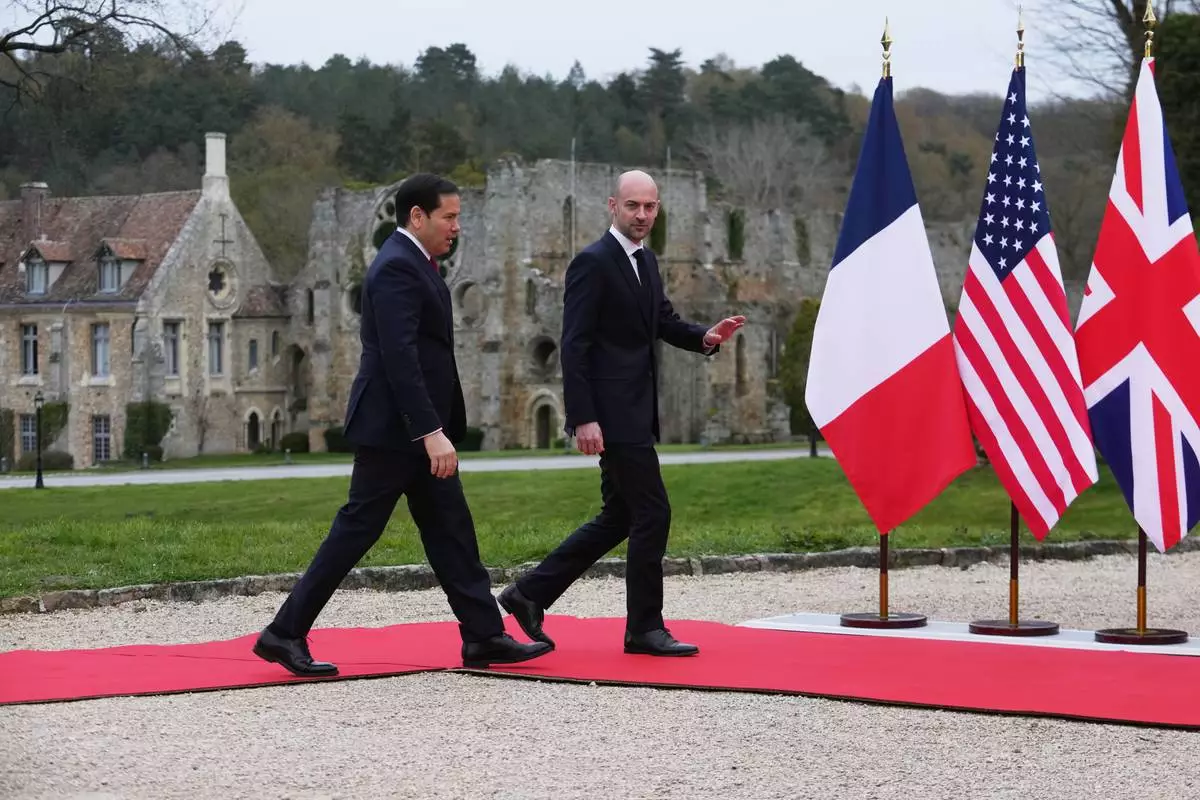
France's Foreign Affairs Minister Jean-Noel Barrot, right, greets U.S. Secretary of State Marco Rubio as he arrives at the G7 Foreign Ministers' meeting with partner countries in Cernay-la-Ville outside Paris, France, Friday, March 27, 2026. (AP Photo/Michel Euler)
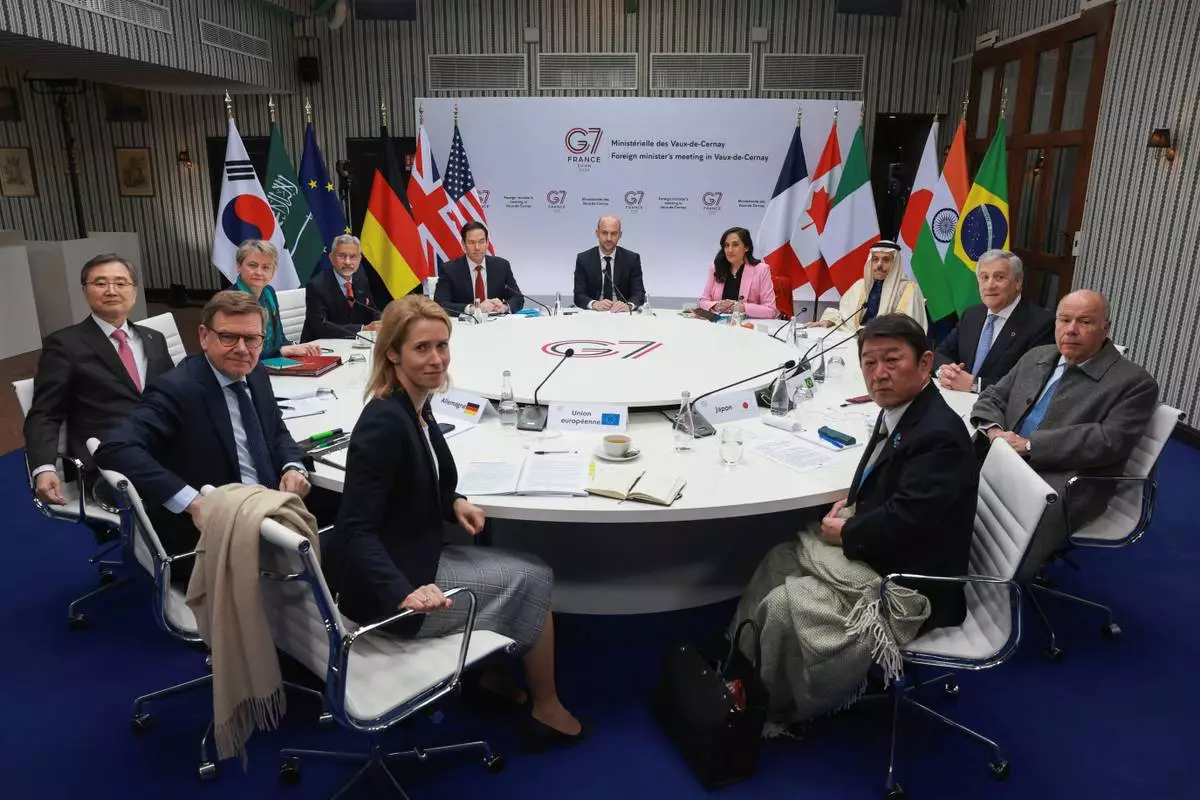
From bottom centre to left: EU High Representative and Vice-President for Foreign Affairs and Security Policy Kaja Kallas, Germany's Foreign Minister Johann Wadephul, South Korea's Foreign Minister Cho Hyun, Britain's Foreign Secretary Yvette Cooper, India's Foreign Minister Subrahmanyam Jaishankar, U.S. Secretary of State Marco Rubio, France's Foreign Affairs Minister Jean-Noel Barrot, Canada's Foreign Minister Anita Anand, Saudi Arabia's Foreign Minister Faisal bin Farhan, Italy's Foreign Minister Antonio Tajani, Brazil's Foreign Minister Mauro Vieira and Japan's Foreign Minister Toshimitsu Motegi attend talks during a G7 Foreign Ministers' meeting with Partner Countries in Cernay-la-Ville outside Paris, Friday, March 27, 2026. (Stephanie Lecocq/Pool Photo via AP)
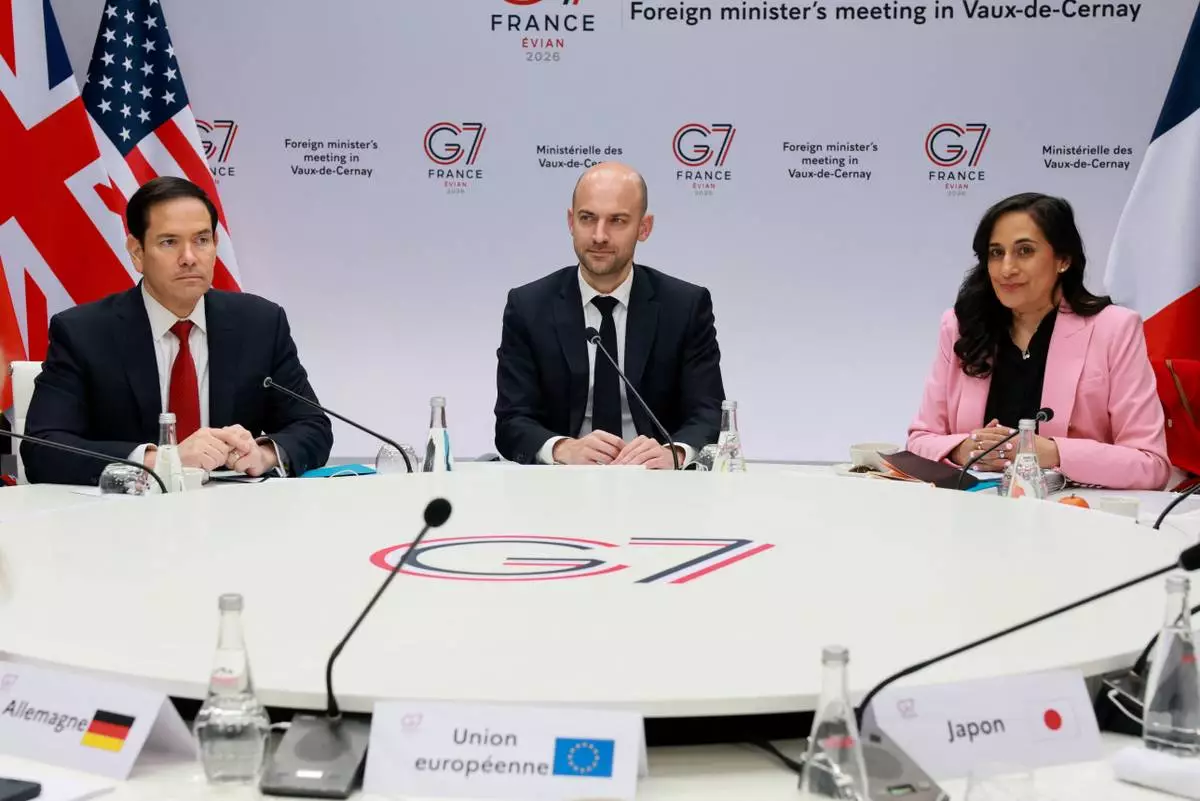
From left: U.S. Secretary of State Marco Rubio, France's Minister for Europe and Foreign Affairs Jean-Noel Barrot and Canada's Foreign Minister Anita Anand attend a working session on the second day of the G7 Foreign Ministers' Meeting in Cernay-la-Ville near Paris, March 27, 2026. (Stephanie Lecocq/Pool Photo via AP)
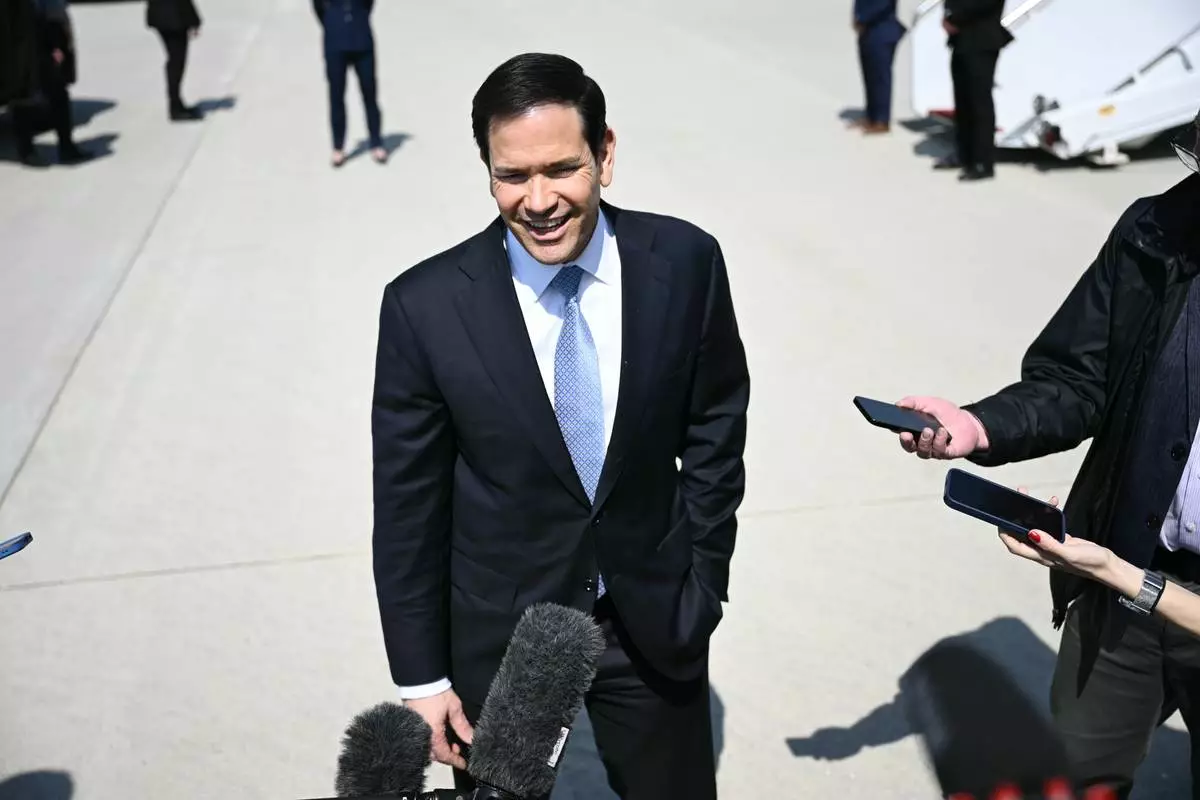
Secretary of State Marco Rubio speaks to reporters before boarding a plane at Joint Base Andrews, Md., Thursday, March 26, 2026. (Brendan Smialowski/Pool Photo via AP)
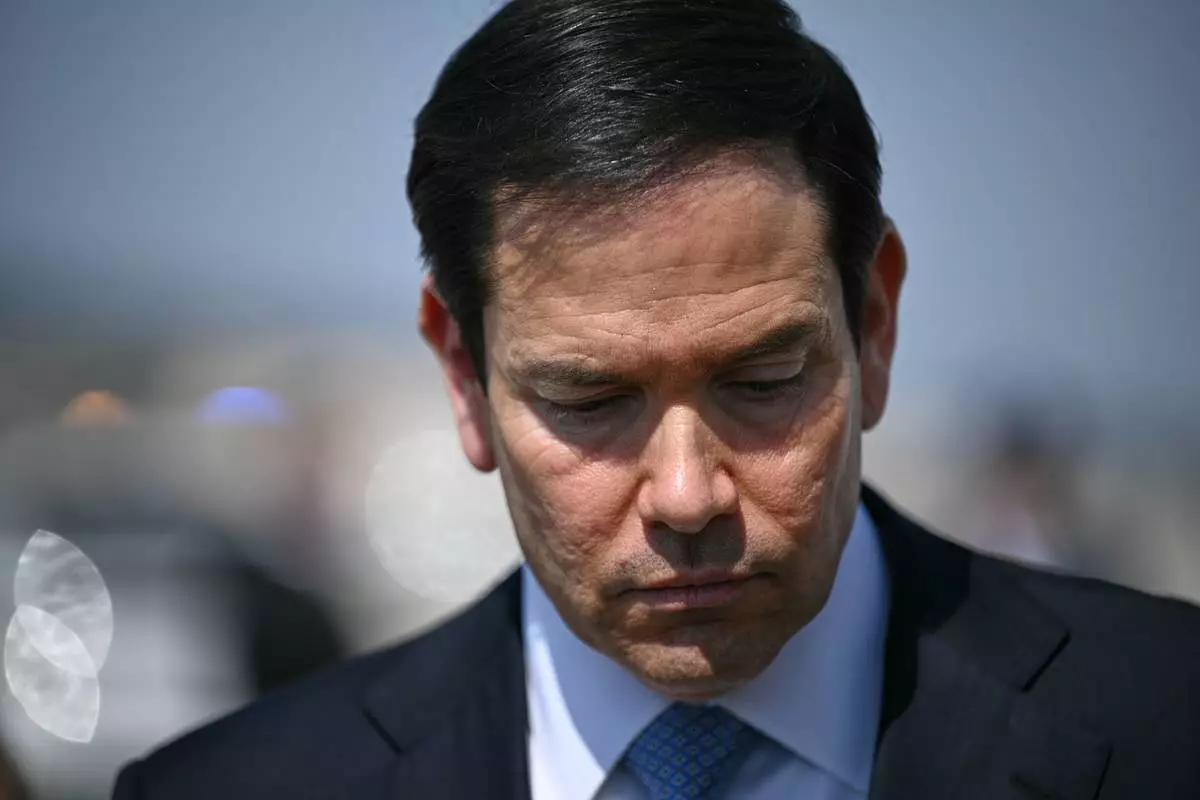
Secretary of State Marco Rubio speaks to reporters before boarding a plane at Joint Base Andrews, Md., Thursday, March 26, 2026. (Brendan Smialowski/Pool Photo via AP)
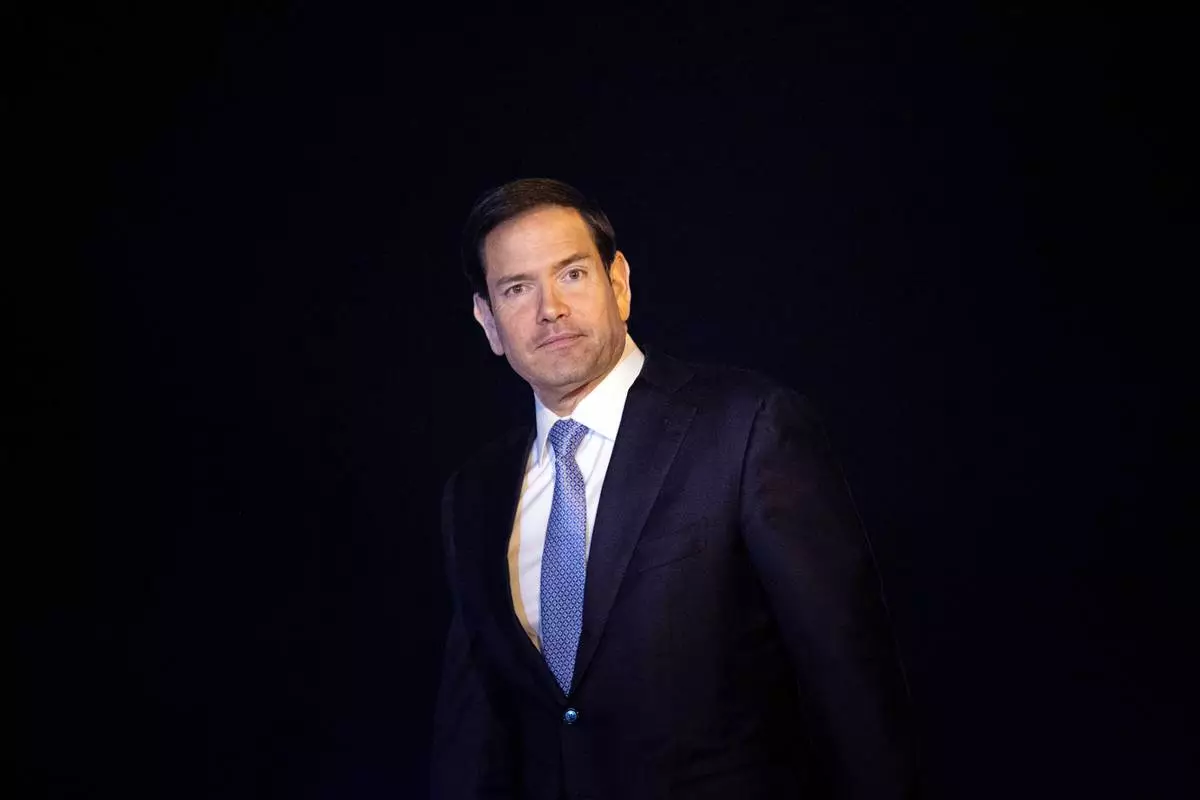
U.S. Secretary of State Marco Rubio arrives at Paris-Le Bourget Airport, in Le Bourget, France, early Friday, March 27, 2026, to take part in the G7 foreign ministers' meeting. (Brendan Smialowski/Pool Photo via AP)
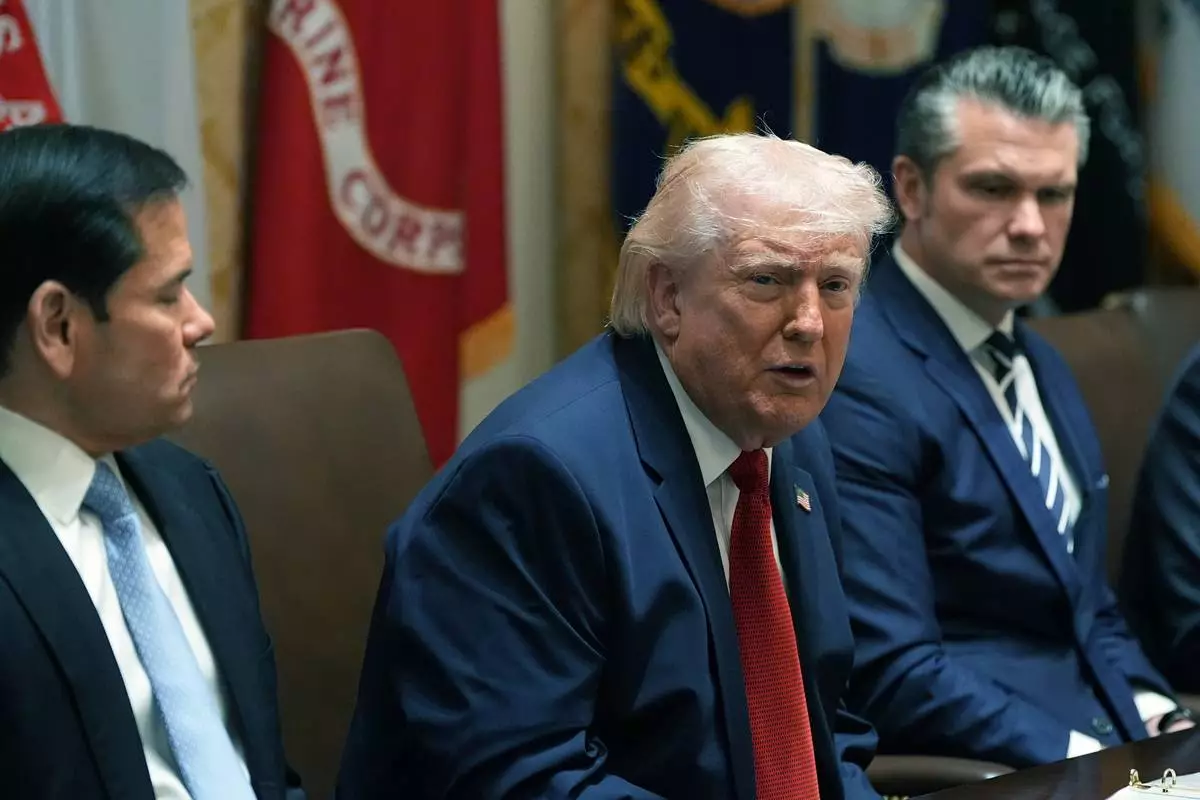
President Donald Trump speaks during a Cabinet meeting at the White House, Thursday, March 26, 2026, in Washington. From left are Secretary of State Marco Rubio, Trump and Secretary of Defense Pete Hegseth. (AP Photo/Alex Brandon)
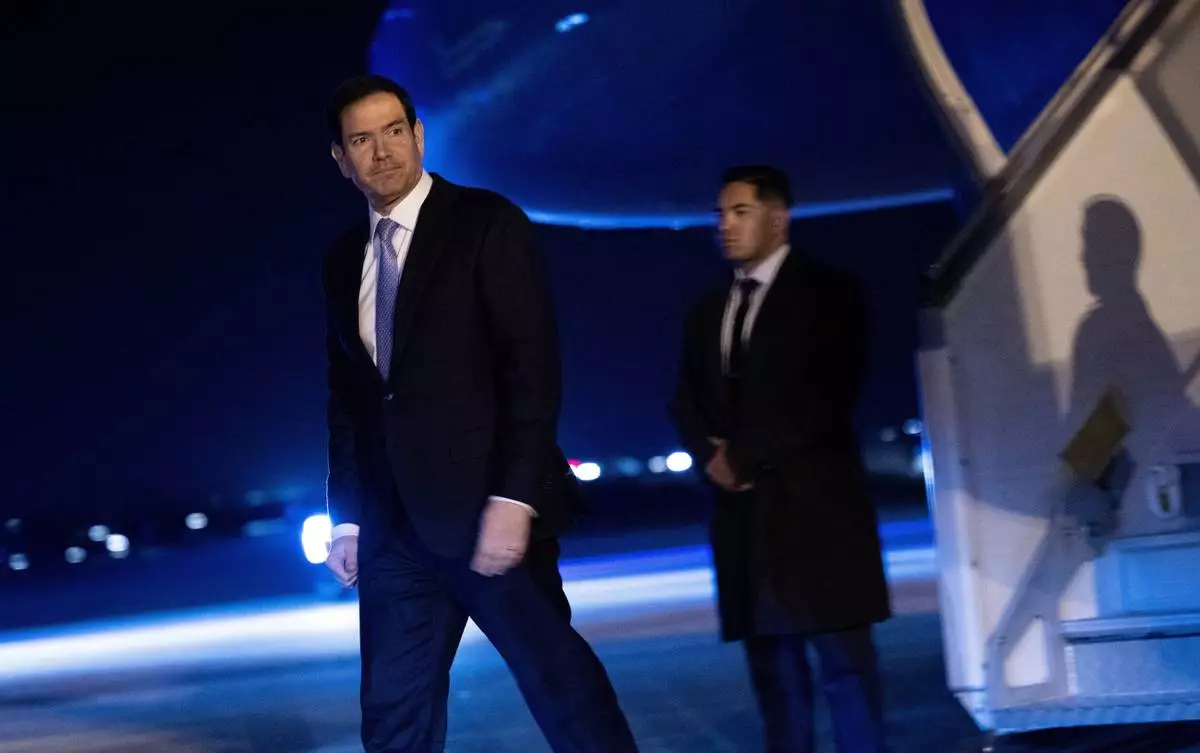
U.S. Secretary of State Marco Rubio arrives at Paris-Le Bourget Airport, in Le Bourget, France, early Friday, March 27, 2026, to take part in the G7 foreign ministers' meeting. (Brendan Smialowski/Pool Photo via AP)