MEXICO CITY (AP) — Cuban President Miguel Díaz-Canel expressed concern on Friday for two missing sailboats carrying nine people that were bound for Cuba with humanitarian aid.
The Mexican navy said on Thursday night that they were searching for the boats, which departed from Isla Mujeres in southern Mexico on March 20.
The disappearance comes as an increasing number of countries and aid organizations send shipments of aid to Cuba as a U.S. fuel blockade causes crippling blackouts and pushes the Caribbean nation to the brink of collapse.
“From our country, we are doing everything possible in the search and rescue of these brothers in struggle," Díaz-Canel said.
So far, naval authorities have received no communication or confirmation of the vessels’ arrival in Cuba, which had been expected between Tuesday and Wednesday of this week.
On Friday, the organization Nuestra América Convoy, said that based on the speed of the vessels reported to the Cuban maritime authorities, the boats in Havana should arrive between Friday and Saturday. The organization made an open call for any information or sightings of the boats.
The captains and crews are experienced sailors, and both vessels are equipped with appropriate safety systems and signalling equipment.
"We are cooperating fully with the authorities and remain confident in the crews’ ability to reach Havana safely," the organization said in a statement.
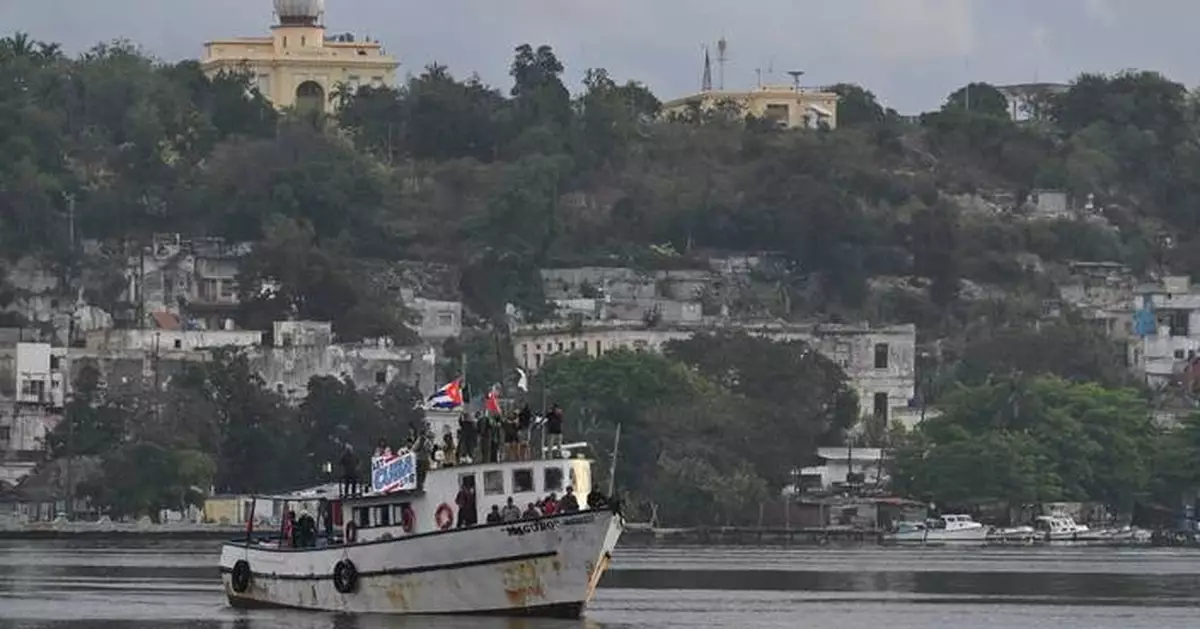
A first vessel from the Convoy Nuestra América, carrying 14 tons of food and medicine, 73 solar panels and about a dozen bicycles, arrived in Havana on Tuesday.
As part of the search efforts, the Mexican navy alerted naval commands in Isla Mujeres and Yucalpetén, as well as naval search, rescue and surveillance stations. It also established coordination with maritime rescue coordination centers in Poland, France, Cuba and the United States, along with diplomatic representatives from the countries of origin of those on board.
Search operations involve navy vessels and Persuader-type aircraft, which are carrying out maritime and aerial search patterns along the estimated route between Isla Mujeres and Havana. The efforts take into account possible course changes, as well as prevailing weather conditions and ocean currents in the region.
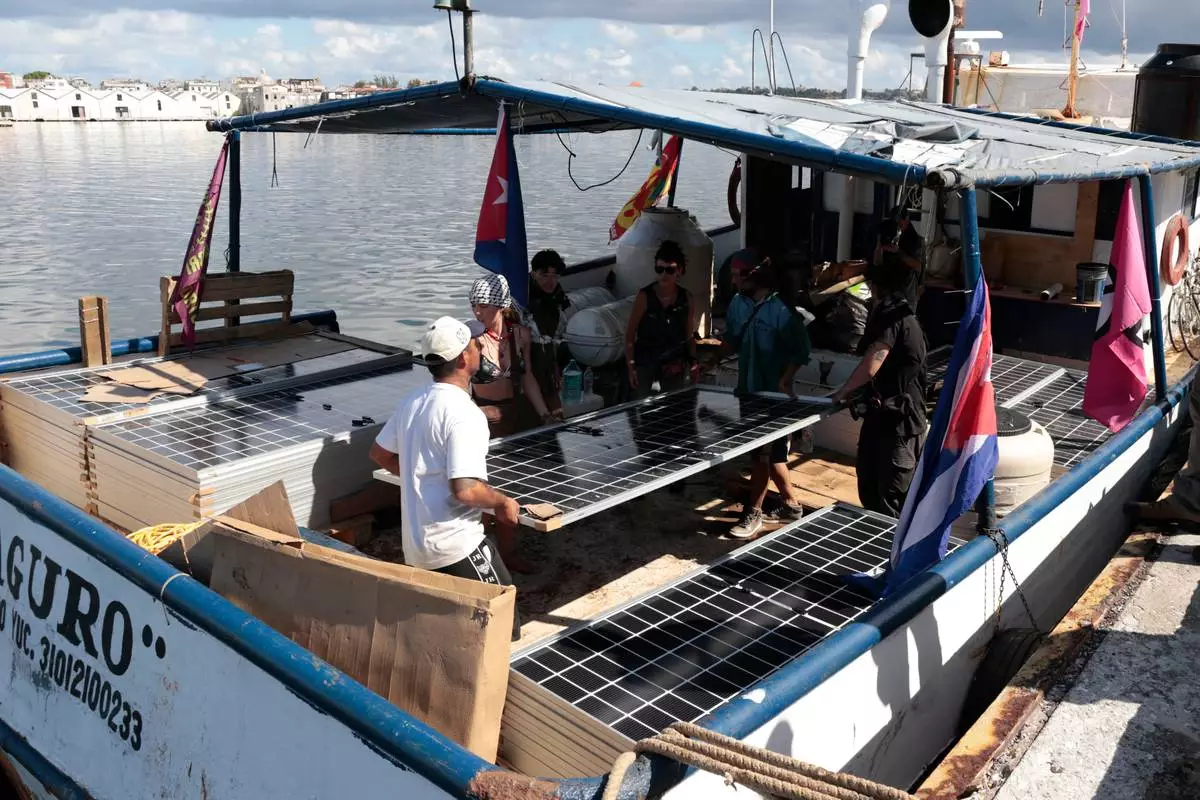
Activists from the vessel Maguro, that arrived from Mexico, unload solar panels and other humanitarian aid from the "Nuestra America," or Our America convoy, at the port in Havana Bay, Cuba, Tuesday, March 24, 2026. (Jorge Luis Banos/IPS via AP, Pool)
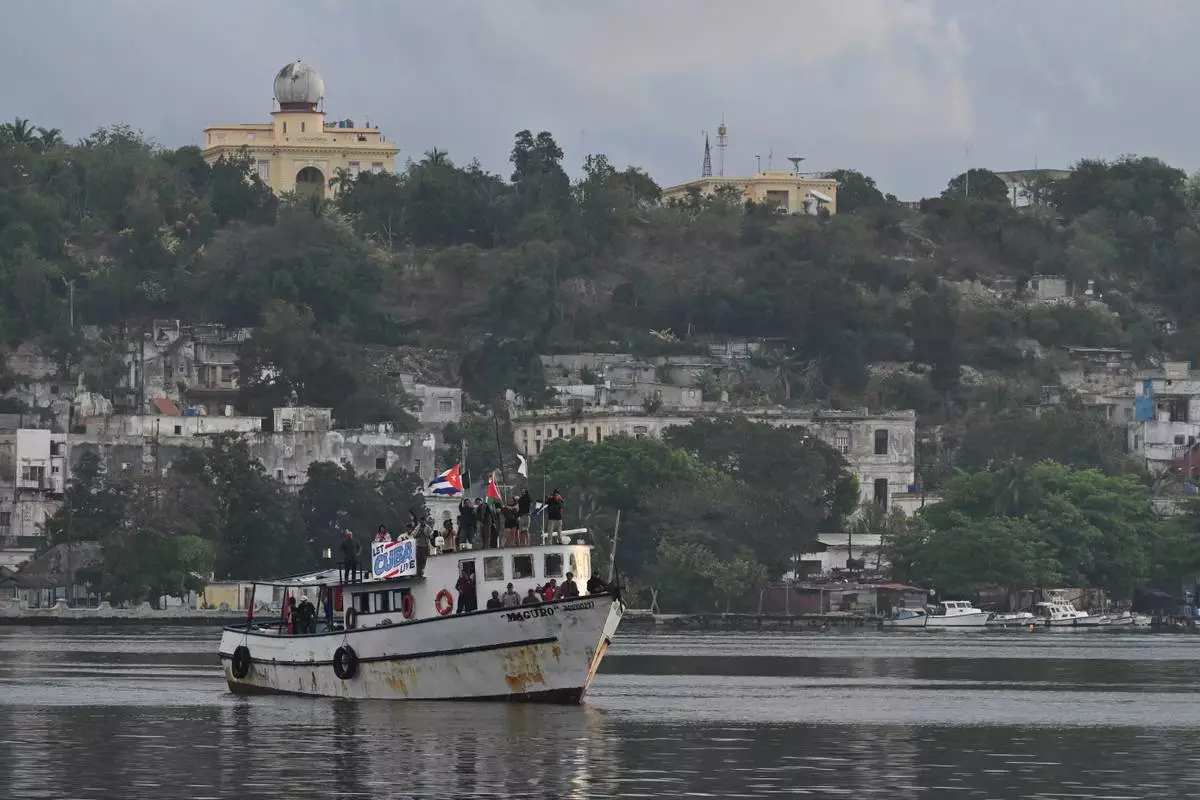
Activists wave Cuban and Palestinian flags from the vessel Maguro, arriving from Mexico with humanitarian aid as part of the "Nuestra America," or Our America convoy, in Havana Bay, Cuba, Tuesday, March 24, 2026. (AP Photo/Jorge Luis Banos)
SAO PAULO (AP) — Brazil’s former President Jair Bolsonaro was discharged from a hospital in the capital on Friday to continue serving a 27-year sentence for a coup attempt at his residence in an upscale gated community.
The Supreme Court earlier in the week granted him the right of house imprisonment due to failing health. The measure could be revised within 90 days.
Bolsonaro left the hospital DF Star in Brasilia at around 10 a.m. local time and headed to the Jardim Botanico neighborhood, where he lived prior to his conviction with his wife, Michelle Bolsonaro, and his 15-year-old daughter, Laura.
The 71-year-old was hospitalized on March 13 for pneumonia, one of several health issues he has faced since he was stabbed by a man in 2018 before being elected president. He was put in intensive care for days due to kidney and inflammatory problems.
Bolsonaro governed between 2019 and 2022 and narrowly lost his reelection bid to current President Luiz Inácio Lula da Silva.
The former right-wing leader was accused of plotting with top aides to stay in office by decree despite the election loss, and was convicted of charges including attempted coup and attempted violent abolition of the democratic rule of law. He has denied wrongdoing and called the case a political witchhunt.
The former president started serving his sentence in November in a 12-square-meter room at the federal police headquarters, which included a bed, a private bathroom, air conditioning, a TV set and a desk. In January, he was transferred to a 54-square-meter room with a 10-square-meter outside area that he could access at will at the Papuda penitentiary.
Bolsonaro remains popular in Brazil and one of his sons, Sen. Flávio Bolsonaro, is in a competitive position against Lula in polls ahead of October’s presidential election. The former president is ineligible and will not be allowed to take a public role in any campaign.
In his ruling, Supreme Court Justice Alexandre de Moraes stressed that Bolsonaro’s transition to house arrest is conditional and that he could return to prison if he violates house imprisonment rules regardless of his medical condition.
Bolsonaro will wear an ankle monitor and is not allowed to communicate with anyone outside his home. He is not allowed to host visitors except for doctors, family members and his lawyers. Police will watch his house and protesters won’t be allowed to gather near it.
Law professor Marcelo Crespo of ESPM university in Sao Paulo said it is unusual for house imprisonment rulings like Bolsonaro’s to include a review after 90 days, but he said de Moraes was seeking “some middle ground by not granting house imprisonment for an undetermined period.” As recently as November, de Moraes deemed the former president to be a flight risk.
The 90-day review has drawn criticism from both sides of the political divide.
Bolsonaro’s family and allies, who consider de Moraes an adversary, have criticized the temporary nature of the house imprisonment. Detractors of the former president are also upset, saying he is receiving lenient treatment despite his long history of advocating for harsh penalties for convicts.
Bolsonaro’s shift to house arrest comes as de Moraes and his wife are entangled in a scandal involving the multibillion-dollar collapse of Banco Master, which was shut down in late 2025 by the Central Bank amid allegations of fraud involving businesspeople and politicians across the ideological spectrum.
De Moraes, who until recently was hailed as a hero by adversaries of the former president, has been under fire since January from both critics and allies of Bolsonaro over the justice’s ties to the bank, which have raised concerns over conflicts of interest. They include his wife’s former multimillion-dollar contract to provide legal services to the bank.
De Moraes has denied wrongdoing.
Political analyst Thomas Traumann, who has written books about Brazil’s political divisions, attributed de Moraes’ decision to grant Bolsonaro house imprisonment to political pressure over his links to the Banco Master scandal.
“If it were up to him alone, he wouldn’t let Bolsonaro go home,” Traumann said.
Traumann noted that Bolsonaro had health problems before going to prison, and that Brazil’s Supreme Court has always been close to politics. “De Moraes needed to show some good will,” he said.
Follow AP’s coverage of Latin America and the Caribbean at https://apnews.com/hub/latin-america
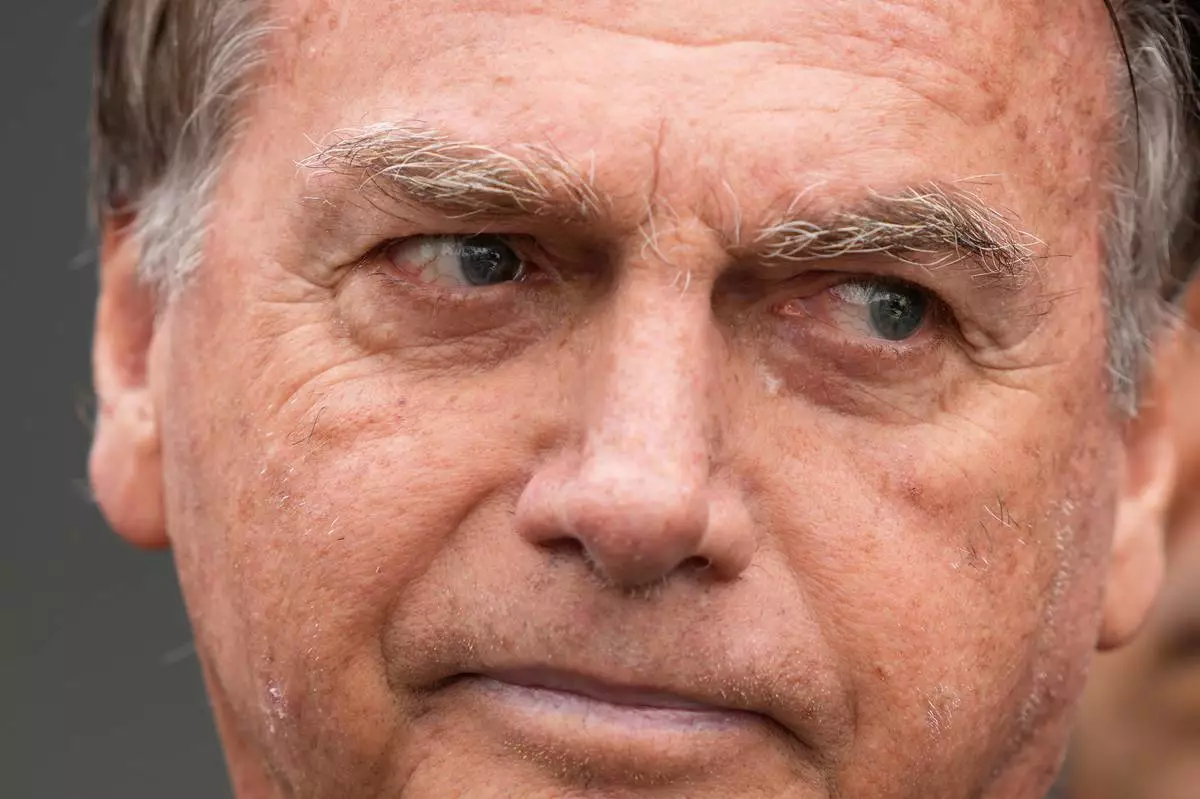
FILE - Brazil's former President Jair Bolsonaro, temporarily allowed out of house arrest for medical treatment, departs a hospital in Brasilia, Brazil, Sept. 14, 2025. (AP Photo/Eraldo Peres, File)