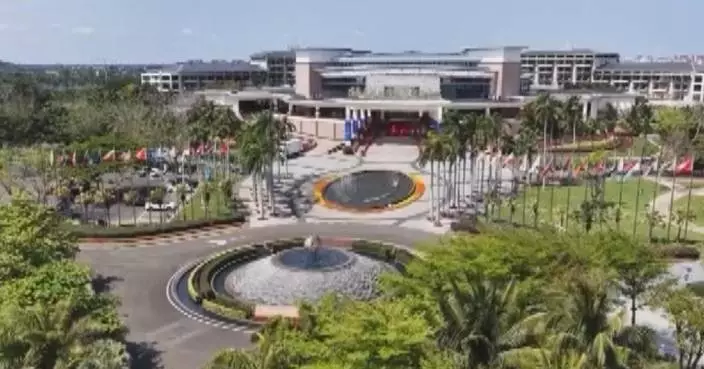
Experts call for broader AI integration into healthcare services, and ask professionals to use the technology in an ethical and responsible way at the Boao Forum for Asia (BFA) Annual Conference 2026 in south China's Hainan Province on Thursday.
The four-day BFA conference, which concludes in the coastal town of Boao on Friday, is themed "Shaping a Shared Future: New Dynamics, New Opportunities, New Cooperation" and has also covered discussions around the impact of technology across multiple sectors.
At a panel discussion titled "The Future of 'AI plus Healthcare': Applications and Governance" on Thursday, delegates shared insights into AI applications in medicine, health management, and public welfare.
China's outline of the 15th Five-Year Plan (2026-2030) for national economic and social development calls for advancing the Healthy China Initiative and harnessing digital and intelligent technologies to improve the nation's health.
At the panel discussion, attendees said the traditional healthcare system is struggling to meet the increasingly complex and diverse health needs of the people, highlighting that AI is emerging as a key force to address the challenges.
"AI has been used very widely in the health sector, from the prediction of epidemics and monitoring the urban health to the intelligent diagnosis and treatment by telemedicine. AI has not only greatly improved the efficiency of medical services and the level of resource allocation, but also driven in-depth transformation of the healthcare model from reactive response to illness to proactive prevention of disease," said Ren Minghui, director of the Institute for Global Health at Peking University.
As the use of AI in healthcare continues to gain momentum, attendees stressed the importance of boosting data security, which needs a collaborative, multi-governance mechanism.
"The way we use artificial intelligence and language models has to be very ethical and responsible, which means we have to think through the implications for the people we try to serve before we deploy it," said Balthasar Staehelin, personal envoy of the president to China for the International Committee of the Red Cross (ICRC).
On the sidelines of the panel discussion, delegates from various sectors shared their perspectives on improving access to and quality of healthcare.
"By using big data platforms, we can accurately understand consumers' health needs, achieve a true upgrade of the entire industry chain from disease prevention, health management to health and elder care services, so as to promote the high-quality development of the 'big health industry'," said Liu Chunxi, senior executive president of Chinese dairy giant Yili Group.
"We select 11 hospitals nationwide and adopt a model consisting of local outpatient services, medication at Lecheng international medical tourism pilot zone, and local follow-up services. We are constantly expanding this approach to improve access to services," said Fu Sheng, director of Boao Lecheng International Medical Tourism Pilot Zone Administration.
The Boao Lecheng International Medical Tourism Pilot Zone is located in Qionghai, near the core area of the Boao Forum for Asia. As China's only medical zone open to international access, Boao Lecheng brings together high-end medical tourism services and cutting-edge global medical innovations. Key areas include cancer prevention and treatment, medical aesthetics and anti-aging, health management and rehabilitation.
Founded in 2001, the BFA is a non-governmental, non-profit international organization committed to promoting regional economic integration and advancing the development of Asian countries.
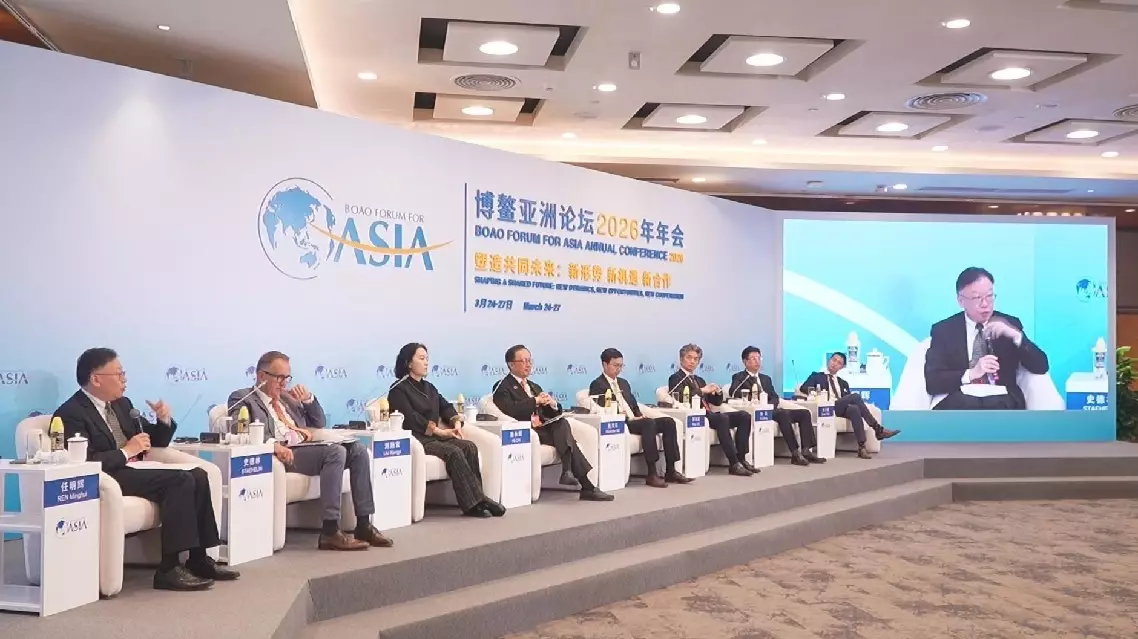
Experts call for broader, ethical AI integration in healthcare at BFA annual forum