After redshirting his freshman baseball season at Hawaii, Xander Sielken made the decision to leave his home state for California to continue playing the sport he loves.
What was out of Sielken’s control, though, was how his loved ones would react. In 2023, Sielken was unexpectedly cut off financially by his family before he resumed playing baseball for West Valley College in Saratoga, California.
During his redshirt freshman year, Sielken worked multiple jobs, including working as a valet, cutting hair, and baking and selling homemade banana bread.
"It was really a grind, mentally and physically. I was working every weekend, I had the job, baseball, schoolwork,” Sielken said. “And, I was just barely getting by, and I literally had just enough money for my rent and my food. I didn’t really have enough money to buy me stuff. I was just trying to get by, paying my rent and my food.”
A challenging journey with more obstacles awaited Sielken, but his comeback culminated in a return to the diamond.
Sielken, now a redshirt junior at Cal State Monterey Bay, and Levi Jung-Ruivivar, a gymnast at Stanford, have been selected as the recipients of the CalHOPE Courage Award for February.
Presented monthly since February 2022, the CalHOPE Courage Award honors student-athletes at California colleges and universities who have overcome stress, anxiety and mental trauma associated with personal hardships and adversity.
Sielken’s journey took a turn for the worst in the spring of 2025. He broke the hamate bone in his hand and surgery forced him back home to Hawaii for two months of recovery, where financial stress and isolation weighed heavily.
Sielken didn’t intend on returning to California considering his tight financial situation, but his teammates insisted he make it back to the mainland in time for the playoffs. Each of Sielken’s teammates contributed to buying his ticket back, which allowed him to appear in a key elimination game.
Sielken went 3-for-4 with a triple in a win-or-go-home game, and in the process helped West Valley finish second in the state.
“That was pretty amazing,” Sielken said.
Jung-Ruivivar faced her own mental and physical challenges. After impressing at the 2024 Paris Olympics while representing the Philippines, Jung-Ruivivar made the difficult decision in January 2025 to step away from gymnastics and address an eating disorder.
For years, Jung-Ruivivar had struggled with the eating disorder, even as she pursued Olympic dreams. Though she enjoyed her classes, hanging out with teammates and college life in general, her mental health continued to decline during her first year on campus.
“It was really tainting my love for the sport,” Jung-Ruivivar said in a statement.
Jung-Ruivivar committed fully to recovery and stepped away from school and training for five months to focus on treatment. Though her treatment took longer than she expected, Jung-Ruivivar said it reshaped her life.
Once Jung-Ruivivar returned to campus, she did so mentally stronger, and eased back into training with the support of coaches and medical staff. She has publicly shared her story in the hopes of reducing the stigma around eating disorders in aesthetic sports, and to encourage other athletes to seek help.
“It’s part of my story,” Jung-Ruivivar said, “but it’s not my whole identity.”
As a redshirt freshman, Jung-Ruivivar has impressed with the Stanford gymnastics team. She is competing in all four events, and was named ACC Newcomer of the Week for the week of Feb. 10. She holds season-best scores of 9.950 on bars and floor and a 9.925 on beam.

This undated photo provided by CSU Monterey Bay shows baseball player Xander Sielken, a recipient of the CalHOPE Courage Award. (CSU Monterey Bay via AP)
NEW YORK (AP) — U.S. stocks are falling Friday as Wall Street stumbles toward the finish of a fifth straight losing week, which would be its longest such streak in nearly four years.
The S&P 500 sank 1% and deepened its losses a day after its worst drop since the war with Iran began. The Dow Jones Industrial Average was down 481 points, or 1.1%, as of 1:10 p.m. Eastern time, and the Nasdaq composite was 1.4% lower.
The losses are a break from Wall Street’s pattern this week, where the U.S. stock market flip-flopped from gains to losses each day as hopes rose and fell about a possible end to the war.
Moments after the U.S. stock market finished trading on Thursday, President Donald Trump offered more potential for hope. He extended a self-imposed deadline to “obliterate” Iran’s power plants to April 6 if it doesn’t fully allow oil tankers to exit the Persian Gulf through the Strait of Hormuz to the open ocean.
Oil prices eased immediately afterward in a sign of hope that some normalcy may return to the strait. It was similar to the optimism that swept global markets after Trump said Monday, just before Wall Street opened for trading, that the United States and Iran had held productive talks.
But oil prices resumed their climb as trading moved westward from Asia to Europe and back to Wall Street on Friday. Despite Trump’s latest announcement of a delay, fighting continued in the Middle East. Iran gave no signs of backing down, while Israel threatened to “escalate and expand” its attacks on Iran.
“The diplomatic dissonance this week between the U.S. and Iran dismayed investors,” said Doug Beath, global equity strategist at Wells Fargo Investment Institute. “By the end of the week, risk appetite could not withstand the fog of war.”
“Any further statements by Trump about a deal are white noise to the markets,” Jim Bianco, president and macro strategist at Bianco Research, wrote in a social media post. “Only if the IRANIANS say the talks are going well will it impact markets.”
The price for a barrel of Brent crude rose 2.5% to $104.39 and is up from roughly $70 before the war began. Benchmark U.S. crude rose 4.3% to $98.59 per barrel.
The fear in financial markets is that the war will disrupt the Persian Gulf's energy industry for a long time. It could keep so much oil and natural gas out of the world’s markets that it sends a punishing wave of inflation through the global economy.
Not only would it raise prices for drivers buying gasoline, it could push businesses that use any trucks, ships or planes to move their products to raise their own prices. It would also make electricity from gas-fired power plants more expensive.
If the war continues until the end of June, strategists at Macquarie say the price of oil could reach $200 per barrel. The record is just above $147, reached during the summer of 2008. That’s when Iran’s testing of missiles, including one that could reach Israel, and strong demand for oil from China helped send prices spiking despite the Great Recession.
High gasoline prices and the war are already hitting confidence among U.S. consumers, whose spending makes up the bulk of the economy. Sentiment among them fell slightly more in March from February than economists expected, according to a survey by the University of Michigan.
U.S. consumers also said in the survey they're worried about inflation jumping in the near future. They're bracing for inflation of 3.8% in the coming 12 months, up from 3.4% in February. It's the largest one-month increase in nearly a year.
On Wall Street, the majority of stocks fell, including three out of every five in the S&P 500. The index, which is the main measure of the U.S. stock market's health, is nearly 8% below its all-time high set early this year.
Big Tech stocks were among the heaviest weights on the market, including drops of 3% for Amazon and 3.4% for Meta Platforms.
Companies selling things that are not essentials, which customers could stop buying if they're spending too much on gasoline, also sank sharply.
Norwegian Cruise Line Holdings lost 5.5%, Airbnb fell 5.3% and Lululemon Athletica dropped 3.8%.
Among the winners on Wall Street was Netflix, which added 0.4% a day after announcing price increases to its services in the United States.
In stock markets abroad, indexes fell in Europe and were mixed in Asia.
In the bond market, Treasury yields swiveled.
The yield for the 10-year Treasury rose as high as 4.48% before pulling back to to 4.42%. That's where it was late Thursday, but it's still well above its 3.97% level from before the war began.
The rise since the war's start has already sent rates jumping for mortgages and for other loans taken by U.S. households and businesses, slowing the economy.
High Treasury yields and disruption in the bond market were big factors that Trump named a year ago when he backed off his initial threats for global tariffs made on “Liberation Day.” The moves caused critics to allege Trump always chickens out, or “TACO,” if financial markets show enough pain.
AP Business Writers Chan Ho-him and Matt Ott contributed.
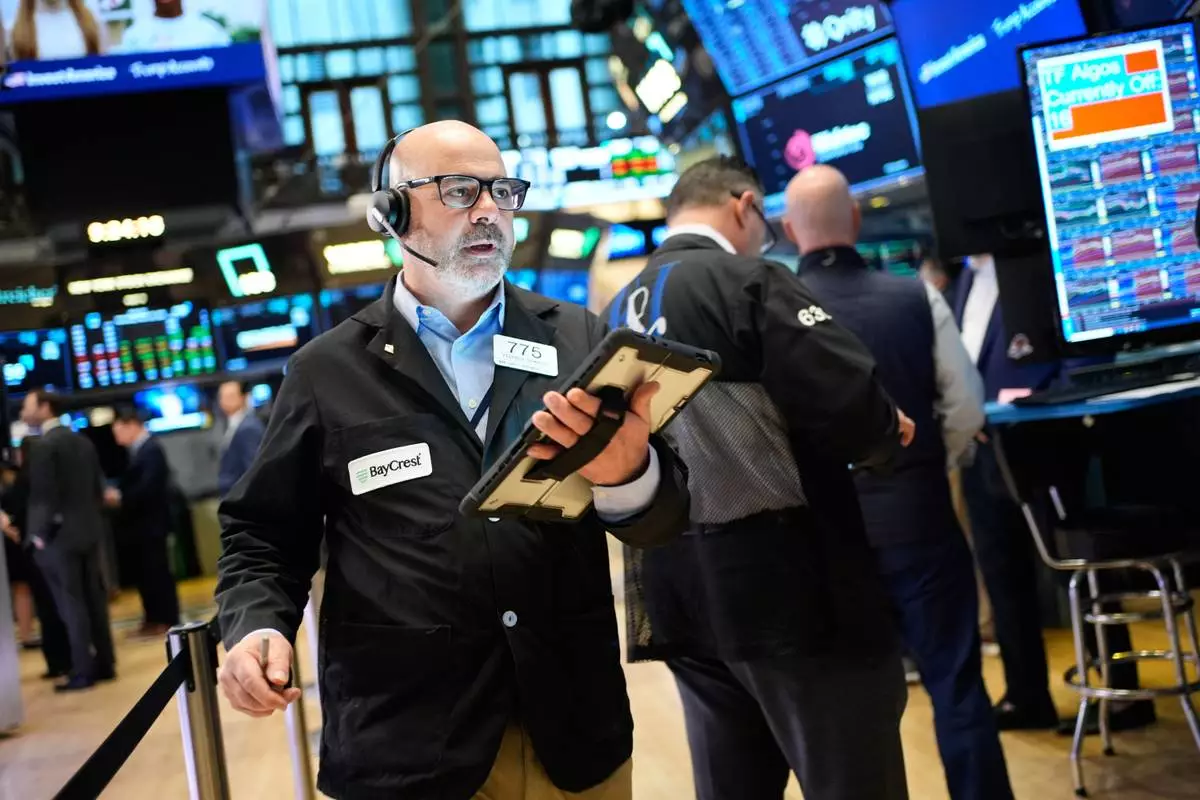
Federico DeMarco works on the floor at the New York Stock Exchange in New York, Wednesday, March 25, 2026. (AP Photo/Seth Wenig)
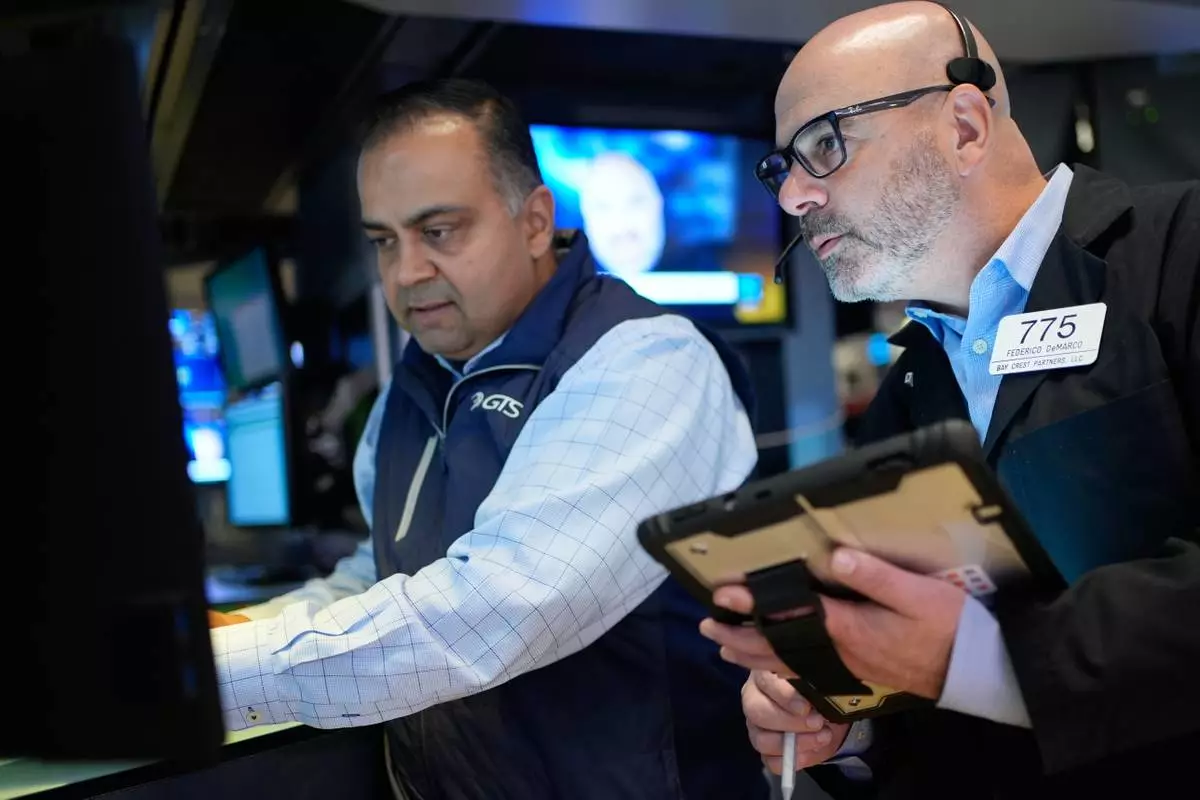
Federico DeMarco, right, and Dilip Patel work on the floor at the New York Stock Exchange in New York, Wednesday, March 25, 2026. (AP Photo/Seth Wenig)

FILE - Liberia-flagged tanker Shenlong Suezmax, carrying crude oil from Saudi Arabia, that arrived clearing the Strait of Hormuz, is seen at the Mumbai Port in Mumbai, India, Thursday, March 12, 2026. (AP Photo/Rafiq Maqbool, File)
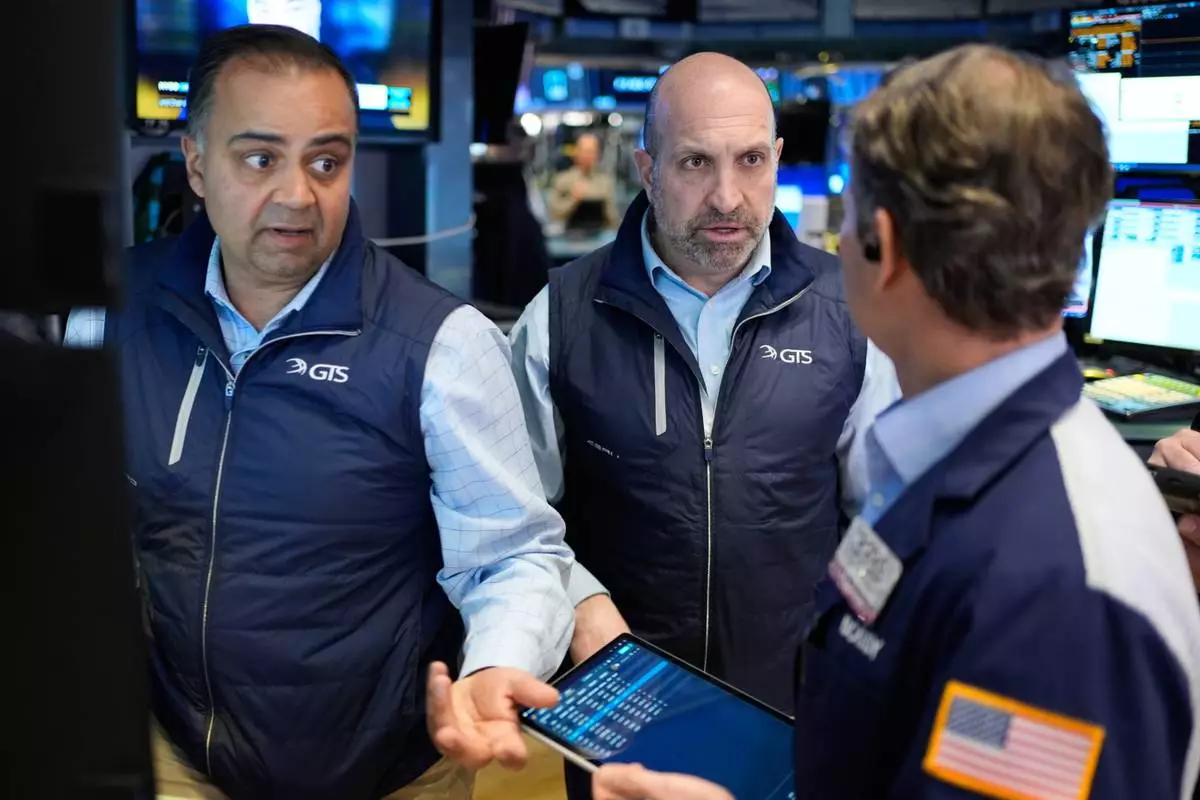
James Denaro, center, and Dilip Patel, left, work on the floor at the New York Stock Exchange in New York, Wednesday, March 25, 2026. (AP Photo/Seth Wenig)