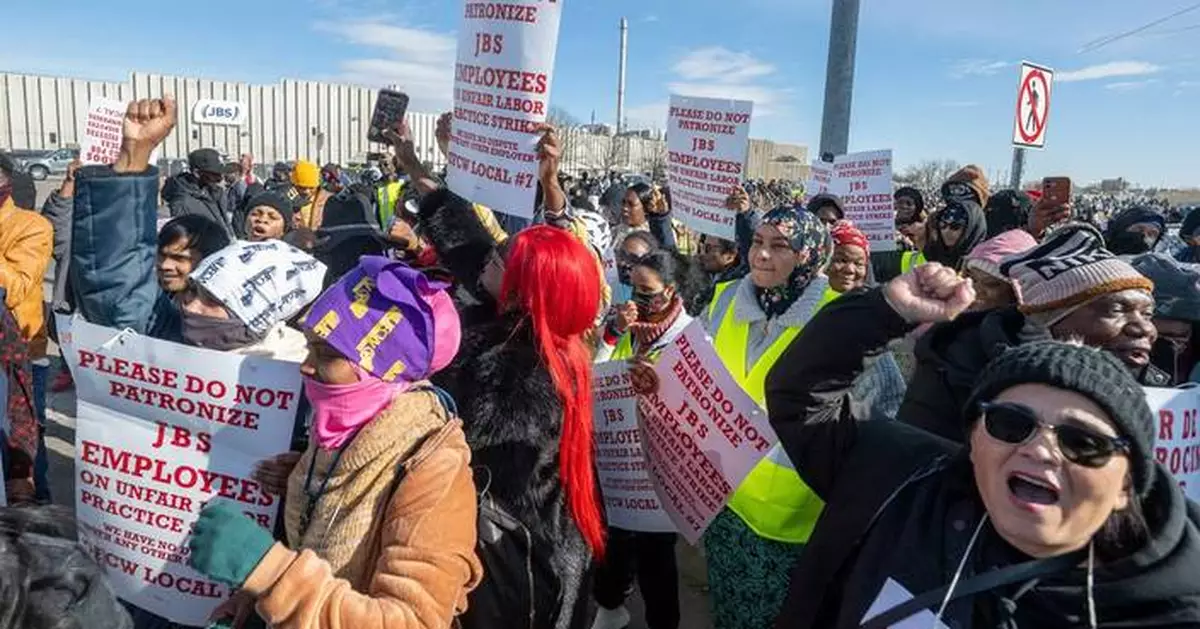
DENVER (AP) — Thousands of striking workers at one of the nation's largest meatpacking plants will extend their walkout to a third week as they push for higher wages and better health care.
Industry experts said it’s too early to know if the strike that began March 16 at the Swift Beef Co. plant in Greeley, Colorado, will impact retail beef prices that already had soared to record levels.
“The workers know the value of their labor,” union President Kim Cordova said Friday. “This could be a long, drawn out fight.”
Owner JBS USA said Friday that it's operating the plant at limited capacity and has shifted beef production elsewhere to meet customers needs.
With negotiations stalled, the company remains in a strong position relative to the striking workers, said Jennifer Martin at Colorado State University’s animal sciences department.
That's because the industry is suddenly less burdened by excess slaughter capacity that had been keeping profit margins low. Now amid the Greeley strike and other slaughter plant capacity reductions — including the closure of a major Tyson Foods’ plant in Nebraska — companies are seeing profits increase, Martin said.
“It’s not necessarily in favor of the employees,” she added. “The lack of harvest capacity at one facility right now might actually be a benefit to the larger industry in the sense of improving (profit) margins.”
It’s the first strike at a U.S. slaughterhouse since workers walked out at a Hormel plant in Minnesota in 1985. That strike lasted more than a year and included violent confrontations between police and protesters.
The Greeley strike began with support from 99% of the plant’s 3,800 workers who belong to the United Food and Commercial Workers Local 7 union. Thousands have showed up at the picket line over the past two weeks.
Union officials say the company’s offer of 2% wage hikes is less than inflation.
JBS said its contract offer is consistent with a deal reached with UFCW union workers at other plants. But Cordova said Colorado has a higher cost of living than those other locations and health care costs ate up much of the wage increase.
JBS is the world’s largest meatpacking company with a market capitalization of $17 billion. It's the top employer in Greeley, a city 50 miles (80 kilometers) northeast of Denver with a population of about 114,000 people.
“We are maintaining supply, supporting the long-term stability of the beef chain, and minimizing disruption for producers, customers, and consumers,” JBS spokesperson Nikki Richardson said in an email. “Our priority is to keep product moving while we work toward a resolution in Greeley.”
In 2020, the Greeley plant was the scene of Colorado’s deadliest workplace coronavirus outbreak, with 291 infections and six deaths among plant workers. During the outbreak, President Donald Trump issued an executive order to keep meatpacking plants across the U.S. open over concerns about the pandemic's impact on the nation’s food supply.
Federal regulators later fined JBS $15,615 for failing to protect its employees.
In the wake of the pandemic, beef companies invested billions of dollars to increase slaughter capacity and ensure enough meat would be available for consumers, Martin said.
But recent years have seen U.S. cattle numbers drop to a 75-year low, driven in part by drought and low prices offered to ranchers. That's meant the additional slaughter capacity is not as needed, Martin said.
JBS was approved for trading on the New York Stock Exchange last May, despite environmental opposition and a federal probe that led to its guilty plea for bribing Brazilian officials for the financing it used for its U.S. expansion.
Brown reported from Billings, Montana.
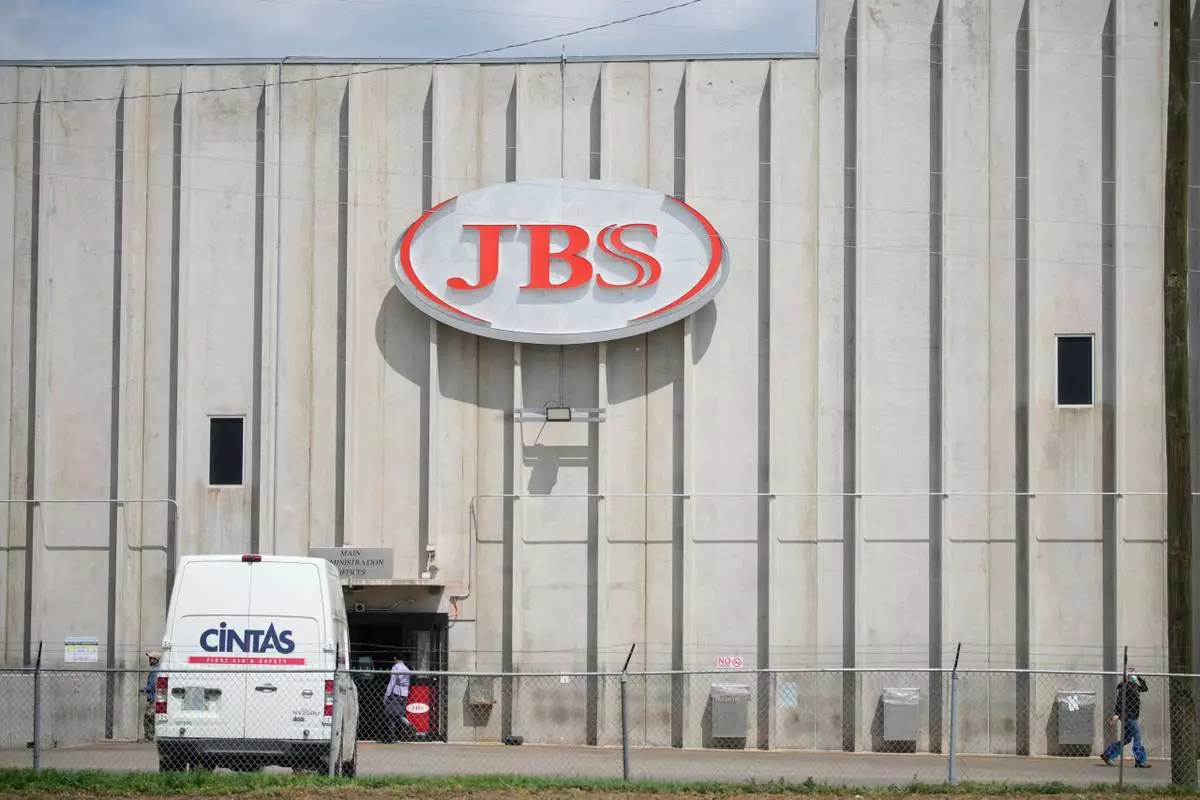
FILE - Employees walk in front of the entrance to the JBS meat processing plant, July 23, 2021, in Greeley, Colo. (AP Photo/David Zalubowski, File)
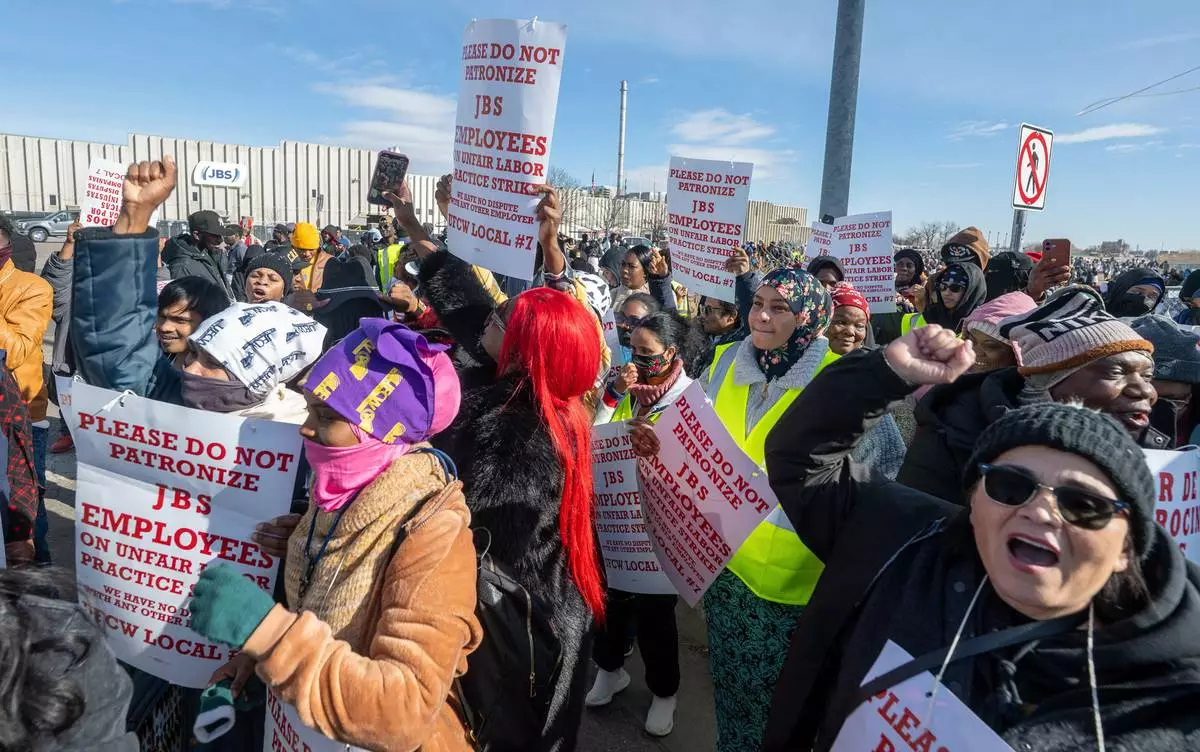
Workers from the JBS Beef Plant protest across the road from the plant on March 16, 2026 in Greeley, Colo. Nearly 3800 workers with the United Food & Commercial Workers (UCFW) are on strike protesting unfair work conditions. (Jerilee Bennett/The Gazette via AP)
WASHINGTON (AP) — As the war in Iran pushes U.S. gas prices toward $4 a gallon nationally, some lawmakers are pushing to suspend the federal gasoline tax in the latest attempt to try to control surging energy costs.
Lawmakers say the action would provide much-needed relief for families and businesses that rely on their cars and trucks to get to work and school and run everyday errands.
Asked about the gas tax at a Cabinet meeting Thursday, President Donald Trump said he has “thought about” suspending it but suggested states should consider suspending their fuel taxes.
“People have talked about” a gas tax suspension, Trump said. “It’s something we have in our pocket if we think it’s necessary.”
As gas prices have spiked, the Trump administration has released millions of barrels of oil from the U.S. Strategic Petroleum Reserve and temporarily lifted sanctions on some Russian and Iranian oil shipments already at sea. The U.S. is negotiating with countries reliant on Middle East crude to join a coalition to police the Strait of Hormuz, where about one-fifth of the world’s traded oil normally flows.
Here's a look at what a gas tax holiday is and its potential impacts.
A gas tax holiday is a temporary suspension of the federal gas tax, currently set at 18.4 cents per gallon on gasoline and 24.4 cents per gallon on diesel fuel. That does not include state taxes, which often are higher.
The tax provides more than $23 billion per year in revenue for federal highway and public transit programs.
The president cannot suspend the federal tax on his own. Congress would have to approve the move.
Both the House and Senate are controlled by Republicans, and bills on the issue are unlikely to advance unless Trump signals his support.
Rising gas prices are putting renewed pressure on household finances, especially for low- and middle-income Americans who have less flexibility to absorb higher transportation costs. The increases can influence how much people drive, where they travel and how they spend money on other things.
“Trump’s war of choice with Iran is driving up gas prices across the country — and Americans shouldn’t have to bear the additional economic burden of Trump’s reckless decision making,” said Sen. Richard Blumenthal, a Connecticut Democrat who co-sponsored the Gas Prices Relief Act with fellow Democratic Sen. Mark Kelly of Arizona.
The bill would suspend the tax through Oct. 1. A similar measure was sponsored in the House by Democratic Rep. Chris Pappas of New Hampshire.
The gasoline tax is the single largest source of revenue for federal highway and public transit programs.
While the House and Senate bills would offset any lost Highway Trust Fund revenue with general funds, the tax suspension could raise the federal deficit and jeopardize the long-term sustainability of investments for highway and public transit programs, according to the American Road & Transportation Builders Association, which represents the transportation construction industry.
The group cites studies showing that many retailers do not pass on the full amount of the gas tax reduction to consumers. Research also suggests that state and federal gas taxes are just one component of a complex pricing scheme that includes the global price of oil and other factors, the group said.
Some states are taking action to lower the gas tax. Georgia Republican Gov. Brian Kemp on March 20 signed into law a 60-day suspension of the state’s 33-cents-per-gallon tax on gas and 37-cents-per-gallon tax on diesel.
The law was supported by both Republicans and Democrats. Kemp said he wanted to “return taxpayer money where it belongs, in the pockets of hardworking Georgians.”
Early results are positive for Georgia drivers. It takes a few days or more for the tax holiday to trickle through to pump prices, because wholesalers pay fuel taxes in the state. But while gas prices nationwide went up an average of 10 cents per gallon in the week that ended Thursday, they fell 15 cents a gallon in Georgia, according to motorist group AAA. On Friday, the state had the 13th-lowest average gas price among states at $3.60 per gallon. Kansas was the lowest at $3.27.
Several states — including California, Connecticut, Florida, Maryland and Utah — have weighed gas tax holidays as a way to provide relief at the pump.
Connecticut Democratic Gov. Ned Lamont recently suggested a temporary suspension of the state’s 25-cent-per-gallon tax on gasoline and 48.9-cent diesel tax, but it remains unclear whether it will happen. State officials are also discussing possible rebate checks for taxpayers to help blunt high energy costs.
Florida Republican Gov. Ron DeSantis, who has supported past gas tax holidays, was skeptical that motorists would see real savings.
“Our ability to influence fuel prices are really marginal,” DeSantis said at a bill signing ceremony this month, according to Politico. “Sometimes the prices get raised so the consumer doesn’t see any difference. … I think when we did it in the past … I don’t think the consumer really felt relief.”
The top advice for drivers looking to save at the pump is to obey the speed limit and drive smoothly, according to Consumer Reports. Driving habits can play a significant role in fuel economy, the magazine says.
Driving at a steady 55 mph can increase fuel economy by 6 to 8 mpg, the publication said in a report that offered tips to get the most out of a tank of gas. “Speeding up from 55 to 75 mph is like moving from a compact car to a large SUV,'' the article said.
Associated Press writers Jeff Amy in Atlanta and Susan Haigh in Hartford, Conn., contributed to this report.
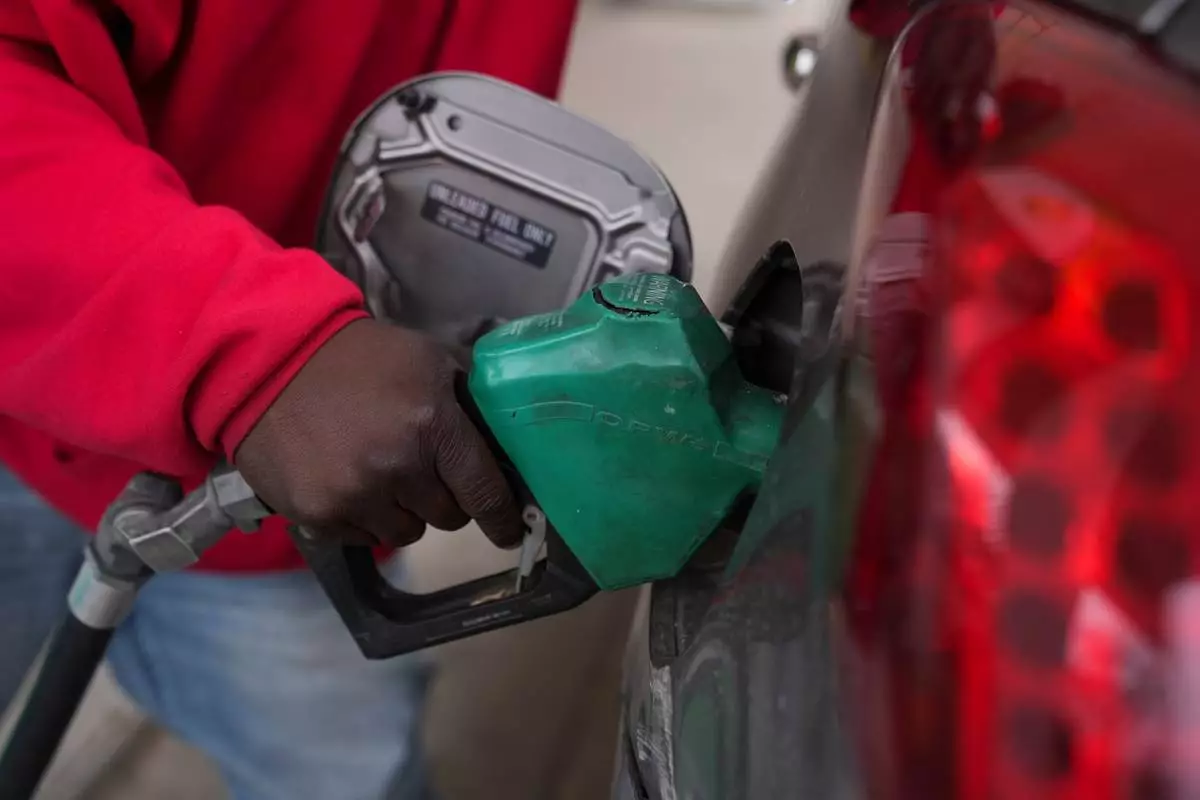
Dave Thomas purchases gasoline at a station Tuesday, March 24, 2026, in Chicago. (AP Photo/Erin Hooley)
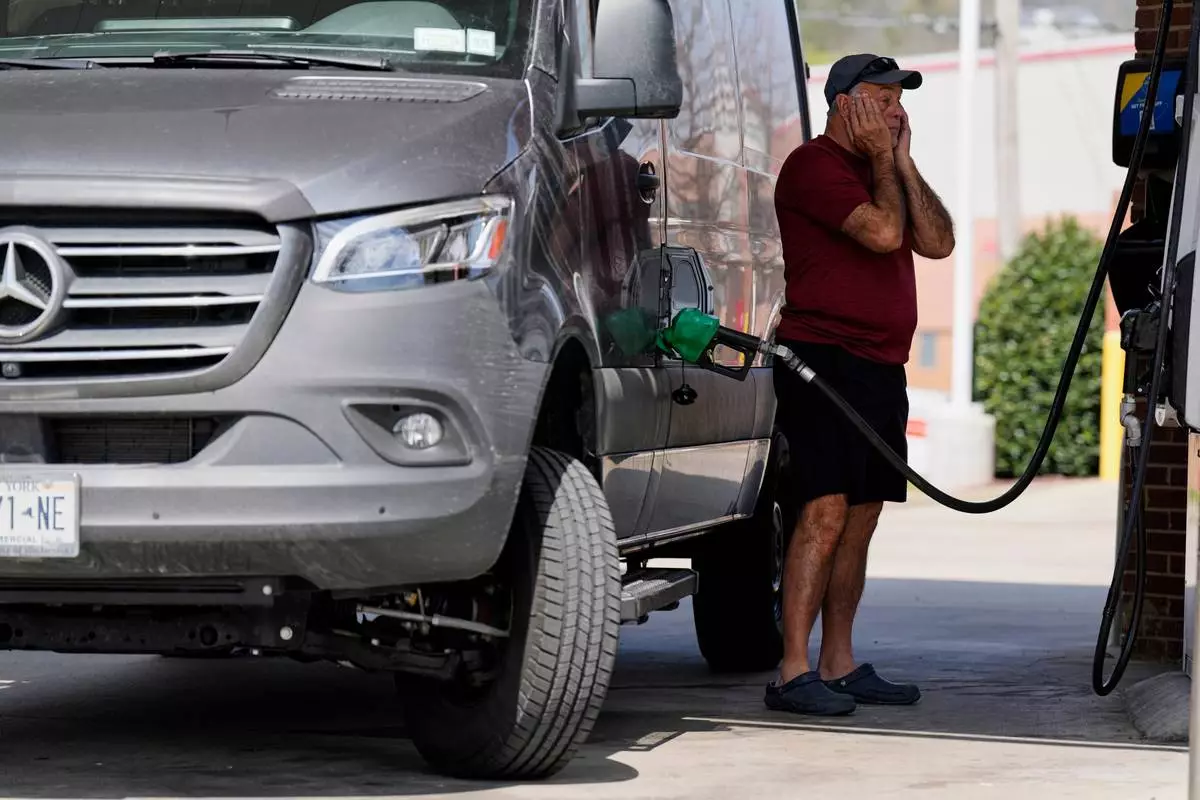
Ray Ruda fills his van with fuel at a gas station Wednesday, March 25, 2026, in Brentwood, Tenn. (AP Photo/George Walker IV)
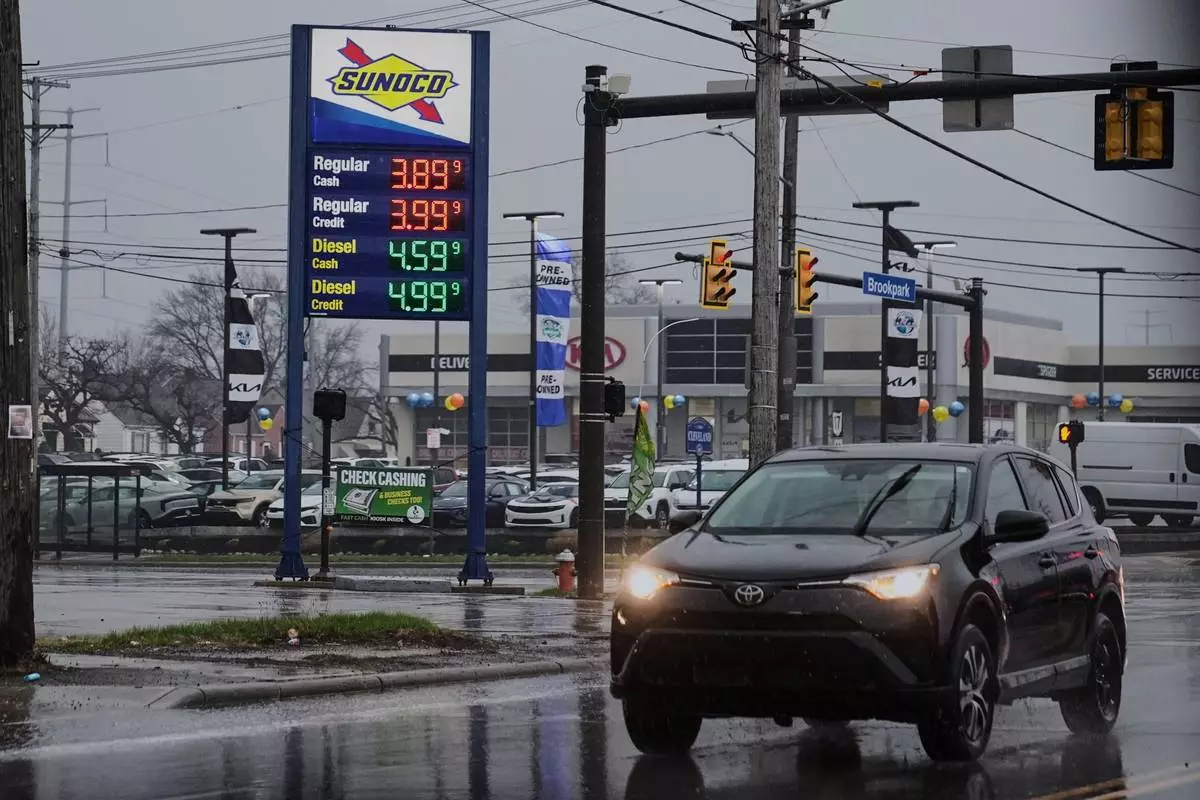
A car drives by a gas station with fuel prices displayed in Parma, Ohio, Thursday, March 26, 2026. (AP Photo/Sue Ogrocki)
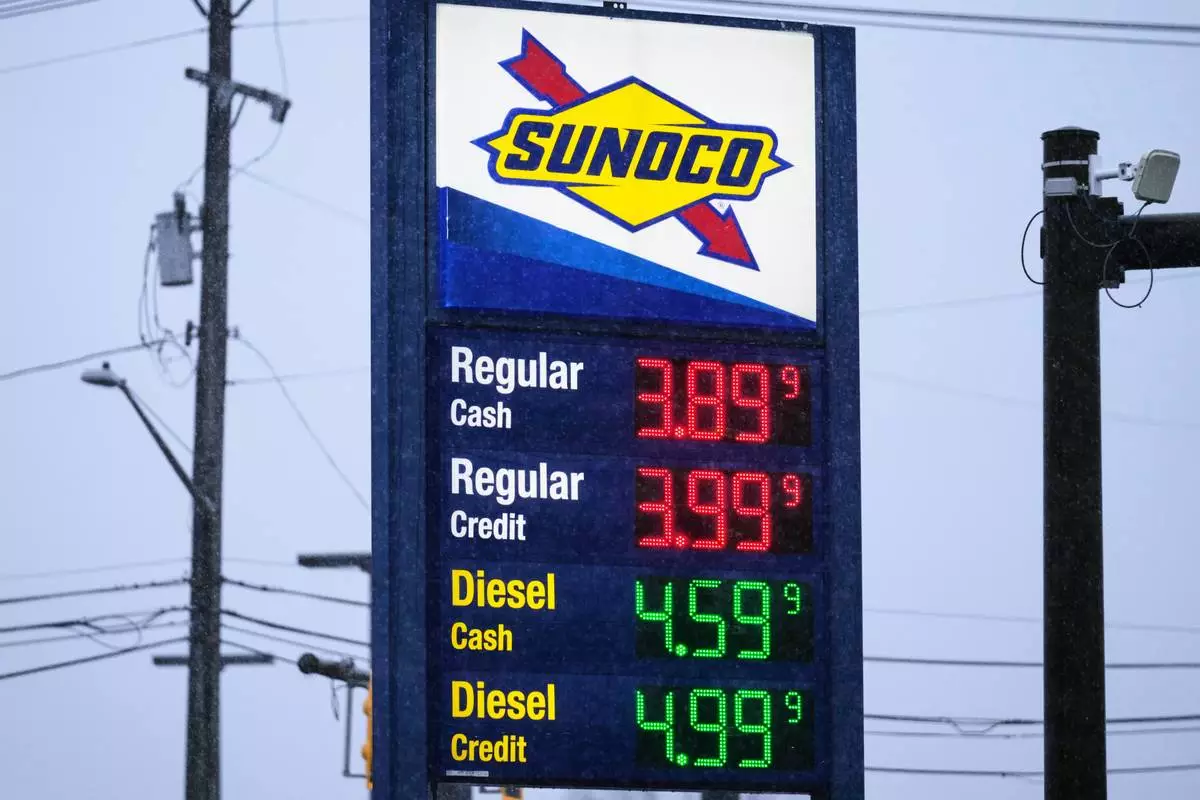
Gas prices are displayed at a gas station in Parma, Ohio, Thursday, March 26, 2026. (AP Photo/Sue Ogrocki)