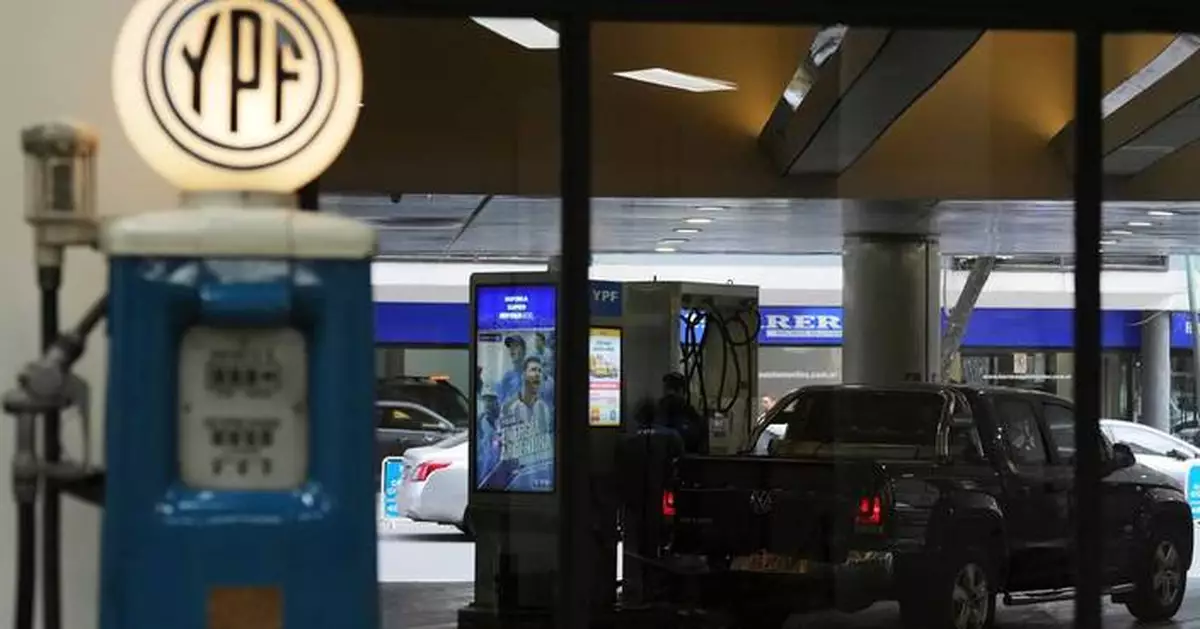
BUENOS AIRES, Argentina (AP) — A New York appeals court on Friday struck down a $16.1 billion judgment against Argentina, overturning a lower court’s order to compensate former shareholders of the nationalized energy giant YPF, a decision that was celebrated by Argentine President Javier Milei.
In the latest ruling in the long-running legal case, which was reviewed by The Associated Press, the U.S. Court of Appeals for the Second Circuit overturned a 2023 judgment in which U.S. District Judge Loretta Preska ordered Argentina to compensate investors — Petersen Energía and Petersen Energía Inversora — for the seizure of a majority share in YPF Energy in 2012.
“Today is a day of celebration for the good Argentines,” said Milei in a national broadcast on Friday. “What seemed impossible, we made possible.”
The president also announced that his government sent a bill to Congress to limit expropriations and increase compensation for those affected.
The president also earlier took aim at former left-wing leader Cristina Fernández de Kirchner, whose administration oversaw the nationalization of YPF.
“Because I’m Milei, I’ll say it the Milei way,” he wrote Friday morning, adding that his government has “cleaned up the mess” left by the former leader.
Kirchner has been under house arrest since 2025, following a six-year prison sentence for corruption.
In June last year, Judge Preska ordered Argentina to transfer its 51% controlling stake in YPF as a partial compensation to the plaintiffs. Two months later, the appeals court placed that order on hold.
Milei, who has struggled to rebuild depleted foreign reserves and has pledged to privatize state-owned companies, has frequently blamed his political opponents for the legal fallout from the YPF seizure.
The 2012 nationalization of Argentina's largest energy company, further damaged Argentina’s international standing by reinforcing its history of abandoning its global financial obligations.
Plaintiffs were able to sue YPF in the U.S. because the company is listed on the New York Stock Exchange.
Since its nationalization, YPF has accelerated the development of Argentina's vast shale gas reserves in the Vaca Muerta field in Patagonia. Crude production at Vaca Muerta has steadily climbed, reaching nearly 600,000 barrels per day in January, about 68% of national output. In 2025, YPF reported a profit of $5 billion, its highest level in the past 10 years.
Follow AP’s coverage of Latin America and the Caribbean at https://apnews.com/hub/latin-america

FILE - An aerial view shows the YPF-La Plata refinery in Berisso, Argentina, Oct. 30, 2023. (AP Photo/Rodrigo Abd, File)
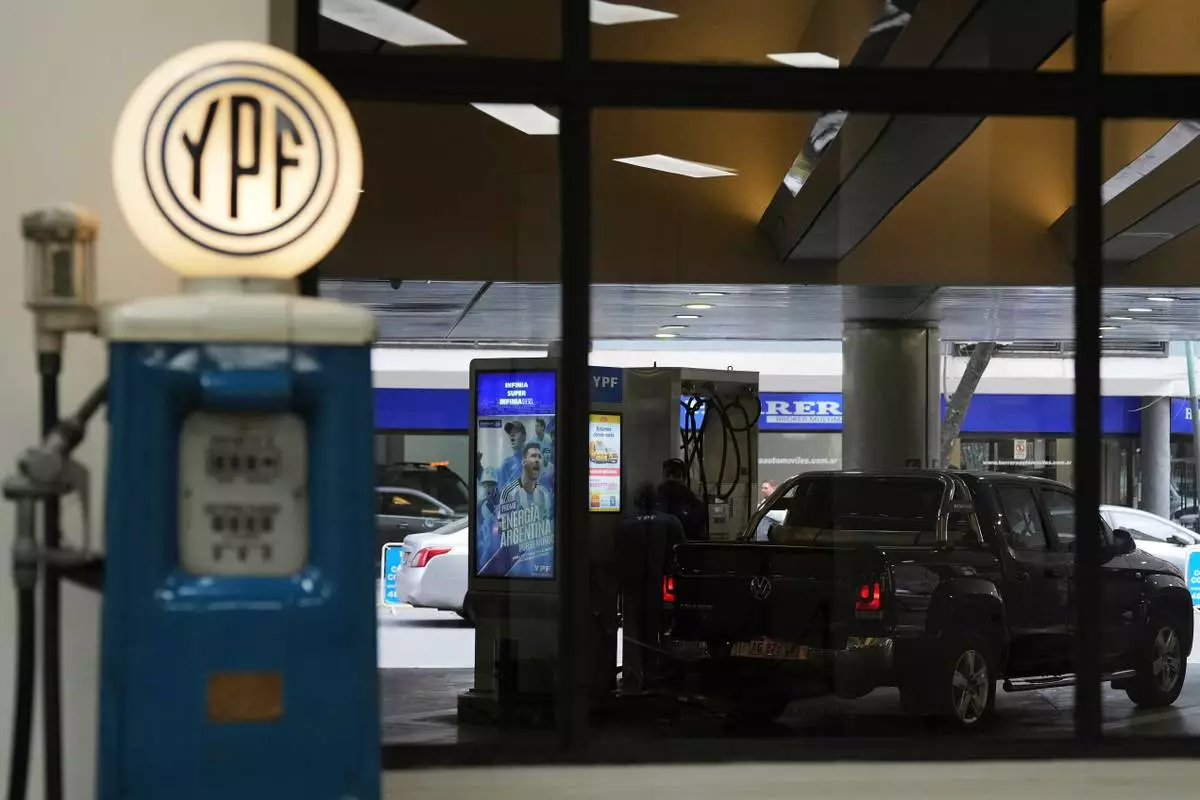
FILE - A worker fuels up a van at a YPF gas station in Buenos Aires, Argentina, July 14, 2025. (AP Photo/Rodrigo Abd, File)
MEXICO CITY (AP) — Mexico's government said in a new report Friday that it identified signs of life for a third of the country's 130,000 registered missing people, an announcement that was quickly criticized by a number of search groups who called it another attempt to undermine the depth of Mexico’s disappearance crisis.
The mounting criticism cut to the heart of fierce debate over how Mexico tracks disappearances, which have soared since the beginning of the drug war in 2006. While authorities say figures are overcounted, families say the number of missing people in Mexico is actually far higher. Both blame what they see as a lack of reliable data on failures by local governments and deep-seated impunity.
Mexican authorities said Friday that by cross-referencing things like vaccination records, birth and marriage registries and tax filings, officials found that 40,367 people — around 31% of reported disappearances — showed some activity in government records since they'd been reported missing. Marcela Figueroa, a top security official, said it indicated that those people might still be alive.
Using that search method, and consulting with a number of search groups, she said that the government was able to track down 5,269 people and mark them as "found."
Figueroa described many of those cases as “voluntary absences,” citing a number of examples of men leaving their partners for another woman being reported as missing and women running away from abusive relationships.
“Not all disappearances are the same,” she said, adding that the government was constantly working to locate Mexico's missing people.
But Héctor Flores, a leader of a search collective in the heart of Mexico’s disappearance crisis, the state of Jalisco, said he saw the Friday report as “misleading” and said the government’s methodology lacked transparency.
Groups like his have accused the government for years of trying to disappear the disappeared to save face on an international stage. Historic corruption and lack of investigation into such cases has fueled distrust among families who believe that changes to the registry could cut real cases from the list and hinder search efforts.
“For us, it’s just another attempt by the administration to hide and downplay the numbers and continue to paint a picture that doesn’t reflect the reality of what we’re living through,” said Flores, whose 19-year-old son was forcibly disappeared by agents from the Jalisco state prosecutor’s office in 2021.
According to figures shared Friday, 46,000, or 36%, of those registered as disappeared had missing data like names and dates that made searches impossible.
Meanwhile, 43,128, or 33%, showed no registered activities in government databases. Of those, less than 10% are under criminal investigation, something Figueroa called a failure by Mexican authorities.
Figueroa also said the government was more vigorously monitoring local prosecutor's offices that have failed to investigate and accurately document cases of missing people, and has sought to boost the number of cases being investigated.
“Society and the families can trust in the records and better tools to search for people,” Figueroa said.
The reinterpreted figures are part of a larger effort to bring order to a convoluted data set that connects to a collective trauma scarring the Latin American nation.
Forcibly disappearing people has long been a tactic by cartels to consolidate control through terror while also concealing homicide numbers. Some of Mexico’s most haunting cases of mass disappearances, like the disappearance of 43 students in central Mexico, have also been tied to state actors. The 130,000 people registered as missing since 2006 is enough to fill a small city and the faces of missing people on fliers line the streets of Mexico's biggest cities.
The controversy stretches back years as different administrations have each proposed revisions of the disappeared database. María Luisa Aguilar, director of the Miguel Agustín Pro Juárez Human Rights Center, which accompanies families searching for missing people, said each census has been marked by fierce criticism and plagues families with a feeling of uncertainty as they wonder if such shifts will further set back an already painstaking search process.
Most recently, the issue erupted under ex-President Andrés Manuel López Obrador, who was in office from 2018-2024. His government launched a census of the disappeared after claiming that the figures had been inflated to make him look bad. A cascade of criticisms in 2023 led to the resignation of the official leading the search for the disappeared.
Mexico's government has said that the official registry of disappeared is an overcount, often marred by faulty data from local prosecutor's offices and cases of people being reported missing two or three times.
Search groups and the U.N. Committee on Enforced Disappearances have argued that the real number is likely higher than the official stats because of failures by local governments, fear by some families to report missing cases, and a lack of “clear and transparent" data.
Aguilar said Friday that while her organization welcomed efforts to make the data more reliable and cut back in impunity, the report “minimizes the state’s responsibility" in the disappearance crisis.
She also said the figures offer few solutions and little specific information to family members and puts the burden on them to continue searches, sometimes at the cost of their lives.
The human rights group Miguel Agustín Pro Juárez Human Rights Center on Friday said in a statement it welcomed efforts to make the data more reliable. But it said the way officials framed the data “minimizes the state’s responsibility” in the disappearance crisis and does little to aid families who often have to take justice into their own hands and search for their missing loved ones themselves.
"Centering the conversation around a crisis of this magnitude on numbers, it's not the response that families of missing persons need after 20 years of such a sharp increase in disappearances," she said. “When we see reports like the one today, it proves the victims right: What they want is to make the number of disappeared persons smaller.”
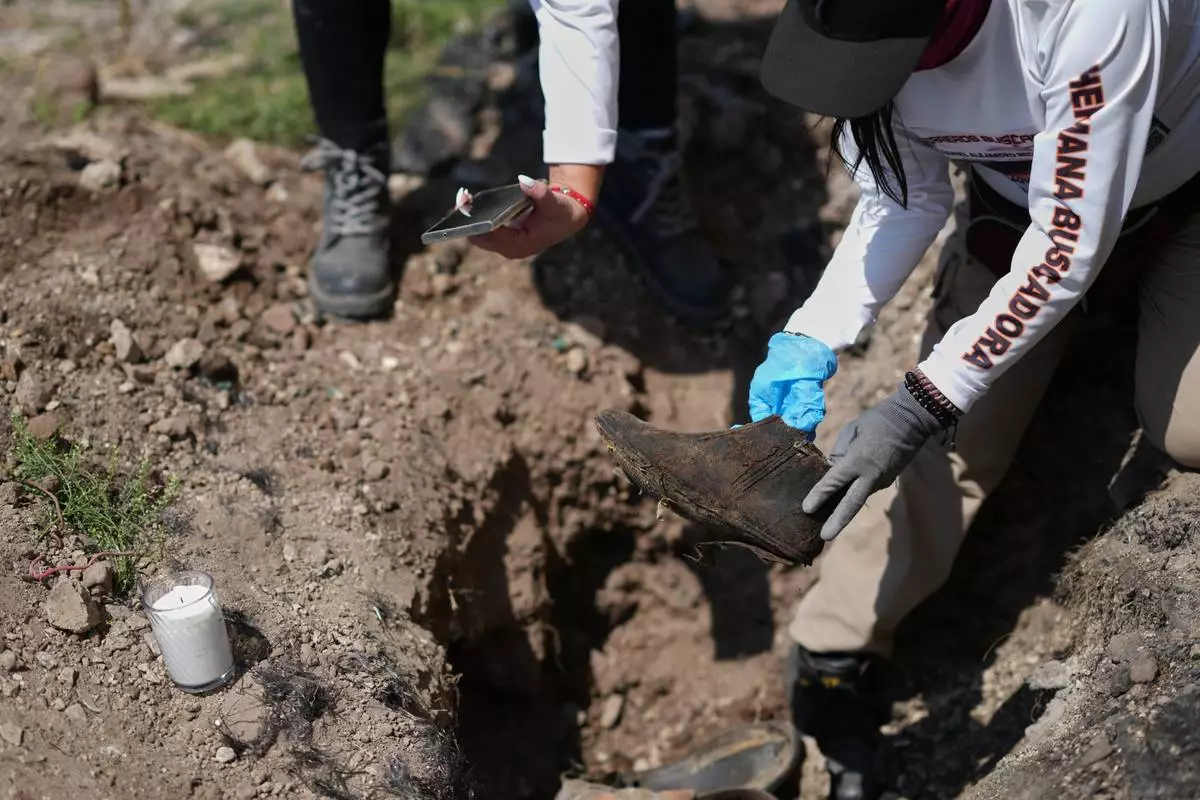
Relatives of missing people, part of a group called the Guerreros Buscadores, hold a shoe they found among skeletal remains buried in Tlajomulco de Zuniga, on the outskirts of Guadalajara, Mexico, Tuesday, March 24, 2026. (AP Photo/Eduardo Verdugo)
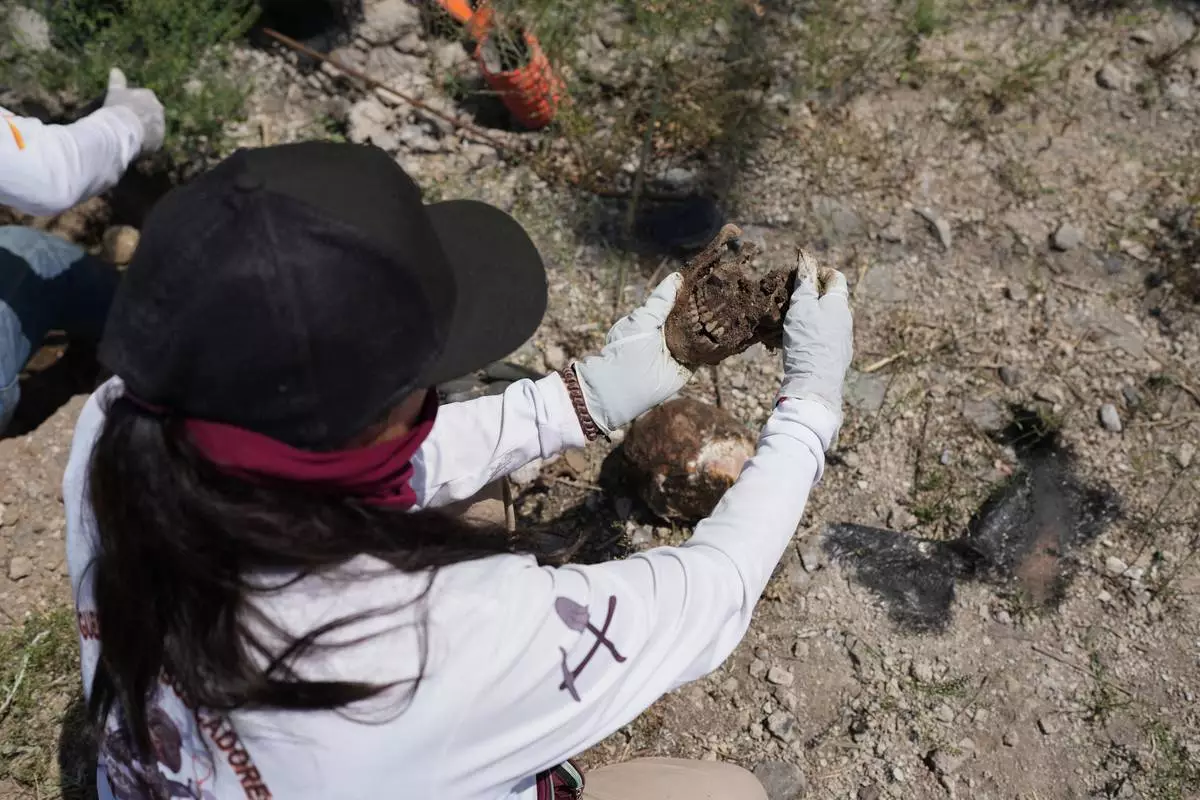
Relatives of missing people, part of a group called the Guerreros Buscadores, hold skeletal remains found buried in Tlajomulco de Zuniga, on the outskirts of Guadalajara, Mexico, Tuesday, March 24, 2026. (AP Photo/Eduardo Verdugo)
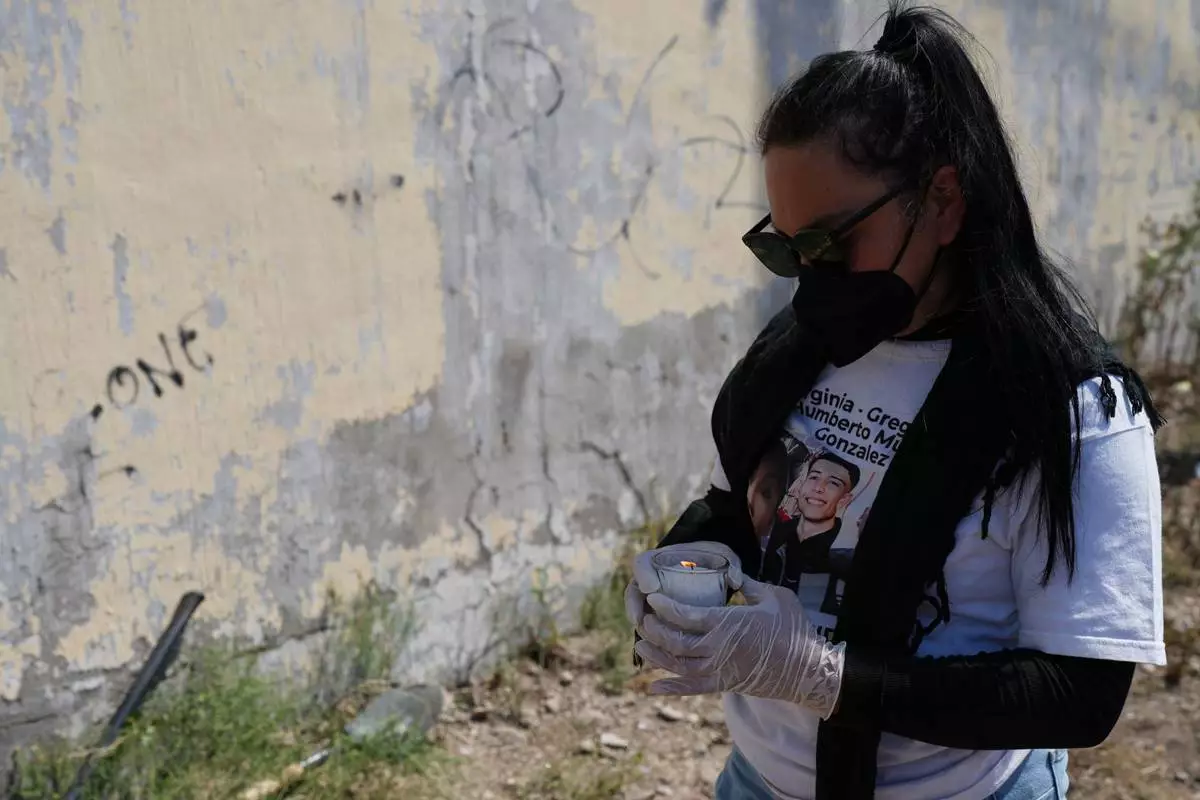
A relative of a missing person, part of a group called the Guerreros Buscadores, lights a candle after finding skeletal remains buried in Tlajomulco de Zuniga, on the outskirts of Guadalajara, Mexico, Tuesday, March 24, 2026. (AP Photo/Eduardo Verdugo)