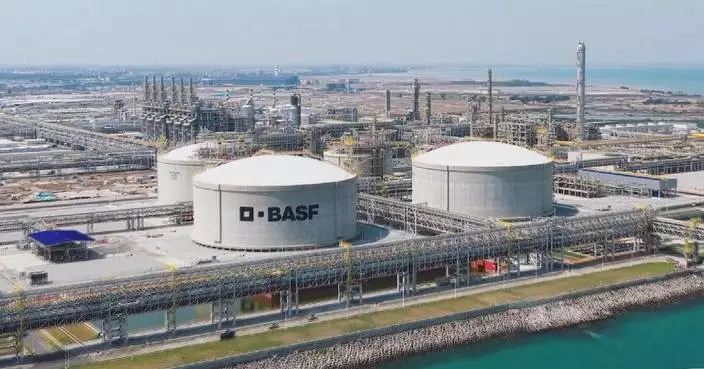
Thanks to the multiple measures introduced since the start of special customs operation in south China's Hainan Free Trade Port (FTP), foreign-invested enterprises in Hainan -- China's southernmost tropical island province -- have reaped tangible benefits.
Friday marks the 100th day following the entry into effect of special customs operation in Hainan -- a milestone in the FTP 's journey toward becoming a world-class, high-level free trade port.
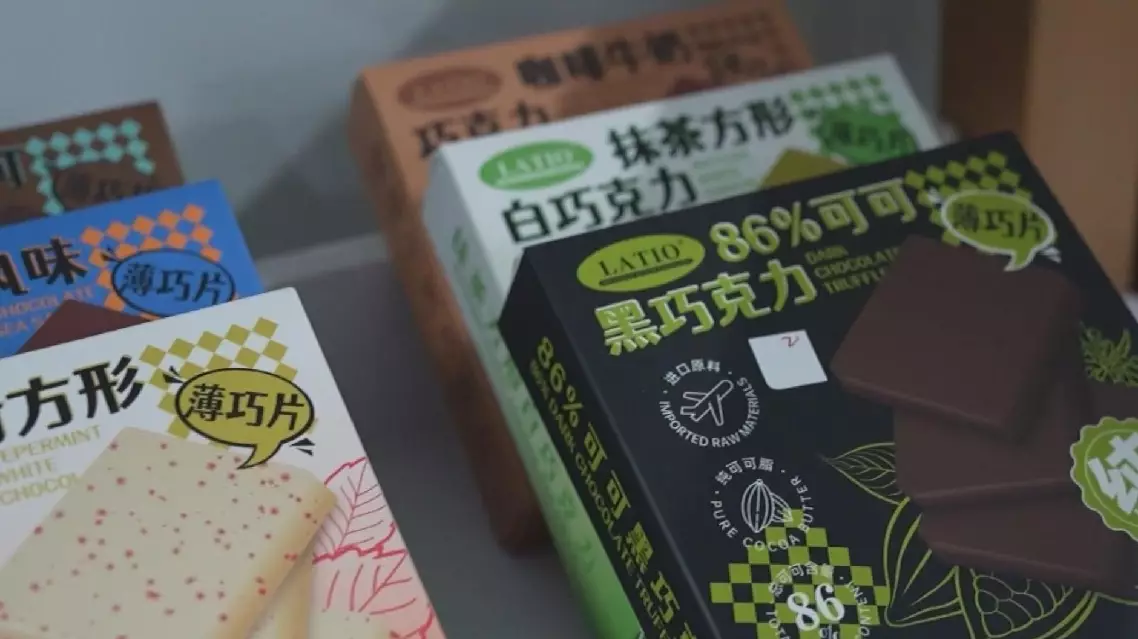
The 100-day mark also coincides with the ongoing Boao Forum for Asia (BFA) Annual Conference 2026, held in the province. Outside the conference venue, a zero-carbon product exhibition area features a Chinese-Canadian joint venture, Green Chocolate Food Manufacturing (Hainan) Company, showcasing its dazzling array of chocolate products.
As one of the pilot enterprises benefiting from the value-added processing duty exemption policy -- one of the key measures introduced after the FTP's island-wide special customs operation took effect -- the company has secured a significant number of new orders over the past 100 days and is now planning to fully implement a new production line within the year.
"It took only three months for our factory to go from being just an empty shell to realizing mass-production of chocolate. And what's especially worth mentioning is that on December 18, 2025 -- the very day of the entry into effect of the special customs operation in the Hainan FTP -- our products cleared customs in just five minutes. That's the speed of China -- incredibly fast," said Wu Huijuan, general manager of marketing at Green Chocolate Food Manufacturing (Hainan) Company.
A small piece of chocolate can serve as a microcosm of global trade. The company used to source cocoa ingredients from Spain and Belgium, processes them in Canada, and then bring the products into the Chinese market via north China's Tianjin. Its supply chain spans multiple oceans, and every link in the chain -- every adjustment, every shift -- will affect the company's profit making.
Five years ago, the company began considering whether to build a new factory in China. After extensive research and site selection, the policies offered by the FTP ultimately convinced this Canadian-origin chocolate brand to establish a joint venture rooted in Hainan.
"We never imagined that after the launch of special customs operation, production would be running nonstop. And even with nonstop production, orders are basically booked through June this year," said Meng Xinli, chairman of the company.
All of this is attributable to the policy benefits provided by the Free Trade Port, including zero-tariff imports on raw materials, auxiliary materials, and production equipment, as well as a 30 percent value-added processing tariff exemption -- meaning after imported cocoa powder undergoes value-added processing in Hainan and reaches a 30 percent value-added threshold, the resulting chocolate products can enter the Chinese mainland market free of tariffs.
The company also benefits from streamlined customs clearance and Authorized Economic Operator (AEO) certification in Hainan, which cut its customs clearance time in half. Additionally, preferential corporate income tax and individual income tax policies have further reduced the company's operating and labor costs.
The cumulative effect of these policy advantages is reflected in a roughly 10 percent reduction in the retail price of the company's chocolates in the market, significantly boosting their competitiveness.
Through institutional innovations designed to deliver tangible benefits to businesses, the Hainan Free Trade Port is fueling corporate confidence and expanding investment.
"We actually have two plans for 2026. First, we plan to build another factory to relieve production pressure. Second, in the second half of the year, we will begin constructing our own raw material processing plant. I think our sales this year should double or even triple compared to last year," said Meng Xinli.
"Leveraging its institutional strengths and unique geographical location, the Hainan Free Trade Port has the conditions to help high-end manufacturing, services, and high-tech agriculture achieve higher-quality development. It also serves as a bold testing or piloting ground for China's voluntary and institution-based opening-up," said Zhang Jianping, deputy director of the academic committee at the Chinese Academy of International Trade and Economic Cooperation, the Ministry of Commerce.
The Hainan Free Trade Port -- the world's largest free trade port by area -- saw the launch of island-wide special customs operation on December 18, 2025, allowing freer entry of overseas goods, expanded zero-tariff coverage and more business-friendly measures.
Unlike major global free trade ports such as the Dutch port of Rotterdam, the Port of Hamburg in Germany, and Singapore, the Hainan FTP combines multiple policy advantages, including value-added processing tariff exemptions, zero tariffs, and low tax rates. Its core competitiveness lies in institutional innovation, positioning itself as a key hub connecting the vast Chinese mainland market with global resources.
Businesses see tangible benefits since launch of special customs operation in south China's Hainan FTP