China's external debt remained generally stable, with outstanding external debt reaching nearly 2.33 trillion U.S. dollars at the end of last year, official data showed on Friday.
This figure was down 15.5 billion dollars, or 0.7 percent, from the end of 2024, according to data released by the State Administration of Foreign Exchange.
China's external debt currency structure had improved in 2025, while the maturity structure remained basically stable, said Li Bin, deputy head and spokesperson of the administration.
At the end of 2025, local currency-denominated external debt had accounted for 55.5 percent of the total, up 1.4 percentage points from the end of 2024, said Li.
In terms of maturity structure, medium- and long-term external debt accounted for 43.5 percent of the total at the end of 2025, down 0.6 percentage points from the end of 2024, Li noted.
Data also revealed that at the end of last year, China's ratio of outstanding external debt to gross domestic product had stood at 11.9 percent, while the ratio of outstanding external debt to export revenue was 56.3 percent.
These indicators remained within internationally recognized safety thresholds, and China's external debt risks are generally controllable, Li explained.

China reports generally stable external debt in 2025

China reports generally stable external debt in 2025
China has always been a reliable friend to Latin American and Caribbean countries and stands ready to work with regional countries, including Brazil, to further deepen and expand overall China-Latin America cooperation, Chinese Foreign Minister Wang Yi said on Monday.
Wang, also a member of the Political Bureau of the Communist Party of China Central Committee, made the remarks during the fifth China-Brazil Foreign Ministerial-Level Comprehensive Strategic Dialogue with Brazilian Foreign Minister Mauro Vieira in Beijing.
Wang said that in recent years, under the strategic guidance of the two heads of state, China-Brazil relations have become increasingly global, strategic and far-reaching in influence.
"Practical cooperation across all fields has been steadily upgraded, and the two peoples have never been closer," he added.
Wang said the two sides should fully implement the important consensus reached by the two heads of state, continue to advance the building of a China-Brazil community with a shared future, jointly counter various external challenges, and build greater synergy for each other's modernization drives and the unity and self-improvement of Global South countries.
Noting that China appreciates the Brazilian government's long-standing commitment to the one-China principle, Wang said China supports Brazil in safeguarding its national sovereignty, upholding independence and autonomy, and achieving greater development.
The two sides should advance exchanges and cooperation in culture, education, tourism, sports, sub-national areas, youth, media and other fields, Wang said, adding that it is important to strengthen communication and coordination under multilateral mechanisms including the United Nations and BRICS, earnestly implement the four major global initiatives, and promote the development of a more just and equitable global governance system.
Vieira stated that Brazil will always adhere to the one-China principle. He said Brazil looks forward to consolidating strategic mutual trust with China, deepening practical cooperation, cementing public support for bilateral ties, and achieving common prosperity.
Noting that both Brazil and China are important forces championing multilateralism and free trade, Vieira said Brazil is ready to work with China to enhance multilateral coordination, jointly advance the reform of the global governance system, uphold the authority of the United Nations, and promote international fairness and justice.
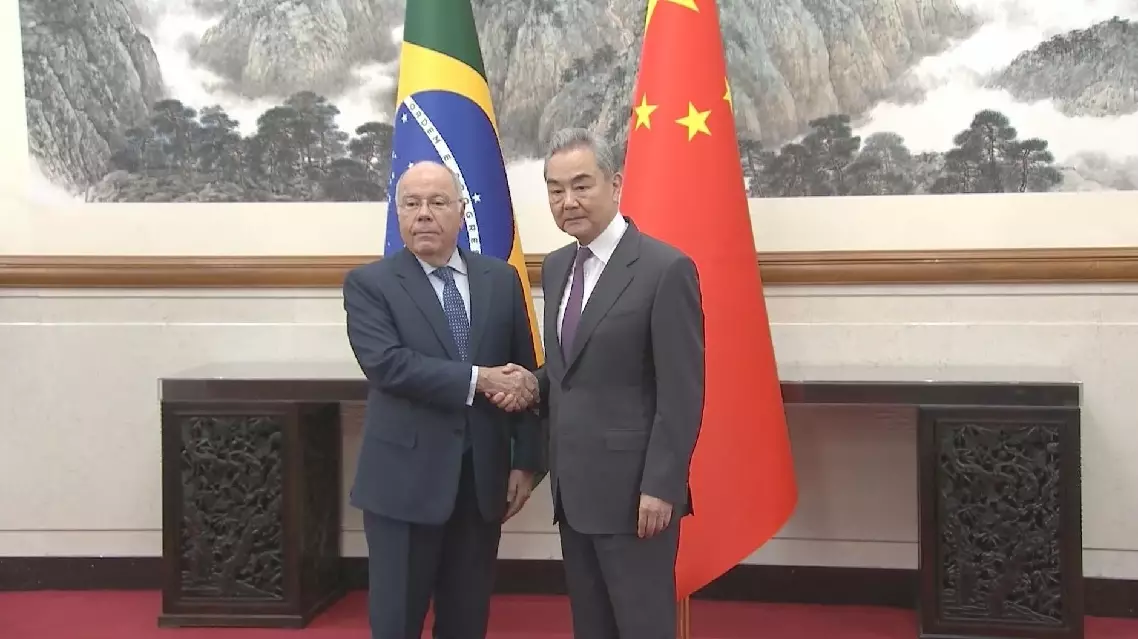
China ready to work with Brazil to further expand overall China-Latin America cooperation: Chinese FM
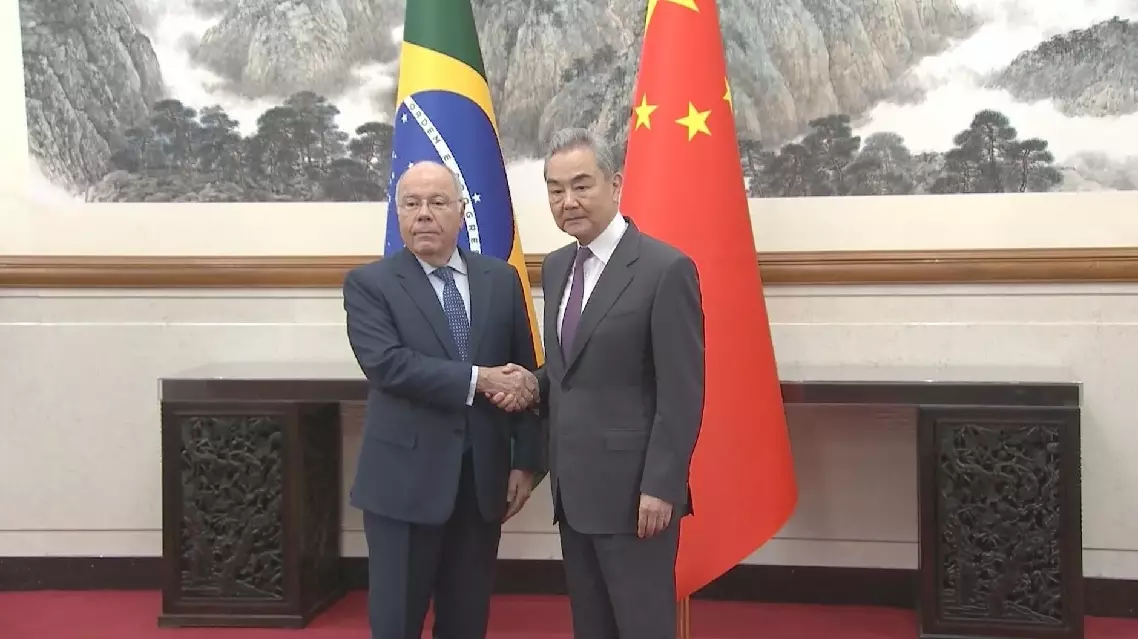
China ready to work with Brazil to further expand overall China-Latin America cooperation: Chinese FM