Skip to Content Facebook Feature Image

China launches world’s first floating artificial island designed for all-weather, deep-sea scientific research

China

China

China

China launches world’s first floating artificial island designed for all-weather, deep-sea scientific research

2026-03-28 17:10 Last Updated At:03-30 12:10

A major national science and technology infrastructure project, the deep-sea all-weather resident floating research facility, was officially launched in Shanghai on Saturday.

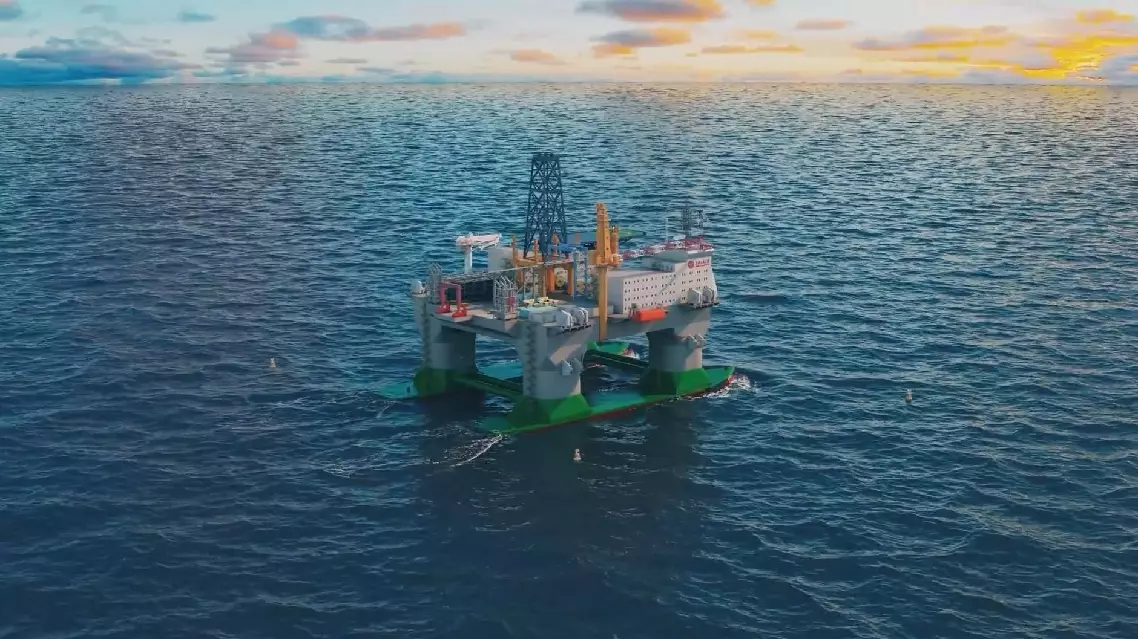
Dubbed the "Deep-Sea Floating Island", the world’s first ultra-large marine research platform is designed to support scientific research needs in fields such as marine equipment, marine resources, and marine science.

The large scientific installation comprises three primary components: the main facility platform, ship-based laboratories, and shore-based support.

The main platform is of an innovative semi-submersible twin-hull design, enabling full-scale testing of deep-sea equipment weighing hundreds of tons and supporting scientific exploration and experiments at full-ocean depths up to 10,000 meters.

The , undertaken by the Shanghai Jiao Tong University (SJTU), has been rated as a major national science and technology infrastructure project.

"We have various types of marine research facilities in our country, such as deep-sea laboratories, oceanographic research vessels, and deep-sea submersibles, but we lack a research facility that can both navigate quickly and remain in a mission area for extended periods. In efforts to address such a shortfall, we have combined the characteristics of semi-submersible platforms in the marine oil and gas field with those of research vessels to form a completely new concept for a semi-submersible research platform," said Xiao Longfei, a professor with the Shanghai Jiao Tong University, the university that was responsible for the development of the "Deep-Sea Floating Island".

The construction of the facility is scheduled for completion in 2030. As an open-sea testing ground, it will support trials of deep-sea mining systems, critical marine equipment, and offshore oil and gas infrastructure. It is expected to accelerate the commercial development of marine resources, reveal seasonal evolution patterns of marine ecosystems, explore the origins and evolution of life, and improve typhoon forecasting accuracy to enhance disaster prevention and mitigation capabilities.

"It can sail at roughly the same speed as the research vessel. Once it reaches the operational area, it can be ballasted to conduct research and experiments. With its super-heavy load capacity, super-long stay capability, and super-strong typhoon resistance, it can conduct this kind of work in harsher sea conditions, for longer periods, and in deeper waters," said Yang Jianmin, an academic researcher with the Shanghai Jiao Tong University.
China launches world’s first floating artificial island designed for all-weather, deep-sea scientific research
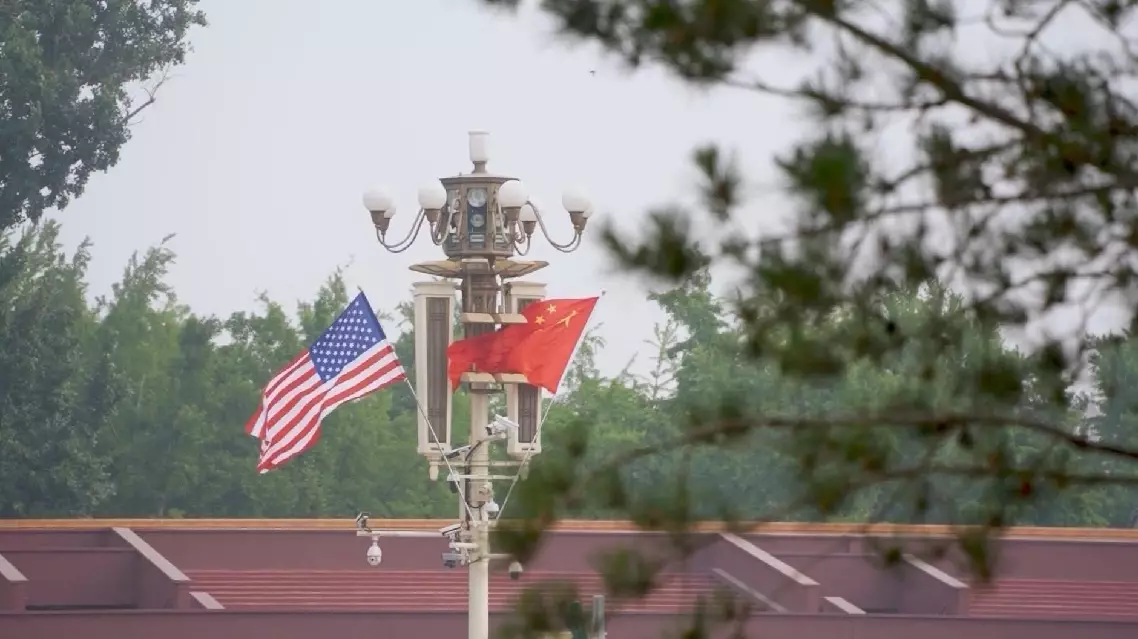

China launches world’s first floating artificial island designed for all-weather, deep-sea scientific research
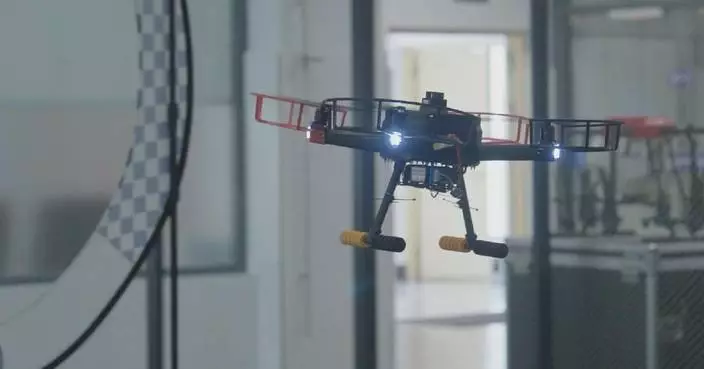
Retired American teacher Ronald Sakolsky said it is "embarrassing" that a positive story about China hit the world headlines but can only be covered by local media in the United States.

More than two decades ago, Sakolsky supported a Chinese woman, Yin Yuzhen, in planting trees to combat desertification. The story went viral when Ms Yin took to social media to look for the man who offered her financial support 20 years ago because she wanted to show that the trees he helped to plant had flourished. After reconnecting online, Sakolsky and Yin met again in China, a story that hit global headlines.

Chinese President Xi Jinping on Thursday referred to the story during a banquet at the White House, saying that it touches the hearts of many Chinese people and stands as a shining example of the friendly exchanges between the two peoples.

During the visit, Xi also said that 100,000 young Americans will be invited to visit China for exchanges and study over the next 5 years.

However, such positive stories are not extensively covered in the U.S. media.

A name called out from a podium, Sakolsky noted, won't make headlines. But it serves as a reminder that what China and the United States need most isn't more noise, but better stories, told well.

"I think the news media, unfortunately, focuses on the negatives. And I'm saying to myself, why aren't you focusing on the fact that President Xi just started the program back again for the student exchange, 100,000 student visas? That's a positive. Why aren't you talking about that? Every single day that I've been home, literally every single day I have been on WeChat, Facebook, e-mail talking to people about the relationship between China and America. I sent a text message to Sean Hannity on Fox news about an hour ago and I said to him, how embarrassing is it that only a local media station here in Pittsburgh has covered the story for five minutes? And yet the President Xi of China mentions it at a White House dinner," said Sakolsky.

Sakolsky said he has spent every day since returning home discussing China-U.S. relations with people across platforms - conversations he hopes can help fill the gap left by mainstream coverage.

Retired American teacher questions US media silence on positive China stories

Retired American teacher questions US media silence on positive China stories

Recommended Articles