WASHINGTON (AP) — President Donald Trump says the United States is winning the war with Iran even as thousands of additional American troops deploy to the Middle East.
He has pilloried other countries for not helping the U.S., only to say later he does not need their assistance. He has twice delayed deadlines for Iran to reopen the Strait of Hormuz. He has both threatened to “obliterate” Iran's energy plants if the vital waterway remains largely shuttered and said the U.S. was “not affected" by the closure.
At one point this month, Trump said one of his predecessors — who, he strongly suggested, was a Democrat — privately told him he wished he had taken similar action against Iran. Representatives for every living former president quickly denied that such a conversation happened.
As the war entered its second month on Saturday, Trump's penchant for embellishments, exaggerations and falsehoods is being tested in an environment where the stakes are much higher than an isolated political fight.
A president who has long embraced bluster and salesmanship to shape narratives and focus attention is confronting the unpredictability of war.
Leon Panetta, who served Democratic presidents as defense secretary, CIA director and White House chief of staff, said he has “seen enough wars where truth becomes the first casualty.”
“It’s not the first administration that has not told the truth about war,” he said. “But the president has made it kind of a very standard approach to almost any question to in one way or another kind of lie about what’s really happening and basically describe everything as fine and that we’re winning the war.”
Michael Rubin, a historian at the American Enterprise Institute who worked as a staff adviser on Iran and Iraq at the Pentagon from 2002 to 2004, said Trump is “the first president of any party in recent history that hasn’t self-constrained to live within rhetorical boundaries.”
“So of course it creates a great deal of confusion,” he said.
To his critics, Trump's style is a sign that doesn't have a coherent long-term strategy. But for Trump, the zigs and zags seem like the point, a method that keeps his opponents — and pretty much everyone else — always on their heels.
The approach was clear this week in the hours before he announced the second delay of the deadline for Iran to reopen the strait. Asked what he would do about the deadline, Trump said he did not know and that he had a day before he had to decide.
“In Trump time, a day, you know what it is, that’s an eternity,” the Republican president said to laughter from members of his Cabinet.
But investors are unimpressed, with U.S. stocks closing out their worst week since the war began. To some on Capitol Hill, the freewheeling is more frustrating than amusing.
Rep. Gregory Meeks of New York, the top Democrat on the House Foreign Affairs Committee, lamented that Trump is “going back and forth and constantly contradicting himself.”
“The administration is winging it,” he said. “So how can you trust what the president says?”
Republicans were not willing to go that far, but their concern was apparent heading into a two-week break from Washington. Sen. John Kennedy of Louisiana said his constituents “support what the president has done.”
“But most of my people are also equally or even more so concerned about cost of living,” he said.
Republican Rep. Chip Roy of Texas, who sits on the House Budget Committee and is a member of the conservative House Freedom Caucus, said his constituents were on board with “blowing some crap up.” Nonetheless, he expressed reservations about the prospect of ground troops and said the administration has not provided enough details in briefings for lawmakers. Such sessions, he said, only reveal information you “read in the papers.”
“Taking out bad guys, taking out conventional (weapons), taking out or at least working to take out nuclear capability, pressing to keep the straits open, all those are good things and I’ve been supportive and will continue to be supportive,” Roy said. “But we’ve got to have a serious conversation about how long this is going to go, boots on the ground, all those things, press for further briefings and understanding of where it’s all headed.”
While Trump has maintained deep support among Republicans, a poll this week from The Associated Press-NORC Center for Public Affairs Research indicates that the president risks frustrating his voters if the U.S. gets involved in the kind of prolonged war in the Middle East that he promised to avoid.
Although 63% of Republicans back airstrikes against Iranian military targets, the survey found, only 20% back deploying American ground troops.
That reflects the political challenges ahead for Trump, who did not prepare the country for such an extensive overseas conflict. If the war drags on or escalates, pressure on Republicans could build before the November elections, when their majorities in Congress are at risk. Some in the party have said sending in ground troops would be a red line that Trump should not cross.
The administration also will likely need congressional support for an additional $200 billion to support the war. That amount of money, which Trump has said would be “nice to have,” even as he said the war was “winding down,” would be a tough vote at any time. But it poses particular risks for budget-conscious Republicans in an election year.
White House spokesperson Anna Kelly said in a statement that Trump is “right to highlight the vast success of Operation Epic Fury.”
“Iran desperately wants to make a deal because of how badly they are being decimated, but the President reserves all options, military or not, at all times,” she said.
Rubin, the former Iran and Iraq adviser at the Pentagon, said there could be some “logic” to the president's ever-evolving rhetorical approach to the war. He said Trump's initial comments about ongoing negotiations, which Iran denied, could “spread suspicion and fear within the regime circles.”
“Perhaps Donald Trump or those advising him simply want the Iranians to grow so paranoid they refuse to cooperate with each other or perhaps they even turn on each other,” he said. “But then again, there's always a danger with Donald Trump of assuming that his rhetoric is anything more than shooting from the hip.”
Rep. Adam Smith of Washington state, the top Democrat on the House Armed Services Committee, said Trump is not going to be able to fully achieve his objectives, including the complete elimination of Iran's nuclear program, “in the current trajectory.”
And if that is the case, Smith said, the president has the option to rely on his rhetorical skills to simply say the U.S. won — and end the war.
“As I've jokingly said, nobody I have ever met or heard of in human history is better at exaggerating his own accomplishments than Donald Trump,” Smith said. “So go knock yourself out and claim this was some great success.”
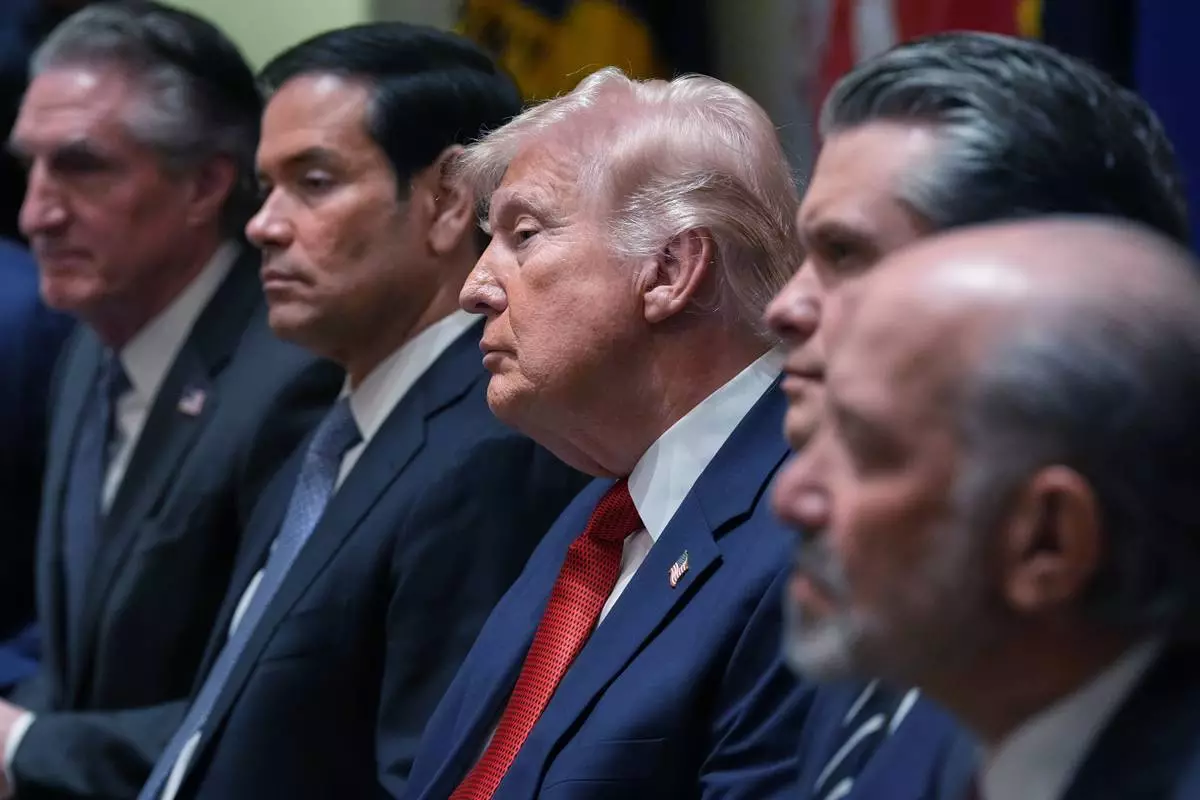
From left, Interior Secretary Doug Burgum, Secretary of State Marco Rubio, President Donald Trump, Defense Secretary Pete Hegseth, and Commerce Secretary Howard Lutnick listen during a Cabinet meeting at the White House, Thursday, March 26, 2026, in Washington. (AP Photo/Alex Brandon)
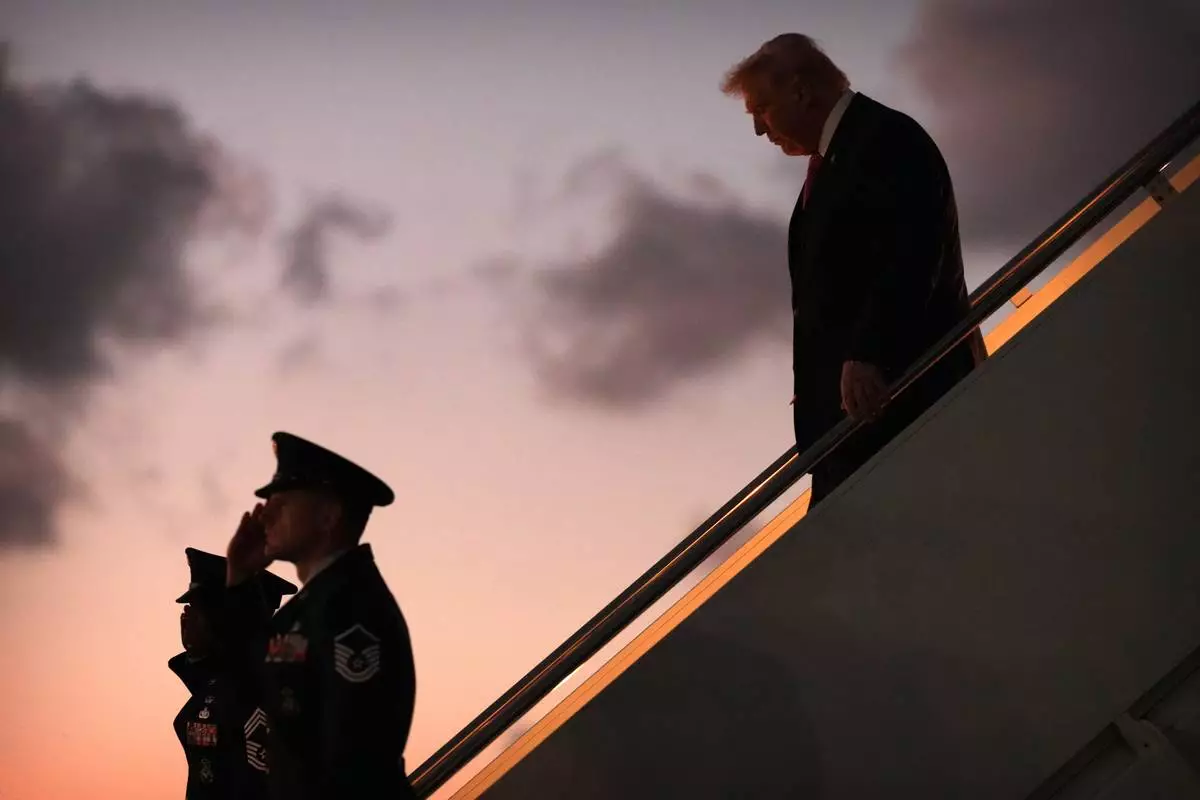
President Donald Trump steps off Air Force One, Friday, March 27, 2026, at Palm Beach International Airport in West Palm Beach, Fla. (AP Photo/Mark Schiefelbein)
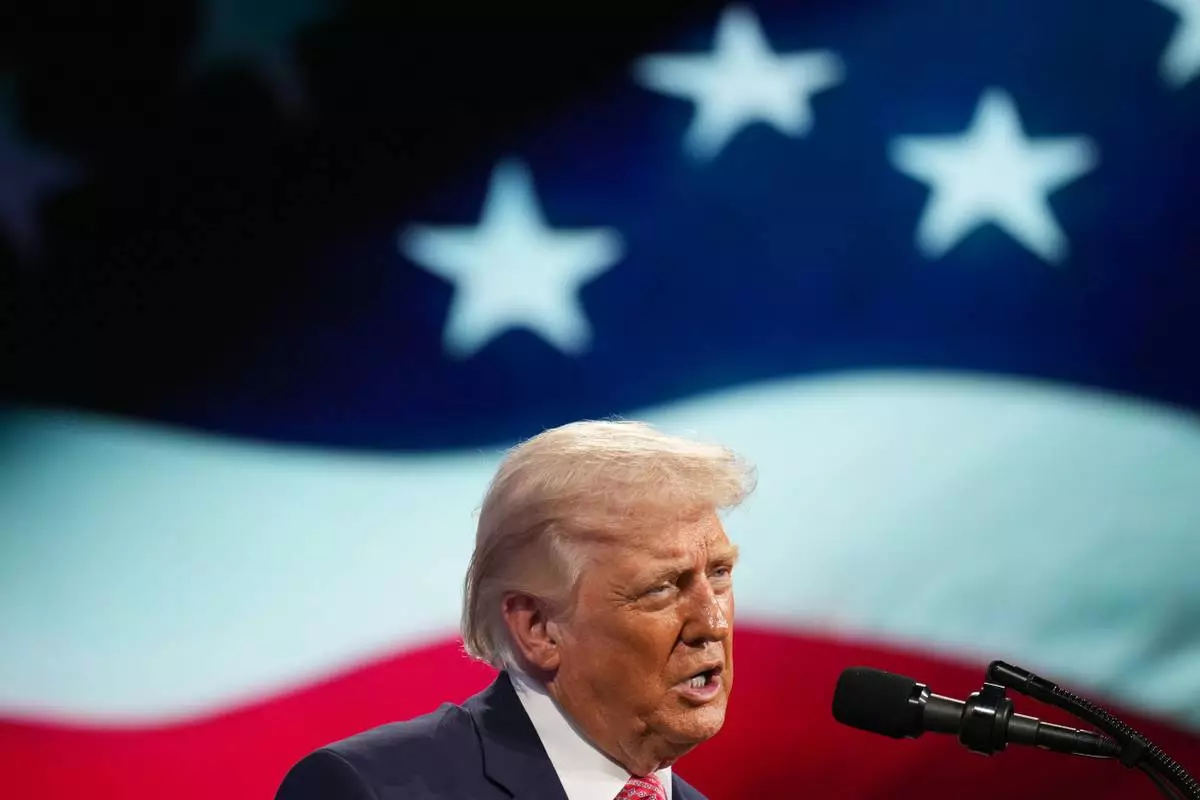
President Donald Trump speaks at the Future Investment Initiative Institute's summit Friday, March 27, 2026, in Miami Beach, Fla. (AP Photo/Mark Schiefelbein)
MEMPHIS, Tenn. (AP) — Shaquoiya Stewart held one of her 6-month-old twins on her lap while Shanille Bowens held the other. As the women caught up and the babies stared at each other quietly, Bowens came around to the key question she asks all the mothers she works for: “Do you think there’s anything you need more support with?”
Bowens is a doula, a provider of physical and emotional support before, during and after birth — care that used to be seen as a luxury and was available only to those who could afford it. But doulas are becoming mainstream.
The country's once-reluctant medical establishment is increasingly welcoming the way doulas complement doctors and nurses, and with insurance coverage growing fast, parents from across the economic spectrum can now take advantage.
More than 30 states reimburse doulas through Medicaid or are in the process of implementing such coverage, up from 14 in late 2022, according to the nonprofit National Health Law Program. Private insurers are starting to do the same, with industry giant UnitedHealthcare launching a new benefit this year. Without insurance, costs vary widely but can exceed $2,000.
The changes are being driven by mounting research that shows these trained, non-medical professionals can significantly improve the health of moms and babies. Expanding doula care, experts say, is a relatively inexpensive way to help reduce maternal mortality, which kills Black mothers like Stewart at a rate more than three times higher than white women.
“Doulas can benefit everybody,” said Sierra Hill, maternal care access coordinator for Minnesota’s health department. “And that’s especially true for our communities that are facing a lot of inequities and health disparities.”
Stewart, who has Tennessee Medicaid, said Bowens shepherded her through the jitters of early pregnancy with her twin sons, blood pressure issues during delivery, a C-section and baby blues after birth.
“I felt safe. It didn’t feel like I was just by myself,” said Stewart, a 35-year-old single mother of four. “She was like my homegirl.”
In 2006, 3% of women in the U.S. got care from a doula during labor, according to a survey conducted for the nonprofit Childbirth Connection, now a program of the National Partnership for Women & Families. That figure has doubled or tripled since then, researchers estimate.
When Bowens was pregnant with the first of her six children more than two decades ago, a counselor recommended a doula.
“I’m like, ‘A doula, what is that?’” Bowens recalled.
Bowens was so inspired by the care she received that she ultimately became one herself. In addition to answering moms' questions and connecting them to community services, Bowens helps her clients navigate the health system and advocates for them.
“Oftentimes, we become friends with our clients – lifelong friends. We help connect them with resources in the community,” said Bowens, founder of Naturally Nurtured Birth Services. “We cater to them … so it looks different for each client.”
That help pays off, especially for moms from underserved communities.
Research comparing two groups of socially disadvantaged mothers found that those who used doulas were four times less likely to have a baby with low birth weight, two times less likely to have a birth complication and much more likely to start breastfeeding. Another study published last year found that Medicaid recipients with doulas had a 47% lower risk of C-sections and a 29% lower risk of preterm birth and were 46% more likely to go to a postpartum checkup.
That postpartum finding is key, said April Falconi, a scientist at Carelon Research who co-authored the recent study. More than half of maternal deaths occur during the postpartum period, she said. Causes include infection and excessive bleeding.
These sorts of results led Minnesota to become one of the first states to cover doulas through Medicaid in 2014. A decade later, the state expanded coverage, allowing Medicaid recipients 18 sessions with a doula without prior authorization, more than double what was allowed before.
“The return on investment is huge,” the health department’s Hill said.
There are no mandatory licenses for doulas, but there are state qualification standards to receive Medicaid payments and many doulas seek certification from private entities.
Naturally Nurtured is involved in a pilot project in Memphis in which doula services are paid for under a Tennessee Medicaid program run by UnitedHealthcare. Services are free to members.
UnitedHealthcare commercial clients with a doula benefit, on the other hand, get reimbursed for the care. Doulas are also included in a limited but growing number of other private plans.
“I see doulas becoming more and more integrated and accepted by all within the health care system," said Dr. Margaret-Mary Wilson, chief medical officer at UnitedHealth Group.
That extends to doctors and nurses in hospitals.
Dana Morrison, principal director of Doulas of Duluth in Minnesota, said there “was definitely” resistance to doulas by birth teams when she began her work 10 years ago. That was also true nationally. One point of friction was when doulas advocated for something different from what the medical professionals wanted. And since doulas weren't as integrated into care, they didn't have the time to build trust with doctors and nurses.
Today, Aspirus St. Luke’s hospital contracts with Doulas of Duluth on a grant-funded program, and patients can receive a scholarship to hire a doula through the organization.
Nurse Mallory Cummings, doula coordinator at Aspirus St. Luke's, said people on the birth team accept and appreciate doulas. “What it really comes down to is everyone’s knowledge of what a doula is,” she said.
On a recent afternoon, Mary Bey settled into a chair in a homey room at the Memphis doula center, cradling her sleeping infant, Ca’Mya. Bowens sat beside her, taking notes on her laptop.
After discussing breastfeeding and sleep, they talked about how Bey, 39, has been crying a lot since the delivery.
“What brings it on?” Bowens asked.
“I’ll be scared and I'll just be so protective and treat her like she’s just glass,” Bey replied.
Bey is haunted by a past loss. Before giving birth to her daughter last December, she suffered a stillbirth. Bowens helped her through.
“She was there when I had to push him out. She was there after, when I was healing. She came to the house. She brought groceries,” said Bey, a single mother of four who was connected with Bowens through the same pilot program as Stewart.
When Bey got pregnant again, she texted Bowens: “Hey, can you still be my doula?”
As the pregnancy progressed, Bowens answered all of Bey’s questions and kept her calm. She was there for Bey’s scheduled C-section and supported her when doctors monitored Ca'Mya for jaundice and what they briefly thought was a heart problem.
Later, Bey worried her C-section scar might be infected. Bowens advised her to get it checked out. It was.
Without her doula, Bey said she would never have gotten through either pregnancy as well as she did, physically or emotionally.
“She makes you feel like she’s family,” Bey said. “She was a friend — my best friend — a cousin, an auntie, a sister. All of the above.”
The Associated Press Health and Science Department receives support from the Howard Hughes Medical Institute’s Department of Science Education and the Robert Wood Johnson Foundation. The AP is solely responsible for all content.
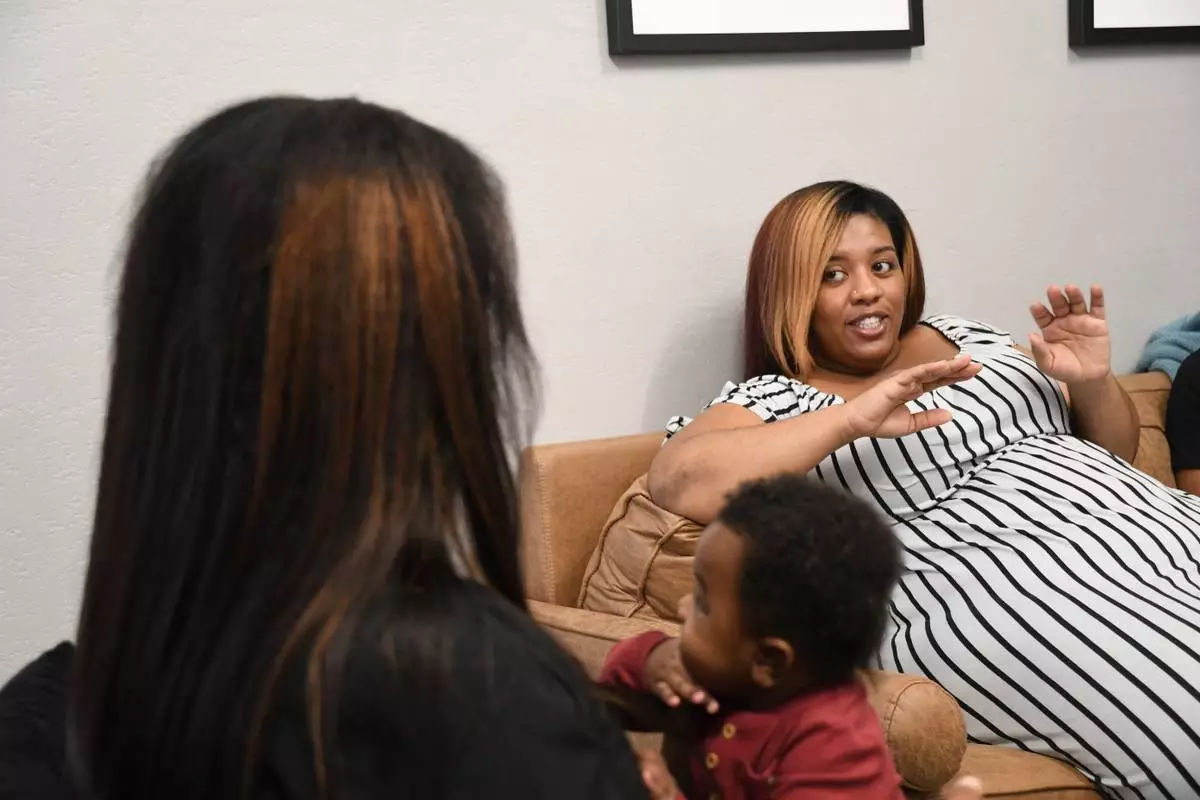
Shaquoiya Stewart, right, speaks with doula Shanille Bowens during an appointment on Feb. 28, 2026, in Memphis, Tenn. (AP Photo/Kristin M. Hall)
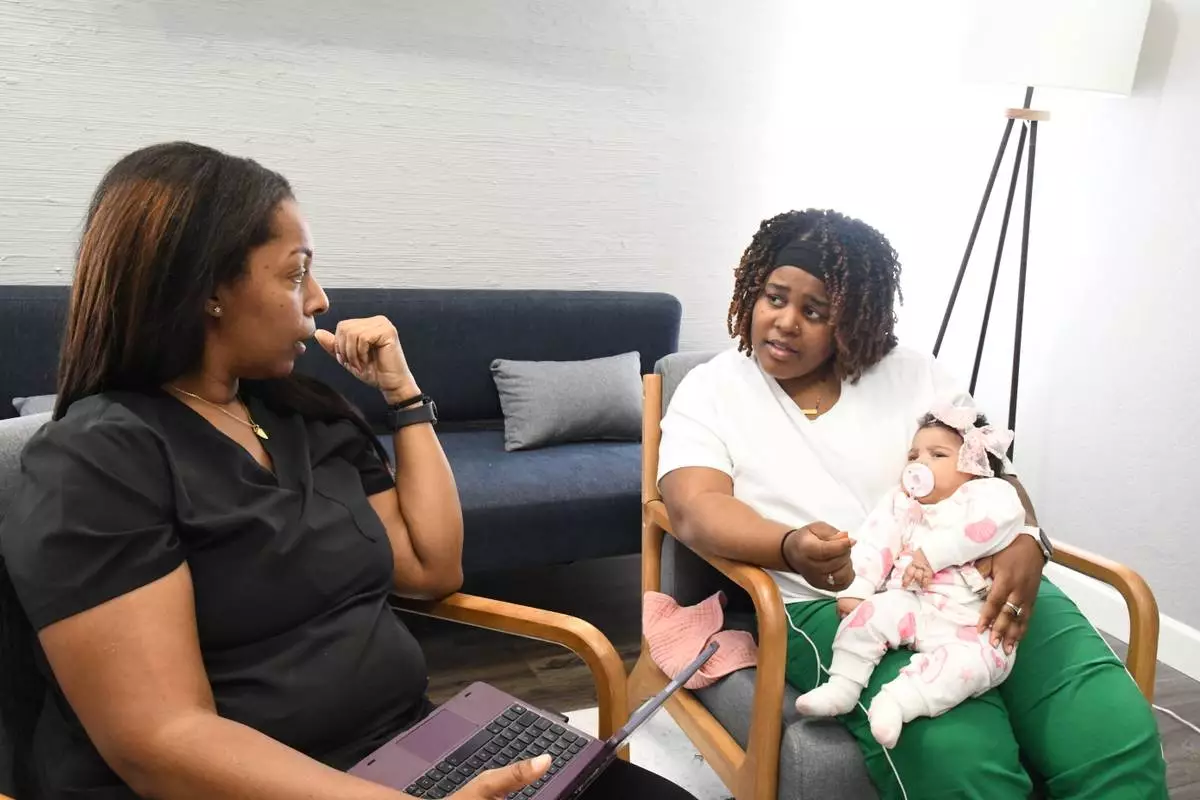
Doula Shanille Bowens speaks to Mary Bey during an appointment on Feb. 28, 2026, in Memphis, Tenn. (AP Photo/Kristin M. Hall)
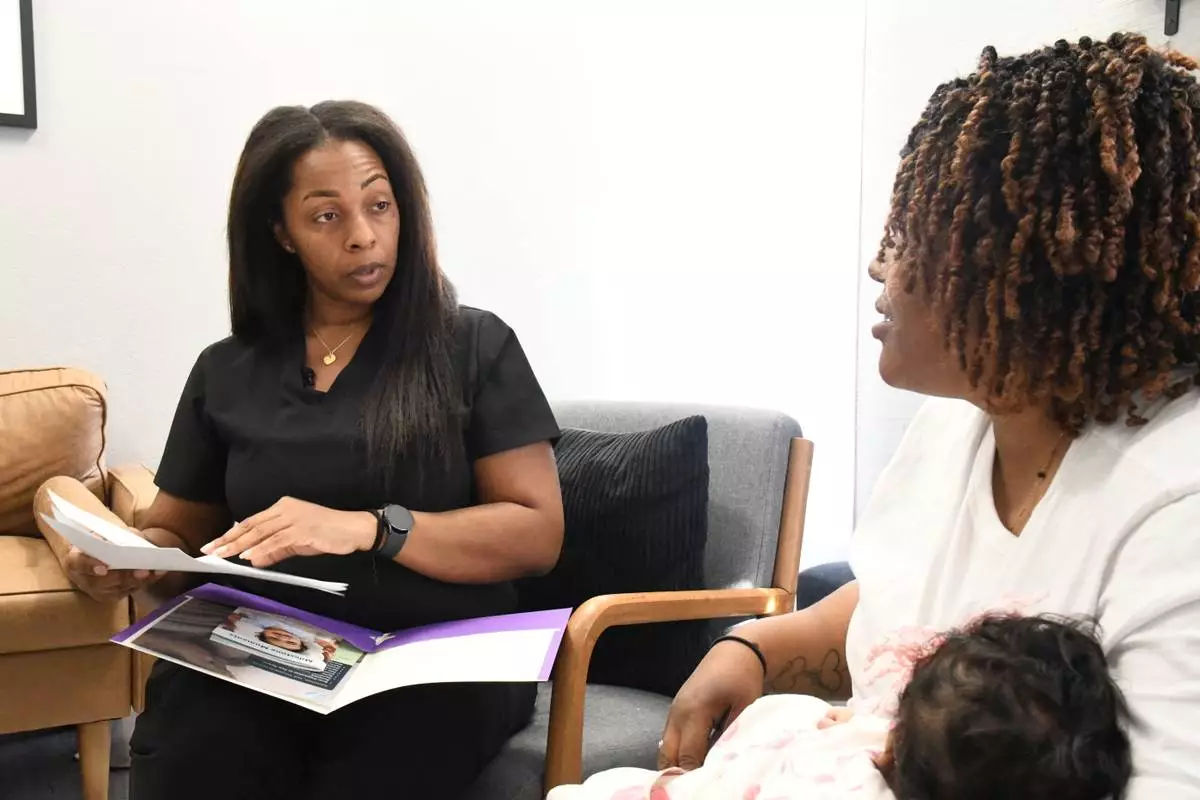
Doula Shanille Bowens speaks to Mary Bey during an appointment on Feb. 28, 2026, in Memphis, Tenn. (AP Photo/Kristin M. Hall)
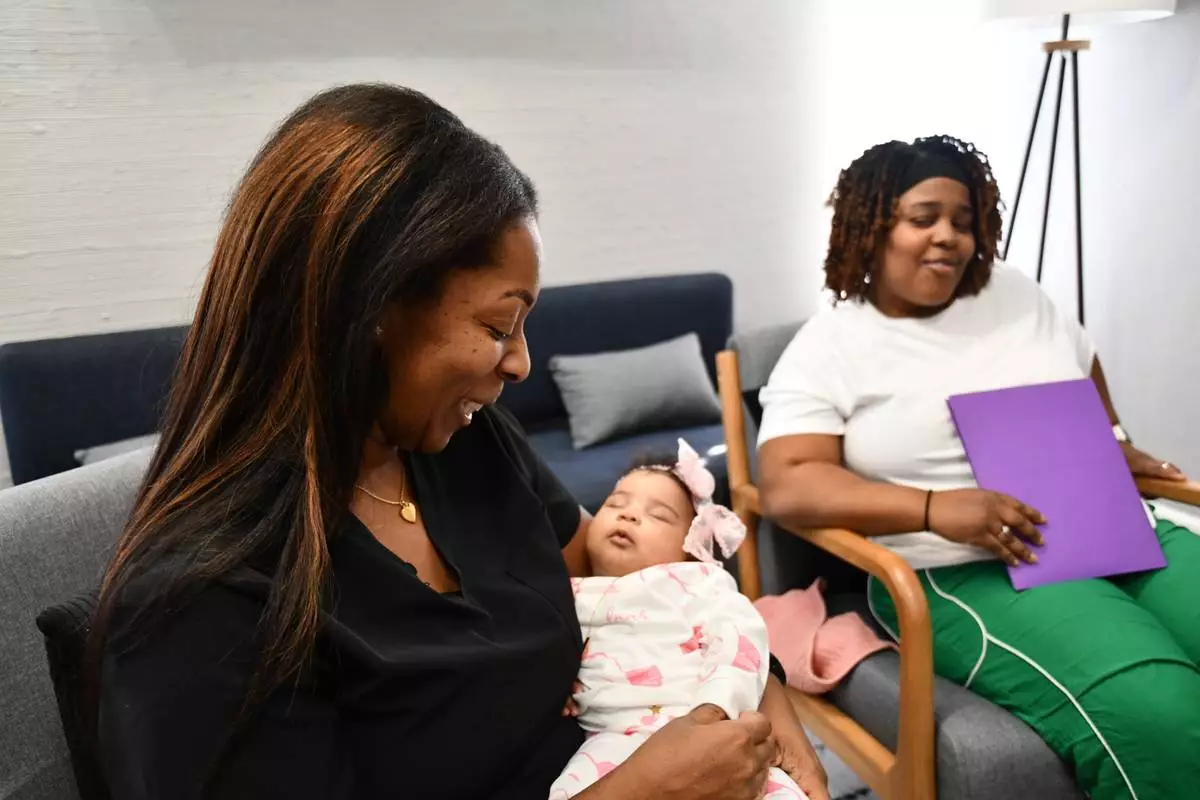
Mary Bey looks on while doula Shanille Bowens holds Bey's daughter, Ca'Mya, during an appointment on Feb. 28, 2026, in Memphis, Tenn. (AP Photo/Kristin M. Hall)
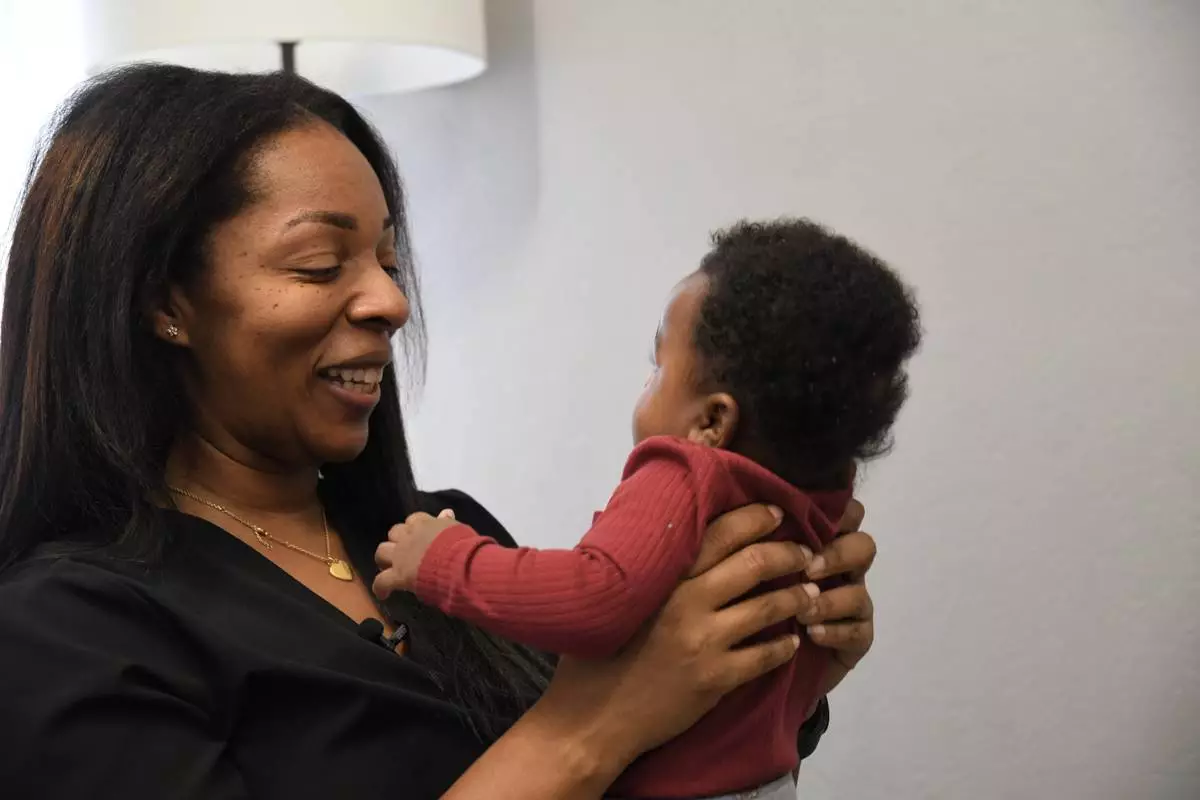
Shanille Bowens, a doula, smiles at Isaiah Stewart during an appointment on Feb. 28, 2026, in Memphis, Tenn. (AP Photo/Kristin M. Hall)