PITTSBURGH (AP) — The Pittsburgh Penguins will have to try to keep their playoff push going without franchise icons Sidney Crosby and Evgeni Malkin.
Coach Dan Muse says both players are “day to day” with injuries and will sit out Saturday's game against Dallas.
Crosby sustained a lower-body injury in the first period of a 4-3 shootout victory in Ottawa on Thursday. The 38-year-old Crosby missed about a month recently after suffering a lower-body injury while playing for Team Canada at the Milan Cortina Olympics.
Malkin will miss a third straight contest while dealing with an upper-body injury that came to light following a loss to Carolina on March 22.
Pittsburgh entered Saturday in second place in the Metropolitan Division standings with a narrow one-point lead over both Columbus and the New York Islanders with 10 games remaining.
The injuries come during a very busy stretch for the Penguins, who play at the Islanders on Monday, then host the Detroit Red Wings on Tuesday. Pittsburgh is trying to return to the postseason for the first time since 2022.
AP NHL: https://apnews.com/hub/NHL

Pittsburgh Penguins center Evgeni Malkin waits for play to resume in the second period of an NHL hockey game against the Colorado Avalanche Monday, March 16, 2026, in Denver. (AP Photo/David Zalubowski)

Pittsburgh Penguins' Sidney Crosby (87) looks to pass during the first period of an NHL hockey game against the Ottawa Senators in Ottawa, Ontario, Thursday, March 26, 2026. (Adrian Wyld/The Canadian Press via AP)
WASHINGTON (AP) — For several hours Friday, in the stillness before dawn, the Senate appeared to have finally figured out how to fund most of the Department of Homeland Security before it faced the longest partial shutdown in U.S. history.
Senators handed House Speaker Mike Johnson, R-La., their deal and headed for the airports, seemingly confident of success.
Then it collapsed. Spectacularly.
An incensed Johnson marched out of his office Friday afternoon. He angrily rebuked the plan that the Senate had unanimously agreed to as a “joke.”
“I have to protect the House, and I have to protect the American people,” Johnson told reporters.
It was a dramatic denunciation of a deal that his counterpart, Senate Majority Leader John Thune, R-S.D., had negotiated after weeks of effort, and was the latest abrupt turn in a funding saga that has bedeviled top Republicans for much of the year.
The collapse of the deal leaves Congress, now on a two-week spring break, with no easy way out of the impasse that has put DHS into a shutdown since mid-February. It also has exposed a rare rupture between the two Republican leaders in Congress, testing their alliances as they labor to move another set of President Donald Trump's priorities into law before the November elections.
Nothing ahead is likely to be easy.
Thune had negotiated for weeks with Democratic senators on their demands for new restrictions on the department's immigration enforcement work. Offers were traded several times. The talks moved along at a stop-start pace. Votes failed again and again.
But as Trump made it clear Thursday that he would sign an executive action to pay Transportation Security Administration workers, Thune and Democratic leader Chuck Schumer of New York settled on a deal: It would not include funding for U.S. Immigration and Customs Enforcement and for U.S. Border Patrol, and would set aside Democratic demands for new limits on the agencies.
Thune pointed out that Congress had allotted money for immigration enforcement and he told reporters that “we can get at least a lot of the government opened up again and then we’ll go from there.”
Asked if he had cleared the compromise with Johnson, Thune said the two had texted.
“I don’t know what the House will do,” the senator said early Friday as the deal came together.
But as House Republicans woke up to the news, their outrage was swift.
Rep. Nick LaLota, R-N.Y., said that on a GOP conference call that morning to discuss their path forward, a few dozen members ranging from moderates to hard-line conservatives spoke in opposition to what the Senate had done.
“The Senate chickened out,” he said. "The cowards there, only a few of them in the middle of the night with I think only three to five senators present on the floor, chickened out because they wanted to go home for two weeks. We need to raise the bar.”
The bitter split threatens to make the job for Republican leaders more difficult as they try to advance their priorities while they still have guaranteed control of both chambers. Trump has said that legislation to impose strict new proof of citizenship requirements on voting is his top priority, but there is no real path for that plan in the Senate with its 60-vote threshold for advancing legislation.
Some Republicans have pushed instead for a budget package that could potentially put some parts of the voter ID law in place. Republicans are also contemplating how to pass an expected request from the White House to fund the war with Iran that could total more than $200 billion, among other priorities.
Meanwhile, the flop of the funding deal has given Democrats another chance to pin the partial shutdown on House Republicans.
“They know this is a continuation of the shutdown because the Senate is gone,” said Massachusetts Rep. Katherine Clark, the No. 2 Democratic leader. "So they know fully well what they’re doing.”
It is not clear what the Senate will do next. A quick resumption of talks is unlikely. Negotiations ended acrimoniously on both sides, with each blaming the other for moving the goalposts along the way.
Schumer said he was proud of his caucus for “holding the line.” But Republican Sen. Susan Collins of Maine, who leads the Senate Appropriations Committee, said Democrats were “intransigent and unreasonable.”
Thune said he believed that Democrats never wanted a deal and would not vote for ICE funding under any circumstances.
“I felt like from the beginning, they just didn’t want to get to ‘yes,’” Thune said after the vote.
The dynamic left senators convinced that the deal was the only way to move past their disagreements and reopen DHS.
But House Republicans on Friday night seemed to revel in the fact they had defied the wishes of the Senate. GOP members said that they work from a perspective that is closer to the will of their constituents.
To Rep. Virginia Foxx, R-N.C., the Senate's proposal was “nothing more than unconditional surrender masquerading as a solution.” She said the House ”will not bend itself into submission by acquiescing.”
Those searching for a way out of the shutdown seemed discouraged.
"This takes two chambers to get the job done,” said Pennsylvania Rep. Brian Fitzpatrick, a moderate Republican. “Apparently, there’s not enough communication between those chambers.”
Associated Press writer Kevin Freking contributed to this report.
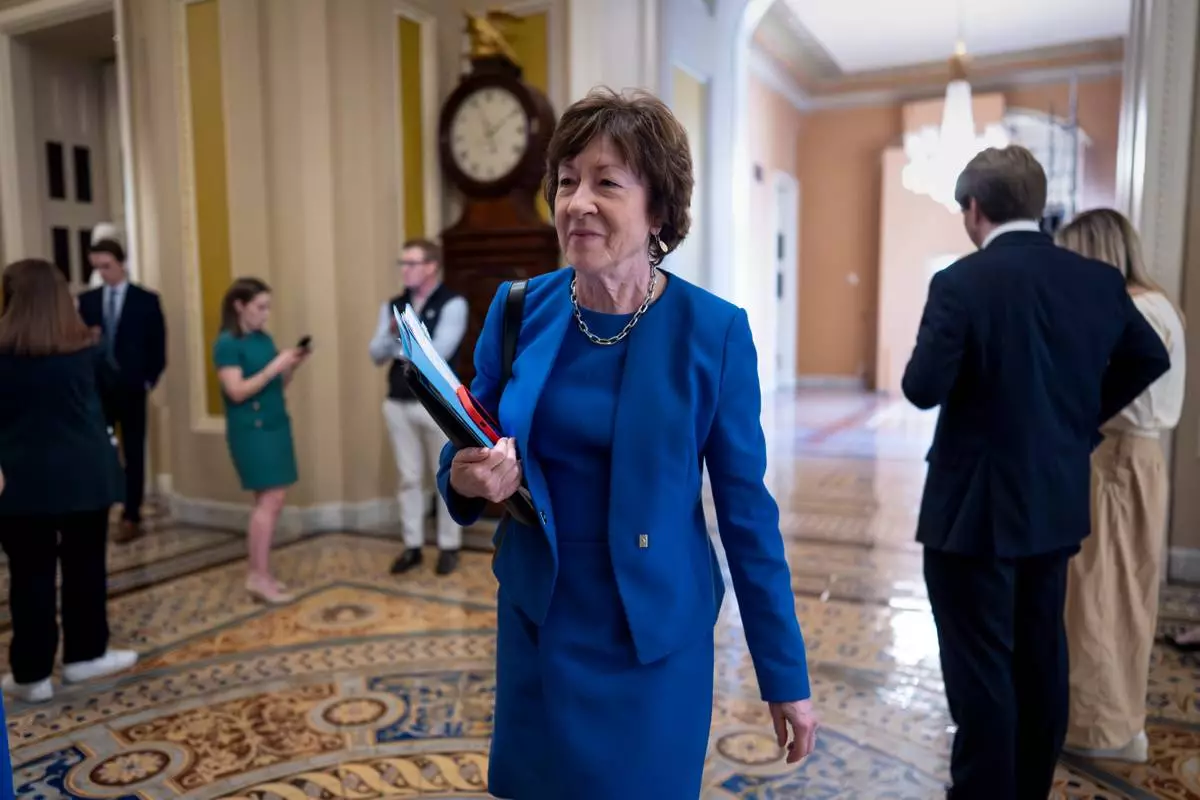
Senate Appropriations Committee Chair Susan Collins, R-Maine, walks to the chamber after meeting behind closed doors with fellow Republicans on the Homeland Security budget stalemate, at the Capitol in Washington, Thursday, March 26, 2026. (AP Photo/J. Scott Applewhite)
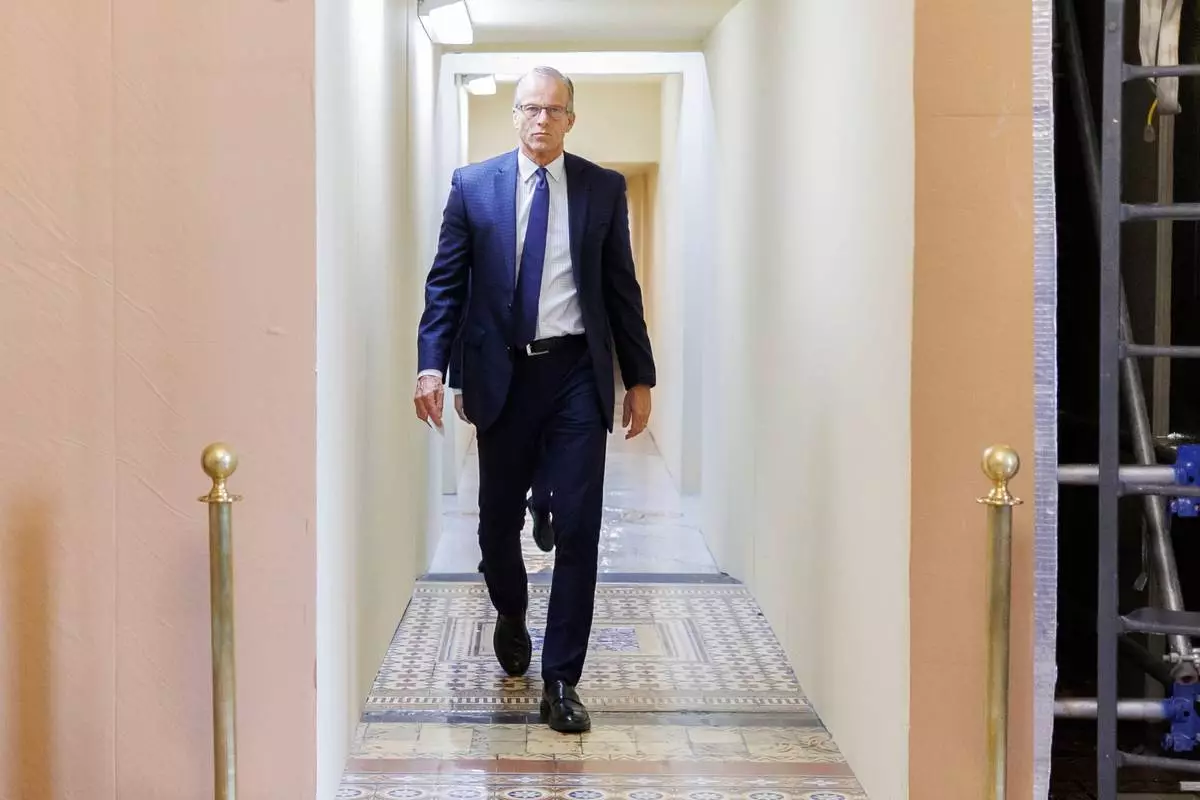
Senate Majority Leader John Thune, R-S.D., walks to the Senate Chamber ahead of a vote on Capitol Hill on Sunday, March 22, 2026, in Washington. (AP Photo/Tom Brenner)
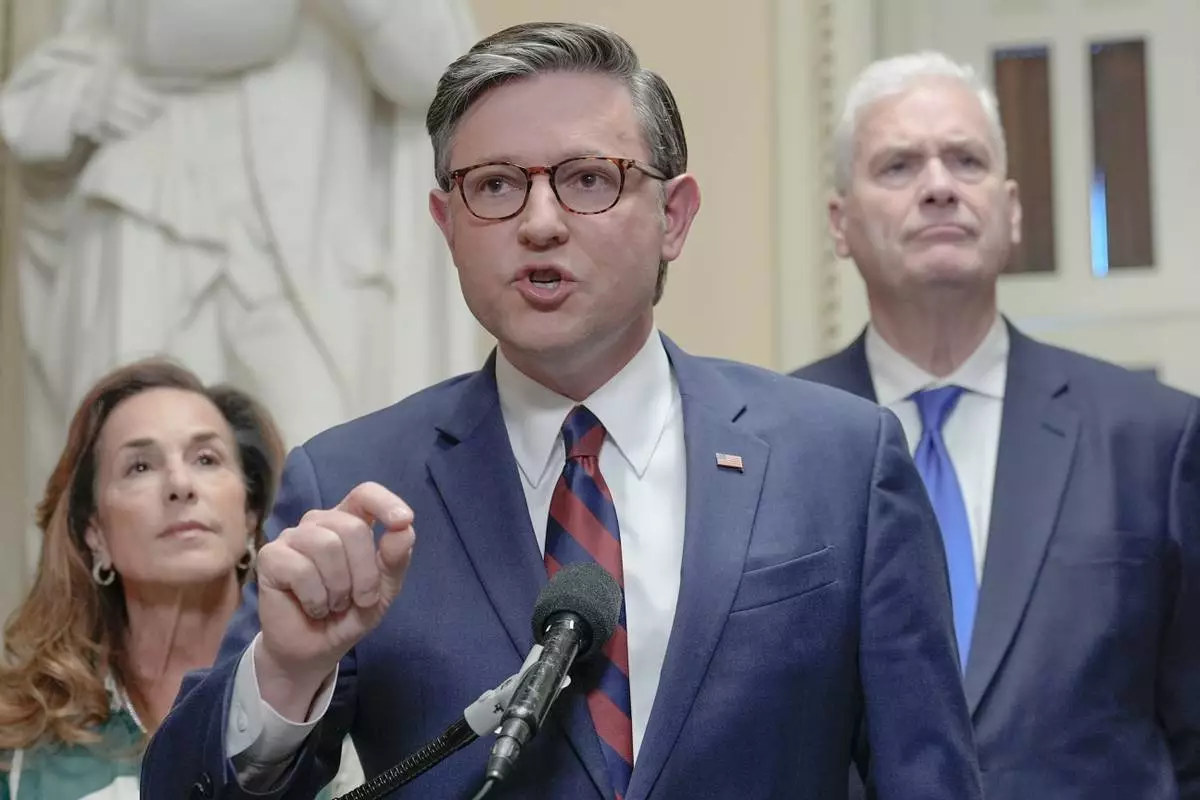
Speaker of the House Mike Johnson, R-La., center, speaks while House Majority Whip Tom Emmer R-Minn., right, and House Republican Conference Chair Lisa McClain, R-Mich., left, listen during a news conference on Capitol Hill, Friday, March 27, 2026, in Washington. (AP Photo/Mariam Zuhaib)