When an invisible entity making up 85% of the universe's mass stumps the greatest scientific minds of our time, awe is an understandable response.
Physicists call it “ dark matter, ” a substance they describe as the cosmic glue, the scaffolding, a web that uses gravity to corral, shape and hold together stars, planets and galaxies. Yet nobody knows exactly what it is.
Click to Gallery
FILE - This image provided by NASA shows two massive galaxy clusters captured by NASA's James Webb Space Telescope and Chandra X-ray Observatory in Jan. 20, 2025, with areas of possible dark matter indicated in blue. (NASA, ESA, CSA, STScI, CXC; Science: James Jee (Yonsei University, UC Davis), Sangjun Cha (Yonsei University), Kyle Finner (Caltech/IPAC) via AP, File)
FILE - This image provided by NASA shows two massive galaxy clusters captured by NASA's James Webb Space Telescope and Chandra X-ray Observatory in Jan. 20, 2025, with areas of possible dark matter indicated in blue. (NASA, ESA, CSA, STScI, CXC; Science: James Jee (Yonsei University, UC Davis), Sangjun Cha (Yonsei University), Kyle Finner (Caltech/IPAC) via AP, File)
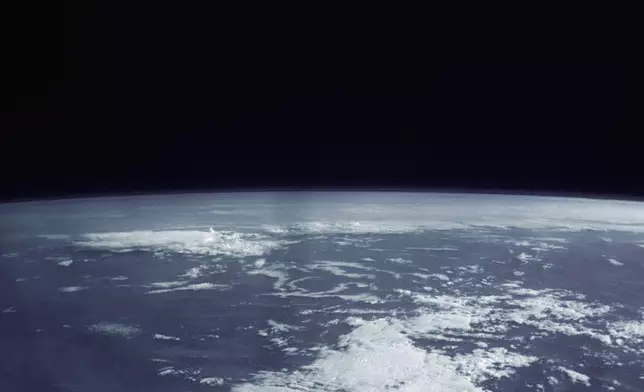
FILE - This photo provided by NASA shows the Atlantic Ocean as astronaut Leroy Gordon Cooper orbits the earth in spaceship Faith 7 on May 16, 1963. (AP Photo/NASA, File)
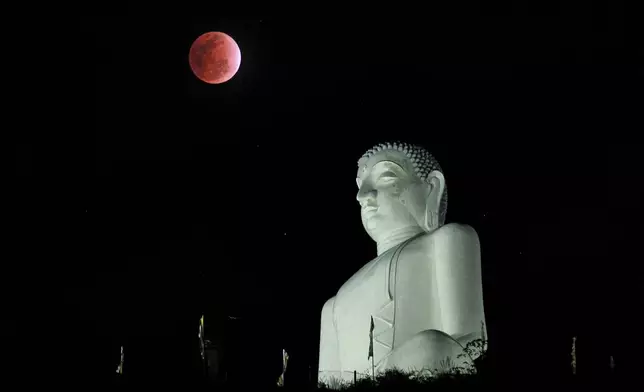
FILE - A lunar eclipse in the night sky behind a statue of the Buddha in Kurunegala, Sri Lanka, Saturday, Dec. 10, 2011. (AP Photo/ Eranga Jayawardena, File)
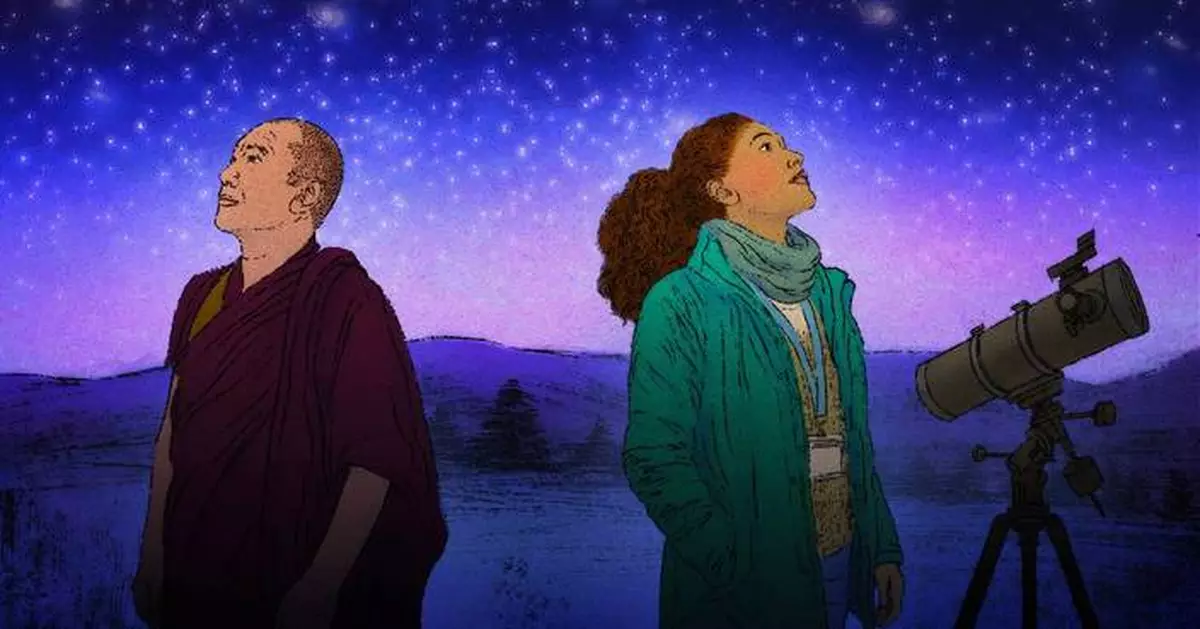
(AP Illustration / Peter Hamlin)
Dark matter's existence is only inferred from its gravitational effects on visible matter. Together with dark energy — a mysterious force causing the universe to expand at an accelerated rate — they are the biggest scientific mysteries of our time.
So it’s no surprise that dark matter and dark energy, which may hold answers to the origins and fate of the universe, have sparked profound religious and philosophical conversations — inspirational to some scientists, cringeworthy to others.
The worlds of science and faith are not as separate as they might seem. Many scientists have expressed how studying the majesty of the cosmos can be complementary rather than conflicting with their faith or spiritual practice.
Vera Rubin, an astronomer whose observations of galaxy rotation curves in the 1970s provided the first robust evidence for dark matter's existence, embraced her Jewish faith as a guide to understanding her role in the universe.
When Chanda Prescod-Weinstein met Rubin as a doctoral student in 2009, the renowned astrophysicist posed an unexpected question: “So how do you think we solve the dark matter problem?”
Prescod-Weinstein, who is an agnostic-atheist and Jewish, cites Rubin’s gracious query as a factor in deciding to study a theoretical particle called the axion, which could potentially solve the dark matter problem. Prescod-Weinstein says she draws on Reconstructionist Jewish teaching and the Torah for scientific inspiration.
“The stories in the Torah are about people who lived in a very intimate relationship with the land and with the night sky, and with a sense of all of that as a part of creation and the creation story,” she said.
It was an obsession with dark matter and dark energy that got Brittany Kamai into astrophysics. She is only the second Native Hawaiian to earn a doctorate in the field. After spending years developing the Fermilab Holometer, an instrument designed to understand what space and time are made of, Kamai returned to her spiritual roots in Hawaii as an apprentice navigator and crew member of a voyaging canoe.
Kamai trains in celestial navigation, using the stars, winds and waves to traverse the ocean without modern instruments. She wonders if the missing link in these mysteries might lie in spirituality — a quality she says many scientists dismiss.
In canoeing, Kamai says she is learning the importance of being “spiritually tuned,” seeking clues her ancestors may have left behind. She wonders if being in the deep ocean could crack the mystery of dark energy.
“When you boil down physics, it’s all a bunch of waves — particles, sound waves,” she said. “Why wouldn’t we need to be in the deepest part of our ocean to have the deepest connection to the entire universe?"
Doug Watson was beset by doubt as a postdoctoral fellow researching dark matter. When he felt burned out, his wife introduced him to the International Society for Krishna Consciousness, or ISKCON, widely known as the Hare Krishna movement, a branch of Hinduism that glorifies Lord Krishna as the Supreme Being. Watson, who used to be nonreligious, said he embraced a religious tradition that encouraged doubt, curiosity and scientific inquiry.
He studied holy texts like the Srimad Bhagavatam, which describes a scene when Krishna’s transcendental gaze animates the universe. This, to Watson, seems “eerily similar” to the observer effect in quantum mechanics — the phenomenon where the act of measuring or observing a quantum system, such as a proton or electron, changes its state.
Watson has used these stories as inspiration to overcome barriers that prompted his burnout.
“I definitely don’t think drawing direct lines between religious texts and scientific facts is the right approach,” he said. “Rather, I see how these stories could inform and inspire new ways of thinking about the origins of the universe.”
Some scientists, such as astrobiologist Adam Frank, warn that seeking sacredness in topics like dark matter might end in disappointment because science constantly evolves.
“You don’t want to base your faith or spirituality on a graph in a scientific paper that goes up or down,” he said.
For Frank, a Zen Buddhist, the true link between science and spiritual endeavor is the awe they instill.
“Whether it’s the poetry of your scripture that you love or the beauty of the equations you are deriving, they’re both calls toward that feeling,” he said.
For the faithful, acceptance that there is nothing transcendent about this world is simply impossible, said Caner Dagli, an Islamic scholar and religious studies professor at the College of the Holy Cross in Massachusetts.
"Transhumanists and other philosophers might think that if we just had enough computing power, we might be able to get the equations to really understand the universe completely,” he said. “But that’s off the table for Muslims because we believe God intervenes in history, he answers prayer.”
Chris Impey, professor of astronomy at the University of Arizona, has often visited India to teach Tibetan monks and nuns at the Dalai Lama's invitation. Being awed by a mystifying universe feels like a spiritual experience, he says.
Impey, an agnostic, has found many aspects of Buddhism compatible with modern cosmology.
“They can accommodate in their tradition an ancient universe, billions of years old,” he said. “They can accommodate many worlds, life in other worlds, life more advanced than us.”
Adam Hincks, a Jesuit priest who teaches at the University of Toronto and serves as an adjunct scholar at the Vatican Observatory, believes that for some, contemplating dark matter and dark energy could elevate their minds to God.
“There are also other things in the universe that for some, would be a similar conduit, such as a beautiful waterfall,” he said. “As the creator, God is present in all of creation, and contemplating creation is a portal to contemplating the divine.”
Australian astrophysicist Ken Freeman is considered a “dark matter pioneer” primarily for his landmark 1970 research that provided some of the first modern evidence of invisible mass in spiral galaxies. Freeman is Christian; like many scientists before him, he wonders about the role of intuition in scientific discovery.
“You wake up in the middle of the night with a thought and you have no idea where that came from,” he said. “People of faith might look at it as the action of the Holy Spirit.”
Was his urge to study dark matter the Holy Spirit's work?
“I would not paint it that way, but it’s a nagging possibility,” he said.
Jennifer Wiseman, a Christian astrophysicist, draws on her faith for wisdom as she investigates the big, enigmatic questions of the universe and ponders using scientific progress to serve humanity.
“Studying the deep universe may make us feel insignificant,” Wiseman said. “But it also gives us a sense of unity that we’re all on the same planet. ... The hope is we get a sense of joy, humility and love from these contemplations.”
Associated Press religion coverage receives support through the AP’s collaboration with The Conversation US, with funding from Lilly Endowment Inc. The AP is solely responsible for this content.

FILE - This image provided by NASA shows two massive galaxy clusters captured by NASA's James Webb Space Telescope and Chandra X-ray Observatory in Jan. 20, 2025, with areas of possible dark matter indicated in blue. (NASA, ESA, CSA, STScI, CXC; Science: James Jee (Yonsei University, UC Davis), Sangjun Cha (Yonsei University), Kyle Finner (Caltech/IPAC) via AP, File)
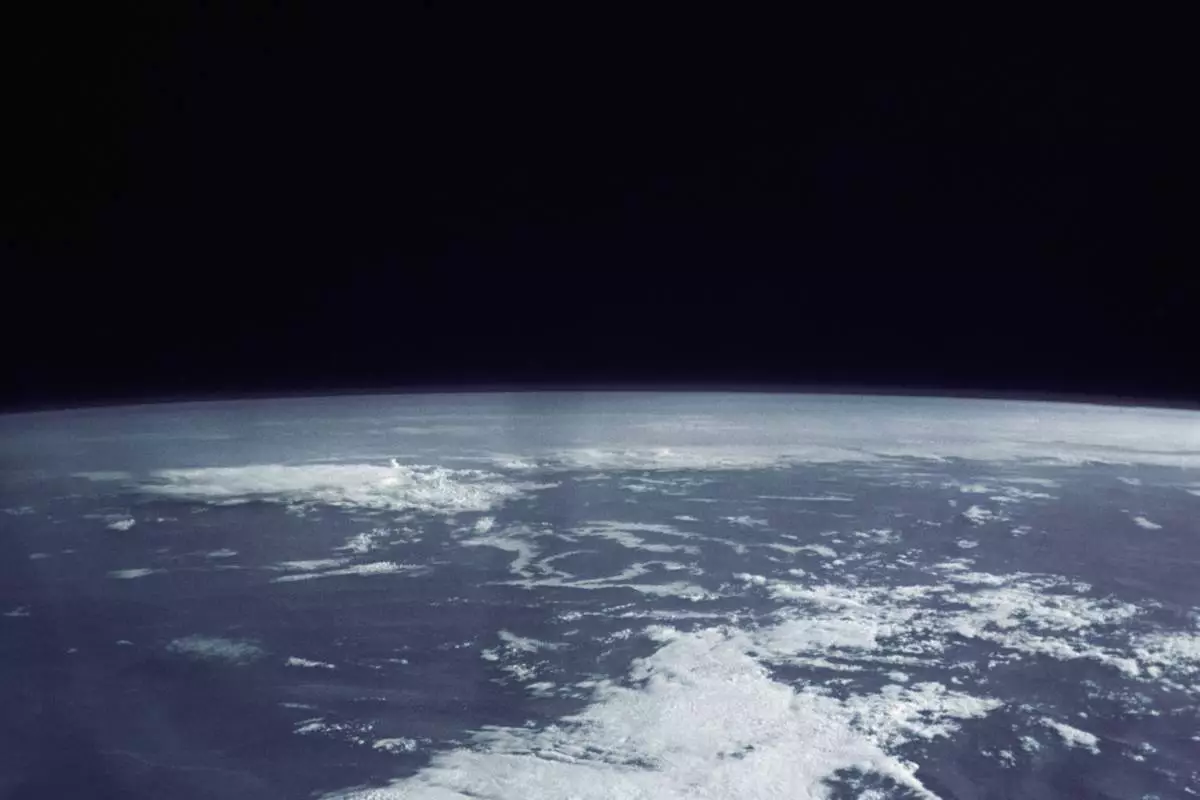
FILE - This photo provided by NASA shows the Atlantic Ocean as astronaut Leroy Gordon Cooper orbits the earth in spaceship Faith 7 on May 16, 1963. (AP Photo/NASA, File)
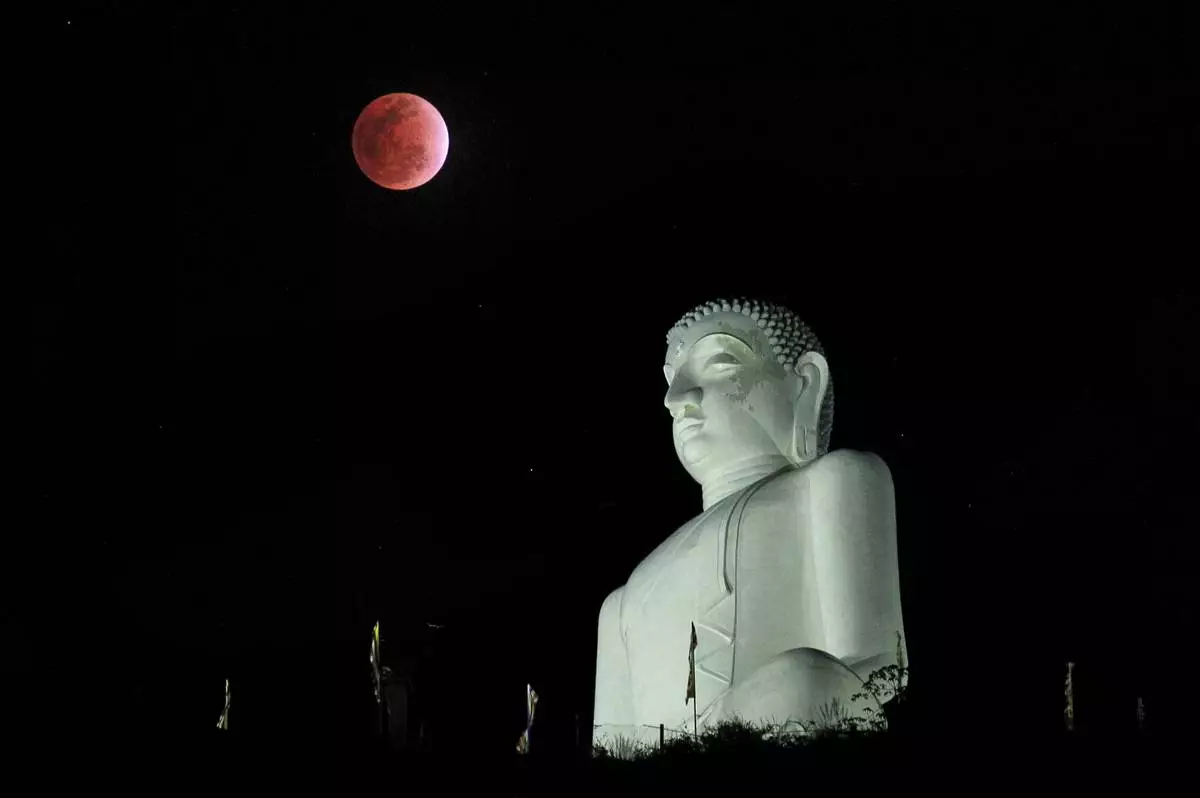
FILE - A lunar eclipse in the night sky behind a statue of the Buddha in Kurunegala, Sri Lanka, Saturday, Dec. 10, 2011. (AP Photo/ Eranga Jayawardena, File)
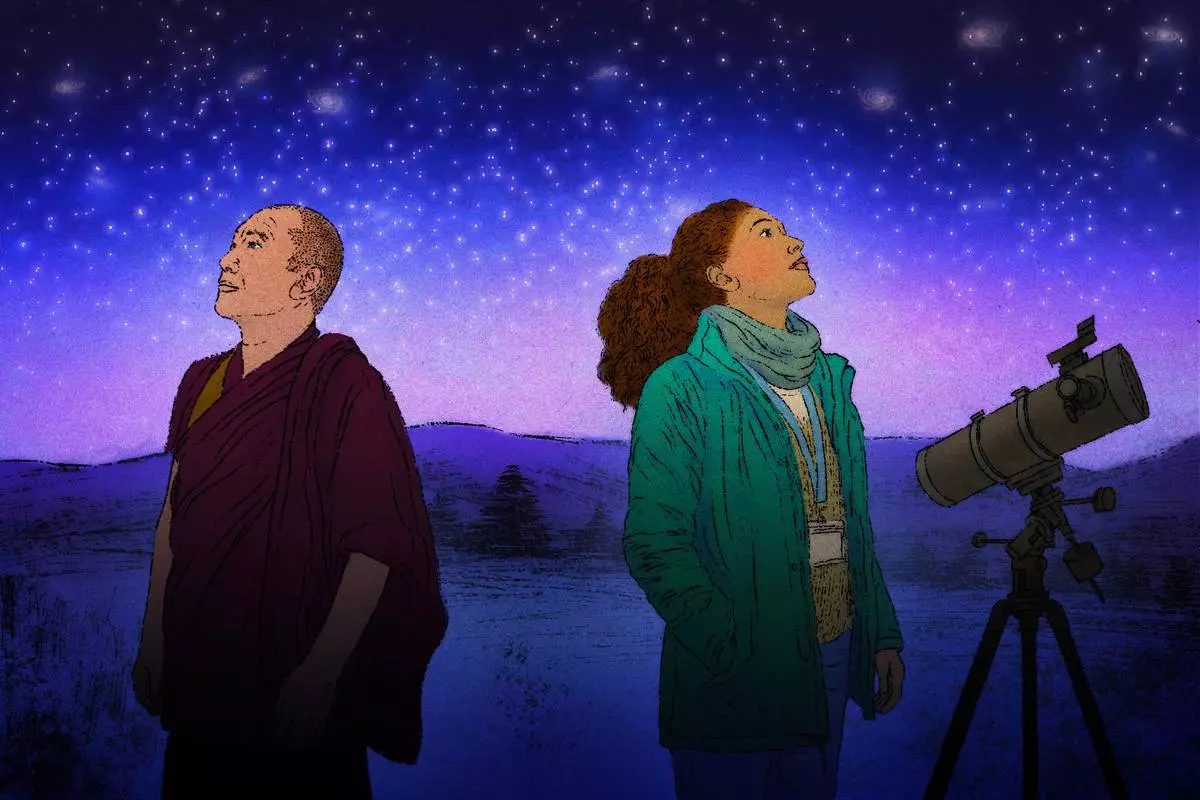
(AP Illustration / Peter Hamlin)
Leftist incumbent Luiz Inácio Lula da Silva defeated Sen. Flávio Bolsonaro, a far-right ally of U.S. President Donald Trump, and was reelected to a fourth term in Brazil's presidential runoff Sunday.
With 100% of the vote counted, Brazil’s electoral court said Lula held an unassailable lead. The announcement capped an evening of chaos at polling places following a last-minute decision to extend voting by two hours. That decision by a Supreme Court justice may trigger legal action by Bolsonaro.
The son of imprisoned former President Jair Bolsonaro bested Lula by more than 2.2 million votes in the first round of voting earlier this month. More than 33 million of the nearly 160 million registered voters did not turn out.
The difference between the two candidates was stark. Bolsonaro and Lula have opposing ideological views on issues ranging from U.S.-Brazil relations and climate change to social welfare.
Here's the latest:
Lula and his wife celebrate with cake
A video published by his campaign shows Lula celebrating with first lady Rosângela da Silva and allies after his runoff victory was confirmed by Brazil’s electoral court. Wearing star-shaped red glasses, he kissed his wife as a small cake appeared on a table. Lula will turn 81 on Tuesday.
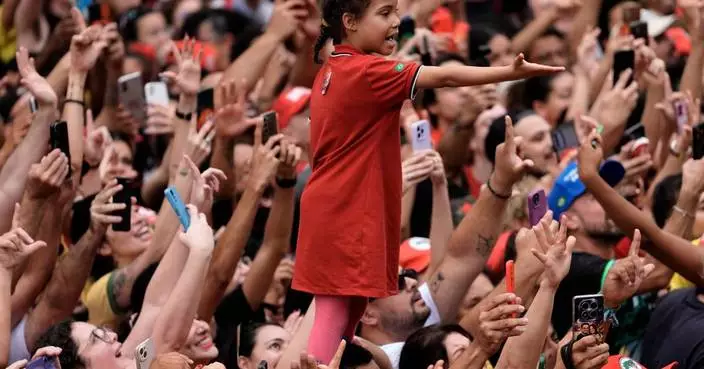
Meanwhile hundreds of his supporters are arriving on Paulista Avenue, São Paulo’s main artery, to kick off celebrations into the night. Some supporters of Flávio Bolsonaro are nearby, which caused police to go to the region.
In Copacabana, two bars facing each other on a busy road filled with supporters of the opposing candidates watching the results.
As it became apparent the night was going in Lula’s favor, Bolsonaro supporters paid the bill and left the bar shaking their heads, as cries of “Olé olé olé ola Lula” rang out and supporters of the incumbent shouted and jumped around in joy.
Rodrigo Valentim, a 51-year-old businessman, said another Lula government would harm the economy.
“I don’t understand how people can vote for Lula,” he said. “The country is collapsing.”
A few meters away, Raquel Costa, who owns a small business, said she felt relief at Lula’s victory.
“Winning always feels good, but this isn’t about winning just for winning. This is about increased social justice, about how we look at ourselves and at the future,” she said.
Brazil’s President Luiz Inácio Lula da Silva was reelected Sunday in a result that provides relief to critics of U.S. President Donald Trump and keeps some distance between Latin America’s biggest economy and Washington.
With 100% of the vote counted, Brazil’s electoral court said the soon to be 81-year-old Lula held an unassailable lead. The announcement capped an evening of chaos at polling places across Brazil, following a last-minute decision to extend voting by two hours. That decision by a Supreme Court justice may trigger legal action by opponent Flávio Bolsonaro.
His triumph bucks a trend in Latin America where increasing numbers of right-of-center presidental candidates allied with Trump have been winning, further extending the United States’ influence in the region. Lula’s victory leaves Mexico and Brazil, Latin America’s two most populous nations, with left-of-center leaders. It also positions Latin America’s largest economy, with a GDP of $2.6 trillion per year, to remain independent of the U.S., despite the pressure of increased tariffs imposed by Trump.
Brazilian Supreme Court Cristiano Zanin ruled shortly after the polls closed that voters nationwide would have another two hours to cast their ballots — at the request of both candidates.
Confusion reigned at many polling stations. Some had already shut down when the decision — made three minutes before poll close time — was relayed to them several minutes after they’d already shut down, and results were paused until the end of the two-hour window.
In Brasilia, volunteers who oversaw the vote count at a school debated whether they needed to stay after the announcement to extend voting, but most left 15 to 20 minutes after polls closed and they had given count information to electoral authorities. At a polling station in Rio de Janeiro, the voting machines had already been switched off minutes after polls were set to close and couldn’t be turned back on.
Eduardo Bolsonaro, presidential candidate Flávio Bolsonaro’s brother and a 42-year-old former lawmaker, spoke to supporters at a polling station in Miami, Florida.
“What we really need is freedom,” Eduardo Bolsonaro said, as he called for judicial reform. “Most of the people here are coming to vote to free Jair Bolsonaro ... we need to reform the judiciary, we need to free the political prisoners.”
Eduardo Bolsonaro was sentenced for lobbying to impose sanctions against members of the Brazilian government and implement higher tariffs on the country’s exports during the trial of his father, former President Jair Bolsonaro, for a coup attempt.
It is unclear whether Eduardo Bolsonaro cast a ballot. Pre-trial detainees can vote in elections, but those convicted with a final sentence cannot as their political rights are suspended.
Eduardo Bolsonaro’s trial has been finalized and earlier this month, Moraes issued a warrant for his arrest. Eduardo Bolsonaro has lived in the U.S. since 2025 and experts say it is unlikely he will be extradited.
With minutes to go before poll closing time, both presidential candidates are asking Brazil’s electoral court to extend voting hours in some cities. The request from President Luiz Inácio Lula da Silva came after issues in nine states with buses that provide transportation to polls. Flávio Bolsonaro’s is due to heavy rains in the nation’s south. Polls were expected to close nationwide at 5 p.m.
Brazilian Supreme Court Justice Kássio Nunes, who also heads the country’s electoral court, told journalists in capital Brasilia that some cities are indeed experiencing bus shortages, but did not answer whether the voting hours will be extended. He did not address Bolsonaro’s request in his comments.
While leaving the White House on Sunday, President Donald Trump declined to endorse anyone in Brazil’s presidential election. “I don’t want to get into that,” he told reporters.
But the president added that his administration was tracking the race. “We are watching,” Trump said.
Brazilian newspapers are stressing that Sunday’s runoff between Lula and Bolsonaro will be a nail-biter, though Bolsonaro’s campaign is more optimistic after recent polls.
Folha de S.Paulo cited an analysis by its own pollster to say the election result is still open, but Lula will have to see his voters increase turnout to close the 2.2 million-vote gap between the two in the first round.
Rio de Janeiro-based O Globo, owned by Brazil’s biggest media company, reported that Bolsonaro, who was handpicked by his father, former President Jair Bolsonaro, overcame initial fears in the right-wing camp that he would not be a competitive candidate because of recent corruption investigations involving him.
Brazil was sharply divided across its five main regions in the first round of the presidential election.
Flávio Bolsonaro won in three of the country’s five regions, but Luiz Inácio Lula da Silva took the second most populous by wide margins. Bolsonaro won in the populous and rich Southeast, where Sao Paulo, Rio de Janeiro and Minas Gerais states lie. They will be the key battlegrounds in Sunday's runoff.
Bolsonaro, 45, carried the agribusiness hub of the country’s Center-West and easily won in the South, which borders Uruguay and Argentina. Lula erased much of Bolsonaro’s gains by winning in the Northeast and also triumphed in the North, the region that includes the Amazon rainforest.
Luzia da Souza, who runs a bar in a middle-class neighborhood of Rio de Janeiro, is a longtime supporter of incumbent Lula and identified herself as "a Black woman from the periphery.”
“Black people’s lives greatly improved during Lula’s terms,” she said, and blamed Congress — which is largely right-wing — for the slow pace of reform.
“A president doesn’t govern on his own,” da Souza said. “But Lula is a man of the people and he knows what it’s like to be poor. I find it impossible not to vote for him.”
Anderson Falcão, a 43-year-old journalist in Brasilia who sported a red shirt in support of Lula, said he worried about Bolsonaro’s long-term political vision, which he called “exclusionary.”
“It’s a project that harms the less fortunate, harms the worker, women, the forest, the Amazon,” he said.
Brazil’s left was caught off guard when Flávio Bolsonaro bested incumbent Luiz Inácio Lula da Silva by over 2 million votes in Brazil’s first-round election.
Since then, it has made a clear bet on an unprecedented wave of digital activism and street protests to support Lula. The shift signals a turning point for the left, which has historically struggled to counter the far-right’s dominant online presence and savvy digital strategy.
Between the campaign’s launch on Aug. 16 and up to the first round, Lula and Bolsonaro had more or less the same number of interactions, according to data analytics company Bites. But since the beginning of the second round, the incumbent’s profiles received around 111 million interactions against Bolsonaro’s 31 million, it said.
Lula voted in the city of Sao Bernardo do Campo, where he began his political career as a union leader in the 1960s.
“I am thankful to the Brazilian people. What people did to me in recent days is something I cannot repay,” he said before casting his vote and holding Brazil’s flag in front of the cameras.
He said he was still emotional about Saturday’s demonstration of support from voters in São Paulo. “I don’t think Paulista Avenue had so many people in any political event.”
“It is a lot of generosity, a lot of care, a lot of love. I will be forever grateful,” Lula said.
First lady Rosângela da Silva, Vice President Geraldo Alckmin and other allies accompanied Lula to the polling station.
Voting is mandatory for literate Brazilians aged 18 to 70. But that has never been a real consideration for nonvoters, who must either submit a formal justification online or at a polling station, or pay a small fine of less than $1.
More than 33 million people did not vote in the first round of the elections on Oct. 4. Some of those were hospitalized, living overseas or working outside their voting areas. And others just chose not to.
Unexcused absences in three consecutive elections freeze tax IDs, block nonvoters from applying to state jobs, hinders loans from state banks, and delays the issuance of passports. For those who don’t want to choose a candidate even when they show up, they can cast blank or null votes.
Fabianne Borges Santoro, a 45-year-old physiotherapist who lives in the neighborhood where Bolsonaro voted, said she voted for change.
“The Workers’ Party has been in power for a long time and the voice of the people is saying that we need change to see improvements in security and the cost of living,” she said, wearing a top featuring Brazil’s national colors, yellow and green. “Things are really expensive and taxes are too high.”
Santoro said she once voted for Lula’s party but now associates it with corruption, particularly after the so-called Operation Car Wash that started in 2014, when the Workers’ Party was in power and entangled dozens of politicians.
Roulen Azeredo, a 76-year-old army reservist, said he had always voted right. He also echoed the desire for a shift in the country’s direction.
“The current government did nothing,” said Azeredo, who hopes Jair Bolsonaro, who is currently serving a 27-year sentence for attempting a coup, will be freed if the former president’s eldest son wins. “His imprisonment is a disgrace.”
Presidential candidate Flávio Bolsonaro voted at a local school in Rio de Janeiro just after 8 a.m., accompanied by his wife, Fernanda Bolsonaro. Wearing a light yellow shirt, he smiled and waved to supporters waiting to see him in the rain.
“The time of real change has arrived,” Bolsonaro told journalists. “Brazil can’t go on another four years on its current trajectory.”
As Bolsonaro voted, supporters of the opposition candidate shouted “Lula, thief, your place is in prison,” while fans of the incumbent responded with clapping and the chant “Olé olé olé ola, Lula!” The two anthems are common in demonstrations.
In Brazil, voting is fully electronic — meaning votes are counted much more quickly than in some other countries.
Polls opened at 8 a.m. and will close at 5 p.m. Brasilia time (2000 GMT) in most of the country.
On the ballot: the presidential face-off between Lula and Bolsonaro and six gubernatorial races. Votes are tallied quickly because each ballot box calculates results locally and prints a paper summary. The encrypted data is transmitted via secure networks to the nation’s top electoral court in capital Brasilia, which aggregates and publishes the counts within hours.
The system has been in place since the 1990s with few questioning its efficiency. One of its critics is former President Bolsonaro.
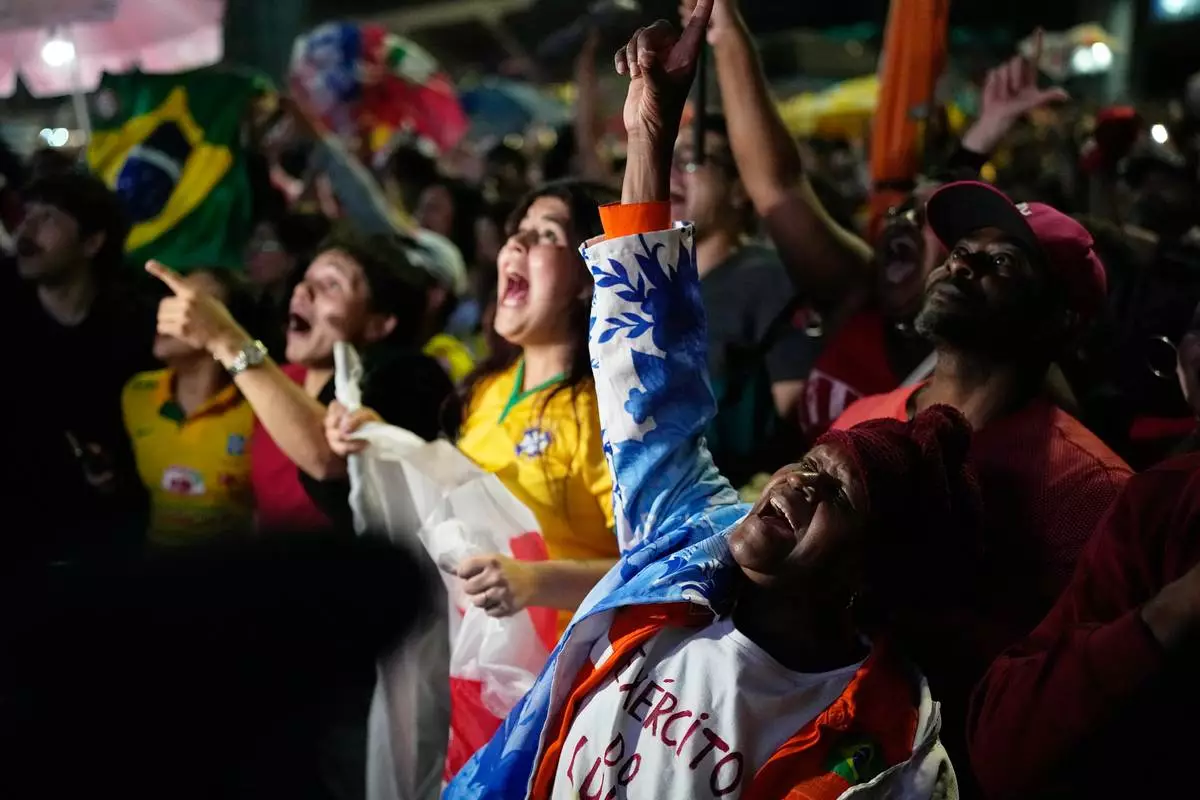
Supporters of President Luiz Inacio Lula da Silva, who is seeking reelection, cheer as presidential runoff results are announced in Sao Paulo, Sunday, Oct. 25, 2026. (AP Photo/Natacha Pisarenko)
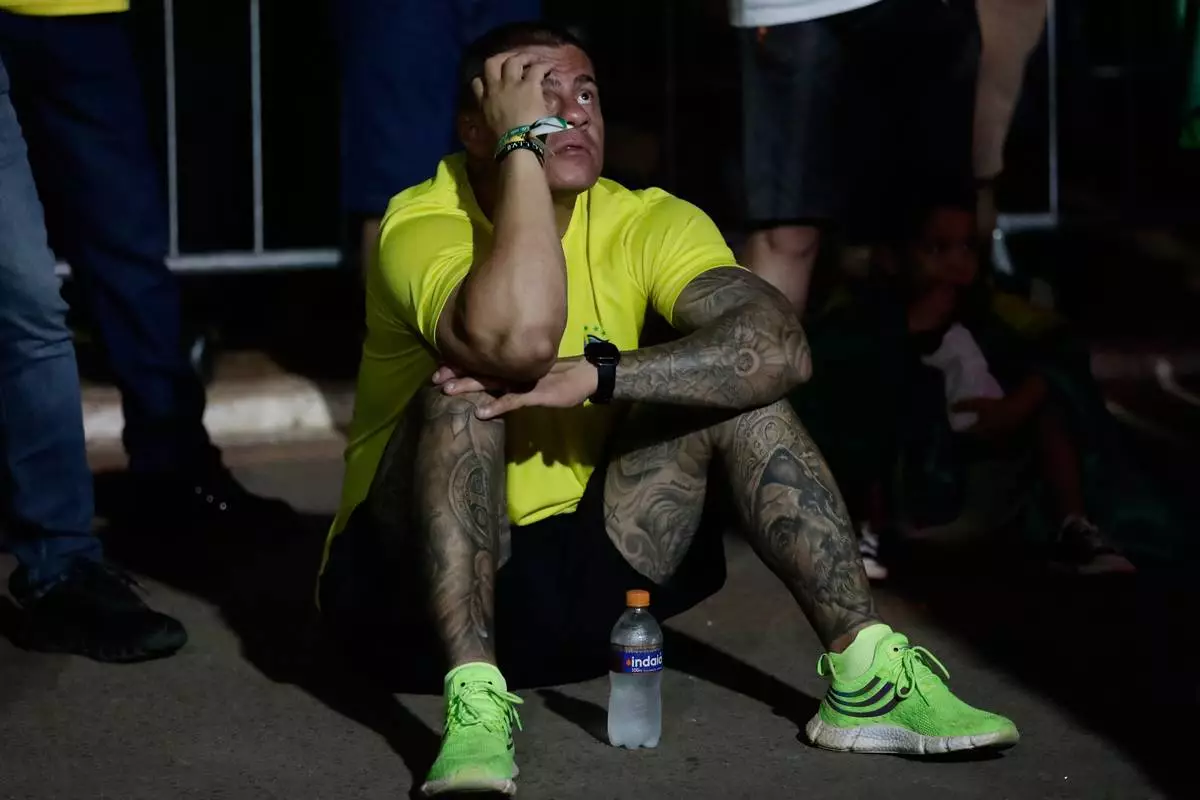
Supporters of opposition presidential candidate Sen. Flavio Bolsonaro react to presidential runoff results in Brasilia, Sunday, Oct. 25, 2026. (AP Photo/Bruna Prado)
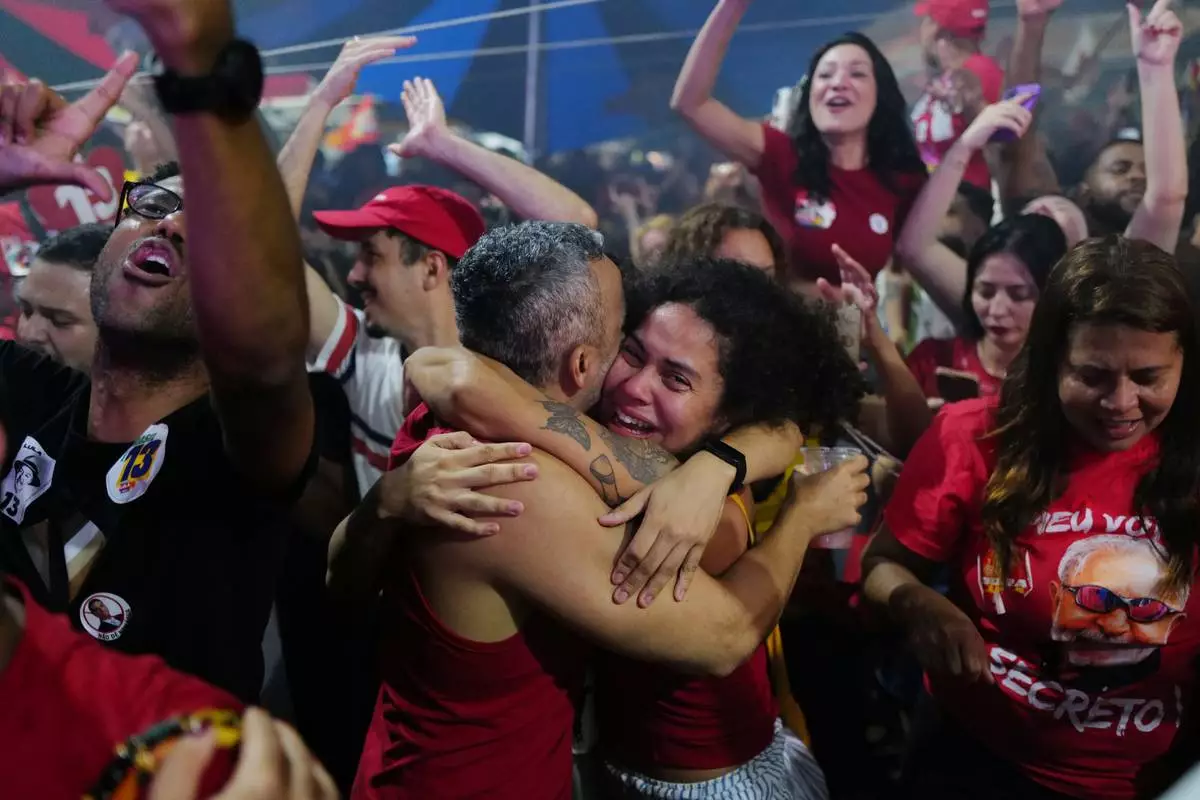
Supporters of President Luiz Inacio Lula da Silva celebrate after he won the presidential runoff in Rio de Janeiro, Sunday, Oct. 25, 2026. (AP Photo/Lucas Landau)
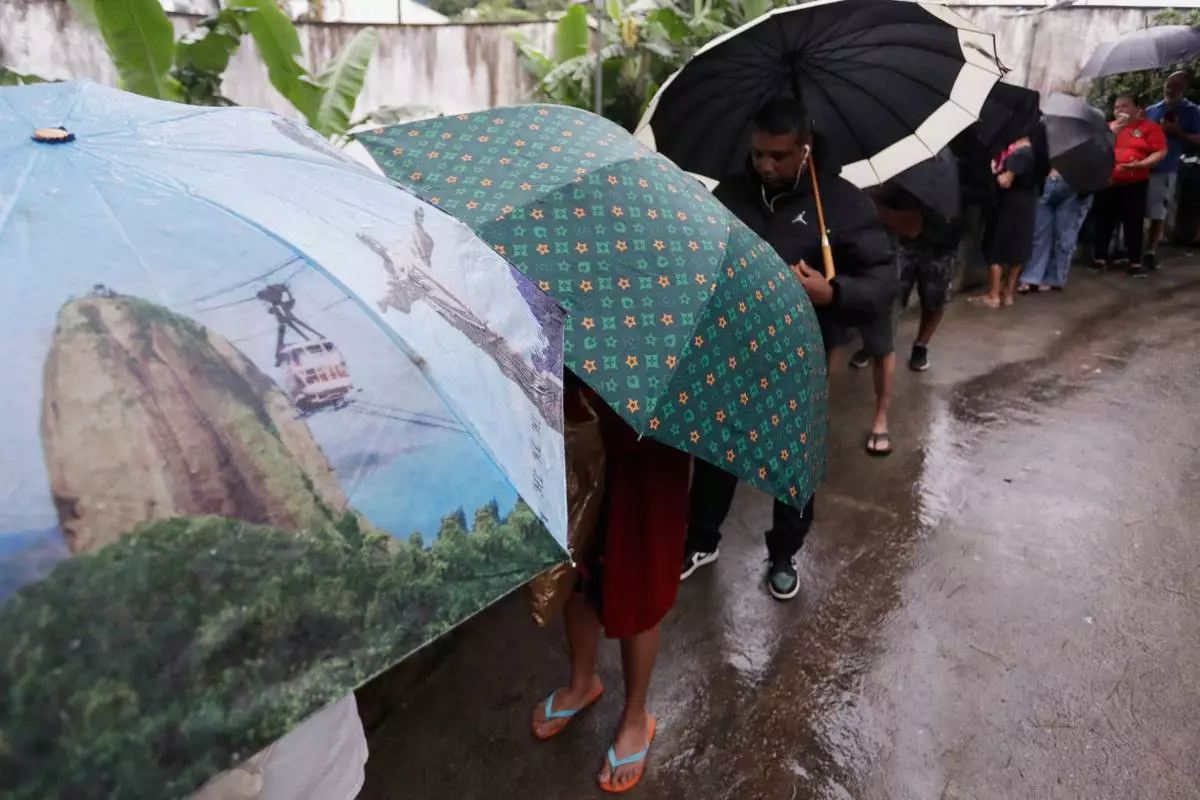
Voters line up to enter a polling station during the presidential runoff in the Rocinha favela in Rio de Janeiro, Brazil, Sunday, Oct. 25, 2026. (AP Photo/Bruna Prado)
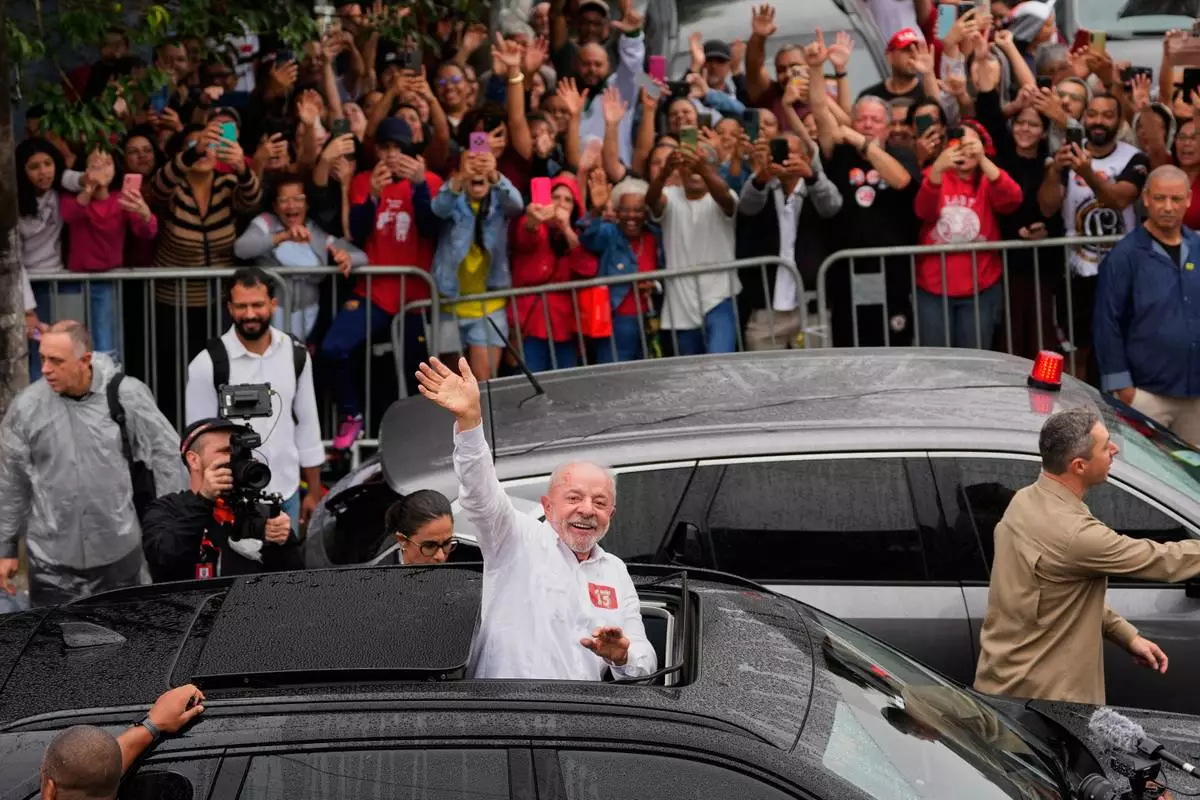
President Luiz Inacio Lula da Silva, who is seeking reelection, waves after voting in the presidential runoff in Sao Bernardo do Campo, Brazil, Sunday, Oct. 25, 2026. (AP Photo/Andre Penner)
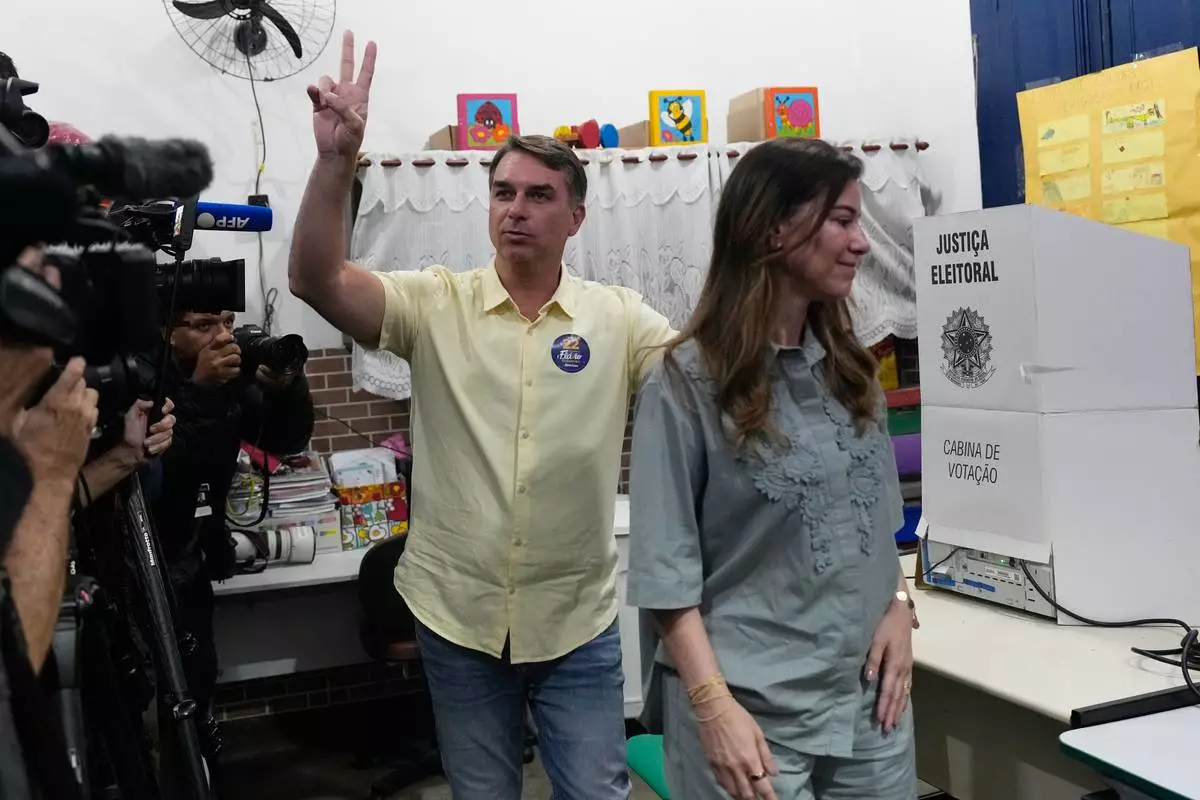
Opposition presidential candidate Sen. Flavio Bolsonaro makes the victory sign after voting in the presidential runoff in Rio de Janeiro, Sunday, Oct. 25, 2026. (AP Photo/Silvia Izquierdo)
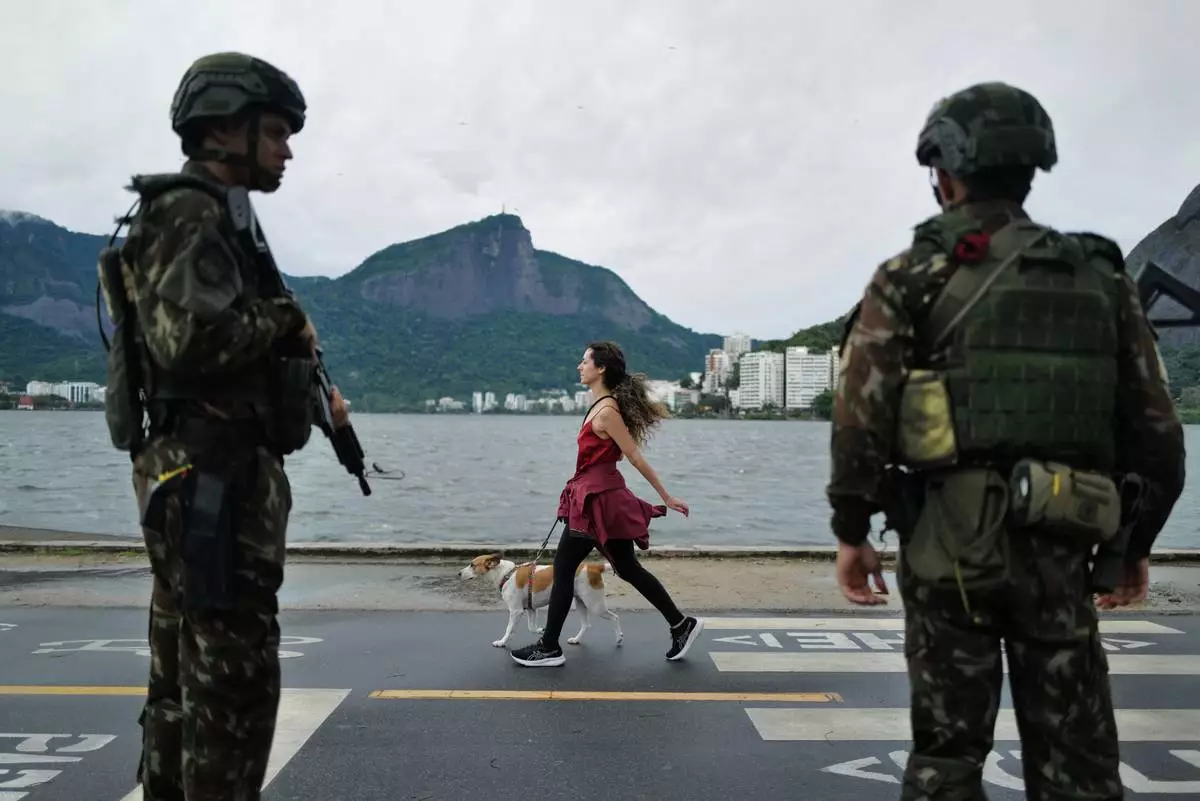
Soldiers stand guard during the presidential runoff in Rio de Janeiro, Brazil, Sunday, Oct. 25, 2026. (AP Photo/Lucas Landau)
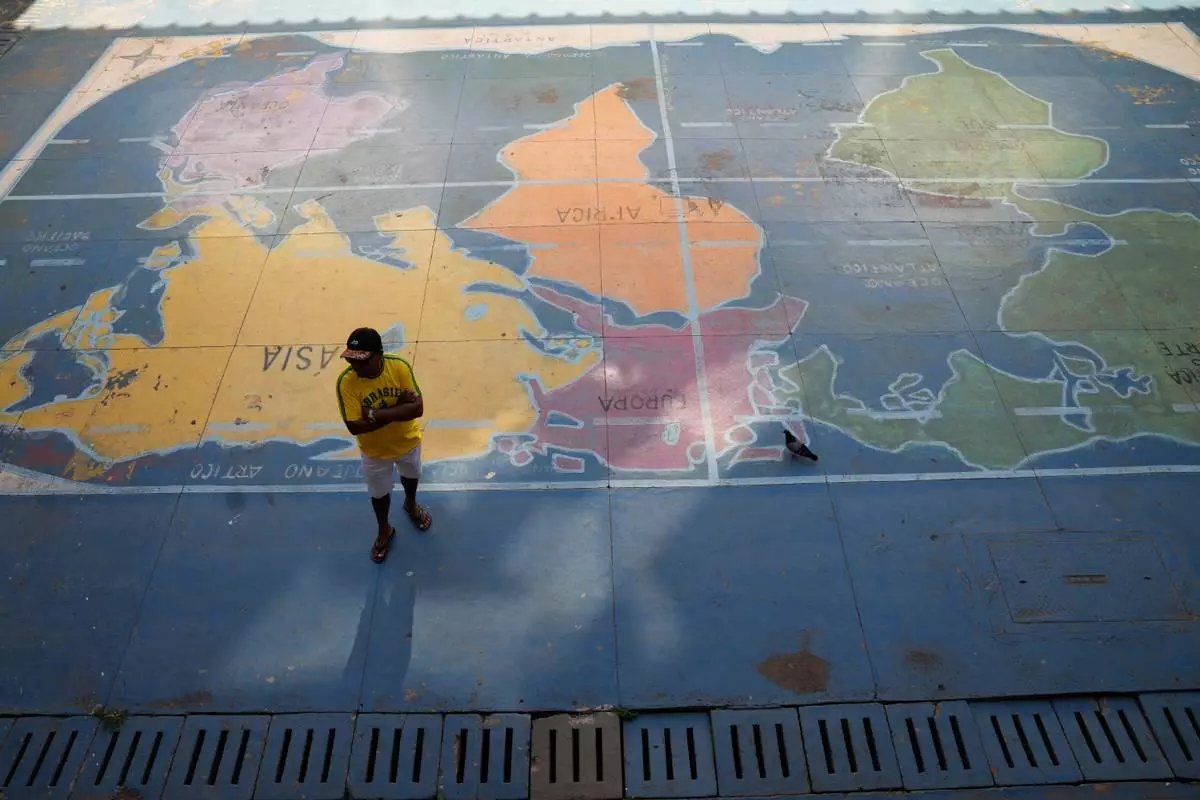
A voter stands at a polling station during a presidential runoff in Brasilia, Brazil, Sunday, Oct. 25, 2026. (AP Photo/Eraldo Peres)
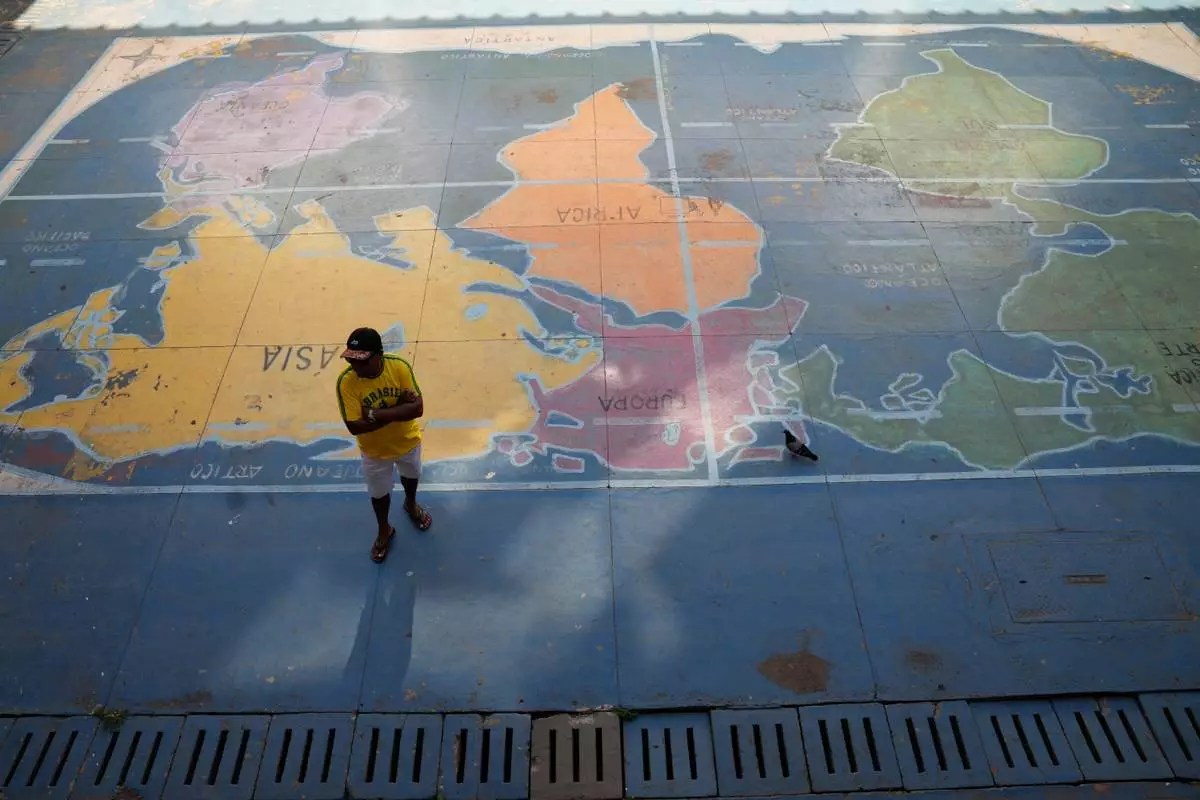
A voter stands at a polling station during a presidential runoff in Brasilia, Brazil, Sunday, Oct. 25, 2026. (AP Photo/Eraldo Peres)
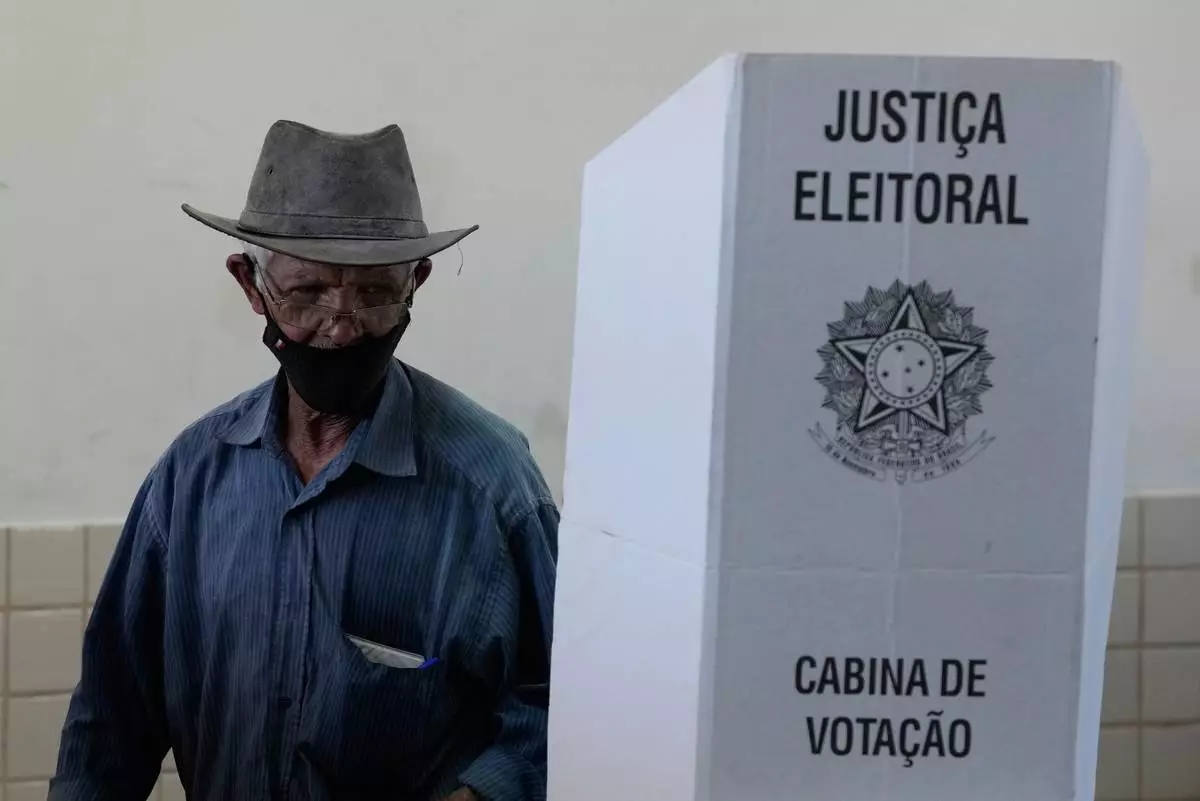
A man votes in the presidential runoff in Brasilia, Brazil, Sunday, Oct. 25, 2026. (AP Photo/Eraldo Peres)
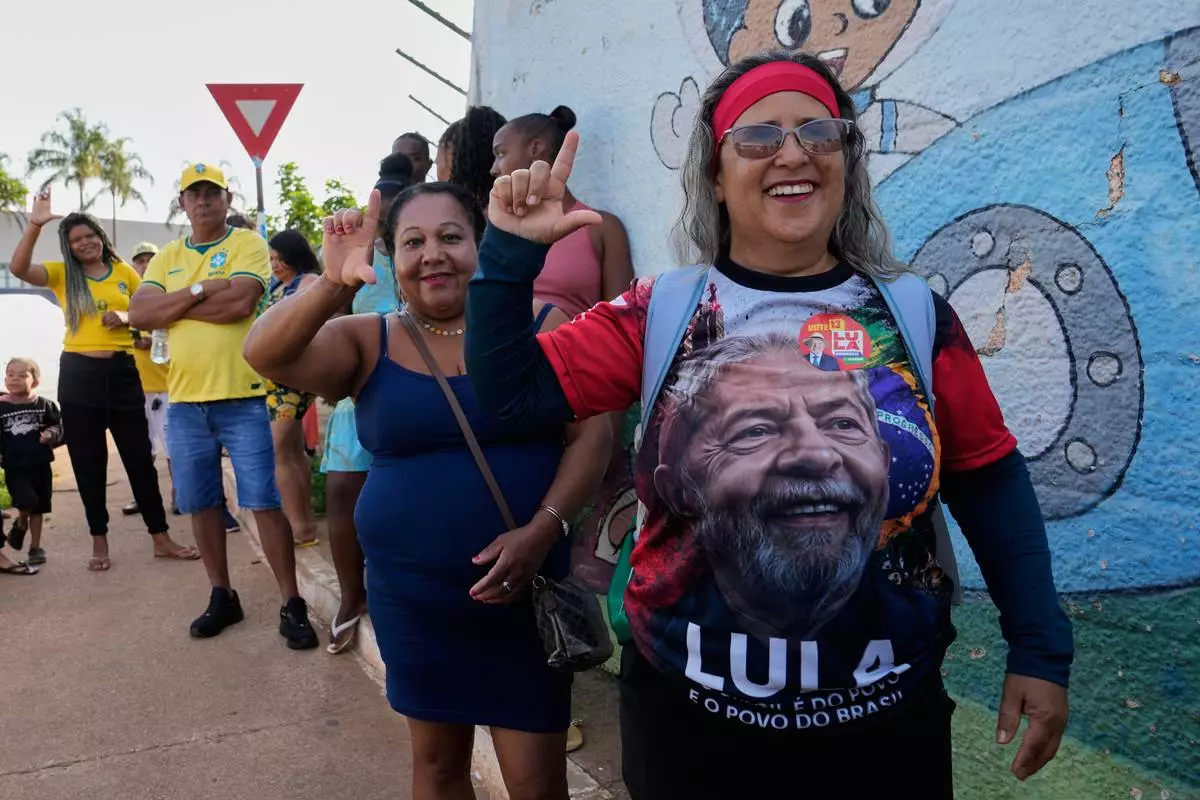
A supporter of President Luiz Inacio Lula da Silva, who is seeking reelection, lines up at a polling station during a presidential runoff in Brasilia, Brazil, Sunday, Oct. 25, 2026. (AP Photo/Eraldo Peres)
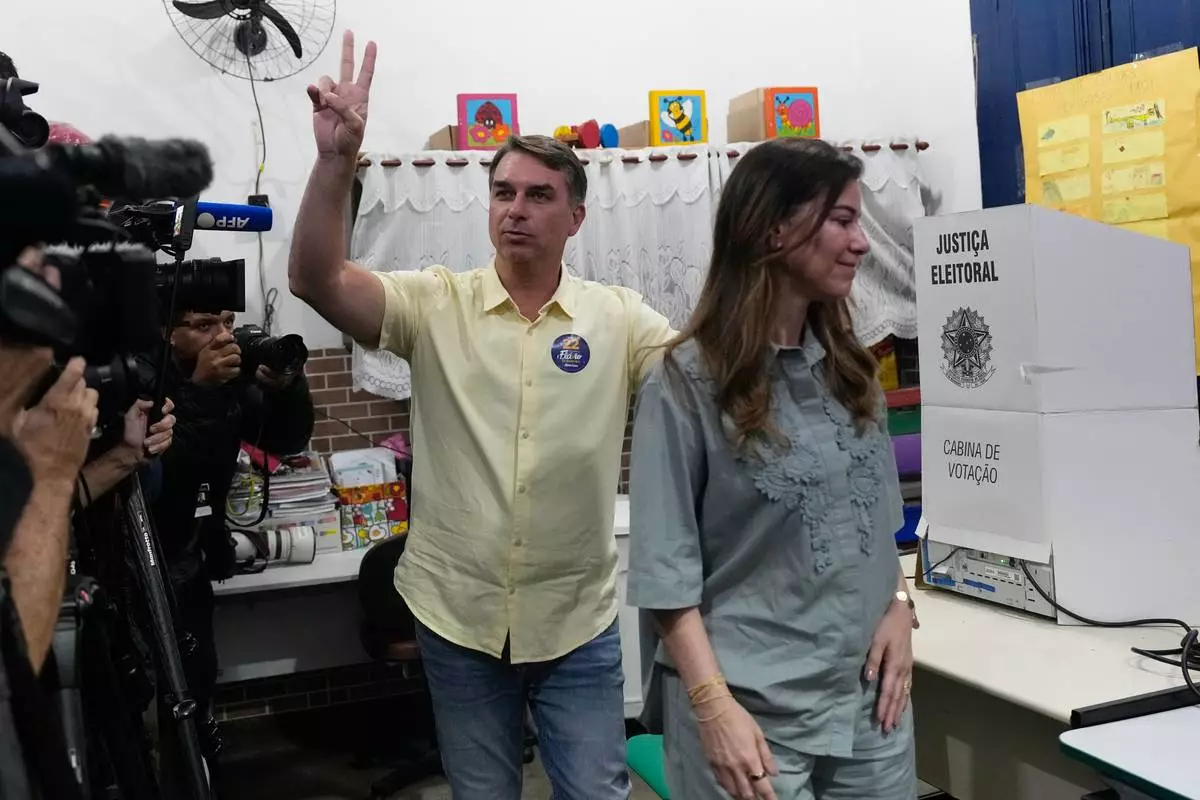
Opposition presidential candidate Sen. Flavio Bolsonaro makes the victory sign after voting in the presidential runoff in Rio de Janeiro, Sunday, Oct. 25, 2026. (AP Photo/Silvia Izquierdo)
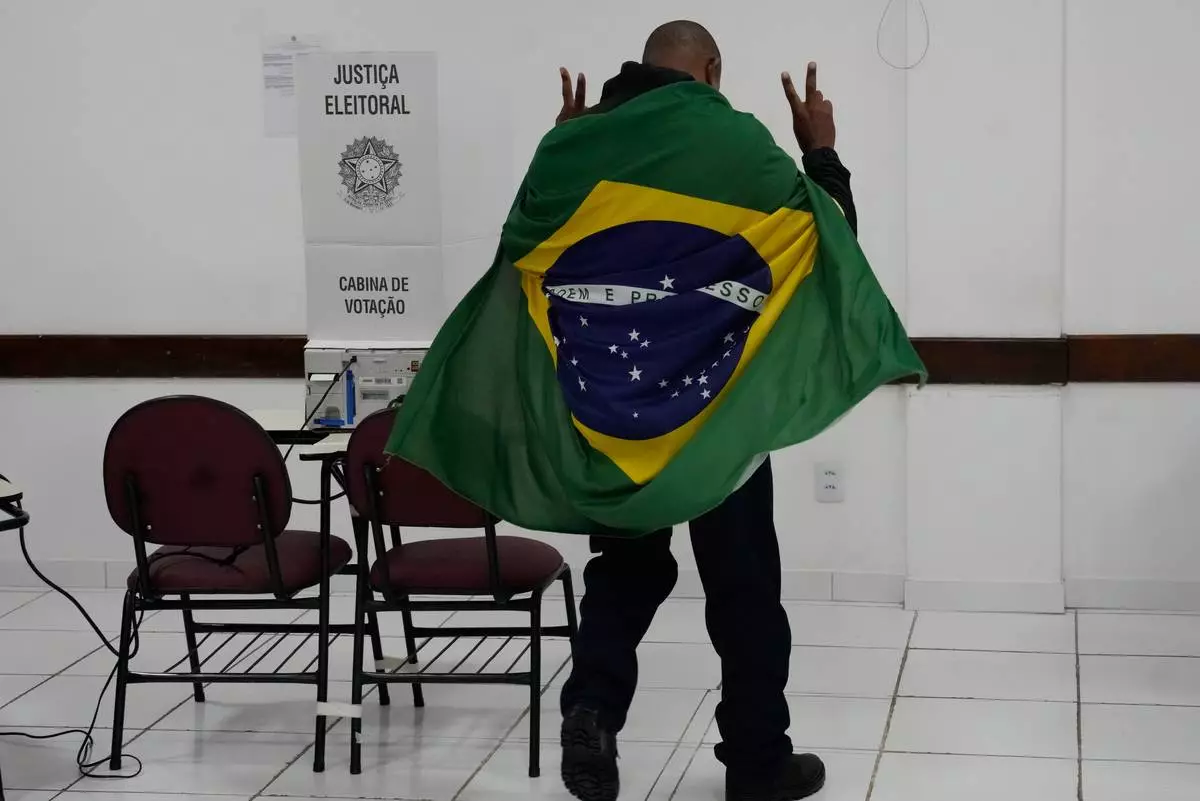
A man wrapped in a Brazilian flag arrives to vote in the presidential runoff in Brasilia, Brazil, Sunday, Oct. 25, 2026. (AP Photo/Eraldo Peres)
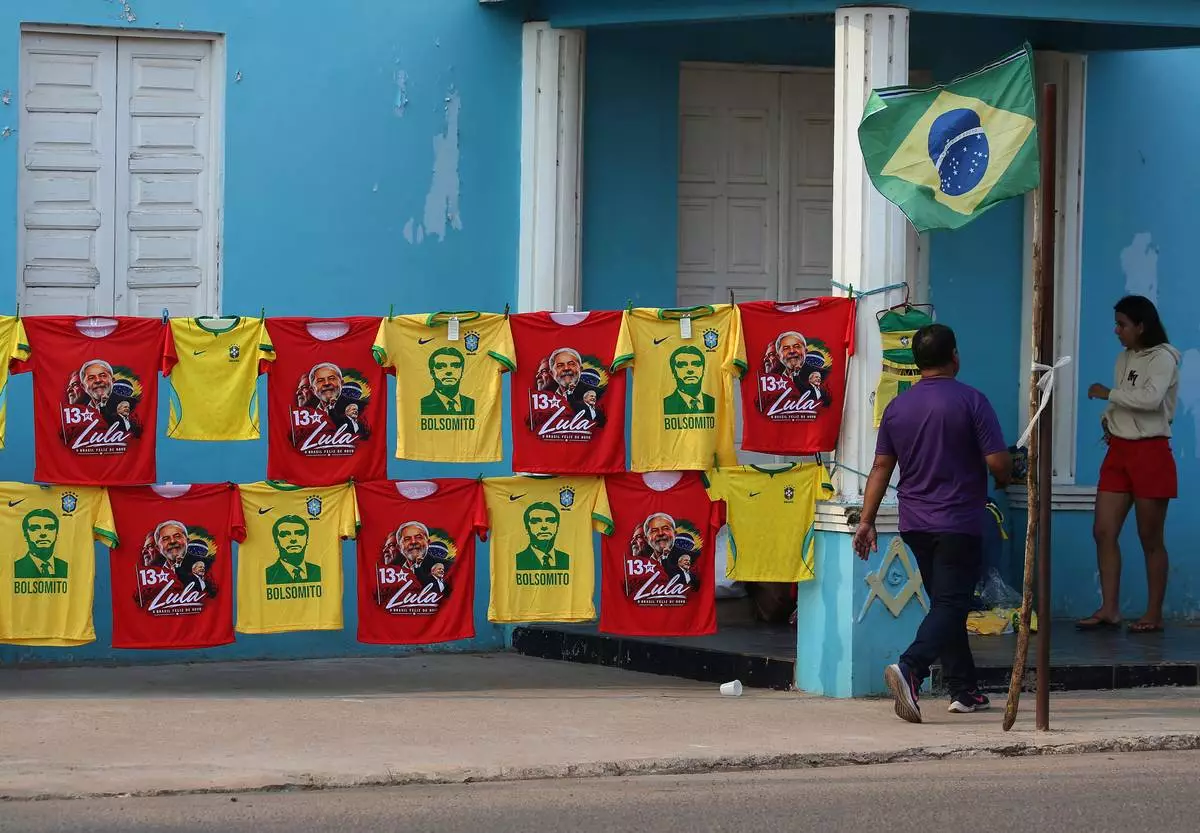
Red T-shirts depicting Brazilian President Luiz Inacio Lula da Silva, who is running for reelection, and yellow T-shirts depicting opposition presidential candidate Sen. Flavio Bolsonaro hang for sale outside a building ahead of Brazil's presidential runoff election in Autazes, Amazonas state, Brazil, Saturday, Oct. 24, 2026. (AP Photo/Edmar Barros)
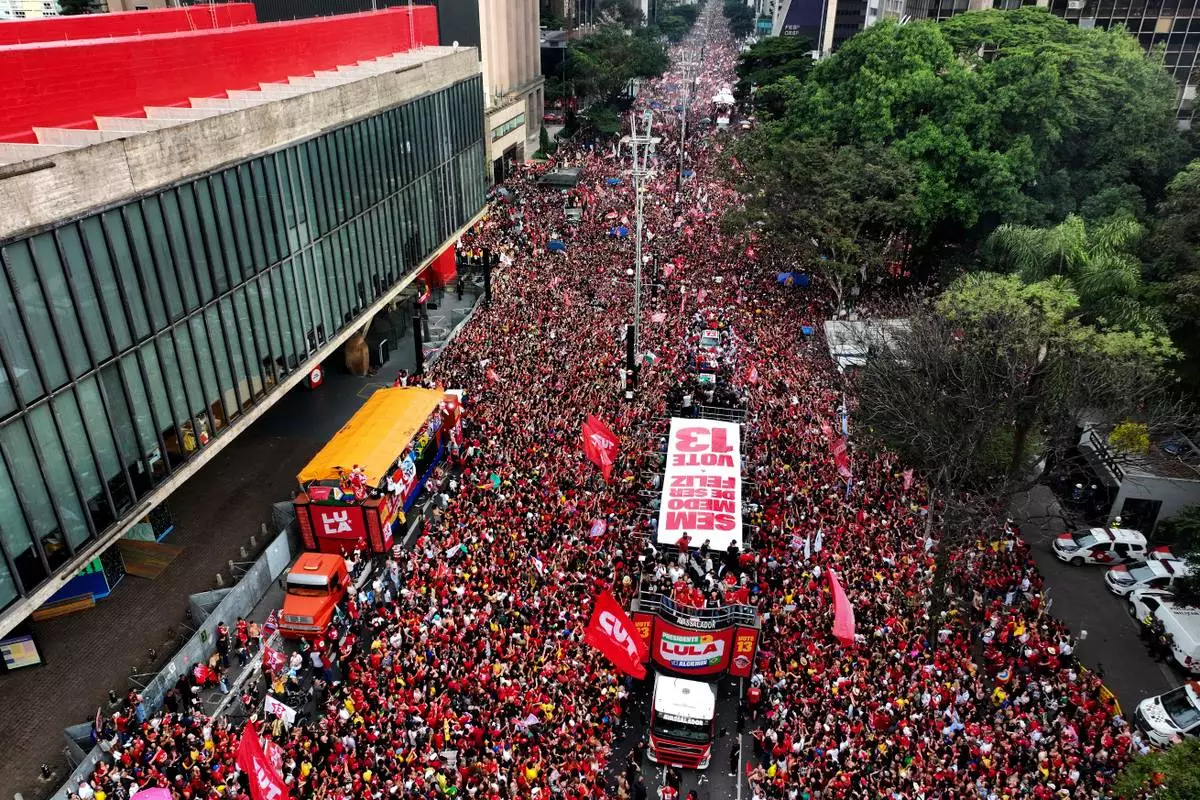
Supporters of Brazilian President Luiz Inacio Lula da Silva, who is running for reelection, crowd Paulista Avenue as his campaign vehicle passes during his final campaign rally ahead of Brazil's presidential runoff election in Sao Paulo, Brazil, Saturday, Oct. 24, 2026. (AP Photo/Andre Penner)
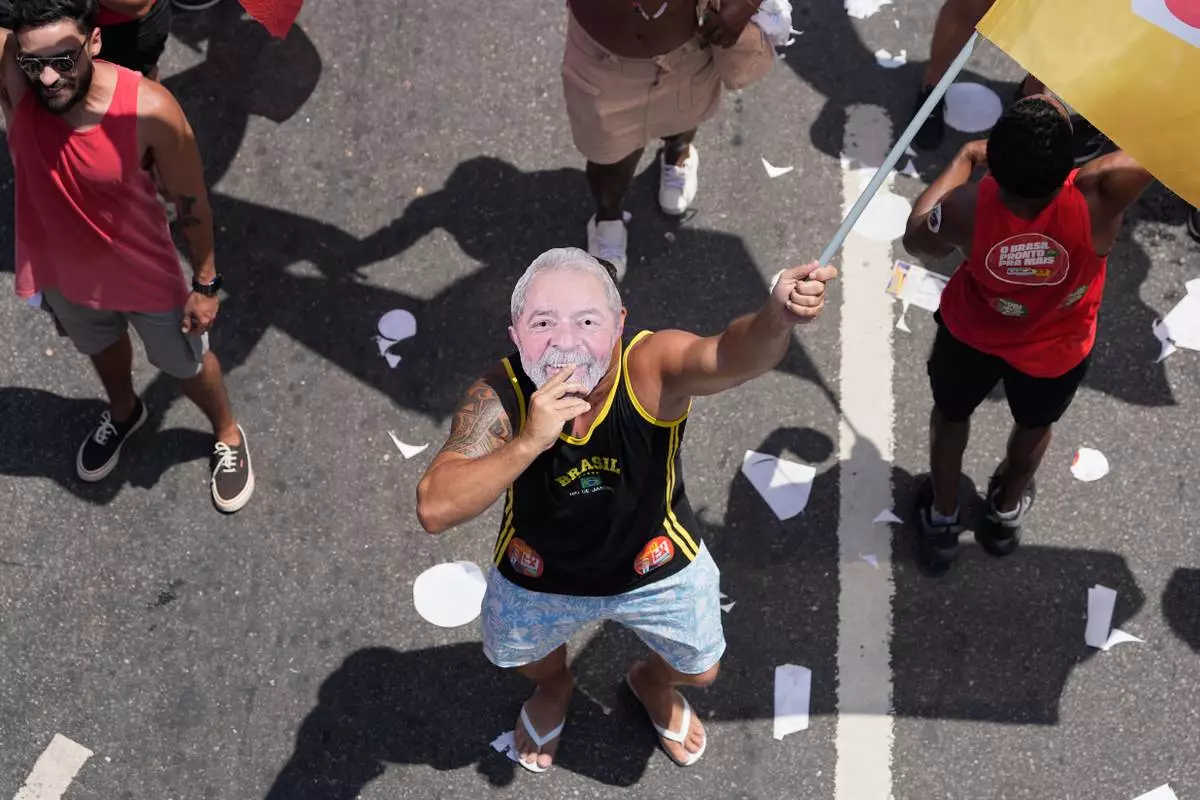
A supporter wears a mask of Brazilian President Luiz Inacio Lula da Silva, who is running for reelection, during his final campaign rally on Copacabana beach a day ahead of the presidential runoff election in Rio de Janeiro, Saturday, Oct. 24, 2026. (AP Photo/Silvia Izquierdo)
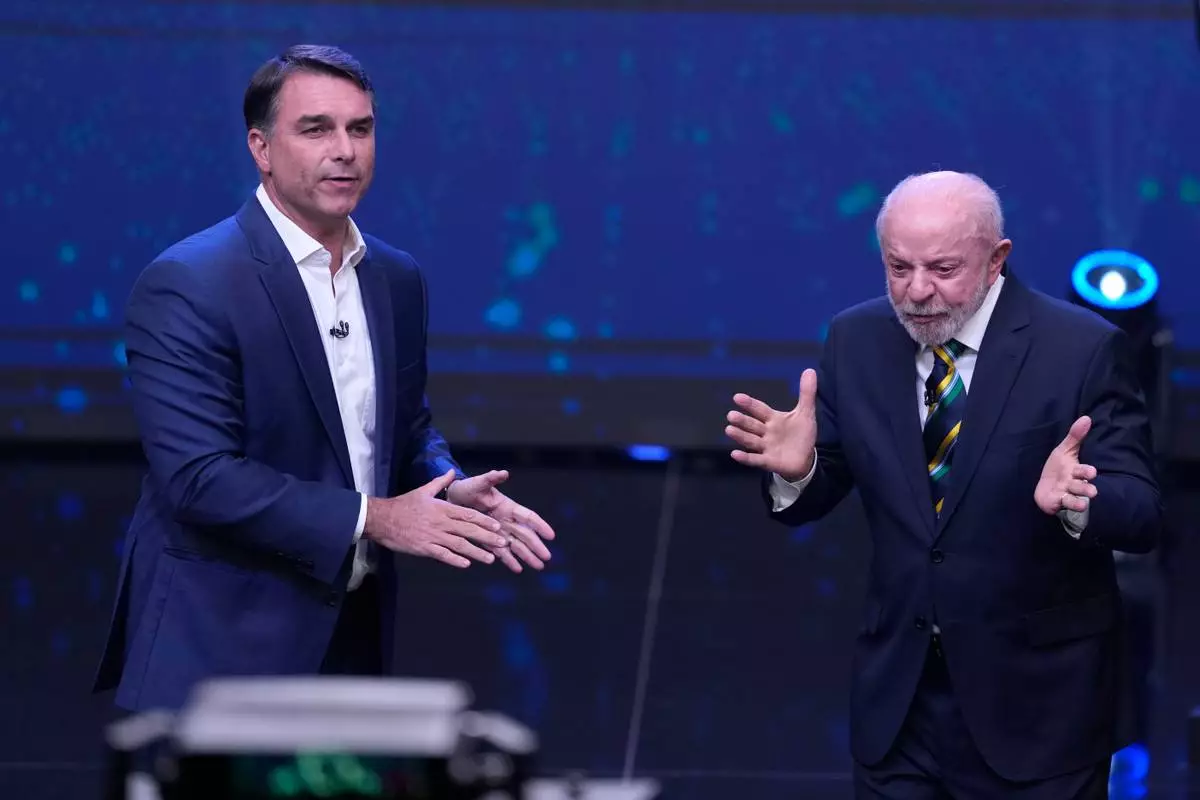
FILE - Brazil President Luiz Inacio Lula da Silva, right, who is running for reelection, gestures as opposition presidential candidate Sen. Flavio Bolsonaro stands beside him during a televised presidential debate one week before the runoff election in Sao Paulo, Brazil, Oct. 18, 2026. (AP Photo/Andre Penner, File)