China is rolling out multilingual apps, cross-border payment platforms, and hands-on cultural workshops to draw overseas visitors, as the country’s inbound tourism drive pivots on smart technology and immersive experiences.
At present, international tourists can make their travel preparations conveniently using mobile apps displayed in different languages. They can book hotels, buy tickets, search for various travel information, and plan their trip routes directly on their phones.
"In 2025, we designed information displays in 16 languages for more than 8,000 scenic spots and 450,000 hotels across China, and also introduced AI-powered route recommendations to make travel more convenient and welcoming for overseas tourists," said Liu Ting, director of the public affairs department of an online travel platform.
With just a few clicks on their phones, overseas tourists can navigate their trips in a short amount of time.
"So you have to download the right apps, it was quite easy to find our way," said Manel, a French tourist.
By September 2025, Alipay plus, the cross-border mobile payment platform operated by Ant International, had cooperated with 40 e-wallets and payment apps in the Asia-Pacific region, enabling overseas tourists to use their local payment applications at 150 million merchant outlets across China.
"We use Alipay for payments which allows us not to carry cash," said Chan Yee Khan, a Malaysian tourist.
Immersive cultural experiences have gone viral among overseas tourists. From visiting intangible cultural heritage workshops and wearing Hanfu to making dumplings and firing porcelain, these activities are becoming a new engine for inbound tourism.
At a scenic spot in Xi'an, capital of northwest China's Shaanxi Province, a Tang Dynasty (618-907) style feast performance attracted around 700 overseas tourists to sample Chinese cuisine, watch the show, and make dumplings.
"I tasted them before in a restaurant, but never made them myself. To also see the cultural side of China, it's really interesting to see," said Nicholas, a German tourist.
"We watch a lot of TikTok (videos), so we see a lot of influencers and we contact them. And that's how we made some of our tours and they were especially tailored for us," said Ridwaan, a tourist from South Africa.
Industry analysts say such cross-border payment options are creating new growth points for tourism consumption, as streamlined digital services become central to the country's inbound travel drive.

China boosts inbound tourism with streamlined digital payments, immersive cultural experiences
Colombians are heading to the polls on Sunday to elect their next president. The country's constitution prevents the current President, Gustavo Petro, from running for a second term.
Yet, many see this election as a referendum on the policies of Gustavo Petro, Colombia's first leftist president.
There are 14 candidates on Sunday's ballot, but the polls show it will likely be a tight three-way race.
The frontrunner is Ivan Cepeda, a 63-year-old three-term senator, representing President Gustavo Petro's party, the Historic Pact coalition. Cepeda has vowed to defend and deepen Petro's progressive reforms and social justice policies to reduce inequality. He also promises to continue the government's controversial "Total Peace" strategy to negotiate the disarmament of remaining guerrilla groups and criminal gangs.
"True prosperity comes from equality, from access to rights, and from transforming the peripheral and excluded territories of the rural world," Cepeda said at a campaign rally.
Running as a political outsider and independent is Abelardo de la Espriella, a 47-year-old lawyer, nicknamed "The Tiger." He has presented himself as the "authority and order" candidate who will reduce state spending by up to 40 percent in the next four years.
"(First,) we must fight insecurity. Colombia is suffering today from a pandemic of insecurity. Crime is out of control: extortion, cattle theft, smuggling, drug trafficking," he said to his supporters at an election event.
According to polls, the third candidate with strong support is Paloma Valencia. The 48-year-old senator represents the Democratic Center party led by popular former President Alvaro Uribe Velez. Her candidacy is backed by politicians and economists who are concerned with growing levels of public debt. They want to see a return to more conservative fiscal policies.
"I don't want to be a president who governs alone, locked away in glass offices. I want to be a president who stands with citizens, who embraces them, who reaches out to them, who has a team, and who governs to transform Colombia," the candidate said at the campaign event
According to polls earlier in the year, many voters are expressing concerns about unemployment, rising living costs, corruption, and, above all, public security.
The election comes after a turbulent year that the International Committee of the Red Cross has called "the worst humanitarian consequences of armed conflict over the past decade."
"(We arrive at this election in a tense atmosphere - tense) because of the economic situation, because of the security situation, and because of the narratives that have been built around the country's main problems. On top of that, emotions, ideas and social media have all helped raise (the tone,)" said Eduardo Velosa, associate professor from International Studies Javeriana University.
If no candidate receives 50 percent of the vote, a runoff election will be held between the top two finishers on June 21st.
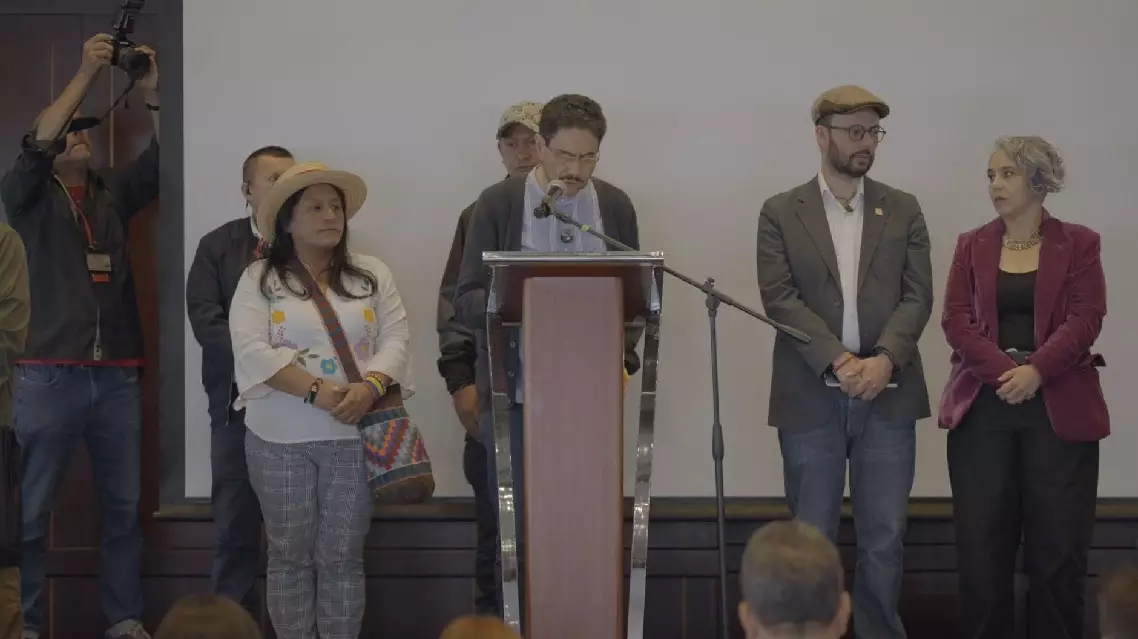
Colombians prepare to choose their next president